 Gen info Gen info
- Casuarina equisetifolia is a she-oak species of the genus Casuarina. It was officially described by Linnaeus in 1759.
- The specific epithet ;equisetifolia' is derived from Latin, meaning "horse hair", referring to the resemblance of the drooping branchlets to horse tail.
(30)
Botany
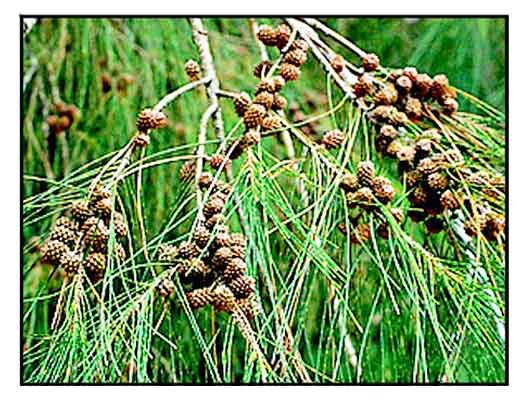
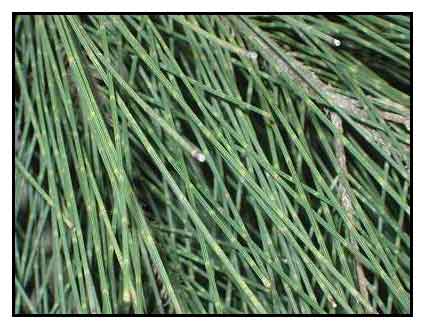
Agoho is a large, evergreen tree, tall and straight, up to 20 meters high. Crown is narrowly pyramidal, resembling some of the conifers in appearance. Bark is brown and rough. Branchlets are very slender, about 20 centimeters long, mostly deciduous, composed of many joints. Internodes are about 1 centimeter long, somewhat 6- or 8-angled. Flowers are unisexual. Staminate spikes are slender, 1 to 3 centimeters long. Cones are usually ellipsoid, 1 to 2 centimeters long, composed of about 12 rows of achenes enclosed in the hardened bracts.
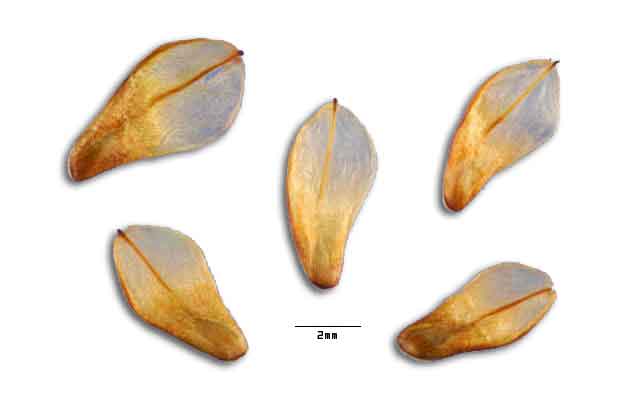
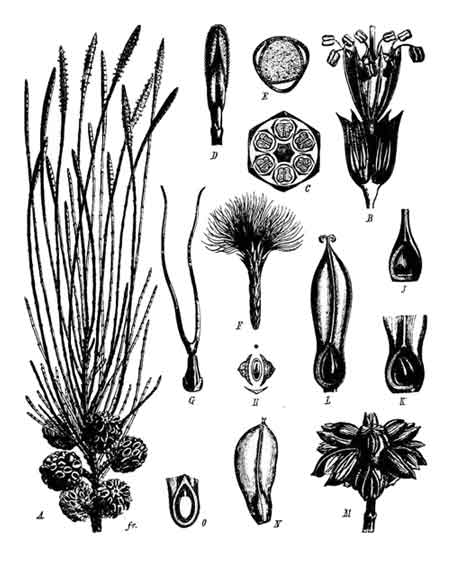 Casuarina is an evergreen tree growing to 6–35 m (20–115 ft) tall. The foliage consists of slender, much-branched green to grey-green twigs 0.5–1 mm (0.020–0.039 in) diameter, bearing minute scale-leaves in whorls of 6–8. Flowers are produced in small catkin-like inflorescences; the male flowers in simple spikes 0.7–4 cm (0.28–1.57 in) long, the female flowers on short peduncles. Unlike most other species of Casuarina(which are dioecious) it is monoecious, with male and female flowers produced on the same tree. Fruit is an oval woody structure 10–24 mm (0.39–0.94 in) long and 9–13 mm (0.35–0.51 in) in diameter, superficially resembling a conifer cone made up of numerous carpes each containing a single seed with a small wing 6–8 mm (0.24–0.31 in) long. On ripening, fruits turn brown and open, dispersing the seeds by water. The seeds can only grow in hot sand near the seashore. Those seeds sprout and form thickets. (30) Casuarina is an evergreen tree growing to 6–35 m (20–115 ft) tall. The foliage consists of slender, much-branched green to grey-green twigs 0.5–1 mm (0.020–0.039 in) diameter, bearing minute scale-leaves in whorls of 6–8. Flowers are produced in small catkin-like inflorescences; the male flowers in simple spikes 0.7–4 cm (0.28–1.57 in) long, the female flowers on short peduncles. Unlike most other species of Casuarina(which are dioecious) it is monoecious, with male and female flowers produced on the same tree. Fruit is an oval woody structure 10–24 mm (0.39–0.94 in) long and 9–13 mm (0.35–0.51 in) in diameter, superficially resembling a conifer cone made up of numerous carpes each containing a single seed with a small wing 6–8 mm (0.24–0.31 in) long. On ripening, fruits turn brown and open, dispersing the seeds by water. The seeds can only grow in hot sand near the seashore. Those seeds sprout and form thickets. (30)
Distribution
- Native to the Philippines.
- Also native to Andaman Is., Assam, Bangladesh, Borneo, Cambodia, Caroline Is., Fiji, India, Jawa, Lesser Sunda Is., Malaya, Marianas, Marshal Is., Myanmar, New Caledonia, New Guinea, New South Wales, Nicobar Is., Northern Territory. Queensland, Samoa, Solomon Is., Sulawesi, Sumatera, Thailand, Tonga, Turks-Caicos Is., Tuvalu, Vanuatu, Vietnam. (11)
-
Throughout the Philippines along sandy seashores, extending inland in open sandy valleys along streams.
- Sometimes growing at altitudes as high as 800 meters.
- Cultivated in Manila and large towns as an ornamental foliage tree or hedge plant.
- Also planted to check erosion.
- Also occurs in Tropics of the Old World from Africa to Polynesia, near the sea.
- Now pantropic in cultivation.
 Constituents Constituents
- Plant yielded kaempferol, quercetin, alicylic acids, amino acids, taraxarol, lupenone, lupeol, gallic acid, ß-sitosterol, catechin, and gallo-catechin.
- Phytochemical screening yielded alkaloids, flavonoids, triterpenoids, carbohydrates, tannins, phenols, gums, and mucilage.
- Studies have yielded proteins, glycosides, saponins, phenolics, flavonoids, tannins, steroids, gum, reducing sugars, and triterpenoids.
- Bark yields 18% tannin.
- Tannins from the bark were catechin, ellagic acid, and gallic acid. Flavonoid (quercetin) and lupeol were isolated from the leaf and fruit, respectively. (5)
- Coloring matter is casuarin.
- Phytochemical screening yielded eight phenolic compounds as major active constituents, viz. gallic (19.18 µg/g), protocatioic (6.84), salicylic 11.57), chlorogenic, syringic, p-hydroxybenzoic, p-coumaric, and vanillic acid. (see studies below) (14)
- Leaf oils yielded 76 compounds comprising of monoterpene hydrocarbons (29.3%), oxygenated monoterpenoids (16.2%), sesquiterpene hydrocarbons (2.7%), oxygenated derivatives (1.0%), alipathic (40.6%) and non-terpenoid (7.3%) compounds. Major compounds were pentadecanal (32.0% and 1,8-cineole (13.1%), with significant quantities of α-phellandrene (7.0%), apiole (72%), and α-terpinene (6.9%). (19)
- Methanol extract of leaves yielded alkaloids, flavonoids, saponin, tannins, steroids, sugar and gum. (21)
- Methanol extract of aerial bark yielded carbohydrates, alkaloids, proteins, glycosides, saponins, flavonoids, and tannins.
(22)
 Properties Properties
-
Resembles a pine tree in appearance.
-
Considered antidiarrheal, anticancer, antibacterial, antifungal.
-
Bark considered astringent, emmenagogue, ecbolic and tonic.
- Phytosterols from leaves considered antibacterial, hypoglycemic, antifungal, molluscicidal, cytotoxic.
- Seeds considered anthelmintic, antispasmodic and antidiabetic.
- Studies have suggested antibacterial, antifungal, antioxidant, antidiabetic, hypolipidemic, antiasthmatic, anticariogenic, nephroprotective, phytoremediative, anti-inflammatory, hepatoprotective properties.
Parts used
Bark, leave
Uses
Edibility
- Seeds are roasted for salt. (20)
- Leaves and green fruit chewed to stimulate salivation to quench thirst. (20)
Folkloric
- Infusion of branches used as diuretic.
- Leaves used for colic.
- Bark used as astringent.
- Bark decoction used as
emmenagogue; in large doses, an ecbolic.
- Used for stomach aches, diarrhea, dysentery and nervous disorders.
- Decoction of bark used for hemoptysis.
- Used for cough, asthma, and diabetes.
- In India and Malaya, bark used for diarrhea and dysentery; also used for beriberi.
- In Malaya and Sarawak, decoction of twigs used in making a lotion for swellings.
- In Malaya, powdered bark used for pimples.
- In Macassar, decoction of bark used for colic.
- In Samoa, bark infusion used for coughs, asthma, and diabetes.
- Infusion of bark used as tonic; decoction used for chronic diarrhea and dysentery.
- In Tonga, bark infusion taken as potion; squeezed into the mouth of infants with mouth infections. Also used for stomachache. (10)
- In Fiji, bark extract taken for rheumatism or as emetic. In Yap (Ulithi), inner bark used to treat diarrhea and other digestive tract ailments. (10)
Others
- Fuel: Tree makes good fuel-wood. It has been referred to as best firewood in the world. It produces high-quality charcoal. Caloric value of the wood is 5000 kcal/kg, while the charcoal exceeds 7000 kcal/kg. (23)
-
Construction: Yields a heavy hardwood with air-density of 900-1000 kg/cubic m. (23) Hard wood favored for making house timber, poles and rafters, tool handles, spears.
- Dye / Tannin: Bark yields 6-18% tannin. Used extensively in Madagascar for tanning. It penetrates the hide quickly and produces a soft leather of pale reddish-brown color. (23)
- Fiber: Wood used to produce paper pulp using neutral sulphate and semi-chemical processes. Raw material is source of rayon fibers. (23)
Studies
• Antibacterial: In a study evaluated methanol extracts of seven medicinal plants for antibacterial and toxic activities. All the plants showed moderate activity against the tested organisms. C. equisetifolia exhibited strong activity against S aureus, B subtilis and S sonnei. (1)
• Antibacterial: Casuarina equisetifolia was one of 12 medicinal plants studied for antibacterial activity against B subtilis, S epidermis, Pseudomonas pseudoalcaligenes, P vulgaris and S typhimurium.
• Hepatoprotective: C. equisetifolia was one for four medicinal plants that showed dose-dependent protection against carbon tetrachloride induced hepatocellular injury in rats.(2)
• Antidiabetic / Hypolipidemic: Study of ethanolic extract showed reduced blood sugar in STZ-induced diabetic rats. There was also a significant reduction in total cholesterol, LDL, VLDL, with an improvement in HDL cholesterol. (6)
• Antioxidant / Antimicrobial / Anti-Aggregating Properties: Study showed the condensed tannins extracted from C. equisetifolia exhibited considerable DPPH radical scavenging activity and ferric reducing antioxidant power. Extracts also showed moderate hemolytic action and potent antimicrobial effect on Bacillus proteus, B. subtilis, K. pneumonia, and Aspergillus fumigatus.(7)
• Antiasthmatic / Bark: Study of ethanol extract of bark showed significant dose-dependent antiasthmatic activity in various in vitro and in vivo animal models. (9)
• Nephroprotective / Leaves: Study evaluated the nephroprotective activity of methanolic extract of C. equisetifolia leaves in gentamicin-induced nephrotoxicity in Wistar rats. Plant extract at a dose of 300 mg once daily for 4 weeks restored normal renal functions and attenuated oxidative stress. C. equisetifolia leaves extract ameliorates gentamicin-induced nephrotoxicity and oxidative damage by scavenging oxygen free radicals, decreasing lipid peroxidation and improving intracellular antioxidant defense. (12)
• Anticariogenic: Study evaluated the activity of various extract solvents of C. equisetifolia against susceptible pathogenic oral bacteria. Results showed a wide range of phytochemicals with anticariogenic activity. (13)
• Antimicrobial: Study evaluated the antimicrobial activity of various extract of leaves against seven medically important bacterial strains (B. subtilis, MRSA, Micrococcus, E. coli, P. aeruginosa and K. pneumonia) and four fungi. A methanol extract showed the most pronounced effect and the most susceptible was S. aureus. The most susceptible fungi were Aspergillus flavus. (see constituents above) (14)
• Anti-Acne / Bark: Study evaluated clinical efficacy of C. equisetifolia bark extract (5% cream) in comparison to benzoyl peroxide as standard for acne vulgaris. Results showed no significant difference in both test and standard control groups. Furthermore, remarkable improvement was found in acne grading in the test group. (15)
• Bio-Fiber / Bark: Study evaluated C. equisetifolia leaf as bio-based fiber and unsaturated polyester composite as matrix due to its natural surface roughness without chemical treatment. Results showed the tensile strength at 30% up to 50% weight loading of CE has the potential to be used in non-structural applications. (16)
• Adsorbent for Removal of Methyl Violet from Wastewater: Study evaluated the CEN has the potential to be used as low cost adsorbent for the removal of methyl violet from wastewater. Thermodynamic study showed the sorption process was endothermic, spontaneous and physical in nature. (17)
• Anti-Diarrheal: Study evaluated the anti-diarrheal effect of a 90% ethanolic extract of C. equisetifolia against castor oil-induced diarrhea in a rat model. Results showed significant (p<0.001) reduction of castor oil-induced frequency and consistency of diarrhea and enteropooling, together with reduction in weight and volume of intestinal contents and modest reduction in intestinal transit. (18)
• Antioxidant / Cytotoxicity / Antibacterial / Leaves: Study evaluated the phytoconstituents and antioxidant activity of a methanol extract of leaves. The extract yielded alkaloids, flavonoids, saponin, tannins, steroids, sugar and gum. The extract exhibited strong antioxidant activity by DPPH radical scavenging study with IC50 25.69 µg/mL. It showed moderate cytotoxic activity in brine shrimp lethality bioassay with LC50 77.98 µg/mL. It also showed mild antibacterial activity against both gram positive and gram negative bacteria. (21)
• Spasmolytic / Bark: Study of methanol extract of aerial bark reduced contractions in isolated ileum induced by spasmogens like ACh, histamine, KCl and BaCl2 and potentiated the effect of nifedipine, suggesting an antimuscarinic, antihistaminic and a calcium channel blocking action. The antispasmodic effect may be due to flavonoids and tannins present in the extract. (22)
• Antioxidant Tannins / Stem Bark and Root: Study identified condensed tannins from stem bark and fine root of C equisetifolia, which consisted predominantly of procyanidin combined with prodephinidin and propelargonidin, and epicatechin as main extension unit. The condensed tannins showed very good DPPH radical scavenging activity and ferric reducing/antioxidant power. Results suggest potential as new sources of natural antioxidants for food and nutraceutical products. (24)
• Antioxidant / Antiproliferative / Needles: Study evaluated the in vitro antioxidant and antiproliferative activity of various solvent extracts of C. equisetifolia needles. Polar solvent extracts showed significantly high amounts of total polyphenols, flavonoids, antioxidants and free radical scavenging activity compared to non polar solvent extracts. On MTT assay for cytotoxic and apoptosis inducing activity on MCF-7 cells, non polar solvent extracts showed good activity in inducing cell death by inducing apoptosis which included DNA fragmentation and release of caspase-3. The active component present in non-polar solvent extract was identified as ascorbic acid. (25)
• Antidiabetic / Antihyperlipidemic / Leaves: Study evaluated the antidiabetic potential of ethanolic extract of Causarina equisetifolia leaves against STZ-induced diabetic experimental rats. Glibenclamide was used as standard drug. Results showed a hypoglycemic and antihyperliidemic effect as evidenced by reduced blood sugar along with significant reduction in total cholesterol, LDL-C, VLDL, and improvement in HDL cholesterol. (26)
• Removal of Cu (II) by Adsorption / Bark: Study has reported on the removal of copper from synthetic aqueous solutions and industrial wastewater by adsorption into C. equisetifolia bark. Study showed adsorption isotherm follows both Frieundlich and Langmuir isotherms. Adsorption capacity of bark was estimated as 16.58 mg/g for a concentration of 10 mg/L at pH equal to 5 with removal efficiency of Cu(II) ion to be about 96%. The regeneration study established the bark can be used continuously without much reduction in removal efficiency and without significant leaching of adsorbed Cu(II) ions. (27)
• Single Dose Toxicity Study / Inflorescence: Study evaluated the single dose oral toxicity of ethanolic extract from inflorescence of C. equisetifolia. Toxicity study was done according to OECD guidelines. A single dose of 300 mg/kbw was followed by 2000 mg/kbw. There was no mortality in the tested animals, no abnormal clinical signs, and no abnormalities in gross pathology observations. Results suggest an LD50 greater than 2000 mg/kbw and may be classified as category 5. (28)
• Anti-Inflammatory / Leaf and Fruit: Study evaluated leaf and fruit aqueous and ethanolic extracts for total flavonoid content and invitro anti-inflammatory activity by HRBC membrane stabilization and protein denaturation assays. Highest amount of rutin equivalent flavonoids were present in the ethanolic extract of leaf and aqueous and ethanolic extracts of fruit. Fruit extract exhibited highest % inhibition of lysis of HRBC. Aqueous leaf and fruit extracts showed highest inhibition of protein denaturation. (29)
Availability
Wild-crafted.
Seeds in the cybermarket.
|