|
Gen info
- Bauhinia is a genus of more than 200 species. The genus was named after the Bauhin brothers, Swiss-French botanists: Caspar (Gaspard) Bauhin (1560-1624) and Johann (Jean) (1541-1613). (25)
The species
share the 'butterfly' configuration of the leaves. Species names monandra refers to the single stamen. (25)
- Alibangbang is an Ilongo word for butterfly.
 Botany Botany
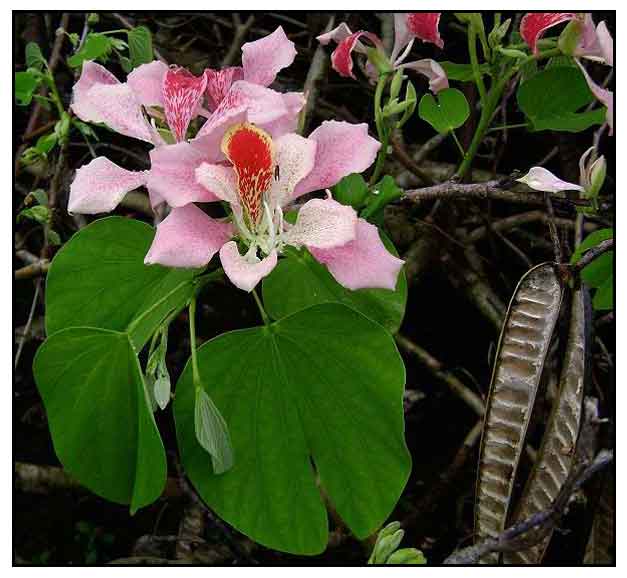
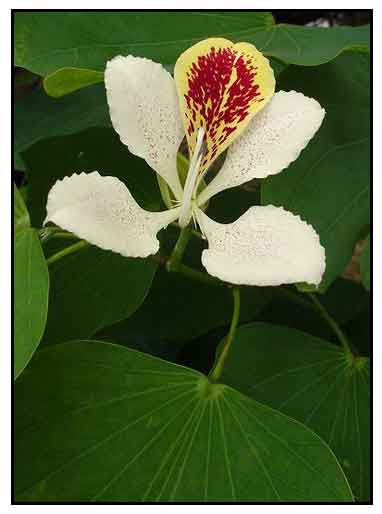
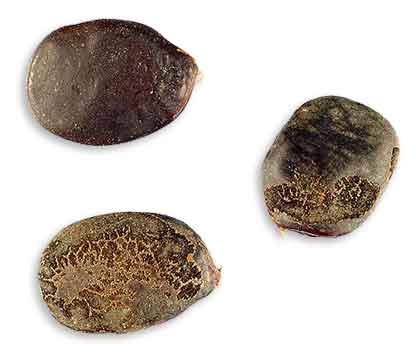
Bauhinia monandra is a small tree, usually reaching 3 to 7 m tall, occasionally to 15 m. Bark is gray and smooth, becoming reddish-brown when mature. Leaves are sub-cordate, butterfly-shaped, simple and alternate, 7-20 cm long and wide. Petioles are 2.5-6 cm long. Flowers are five-petaled, borne in short, axillary raceme clusters; petals are pale pinkish, large and spreading, measuring 0.5 cm long and 0.3 cm wide, with 1 single, curved stamen measuring 25 - 50 mm long, style about 35 mm long. Fruit is a large, brown, flattened pod measuring 12-25 cm long and 2-3 cm wide, containing 10-20 seeds. Seeds are flat, 10-12 mm long and 7-8 mm wide. (25)
Similar to Bauhinia acuminata but grows only to medium size. Butterfly flower is an evergreen tree with a rounded crown, growing to a height of 3-10 meters. Flowers are showy and about 10 centimeters across; petals spreading, pink, purplish, the middle petal with numerous, small red-purple dots. Fertile stamen is only one.
 Distribution Distribution
- Introduced.
-
Widely cultivated in cities and towns in the Philippines.
- Native to Borneo.
- Naturalized in tropical America,
- Invasiveness info: Many Bauhinia species have been introduced as ornamentals. Evidence shows Bauhinia monandra can escape cultivation and naturalize in disturbed areas, such as roadsides, waste ground urban areas., grasslands, and riparian areas. Once naturalized, the species can become weedy and invasive with potential to replace native vegetation. (23)
Constituents
• Butanol fraction of a methanol extract of dried leaves yielded quercetin-3-rutinoside.
• Aqueous extract yielded a flavonoid: 3,7-di-O-α-
rhamnopyranosylquercetin.
• Study on nutritional content of seeds showed: Lipids 28.7%, protein 33.09%, carbohydrate 21.45%, fiber 3.25%, phytate 11.5 mg/100g, hydrogen cyanide 0.32 mg/100g, tannins 6%, and saponins 2.05%.
• Nutritional analysis of seeds yielded a protein content of 33.09%, 21.45% soluble carbohydrates, and 3.25% fiber. The hydrogen cyanide content was 0.32 mg/100g. (see study below) (8)
• Study of essential elements in seeds of Bauhinia yielded (mg/g) potassium 74.20 ± 2.46, calcium 77.9 ± 2.98, magnesium 2.8 ± 0.02, sodium 2.319 ± 0.07, sulphur 4.166 ± 0.005, phosphorus 1.594 ± 0.09, iron 1.710 ± 0.11. (see study below)
(8)
• Phytochemical screening of leaves yielded flavonoids, terpenoids, steroids, alkaloid, cardiac glycoside, saponin, tannins, and phenols. (see study below)
(16)
• TLC and GC-MS study of flowers for essential oil showed a yield of 0.06% with 7 compounds, with majorities characterized as panaxene 20.51% and α-guaiene 33.39%. The essential oil showed a predominance of sesquiterpene compounds (70.22%). (24)
Properties
- Astringent, febrifuge, laxative.
- Studies have shown anti-diabetic, antioxidative, insecticidal, hepatoprotective properties.
Parts
used
Bark, pods.
Uses
Edibility
- Leaves and pods eaten as vegetable in China.
- In Africa, pods are pounded and boiled in water to provide a laxative drink.
Folkloric
- No recorded folkloric medicinal use in the Philippines.
- In Brazil, used for diabetes.
- In India pod is used as astringent for diarrhea, dysentery and as cure for fever. Decoction of root and bark used for leprosy and small pox. Leaf extracts used for eye ailments.
- An anti-inflammatory ointment is made from the bark.
Others
- Dyes: In Africa, pods and seeds are sources of black and blue dyes.
-Ornamental: Cultivated for its flowers.
- Fiber: In Eastern Sudan, crumble bark is a source of fiber for cordage.
- Wood: Hard wood used for fuel.
- Environmental: Used as boundary, barrier, or support.
(23)
 Studies Studies
• Toxicity Study:
Acute and subacute toxicity study in rats of a methanolic leaf extract of Bauhinia showed relatively low toxicity on acute administration but advises caution when used subacutely as anti-diabetic remedy. (1)
• Anti-Diabetic / Stimulation of Insulin Release / Leaves: Study of methanol extract of dried leaves of B. monandra in alloxan-induced diabetic rats showed significant blood glucose reduction of 65%. A water fraction had 71.5% hypoglycemic activity comparable to glibenclamide. Subfractions of butanol fraction reduced hyperglycemia in alloxan-induced diabetic rats 62 and 66% and induced insulin release from INS-1 cells. Results justifies the ethnomedical use of the plant as antidiabetic remedy. (2)
• Non-Genotoxic / Non-Cytotoxic / Antioxidative Potential: BmoLL (Bauhinia monandra leaf lectin) is a galactose-specific lectin purified from the leaves of Bauhinia monandra with a hypoglycemic potential demonstrated in rats. Study showed the lectin Bmoll did not produce any genotoxicity and cytotoxicity in all assays used. A significant decrease in spontaneous mutation frequency was noted in E coli strains, especially in the repair-deficient strain, suggesting an anti-oxidative potential. (3)
• Antioxidant: In a DPPH assay, leaf extracts exhibited very potent antioxidant activity, compared with pure catechins used as positive controls. (5)
•Flavonoids / Antioxidant: Study of ethyl acetate extract of leaves isolated 2 active compounds: quercetin-3-O-rutinoside and quercetin. Compound 2 had higher antioxidant activity while compound 1 had lower activity than L-ascorbic acid. (6)
• Reproductive Benefits: Study of aqueous and ethanol extracts of dried leaves on pregnant Wistar rats showed no evidence of maternal or fetal toxicities and the aqueous extract promoted increased implantation and decreased post-implantation loss in pregnant rats. (7)
• Seeds / Nutritional Study / Potential Nutrient Source: Protein content was 33.09%, comparing fairly with soya beans (Glycine max) and groundnuts (Arachis hypogaea). Seeds also yield 21.45% soluble carbohydrates, comparing favorably with soybean 20.7% and peanut 24.6%. It also yields 3.25% fiber. The hydrogen cyanide content was 0.32 mg/100g; chronic exposure has been reported to cause neurological, respiratory, cardiovascular and thyroid debilities. Study concludes BM seeds are rich in nutrient and low in anti-nutritional compounds. If popularized, the plant may serve as a complimentary source of essential nutrients to man and livestock provided toxicants are removed. (8)
• Nephrotoxic Effect at High Doses: Study of leaf extract in alloxan-induced diabetic rats showed significant elevation of creatinine at higher dose of B. monandra. Although it showed an ability to reduce blood sugar levels in diabetic rats, excessive administration of BM extract above 2g/kg can be toxic to the kidney. (10)
• Hepatoprotective / Antidiabetic: Study evaluated the effects of a leaf extract in the liver of alloxan-induced diabetic rats. Results showed significant reduction of blood sugar level in diabetic rats as well as a hepatoprotective effect. (11)
• Reproductive Effects / Toxicity: Study of aqueous and ethanol extracts from dried leaves of B. monandra in pregnant Wistar rats showed no maternal or fetal toxicities, no impairment of reproductive performance or delay in fetal development. The aqueous extract promoted increased implantation and decreased postimplantation loss in pregnant rats. (12)
• Insecticidal / Leaf Lectin: Bauhinia monandra leaf lectin was evaluated for anti-insect activity against C. maculatus, Z. subfasciatus, and A. kuehniella larvae. BmoLL produced about 50% mortality to Z. subfasciatus and C. maculatus. While it did not significantly decrease survival of A. kuehniella larvae, it produced a 40% decrease in weight. (13)
• Antimicrobial / Antioxidant / Leaves: Study evaluated EA and n-hexane fractions of ethanolic extract of leaves for antioxidant activity (DPPH assay), phytoconstituents, and antimicrobial potential. The EA fraction showed more higher antioxidant and antimicrobial activities than the hexane fraction. (see constituents above) (16)
• Hypoglycemic Effect / Leaves: Study of aqueous extracts of Bauhinia monandra and B. forficatya in normoglycemic mice showed hypoglycemic activity. 3,7-di-O-α- rhamnopyranosylquercetin was identified in the aqueous extract of B. monandra.
The hypoglycemic activity may be related to the presence of glucosyl flavonoids. (17)
• Anti-Inflammatory / Antinociceptive / Leaf Lectin: Lectins are proteins or glycoproteins of non-immunogenic origin with identified biological activities, i.e., insecticidal, antifungal, antibacterial, antiproliferative, anti-diabetic, wound healing etc. They have shown anti-inflammatory and antinociceptive properties. This study evaluated the potential anti-inflammatory and anti-nociceptive activity of pure B. monandra leaves in mice using 1% carrageenan-induced inflammation in mice for anti-inflammatory activity and acetic-acid induced abdominal writhing and hot plate testing for antinociceptive activity. BmoLL showed a significant (p<0.05) anti-inflammatory activity in
mice. Results reinforce the hypothesis that the antinociceptive response of lectin may be explained by their specificity for different sugars, which could enhance the lectin-carbohydrate interaction and cell receptors. (18)
|
• Increased Insulin Secretion in Prenatal Malnourished Rats: Study investigated the effects of a methanolic extract of B. monandra on blood glucose levels, insulin and lipid control on prenatal malnourished rats.
Acute extract administration in control rats reduced glucose with no effect on insulin secretion. In malnourished rats, it induced insulin peak. In chronic study, the extract lower glucose with higher insulin levels in prenatal malnourished rats. (19)
• Intestinal Effect on Ingestion of Seed Extract / Inhibition of Enzyme Synthesis: Study has shown a high hemagglutinating activity against trypsin-treated erythrocytes of rabbit.
In the study rats were given a NaCl extract of seeds. Histopathological studies showed the the lectins from B. monandra seeds did not cause visible intestinal damage even when they seem to be able to bind to the enterocyte brush border. Low dissaccharidase activity in the membrane and enterocyte fractions,which represent enzyme synthesis level, indicates the lectins could reduce synthesis of the enzymes rather than inhibit active sites of the enzymes. (20)
• Genotoxicity Potential / Leaves: Study evaluated the genotoxicity, cytotoxicity and mutagenicity of an aqueous infusion of B. monandra leaves. Various infusion concentrations did not cause mutagenicity or cytotoxicity. However, highest concentration (100 µg/mL) induced breaks in DNA phosphodiester bonds and form abasic sites. Results revealed risk and benefits of the extract for therapeutic use and effects on genetic integrity. (21)
• Hypoglycemic / Effect on Insulin Release
/ Leaves: Oral administration of methanol extract of dried leaves to alloxan-induced diabetic rats showed significant blood glucose reduction of 65%, similar to the effect of glibenclamide. Quercetin-3-rutinoside was isolated from a butanol fraction and characterized. Results suggest stimulation of insulin release is one of the modes of action of the butanol fractions and some subfractions. (22)
• Flower Essential Oil: TLC and GC-MS study of flowers for essential oil showed a yield of 0.06% with 7 compounds, with majorities characterized as panaxene 20.51% and a-guaiene 33.39%. The essential oil showed a predominance of sesquiterpene compounds (70.22%). The allied techniques, classic and modern, demonstrated different ways of evaluating essential oil chemical composition, with both techniques showing high efficiency and precision. (24)
• Effect of Processing on Mineral Content and Proximate Composition / Seeds: Study reports on the effect of boiling seeds on mineral composition, nutritive value, and anti-nutritional factors. Mineral contents yielded concentrations of Potassium 103.33mg/g, Iron 75.92mg/g, Calcium 56.55mg/g, Sodium 53.33mg/g, Phosphorus 47.60mg/g, Magnesium 43.33mg/g, and Zinc 01.11mg/g. Proximate compositions of the seeds showed high crude protein in the boiled (25.75-31.69mg/g) and low crude fiber (7.11-10.75mg/g) in the raw samples. Phytochemical screening of the seeds showed that the concentration of Hydrogen cyanide, fluorine and sulphur levels reduced significantly (P<0.05) as the boiling times increased compared to the raw samples. The study discussed the implications of the findings.(26)
Availability
- Wild-crafted.
|