|
 Gen info Gen info
- Chenopodium ambrosioides originated in Central American, long used as an anthelmintic in many parts of the world. Although Chenopodium has been replaced by more effective and less toxic anthelmintics, it is still used in many indigenous traditional systems for the treatment of worm infections in both humans and livestock.
- Once referred to as Baltimore Oil for that Maryland city's large oil extraction facility.
- Etymology: the Spanish name, epazote, derives from the Nahuatl epazotl, a compound word formed from epatl and tzotl, roughly meaning "skunk smell".
Botany
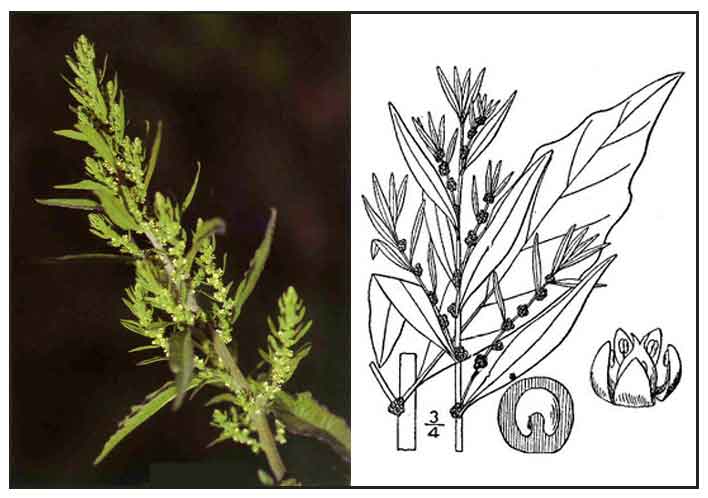
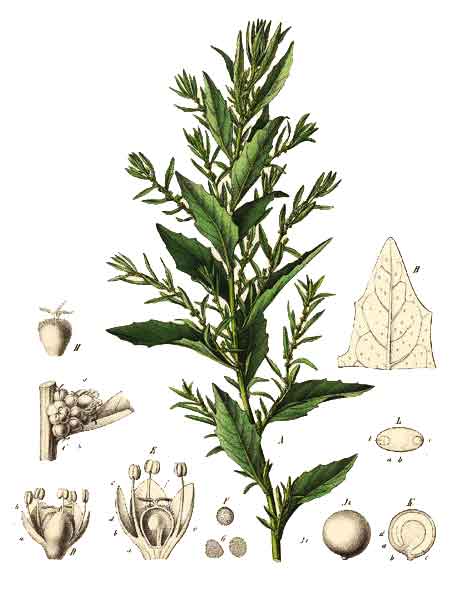
• Alpasotis is an erect or ascending, branched,
glandular herb, often nearly 1 meter high. Stems are angled, smooth or glandular-pubescent. Leaves are oblong to oblong-lanceolate 3 to 10 centimeters in length, with lobed margins, and with
a rank aromatic odor when crushed. Flowers are small and spicate, regular and perfect. Sepals are 5, sometimes
only 3, enclosing the utricle, which is less than 1 millimeter long. Stamens are as many as sepals, hypogynous or somewhat perigynous,
filaments distinct. Ovary is 1-celled, free, usually depressed,
styles are 2 or 3. Fruits are utricles, the seed horizontal, smooth and shining.
Distribution
- Introduced to the Philippines.
-
In the settled areas throughout the Philippines, cultivated and spontaneous,
at medium and higher altitudes, like Benguet, often very abundant.
- Native of Mexico; now, pantropic.
 Constituents Constituents
- The compound considered to be the active ingredient is ascaridole, a monoterpene. The major component of chenopodium oil are: ascaridole (60-80%), isoascaridole, p-cymene, limonene, and x-terpinene. The levels of the compounds vary according to age, part, and whether fresh or dried.
(22)
- Oil from Chenopodium ambrosioides var. anthelminticum, yielded cymene and terpinene in addition to ascaridol.
- Plant yields anthraglycosides,
cinnamic acid derivatives, mucins and pectins, saponins, amygdalin,
volatile oils ascaridol and geraniol, cymene, terpenine.
- Oil is chiefly distilled from the fruit, stored in the hairs in the surface. Pharmacognostical study distinguishes two types of hairs, and the sac type contains the oil.
- Contains oxalic acid which is reduced by cooking. Should be
used with caution in patients with gout, kidney stones, rheumatism.
- Main constituents of leaf essential oil were ascaridole 51.12%, p-cymene 19.88%, neral 8.70%, and geraniol 7.55%.
(See study below). (19)
 - Study of aerial parts (leaves, flowers, and stem) for essential oil by GC and GC/MS analysis yielded 14 components representing 98.8% of the total oil. Major components were α-terpinene (51.3%), p-cymene (23.4%) and p-mentha-1,,8-diene (15.3%).
(see study below) (37) - Study of aerial parts (leaves, flowers, and stem) for essential oil by GC and GC/MS analysis yielded 14 components representing 98.8% of the total oil. Major components were α-terpinene (51.3%), p-cymene (23.4%) and p-mentha-1,,8-diene (15.3%).
(see study below) (37)
- Study of fruits yielded two flavonol glycosides, kaempferol 3-rhamnoside-4'-xyloside and kaempferol 3-rhamnoside-7-xyloside. (40)
- Study of methanolic extract yielded stigmasterol (1), ß-sitosterol (2), octadecanoic acid (3), scopoletin (4), and 1-piperoylpiperidine (5).
(41)
- Ascaridole is formed in highest concentration in the seeds. Other components are limonene, transpino-carveol, ascaridole-glycol, aritasone,
α-pinene, myrcene, phellandrene, and α-terpinol.
- The leaves are a source of
bioactive compounds such as α-terpinene, α-terpinenyl-acetate, beta-cymene, p-cymene, piperitone, carvyl acetate, piperitol acetate, trans-ascaridol, carvacrol, thymol, and limonene. In addition, chrysin, patulin, piperoylpiperidine, and scopoletin are present in this species.
(49)
- GC-MS and GC-FID analysis of essential oil identified 44 components, representing 88.95% of total hydrodistilled oil. Most abundant components were cis-ascaridole (60.33%), m-cymene (22.17%), and α-terpinene (see study below) (50)
- Chromatographic study of hydroethanolic extract of flowers yielded nine alkaloids: trisphaeridine (1), galanthamine (2), crinine (3), demethylmaritidine (4), anhydrolycorine (5), nor-galanthamine (6), N-formylnorgalanthamine (most prevalent) (7), peramine (8), and ergovaline (9). (see study below) (51)
Properties
- Analgesic, anti-asthmatic, anti-fungal, carminative, diuretic, emmenagogue, stomachic, sudorific, vermifuge.
- Bruised leaves emit a somewhat foetid odor.
- Fruit well known for its vermifuge properties.
- The characteristic smell of the plant is attributed to ascaridol.
- Studies have suggested antitumor, anthelmintic, antispasmodic, antioxidant, myorelaxant, antimycotic, trypanocidal, nematicidal, antileishmanial, analgesic, antidiabetic, antipyretic, antifungal, antibacterial, anti-viral, drug-modulating, anticancer, anti-helicobacter, anti-inflammatory, hypotensive, insecticidal, mosquitocidal, anxiolytic properties.
Parts utilized
- Entire plant.
- Collect during the months of May to October.
- Rinse, dry under the sun and compress.
Uses
Edibility
• Used as dietary condiment.
•
Tender leaves sometimes used as potherb.
• Leaves used as herbal tea.
Folkloric
• Fruit well known for its vermifuge use; as bruised fruit in small doses, or juice expressed from the plant, taken straight or as a decoction in milk or water.
• Hookworms (Ankylostoma duodenale) and the amoeba which cause dysentery are destroyed by the oil.
• Oil sometimes applied to tropical ulcers.
• Hookworm infections and hookworm inflammatory disease: dose
for adults - 2.6 to 3 gms of dried powdered material every morning and
every night daily for 3 to 6 consecutive days.
• Decoction may be used as wash for various skin diseases of the
lower limbs, eczema, ulcers.
• Prepared drug is sharp and bitter tasting.
• Infusion taken as digestive remedy, for colic and stomach pains.
• Leaves and tops, crushed and mixed with cooked rice, used as carminative in poultices applied to abdomen of children suffering from dyspepsia.
• Used as a wash for hemorrhoids.
• Poultice for snake bites and other poisons.
• Used for wound healing.
• Anecdotal reports of cures in use for uterine fibroids and certain
cancers.
• In Mexico, used as emmenagogue
and vermifuge.
• Used as abortifacient.
• In the Antilles, used as antispasmodic;
decoction as internal hemostatic; the bruised plant for ulcers.
• In southern Africa, Sutos and Zulus use an infusion for colds
and stomach aches; as an enema for intestinal ulceration and as sudorific.
• In Mexico, used as emmenagogue and vermifuge.
• Infusion used as diuretic and sudorific.
• Oil used for pectoral complaints and nervous affections. Also used as abortifacient.
• In Martinique, oil is used as stomachic.
• In the Yucatan, indigenous tribes have used epazote for intestinal parasites, asthma, chorea and other nervous afflictions.
• In Peru, plant soaks used topically for arthritis.
• In Cameroon, plant used to repel and kill insects. (42)
• In Brazil, plant used for treatment of worms (hookworms, round worms, and tapeworms), cough, asthma, bronchitis, and other upper respiratory ailments; for angina, to relieve intestinal gas, to promote sweating, and as general digestive aid. Indigenous tribes bathe with decoction of epazote to reduce fever. (44)
Others
• Dye: Whole plant yields a gold/green dye.
• Pesticidal: Leaf decoction used as fumigant against mosquitoes and flies. Added to fertilizers
to inhibit insect larvae. Also used to kill snails.
• Ethnoveterinary / Anhelmintic: In Latin America, plant is used
to treat worms in livestock.
Caution / Toxicity
- The essential oil in the seed and flowering plant is highly toxic. It can cause dizziness, vomiting, salivation, increased heart rate and respirations,
convulsions and death. Inhalation is dangerous.
- Oil of chenopodium can cause skin reactions.
- The toxicity in animals vary from no adverse reactions to severe toxicity.
- Oil of chenopodium has caused death or adverse reactions at various doses: goats, 0.2 ml/kbw; sheep, 0.1 ml/kbw; cats, 0.2 ml/kbw; dogs o.2 ml/kbw (vomiting), rabbits, 0.5 ml. These doses are close to efficacious doses, so caution is advised in use of the oil in animals. (22)
- Contains oxalic acid which is reduced by cooking. Should be
used with caution in patients with gout, kidney stones, rheumatism.
- Acute and Subacute Toxicity Studies / Alkaloids / Flowers: Results suggest low to moderate toxicity. (see study below) (51)
- Interactions: Medications that increase sensitivity to sunlight (photosensitizing drugs) interacts with chenopodium oil and increase the risk of sunburn, blistering or rashes on skin exposed to sunlight. Drugs that may cause photosensitivity include amitryptiline, ciprofloxacin, levofloxacin, trimethoprim-sulfamethoxazole, etc. (34)
- See studies below: (3) (60)
Studies
• Genotoxic:
Study evaluated the genetic damage induced by decoction and infusion of the plant assayed in different concentrations (1, 10, 100, 1000 µg/ml) by addition of the extract to human lymphocyte cell cultures. Endpoints evaluated were chromosomal aberrations (CA), sister chromatid exchanges (SCE), cell proliferation kinetics (CPK) and mitotic indexes (MI). Results suggested a possible genotoxic effect of both preparations, probably due to different active principles. (3) (see study below: 60)
• Antitumor: Study
on Swiss mice concluded that Chenopodium ambrosioides has potent anti-tumoral
effect attributed to its anti-oxidant properties. (4)
• Anthelmintic:
Although the study did not reduce the number of nematode adults
or eggs on short-term treatment, in in-vitro testing, the oil reduced
the viability of eggs and suggested a long-term strategy for reduction
of parasite loads at a whole farm level. (5)
• Anthelmintic / Nematocidal Infusion: Study suggests the
traditional use of CA infusions as vermifuge is safer than use of the
herb's essential oil. (6)
• Antimycotic:
The essential oil from the leaves exhibited antimycotic activity against
dermatophytes Trychophyton mentagrophytes and Microsporum audouinii.
Petroleum jelly oil showed to control established ringworm infection
in guinea-pigs in preliminary trials. (7)
• Trypanocidal:
Study yielded four monoterpene hydroperoxides and ascaridole and exhibited
trypanocidal activity against T cruzi. (8)
• Anti-Leishmaniasis / Essential Oil:
Study showed the essential oil of CA had potent inhibitory effect against
promastigote and amastigote forms of Leishmania amazonensis and presents
a potential source of a drug to combat leishmaniasis.
(9)
• Anti-Leishmaniasis: Study clearly demonstrated that the essential oil of CA could be an alternative for the development of a new drug against cutaneous leishmaniasis.
• Analgesic / Antipyretic:
Moroccan study of fresh leaf aqueous extract
exhibited marked analgesic effect. Also, the extract produced a significant inhibition of yeast-induced pyrexia in rats, confirming its traditional use as a remedy for fever. (12)
• Antidiabetic / Antipyretic:
Study evaluated the hypoglycemic effect of C. ambrosioides in mice fed with high-fat diet before induction of diabetes in mice by streptozotocin (STZ). Animals treated with crude extract (100, 200 and 300 mg/kg) showed significant (p<0.05) hypoglycemic effect compared to control. (14)
• Subchronic Toxicity Study:
Study of subchronic treatment hydroalcoholic extract
did not induce toxic alterations using the therapeutic dose. Results suggest that it is safe to use the product in the adequate dose. (15)
• Reproductive Study / Safety:
Study showed the aqueous extract did not have any maternal or fetal toxicity nor did it impair reproductive performance in rat dams. The extract administered during gestation to rats did not impair fertility or negatively impact gestation in rats.
• Nematicidal:
Study
of a hexane and ethanolic extract of C. ambrosioides had a negative effect of embryos, hatching rate and larval survival of H. bakeri. Data show both extracts possess nematicidal activity justifying its use as worm medicine all over the world.
(16)
• Intralesional Treatment of Leishmaniasis:
Study showed intralesional hydroalcoholic extract treatment was more efficient than oral HCE treatment probably through a direct leishmanicidal effect or improvement in the NO production by HCE-stimulated macrophages. Results could justify the topical use of CA leaves in the treatment of ulcers caused by leishmaniasis. (17)
• Cytotoxicity / Antifungal:
Extracts from C. ambrosioides showed high bioactivity against A. salina, which may be associated with cytotoxic activity against cancer cells. Extracts also showed activity against Candida krusei. (18)
• Leaf Essential Oil / Cytotoxicity:
Main constituents of leaf essential oil were ascaridole 51.12%, p-cymene 19.88%, neral 8.70%, and geraniol 7.55%. The essential oil showed moderate toxicity on in vitro cytotoxicity bioassays on human cell line HaCaT. (19)
• Chronic Toxicity Study:
An aqueous leaf extract given ad libitum for six weeks showed a decrease in weight of the treated animals whereas body weight of en-treated animals rose progressively. Phytochemicals yielded saponins, alkaloids, and volatile oils. Pathologic features included lung congestion, metaplastic changes in the stomach mucosal surface, and necroses of kidney tubules. (20)
• Antibacterial / Roots:
Study evaluated a crude methanolic extract of roots and fractions for antimicrobial activity against five bacterial and five fungal strains. The n-hexane fraction showed good to low activities against all bacterial strains and good activity against S. epidermis. (23)
• Acute and Sub-Chronic Toxicity Studies / Leaves:
Study evaluated the toxicity of aqueous extract of C. ambrosioides leaves in rats through oral gavage. Results showed slight hepatotoxic lesions in rats. (24)
• Digestive Effects / and Sub-Chronic Toxicity Studies / Leaves:
Study of aqueous extract of leaves for digestive effects in goats showed good laxative properties and digestive benefits. It increases the digestibility of dry matter without degrading assimilation of nitrogenous matter. Results suggest a potential as functional food for the species. (25)
• Analgesic / Anti-Inflammatory / Leaves:
Study evaluated a methanol extract of dried leaves of CA for anti-inflammatory and analgesic activities. Results showed anti-inflammatory effect with dose related inhibition of carrageenan-induced paw edema and cotton pellet induced granuloma in rats. It showed analgesic effect in the hot plate and formalin induced paw licking in rats. (26)
• Anti-Helicobacter pylori:
Chenopodium ambrosioides demonstrated effective bactericidal activity against Helicobacter pylori both in vitro and in vivo. The conclusion that the effect rivals triple therapy should be made prudently because of the small sample size. (27)
• Hypotensive / Leaves:
Study evaluated various extracts of leaves of C. ambrosioides for hypotensive effect in anesthetized normotensive rats. Intravenous administration of AqE of leaves induced a dose-dependent hypotension. Results suggest the presence of cholinomimetic-muscarinic component in the fractions. (28)
• Biosynthesis of Silver Nanoparticles:
Biosynthesis of silver nanoparticles (AgNPs) was achieved using an aqueous extract of Chenopodium ambrosioides as reducer and coating agent. Results suggest a promising potential to produce a large amount of small particles (<10 nm) in an ecofriendly protocol.(29)
• Ascaridole / Caryophyllene Oxide / Essential Oil:
Study evaluated the toxic mechanism of essential oil and its major pure ingredients viz., carvacrol, caryophyllene oxide and ascaridole. Results showed the toxicity of essential oil of CA is partially related to the inhibition of the respiratory chair preferably by caryophyllene oxide while the toxicity of the antiparasitic agent ascaridole is dependent on the availability of redox-active iron. (30)
• Analgesic / CNS Depressant Effect of Homeopathic Formulations:
Study of homeopathic formulations (3X, 6X, 12X, and 30X potencies) of CA were evaluated for analgesic and behavioral effects The homeopathic formulations showed analgesic effects and CNS depressant property. (31)
• Larvicidal / Repellent / Essential Oil / Anopheles gambiae:
Study of essential oil from seeds and leaves of Chenopodium ambrosioides showed larvicidal and repellent effects against the larvae and adults of Anopheles gambiae s.s. mosquitoes. Results suggest a potential to explore in combating malaria through anti-vector intervention. (32)
• Assessment of Anthelmintic Efficacy / Clinical Field Trials: Commercial preparations of chenopodium oil have been used and continues to be use with considerable success in mass treatment campaigns. However, therapeutic doses of up to 6000 mg/kg of powdered, dried plant had not significant anthelmintic effect on adults of Necator, Trichuris or Ascaris. Study suggests possible origins of subjective belief in the efficacy of C. ambrosioides may be the positive association of spontaneous, or peristalsis-induced passage of senescent worms immediately following a therapeutic episode. It is also possible, varieties of plants containing much more ascaridol were used. Results of controlled field studies did not sustain widely held traditional beliefs or the value of therapeutic practice regarding the plant. Findings further suggest all indigenous ethnomedical practices be objectively evaluated for efficacy and safety before adoption or promotion in health care programs. (33)
• Prevention of Bone Loss: Study evaluated the effect of Chenopodium ambrosioides extract for preventing bone loss and bone metabolism in ovariectomized rats. Results showed effects of a hydroalcoholic extract on bone metabolism by changing blood proteins and enzymes and preventing bone loss and substitution of bone marrow cells by adipocytes in ovariectomized rats. (35)
• Synergism of Essential Oil and Pentamidine Against Leishmania: Study showed the essential oil of Chenopodium ambrosioides exhibited synergism with pentamidine against promastigotes of Leishmania amazonensis. (36)
• Antifungal / Essential Oil of Aerial Parts: Study evaluated the essential oil of aerial parts for antifungal activity. In vitro antifungal activity by well diffusion and broth microdilution methods showed concentration dependent activity with MIC from 0.25 go 2 mg/ml. The oil showed in-vivo antifungal activity on induced vaginal candidiasis in a rat model. (see constituents above) (37)
• Amoebicidal / Ascaridole / Essential Oil: Study evaluated the in-vitro and in-vivo antiamoebic activity of essential oil of Dysphania ambrosioides in an hamster model of amoebic liver abscess. Results showed an IC50 of 0.7 mg/mL against trophozoites. Oral administration of essential oil (8 mg/kg and 80 mg/kg) to hamster infected with Entamoeba histolytica reverted the infection. Ascaridole was identified as the main component of the essential oil. (38)
• Anticancer / Human Breast Cancer MCF-7 / Essential Oil: In-vitro study evaluated the C. ambrosioides essential oil for induction of cell death in human breast cancer cells (MCF-7). MCF-7 cells were treated with essential oil and its two main components viz. 1-isopropyl-4-methylbenzene and α-terpinene. Results showed the EO and its two main components significantly inhibited the growth of MCF-7 cells. Effect was attributed to induction of oxidative damage. The two main components showed less effective anticancer activity than the essential oil. (39)
• Insecticide / Essential Oil / Aerial Parts: Distillation study evaluated aerial parts of Dysphanis ambrosioides and leaves of Clausena anista for essential oil and insecticidal activity. Essential oil of D. ambrosioides was characterized by monoterpene peroxide ascaridole (61.4%) and aromatic p-cymene (29.0%). The EO of DA was more toxic to adults of M. domestica with LD50 of 51.7 µg/;. The mixture of essential oils of DA and Clausena anisata showed significant synergistic effect against mosquito larvae with LC50 of 19.3 µg/l. (42)
• Drug Modulating Action / Antimicrobial / Essential Oil: Study of essential oil yielded α-terpinene as the major compound at 54.09%. The EO demonstrated antimicrobial activity with significant MIC against Staphylococcus aureus (256 µg/ml) and moderate activity against Pseudomonas aeruginosa (512 µg/ml). Modulating effect on antibiotics was significant against P. aeruginosa potentiating the effect of all antibiotics tested. Combined effect with fluconazole was significant. (45)
• Antispasmodic / Myorelaxant / Antioxidant / Flowers: Study evaluated the antispasmodic, myorelaxant, and antioxidant effects of hydroethanolic extract of flowers and fractions. The extract showed significant myorelaxant effect (IC50 0.39 mg/mL), antispasmodic activity (IC50 4.34 mg/mL)
. LC/MS-MS analysis showed the plant extract to be rich in flavonoids, to which the extract activity was attributed. (46)
• Schistosomicidal / Cytotoxic / Antibacterial / Essential Oil: Study evaluated the essential oil for antibacterial activity against a panel of cariogenic bacteria and invitro schistosomicidal effects on Schistosoma mansoni and its cytotoxicity to GM07492-A cells. GC and GC-MS study revealed major constituents of monoterpenes cis-piperitone oxide (35.2%), p-cymene (14.5%), isoascaridole (14.1%), and
α-terpinene (11,6%), The extract exhibited weak activity against Streptococcus sobrinus and Enterococcus faecalis (MIC = 1000 µg/ml). The EO showed remarkable schistosommicidal activity in vitro, killing 100% of adult worm pairs within 24 and 72 h, respectively. Selectivity index showed the EO was 31.8 times more toxic to adult S. mansoni worms than GM07492-A cells. Results suggest promising schistosomidical potential of the essential oil.
(47)
• Antinociceptive / Anti-Inflammatory / Wound Healing / Leaves and Stems: Study evaluated the antinociceptive, anti-inflammatory, and wound healing effects of ethanol extract of stems and leaves of C. ambrosioides in animal models. The extract (5% per ear) was effective in reducing ear edema induced by croton oil by 78.09%, capsaicin by 70.85%, and arachidonic acid by 77.02%. At 500 mg/kg p.o. the extract significantly inhibited paw edema induced by Cg (carrageenan) by 40%, PGE by 51%, SP by 56%, and BK by 57%. Topical application of the extract on excision wounds significantly reduced the wound area compared to untreated controls. At 150-500 mg/kg, the extract did not showed any significant alterations in motor performance or body temperature. Results, along with inhibition of mediators (BK, NO, SP, PGE2 and TNF
-α) and enzymes (MPO and ADA) activity, validate the use of the plant for treatment of inflammatory conditions, pain, and wound healing processes.
(48)
• Antiviral / Antimicrobial / Essential Oil: GC-MS and GC-FID analysis of essential oil identified 44 components, representing 88.95% of total hydrodistilled oil. Most abundant components were cis-ascaridole (60.33%), m-cymene (22.17%), and α-terpinene (1.70%). The oil showed notable antiviral activity against CV-B4 virus with IC5o 21.75 µg/mL.
It showed strong antibacterial activity against Pseudomonas aeruginosa and Bacillus subtilis strains, and antifungal activity against pathogenic strain Candida albicans. (50)
• Acute and Subacute Toxicity Studies / Alkaloids / Flowers: Study evaluated the acute and subacute toxicity of D. ambrosioides hydroethanolic extract (DAHE), and its alkaloid composition. Chromatographic study yielded nine alkaloids, with N-formylnorgalanthamine being the most prevalent. Acute toxicity testing of 1-7 g/kg as single oral dose, showed an oral LD50 value of 5000 mg/kg. In subacute toxicity study using doses of 5, 50, and 500 mg/kg for 15 days, the 500 mg/kg dose significantly enhanced ALT, AST and urea, while liver and kidney histological exams revealed modest infiltration of hepatocyte trabeculae by inflammatory cells in the liver and slight alternation in the kidney architecture. Results suggest low to moderate toxicity.
(see constituents above) (51)
• Anticancer against Leukemia Cancer Cells / Antioxidant / Leaves: Study evaluated
the anticancer and antioxidant potential of Pasote leaf powder extract by MTT method on P388 leukemia cells. The pasote water extract showed anticancer potential with IC50 of 0.105 µg/mL. Antioxidant testing by DPPH method showed IC50 of 50.736 µg/mL. Results showed anticancer and antioxidant potential. (52)
• Anxiolytic / Leaves: Study evaluated the anxiolytic effects of D. ambrosioides aqueous extracts and its mechanism of action. The extract increased percentage of entries into and percentage of time in open arms; reduced rearing, head dipping and percentage of time in close arms in elevated plus maze. It reduced rearing and defecation and increased crossing in open field. The anxiolytic activity was blocked by GABAa antagonists, complex receptors (N-methyl-ß-carboline-3-carboxamide, flumazenil or bicuculline) in elevated plus maze test. Activity of GABA-T activity was inhibited and brain GABA concentration was increased. Results suggest anxiolytic properties in mice that include action on benzodiazepine and/or GABA sites in the GABAa receptor complex or by modulation of brain GABA concentration in the CNS. (53)
Study evaluated the anxiolytic activity of D. ambrosioides leaf extract orally in Swiss albino mice, using EPM (elevated plus maze), OFT (open field test), LDT (light and dark test), and HBT (hole board test). Diazepam was used as standard. D. ambrosioides was used in dosage concentrations of 100 and 200 mg/kg. The leaf extract showed mild anxiolytic activity. Treated mice showed notable (p<0.05) increase in all parameters compared to negative control. (55)
• ZnO Nanoparticles / Antibacterial / Leaves: Study reports on the green synthesis of zinc oxide nanoparticles (ZnO-NPs) using D. ambrosioides extract. The NPs were evaluated for antibacterial properties using disc diffusion assay. Most of the bacterial strains tested were sensitive to the ZnO-NPs, with Prevotella intermedia the most sensitive.
The antibacterial properties were similar to commercial ZnO-NPs used as reference. (54)
• Inhibition of Migration and Invasion / Hepatocellular Carcinoma / Seeds: Study evaluated the possible mechanism for preventing or treatment of hepatocellular carcinoma using Mexican tea. GC-MS study of seed extract identified eight compounds with ascaridole (25.82%) showing highest content. Migration and invasion were significantly (p<0.05) inhibited. Transcription analysis suggests
2-hydroxy-2,6,6-trimethylbicyclo[3.1.1]heptan-3-one, cis-11-eicosenoic acid and 2-ethylcyclohexanone might be the active compounds. Results suggest the seed extracts inhibits invasion and migration of SMMC-7221 cells in hepatocellular carcinoma through the Wnt signaling pathway. (56)
• Mosquitocidal / Culex quinquefasciatus / Essential Oil: Study of essential
obtained by hydrodistillation and GC-MS identified major compounds of 1-methyl-4-(1-methylethyl)-2,3-dioxabicyclo[2.2.2]oct-5-ene (cis-ascaridole), 1-methyl-4-(1-methylethyl) benzene (р-cymene), and 1-isopropyl-4-methyl-1,3-cyclohexadiene (p-mentha-1,3-diene also known as α-terpinene). The EO and major fractions showed remarkable mosquitocidal activity against third instar larvae and adults of Culex quinquefasciatus. Mortality was time- and dose-dependent. LC50s after 24h treatment ranged between 6.2 - 20.1 µl/l and 5.1 - 13.9 µl/l against larvae and adults, respectively. Results suggest potential of EO and major fractions as natural mosquitocides against Cx quinquefasciatus. (57)
• Alleviation of Scopolamine-Induced Amnesia: Study evaluated the memory-enhancing activity of ethanolic extracts of D. ambrosioides on scopolamine-induced amnesia in experimental animals.
Memory enhancement was evaluated using elevated plus maze, Morris water maze, and Barnes maze models. Two plant dosages, Dys100 and Dys200 were used. Dys100 and Dys200 exhibited memory-enhancing activity. Decrease in transfer latency in EPM, and decrease in both escape latency and path length, increase time spent in Morris water maze revealed the antiamnesic property of the extracts. The extracts showed significant decreases in escape latency and number of poke errors in the Barnes maze model. Results showed dose-dependent alleviation of scopolamine-induced amnesia. Further studies are required to understand the underlying mechanisms. (58)
• Alleviation of Scopolamine-Induced Amnesia: Triple-negative breast cancer (TNBC) is a lethal and aggressive breast cancer subtype, which is characterized by deficient expression of the three main receptors implicated in breast cancers, making it unresponsive to hormone therapy. Study evaluated the anticancer properties of 25 biologically active compounds domiciled in the plant. Molecular docking study identified several potent inhibitors of AKT1 and 2 isoforms from D. ambrosioides. Cynaroside and epicatechin gallate having binding energy of -9.9 and -10.2 kcal/mol for AKT1 and 2 respectively, demonstrated considerable drug-likeness than the reference drug, capivasertib, with AKT1 and 2 binding strengths of -9.5 and -8.4 kcal/mol.
The compounds could emerge as efficacious drug candidates in the treatment of TNBC. (59)
• Vitamin C Protective Effect against Cyto-Genotoxicity Induced by D. ambrosioides: Despite its widespread use, there are reports of inadvertent intoxication linked with consumption of D. ambrosioides. Study evaluated the potential cytogenotoxic effects of D. ambrosioides leaf aqueous extract (DAAE) and the prospective protective role of vitamin C (ascorbic acid) through micronucleus test conducted on (1) Vicia faba root-tip meristem and (2) mouse bone marrow cells. The DAAE showed dose-dependent cytotoxic and genotoxic effects on both biological models. V. faba treated with DAAE showed significant increases in activities of SOD and CAT enzymes. DAAE treated mice showed significant elevations in serum biochemical parameters, and histological exam of liver and kidney showed hepatic degeneration, glomerular shrinkage, and distinct vacuolated tubular epithelial cells. Co-treatment with vitamin C showed significant protective effect against DAAE-induced cytogenotoxicity. Study underscores the importance of vitamin C as a protective agent against oxidative stress and cytogenotoxicity by DAAE and recommends its use in any DAAE-based preparation. (60)
• Myorelaxant / α-Terpinene / Essential Oil: Study evaluated the myorelaxant effect of D. ambrosioides essential oil (EODa) and its major constituent α-terpinene on tracheal smooth muscle isolated from rats. The EO and α-terpinene induced myorelaxant effects on top of contractions induced by KCl, ACh, and 5-HT. Relaxation induced by the agents is via inhibition of L-type VGCC, inhibiting the inward Ca2+ current through the channels. Results suggest the EODa, due to efficacy on relaxation of respiratory tract, possess therapeutic potential as an antispasmodic agent for the respiratory tract. (61)
• Modulation of Hind-Limb Ischemia-Reperfusion Injury / Seeds: Study evaluated the effect of seeds extract on left hindlimb IR injury in adult rats. Da aqueous extract is rich in 60 secondary metabolites, mainly phenolic acids and flavonoids. Pretreatment with Da extract ameliorated structural defects of both left kidney and left gastrocnemius muscle. The extract decreased serum markers of both muscle and kidney damages. The Da extract attenuated oxidative stress by modulation of the Nrf2/HO-1 signaling pathway. The extract attenuated NLRP3 inflammasome by reducing key inflammatory cytokines, IL-ß and TNF-α. Results suggest Da seeds have a protective effect on HLIRI, which may be attributed to antioxidant, anti-inflammatory and anti-apoptotic mechanisms.
(62)
Availability
Wild-crafted. |