 Gen info Gen info
- In India, considered a sacred tree among the Hindus. The Maha Vilva tree is associated with Lord Shiva and is usually planted near temples dedicated to the Lord Shiva. The trifoliate leaf or tripatra symbolize the three functions of creation, preservation and destruction. The offering of leaves is an essential to the ritual while worshiping Lord Shiva all over India. (60)
-
Bael has been used as medicinal and food item since 5000 BC. It is mentioned in the famous Sanskrit epic poem Ramayana, and mentioned in the book Charaka Samhita, a comprehensive compilation of Ayurvedic information. (61)
Botany
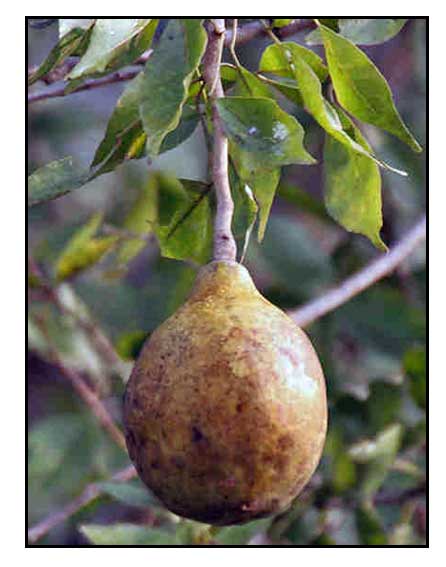
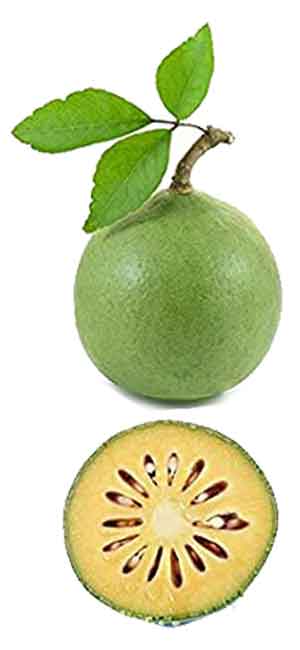
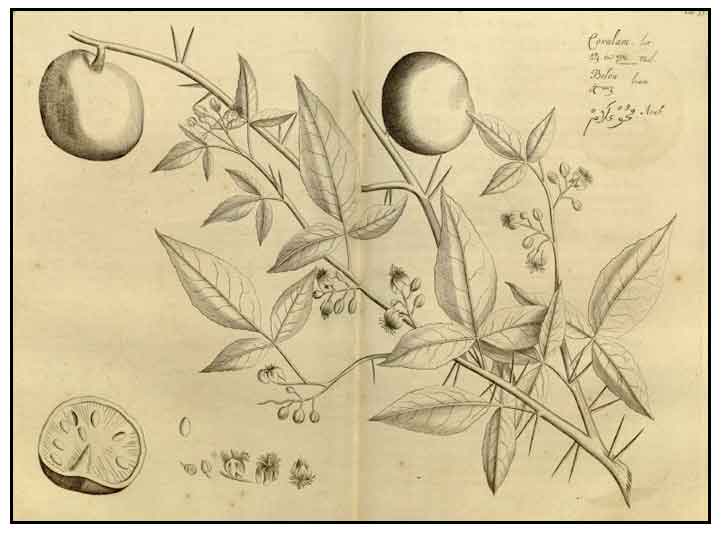
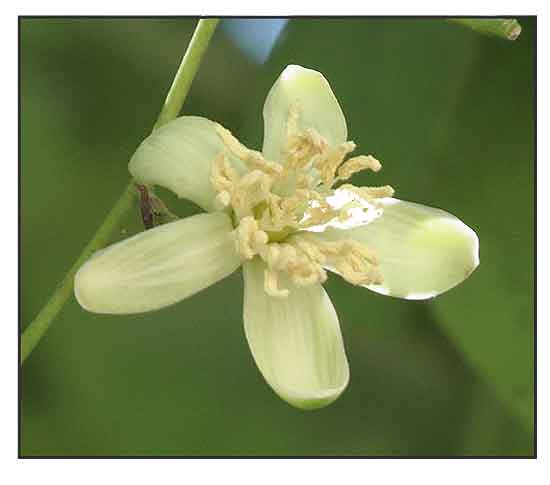
Bael is a small, deciduous, smooth tree. Spines are straight, strong, axillary, and about 2.5 centimeters in length. Leaflets are 3 to 5, ovate-lanceolate, shallowly toothed, the lateral ones being sessile and the terminal ones long-petioled. A gummy sap exudes from the wounded branches, hanging down in long strands, slowly hardening. Flowers are 3 centimeters across, greenish-white and sweet-scented. Fruit is nearly spherical, 10 to 14 centimeters in diameter. Rind is grey or yellow; the pulp sweet, thick, aromatic, gelatinous, and orange-colored. Seeds are numerous, oblong and flat.
Distribution
- Recently introduced to the Philippines.
- Native to Assam, Bangladesh, India, Nepal, Pakistan, West Himalaya.
 Constituents Constituents
- Rind yields an essential oil - Marmelle oil.
- Dry pulp, moistened with cold water, yields a red liquid containing mucilage and (probably) pectin.
- Fruit, ripe or unripe, moistened with a ferric chloride solution, gives a tannic reaction, strongest in the parts of the pulp next to the rind.
- Fruit yields 2.08 % ash, 3.72 % in the pulp separated from the rind.
- Wood yields the following composition: Soluble potassium and sodium compounds, 0.16%; phosphates of calcium and iron, 0.13%; calcium carbonate, 2.16%; magnesium carbonate, 0.19%; silica with sand and other impurities, 0.01%.
- Distillation of fresh leaves yielded one ounce of thin volatile oil having a faint, yellowish-green color, a neutral reaction, a peculiar aromatic odor, and a slightly bitter taste.
- Plants contains a bitter principle and a balsamic principle resembling Balsam of Peru.
- Roots, leaves and bark yield reducing sugars and tannin.
- Fruit pulp yields marmelosin, considered one of the most important active principle of the fruit.
- Phytochemical screening of leaves yielded alkaloids, flavonoids, tannins saponins and sitosterol.
(25)
- Leaf essential oil obtained by hydrodistillation yielded 82 compounds, with 81 identified components. Major component was limonene (64.1%), with two other abundant components (E)-ß-ocimene (9.7%) and germacrene B (4.7%) (see studies below) (34)
- Phytochemical screening of crude extracts yielded alkaloids, cardiac glycosides, terpenoids, saponins, tannins, flavonoids, and steroids. (see study below)
(42)
- Bael fruit contains nutrients like vitamins (riboflavin), minerals, trace elements, and phytochemicals, including flavonoids, polyphenols, and antioxidants. (53)
- Proximate analysis of fruit pulp powder (%) yielded 6.04 moisture, 4.10 ash, 49.09 vitamin C, 4.35 protein, 1.54 fat, and 74.31 carbohydrate. Phytochemical screening of fruit pulp powder yielded the presence of tannin, phenol, flavonoids, alkaloids, steroids, and terpenoids. (55)
- Mineral analysis of fruit pulp powder (ppm) yielded sodium 184, potassium 1596, calcium 94.9, magnesium 243, zinc 1.39, copper 1.34, and iron 18.24. (55)
- Nutrient analysis of leaf extracts (g/100 g dry weight) yielded
proximate principles: carbohydrate 7.3 ± 0.12, reducing sugar 2.0 ± 0.09, glucose 1.0 ± 0.08, cellulose 8.0 ± 0.15, crude fiber 14.93 ± 0.23, protein 1.325 ± 0.17, free amino acids 0.1198 ± 0.79, lipid/fat 1.24 ± 0.19, free fatty acid 0.32 ± 0.14. (57)
-
Micronutrient analysis of leaf extracts yielded (mg/100 g dry weight) of calcium 240.48 ± 0.21, phosphorus 10 ± 0.11, iron 14.30 ± 0.11, magnesium 728.75 ± 11.10, thiamin 0.0154 ± 0.0031, riboflavin 0.113 ± 0.014, niacin 0.999 ± 0.053, ascorbic acid 275 ± 26.32, retinol 72.80 ± 4.79, tocopherol 14.829 ± 2.06. (57)
Properties
- Unripe fruit considered astringent, carminative, digestive, stomachic, anti-diarrheal.
- Fresh juice is bitter and pungent.
- Ripe fruit is sweet, aromatic, cooling, laxative.
- Considered antimicrobial, hypoglycemic, astringent, antidiarrheal, antidysenteric, demulcent, analgesic, anti-inflammatory, antipyretic, wound-healing, insecticidal and gastroprotective properties.
(see studies below) (33)
- Phytochemicals have suggested antineoplastic radioprotective, antidiarrheal, antibacterial, antidyslipidemic, chemoprotective, antioxidant, hypoglycemic, hepatoprotective, chemopreventive, anti-inflammatory, anti-allergic, larvicidal, phytoremediative, neuroprotective, insecticidal, antiulcer, antifertility, wound healing, antidepressant, anxiolytic, immunomodulatory, analgesic, antipyretic, antifungal, antimutagenic, nootropic properties. (33)
Parts used
Root, bark, fruits, flowers.
 Uses Uses
Edibility
- Fresh, ripe fruit is edible.
- Fruit pulp made into juice, jams, syrup, puddings and cake.
- Some tribes use it for pickling or as preserves; also, as a refreshing and mildly laxative drink or sherbet.
- Also prepared as a marmalade from the full grown and tender fruit, cut in thin slices.
- In India, beating the seeded pulp together with milk and sugar makes a popular sherbet drink.
- Young shoots and leaves eaten as vegetable in Thailand; as food seasoning in Indonesia.
Folkloric
- Mucous fluid from the stem and fruit is rubbed on the hair in place of oil by the rural folk.
- Decoction of root-bark used for hypochondriasis, melancholia, intermittent fever, palpitations.
- Poultice of leaves applied to inflamed parts.
- Bitter fresh juice, diluted with water, used as remedy for catarrh and fever.
- Decoction of leaves used for asthma.
- Fresh juice of leaves, sweetened with honey, used as laxative or febrifuge; also, used for asthma.
- Sweet-scented extract from flowers used as lotion for the eyes.
- Infusion of flower used as cooling drink.
- Unripe or half-ripe fruit used for diarrhea, believed effective because of the tannins and mucilaginous substances.
- Used by inhabitants of the Indian subcontinent for over 5000 years.
Leaves, bark, roots, fruits, and seeds are extensively used in Indian traditional medicine, Ayurveda, and various fold medicine. (51)
- Hindu physicians used a confiture made from preserved sliced fruits for diarrhea and dysentery.
- Sherbet drink of ripe fruit - two ounces of pulp in 3 or 4 ounces of water or syrup - is a pleasant laxative and a simple cure for dyspepsia.
- Bael-marmalade or an aromatized confection is a useful breakfast during convalescence from dysentery or diarrhea; also, used daily as a preventive during cholera epidemics. Also, used to prevent the growth of piles.
- Fruit used in tuberculosis.
- For fractures, pulp is dried and ground to powder form, mixed with ghee, tumeric powder in a glass of lukewarm water, drunk twice daily. (66)
- Leaf paste applied to premature graying hair.
- Leaves said to cause abortion and sterility in women.
- Decoction of unripe fruit mixed with fennel and ginger is used for hemorrhoids.
- Astringent rind of the ripe fruit used in acute dysentery, its effect enhanced by combining it with opium.
- Powder of dried pulp used in dysentery accompanied by gripping pains in the loins and costiveness. - Tonic is prepared from 12 to 15 gm of the powdered pulp; 16 to 20 grains as febrifuge; 20 grains to 2 drachms, as nauseant and antidysenteric.
- In Iranian folk medicine and Ayurveda and Siddha systems of medicine, used for treatment of diabetes.
- In Indian traditional medicine, used for diarrhea.
Others
- Scent: Perfume is distilled from the flowers. The limonene-rich oil has been distilled from the rind and used for scenting hair.
- Fruit employed in the treatment of scum in vinegar manufacture.
- Wood: Used for small-scale turnery, tool and knife handle, pestles and combs. Shell of hard fruits fashioned into pill and snuff boxes.
- Gum or resins: Abundant gum from the seed used as household glue and adhesive by jewelers.
- Detergent: Fruit pulp has detergent action, used as a soap substitute for washing clothes.
- Used in construction as water-proofing walls - mixed with lime plaster and added to cement.
- Added to watercolors or as protective coating for paintings.
- Dye: There is 9% tannin in the pulp of wild fruits, 20% in the rind. Rind is employed in tanning; also, yields a yellow dye for calico and silk fabrics.
- Insecticidal: Leaf extract used as insecticidal against the brown plant hopper, a rice plant pest in Asia.
- Ritual: In the Hindu culture, leaves are important ingredients of offerings to the "Lord Shiva."
Studies
• Radioprotective / Free Radical Scavenging: Results demonstrated that AME protected HPBLs against radiation-induced DNA damage and genomic instability. Its radioprotective effect may be from scavenging of radiation-induced free radicals and increase oxidant status. (1)
• Antidiarrheal Activity: A study of the effect of the methanolic extracts of four medicinal plants, including Aegle marmelos, against castor oil-induced diarrhea in mice, showed the methanolic extracts to significantly reduce induction time of diarrhea and the total weight of feces, establishing the efficacy of the extracts as antidiarrheal agents. (2)
• Safety: Study evaluated the acute and sub-acute toxicity of Aegle marmelos in rats. Results demonstrate the extract of leaves have a high margin of safety. (3)
• Anti-Dyslipidemia / Fruit: Study was done to evaluate the antidyslipidemic effect of AM unripe fruit aqueous extract against isoproterenol-induced cardiac stressed rats. Results showed the extract to have significant antidyslipidemic effect. (4)
• Anti-Dyslipidemia / Leaves: Study showed AM leaves possess antihyperlipidemic effects in rats with ISO-induced myocardial infarction.
• Antibacterial: Study showed significant anti-bacterial activity that was both organism and solvent dependent. Results show the ethanol and chloroform leaf extracts can be used as potential source of antimicrobial agents. (5)
• Hepatoprotective / Alcohol-Induced Toxicity / Leaves: Study in alcohol-induced liver disease in albino rats showed that Bael leaves have excellent hepatoprotective effects compared with the standard herbal drug, silymarin. (6)
• Hepatoprotective / CCL4-Induced Hepatotoxicity: Study evaluating an ethanolic extract of leaves in carbon-tetrachloride (CCl4)-induced toxicity in mice exhibited hepatoprotective activity. (17)
• Sperm Motility Effects: Study showed the water extract of leaf of A. marmelos possesses anti-motility action on spermatozoa in rats. (8)
• Hypoglycemic / Antioxidant Effects / Leaves: (1) Study on diabetic rats showed the aqueous extract of leaves possesses hypoglycemic and antioxidant properties and presents a potential for diabetic management. (2) Leaf extract effectively reduced oxidative stress induced by alloxan and produced a reduction in blood sugar.
• Marin / Anti-Allergic: Study isolated marin, 7-(6',7'-dihydroxygeranyl-oxy)marinara. Marin exhibited an inhibitory effect on histamine release from the mast cells involving mechanisms related to intracellular Ca++ signaling events by blocking Ca influx into mast cells. (10)
• Learning and Memory Effects: Study evaluating the effect of chronic administration of A. marmosets as cognitive enhancer in diabetic rats. Results showed a significant protective effect against diabetes-induced spatial learning and memory deficits. The effect was attributed to hypoglycemic, hypoglycemic and antioxidant activities of A. Marmosets (11)
• Anti-Diarrheal / Decreased Colonization: Decoration of unripe fruit affected the bacterial colonization to gut epithelium and production and action of certain interferons. Decoction also showed cidal activity against Giardia and rotavirus and significantly reduced bacterial adherence to and invasion of HEp-2 cells. (12)
• Anti-Inflammatory / Antipyretic / Analgesic: Serial extracts of leaves showed marked analgesic activity, anti-inflammatory and antipyretic activities. (13)
• Gum / Mucoadhesive Tablets: Gum isolated from the pulp showed good flow property. Results suggest the gum is suitable for use as a release retardant for the manufacture of sustained release tablets. (14)
• Antioxidant / Antimicrobial / Fruit: Fruit of Aegle marmelos was evaluated for antimicrobial and antioxidant activity. Tested against six food pathogenic strains of bacteria and fungi, results showed more antifungal activity. Results showed A. marmelos may be recommended as an antimicrobial and antioxidant of plant origin to enhance the shelf life of stored food commodities by controlling fungal growth and oxidation process. (18) Study evaluated a methanolic fruit extract for antimicrobial activity. Phytochemical screening yielded flavonoids, phenols, saponins, carbohydrates, alkaloids, proteins, and amino acids. Extract showed moderate antimicrobial activity against gram-positive and gram-negative bacterial and fungus. (54)
• Hypoglycemic Effect: Bael leaves produce hypoglycemic effect probably through enhancement of peripheral utilization of glucose, correction of impaired hepatic glycolysis and limiting gluconeogenic formation. (19)
• Skimmianine / Effect: Study isolated skimmianine, a quinoline alkaloid from the roots of AM. Skiammianine markedly inhibited the histamine release from mast cells probably involving mechanisms related to intracellular Ca++ signaling evens and protein kinase C signaling with a role in granule exocytotic processes. (20)
• Insecticidal: Study showed aegle oil may be used as botanical insecticide against different stored grain insect pests causing infestation in stored wheat and pulses. (21)
• Genotoxicity Modulation: Various concentrations of AM was studied on doxorubicin (DOX)-induced genotoxic effects in mice bone marrow. Results showed protection against DOX-induced genotoxicity and may be due to inhibition of free radicals and increased antioxidant status.
• Anti-Ulcer / Root: Study of a 50% ethanolic extract of Aegle marmelos root showed dose-dependent ulcer protective effect in a gastric ulcer model in rats. (22)
• Antihyperlipidemic: Study of various extracts on hyperlipidemic activity in rats showed dose-dependent reduction of total cholesterol triglycerides, LDL, VLDL, and significantly increased HDL. (25)
• Anti-Ulcer / Fruit Seed: Study evaluated the anti-ulcer activity of methanolic and aqueous extract of A. marmelos seeds in indomethacin-induced, stress-induced, and pylorus ligation-induced ulceration models. Results showed anti-ulcer activity with reduction in gastric juice volume, free acidity, total acidity and increase in pH. The antiulcer activity was attributed to the presence of quercetin-like (flavonoid) contents. (26)
• Phytoremediation / Fruit Seed: In a study on Dust Collection Efficiency of dust capturing herbs, shrubs, and trees, Aegle marmelos showed medium efficiency (11 to 20%). (27)
• Anti-Fertility / Antispermatogenic: Study evaluated the antifertilty effect of an aqueous extract of Aegle marmelos in male rats. Results showed a highly significant decrease in weights of testes, epididymis, seminal vesicle, ventral prostate and vas deferens, with significant reduction of serum testosterone. Results conclude an antispermatogenic and antifertility effect. (28)
• Antifungal: Study evaluated various extracts of leaf, fruit, and stem for potential against four fungal strains: Candida albicans, P. chrysogenum, A niger and F solani. A methanolic fruit extract showed strong antifungal activity against most of the strains, while a leaf extract showed moderate potential. (29)
• Antidiabetic / Leaf and Callus: Study showed methanol extracts of leaf and callus produced maximum anti-diabetic effect. The in vitro callus culture of A. marmelos showed more potential for diabetes management than the original leaf extract . (30)
• Antibacterial / Leaves, Fruit, and Peels: Study evaluated various extracts of leaves, fruits and peels of AM for antibacterial activity. Of all parts, the fruit showed the best result. Ethanolic and ethyl acetate extracts showed better activity against S. aureus and P. aeruginosa. The activity was attributed to antibacterial compounds in tannins, phlobatannins, saponins, terpenoids, alkaloids and polyphenols.(31)
• Wound Healing / Fruit Pulp: Study evaluated the wound healing potential of Aegle marmelos fruit pulp extract on excision, incision, and dead space wound models in rats. Results showed A. marmelos seems to promote wound healing by enhancing connective tissue formation and antioxidant status with decrease in free radicals and myeloperoxidase having tissue damaging effects. (32)
• Essential Oil / Leaves / Limonene / Bioactivities: Bioassay screening of essential oil showed marginal toxicity against MCF-7 human breast adenocarcinoma cells, and good larvicidal activity against mosquitoes (Culex pipens), nematocidal activity against Caenorhabditis elegans, insecticidal activity against termites, fruit flies, and fire ants. It also showed remarkable brine shrimp lethality. Most of the biologic activity was attributed to limonene. (see constituents above) (34)
• Antibacterial / Ripe Fruit: Study of pellets of dried extract from ripe fruits showed significant antibacterial activity against tested gram positive (S. aureus, B. subtilis, S. epidermis) and gram negative (E. coli, Shigella flexneri, P. aeruginosa) bacteria. (35)
• Anxiolytic / Antidepressant: Study reviewed the anxiolytic and antidepressant activity of A. marmelos. A methanol leaf extract showed significant anxiolytic and antidepressant activities possibly through increasing monoamines level at post synaptic sites. (36)
• Antioxidant / Fruit Pulp: Study evaluated the antioxidant potentials of Aegle marmelos fruit pulp extracts. Phytochemical screening yielded steroid terpenoids, saponins, tannins, lignin, flavonoids. Results showed the fruit pulp extracts to be a good natural antioxidant. (37)
• Antimutagenic / Antibacterial: Study evaluated the antimutagenic and antibacterial activity of various dried fruit extracts of Aegle marmelos. Results showed promising antimutagenic activity. All extracts showed antibacterial activity equivalent to standard streptomycin. (38)
• Antiulcer / Fruit Seed: Study evaluated methanolic and aqueous extract of A. marmelos seeds for antiulcer activity using indomethacin-induced ulceration, stress-induced ulceration, and pylorus ligation induced ulcerations. The aqueous extract showed significant ulcer healing property. The activity was attributed to quercetin like (flavonoid) contents. Ranitidine was used as standard. (39)
• Nootropic / Leaves: Study evaluated the anti-amnesic activity of A. marmelos and its influence on the cholinergic system of brain of rats. Results suggest nootropic potential with significant neuroprotection and memory enhancement, with a potential for the management of Alzheimer;s disease and other neurodegenerative disorders. (40)
• Hepatoprotective / Paracetamol Induced Hepatotoxicity: Study of a hydroalcoholic extract of A. marmelos showed hepatoprotection against paracetamol induced liver damage in rats. Silymarin was used as reference standard. (41)
• Antimicrobial: Study suggested the presence of alkaloids, cardiac glycosides, terpenoids, saponins, tannins, flavonoids and steroids in an ethanolic extract were responsible for antibacterial activity, with maximum zones of inhibition against E. coli, P. aeruginosa, and B. subtilis. (42)
• Antidiabetic / Fruit: Study evaluated the protective effect of an aqueous fruit extract of A. marmelos on pancreatic histopathology in streptozotocin induced diabetic rats. Results showed a protective effect on the pancreas, with improved functional state of the pancreatic ss-cells and partially reversed the damaged cause by streptozotocin to the pancreatic islets. The effects observed were better than with animals treated with glibenclamide. (44)
• Antibacterial / Leaves: An aqueous:ethanol extract showed good antibacterial activity against E. aerogenes, K. pneumonia and S. epidermis. GC-MS analysis yielded many bioactive compounds such as flavonoids, alcohols, aldehydes, aromatic compounds, fatty acid methyl esters, terpenoids, phenolics, and steroids that may be contributed to its antibacterial activity. (45)
• Immunomodulatory / Fruit: Study evaluated the humoral and cell-mediated immune responses in immunosuppressed and Aegle fruit extract treated immunosuppressed albino rats. Results showed immunomodulatory property which can be assessed for cytokine and complement activation activities. (46)
• Potential for Herb-Drug Interaction: Study showed an aqueous extract of Aegle marmelos possesses agonist activity on cholinergic, serotonergic and adrenergic receptors using isolated rat ileum, fundus and tracheal tissue preparations. (47)
• Repression of Pro-Inflammatory Cytokines During Colonic Inflammation / Fruit: Study examined the inflammatory modulating effect of A. marmelos fruit extract in dextran sodium sulfate induced colitis in Swiss albino mice. Results showed suppression of disease symptoms with significant reduction of increased mRNA expressions of interleukin (IL) 2, IL-6 and tumor necrosis factor-α during colitis. Results suggest the restorative potential of AME in healing the DSS-induced colitis in mice by modulating NF-kB and regulation pro-inflammatory mediators involved in colonic injury. (48)
• Anti-Cancer / Hepatocellular Carcinoma HepG2 Cell / Leaves: Study evaluated the anticancer activity of methanol extract of leaves. GC-MS analysis yielded 1,2,3-propanetriol as major component followed by cinnamic acid methyl ester, 3,4-dihydro-4,5-dihydroxy- 1(2H)-naphthalenone, phytol, nicotinamide, etc. Results showed induction of apoptosis when HepG2 cells were treated with ME, with evidence of DNA fragmentation in HepG2 carcinoma hepatocytes. (49)
• Neuroprotective / Seed: Study investigated the neuroprotective effect of a hydroalcoholic seed extract on hypoxic neurotoxicity induced in wistar rats. Results showed a neuroprotective effect and suggest a potential for A. marmelos in the therapy of various neurodegenerative diseases, which may be due, in part, to its free radical scavenging property. (50)
• Antidiarrheal / Effect on Colonization / Unripe Fruit: Study evaluated a hot aqueous extract of dried unripe fruit pulp for antimicrobial activity and effects on the pathogenicity of infectious diarrhea. The effect of the decoction on adherence of enteropathogenic E. coli and invasion of enteroinvasive E. coli and S. flexneri to HEp-2 cells were assessed on its effect on colonization. Results showed cidal activity against Giardia and rotavirus. Viability of six test bacterial strains were no affected. Despite limited antimicrobial activity, unripe fruit pulp decoction affected bacterial colonization to gut epithelium and production and action of certain enterotoxins. (52)
• Effect on Hyperlipidemia: Study evaluated the anti-hyperlipidemic effect of A. marmelos at a daily dose of 5 g for one month. Results showed improvement in all lipid parameters with significant reduction of total cholesterol (10%), LDL-C (12.6%), VLDL-C (27.4%), triglycerides (34.7%), brining the values to near normal levels. There was also a significant increase in HDL-C. Study showed absence of potential toxicity. (56)
• Anti-Inflammatory Synergism with Murraya koenigii /
Arachidonate COX Inhibitory / Leaves: Study evaluated the anti-inflammatory activities of leaves and Aegle marmelos using carrageenan induced inflammation and paw edema on albino wistar rats. Individually, both extracts exhibited anti-inflammatory property. Combined doses of the two extracts produced pronounced synergistic anti-inflammatory activity. Results suggest the methanol extracts may possess arachidonate COX inhibitory property. (58)
• Nephroprotective / Nephrocurative / Leaves: Study evaluated the nephroprotective and nephrocurative potential of aqueous extract of A. marmelos leaves on gentamicin induced nephrotoxicity in rats. Results showed significant (p<0.001) reduction in nephrotoxicity. (59)
• Antifertility Effects / Mechanisms of Action: A study gathered scientifically confirmed material on the antifertility actions of A. marmelos. Study reported that an ethanolic extract of leaf possesses anti-spermatogenic activity via antimotility action on spermatozoa. An aqueous leaf extract also diminished viability of human sperm. A methanolic bark extract caused dose- and duration-dependent infertility by reducing reproductive organ mass and serum testosterone concentrations, with resulting decline in sperm density, motility, viability, and acrosomal integrity. The bark also contains marmin and fagarine, both known to reduce male fertility and inhibit ovulation and steroidogenesis. (62)
• Radioprotective / Mechanisms of Action / Review: Radiotherapy use in cancer care and palliation is compromised by side-effects resulting from radiosensitivity of bordering normal tissues exposed to the cytotoxic effects of ionizing radiation. Studies have shown that Aegle marmelos, bael, has been observed to prevent radiation-induced illness effects, with potential to be an effective, non-toxic radioprotective agent. (63)
• Nootropic / Fruits: Study evaluated the nootropic protective effect of methanolic extract of marmelos fruits on scopolamine induced amnesia in rats. Spatial memory was assessed by Morris water maze test and biomarker enzymes (acetylcholinesterase, malondialdehyde, SOD) were estimated. Results showed significant reversal of scopolamine induced spatial memory deficits and inhibition of changed levels of biomarker enzymes due to scopolamine. Results suggest potential as adjuvant medicine in the treatment of cognitive disorders. (64)
• Effect on Inflammatory Bowel Disease / Unripe Fruit: Study evaluated the effect of Aegle marmelos unripe fruit extract (AMFE) on inflammatory bowel disease (IBD) (acetic acid induced ulcerative colitis and indomethacin-induced ulcerative colitis) in Wistar albino rats. Disease pathogenesis was measured using disease activity index (DAI), macroscopic and microscopic scores, mesenteric mast cell protection, superoxide dismutase (SOD) and malonaldehyde (MDA). Results showed dose dependent decrease in intestinal inflammation following treatment with AMFE.
Significant protection in mast cell degranulation was observed. AMFE treatment significantly decreased MDA levels and increased SOD activity. (65)
Availability
Wild-crafted.
|






_fruit_at_Narendrapur_W_IMG_4099.jpg&imgrefurl=http://commons.wikimedia.org/wiki/File:Bael_(Aegle_marmelos)_fruit_at_Narendrapur_W_IMG_4099.jpg&usg=__0QfhHcPMRSN_QjT1amc8hESkm-M=&h=568&w=475&sz=128&hl=en&start=4&zoom=1&um=1&itbs=1&tbnid=bpm-__SxtfeQIM:&tbnh=134&tbnw=112&prev=/images?q=aegle+marmelos+image&um=1&hl=en&client=safari&sa=G&rls=en-us&tbs=isch:1)
