Gen info
- Ficus religiosa (Peepal) is considered the most sacred tree in India, believed to be the residence place of the triad-Brahma, Vishnu and Mahesh (Shiva). The roots, trunk, and leaves represent Lord Brahma, Vishnu, and Shiva, respectively. Women worship the tree on the 15th of all months which falls on Monday, i.e., Somvari Amavasya. They pour water and milk on the roots; sandal paste, vermillon, akshat (wet rice) and flowers are offered. A thread tied 108 times around the tree awakens the tree spirit, which grants a boon to the worshiper. (62)
- Hindu and Jain ascetics consider the species to be sacred and often meditate under it. It is the tree species under which Gautama Buddha is believed to have attained enlightenment. (73)
-
The sacred fig is the state tree of the Indian states of Odisha, Bihar and Haryana.
 Botany Botany
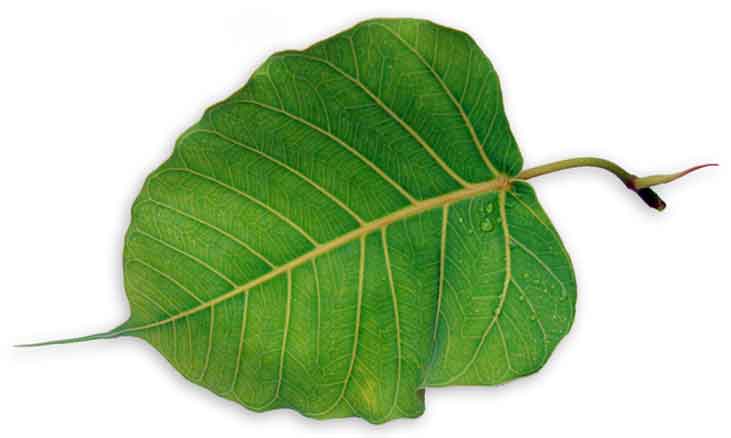
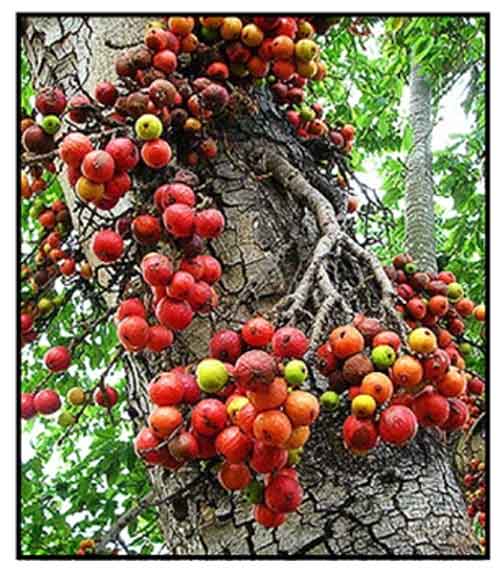
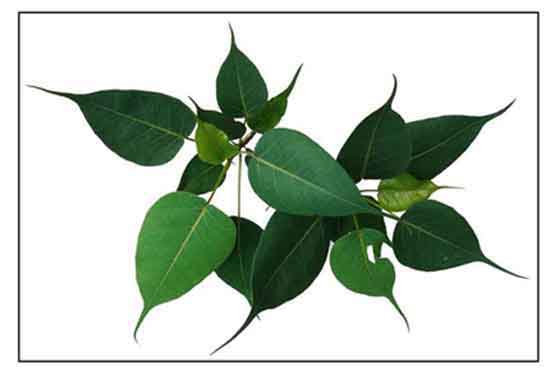
Ficus religiosa is a large tree, growing to a height of 25 meters, with the trunk reaching a diameter of more than one meter. Leaves are alternate, long-petioled, ovate or heart-shaped, the apex tapered to a tail-like tip, up to 15 centimeters long. Blade is dark shiny green above, pale green below, with slightly undulate margins, Fruits are in pairs, 1.5 centimeters in diameter, and dark purple.
Ficus religiosa is an evergreen or deciduous banyan or small to medium-sized tree up to 20 m tall, bark surface fissured, grey. Leaves arranged spirally, ovate-cordate to ovate, 6-26 cm × 4-16 cm, base subcordate to truncate, apex caudate, margin often uneven or sinuous, with 6-9 pairs of lateral veins, glabrous, stipules up to 1.5 cm long. Figs axillary, paired, sessile, subglobose, 10-15 mm in diameter, glabrous, ripening pink, purple or black. Flowers with free tepals, male flowers in 1 row, sessile, with 2-3 tepals, female flowers sessile or stipitate, with 3-4(-5) tepals. (69)
Distribution
- Introduced to the Philippines in early times.
- Planted in parks and along roads.
-
Native to Andaman Is., Assam, Bangladesh, Himalaya, India, Malaya, Myanmar, Nepal, Nicobar Is., Pakistan. (46)
 Constituents Constituents
- Plant yields ß-sitosteryl, n-octacosanol, methyl oleanolate, lanosterol, stigmasterol, lupeol.
-
Phytochemical studies have isolated phytosterols, amino acids, furanocoumarins, phenolic components, hydrocarbons, aliphatic alcohols, volatile compounds and secondary metabolites.
- Phytochemical study on fruits yielded major constituents of n-Hexadecanoic acid; 9, 12-Octadecadienoic acid; 9, 12, 15-Octadecatrienoic acid, and Butyl 9, 12, 15-octadecatrienoate.
(see study below) (17)
- Stem yielded alkaloids, saponins, tannins, triterpenes, and steroids. GC-MS analysis for bioactive components yielded major chemical constituents of 1,2-Benzenediol (9.85%), Caffeine (4.20%) and Stigmasterol,22,23- dihydro (1.81%).
(19)
- Physico-chemical compound analysis of bark yielded alcohol soluble extractive 7.21 ± 0.92, water soluble extractive 15.76 ± 0.67, total ash 7.68 ± 0.8, acid insoluble ash 0.41 ± 0.03. Phytochemical screening yielded
tannins, saponins, flavonoids, steroids, terpenoids, and cardiac glycosides.
 Properties Properties
- Considered astringent, antidiarrheal, antidysenteric, laxative, antiasthmatic, antifungal, antibacterial, antiulcer, antidiabetic.
- Leaves considered analgesic, anti-inflammatory, antioxidant, febrifuge, vulnerary.
- Fruit considered digestive.
- Bark considered vulnerary, anti-inflammatory.
- Studies have suggested anticonvulsant antidiabetic, anti-inflammatory, antimicrobial, analgesic, wound-healing, antioxidant, anti-amnesic, antidiabetic, immunomodulatory, acetylcholinesterase, anticancer, anti-amnesic, anti-lipid peroxidation, nephroprotective, antiulcer, bronchospasm potentiating, chemopreventive, antiasthmatic, antihelmintic, cardioprotective, hepatoprotective properties.
Parts used
Roots, leaves, seeds, bark, fruit, latex.
Uses
Edibility
- Fruits are edible.
Folkloric
- No reported folkloric medicinal use in the Philippines.
- Throughout South Asia, ethnomedical uses have been reported for about 50 types of disorders.
- Roots used for gout; chewed to prevent gum disease.
- Leaves used for treating constipation, mumps, abscesses.
- Juice extracted from leaves or powdered leaves used for fevers, wounds, constipation, dysentery, bruises, boils and mumps.
- Paste of leaf applied on wounds and bruises.
- Fruit used as digestive and laxative.
- Leaf decoction used for toothache pains. Infusion or decoction of bark used with honey for treatment of gonorrhea, ulcers, skin diseases, and scabies. Powdered bark used for wound healing. Paste of bark and leaves used for stomatitis. Decoction of root bark mixed with salt and jaggery used for diuresis. (36)
- Roots used to alleviate inflammation. Bark from roots used for low back pain, stomatitis, and ulcers.
- Latex combined with juice of roots to treat various skin diseases, including ringworm, athlete's foot, and other fungal affections.
- Fresh sap from leaves used for wound healing and to treat diarrhea, cholera. In Vietnam, aerial roots used as diuretic and for treatment of ascites. (69)
- In traditional Indian medicine, bark used as antibacterial, antiprotozoal, antiviral, antidiarrheal. Leaves used for ulcers.
- In Bangladesh, used for cancer, inflammation and infectious diseases.
- In Ayurvedic and Malay traditional medicine, used for treatment of gastric ulcers.
- In India, used for bleeding disorders: hematemesis, hemoptysis, hematuria, menorrhagia, metrorrhagia, epistaxis, and bleeding hemorrhoids.
- In India, moderately warm fresh leaf juice is used as ear drop; roots chewed to prevent gum disease. (62)
Others
- Buddhist Ritual: Considered a sacred tree by the Hindus and Buddhists. Bodhi Puja, the veneration of the Bodhi-tree has been a popular and widespread ritual in Sri Lanka. Lord Buddha believed people of other faiths who lead meritorious lives would be reborn in low or high spiritual plains. Beings of low spiritual plain take refuge in Bo trees where they may grant relief to those offering Bodhi Puja or accept merit offered to them and get elevated in the spiritual world.
Studies
• Phytochemistry / Pharmacology: Studies have isolated phytosterols, amino acids, furanocoumarins, phenolic components, hydrocarbons, aliphatic alcohols, volatile components and few other classes of secondary metabolites. Fresh plant materials, crude extracts and various components showed a wide spectrum of in vitro and in vivo pharmacological activities - antidiabetic, cognitive enhancement, wound healing, anti-convulsant, anti-inflammatory, analgesic, antimicrobial, antioxidant, antiasthmatic, immunomodulatory, antitumor, antiulcer, among many others. (2)
• Wound Healing / Ointment / Roots: Root extracts of Ficus religiosa in the form of ointment promoted wound-healing activity; a 10% formulation showed better activity than a 5% concentration. (3)
• Anti-Ulcer / Stem Bark: Study of ethanol extract of stem-bark against in vivo indomethacin- and stress-induced gastric ulcer significantly reduced the ulcer index in all assays used, reduced gastric juice volume, and free and total acidities. (4) Study evaluated a hydroalcoholic extract of leaves in rats against absolute ethanol, aspirin, and pyloric ligation induced gastric ulcer, with Ranitidine as standard drug. Results showed significant decrease in ulcer index value. (20)
• Nephroprotective / Cisplatin Induced Toxicity: Study of methanolic extract of F. religiosa latex against cisplatin-induced nephrotoxicity showed nephroprotective and curative activity. Phytochemical screening of the extract yielded glycoside, alkaloids, tannins (phenolic compounds), flavonoids, and amino acids. (5) (56)
• Antidiabetic: Study of aqueous extract of bark in normal, glucose-loaded hyperglycemic and STZ-induced diabetic rats exhibited significant antidiabetic activity. There was significant reduction of blood sugar in all models. There was significant anti-lipidperoxidative effect in the pancreas of STZ-induced diabetic rats. (6) A methanolic extract of F. religiosa exhibited significant anti-hyperglycemic activity in STZ-induced rats. The antidiabetic activity may be due to phenolic compounds and flavonoids. (18) Study evaluated the hypoglycemic and anti-inflammatory effects of FR with its comparison to glibenclamide. Results showed effective and dose dependent curative effect against hyperglycemia and elevated TNF-α in the tested doses. The favorable modulation of cytokine TNF-α may be responsible for the potent anti-diabetic effect. (32) Ethanolic extract of fruit showed pronounced antidiabetic activity at a dosage of 250 mg/kbw. (34)
• Anti-Inflammatory / Immunomodulatory: Study of aqueous extract of F. religiosa showed modulation of cytokine tumor necrosis factor (TNF) and indicates that the anti-inflammatory and immunomodulatory properties are related to its potential antidiabetic activity. (10)
• Anthelmintic: The latex of three Ficus spp. (F. religiosa, F. elastica, F. benghalensis) were investigated for its anthelmintic activity against Indian earthworm Pheretima posthuma. Metronidazole was used as reference drug. All three possess anthelmintic activity but F. religiosa showed more activity. (7)
• Anticonvulsant / Figs / Roots: Methanolic extract of figs of F. religiosa exhibited dose-dependent anticonvulsant activity against MES and picrotoxin-induced convulsions, with no neurotoxic effects. Inhibition of the anticonvulsant effect by cyproheptadine suggests the involvement of serotonergic pathways in the anticonvulsant activity. (8) Study evaluated the anticonvulsant activity of aqueous aerial root extracts in chemoconvulsant-induced seizures in mice. Results showed the extract exhibited no toxicity and protected animals in strychnine and pentylenetetrazole tests in a dose dependent manner. Effect in picrotoxin and isoniazid was less potent. (57)
• Anti-Inflammatory / Mast Cell Protective Effect: An aqueous extract of the bark showed significant anti-inflammatory effect in both acute and chronic models of inflammation. It also showed protection of mast cells from degranulation induced by various degranulators. These effect might explain the beneficial effects observed in kumkum dermatitis and other inflammatory conditions. (9)
• Antioxidant: Various extracts showed considerable inhibition of DPPH free radical formation. Results indicate the antioxidant property may be due to phenolic compounds. (11)
• Bronchospasm Potentiating Effect / Fruits: Study results showed F. religiosa fruits was ineffective against histamine-induced bronchospasm in guinea pigs. In addition, the methanolic extract of fruits was showed potentiation of bronchospasm induced by histamine and acetylcholine on guinea pig tracheal chain preparation. (12)
• Chemopreventive / Cervical Cancer: Study reports the anti-neoplastic potential of aqueous extract of F. religiosa bark in human cervical cancer cell lines. In HeLa. FRaq induced apoptosis through an increase in intracellular Ca2+ leading to loss of mitochondrial membrane potential, release of cytochrome-c and increase in expression of caspase-3. These and other data suggest a chemopreventive potential in cervical cancer. (16)
• Phytoconstituents / Fruits: Phytochemical study on fruits yielded major constituents of n-Hexadecanoic acid; 9, 12-Octadecadienoic acid; 9, 12, 15-Octadecatrienoic acid, and Butyl 9, 12, 15-octadecatrienoate. In an earlier study on Vitex altissima, these phytoconstituents were shown to have significant biologic activities. (17)
• Wound Healing / Leaves: Study evaluated the wound healing activity of leaf extracts of F. religiosa prepared in ointment form on excision and incision wound models on Wistar albino rats. Results showed significant promotion of wound healing activity in all the wound models, with a high rate of wound contraction, decrease in period of epithelisation, high skin breaking strength. The 10% form showed better results than the 5% concentration. (21) Study of aqueous extracts of F. religiosa and F. benghalensis in rats using excision, incision and dead space model showed significant wound healing, comparable to standard drug povidone iodine ointment, in terms of wound contraction, tensile strength, and histopathological parameters. (41)
• Analgesic / Leaves: Study evaluated different solvent extracts of leaf for analgesic potential by acetic acid induced writhing assay in Swiss albino mice. All the test extracts showed significant analgesic activity, with the methanol extract being most potent. (22)
• Anti-Asthmatic / Leaves: An in vivo study evaluated aqueous extracts of leaves for broncho-protective activity in guinea pigs. Administration of AEFRL produced significant effect on latency to develop histamine and acetylcholine induced pre-convulsive dyspnea. Results also showed significant increase in the number of intact cells in the mast cell stabilizing model. (23)
• Biosorption / Nickel: Study investigated the pollutant binding capacity of acid treated Ficus religiosa leaves. Results showed the biosorbent is an attractive low cost alternative for treatment of wastewater containing lower concentrations of nickel. (24)
• Anti-Inflammatory / Analgesic / Anti-Lipid Peroxidation / Stem Bark: Study investigated a methanol extract of stem bark in Wistar albino rats and Swiss albino mice showed anti-inflammatory effect with significant inhibition of carrageenan-induced rat paw edema; significant analgesic effect with inhibition of acetic acid induced writhing; and significant anti-lipid peroxidant effects in vitro. (25)
• Hepatoprotective / Stem Bark: Stem-bark powder extract was investigated against paracetamol-induced hepatotoxicity in rats. Silymarin was used as standard drug. Results showed significant hepatoprotective activity, with the methanolic extract showed greater activity. (26)
• Anti-Cancer Effect / Stem Bark: Study investigated the cytotoxic effect of F. religiosa chloroform extract on genes expression in inhibition differentiation pathway on prostate cancer cells resistant to docetaxel (PC3-TxR) in vitro. Results showed an anticancer effect of FR chloroform extract which target Id pathway on PC3-TxR cells. (27)
• Adsorption / Chromium / Leaves: Study evaluated the chromium (Cr) removal capacity from aqueous solution using Ficus religiosa leaves. Results showed activated Ficus religiosa leaves can be used as efficient adsorbent for Cr removal from waste water. However, further research is needed for large scale removal. (28)
• Hepatoprotective / INH+Rifampin and Paracetamol Induced Toxicity: Study of a methanolic extract of F. religiosa showed hepatoprotective activity against isoniazid-rifampicin and paracetamol induced oxidative liver injury in rats. (29)
• Effect on Glycemic Index / Leaves and Bark: Study showed supportive scientific evidence that Ficus religiosa leaves and bark powder based food products possess significant lowering effect in glucose level, showing low glycemic index and glycemic load. Study speculates that addition of 10% leaves in the recipe may increase the insulin which affects digestion of carbohydrates to produce the hypoglycemic effects. (30)
• Antimicrobial / Leaves and Bark: Study evaluated leaves for in-vitro antimicrobial activity on two strains of microorganisms: E. coli and S. aureus. The extracts were more potent on S. aureus, and the water extract showed better activity than the methanol extract. (31) Study showed antimicrobial activity of diethyl ether and methanol extracts of bark and leaves of F. religiosa against three bacteria, viz. E. coli, S. aureus, and P. aeruginosa. The leaf extracts showed better antimicrobial activity against the test microbes. (42)
• Cardioprotective / Leaves: Study evaluated FR in STZ-induced diabetic cardiomyopathy in rats. Results showed significant improvement in diabetic markers, oxidative stress, inflammatory and cardiac markers, possible mediated through control of diabetes, modulation of oxidative marker and cytokine (TGF-ß1, TNF-α). (33)
• Hepatoprotective / Cisplatin Induced Liver Injury / Latex: Study evaluated the hepatoprotective effects of F. religiosa latex on cisplatin induced liver injury in Wistar rats. Results showed a significant alleviation of cisplatin-induced elevation in ALT, AST, alkaline phosphatase and hepatocyte cells degeneration inflammatory infiltrate and necrosis. (37)
• Eco-Friendly Dye / Bark: Study investigated the dyeing of bleached cotton fabrics with natural dye from the bark of Ficus religiosa. Results showed good washing, light, and rubbing fastness properties and suggests a potential as a dye for coloring textiles with a good scope for commercial dyeing of cotton. (38)
• Memory Enhancing / Leaves: Study investigated the memory enhancing activities of ethanolic extract of leaves in Wistar albino rats and Swiss albino mice on five models of learning parameters. Results showed the leaf extract might possess anti-amnesic as well as nootropic properties. Amino acid constituents may be responsible for the activity. (39)
• Heavy Metal Removal / Leaf Ash: Thermodynamics study investigated the sorption of lead (II) and chromium (VI) by F. religiosa leaves ash. Results showed sorption of lead was exothermic and that of chromium was endothermic. The equilibrium sorption data and sorption kinetics correlated with Langmuir model and pseudo second order model, respectively. (40)
• Anti-Diarrheal / Stem Bark: Study evaluated the antidiarrheal effect of various extracts of stem barks against castor oil-induced diarrhea model in rats. A 60% hydroalcoholic extract showed marked reduction in the number of diarrheal stools and total weight of diarrheal feces. (43)
• Behavioral Effect of Saponin Fraction: Study evaluated a saponin-rich fraction of adventitious root extract in pentylenetetrazole (PTZ) kindling mouse model and its associated depression and cognition deficit. Results showed significant decrease in seizure activity and marked protection against kindling-associated depression. It failed to protect against learning and memory impairments. Observed behavioral effects were corroborated with modulation in levels of adrenaline, dopamine, serotonin, GABA and glutamate in discrete brain regions. (44)
• Laxative / Leaves: Study evaluated the laxative potential of aqueous extracts of F. religiosa leaves in albino Wistar rats. Results showed significant laxative activity and dose dependently reduced loperamide induced constipation. There was significant enteropooling and excretion of Cl, Na, K, and Ca in the intestinal fluid. (45)
• Analgesic / Anti-Inflammatory / Dried Leaves: Study evaluated various fractions (FRI-FRV) of dried leaves for analgesic and anti-inflammatory activity using different models of pain (acetic acid-induced writhing in mice and tail flick test in rats) and inflammation. (carrageenan-induced rat paw edema and cotton pellet-granuloma formation in rats). Out of the five fractions, FRI and FRIII exhibited potent analgesic and anti-inflammatory activities against the different models of inflammation and pain. (47)
• Pharmacognostical Standardization of Fruits: Study evaluated the pharmacognostical and phytochemical parameters of fruits of F. religiosa. Macroscopical studies showed the fruit is purple-colored, depressed and globosed-shaped, 2-3 cm in diameter and sweet in taste. Microscopic studies showed the presence of epidermis, stone cells, pitted parenchymatous fibers, parenchymatous tissue, etc. Physiochemical parameters showed total ash 6.74% w/w, water soluble ash 5.40% w/w, acid insoluble ash 1.85% w/w, petroleum ether soluble extractive 1.08% w/w, etc. Qualitative analysis showed presence of carbohydrates, steroids, free amino acids and phenolic compounds. Total phenolic content was 0.2% w/w. (48)
• Anti-Fertility Effect on Uterine Morphology / Fruits: Study evaluated the antifertility activity of 1% methanolic extract of Ficus religiosa fruits on uterine morphology of goat (Capra hircus). Treatment induced a decline in uterine glands diameter which are crucial for implantation. Results suggest antifertility activity which should be further experimented on for antifertility programmes. (49)
• Antioxidant / Cytotoxic / Combined with F. benghalensis / Leaves Study evaluated the antioxidant and cell proliferation activity of combined methanolic extract of F. religiosa and F. benghalensis leaves. The combined extract exhibited strong antioxidant potential in DPPH assay with increase percentage inhibition with increase in concentration. Mitrochondrial reduction assay to evaluated cell proliferation activity of combined leaves extract showed increase extract concentration decreased cell proliferation in the HeLa cell line. (50)
• Lack of Anticonvulsant Activity / Leaves: Study evaluated the anticonvulsant effect of leaves in experimental animal models of convulsion. Results showed no significant change after extract extract treatment on duration of tonic hind limb extension in MES (maximal electroshock) test and latency to clonic convulsions in PTZ (pentylenetetrazole) test. (51)
• Anti-Parkinson Activity / Leaves: Study evaluated the anti-parkinson's activity of petroleum ether extract of Ficus religiosa leaves in haloperidol and 6-hydroxydopamine (6-OHDA) induced experimental animal models using behavioral parameters like catalepsy, muscle rigidity, and locomotor activity and its effects on neurochemical parameters i.e., MDA, CAT, SOD and GSH in rats. Results showed Ficus religiosa treatment significantly attenuated the motor defects and also protected the brain from oxidative stress. (52)
• Hypoglycemic / Antihyperlipidemic / Leaves: Study evaluated whether the hyperglycemic condition is related with hyperlipidemia and whether these conditions could be controlled by indigenous preparations. In this study, aqueous leaves extracts were administered in alloxan induced diabetic rats. Results showed significant improvement in glucose, serum lipids, lipoprotein concentrations and lipid metabolizing enzymes activity (lipase, HMG-CoA reductase and LCAT). (53)
• Wound Healing / Ointment / Leaves: Study evaluated the effect of hydroalcoholic extract of Ficus religiosa leaves on experimentally induced wounds in rats in excision wound, incision wound, and burn wound models. A formulation of leaves was prepared in emulsifying ointment concentrations of 5% and 10% and applied to wounds. Results showed dose-dependent wound healing activity as evidenced by significant decrease in period of epithelization and wound contraction in excision wound and burn wound models and significant increase in breaking strength in incision wound model. (54)
• Immunoadjuvant Potential Against Swine Flu Vaccine Antigen / Leaves: Study evaluated the adjuvant potential of aqueous leaves extract of Azadirachta indica, Butea frondosa, and Ficus religiosa, evaluated the antibody (IgG) titre of Swine fly vaccine antigen. The aqueous leaves extract showed anti-Swine flu titer at higher doses. The aqueous leaves extracts exhibited adjuvant activity against Swine flu vaccine antigen and may be used in manufacturing active adjuvant for vaccine antigen. (55)
• Wound Healing / Stem-Bark Oil: Study evaluated the effect of stem-bark oil on incision and excision wound models in rats. Topical application of oil extract exhibited significant increase in wound breaking strength (p<0.01) in incision wound model,; reduction in period of epithelization and increase in wound contraction rate (p<0.001) in excision wound model. (58)
• Anticancer / Leaves: Study evaluated various extracts of F. religiosa leaves for cancer cell inhibition and to study the chemosensitizing effect on cancer cell lines using fulforhodamine B assay. Results showed F. religiosa chloroform extract has anticancer activity against cancer cell in vivo and in vitro. (59)
• Silver Nanoparticles / Leaves: Study reports on the synthesis of silver nanoparticles using Ficus religiosa leaf extracts. PTIR spectroscopy confirmed the presence of alcohol, alkene, alkyne, and alkyl halide functional groups . The morphology of the synthesized AgNPs was spherical. (60)
• Antifungal / Leaves: Study of four plants viz., Alternanthera sessilis, Dendrocalamus strictus, Digera muricata, and Ficus religiosa showed antifungal activity against two strains of fungi viz., Trichoderma viridae and Aspergillus niger. The antifungal substances contained in the extracts were fungistatic at lower concentrations, becoming fungicidal at higher extract concentrations. (61)
• Hypolipidemic / TNF-α Lowering Effect: Study evaluated the tumor necrosis factor-α (TNF-α) lowering and hypolipidemic effects of F. religiosa in high fat diet induced dyslipidemic rats. Results showed effective curative effect on elevated total cholesterol, triglycerides, and LDL, and lowering of TNF-α levels, along with improvement in HDL at 400 mg/kg dose. Results suggest potential as an economical antihyperlipidemic agent. (63)
• Comparative Free Radical Scavenging Effect: Study evaluated evaluated the in vitro antioxidant capacity of Ficus religiosa, Aegle marmelos and Butea monosperma against free radical damage using different standard methods as DPPH, H2O2 scavenging assay, and reducing power assay. F. religiosa extract showed highest DPPH radical scavenging activity with IC50 36.48µg/mL followed by A. marmelos (40.41) and B. monosperma (55.45). F. religiosa also showed highest antioxidant activity with H2O2 assay, which also showed highest phenolic content (213.0 ± 0.721 mg/gm GAE). Antioxidant activity was attributed to high phenolic and flavonoid contents. (64)
• Hepatoprotective / Paracetamol / CCl4-Induced Toxicity / Leaves: Study showed a hepatoprotective effect of F. religiosa leaf extract against paracetamol and CCl4-induced hepatic damage. (65)
• Antimicrobial Against Bacteria Causing Skin Infection: Study evaluated the antibacterial and MIC of ethanolic leaves extracts of three medicinal plants viz., Psidium guajava, Ficus religiosa, and Cardiospermum halicacabum against gram positive (Streptococcus pyogenes or Group A Streptococcus) and gram negative bacteria (Escherichia coli, Proteus species) isolated from clinical skin samples. The extracts of three medicinal plants showed broad spectrum antibacterial activity against the panel of pathogens. (66)
• Antiulcer / Acute Toxicity Study / Stem Bark: Study evaluated the antiulcer activity of stem bark extracts on ethanol induced gastric ulcer model in adult female albino rats. Acute toxicity study using OECD guideline showed no significant toxicity at test dose level of 2000 mg/kbw. The best antiulcer activity was shown by the hydroalcoholic extract with significant effect on ulcer index (p<0.001) with percentage protection of 52.02%. (67)
• Immunosuppressive Potential on Human Rickettsial Disease / Saponins: Study evaluated the immunosuppressive activity of crude saponin extracts from Adhatoda vasica and Ficus religiosa on infected human whole blood sample (rickettsial disease). Results showed crude saponin from both medicinal plants at higher doses showed decline in monocyte and granulocyte counts including CD14 monocyte surface marker. Study showed crude extracts from both plants showed immunosuppressive activity in infected human whole blood samples. (68)
|