Botany
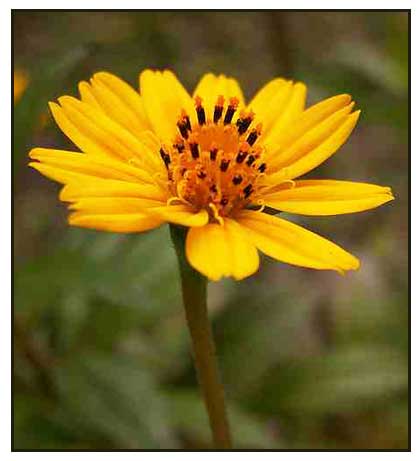
Hagonoi-tsina is a slender, spreading, and hairy herb, with the branches usually less than 50 centimeters long. Leaves are oblong to oblong-lanceolate, 2 to 4.5 centimeters in length, and narrowed at both ends; the margins entire or obscurely toothed; and both surfaces covered with sharp-pointed, appressed, straight, and stiff hairs. Heads are stalked, about 1 centimeter in diameter, and yellow. Involucral bracts are oblong-ovate. Ray flowers are 8 to 12, spreading, about equal to the bracts, and broad; the disk flowers number about 20, are short, narrow and pointed. Achenes are nearly cylindric, and hairy.
 Distribution Distribution
- In open waste places at sea level.
- A casual introduction.
- Also occurs in India to China.
Constituents
- Studies yield presence of saponins, tannins, terpenoids, steroid, flavonoids.
- Plant yields coumestans derivatives: wedelolactone and demethylwedelolactone.
- Methanol and acetone extracts yielded saponins, pholabatannins, resins, lipids and fats, steroids, tannins, glycosides, terpenoids, reducing sugars, phenols, carbohydrates, anthraquinone, catchol, sterols, and flavonoids.
- Study of leaf extracts yield major constituents of 2-Tridecanone (CAS) (4.51%), n-(methoxyphenylmethylene) carbamic acid ethyl ester (1.65%), and 9,12,15-Octadecatrienoic acid, methyl ester, (Z,Z,Z) (13.68%). (See study below) (18)
- Phytochemical screening of chloroform and methanol leaf extracts by GC-MS analysis yielded eight bioacetive compounds, namely: tridecanol, 2--ethyl-2-methyl, the dominant compound (28.12%) (6), dodecanoic acid, 10 methyl, methyl ester (1), 1,2 benzenedicarboxylic acid, butyl octyl ester (2), 10-octadecenoic acid, methyl ester (3), oleic acid, eicosyl ester (4), 1-heptatriacotanol (5), 9,19-cyclocholestan-3-ol-7-one,4adimethyl-[20R] (7), and c-sitosterol (8). (28)
- Phytochemical screening of leaves yielded alkaloids, glycosides, flavonoids, saponins, steroids, and carbohydrates. (see study below) (34)
Properties
Leaves considered tonic, alterative.
Considered astringent, bitter, acrid, anti-inflammatory, cardiotonic, vulnerary.
Parts used
Leaves, seeds, flowers.
Uses
Folkloric
- Leaves are used to dyeing grey hair and in promoting hair growth.
- Used for coughs, cephalalgia, skin diseases and alopecia.
- Juice of leaves used as snuff in cephalalgia.
- Decoction of seeds and flowers, as well as leaves, at half a teacup twice daily, used as deobstruent.
- Plant decoction used for uterine hemorrhage and menorrhagia.
- In Indian indigenous systems of medicine, juice of tender leaves used for jaundice, crushed leaves used for helminthiasis. Fresh juice from leaves use externally for skin problems.
- Extracts from dried or fresh leaves of plants applied as paste on wounds.
- In Bangladesh, used for cancer and alopecia.
- In Siddha medicine, used as hair growth stimulant and hair dyeing.
- Fruits, leaves, and stems traditionally used in childbirth and treatment of bites and stings, fever and infections (34)
- Fresh plant, combined with sesame oil, used to treat elephantiasis. (35)
Others
- Dye: / Tattooing: Leaf juice used for tattooing with its deep indelible blue black color. Root is pounded to produce a black dye with salts of iron.
- Purifying water: Leaves used for purifying water. (35)
Studies
• Anti-Prostate Cancer: Study in mice showed oral administration of W. chinensis extract impeded prostate cancer tumorigenesis. Exposure of prostate cancer cells induced apoptosis selectively in androgen receptor (AR)-positive prostate cancer cells. The anticancer action of the WC extract was correlated with the accumulation of the principle active compounds wedelolactone, luteolin and apigenin in vivo. (1)
• Anti-Cancer: Study of ethanolic extract showed inhibition of growth of Ehrlich's ascites carcinoma.
• Phytochemicals / Wedelosin / Complement Inhibition: Study yielded a series of caffeic acid derivatives and the new compound, wedelosin, as well as three known flavonoid glycosides (quercetin 3-O-β-glucoside, kaempferol 3-O-β-apiosyl-(1-2)-β-glucoside, and astragalin or kaempferol 3-O-β-glucoside. Wedelosin showed an inhibitory activity on both the classical and the alternative activation pathway of the complement system.
• Hepatoprotective / Wedelosin / Complement Inhibition: Study on hepatotoxin-induced acute hepatitis in rats showed a hepatoprotective effect against liver injuries on WC treated rats. (3)
• Anti-Stress Activity: Study evaluating the effect of alcoholic extracts of Costus speciosus rhizomes and Wedelia chinensis leaves on albino rats showed normalizing activity against cold immobilization stress induced changes in NE, DA, 5HT, 5-HIAA and MAO. Results showed biochemical evidence for antistress activity of tested extracts.
• Antifungal / Anti-Inflammatory: Study showed the leaf extract of W chinensis contains the major phytoconstituents - carvocrol (46%) and trans-caryophyllene (14%) - which may be responsible for its anti-fungal and anti-inflammatory properties in a mice model. (6)
• Anti-Inflammatory / Analgesic: Study in animal models showed potent analgesic and anti-inflammatory effects and therapeutic efficacy of WC extract comparable with those of standard drugs like aspirin, morphine and indomethacin. (7)
• CNS Depressant Activity: Study of ethanol extract of whole plant of WC on albino and Wistar rats revealed CNS depressant activity with significant reduction of spontaneous activity, exploratory behavioral patter, muscle relaxant activity and significantly potentiated sodium-induced sleeping time. (8)
• Antibacterial Activity: Study analyzed the phytochemical constituents and antibacterial activities of T procumbens, Wedelia chinensis and P amboinicus against different bacterial strains.
• Antitumor Active Fraction: Study W. chinensis was sequentially extracted by various extracts and each examined for bioactivity in cancer cell lines to identify the most active fraction and most sensitive cell line. The MTT assay showed the 70% ethanol extract exhibited the highest degree of cytotoxicity than others. The EA showed the most potent antiproliferative activity than others. (15)
• Melanogenesis of B16 Melanoma Cells: EEW can directly stimulate melanogenesis in B16 melanoma cells,which may be mediated by promoting cell proliferation and increasing expression of tyrosinase and MITF. (17 )
• Bioactive Components: Study of leaf extracts yield major constituents of 2-Tridecanone (CAS) (4.51%), n-(methoxyphenylmethylene) carbamic acid ethyl ester (1.65%), and 9,12,15-Octadecatrienoic acid, methyl ester, (Z,Z,Z) (13.68%). Some identified compounds possess biologic activities: (1) 9,12,15-Octadecatrienoic acid, methyl ester, (Z,Z,Z) (RT 25.18) possesses anti-inflammatory, hypocholesterolemic, cancer preventive, hepatoprotective, nematicide, insecticide, antihistaminic antieczemic, antiacne, antiandrogenic, antiarthritic, anticoronary properties. 9(Z),12(Z),15(Z)-octadecatrienoic acid, methyl ester, also known as α- linolenic acid methyl ester known to inhibit proliferation of ER-positive and ER- negative breast cancer cells [19]. It is a potent antiangiogenic agent in colorectal cancer and in HUVEC cells. (18)
• Anti-Inflammatory / Antimicrobial / Essential Oil: Study of essential oil of Wedelia chinensis in a Swiss albino rat model showed anti-inflammatory and antimicrobial activity attributed of many major compounds. Major compounds identified were Carvocrol and trans-Caryophyllene. (19)
• Antibacterial / Leaves / Bacillus cereus: Study showed the methanol extract of W. chinensis may be an effective antibacterial agent to treat infectious diseases caused by a range of pathogenic bacteria. The antibacterial mechanism may bet attributed to the presence of major phytochemicals such as flavonoids, terpenoids and tannins. (20)
• Anticonvulsant : Study evaluated the anticonvulsant activity of various extracts of whole plant of Wedelia chinensis in mice models using MED and PTZ methods. Results showed anticonvulsant activity in both models comparable to that of phenytoin. (21)
• Phytocompounds Synergistically Suppressing Androgen Activity and Growth in Prostate Cancer Cells: Study reports four anti-proliferative phytocompounds (indole-3-carboxylaldehyde, wedelolactone, luteolin and apigenin) and identified their ability to modulate androgen receptor (AR) activation of transcription from prostate-specific antigen promoter in PCa cells. identified synergistic effects of active compounds in W. chinensis and showed a potential for prostate cancer prevention and therapy. (22)
• Amelioration of DSS-Induced Acute Colitis: Study shows W. chinensis is non-toxic and can actively ameliorate DSS (dextran sulfate sodium)-induced acute colitis in mice. (23)
• Anticandidal Activity / Leaves / C. albicans: Tested against four pathogenic C. albicans strains, a methanol extract of leaves exhibited favorable anticandidal activity. (24)
• Hepatoprotective / Cadmium induced Liver Toxicity: An aqueous extract of leaves from Wedelia chinensis showed hepatoprotective activity in cadmium chloride-induced hepatotoxicity in albino rats. The hepatoprotective activity may be due to the antioxidant effect exerted by flavonoids present in the leaves.(25)
• Larvicidal / Aedes aegypti and Culex quinquefasciatus: Various extracts of Wedelia chinensis were tested for larvicidal activity against early fourth instar larvae of A. aegypti and C. quinquefasciatus. Methanol and acetone solvent samples showed higher toxic potential. Results suggest W. chinensis is an ideal larvicide against AA and CQ, an ecofriendly alternative for control of the dengue vector and lymphatic filariasis vector. (26)
• Inhibition of Nasopharyngeal Carcinoma CNE-1 Cell Growth: Study evaluated various extracts of WC for bioactivity in vitro via MTT assay in five human cancer cell lines. Results showed one subfraction of the EA extract was cytotoxic to nasopharyngeal carcinoma (NPC) CNE-1 cells, with significant G2/M cell cycle arrest and modest apoptosis. Results suggest Chk1 is a novel molecular target of EA6 in NPC cells and also suggest an intervention strategy for NPC. (27)
• Neuroprotective / Cerebral Ischemia/Reperfusion Induced Oxidative Stress: Study investigated the neuroprotective activity of W. calendulacea against cerebral ischemia/reperfusion induced oxidative stress in rats. Results showed W. calendulacea protects neurons from global cerebral ischemic injury in rat by attenuating oxidative stress. (30)
• Coumestans / Hepatoprotective / Paracetamol Induced Damage / Leaves: Study evaluated the effect of coumestands isolated from the leaves of W. calendulacea in paracetamol induced liver damage. Results showed coumestans effected significant protective actions in the alleviation of paracetamol induced hepatocellular injury. (31)
• Neuropharmacological Activities / Stem: Study evaluated the neuropharmacological activities of methanolic and aqueous extract of W. calendulacea stem in rats and mice using pentobarbital-induced sleeping time, PTZ- and strychnine-induced seizures, spontaneous motor activity, exploratory behavior, and rota-rod performance. Results suggest the presence in the extract of an agent with neuropharmacological activity that may be sedative in nature. (32)
• Activity in Post-Menopausal Osteoporosis: Osteoporosis in women is mainly due to estrogen deficiency following menopause. Isoflavones are estrogenic enough to promote bone formation. This study investigated the anti-osteoporotic effect of an ethanol extract of W. calendulacea in ovariectomized rat model of osteoporosis. On the basis of biomechanical and biochemical parameters, results showed the extract had a definite protective effect, further supported by histopathological studies. Phytochemical screening revealed the presence of isoflavones and wedelactone, which are known phytoestrogens that may be responsible for the antiosteoporotic activity. (33)
• Thrombolytic Activity Leaves: Study evaluated the in-vitro thrombolytic activity of leaf extracts of four medicinal plants of the Asteraceae family.
Methanolic extracts of Wedelia chinensis, Emilia sonchifolia, Eclipta alba and Spilanthes paniculata showed clot lysis activity of 24.48%, 28.71%, 15.19%, and 42.77%, respectively. (34)
• Antiviral / Varicella Zoster Virus (VZV): Study evaluated the antiviral potential of methanolic and ethanolic crude extract of S. calendulacea against Varicella Zoster Virus (VZV) using Hep-2 cell line. Results showed the extracts demonstrated maximum relative activity at 25 µg/ml compared to standard drug Acyclovir. (36)
Availability
Wild-crafted. |