|  Botany Botany
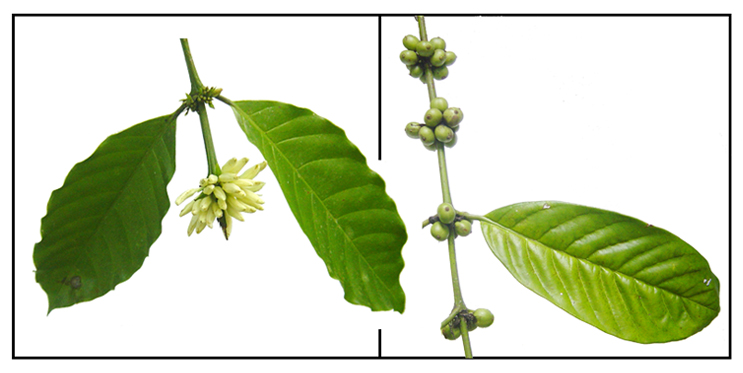
Kape is a small, smooth tree reaching
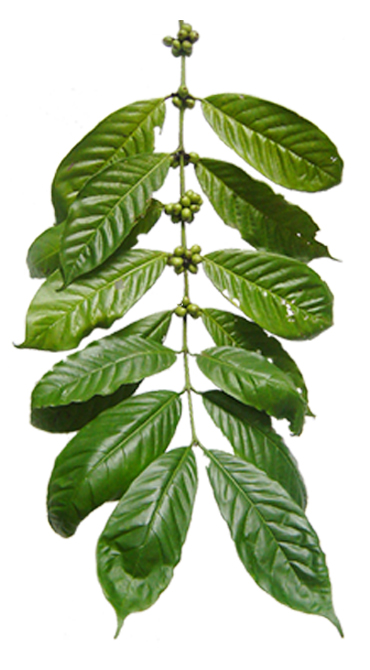
a height of 3 to 5 meters. Leaves are elliptic-ovate to elliptic-oblong,
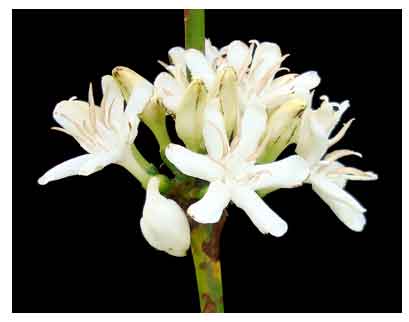
8 to 15 centimeters long, shining, and pointed on both ends. The flowers are
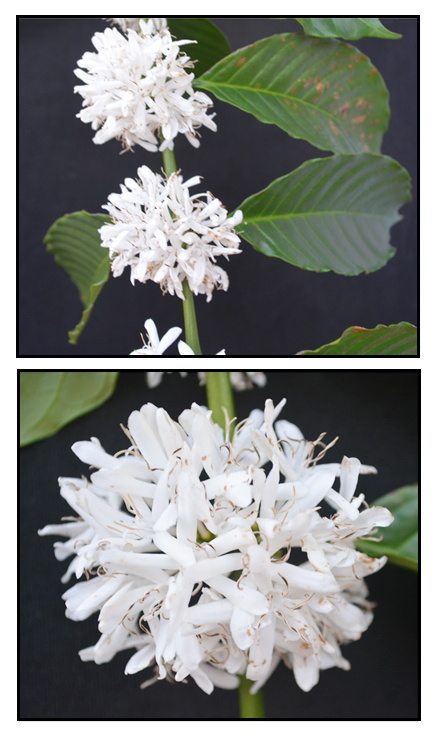
white, borne in fascicles in the axils of leaves. Corolla is 1.5 centimeters. Fruit is red, ovoid
or ellipsoid, 1 to 1.4 centimeters long.
Besides Coffea arabica, other species have been introduced in the Philippines: C. robusta, C. excelsa, C. liberica, C. canephora and C. ugandae.
 Distribution Distribution
- Widely scattered in distribution.
- Introduced by the Spaniards.
- IUCN Red List classified as "ENDEANGERED."
(36)
Constituents
• The alkaloids
of coffea arabica are caffeine, adenine, xanthine, hypoxanthine, guanosine
and proteids.
• Leaves contain an alkaloid, caffeine, 1.15 to 1.25 percent.
• The pericarp of the fruit contains caffeine, mallic acid, mannite,
invert sugar and saccharose.
• The seeds contain caffeine 0.72 to 2.43%, gallic acid, citric acid, proteids, sugar, legumin,
glucose, dextrine, coffeo-tannic acid, fat, and volatile oil (caffeol).
• Caffeine is medically known as trimethyl xanthine, C8H10N4O2.
• Study on fresh Coffea arabica flowers yielded about 150 different chemical substances. n-Pentadecane (20-37% relative peak area, RPA) was the most abundant compound in the HS fractions from fresh flowers, followed by 8-heptadecene (8-20% RPA) and geraniol (6-14% RPA). (see study below) (7)
• Study on composition of Coffea arabica seeds yielded in g/100g—CARBOHYDRATES/FIBER: sucrose 6.0-9.0, reducing sugars 0.1, polysaccharides 34-44, lignin 3.0, pectin 2.0; NITROGENOUS COMPOUNDS: protein/peptides 10.0-11.0, free amino acids 0.5, caffeine 0.9-1.3, trigonelline 0.6-2.0; LIPIDS: coffee oil (triglycerides with unsaponifiables, sterols/tocopherols) 15-17.0, diterpenes (free and esterified) 0.5-1.2; MINERALS, 3.0-4.2, ACIDS AND ESTERS, chlorogenic acids 4.1-7.9, alipathic acids 1.0, quinic acid 0.4. (13)
• Lipid fraction of coffee is composed mainly of triacylglycerols, sterols, and tocopherols, typical components found in common edible vegetable oils. Coffee oil also contain diterpenes of the kaurene family, as 20% of total lipids. (16)

Properties
- Respiratory, gastric and
renal stimulant; diuretic, antilithic, digestive, peristaltic, febrifuge.
- Increases reflex action and mental activity. More stimulating than
cocoa.
- Roasted coffee believed to have disinfectant and deodorant properties.
- A strong infusion of coffee is antisoporific.
- Studies have suggested antioxidant, gastrointestinal and nervous system effects, skin protective, antibacterial, wound healing, anticariogenic, anti-inflammatory, antileishmanial properties.
 Parts used Parts used
Seeds and leaves.
Uses
Edibility
• Leaves used for brewing tea. (Some believe the leaves are overlooked because of high value given to the beans.)
Folkloric
• Infusion or decoction
of roasted coffee leaves as a stimulant. Some prefer the leaf to the
berry.
An important alkaloid used as a stimulant for the nervous system and
circulation.
• In traditional Indian medicine,
coffee is a palliative in spasmodic asthma, whooping cough, delirium
tremens. Roasted coffee considered as disinfectant and deodorant.
• Used in the early stages of typhoid fever.
• Roasted coffee used for disinfectant and deodorant properties.
• Strong infusion of black coffee used as antisoporific in cases of poisoning by opium, alcohol, and other stupefying or narcotic poisons.
• Used as vehicle for administration of quinine and sulfate of magnesia, concealing the bitter and nauseous tastes of the medicines.
• Used as a tonic to offset the effects of malaria.
• Used as a diuretic in dropsy.
• In the raw state, berries are used for hemicrania and intermittent fevers.
Others
• Fodder: Pulp and parchment occasionally fed to cattle in India. (24)
• Apiculture: Honeybees collect nectar and pollen from the flowers. (24)
• Herbicide: The caffeien content is considered a natural herbicide, selectively inhibiting germination of Amranthus spinosus seeds. (24)
Studies
• Gastrointestinal:
(1) Gastroesophageal
reflux: Coffee promotes gastroesophageal reflux, stimulating gastrin
release and gastric acid secretion and slow gastric emptying. The effects
on esophageal sphincter effects. (2) In some, it increased rectosigmoid
motor activity within 4 minutes of ingestion.
• Nervous system effects: Caffeinated
beverages acutely stimulated the autonomic nervous system, affecting
alertness, heart rate and energy arousal.
• Antioxidant: Extract shown to have antioxidant activity attributed to chlorogenic acid.
• Dental Caries / Anticariogenic: Streptococcus mutans has been implicated as the primary causative agent of dental caries in humans. The organisms also produces an adherent glucan that contributes to the formation of dental plaque. Roasted coffee extract possesses a wide range of antibacterial activity that includes S aureus and Strep mutans. The study suggests coffee has an anticariogenic action but no antiadhesive action.
 • Lectins: Study showed potent lectin activity in the fruit extract. • Lectins: Study showed potent lectin activity in the fruit extract.
• Cafestol / Hypercholesterolemic: A diterpene molecule in coffee, said to be the most potent cholesterol-elevating compound in the human diet. A typical bean of Coffea arabica contains 0.6% cafestol by weight, and is highest in unfiltered coffee drinks. Regular consumption of boiled coffee increases serum cholesterol by 8% in men and 10% in women. In drip brewed coffee, it is present in only negligible amount. Study suggests that cafestol can directly regulate expression of genes involved in cholesterol metabolism through activation of nuclear receptors FXR and PXR. Cafestol is also an intestine-specific activator of PXR and direct regulation of FXR and PXR genes in the intestines contribute to its choleraterol-raising effect in humans.
• Compounds Isolated from Flowers: Extraction techniques isolated about 150 different chemical substances from the flowers of Coffea arabica. n-Pentdecane was the most abundant compound, followed by 8-heptadecene and geraniol. Hydrocarbons and terpenoids were predominant compounds in the sorptive extractions. Caffeine, the distinctive component of coffee fruits and beans, was also found in relative high amounts in the CO2 extraction of arabica flowers.
(7)
• Seed Oil / Skin Protective Property: Study evaluated the in vitro effects of green coffee oil on the synthesis of collagen, elastin, and glycosaminoglycans and the release of transforming growth factor beta1 and GM-CSF by human skin fibroblasts. Results showed seed oil might improve physiological balance in the skin, allowing the formation of new connective tissue, and preventing dryness by increasing AQP-3 levels. It suggests a potential for CGO as adjuvant for use in dermocosmetic formulations.
(8)
• Anti-Diabetic Effect: Study evaluated the anti-diabetic effect of extracts of Coffea arabica in diabetic rats. Results showed significant lowering of blood glucose levels compared to control. Findings suggest the extract of coffee can alleviate diabetic hyperglycemia. (9)
• Stimulatory Effect on Cellular Immune Function / Immunostimulant: An alcohol extract of coffee showed a immunostimulatory effects on cell-mediated immune response and cyclophosphamide-induced immunosuppressed mice. The activity could have been due to cell-mediated and humoral antibody-mediated activation of T and B cells. Results suggest Coffea arabica is a potent immunostimulant against cytotoxic drugs. (10)
• Coffee Berry Pulp / Antibacterial: Study evaluated the antibacterial potential present in Hawaiian Arabica coffee berry pulp. Results showed antibacterial compounds present in the pulp. A water extract of coffee pulp showed potential antibacterial effect against E. coli 1472. A higher antibacterial activity was provided by 80% methanol extract. Listeria monocytogenes strains were most susceptible to chloroform fractions. Results suggest the berry pulp has a potential as food preservative. (11)
• Effect on Bone Morphology and Biomechanics: Study evaluated the effects of coffee on femoral morphology and biomechanics resistance in Wistar rats. Results confirm coffee consumption interferes negatively with material and bone properties, diminishes trabecular and cortical bone density, increasing fragility and possibly increasing risk for fractures. (12)
• Mangiferin / Coffee Leaves: Survey reports the phenolic composition of Coffea leaves show that mangiferin and HCE (hydroxycinnamic acid esters) accumulation corresponds to lineage recognition and species delimitation, respectively. The potential health benefits of coffee-leaf tea, and beverages and masticatory products from fleshy parts of coffee fruits, are supported by phenolic quantification. (14) Arabica coffee leaves have been found to have the highest levels of mangiferin, with anti-inflammatory, hypolipidemic, and antidiabetic effects.
• Anticariogenic: In-vitro study showed coffee has antibacterial action to Streptococcus mutans. The anticariogenic action is related to its capacity of altering the biosynthesis of extra cellular polysaccharides (mainly mutans), avoiding the adhesion of streptococci. (15)
Neurochemistry International
• Attenuation of PTZ-Induced Seizures / Antioxidant Effect: Study suggests the neuroprotective effect of low long-term caffeine exposure to epileptic damage and suggest that the increase in the cerebral GSH content caused by caffeine supplementation may provide a new therapeutic approach to the control of seizure. (17)
• Comparison of Organic and Conventional Coffea arabica: In-vivo study compared organic and conventional coffee powder 4% (w/w) and infusions 5%, 10%, and 20% (w/v) incorporated in a commercial diet. Organic coffee showed higher levels of chlorogenic acid, caffeine, and trigonelline than conventional; however, the difference did not significantly affect behavior. Infusions showed an antioxidant effect, reducing the levels of formaldehyde, with no alteration of serum biochemical parameters and no induction nor prevention of neoplastic lesions. (18)
• Effect on Wound Healing /
Residual Press Cake: Study investigated the chemical composition of aqueous extracts of coffee bean residual press cake, their antioxidant activity, and and effect of topical application of coffee bean residual press cake on skin wound healing in an animal model. Results showed the raw material was richer in chlorogenic acid than the roasted one. Daily application of the chlorogenic acid and coffee beans press cake aqueous extract enhanced skin wound healing in the mice model. The effect was attributed to the synergistic action of their components. (19)
• Antimicrobial: Study investigated the antimicrobial effect of C. arabica, C. benghalensis, and C. liberica against selected gram positive strains i.e., MRSA, S. aureus, B. subtilis, and S. agalactiae. The strongest inhibitory effect against MRSA was observed with the leaf of Arabic coffee. Antibacterial effect of roasted seeds was reported earlier against B. subtilis. (20)
• Interactions: Major interactions: (1) Ephedrine: Interacts with ephedrine; both are stimulant drugs. (2) Adenosine:Caffeine might block the effects of adenosine, which is a drug used in a cardiac stress test. (3) Alcohol: Alcohol may decrease how quickly the body breaks down caffeine. (4) Alendronate: Coffee can decrease how much alendronate the body absorbs. (5) Antibiotics: Some antibiotics might decrease the quickly the body breaks down caffeine. (6) Clozapine: Coffee might decrease how fast the body breaks down clozapine. (7) Dipyradimole: Coffee might block the effects of dipyridamole, a drug used in cardiac stress testing. (8) Disulfiram (Antabuse): Antabuse may slow down how fast the body gets rid of caffeine. (9) Also interacts with lithium, MAOIs, tricyclic antidepressants, anticoagulant/antiplatelet drugs, theophyllines, verapamil, etc. Minor interactions: Birth control pills, cimetidine, fluconazole, antidiabetic drugs, mexiletine, and terbinafine. (21)
• Antibacterial Against
Enterobacteria: Disc diffusion study evaluated the in vitro antimicrobial activity of commercial coffee extracts and tested chemical compounds. While contents of trigonelline, caffeine, and chlorogenic acids differed significantly among coffee extracts, there was no significant differences observed in antimicrobial activity. Caffeine, chlorogenic acid, and protocatechuic acid showed particularly strong effect against Serratia marcescens and Enterobacter cloacae. The compounds also showed potential as natural antimicrobials against Salmonella enterica. The caffeine concentrations in coffee extracts were enough to warrant 50% of antimicrobial effect against S. enterica. (22)
• Antileishmanial / Antioxidant: Study evaluated the antileishmanial effect of Coffea arabica, Salvia rhytidea, and Bunium persicum against Leishmania major and L. tropica promastigotes and their cytotoxicy and antioxidant activities. C. arabica was second to B. persicum in antileishmanial activity. Cytotoxicity evaluation showed the extract to be safe for macrophages. Results also confirmed great antioxidant activities for the plant extracts. (23)
• Effect of Roasting Beans on Antioxidant and Anti-Inflammatory Properties: Study evaluated the in vitro antioxidant effects and anti-inflammatory effects of C. arabica green coffee extracts at different roasting levels. Results showed roasting level did not cause huge differences in total caffeine content. However, total chlorogenic acid contents were higher in light roasted coffee extract than other roasted groups. Anti-inflammatory activity was evaluated in lipopolysaccharide-treated RAW 264.7 macrophage cells. Study showed the physiological antioxidant and anti-inflammatory activities of coffee are negatively correlated with roasting levels in cell models. (25)
• Caffeine from C. arabica and Camella sinensis / Antibacterial / Additive Effects: Study evaluated caffeine isolated from C. arabica and C. sinensis, and evaluated for single and combined antibacterial activity against six selected pathogenic bacteria i.e., S. aureus, B. cereus, E. coli, P. mirabilis, K. pneumonia, and P. aeruginosa. Both compounds showed similar antibacterial activity against the test bacteria except for P. mirabilis. Combination showed additive effects against most of the bacteria, especially P. aeruginosa. (26)
• Anthelmintic / Unbaked Coffee Beans: Study evaluated the anthelmintic activity of C. arabica unbaked bean extracts. A chloroform extract of C. arabica exhibited significant anthelmintic activity against Pheretima posthuma when compared to aqueous and ethanolic extracts and standard drug. (27)
• Antibacterial / Tea and Coffee: Study assessed six strains of human pathogenic bacteria for their sensitivity to aqueous extracts of tea and coffee. Both tea and coffee inhibited bacteria to a variable extent and retained their antibacterial activity even after the addition of milk and sugar. Equal effectiveness of tea/coffee extracts and their preparation justifies their potential as antibacterial agents. (29)
• Antioxidant / Antibacterial / Essential Oil
of Husks: Study explored the constituents of coffee husks oil obtained from Coffea arabica. GC and GC-MS analysis yielded 55 components in the coffee husk volatile oil. The most abundant components in the oil were isopropylidene-5-decoxyhexo )163%).Both volatile oil and total alcoholic extract from C. arabica husk possessed antibacterial and antifungal activity against all test gram positive and gram negative bacterial and fungal strain. Results showed the total alcoholic extract with potent activity against S. aureus (22.0 mm/104.8%) compared to ampicillin by 21 mm. Both volatile oil and total alcohol extract showed dose-dependent antioxidant activity by DPPH radical scavenging assay. (30)
• Organic and Conventional Coffee / Mineral Content: Study evaluated the concentrations of Cu, Fe, and Zn and proximate composition of powder and coffee infusions from beans grown under organic or conventional agricultural systems. Overall, mineral content of coffee is influenced by conditions of agricultural management styles and the extraction process. Study showed Cu, Fe, and Zn were higher in conventional coffee powder than in organic powder. However, organic coffee had higher extraction yield for all infuses. and a 20% infusion (w/v) had higher level of Zn than conventional infusion. (31)
• Anticancer Potential: Study evaluated the anticancer activity of ethanol extract of war coffee beans. A ethanol extract of coffee bean at concentration of 0.1 µg/ml has potent anti-proliferative effect against HeLa and PA-cell lines with decrease in percentage viability to less than 30% after 72 hours of incubation. Extract and fraction were able to induce apoptosis and nuclear fragmentation in the cells. Non-cytotoxicity to human peripheral lymphocytes indicates safety for humans. (33)
• Arabian Coffee Blended with Cloves or Cardamom / Antioxidant Effect: Study investigated the antioxidant activity of C. arabica (decoction blended with or without cardamom or cloves) in high-fat diet (HFD)-fed C57BL/6J mice. The Arabian coffee blended with cardamom or cloves exhibited enhanced free radical scavenging and antioxidant properties compared with C. arabica alone. Coffee with cardamom had more pronounced effects than coffee with cloves. (34)
• Cytotoxicity Study
/ Seed Oil: Green C. arabica seed oil (GCO) is an active cosmetic ingredient in many skin care products, while roasted coffee oil (RCO) is main used from imparting aroma in food industry. Study evaluated the chemical composition of GCO and RCO, their polar fractions, and their cytotoxicity and antioxidant potential in vitro. Exposure to GCO showed no cytotoxic effects, and in fact, there were slight increments in cell proliferation. Cell exposure to RCO led to significant decreases in cell viability. Increases in concentration of coffee oil PFs were associated with relevant increased toxicity.(36)
See: Caffeine / Studies reporting on the benefits of caffeine / InformationXchange
Availability
- Wild-crafted.
- Cultivated.
- Tinctures and seeds in the cybermarket. |