|
Botany
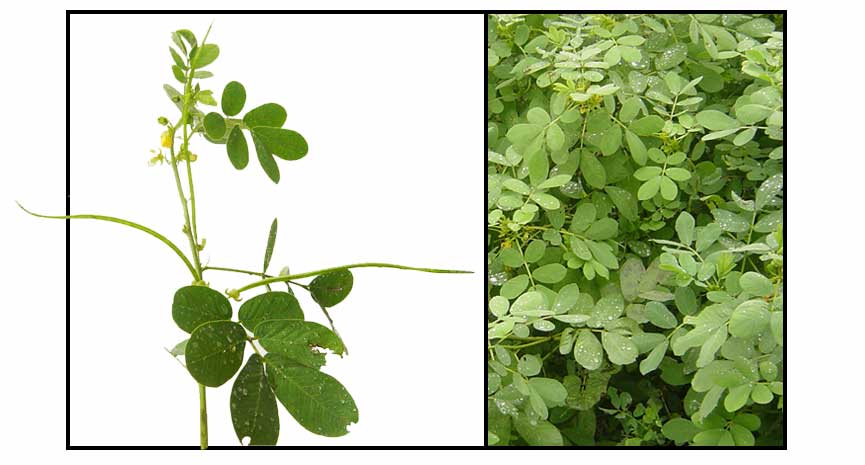
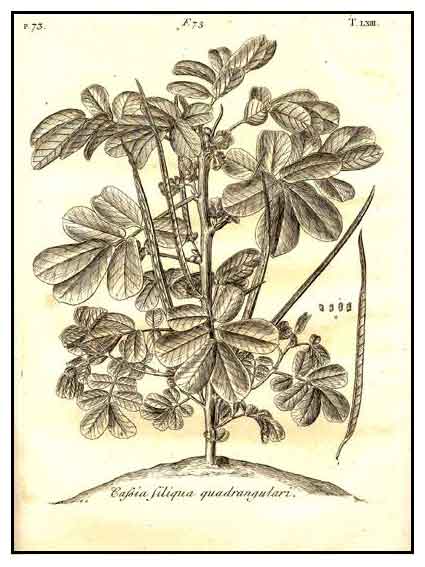
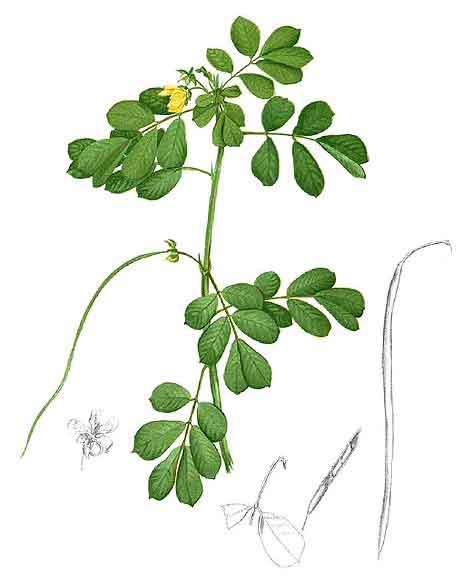
Katanda is a stout erect, smooth, rank-smelling,
half-woody annual, 1 meter or less in height. Leaves are 8 to 12 centimeters long and pinnately compound with
6 leaflets. Leaves are furnished with glands on the main rachis
between leaflets. Leaflets are oblong-ovate or obovate and 2 to 5
centimeters long. Flowers are crowded, in pairs, in the axils of the upper
leaves, and about 1.5 centimeter across. Calyx-tube is short; sepals are imbricate. Petals are 5, yellow, subequal.
Stamens are 10, rarely all perfect, 3 to 5 being reduced to staminodes
or sometimes absent, anthers mostly basifixed opening by terminal
spores or with the slit more or less continuous downward. Ovary
sessile or stalked. Fruits are slender pods, up to 15 centimeters long and 3 to 4 millimeters
thick. Seeds are flattened in the same direction as the pod.
 Distribution Distribution
- A very common weed throughout
the Philippines, in settled areas at low and medium altitudes.
- Pantropic.
Constituents
• Seeds yield tannins and dyes
(yellow, blue and red).
• Volatile oil showed a high content of aliphatic acids (>75%)
and anthraquinones.
• Seed analysis showed the following percentage composition: water, 27.2%; petroleum ether extract, 9.75%; ether extract, 0.86%; absolute alcohol extract, 1.63%, and watery extract, 20%.
• Plant yields emodin to which the medicinal properties are attributed to.
• Leaves yield a principle similar to cathartin.
• Seeds contain phytosterine and glucosenine.
• Phytochemical screening yielded glycosides, tannins, flavonoids, and saponins.
• Leaf extracts yielded anthraquinones, carbohydrates, glycosides, steroids, flavonoids, and saponins. (see study below) (35)
• Proximate analysis of leaves (per 100g) yielded moisture 42gm ±2gm, ash 96gm ±1gm. Phytochemical analysis showed the presence of magnesium, calcium, sulphur, iron, sodium, chlorine, alkaloids, tannin, saponin, flavonoids, carbohydrate, protein, steroids, glycosides. (36)
• Seed extract yielded saponin, alkaloids, flavonoids, glycosides, protein, tannin, phenolic compounds, and carbohydrates. (see study below) (34)
• Study for total flavonoid content of CtEA showed 106.8 ± 2.8 mg/g d.w.QE, CtME 72.4 ± 1.12 mg/g d.w.QE and CtWE 30.4 ± 0.8 mg/g d.w.QE. Flavonoids concentration in decreasing order was: CtEA quercetin > kaempferol >
epicatechin; in CtME quercetin> rutin > kaempferol, and in CtWE quercetin > rutin > kaempferol. (see study below) (54)
Properties
• Sweet tasting, slightly cooling.
• Diuretic, laxative, purgative.
• Mucilaginous and foetid smelling leaves are aperient, antiperiodic, antiseptic, alterative, febrifuge,
anthelminthic, digestive.
• In Ayurveda, considered
aperient, laxative, cardiotonic, anthelmintic, liver tonic, expectorant.
Parts
utilized
· Seeds, leaves, roots.
· Collect pods from August to October when the seeds are
about to ripen.
· Sun-dry, remove the pericarp before using.
Uses
Culinary
• Edible wild vegetable.
• Leaves used as pot herb.
• Roasted seeds used as coffee substitute. In Mexico, used as substitute for coffee or for adulterating it.
Folkloric
· In the Philippines, the entire plant, in decoction, is used as purgative and vermifuge.
· Leaves and seeds used as a remedy for ringworm and scabies.
· Decoction of seeds
used for hepatitis, edema associated with liver problems, hypertension,
infantile convulsion, night blindness due to fever, habitual constipation.
· Infusion of leaves used for intestinal disorders. Decoction
is mildly laxative.
· Poultice of seeds and leaves used for scabies, psoriasis, ringworm
and eczema.
· Paste of the roots used for ringworm.
· Decoction of leaves used in children suffering from fever while teething.
· Leaves fried in castor oil are used as application to foul ulcers.
· In Africa and India, a traditional medicine for the treatment of ulcers. Pounded fermented leaves added to food or local gin and taken orally as purgative or anthelmintic. (17)
· leaves also used to hasten suppuration.
· Malays use decoction of leaves as a mild purgative or as a cure for coughs.
· In Ayurveda,
seeds and leaves used for cough, leprosy, ringworm, colic, flatulence,
dyspepsia, bronchitis.
· In India, used for rheumatism and gout.
· In Indo-China, pods are used for dysentery and ophthalmia.
· Seeds, ground with sour buttermilk, used to relieve irritation of itchy eruptions.
Others
• Pesticide: In organic farms in India,
used as a natural pesticide.
• Dye: In India, seeds also used in dyeing along with indigo.
• Used in pet food preparations.
• Gelling agent in air fresheners.
 Studies Studies
• Antifungal / Chrysophanic Acid:
Study of an aqueous paste of defatted seed powder isolated chrysophanic acid and other hydroxynathraquinone derivatives. The major antifungal compound, identified as chrysophanic acid-9-anthrone, was active against Tricophyton rubrum, T. mentagrophytes, Microsporum canis, M gypseum, and Geotrichum candidum. (2)
• Antifungal: Study showed ethanol
extract of CT to have potent antifungal activities against Microsporum
canis and C albicans, suggesting a potential as a antifungal agent.
• Immunomodulatory / Anthraquinones:
Anthraquinones of edible wild vegetable Cassia tora stimulate proliferation
of human CD4+ T lymphocytes and secretion of interferon-gamma or interleukin
10. (3)
• Antioxidant / Volatile Oil: The study of chemical components of the volatile oil from C. tora showed
antioxidant activity of potential use for hyperlipidemia, hypertension
and inflammatory disease. (4)
• Lipid Effects / Fiber Supplement: Study in Korean diabetic patients showed Cassia tora fiber supplement can help improved serum lipids
in T2DM. (5)
• Lipid Effects / Seeds: Ethanolic extract of seeds of Cassia tora decreased
total and LDL cholesterol, triglycerides and increased HDL. (7)
• Hypotensive / Vagal Reflex:
Study evaluated Cassia tora seeds for possible reflex mechanism for hypotensive effect. Study suggests a possible vagal reflex mechanism that
alters the vasomotor tone of the sympathetic NS. (6)
• Anthelmintic: Study
demonstrated the anthelmintic activity of alcohol and aqueous extracts
of Cassia tora against Pheretima posthuma and Ascardia galli. Both extracts showed significant anthelmintic activity at highest concentration of 100 mg/ml. Piperazine citrate was the standard reference. (8)
• Antimicrobial: Study
on various extracts of Cassia tora, Calendula officinalis and Mormodica
charantia showed activity against all tested bacteria, Staph aureus
being more susceptible to the aqueous extracts. (9)
• Antihypertensive: Study
of the methanol extracts from the raw and roasted seeds of Cassia tora
exhibited significant inhibitory properties against ACE (angiotensin
converting enzyme). (10)
• Aldose Reductase / Diabetes:
Study of seed extracts of CT isolated nine anthraquinones,
with compounds 6 and 8 exhibiting inhibitory activities on protein glycation
and aldose reductase. (11)
• Anti-Inflammatory: Study
of the methanol extract of leaves of C. tora exhibited significant anti-inflammatory activities against carrageenan, histamine, serotonin and dextran-induced rat hind paw edema. (12)
• Hepatoprotective / Antioxidant / Seeds: Study
in albino rats showed the protective effects of Cassia tora against carbon tetrachloride induced hepatotoxicity attributed to its effective free radical scavenging that accounts for its antioxidant property. (13) Study evaluated the total and defatted alcoholic extracts of seeds of Cassia tora for hepatoprotective activity in carbon tetrachloride induced toxicity in adult Wistar albino rats. The effects of the extracts were comparable with standard drug silymarin. (38)
• Anti-Cancer: Study
evaluated the antioxidant and antiproliferative potential. The plant extract induced a marked concentration dependent inhibition of proliferation, reduced DNA content and apoptosis in HeLa. Results indicated that C. tora is effective against free radical mediated diseases. (14)
• Anti-Diabetes: Study
results indicate that constituents of C. tora seeds have a beneficial effect on postprandial blood glucose control which may be partly due to mediation by stimulated insulin secretion from the pancreas of diabetic rats. (15) suppressing EROD, NADPH CYP-450 reductase in cells and promoting GST activity. (16)
• Antioxidant / Leaves: Study
evaluated a methanolic extract of leaves for antioxidant activity using various assays. Results showed a reduction of DPPH radicals in a concentration-dependent manner. The potent in vitro antioxidant activity may be attributed to phenolic content of leaves. (17)
• Antioxidant Activity / Topical Cream of Leaves Extract: Study
evaluated the in vivo antioxidant activity of a newly formulated O/W cream of of methanolic extract of leaves. Results showed topical O/W creams prevented oxidative stress induced in rats by exposure to UV-B light through antioxidant activity. (18)
• Trypsin / Protease Inhibitory Activity: Study investigated the protease inhibitory activity of Cassia tora against trypsin, Aspergillus flavus and Bacillus sp. proteases. Proteases play an important role in many human, plant, and insect pathogens. Results showed crude extracts with strong antitryptic, bacterial, and fungal protease inhibitory activity. The Cassia tora inhibitor may attenuate microbial proteases and may be used a phytoprotecting agent. (19) Study evaluated the protease inhibitory activity of cassia tora seeds. Results showed trypsin inhibitory activity of the seeds. (31)
• Novel Cancer Therapeutic / Leaves: Study of methanolic leaf extract of C. tora showed a concentration dependent lipid peroxidation inhibition. The antiproliferative activity of CTME with anticancer drug Cisplatin was studied using HeLa (human cervical cancer cells). The plant induced marked concentration dependent inhibition of proliferation, reduced DNA content and apoptosis in HeLa cells. (20)
• Antiasthmatic: Study evaluated the antiasthmatic activity of C. tora leaves. A hydroalcoholic extract showed bronchodilator activity, significantly inhibiting the contractile effect of histamine in isolated goat tracheal chain. (21)
• Anti-Psoriatic Activity: Study evaluated the anti-psoriatic activity of newly formulated oil in water (O/W) creams of methanol extract of leaves using Mouse tail model. O/W creams containing a methanol extract of leaves showed potent antipsoriatic activity, significantly and dose-dependently decreasing relative epidermal thickness of animal skin. (22)
• Antibacterial / Leaves: Study evaluated ethanolic and aqueous extracts of leaves for antibacterial activity. The alcoholic extract revealed anthraquinone glycosides, phenolic compounds and saponin glycosides; the aqueous extract yielded glycosides and phenolic compounds, saponins glycosides. Both extracts exhibited significant antibacterial activity. Ciprofloxacin was used as reference drug. (23)
• Antimicrobial / Seeds: In vitro study evaluated extract and prepared test ointment for antimicrobial activity against two bacterial species (S. aureus and E. coli) and two fungal species (A. niger and M. gypseum). The benzene extract was most potent against Staphylococcus aureus and A. niger. Phytochemical analysis of the seeds showed it mainly contained anthraquinones. (24)
• Anti-Ulcer / Antioxidant / Seed: In a study on Wistar albino rats, a seed extract showed potent anti-ulcerogenic properties probably via cytoprotective mechanism from its antioxidant properties. (25)
• Neuropharmacological Effects: Study evaluated the neuropharmacological effect of leaves in mice. Ethanol and aqueous extracts showed significant activity in the behavioral model of hole board test. Chlorpromazine was the standard drug reference. (26)
• Anthelmintic Activity / Stem Bark: Study evaluated methanolic and aqueous extracts of Cassia tora stem bark for anthelmintic potential against earthworm Pheretima posthuma. Both extracts exhibited significant anthelmintic activity. Albendazole was the reference drug. (27)
• Mucilage / Suspending Agent: Cassia tora mucilage exhibited the strongest suspending ability. The mucilage can be a stabilizer of choice if high viscosity is desired, and serve as a good thickening agent both in the pharmaceutical and food industries. (28)
• Anti-Psoriatic Activity / Flavonoids / Seeds: Study evaluated the anti-psoriatic activity of three flavonoids, namely luteolin-7-O-β-glucopyranoside (1), quercetin-3-O-β-D-glucuronide (2) and formononetin-7-O-β-D-glucoside (3), isolated from the ethanol extract of C. tora leaves using a UV-B induced photodermatitis model. Results showed the flavonoids from C. tora leaves have significant antipsoriatic activity. (32)
• Larvicidal / Anopheles stephensi / Seeds: Study evaluated various concentration of seed extracts for larvicidal activity against the larvae of Anopheles stephensi. Results showed larvicidal activity, with the 0.4% extract sowing 80% larvae mortality. (see constituents above) (34)
• Antimicrobial / Leaf: Study evaluated organic and aqueous extract of leaves of C. tora for antimicrobial activity against three human pathogenic bacterial and two fungal strains. Aqueous and methanol extracts showed significant antimicrobial activity against most of the tested microbes. The most susceptible was Pseudomonas aeruginosa followed by Candida albicans. (35)
• Galactomannans / Gum
/ Toxicoloty / Seeds: Seed gums are used for their emulsifying, suspending, binding, thickening, stabilizing, and water-holding properties, and used pharmaceutically for various formulations and sustained drug release systems. Study evaluated the toxicity of seed gum isolated from Senna tora in adult albino rats. Acute oral toxicity study showed the LD50 of Senna tora gum is greater than 2000 mg/kg. In sub-acute toxicity, there was no sign of toxicity at doses of 500, 1000, and 1500mg/kg daily for 28 days. (37)
• Treatment of Anxiety Disorders / Leaves: Invention application relates to the use of C. tora extracts for its antianxiety activity and the process of preparation of the novel herbal extract. The crude alcoholic extract of leaves revealed significant antianxiety activity. (39)
• Antimicrobial / Anticancerous: Study evaluated crude extracts of leaf and seed along with organic solvents for antimicrobial and anti-cancerous activities. Most of the antimicrobial activities were found with the organic solvents. Leaf and seed extracts showed significant antimicrobial activity, especially against Klebsiella oxytoca, Salmonella typhi, and Pseudomonas aeruginosa, as well as antifungal activity against Aspergillus niger and Curvularia lunata. On anticancer activity against breast cancer cell line MCF7, the hexane fractions of leaf extract showed more effective activity than the ethyl acetate fractions. (40)
• Wound Healing
/ Leaves: Study evaluated the wound healing activity of extract of leaves of Cassia tora using excision and incision wound models on albino mice. Results showed significant increase in percentage of excision wound contraction, tensile strength of incision wound, and remarkable reduction in period of complete epithelization. The methanolic extract exhibited significant (p<0.01) wound healing activity compared to control. (41)
• Cataract Prevention / Leaves: Study evaluated the potential of an ethyl acetate fraction of Cassia tora leaves on experimental cataract induced by a single subcutaneous injection of sodium selenite. Results showed effective protection against cataract by reducing the inflammatory response, reducing protein denaturation and cross-linking, and maintaining membrane integrity and intracellular communication. The protective activity may be due to the additive effects of phytochemicals in the leaves. (42) Study evaluated the efficacy of C. tora leaves in preventing experimental cataractogenesis in a cataract induced animal model. There was a significant decrease in the onset and maturation of cataract, potentiated antioxidant defense and normalized lens crystallin expression. HPLC and ESI-MS analysis yielded flavonoids and anthraquinones. The anticataract effect is attributed to the presence of antioxidants in the leaves. (47)
• Hypotensive Principles from the Seed: Study showed aqueous and methanol extracts from seeds of Cassia tora elicited a hypotensive effect on anesthetized rats. Preliminary studies showed the active hypotensive principles to be derived from the kernel of the seeds and consisting mainly of glycosides. (43)
• Anthelmintic / Antibacterial / Leaves and Roots: Study evaluated leaves and roots extracts of Cassia tora for antibacterial and anthelmintic activity. Aqueous extracts of roots and leaves showed better antibacterial activity against Staphylococcus aureus. Ethanolic extracts showed moderate activity against Indian adult earthworm Pheretima posthuma. (44)
• Antifungal / Emodin, Physcion and Rhein / Seeds: Study isolated emodin, physcion, and rhein from the chloroform fraction of seeds. They showed strong and moderate fungicial activities against B. cinerea, E. graminis, P. infestans, and R. solani. (45)
• Potential for Food, Feed, Medicine and Climate Change Adaptation: Considered a weed in the Philippines, study reports on Senna tora as a source of food, feed, and medicinal use in Bukidnon. It ca be an important seed protein crop, with a great potential as leaf vegetable for humans and forage for livestock. Deep-rooted and hardy, it could produce substantial foliage during the rainy months and make grasslands less to erosion. (46)
• Antidermatophytic
/ Leaves: Study evaluated the antimycotic activity of petroleum ether and methanolic leaf extracts of Senna tora against dermatophytic fungi viz., Trichophyton rubrum, T. tonsurans, T. mentagrophytes, Microsporum gypseum, Candida albicans and bacteria like S. aureus, P. aeruginosa, B. subtilis and E. coli. Results showed effective antidermatophytic activity attributed to the presence of phytochemical constituents like flavonoids, phenols and triterpenoids. (48)
• Hypolipidemic Activity / Seeds: Study evaluated the hypolipidemic effect of Cassia tora seeds extracts in two hyperlipidemic models of rat viz., triton injected and cholesterol rich HFD fed model of hyperlipidemia. The lipid lowering effect of C. tora seeds extract may be due to early clearance of lipids from circulation in the Triton model and may be due to reactivation of lipolytic enzymes as evidenced by increased PHLA. In cholesterol rich HFD fed hyperlipidemic animals, the seed extract stimulates PHLA and hepatic +LPL activity, both playing a key role in lipid metabolism the utilization in the body. (49)
• Anticancer Activity / Antimetastatic Effects in Vivo: Study evaluated the in vitro anticancer effects in TCA8113d human tongue carcinoma cells. Cassia tora significantly induce apoptosis in cancer cells (p<0.05) by upregulating BAX, caspase-3, and caspase-9, and by downregulating Bcl-s. Results showed Cassia tora exhibited most potent in vivo anticancer effects, induced apoptosis, had anti-inflammatory activities and exerted in vivo anti-metastatic effects, (50)
• Reversible Antifertility Effect in Male Rats: Study evaluated the effects of Cassia tor on the reproductive function of male rats in a safe, orally effective, and reversible fertility regulating agent. Results showed decreased testes and accessory sex organs weights, sperm motility, density, and testosterone level in rats which may be due to androgen suppression effects that caused inhibition of spermatogenesis resulting in reduction of fertility in treated male rats. (51)
• Antiangiogenesis: Study investigated the cytotoxic effect and antiangiogenic effect of leaf extracts on C. tora and C. sophera on human cancer cell lines and chick embryo respectively. Various leaf extracts were tested for antiproliferative activity using MTT assay on HCT15 and HepG2 cell lines. Results showed both plants were toxic to tested cell lines with increasing concentrations and time. EA extract of Cassia tora was more toxic on Hep G2 cell line, while EA and methanol extracts of both plants showed strong antiproliferative effect. (52)
• Nephroprotective / Cisplatin Induced Nephrotoxicity / Seeds: Study evaluated the effect of oral administration of methanol extracts of seeds of Cassia tora in cisplatin induced acute renal failure in Swiss albino mice. Results showed significant dose dependent nephroprotective activity. (53)
• Antioxidant / Protective Against Oxidative-Stress Induced DNA and Cell Membrane Damage: Study evaluated the antioxidant and protective effect of C. tora against oxidative stress-induced DNA and cell membrane damage. The CtEA inhibited free radical-induced red blood cell hemolysis and cell membrane morpphology better than CtME. It also showed better protection against free radical-induced DNA damage. (see constituents above) (54)
Availability
- Wild-crafted.
- In the cybermarket, available in a variety of commercial products. |