|
 Gen info Gen info
- Cassytha is a genus of about 30 species, mostly occurring in Australia, a few in South Africa, with one pantropical species, Cassytha filiformis. (9)
- They are parasitic vines with small haustoria (infectious, adhesive structures that withdraw nutrients from host organs).
(9)
- In Hawai'i, two Cuscuta species and C. filiformis are sometimes confused, in fact, sometimes referred to by the same name, kauna'oa. (9)
Botany
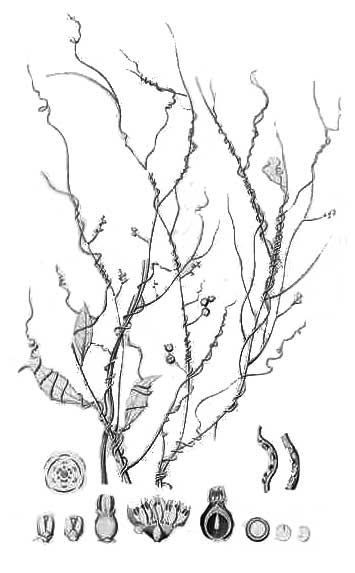
Kauad-kauaran is a parasitic vine,
adhering to the host by suckers. Stems are very long, slender, brown,
yellowish brown or greenish, twining and matted together, with
numerous branches forming a web of leafless cords over grasses
or bushes. Flowers, borne on short spikes, are small and stalkless. Perianth segments are unequal, the outer small
and rounded, and the inner ones much longer, oblong or oval in
shape. Stamens are 9, in 3 rows, anthers are all 2-celled, 2 outer rows
introrse, the inner row extrorse. Ovary is superior, 1-celled. Fruits is nearly spherical, smooth, fleshy and about 7
millimeters in diameter.
 Distribution Distribution
- Grows in thickets, especially
near the sea, in dry regions and sometimes inland up to an altitude
of 500 meters, throughout the Philippines.
- Parasitic on various coarse grasses, shrubs, etc.
- Pantropic.
Constituents
- Contains an alkaloid (0.1 %) identical
to laurotetanine, described under Litsea sebifera.
- Bioassay-directed fractionation isolated three new compounds, including an aporphine alkaloid, cassyformine (4), an oxoaporphine alkaloid, filiformine (8), and a lignan, (+)-diasyringaresinol (10), along with 14 known compounds. (see study below) (1)
-
Study of an alkaloid extract yielded three major aporphine alkaloids: actinodaphnine, cassythine, dicentrine and were evaluated for in vitro activity on T. brucei brucei. (see study below) (2)
- Study yielded three new compounds: two alkaloids, cassyformine and filiformine,
and a lignan along with 14 known compounds.
- Study estimated total alkaloidal content
to be around 0.11 to 0.43%. A Brazilian species yielded 13 alkaloids. In Taiwan, a methanolic extract yielded aporphine alkaloids: cathafiline, cathaformine, actinodaphnine, N-methylactinodaphnine, predicentrine, and ocoteine. (11)
- Study of aerial parts yielded alkaloids, tannins, cathetic tannins, gallic tannins, and mucilage.
- Phytochemical screening of methanol extracts of leaves yielded saponins, steroids, and tannins. GC-MS analysis of butanol fraction yielded 8 saponin compounds viz., 9,12-octadecadienoic acid (Z,Z)-2,3-dihydroxypropyl ester (1), 5-stigmastan-3, 6-dione (2), didodecyl phthalate (3), eicosanoic acid, methyl ester (4), hexatriacontane (5), campesterol (6), cholestan-7-one, cyclic 1,2-ethanedienyl acetal (7), and cholan-24-oic acid, 3,7,12-tris (acetyloxy)-,methyl ester, (3α, 5β, 7α, 12α). (8) (20)
- Ethyl acetate extract of leaves yielded carbohydrates, saponins, glycosides, sterols, balsams, terpenes, resins, alkaloids, and volatile oils, with absence of tannin phlobotannins, and anthraquinone. (33)
- Bioassay-directed fractionation of methanol extract of fresh herb isolated six aporphinoid alkaloids viz., actinodaphnine (1), N-methylactinodaphnine (2), cathafiline (3), cathaformine (4), predicentrine (5), and ocoteine (6).
(see study below) (34)
- GC-MS for essential oil showed an oil that was sesquiterpenoid in nature, with principal components of bicyclogermacrene (12-26%), spathulenol (27-36%), and ß-caryophyllene (5-10%).
(36)
Properties
- Sweet and mildly bitter tasting, astringent, diuretic, antiphlogistic , anticontusion, laxative, cooling, tonic, and alterative.
- Laurotetanine can cause cramps, and in sufficient
doses, death.
- Studies have shown anti-platelet aggregation, anti-trypanosome, anti-cancer, vasorelaxant, antibacterial, anti-hemorrhagic, anticonvulsant, diuretic properties.
Parts utilized
· Entire plant.
· Collect from May to October.
· Rinse, cut into pieces, dry under the shade, compress
before using.
Uses
Edibility
· In Micronesia, fruit is used as premasticated food for infants.
- Leaves occasionally eaten as vegetable.
Folkloric
· Little therapeutic use in the Philippines.
· In Manila, decoction of fresh plant used to hasten parturition, and to prevent hemoptysis.
· Sanskrit writers describe it as a tonic and alterative, and its power of increasing the secretion of semen.
· Used for constipation, dysentery, hemoptysis, epistaxis, acute conjunctivitis, furuncles, cold, fever, and headaches.
· Decoction of dried material used for nephritic-edema,
urinary lithiasis and infections, hepatitis, hepatic fever among infants,
cold-fever among infants, headaches, multiple furuncles.
· Poultice of pounded fresh material applied to furuncles;
or, decoction applied as external wash to same.
· In India, the
powdered plant, mixed with sesame oil, used to strengthen the hair. Whole plant used as alterative in bilious disorders and piles. Stems used for epilepsy.
· Used by Brahmins, in a mixture of butter and ginger, for cleansing of inveterate ulcers
· In Maritius, decoction used for rachitic infants.
· In African folk
medicine, used to treat cancer and African trypanosomiasis. (2)
· In southern Africa, used for washing the hair, destroying vermin, and promoting hair growth.
· In Senegambia, used for urethritis.
· In Cochin-China used as antisyphilitic.
· In Thailand, decoction of plant parts used as potion or bath for treatment of jaundice.
· In Palau, whole plant of C. filiformis is mixed with bark of Terminalia cata (scarlet macaw) and copra, crushed together, and the juice squeezed out and drunk for gonorrhea. (9)
· In Benin, used for the treatment of hemorrhages. (17)
· In Thakar tribe of Maharashtra use infusion of aerial roots and pendulous branches for snake bites. (23)
· In the Bahamas, Cassytha filiformis (Love Vine) is one of four main plants that serve as ingredients for love potions, the others viz., Bourreria ovata (Strong Back), Tabebuia bahamensis (Five Finger), and Diospyros crassinervis (Stiff Cock). (24)
· In Comorian folkloric medicine of Morocco, seeds, leaves, and vine used for treatment of inflammation, intestinal worms, dermal problems, dental problems, diabetes, influenza, headaches, stomach aches, malaria, cough, asthma, and diarrhea. (37)
Others
• Magic: Plant use for sorcery.
• Thatch root construction: Vine used for thatched roof construction in Papua New Guinea.
• Hair use: Sap from stems used as shampoo and hair conditioner.
• Ornamental: Used in Hawaii as human ornament and in decorative garlands and lei. (9)
• Dye: Dye extracted from vine used as coloring agent to provide a brown or black color for fabrics.
• Paper: Paste of whole plant used for paper making. (26)
Studies
• Chemical Constituents / Antiplatelet aggregation activity: Bioassay-directed fractionation isolated three new compounds, including an aporphine alkaloid, cassyformine (4), an oxoaporphine alkaloid, filiformine (8), and a lignan, (+)-diasyringaresinol (10), along with 14 known compounds. Among the isolates, cathafiline (1), cathaformine (2), actinodaphnine (3), N-methylactinodaphnine (5), predicentrine (6) and ocotein (7) exhibited
significant antiplatelet aggregation activity. (see constituents above) (1)
• Aporphines / Anti-cancer / Anti-trypanosome: Alkaloids from Cassytha filiformis
and related aporphines: Antitrypanosomal activity, cytotoxicity, and
interaction with DNA and topoisomerases: Study showed isolated
aporphines to possess in vitro cytotoxic properties and exhibited interactions
with DNA which may partly explain the effect on cancer cells and on
trypanosomes. (5)
• Aporphines / Anti-cancer / Anti-trypanosome: Study isolated six aporphines, and analyzed the in vitro cytotoxic properties of four on different cancer and non-cancer cell lines. Major alkaloids - actinodaphnine, cassythine and dicentrine showed antitrypanosomal properties in vitro. (2)
• Ocoteine / Alpha1 Adrenoceptor Blocking Agent: Study isolated ocoteine and was found to be an alpha-1 adrenoreceptor blocking agent in rat thoracic aorta. At high concentrations, it also blocks 5-HT receptors. (3)
• Vasorelaxant / Alkaloids / Flavonoids: Study yielded two aporphine alkaloids, isofiliformine and cassythic acid along with 22 known compounds from the whole herb of Cf. Cassythic acid, cassythine, neolitsine and dicentrine showed potent vasorelaxing effects on precontracted rat aortic preparations. (4)
• Toxicity Studies / LD50: Study suggests the aqueous extract of C. filiformis administered at normal therapeutic doses is not likely to produce severe toxic effects on some organs or hematologic and biochemical parameters in rats. Acute toxicological evaluation of the plant extract showed an LD50 greater than 500 mg/kbw. (6)
• Comparative Study of Diuretic Activity: Study evaluated aqueous and alcoholic extracts of Cuscuta reflexa and Cassytha filiformis for diuretic activity in Wistar rats. Results showed significant diuretic activity and marked increase in Na and K excretion. The diuretic effect was higher with the C filiformis extract. (7)
• Antioxidant: Study evaluated the antioxidant study of alcoholic extracts of Cuscuta reflexa and Cassytha filiformis. Both ethanolic extracts neutralized the activities of radicals and inhibited the peroxidation reactions. C. reflexa showed greater in vitro antioxidant activity and contained more polyphenol contents. (12) Study evaluated the antioxidant activity of various extracts of C. filiformis based on radical scavenging activity using DPPH assay. The methanolic extract showed good antioxidant activity compared with standard BHT (butylated hydrotoluene). (40)
• Analgesic / Antipyretic: An alcohol extract of leaves was evaluated for analgesic and antipyretic activity. The extract showed significant reduction of elevated body temperature in rat when compared to standard Paracetamol and produced significant increase in reaction time in in hot plate and tail flick methods. Results suggested antipyretic and analgesic activities. (13)
• Hepatoprotective / Antioxidant / Acute Toxicity Study: Study evaluated a methanolic extract in male Wistar rats against hepatotoxicity induced by CCl4 and olive oil. Analysis yielded polyphenolic compounds, tannins, flavonoids, alkaloids, and saponins. Acute toxicity study showed safety up to 5000 mg/kbw. Results showed hepatoprotective activity with histopathological changes partially or fully prevented in treated animals. (14)
• Antibacterial / Urogenital Gram-Negative Bacteria: Various extracts from aerial parts were evaluated for antibacterial properties. The extracts from aerial parts, except the n-hexane extract, were active against gram negative bacterial. Results suggest active antibacterial ingredients comparable or more potent than gentamicin against clinical bacteria isolates studied. (15)
• Antioxidant / Anticonvulsant: Study evaluated an ethanolic extract on antioxidant enzymes in rat brain after induction of seizures by MES and PTZ.. In both models, antioxidant enzymes, catalase and lipid peroxidation in rat brains were decreased due to seizure but significantly restored by administration of the ethanol extract. The antioxidant activity might be due to antioxidant properties which delays the generation of free radicals in MES and PTZ induced epilepsy. (16)
• Anti-Hemorrhagic / Pro-Coagulant Effect: Study evaluated four species of medicinal plants sold by herbalists in South Benin for treatment of bleeding. C. filiformis showed pro-coagulant effect with a 31% reduction of plasma re-calcification time (PRT), an action different from the classical pathway of blood coagulation. (17)
• Antibacterial / Staphylococcus aureus: Study showed the water extract of Cleistopholis patens was inactive against strains of S. aureus whereas Cassytha filiformis extracts were active against the organism. Study showed no synergism and suggests the two plant extracts should not be combined. (19)
• Effect of Brain Neurotransmitters / Effect on Seizures: Study investigated the effect of ethanolic extract of Cassytha filiformis on biogenic amines concentrations in rat brain after induction of seizures by MES and PTZ. In the MES model, there was significant restoration of decreased levels of brain monoamines. In the PTZ model, the was significantly increased monoamines in the forebrain of rats. The increased monoamines in rat brain may decrease the susceptibility to MES and PTZ induced seizure in rats. (21)
• Hepatoprotective / Paracetamol Induced Hepatotoxicity: Petroleum ether and methanol extracts exhibited hepatoprotective properties in a paracetamol induced model of hepatotoxicity on Wistar albino rats. (23)
• Toxicity of Defatted Extract: Defatted ethanolic extract of CF has shown potential antihypertensive activity on a previous study. This study evaluated the acute and delayed toxicities of the extract on 90 mice. Animal body weight, food and water intakes were affected. Results suggest the defatted ethanolic extract of C. filiformis is toxic and produces delayed toxicity. (24)
• Cytotoxic Aporphine Alkaloids: Purification of a cytotoxic alkaloid extract of Cassytha filiformis isolated four known aporphine alkaloids: neolitsine, dicentrine, cassythine (=cassyfiline) and actinodaphnine. The alkaloids were tested for cytotoxic activities on cancer and non-cancer cell lines in vitro. Neolitsine was the most active against HeLa and 2T2 cells with IC50s of 21.6 and 21.4 µM, respectively. Cassythine and actinodaphnine showed highest activity against Mel-5 with IC50s of 24.3 and 25.7 µM, respectively, and HL-60 with IC50s of 19.9 and 15.4 µM, respectively. (27)
• Microbiocide / Anti-HSV-2 Infection / Invention: Invention relates to a microbiocidal composition of various extracts of aerial parts of P. glabrum, R. mysorensis, T. paniculata, C. reflexa, T. crenulata, S. myrtina and Cassytha filiformis along with excipients and carriers for the treatment of sexually transmitted diseases, particularly HSV-2 type infections. (28)
• Gelsemium Poisoning / Mistaken Identity: This study reports on three cases of acute gelsemium poisoning after consumption of a homemade herbal soup believed to be made from Cassytha filiformis. Presenting symptoms were dizziness, nausea, generalized weakness, and bilateral ptosis about one hour after ingestion. C. filiformis is generally regarded as non-toxic. The report highlighted the potential public health threat posed by picking and consumption of wild plants, and the wrongful identification and attribution of plant names. (29)
• Antihypertensive / Antioxidant: Study evaluated the blood pressure lowering effect of C. filiformis extract in male Sprague-Dawley rats and its correlation with antioxidant activity. Hypertension was induced with a combination of prednisone, salt for two weeks and oxidative stress-associated hypertension. Results showed significant antihypertensive effect. The 5m/kbw dose showed best blood pressure lowering effect. There was no correlation seen between NO increase and blood pressure lowering effect. (30)
• Reversible Hepatotoxicity / Effect on Propofol Induced Sleep: Study evaluated the liver toxicity of Cassytha filiformis extract and its reversibility in mice. Half of the animals were used to study the effect of CF on sleep time on propofol induced sleep (sleep onset time/SOT and duration of sleep/DOS). the C. filiformis extract shortened SOT and prolonged DOS significantly. ALT was increased due to toxicity of CFE, however, the ALT/ALP decreased and liver weight increased gradually after the extract treatment was discontinued. Results suggest the C. filiformis extract is toxic to the liver but the toxicity is reversible depending on doses. (31)
• Polyherbal Combo / No Effect on Diarrhoegenic Bacterial Infections: Study evaluated the rationale behind combining the extracts from fruits of Alchornea cordifolia and Pterocarpus santalinoides and aerial parts of Cassytha filiformis in the traditional treatment of diarrhoegenic bacterial infections. The extracts exhibited activity against all the test isolates (Salmonella typhi, Shigella dysenteriae, Escherichia coli, and Staphylococcus aureus). Results showed C. filiformis has antagonistc and indifference activities in combination with either P. santalinoides or A. cordifolia. The combination of extracts is countnerproductive and invalidates any claim for positive results in the management of diarrhoegenic bacterial infections. Study showed that combining various plants extracts do not necessarily yield a higher therapeutic effect. (32)
• Hematological Effects / Leaves: Study evaluated an ethyl acetate extract of Cassytha filiformis leaves for photochemical components and toxicity. The oral LD50 of the extract in mice was above 5000 mg/kbw. Oral administration for 28 days did not case any variation in Hb, MCH, and MCHC. Mean MCV was significantly reduced. Platelet counts were significantly (p<0.05) reduced in rats fed 500 to 1000 mg/kbw of extract. Neutrophil counts were also significantly reduced. Study suggests the EA leaf extract may contain biologically active principles that may boost the immune system through increase of defensive WBCs, although it causes adverse effects on platelets and neutrophil counts. (33)
• Aporphinoids / Antiplatelet / Vasorelaxant: Bioassay-directed fractionation of methanol extract of fresh herb isolated six aporphinoid alkaloids viz., actinodaphnine (1), N-methylactinodaphnine (2), cathafiline (3), cathaformine (4), predicentrine (5), and ocoteine (6). They showed potent inhibitory activity of rabbit platelet aggregation induced by adenosine diphosphate (ADP), arachidonic acid (AA), collagen and platelet-activating factor (PAF). Alkaloids 1 and 2 showed strong inhibition of aortic contraction induced by K+ and norepinephrine. (34)
• Antibacterial / Urogenital Gram Negative Bacteria / Aerial Parts: Study evaluated the antibacterial properties of extracts of aerial parts of C. filiformis. Gentamicin was used as reference drug. Methanol and hot-water extracts were effective against E. coli and P. aeruginosa, but showed no activity against P. mirabilis and Klebsiella spp. Activity may be due to phytoconstituents like alkaloids, flavonoids, steroids, and terpenoids. Results suggest a potential for antimicrobial agents that may replace common antibiotics in use to combat against emerging resistant urogenital pathogens. (35)
• Immunomodulatory / Anti-Inflammatory: Study evaluated the potential immunomoduatory properties ex vivo of phenolic fraction of methanolic extracts of Cassytha filiformis and Piper borbonense. Results showed immunosuppressive effect on lymphocyte subpopulations. Most immunosuppressive activity was observed at doses of 25 for C. filiformis. An immunostimulant effect observed on granulocytes can suggest a possible anti-inflammatory potency. (38)
• Effect of Oral Administration of Whole Plant Extract / Toxicity Study: Aqueous extract showed no effect on SGOT and SGPT, electrolytes, glucose level. and hematological parameters (Hb, WBC, RBC, PVC, platelets, and indices). Acute toxicological study of the plant extract showed an oral LD50 greater than 500 mg/kbw. Study suggests that at therapeutic doses, the extract is not likely to produce severe toxic effects on some organs, biochemical and hematological parameters. (39)
Availability
Wild-crafted. |