Botany
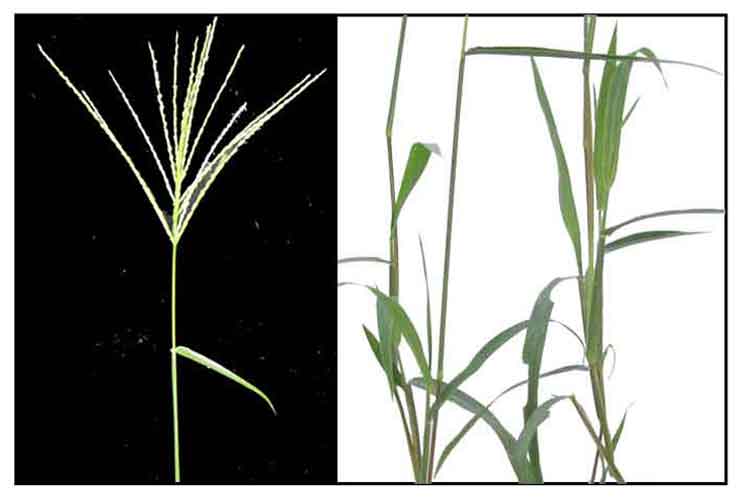
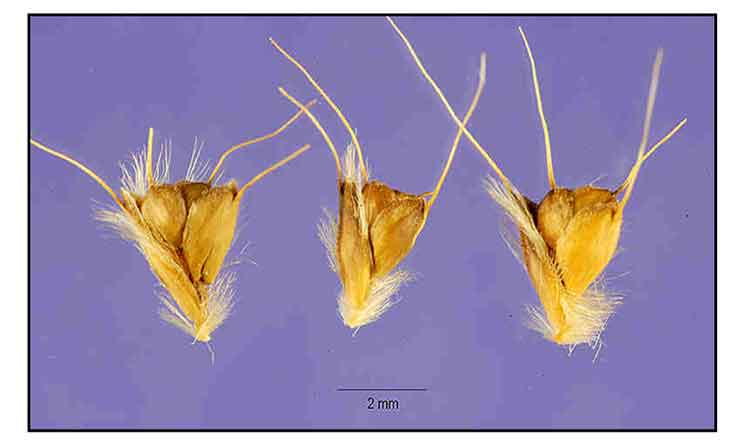
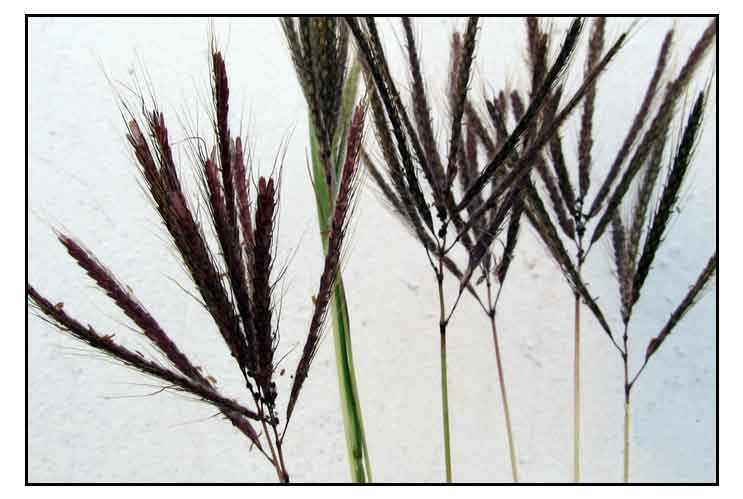
Korokorosan is a annual, tufted, erect grass, growing 0.5 to 1 meter high. Leaves are thin, linear-lanceolate, rounded at the base, acuminate, flat, 8 to 15 centimeters long, with a flowering stalk at the tip of its stem. Floral branches are numerous, opening from a central point suggesting the ribs of an umbrella. Florets are dense and tiny, with long purplish hair. Grains are trigonous.
 Distribution Distribution
- In and about towns and open grasslands and waste places from Luzon to Mindanao.
- Widespread species found in sea coasts and offshore islands of China, Taiwan, India, Southeast Asia, Java , Australia.
- Originating from tropical America.
Constituents
- Aqueous extract of leaves yielded phytosterols, flavonoids, tannins, phenols, carbohydrates, proteins and amino acids. (see study below)
 (3) (3)
- Study for phytochemical constituents
of roots yielded amino acids, glycosides,
proteins, and carboxylic acids.
(see study below) (5)
- Phytochemical screening of fresh leaves yielded coumarins+, flavonoids ++, glycosides+, phenols+, saponins+. Quantification of secondary metabolites yielded flavonoids 0.007±0.001, phenols 0.800±0.021, saponins 0.646±0.0026, and tannins 0.720±0.010. (13)
Parts used
Leaves.
Uses
Folkloric
- No reported folkloric medicinal use in the Philippines.
- Elsewhere, paste of leaves applied externally for skin diseases. (1)
- Leaf juice used for fever, diarrhea, and diabetes.
- In Tamil Nadu, India, leaf paste applied externally for fever and diarrhea. (11)
- In the Navapind and Shahpur Virtanin district of Sheikupura, Pakistan, used for for diabetes and skin disorders; also as fodder. (15)
- The Malayali tribes in the Kolis hills of Tamilnadu, India, leaf paste and juice used for treatment of fever, skin diseases, and diabetes. (16)
Others
- Fodder: Used as fodder when young.
Studies
• Analgesic / Anti-Inflammatory / Toxicity Study: Study evaluated a petroleum ether extract of Chloris barbata SW for and anti-inflammatory activity in a carrageenan induced paw edema in rats and analgesic activity using tail immersion and acetic acid induced writhing in mice. Acute toxicity showed no sign of toxicity up to a dose level of 2000 mg/kbw. Results showed dose-dependent analgesic activity and dose-related inhibition of paw edema. (2)
• Antibacterial / Leaves: An in-vitro screening of leaf extracts of Chloris barbata for antimicrobial properties yielded moderate antibacterial activity against some pathogenic microorganisms when compared with standard Ciprofloxacin. (see constituents above) (3)
• Anti-Diabetic / Anti-Hyperlipidemic / Leaves: Study evaluated a methanolic extract of leaves for in-vivo anti-diabetic and anti-hyperlipidemic activities in STZ-induced diabetic rats. Results showed a significant decrease in blood glucose and significant increase in plasma insulin and liver glycogen levels in STZ induced diabetic rats, comparable to glibenclamide. Anti-hyperlipidemic activity was evidenced by decrease in serum TC, TG. LDL-C, VLDL-C with a significant increase in HDL-C. (4)
• Antibacterial / Roots: Study of powdered root material from Chloris barbata yielded bioactive constituents linked to its antibacterial activity against Staphylococcus aureus and Escherichia coli. (see constituents above) (5)
• Antipyretic / Analgesic / Leaves: Study evaluated the in vivo antipyretic and analgesic activities of ethanolic extract of C. barbata leaves in a rat model. No toxicity was observed at an oral dose of 2000 mg/kg. Results showed significant antiypretic activity in brewer's yeast induced pyretic activity and analgesic activity in tail immersion and hot plate method. The effects were comparable to paracetamol. (9)
• Anthelmintic
/ Leaves: Study evaluated the in vitro anthelmintic activity of ethanolic leaf extract of C. barbata against Indian earthworm Pheretima posthuma using three concentrations i.e., 25, 50, and 75 mg/ml. Results showed significant anthelmintic activity at higher concentrations compared to standard albendazole in terms of time of paralysis and time of death of worms. (10)
• Anti-Urolithiatic: Study evaluated crude ethanol and aqueous extracts of C. barbata for in vitro anti-urolithiatic activity. Both extracts showed maximum efficiencies in dissolution of calcium oxalate crystals, with the ethanolic extract showing more efficiency than the aqueous extract. (12)
• Antipyretic / Analgesic / Leaves: Study evaluated the in vivo anti-pyretic (brewer's yeast) and analgesic (tail immersion and hot plate methods) activities of ethanolic extract of C. barbata leaves in rats. Acute toxicity study showed no toxicity or mortality at dose of 2000 mg/kg. Results showed antipyretic and analgesic activities comparable to standard drug paracetamol. (14)
Availability
Wild-crafted. |