 Gen info Gen info
- The family Araceae comprised about 110 genera and more than 1800 species, members of which are rhizomatous or tuberous herbs.
-
Etymology: The genus Acorus derives from 'Acoron' (coreon) meaning the pupil of the eye. The species names 'calamus' derives from Greek 'calamos' meaning 'a reed.'
-
Historical info: Sweet flag's ethnobotanical history dates back to the Old Testament when Moses was bade by God to make holy oil for anointing the tabernacle. It has been mentioned in early Greek and Roman medicine. Acoron, an herbal of the first century, appears to be sweet flag. (39)
Botany
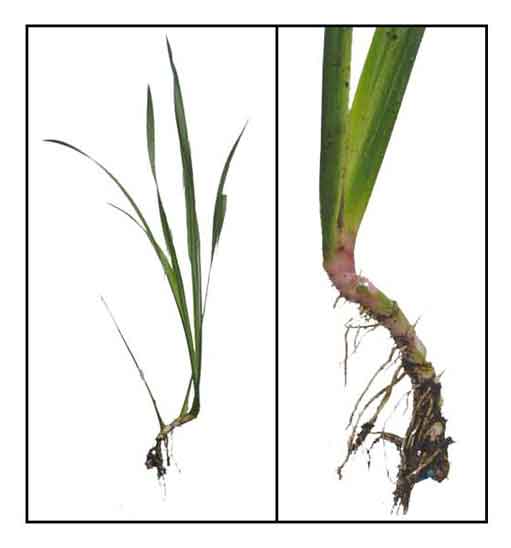
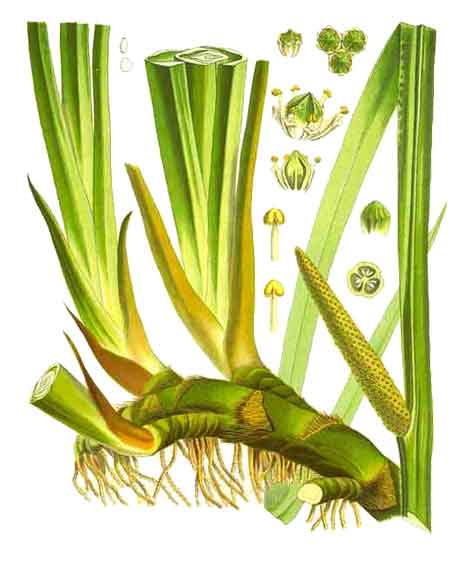
Lubigan is a perennial aromatic herb, with creeping, branching and rhizomatous rootstock. Rhizome are prostrate,
firm and stout with compactly arranged annular rings with numerous rootlets. Leaves arising from rhizome are linear, distichous, 25 to
50 centimeters long, 1 to 1.5 centimeters wide, with waved margins and stout midribs, base of leaf sheathed, clasping to each
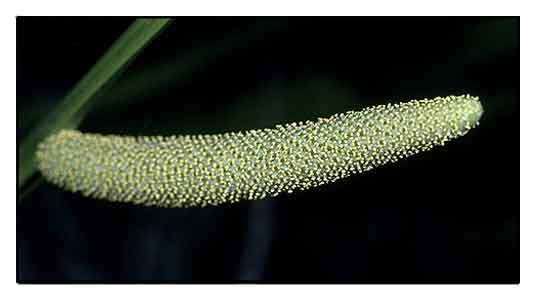
other. Peduncle is compressed. Spathe is green, much elongated, similar in shape to the leaves. Spadix is 3 to 5 centimeters long, and 1 centimeter or less in diameter, and bears many flowers. Flowers are very small, compacted into a concave-shaped spadix
inflorescence. Sepals are 6, stamens 6, rarely flowering in the Philippines. Fruits are berries, turbinate, prismatic, with pyramidal tops, about
0.2 centimeter diameter.
 Distribution Distribution
- Along streams in mountains,
creeks other moist places with running water, on boulders, etc., at
low and medium altitude in Luzon (Laguna).
-
Also found in Bontoc and
Benguet provinces in swamps, at an altitude of about 1,300 meters, as a naturalized element.
-
Also occurs in the temperate to subtemperate regions of Eurasia and the Americas.
 Constituents Constituents
- Rhizomes contain a volative and aromatic oil, sugars, choline, mucliage, and a little tannin.
- Phytochemical studies yield volatile oil (active constituents α-asarone
and beta-asarone) and saponin.
- Rhizome studies have yielded asarone, parasaron, asarylaldehyde, sesquiterpenes,
acorin, eugenol.
- An oily substance, calamol (C12H18)3) has been extracted from the rhizome. Calamol oil is colorless, mobile liquid, with a strong characteristic, and rather pleasant aromatic odor. The oil has been described as containing palmitic and heptoic acids, ester of palmitic together with some pinene, camphene, asaraldehyde, eugenol, asarone, calamene, calamerol and calameon.
- Rhizome has yielded an alkaloid, mainly choline, soft resin, gum, starch, and a bitter glucoside, acorin.
- Study of dried rhizome for calamus oil yielded 1.37 ± 0.11% v/w. ß-Asarone was the major component followed by α-aserone. Other compounds were methyl isoeugenol, shyobunone, isoelemicin, methyl isoeugenol, ß-calacorene, khusinol acetate, shyobunone, guaiol, α-cadinol, elemicin, -cadinene, spatulenol, -muurolol and rosifoliol. (41)
- Phytochemical screening of leaf and rhizome yielded steroids, alkaloids, tannins, phenols, flavanoids, fatty acid, cardiac glycosides, carbohydrates, amino acid and proteins. Anthocyanin and leucoanthocyanin were present only in the leaf essential oil. (see study below) (42)
- GC analysis of essential oil of rhizomes yielded main components of isoshyobunone (15.56%), β-asarone (10.03%), bicyclo[6.1.0]non-1-ene (9.67%), shyobunone (9.60%) and methylisoeugenol (6.69%). (see study below) (49)
- GC-MS study of leaves for essential oil extracted by steam distillation
yielded a total of 61 components accounting for 71.08% of the total oil. The main compounds were α-asarone 16.54%, (E)-methylisoeugenol 5.06%, γ-cadinene 3.00%, α-pinene 2.96%, and citronellal 2.82%. (66)
 Properties Properties
-
Considered stimulant,
carminative, emetic, antispasmodic, insectifuge, astringent.
- Studies indicate anticonvulsant, antibacterial, antioxidant, insecticidal, radioprotective, glucosidase inhibitory, insulin sensitizing, antiepileptic, larvicidal, smooth muscle relaxant, neuroprotective, hypolipidemic,
immunomodulatory properties.
- Rhizome considered stimulant and tonic.
- Oil of sweet flag considered antibacterial, antifungal, and antiamebic.
- In Ayurvedic medicine, rhizomes are considered aromatic, stimulant, bitter tonic, emetic, expectorant, emmenagogue, aphrodisiac, laxative, diuretic, antispasmodic, carminative and anthelmintic.
(53)
Propagation
Division of rhizomes
and potted without drainage holes. For potting, use one part river sand,
one part garden soil, one part coco coir dust and one part rice hull.
When established, place in partial to full sun.
Part utilized
Rhizome and
leaves.
 Uses Uses
Edibility
-Fresh rhizomes can be candied or used in cordial liqueurs, soups and
sauces, mixed with other condiments (ginger, mace or cinnamon).
-Young shoots used in salads, believed to improve the appetite.
Folkloric
· Rheumatic
arthritis, lumbago and leg pains: As embrocation, by cooking vine or
rhizome (50 gms) with coconut oil (3 oz) .
· Indigestion, gastritis; Used for ague, tonic dyspepsia.
· Rhizome use as masticatory for toothache.
· Rhizome used as stimulant and tonic.
· Oil is carminative; also used as digestive and to increase the appetite.
· Dried rhizome chewed ad libitum to relieve dyspepsia.
· Oil used as expectorant and remedy for asthma. Also used for chronic dysentery.
· Hakims use the rhizome for hemorrhages and intestinal ulcerations; also for suppression of urine and menstrual evacuations.
· In Teheran, rhizome is reputed to be a remedy for rheumatism.
· Rhizome is a nervine sedative; in large doses, nauseant and emetic.
· Tinnitus, deafness, poor memory.
· Loss of consciousness during high fever.
· Sometimes combined with other drugs for treatment of insanity.
· Decoction: 30 gms of dried material (roots and leaves) to a
pint of boiling water; tea drunk 4x daily for dyspepsia, gastritis,
indigestion, stomach pains, diarrhea, asthma.
· Powdered rhizome used as insecticide and insectifuge.
· Rhizome skin used as hemostatic.
· Poultice of fresh material used for abscessed inflammation
and scabies.
· In Ayurveda,
used for psychoneurosis, insomnia, hysteria, epilepsy, memory loss.
Also, for cough, fever, bronchitis, depression, inflammation, tumors,
general debility.
· In Teheran, rhizome used as remedy for rheumatism.
· In Chinese medicine,
used to aid digestion and regulate gastrointestinal fermentation and
acidity. In ancient Chinese medicine, used to relieve swelling and constipation.
· In Greek-Arab medicine, used to treat gastritis, anorexia,
epilepsy, rheumatoid arthritis.
· Early Europeans, Chinese and Arbas considered it a strong aphrodisiac; while in North America and New Guinea, once used to induce abortion.
-
In Ayurvedic medicine, used for treatment of epilepsy, schizophrenia and memory disorders, chronic diarrhea and dysentery, bronchial catarrh, intermittent fevers, tympanitis colic, otitis media, cough, asthma, glandular and abdominal tumors. Also used traditionally for flatulent colic and chronic dyspepsia, kidney and liver problems, rheumatism and eczema. Rhizomes are used in form of powders balms, enemas, pills, and ghee preparations. Rhizomes used for protection against small pox, ringworm, snake bites, gout, rheumatism, and dysmenorrhea. Stems used for cough, cold, and toothache. Tribals in the Garhwal region of the Himalayas chew fresh rhizomes to prevent alcohol intoxication. Rhizome decoction used in children for gastroenteritis. Rhizome pieces are tied around the belly for jaundice. Tirumala natives use rhizomes for treatment of dental disorders. (53)
Folkloric
fringe
- Used to protect young children from bales or
usog. The matured rhizome is round-peeled and dried and the pieces
thread together and worn as a protective waist or wrist band.
- Used as an amulet to ward off evil spirits.
Others
- Repellent: Fragrant leaves and oil used as insect repellent
- Scents and Perfumery: Oil used for scenting snuff. Also for flavoring alcoholic beverages. Calamus oil also used in making perfumes. Powdered rhizome used for sachet and toilet powders.
- In India, since antiquity, rhizomes has been used for medicinal baths, as incense, and for tea. Powdered rhizomes used as insecticide against fleas, bedbugs, moths, and lice. Rhizomes used for killing insect pests in stored rice. Also used in incense sticks. (53)
Studies
• Insecticidal / Asarones:
Study indicate the toxicity of asarones might be due to the cis configuration. In a fumigation test, the insecticidal activity of the compound was largely attributable to its fumigant action. • Insecticidal activities of asarones identified in Acorus gramineus rhizome
against Nilaparvata lugens (Homoptera: Delphacidae) and Plutella xylostella
(Lepidoptera: Yponomeutoidae) (2)
• Antifungal / B-Asarone:
An antifungal substance, B-Asarone, was isolated from the extract of
AG with in vivo and in vitro activity against plant fungal pathogens
M. grisea and C. orbiculare. (1)
• Antibacterial / Anthelmintic:
Isolation of beta-asarone, an antibacterial and anthelmintic compound,
from Acorus calamus in South Africa: The aromatic rhizomes is used in
many traditional medicine systems for stomach cramps, dysentery, asthma
and as anthelmintic, tonic and stimulant. The beta-asarone isolated
showed anthelmintic and antibacterial activities. However its mammalian
toxicity and carcinogenicity discourages its use for traditional healing. (3)
• Glutathione S-transferase Activity / Hyaluronidase Inhibitory
Effect: Of 20 alcohol extracts of 20 species plants
tested, Acorus gramineus and Pueraria lobata exhibited GST activity. (6)
• Anti-Diarrheal:
Study of plant extracts for anti-diarrheal potential against castor-oil
induced diarrhea in mice showed Acorus calamus rhizome significantly
reduced induction time of diarrhea and the total weight of the feces.
Results established the efficacy of the plant extracts as antidiarrheal
agents. (7)
• Anti-Ulcer / Anti-Secretory /
Cytoprotective : Ethanol extract study produced significant
anti-secretory, anti-ulcer and cytoprotective effects in rats. Its ability
to protect the mucosa against indomethacin-induced mucosal damage confirms
its anti-ulcer activity. Calamus also showed significant adaptive cytoprotective
activity. It is known to possess sesquiterpenes which could contribute
to its anti-ulcer activity. (8)
• Anti-Convulsant / Essential Oil Inhalation Effects:
Sedative effect after inhalation or oral administration of AGR essential oil suggests the oil may act on the CNS via the GABAergic system. An inhibitory activity of preinhalation of the essential oil was also noted on lipid peroxidation, to which an anticonvulsive action is attributed. (10)
• Antihepatotoxic / Antioxidant:
Study showed the ethanol extract of AC confers hepatoprotective and antioxidant activities by histopath and biochemical observations against acetaminophen-induced liver injury is rats; an effect comparable to the standard drug silymarin. (11)
• Volatile Oil / Olfaction Stimulation / Benefits in Alzheimer's Disease:
Study showed perfume stimulating olfaction with volatile oil of Acorus gramineus significantly increase the learning-memory ability, decrease MDA content and increase SOD and GSH-Px activities and brain weight in AD rats. (14)
• Memory / Cerebral Atrophy / Alzheimer's Disease:
Study in AD-induced rats treated with extract of volatile oil of A. gramineus and piracetam showed adjuvant therapy has the effect of controlling cerebral atrophy and prevention and cure of AD.
• Calamusenone / Pesticidal: Calamusenone isolated from A. gramineus rhizome showed promise as a novel pesticide candidate for stored-product pest control. (15)
• CNS Neuroprotective Effects / Anticonvulsive: (1) Korean study in mice on central effects of inhalation of essential oil from AG produced significant inhibition of GABA-transaminase enzyme degradation with resultant increase in GABA and glutamate. An anticonvulsant and sedative effect was reported. (2) Both Acorus gramineus and α-asarone can enhance reactivity and convulsive threshold of immature rats to electric stimulation. (3) Rhizome essential oil study showed neuroprotective effects on cultured cortical neurons through the blockade of NMDA receptor activity. (18)
• Pharmacognostical and Phytochemical Study: Microscopic studies showed the presence of epidermis, cortex, fibrovascular bundle, and starch grain the the drug powder. Phytochemical screening showed alkaloids carbohydrate, glycoside, phenolic compounds and tannins.
• Antimicrobial: Study of rhizomes and leaf extracts showed pronounced antifungal activity with the ethyl acetate extracts. In addition, both a- and ß-asarones exhibited very strong antimicrobial activities against fungi and yeasts, higher than the rhizome and leaf extracts. Study suggests the active principles a- and ß-asarones might be responsible for the antimicrobial activity. Only antibacterial activity to E. coli was noted.
• Anti-Anxiety: Study of 70% hydro-alcoholic extract was done on general anxiety in humans. The results showed the extract not only significantly attenuated anxiety related disorders but also significantly reduced stress phenomenon and correlated depression. (26)
• Bioanalytical Investigation of Asarone in Connection with Intentional Intoxication / : A study, spurred by reports of intentional intoxication in humans, failed to demonstrate the presence of 2,4,5-trimethoxyamphetamine, claimed as a hallucinogenic component of A. calamus.. The study identified cis-TMC as a urinary target metabolite for LC-MS for detection of intoxication cases, and possible as an alternative to GC-MS analysis of a- and ß-asarone. (27)
• Anti-Seizure: Study of an aqueous extract of Acorus calamus showed protective effect against MES (maximal electric shock) but not against PTZ (pentylenetetrazole) induced seizures. (28)
• Anticonvulsant / Raw and Processed Vacha Rhizomes: Study confirmed the anticonvulsant activity of raw Vacha and subjecting it to classical Shodhana (purification) procedure enhanced, rather than decrease, the activity profile of the Vacha. (30)
• Toxicity Study / Rhizomes: Study evaluated the potential toxicity of an ethanolic extract of Acorus calamus rhizomes in Wistar rats. Hematologic and biochemical analysis showed no marked differences in any of the parameters, with no gross or histopathological changes observed. The ethanolic extract does not appear to have toxicity on acute and chronic administration in rats. (31)
• Bioanalytical Study on Possible Calamus Oil Intoxications: Calamus or sweet flag is being marketed as being hallucinogenic. Study aimed to identify α- and β-asarone, considered active components of A. calamus, in urine samples collected from seven cases. Study showed not evidence for the presence of the claimed hallucinogenic substance TMA-2 (2,4,5-trimethoxyamphetamine) in urine samples collected after ingestion of A. calamus oil. (33)
• Prevention of CCI Induced Neuropathy: Study investigated the attenuating role of A. calamus plant extract in chronic constrictive injury (CCI) of sciatic nerve induced peripheral neuropathy in rats. Results showed AC prevented CCI induced neuropathy which may be attributed to its multiple actions including antioxidative, anti-inflammatory, neuroprotective, and calcium inhibitory actions. (34)
• Cytotoxic Potential / Rhizome: Study evaluated the cytotoxicity of methanolic and aqueous extracts of rhizomes of A. calamus. Both extracts showed to be cytotoxic by Allium cepa root tip assay and XTT assay in MDA-MB-435S and Hep3B cell lines. Results suggest a potential for the development of anticancer drugs. (35)
• Cytotoxic Effect / Breast Carcinoma Cell Line: Study evaluated the cytotoxic effect of A. calamus extract on breast carcinoma (MCF-7) cell lines. Results showed A. calamus can cause cell death in MCF-7 cancer cells, decreasing cell viability in malignant cells in a concentration dependent manner. (36)
• Analgesic Effect: Study evaluated the analgesic activity of methanolic extracts of Acorus calamus and Oroxylum indicum in adult Swiss albino mice using acetic acid induced writhing method. Results showed inhibition of writhing reflex, with the methanolic extract of A. calamus showing greater activity than O. indicum. (37)
• Bioactive Fraction (F3) Effect in Hyperlipidemia: Study evaluated the bioactive F3 fraction from the rhizomes in experimentally induced hyperlipidemia in rats. The bioactive fraction F3 demonstrated cholesterol reducing effect y increasing fecal cholesterol excretion and decreasing cholesterol biosynthesis in the liver. The effects on fibrinogen levels and free radicals indicate the F3 fraction provides potential benefit in atherosclerosis associated with hyperlipidemia. (38)
• Drug Interactions: Moderate interactions: (1) MAO--medications for depression, for ex. Nardil (phenelzine), Parnate (tranylcypromine. (2) Sedatives, CNS depressants. Minor interactions: Antacids, medications that decrease stomach acid (H2 blockers and proton pump inhibitors). (40)
• Antimicrobial / Essential Oil /
Leaf and Rhizome: Study evaluated the antimicrobial effect of essential oil of leaf and rhizome of Acorus calamus against different microbial strains. Rhizome essential oil showed higher activity than leaf oil even at low MIC. (see constituents above) (42)
• Antidiarrheal / Leaves: Study evaluated the antidiarrheal effects of leaves of Acorus calamus against castor oil-induced diarrhea in wistar rats. Results showed antidiarrheal activity as evidenced by a significant decrease in severity of diarrhea, reduction in rate of defecation and a profound decrease in intestinal transit. (43)
• Apoptotic / Oral Cancer Cell Lines: The mechanism that can activate caspases may be a feasible approach for effective tumor treatment. Acorus calamus decreased cell viability in malignant cells in a concentration dependent manner. The ability of apoptotic induction by A. calamus can be utilized in anticancer formulation. (44)
• Immunomodulatory
/ Leaves: Study evaluated various extracts of Acorus calamus leaves for immunomodulatory activity by in-vivo phagocytic stimulation and nitro-blue tetrazolium test. The petroleum ether, alcoholic extract and volatile oil showed high significant immunostimulation (p<0.001) activity at 5-15 mg/ml concentration. Results showed stimulation of cell mediated immune system through modulation of neutrophil function. (45)
• Blood Pressure Lowering / Vascular Modulatory Effects: Study of crude extract and fractions of Acorus calamus for blood pressure lowering effect showed relaxant effects possibly mediated through Ca++ antagonism in addition to a nitric oxide pathway. An associated vasoconstrictor effect may be nature's way to offset excessive vasodilation. (46)
• Antifungal: Study evaluated petroleum ether and ethanolic extracts of eight medicinal plants for anti-fungal activity against phytopathogenic fungus Sclerotium folfsii Sacc. using poison food method. The most promising result was obtained with the petroleum ether extract of A. calamus, which exhibited 100% inhibition with MIC of 10.4 mg/ml. (47)
• Antioxidant / Leaves and Rhizomes: Study investigated the antioxidant activity of methanolic extract of leaves and rhizomes of A. calamus by DPPH assay. The rhizome extract displayed stronger DPPH free radical scavenging activity than the leaf extract. Total phenolic content was 17.1 ± 0.04 and 17.3 ± 0.88 mg gallic acid/g of extract, respectively. There was a correlation between total phenolic content and antioxidant activity of leaves and rhizomes extracts. (48)
•
Repellent and Insecticidal / Shyobunone and Isoshyobunone / Essential Oil / Rhizomes: Study evaluated the essential oil of A. calamus rhizomes for insecticidal and repellent activity against Lasioderma serricome and Tribolium castaneum. Of the essential oil components, the active constituents were shyobunone and isoshyobunone. The EO showed contact toxicity against LS and TC with LD50 of 14.40 and 32/55 µg/adult, respectively. The EO, shyobunone and isoshyobunone were strongly repellent against TC. (49)
• Wound Healing / Leaves: Study evaluated the wound healing activity of 80% ethanolic extracts of mature leaves of Acorus calamus leaves on excision- and incision-based wound models in rats. Topical application once daily in concentration of 40% w/w and 20% w/w in ointment formulation showed enhanced wound contraction, decreased epithelialisation time, increased hydroxyproline content and histological characteristics of wound healing. The extract promoted significantly promoted wound healing in both wound models. (50)
• Interaction of α-Asarone and A. calamus with CYP3A4 and CYP2D6: Study evaluated the possible interaction of standardized extract of Acorus calamus (AC) with Cytochrome P450 enzyme. Effect on individual isoforms such as CYP3A4 and CYP2D6 isoenzymes were analyzed. CYP450-CO assay showed moderate interaction potential. Extract showed higher IC50 values (46.84-32.99 µg/ml) compared to standard inhibitors and lover IC50than α-asarone. Care should be taken when using the extract with other cytochrome P450-interacting molecules, with low therapeutic index. (51)
• Effect of Supplemental Ultraviolet-B on Essential Oil Composition and Phenolic Content: Study evaluated the effect of supplemental UV-B radiation (sUV-B) on essential oil contents of sweet flag. The level of essential oil and phenol contents increased with exposure to sUV-B. It resulted in significant increase in p-cymene and carvacrol contents of the EO. Decrease in level of major component beta-asarone due to sUV-B treatment is of prime importance because of its toxicological concern to human health. (52)
• Effect on Collagen Maturation of Wound Healing: Study evaluated the efficacy of topical administration of ethanol extract of A. calamus on dermal wound healing in rats. Biochemical analysis of granulation tissue revealed a significant increase in collagen, hexosamine and uronic acid compared to control. Tensile strength of treated wounds was increased by 112%. A significant reduction in lipid peroxide levels suggested presence of antioxidant compounds. Results confirmed beneficial effects in augmenting the wound healing process. (54)
• Anticellular / Immunosuppressive / Rhizome: Study evaluated the anticellular and immunomodulatory properties of ethanolic extract of Acorus calamus rhizome. The extract inhibited proliferation of mitogen (phytohaemagglutinin; PHA) and antigen (purified protein derivative; PPD)-stimulated human peripheral blood mononuclear cells (PBMCs). The extract also inhibited growth of several cancer cell lines of mouse and human origin. It inhibited production of NO, IL-2, TNF-α. Results demonstrated in vitro antiproliferative and immunosuppressive potential of the ethanolic extract of rhizome. (55)
• Cancer Chemoprevention / Mechanisms: Review focuses on the current available scientific evidences of A. calamus and/or asarone for cancer chemoprevention based on preclinical in vitro and in vivo models, along with molecular targets of mechanisms involved in its anti-cancer activity. The mechanisms underlying the cancer chemoprevention of A. calamus and/or asarone includes variations of all kinds of cancer hallmarks, which include regulation of cell proliferation and cell cycle arrest, induction of apoptosis, inhibition of angiogenesis as modulated via different signal transduction pathways. Study hopes to provide sources and direction for further studies. (56)
• Silver Nanoparticles / Antibacterial / Rhizomes: Study reports on the biosynthesis of silver nanoparticles (AgNPs) using aqueous rhizome extract of A. calamus. The AgNPs significantly inhibited clinical isolates of Staphylococcus aureus and Escherichia coli in a dose dependent manner. Results suggest potential for commercial application as an antibacterial agent. (57)
• Neuroprotective / Chronic Sciatic Nerve-Induced Pain / Saponin: Study evaluated a saponin-rich extract of A. calamus (SRE-AC)in chronic constriction injury (CCI) of the sciatic nerve induced neuropathic pain and neuronal functional changes in rats. The CCI produced significant (p<0.05) increase in thermal and mechanical hyperalgesia, rise in sciatic functional index, decrease in nerve conduction velocity, along with biochemical and histopathological changes. Oral administration of SRE-AC and pregabalin significantly (p<0.05) ameliorated CCI-induced nociceptive pain threshold, sciatic functional and electrophysiological changes in a dose dependent manner, and attenuated tissue biochemical and histopathological changes. (58)
• Neuroprotective to Brain Against Noise Induced Stress: Exposure to continuous loud noise is a serious health concern with its excess production of free radicals. Study evaluated the protective effect of ethyl acetate and methanolic extract of A. calamus against noise stress (30d, 100 dBA/4h/a) induced changes in the rat brain. Study showed during exposure in noisy environment ROS generation lead to increase in corticosterone LPO and SOD, decrease i CAT, GPx, GSH, protein thiols, vitamins C and E levels. Both EA and ME protected against most of the changes in the rat brain induced by noise stress. (59)
• Antimicrobial Against MDR Nosocomial Pathogens / Rhizome: Study evaluate the invitro antibacterial property of A. calamus rhizome acetone extract against nosocomial pathogens i.e. E. coli, S. aureus, P. aeruginosa, K. pneumonia, K. oxytoca, and Acinetobacter baumanii. All six isolates were resistant to an antibiotic with a multidrug-resistance (MDR) pattern. Results showed considerable inhibition of A. calamus extract in all isolates. Maximum inhibition was 17 mm on S. aureus and minimum inhibition of 13mm on A. baumanii at 60 µg concentration. (60)
• Nephroprotective / Antioxidant / Acetaminophen Toxicity: Study evaluated the nephroprotective and antioxidant activities of ethanol extract of AC at doses of 250 and 500 mg/;kbw on acetaminophen (APAP) induced toxicity in male albino rats. AC inhibited the hematological effects of APAP, significantly increased activities of renal SOD, catalase, glutathione, and glutathione peroxidase and decreased MDA content of APAP-treated rats. Histopathological changes supported the protective nature of AC against APAP-induced necrotic damage of renal tissues. Results showed nephroprotective and antioxidant activities against APAP induced renal damage. (61)
• Anti-Carcinogenic and Anti-Angiogenic against Gastric Cancer Cells: Study evaluated the anticancer activity of ethanolic and methanolic rhizome extracts of A. calamus and essential oil on human gastric cancer cell line (AGS). The extracts inhibited the angiogenesis in HUVEC cells. The extracts and essential oil caused G1 arrest in AGS cells and downregulated Oct4 and NS (Nucleostemin) after treatment. GC-MS yielded new compounds epiprezizaene, valencene and isocyclocitral in the essential oil. Results showed antiproliferative and anti-angiogenic effects on cancer cells. (62)
• Acute and Sub-Acute Oral Toxicity Study: Study evaluated the acute and sub-acute toxicity profile of hydroalcoholic extract of A. calamus (HAE-AC) in mice and rats respectively. On single oral doses of HAE-AC 2,500 and 10,000 mg/kg induced increase in general behavioral abnormalities in nice. LD50 was 5,070.59 mg/kg. Daily single oral doses of HAE 200, 500, and 1000 mg/kg were well tolerated behaviorally after 28 days of dosing and induced no significant changes in body and organ weights of rats. A mild rise in ALT and AST and histopathlogical changes in liver tissue were noted at 1000 mg/kg dose of HAE-AC. Results suggest HAE-AC is non toxic and at high dose has a mild but acceptable toxicity potential. (63)
• Antispasmodic / Antidiarrheal: Study evaluated the pharmacologic basis for use of the plant as antispasmodic and anti diarrheal. In isolated rabbit jejunum preparation, the crude extract caused inhibition of spontaneous and high K+ (80 mM)-induced contractions with EC50s of 0.42 and 0.13 mg/mL suggesting spasmolytic activity, possibly mediated through calcium channel blockade (CCB). The CCB activity was concentrated in the n-hexane fraction. Results provide strong mechanistic basis for its traditional use in gastrointestinal disorders such as colic pain and diarrhea. (64)
• Diuretic / Antiurolithiatic / Rhizome: Study evaluated the diuretic and antiurolithiatic activities of ethanolic extract of Acorus calamus rhizome. Ethylene glycol induced urolithiasis. Cystone was used as reference drug. Results showed the EEAC (750 mg/kg p.o.) produced significant increase in urine volume (p<0.001) and urinary excretion of Na+ and K+ electrolytes (p<0.05) comparable to furosemide. In the ethylene glycose induced urolithiatic model, EEAC significantly (p<0.05) decreased excretion and deposition of various urolithiatic promoters in a pattern comparable to cystone. The EEAC also prevented impairment of renal functions. The antiurolithiatic effect is mediated possible through diuretic and nephroprotective actions of the active compounds of the rhizomes. (65)
Toxicity concerns
- Cancer concerns: Banned from food products in some countries because of cancerous findings in animal studies, using high doses of carcinogenic ß-asarone, present in large amounts in Asian plants, but of limited amounts in European plants. Studies report limited amounts of the toxic derivatives in North American plants.
- Putting the cancer concern in perspective,
large doses are fed to test animals in elicit hepatic cancers. Other studies failed to show embryotoxicity or teratogenicity in the embryos of pregnant mice. These test doses are much larger than those found in herbal preparations.
Alternativists argue its safety with its more than 2000 years of use by ancient cultures and folk medicinal practices.
Availability
- Wild-crafted.
- Usually sold in the Quiapo herbal market.
- Essential oil, seed, powder, leaf and rhizome extracts in the cybermarket.
- Marketed in many herbal formulations.
|