|
 Botany Botany
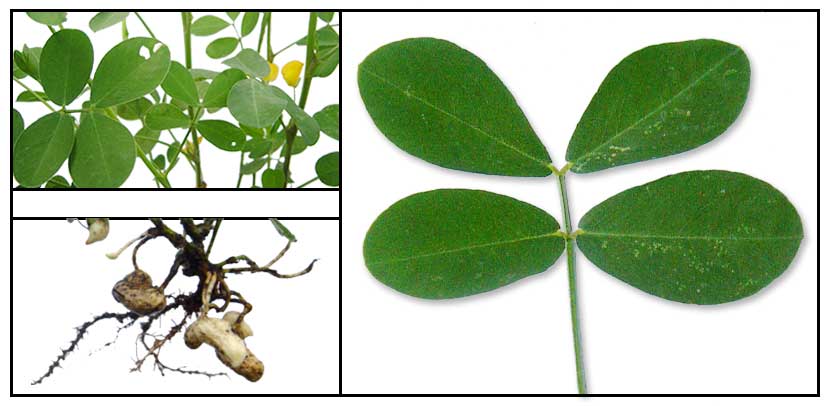
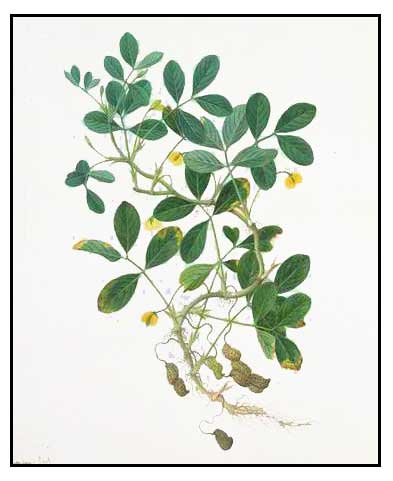
Mani is an annual, spreading,
hairy, branched herb, with stems 30 to 80 centimeters long. Leaves are pinnate,
8 to 12 centimeters long, with a clasping petiole base and the sheath
produced in 2 linear-lanceolate stipules. Leaflets are in two
pairs, oblong to obovate, 2 to 5 centimeters long. Flowers are axillary,
few, fascicled, yellow, about 8 millimeters long. Pods ripen underground
and are oblong, leathery, reticulate, 1 to 5 centimeters long, containing
1 to 3 seeds that are oval and smooth.
 Distribution Distribution
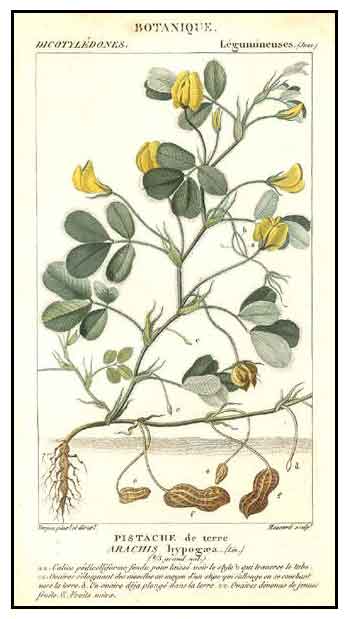
Cultivated in the
many parts of the Philippines for its edible seeds.
Constituents
- Has a high protein and fat content, with considerable carbohydrates and a fair
source of calcium and iron.
- The seeds yield arachis oil, colorless and with a pleasant taste.
- The fixed oil is 43 to 45 percent.
- Peanut oil contains glycerides of palmitic, oleic, stearic, lignoceric,
linoleic, and arachidic acids.
- Three alkaloids have been isolated: betaine, choline, and arachine which
may be a cause of poisoning in animals.
- Phytochemical study yielded isoflavonoid, 1-pentene-3-ol, geraniol.
- Study yielded a new 3,9-dihydroxy-4, 8-dimethoxycoumestan. (4)
- Study of various peel extracts yielded bioactive compounds such as tannins, saponin, flavonoids, alkaloids, glycosides, beta cyanin, coumarins, quinones, and steroids. (see study below) (20)
- Study of oil from seeds of six varieties yielded varying compositions of fatty acids viz. capric, lauric, myristic, palmitic, palmitoleic, stearic, oleic, linoleic, linolenic, arachidic, behenic, and lignoceric. The major fatty acids were oleic (41.67-44.20%) and linoleic (19.58-20.89%). (21)
- Peanut skin methanol and ethyl acetate extracts have shown strong presence of
flavonoids, phenols, alkaloids, and tannins. (see study below) (23)
- Phytochemical analysis of leaves (L), stems (S) and roots (R) yielded alkaloids (LSR), glycosides (LS), glycosides (LS), tannins (R), flavonoids (R), sterols (LR), fats and oils (R), phenols (LR), lignins (LSR), saponins (R), and an absence of quinones. (26)
- Phytochemical screening of stems and
leaves isolated to known compounds identified as 1,2-benzenedicarboxylic acid-bis-(2-methylpropyl) ester (1), 2-hydroxy benzoic acid (2), 1,2-benzenediol (3),4-hydroxy benzoic acid (4), ( E)-3,4-dihydroxy-cinnamic acid (5), 4-hydroxy phenol (6), phthalic acid dibutyl ester (7), 3,4-dihydroxy-phenethylalcohol (8), 4-hydroxyphenyl ethanol (9), 3,4-dihydroxy-benzoic acid (10). (36)
- Study of aerial parts for chemical constituents isolated four compounds which were identified as ß-sitosterol (1), isomedicarpin (2), soyasapogenol B (3), and daucosterol (4). (39)
- Nutrient analysis
of one ounce of shelled peanuts, equivalent to 28 g yielded 166 calories, 7.8 g protein, 17.1 mg calcium, 203 mg potassium, 49.3 mg magnesium, 111 mg phosphorus, 89.6 mg sodium, 33.6 mcg folate, 4.3 g carbohydrates, 2.6 g dietary fiber, and 14.7 mg total fat. (40)
- GC-MS analysis of roots yielded major phytochemical compounds viz., 2H-Pyaran,2,5-diethenyl- tetrahydro, Didodecyl phthalate, Decanoic acid, Tetradecanoic acid, Bis(2-ethylhexyl) phthalate, Dodecanoic acid, Phosphonic acid, 2-(4-Methoxyphenyl)-5-(4-methoxynaphthyl) thiophene and Methyl 2-(N-Benzylimino)-4-chloro-3,3-dimethylbutanoate. (see study below) (41)
- Nutrient analysis of groundnuts, all types, per 100 g yielded: (Principle) energy 567 Kcal,
carbohydrates 16.13 g, protein 25.80 g, total fat 49.24, cholesterol 0 mg; (Vitamins) folates 240 µg, niacin 12.066 mg, pantothenic acid 1.767 mg, pyridoxine 0.348 mg, riboflavin 0.135 mg, thiamin 0.640 mg, vitamin E 8.33 mg; (Electrolytes) sodium 18 mg, potassium 705 mg; (Minerals) calcium 92 mg, copper 1.144 mg, iron 4.58 mg, magnesium 168 mg, manganese 1.934 mg, phosphorus 76 mg, selenium 7.2 µg, zinc 3.27 mg. (USDA National Nutrient Data Base) (42)
Properties
- Oil is considered aperient, demulcent, emollient and pectoral.
- Considered aphrodisiac, decoagulant, anti-inflammatory, peptic.
- Studies have shown antioxidant, anti-inflammatory, hypoglycemic, hypolipidemic, sedating properties.
 Nutritional composition Nutritional composition
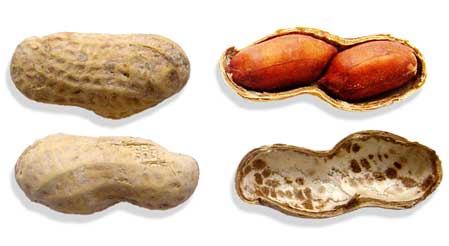
- Seed In grams (g) or milligrams (mg) per 100 g of food.
- 500 calories per 100 g
- Protein, 29g; fat, 45 g; carbohydrate, 15 g; fiber 2.7 g.
- Minerals: calcium 49 mg; phosphorus 409 mg, iron 3.8.
- Vitamins: A, 15mg, B1, 0.79 mg; B2, 0.14 mg; niacin, 15.5 mg, vit C, 1 mg.
Parts used
Seeds, oil.
Uses
Nutrition
- Seeds are edible.
- Kernel of the peanut used for oil extraction; an ingredient in many
food products: peanut butter, candies and desserts.
- Peanut oil used for salads; an inexpensive substitute for olive oil.
- Peanuts also contain resveratrol, touted for its varied health benefits.
Folkloric
- Teaspoon of oil in milk
used for gonorrhea.
- Oil used for bladder conditions.
- In China, used for gonorrhea and rheumatism;
also used for insomnia.
- In Zimbabwe, used for plantar warts.
Others
- Oil used in liniments
and ointments.
- Lower grades of oil used for making soap and illumination.
- Peanut cake makes excellent cattle feed.
- The leafage makes good fodder and hay for livestock.
- Some portion of the oil is used in the manufacture of some textile fibers.
- Peanut shells are used in the manufacture of plastic, wallboard, abrasives and fuel. Also, used to make cellulose (for use in rayon and paper) and mucilage (glue).
 Studies Studies
• Diabetes and HDL-C: Peanut (Arachis
hypogaea) Consumption Improves Glutathione and HDL-Cholesterol Levels
in Experimental Diabetes: Peanut consumption may improve oxidant-antioxidant
status without increasing blood lipids. Increased HDL-C may have cardioprotective
benefits in diabetics. (1)
• Hypoglycemic and hypolipidemic:
Aqueous extract study in alloxan-induced diabetic
rats caused a significant decrease in fasting blood sugar, decrease
in TC, triglycerides, LDL and HDL-C. (2)
• Antioxidant / Anti-Inflammatory:
Biosynthesis Enhancement and Antioxidant and Anti-inflammatory Activities
of Peanut (Arachis hypogaea L.) Arachidin-1, Arachidin-3, and Isopentadienyl resveratrol:
Peanuts yield bioactive stilbenoids, which except for resveratrol have
not been investigated The study showed all the test stilbenoids to have
potent antioxidant and anti-inflammatory activities. (3)
• Antioxidant / Luteolin:
Methanolic extracts
of peanut hulls (Spanish variety) exhibited strong antioxidative activity;
further study showed luteolin as the active antioxidative flavonoid
present in the peanut hulls. (5)
• Immunochemical Studies:
Study yielded 14 antigenic constituents in A. hypogea seeds. Arachin contains 4 antigens and conarachin contains 2. (7)
• Decrease Fat Absorption / Decreased lipolytic Activity:
Study of peanut shell extracts showed inhibitory effect on lipid metabolic enzymes and also increased fecal fat suggesting use in reducing dietary fat absorption. The reduction of intracellular lipolytic activity may reduce circulating levels of free fatty acids. (8)
• Sedative / Sleep Effects:
Study on peanut leaf aqueous extracts (PLAE) showed a mild hypnotic effect on sleep ameliorations. As a mild tranquilizer, the PLAE significantly elevated GABA-mediated neurotransmission and reduced Glu/GABA in target brain region, suggest some efficacy on spontaneous sleep improvement. (10)
• SIRT1 Gene / Resveratrol:
SIRT1 is a gene found in humans and mammals, a principal regulator of lifespan, involved in repairing damage from free radicals and boosting mitochondrial energy production. It is activated by caloric restriction or by resveratrol. Resveratrol is believed to modulate the growth of cancer cells. Resveratrol is naturally found in grapes (providing the anti-aging attribute to red wine), some green teas, and even peanuts. Study is being designed to determine if A. hypogaea extract can be a source of resveratrol. (12)
• Peanut Phytoalexins / Stilbenoids / Sleep Effects:
Study evaluated peanut phytoalexins, together with related natural and synthetic stilbenoids. Results suggest peanut stilbenoids, as well as related natural and synthetic stilbene derivatives exhibit a wide range of biologic activities. (14)
• Effect on Metabolism of Osteoblastic Cells: Study evaluated the effects of A. hypogaea extracts on metabolism of osteoblastic cells. A hydroalcoholic extract stimulated the proliferation and differentiation of ROS cells and differentiation of without effect on osteoblastic cells. The action was attributed to phyto-estrogens, notably isoflavones and/or to non-estrogenic substances. (15)
• Lectin / Anti-Cancer: The D-galactose binding lectin PNA (Pea Nut Agglutination) was successfully isolated and purified from the seed of the peanut (Arachis hypogaea). The isolated PNA showed marked cytotoxicity towards human cancer cell lines viz. HeLa and Hep-2 in a dose-dependent manner. The isolated lectin was found to induce DNA fragmentation in treated HeLa cells in a dose-dependent manner. (17)
• Biosorbent / Cr VI / Peanut Hulls: Study reports on the effectiveness peanut hulls as low-cost biosorbent for Cr (VI) biosorption from aqueous solution. Thermodynamic study showed the biosorption process was spontaneous and endothermic, and suggests potential for the use of peanut hulls for industrial wastewater treatment. (18)
• Anti-Diabetic Effect / High MUFA: Study evaluated the anti-diabetic effects of peanut in alloxan induced diabetic male rats. Results showed an anti-diabetic effect by reducing fasting blood glucose and HbA1c levels. The anti-diabetic effect may be due to high MUFA (mono-unsaturated fatty acid) content and the free radical scavenging activity of peanut. (19)
• Larvicidal Against Chikungunya and Malarial Vectors / Peels: Study evaluated various peel extracts of Arachis hypogaea for larvicidal activity against mosquito vectors. A crude extract showed potent larvicidal activity against A. aegypti and A. stephensi. Results showed the presence of effective constituents that can be a potent source for the production of natural larvicides. The large biomass of agricultural waste can be exploited for integrated mosquito control programs. (see study above) (20)
• Effect on Dyslipidemia in Young Adults: Study the effects of 4-8 weeks of peanut supplementation on 30 dyslipidemic young adults of both sexes, aged 30-40. Results showed the mean serum TAG, LDL-C and TC were significantly decreased, with increase in serum HDL-C level after 8 weeks of supplementation. The lipid lowering effects of peanut may be due to high Mg+2 content and other active components. (22)
• Antibacterial / Seed Coat: Peanut skins are low value byproducts of peanut blanching and roasting operations. Study evaluated the antibacterial activity of peanut skin extracts against some pathogenic microorganisms like Acinetobacter baumannii, Staphylococcus aureus, Klebsiella pneumonia, Serratia marcesens and Escherichia coli. Peanut skin extract showed activity against all test bacteria, with best inhibition against S. aureus. (23)
• Inhibitory Effect Against Methylglyoxal-Derived Advanced Glycation End Product Toxicity: Methylglyoxal (MGO) is a highly reactive dicarbonyl compound that causes endothelial dysfunction, with important roles in the development of diabetic complications. Study evaluated the effects of peanuts and its phenolic contents against MGO-mediated cytotoxicity. Results showed inhibition of AGE formation. Pretreatment significantly inhibited MGO-induced cell death and ROS production in umbilical vein endothelial cells. (24)
• Hepatoprotective / Anti-Inflammatory / Inhibition of Platelet Aggregation / Leaves: Study evaluated the ant-inflammatory and hepatoprotective properties of methanol extract of Arachis hypogaea leaves. Extract significantly suppressed the development of hind paw edema induced by egg albumin. Extract significantly inhibited platelet aggregation in a dose dependent manner. There was also an observed decrease in activity of prostaglandin synthase. There was non-significant difference (p<0.05) in selected liver function parameters in all groups after 21 days of administration. (25)
• Amoebicidal / Pericarp: Acanthamoeba is an opportunistic pathogen causing keratitis and fatal encephalitis. Study investigated the in vitro amoebicidal effect of various extracts and fractions of A. hypogaea L. (peanuts) pericarp (waste product) on cysts of A. astronyxis T7 genotype from patients suffering with keratitis. The total methanol extract chowed the highest mean of non-viable cysts (99%). (27)
• Source of Resveratrol / Roots: Study reports on the extraction of a potent antioxidant, resveratrol (3,4',5-trihydroxystilbene) using 80% methanol extract from peanut roots. The highest and lowest resveratrol contents in roots were 1.330 and 0.130 mg/g on fall and spring crops, respectively. Study notes that peanut roots, usually left in the field as agricultural waste, contain resveratrol, a potent antioxidant. (28)
• Neuroprotective / Antioxidative Against Oxidative Stress in SK-N-SH Cells / Peanut Sprouts: Study evaluated the protective effect of peanut sprout extracts (PSE) against paraquat (PQ) induced SK-N-SH cells. Sprouts were obtained from the germination of mature peanut kernels. PSE showed no significant cytotoxicity at 1.5 mg/mL concentration. Cell death was significantly inhibited in group of cells pre-treated with PSE. The PSE exhibited neuroprotective activities against oxidative stress in SK-N-SH cells induced by PQ and suggests potential use in the prevention of neurodegenerative diseases such as Alzheimer's disease and Parkinson's disease. (29)
• Effect on Serum Testosterone and Lipid Profile: Study evaluated the effect of consuming groundnut on serum testosterone level and lipid profile in male rats. Rats fed on different percentages of ground nut showed different levels of serum lipids and testosterone. Results showed groundnut consumption is associated with increase in serum testosterone accompanied by an increase in HDL-C in male rats. Study suggests groundnuts may be a potential solution to age-related decline in testosterone production. (30)
• Antiviral Activity Against Human Influenza Viruses / Skin Extract: Peanut skins, low-value byproducts of the peanut industry, contain high levels of polyphenols. Study investigated the antiviral activity of ethanol extracts of peanut skins against various influenza viruses using cell-based assays. Extracts with higher polyphenol content exhibited higher antiviral activities. An extract from roasted peanut skins effectively inhibited replication of influenza virus A/WSN/22. The extract showed activity against both influenza type A and type B viruses, and exhibited potent activity against clinical isolate of the 2009 H1N1 pandemic. The extract also showed synergistic antiviral activity with anti-influenza drugs, oseltamivir and amantidine. (33)
•
Improvement of Sleep Behavior / Stem and Leaf: Study evaluated the sedative effects of Arachis hypogaea stem and leaf extract on male Sprague-Dawley rats treated with pentobarbital. Study showed the stem and leaf extract improved sleep behavior in pentobarbital-treated rats possibly through GABA-gated channel related mechanisms. (34)
• Resveratrol / Sensitization of Radioresistant Prostate Cancer Cells / Stems: Study characterized resveratrol (RV) in peanut stem extract (PSE) and showed both RV and PSE dose-dependently induced cell death in DOC-2/DAB2 interactive protein (DAB2IP)-deficient PCa cells with the radiosensitive phenotype. RV and PSE effectively enhanced radiation in the xenograft mouse model. Results demonstrated the promising synergistic effect of RV and PSE combined with radiation in the treatment of radioresistant prostate cancer. (35)
• Silver Nanoparticles / Antibacterial / Roots / Leaves: Study reports on the green synthesis of silver nanoparticles using Arachis hypogaea root extract and evaluation for antibacterial and clinical applications. The AgNPs showed highest activity against Enterococcus sp. (35 ± 0.4 mm) followed by Pseudomonas sp. (33 mm) and Staphylococcus aureus (29 mm). (see constituents above) (41) Study reports on the cost effective, eco-friendly, and economical green synthesis of nanoparticles using a leaf extract as reducing agent. Results suggest the Arachis hypogaea mediated silver nanoparticles could act as an effective agent in antibacterial control systems in water treatment, medicine and industries. (47)
• Antioxidant / Anti-Inflammatory / Skin Extracts: Study evaluated the anti-inflammatory effects of peanut skin extracts on pro-inflammatory enzyme, COX-2 protein expression and its downstream product, prostaglandin E2 (PGE3) and nitrous oxide (NO) level. Study showed skin extracts yield high levels of procyanidins and other phenolic compounds. Both acetone and ethanol extracts exhibited similar antioxidant activity in in-vitro model of inflammation. Results showed decrease COX-2 expression, along with decreased PGE2 and NO levels. Study suggests potential for a low cost and economical source of natural antioxidants for food and nutraceutical industries. (43)
• Peanut Allergy
/ An Evolving Clinical Challenge: Peanut allergy is an IgE-mediated food allergy that may cause severe and occasionally fatal reactions in patients sensitized to peanuts. This study reviews the epidemiology, pathogenesis, and clinical features of peanut allergy, along with diagnostic and therapeutic modalities. Allergy to peanuts resolves infrequently and remains a source of morbidity in about 80% of allergic patients. Of 32 food allergy related anaphylaxis reported from 1994 to 1999, 67% died of anaphylactic reactions to peanut. Only a minute dose--0.1-1 mg--may cause a systemic reaction. More. . .(44)
•
Major Glycoprotein Allergen from Arachis hypogaea / Th2 Adjuvant In-Vitro: Allergy to peanut tends to be persistent and severe. Authors hypothesized that peanut glycans play a role in enhancing the Th2 immunogenicity of peanut allergens. Enhancement of Ag uptake and activation of DCs, the presence of similar glycan PAMPs from insects, crustaceans, and mollusks suggest glycoallergens from these sources may act as Th2 adjuvants that contribute to allergic sensitization in susceptible individuals. (45)
• Cardioprotective / Resveratrol / Boiled Peanuts: Boiled peanuts is reported to possess a bioactive phytoprinciple, Resveratrol, a potent cardioprotective agent. Study evaluated a methanolic extract of boiled peanuts against isoproterenol induced experimental myocardial infarction in albino rats. Results showed cardioprotective effect related to its ability to reduce elevated levels of cardiac enzyme markers and lipid profile. The activity may be due to the presence of high resveratrol. (46)
Allergy & toxicity
• Allergy: Peanut allergy is
common and can be severe, occurring with a prevalence rate of 0.5% in
the general population, accounting for 10-47% of food-induced anaphylactic
reactions. Symptoms vary from mild urticaria to severe systemic reactions
that can be fatal. Hypersensitivity starts in childhood and usually
lasts the lifetime. For many, the history is obvious, commonly occurring
in atopic individuals with other food allergies; laboratory will reveal
a peanut-specific IgE antibody. Although immunotherapy is promising,
present treatment consists of strict avoidance and self-injection of
epinephrine. (Allergen
Data Collections) (6)
• Toxicity / Aflatoxins: A concern is the possible contamination of damaged or spoiled seeds with teratogenic, carcinogenic aflatoxins – the principal toxins aflatoxin B and G, and the less toxic dihydro-derivatives, aflatoxins B2 and G2, formed by aflatoxin producing molds (Aspergillus flavus, etc). Arachin, with 4 antigens and conarachin with 2 antigens are also reported. source
Availability
- Wildcrafted.
- Various peanut based commercial products. |