 Gen info Gen info
- There is an estimated total of 1200 species of Piper in the pantropical and neotropical regions. Works on Philippine wild Piperaceae have been extensive. Candole (1910) reported 133 species of Piper and 26 of Peperomia; Merill (1923), 115 Piper, 25 Peperomia, and Quisumbing (1930), documented 87 Piper and 21 Peperomia.
- Referred to as "King of Spices.
Botany
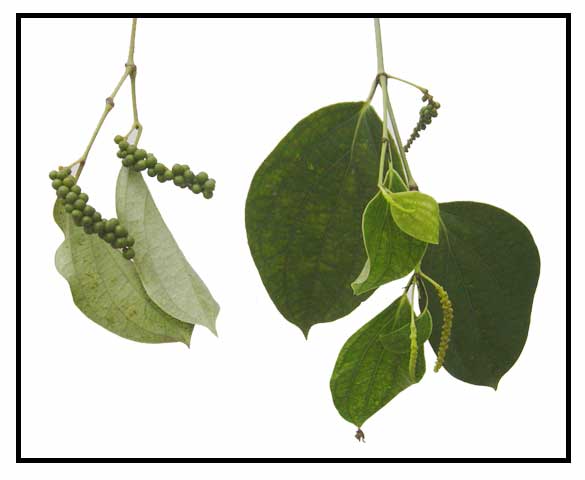
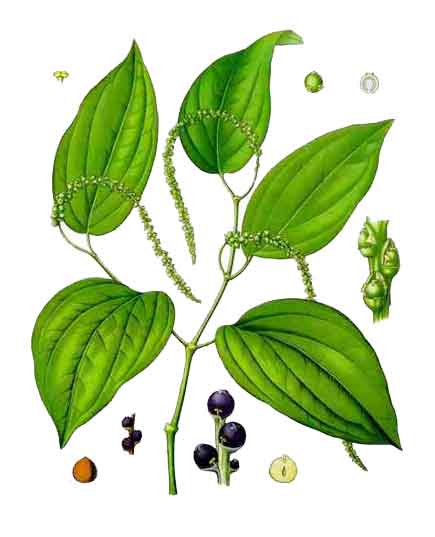
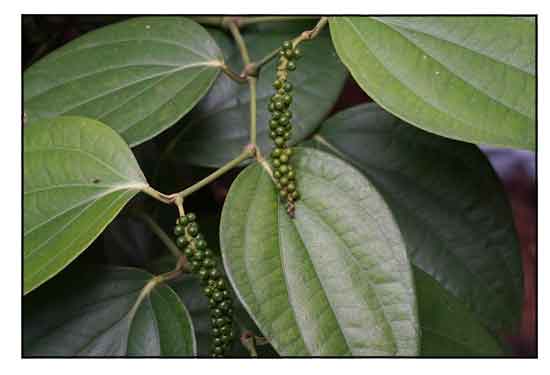
Paminta is a stout climber with
smooth branches, 2 to 3.5 millimeters in diameter. Leaves are somewhat leathery, broadly ovate to oblong-elliptic, 10 to 13
centimeters long, 3.5 to 8 centimeters wide, with pointed, rounded, or heart-shaped based, 7-plinerved, smooth on both surfaces. Rachis is hairy. Bracts of the female cupular receptacles are short, whole, adnate, without raised margins. Flowers are usually dioecious
(having the male and female organs). Female spikes are pendulous, 6.5 to 10.5 centimeters long. Fruits are crowded, sessile, rounded, about 4 millimeters long, 3 millimeters in diameter, with 3 or 4 stigmas.
Distribution
- Introduced.
-
Limited cultivation in the Philippines.
- Also cultivated in all tropical countries of the Old World, and also in Brazil and in the West Indies.
 Constituents Constituents
- Black pepper has been found to contain piperine, alkamides, piptigrine, wisanine, dipiperamide D, and dipiperamide E.
-
The pepper contains an active resin (oleoresin, responsible for the known
pungent taste and aromatic odor), a volatile oil, starch, gum, a small quantity of fatty oil in the mesocarp, and about 5% of inorganic matter, besides the alkaloid, peperine, and a volatile alkaloid probably identical with pepperidine.
-
Contains an alkaloid piperine, 5 - 9%;
piperidine, 5%; mesocarp contains chavicine.
- Piperine the active principle, has the same chemical composition as morphine, although it is almost devoid of taste, color or smell, and is resolvable into piperic acid and a colorless liquid alkaloid, piperidine.
- Study yielded six bioactive compounds i.e. piperine, pellitorine, guineensine, pipnoohine, trichostachine, and piperonal. (16)
- Study of essential oil from root distillation yielded a total yield of 0.39% essential oil, with contents of trans- and ciscaryophyllene, -3-canene, humulene, limonene, pinene in the oil were 51.2, 6.76, 6.00, 3.76, 2.97, 1.35% respectively. (22)
- Nutrient analysis per 100 g yielded: (principles) energy 255 Kcal, carbohydrates 64.81 g, protein 10.95 g, total fat 3.25 g, cholesterol 0 mg, dietary fiber 26.5 g; (vitamins) choline 11.3 mg, folic acid 10 mcg, niacin 1.142 mg, pyridoxine 0.340 mg, riboflavin 0.240 mg, thiamine 0.109 mg, vitamin A 299 IU, vitamin C 21 mg, vitamin E? 4.56 mg, vitamin K 163.7 mcg; (electrolytes) sodium 44 mg, potassium 1259 mg; (minerals) calcium 437 mg, copper 1.127 mg, iron 28.86 mg, magnesium 194 mg, manganese 5.625 mg, phosphorus 173 mg, zinc 1.42 mg; (phytonutrients) carotene-ß 156 mcg, carotene-α 0 mcg, crypto-xanthin-ß 48 mcg, lutein-zeaxanthin 205 mcg, lycopene 6 mcg. (28)
- Study on antioxidant activity showed 74.61 ± 0.02% with an IC50 of 14.15 ± 0.02 µg/ml. (29)
- Phytochemical screening yielded the presence of alkaloids, tannins, flavonoids, cardiac glycosides. (see study below) (31)
- Major chemical compounds responsible for aroma, pungency and medicinal properties are: α-terpineol (floral), acetophenone (irritant, sharp), hexonal (green apple) nerol (fresh, floral, herbal), nerolidol (mild spicy, rooty), 1,8-cineol (camphory), dihydrocarveol (warm, woody), citral (citrussy), α-pinene (terperic, oxidized), piperolnol (sweet, floral.) (32)
- Study of ethanol extract of roots yielded three amide alkaloids viz., piperine, pellitorine, 3,4-dimethyinenedioxycinnamoyl-piperidine, and ß-sitosterol. (see study below) (51)
- Study of chloroform extract yielded 1H-Cycloprop[e]azulen-7-ol, decahydro-1,1,7-trimethyl-4-methylene-, [1ar-(1aα,4aα,7β,7a,β,7bα.)]- (8.39%) and 2-methylene-4,8,8-trimethyl-4-vinyl-bicyclo[5.2.0]nonane (6.92%) as the two primary components. (see study below) (52)
- GC-MS analysis for essential oil of P. nigrum separated and identified 30 compounds. Main components were ß-caryophyllene (23.49%), 3-carene (22.20%), D-limonene (18.68%), ß-pinene (8.92%), and α-pinene (4.03%).
 Properties Properties
- Considered acrid, astringent, rubefacient, stimulant, counterirritant, stomachic,
carminative.
- Roots considered tonic, stimulant, cordial and anthelmintic.
- Studies have shown cholinergic, antispasmodic, analgesic, antibacterial, larvicidal, antiepileptic, antioxidant, hypolipidemic, immune-enhancing, antiproliferative, anti-vitiligo, wound healing, gastroprotective properties.
Parts utilized
Roots, leaves, seeds.
Uses
Edibility / Culinary
• The dried fruits furnish the
black pepper of commerce. When the outer shell is removed, the product
is white pepper.
• The use of pepper as spice and condiment dates back to early times.
• Used for large-scale preservation of food, sausage making, etc.
• Study showed heating black peppercorns between 100˚C and 150˚C for 15 to 30 minutes in a microwave, simulating dry roasting, made little change in the amount of volatile oil. (See study below) (20)
Folkloric
- In the Philippines, used as stimulant and rubefacient. Piperine also used as antiperiodic.
- Decoction used as mouthwash for toothache.
- Used as
rubefacient in alopecia and
skin diseases.
- Used in preparing liniments used in chronic rheumatism.
- Used in dyspepsia, flatulence, gonorrhea, cough, hemorrhoids and intermittent fevers.
- Decoction used for obstinate intermittent fever and flatulent dyspepsia.
- Used a febrifuge, with brandy and anise, in various forms of malarial fevers.
- Externally pepper is rubefacient and used as counterirritant.
- In decoction, used as mouthwash for toothache.
- Used as rubefacient in alopecia and skin diseases.
- Infusion used as gargle for afflictions of the throat.
- Juice of leaves boiled in oil and applied externally for scabies.
- Ointment mixed with lard used against Tinea capitis.
- Used in shellfish and mushroom poisoning.
- Mixed with honey and ginger, used by Malays as abortifacient.
- Roots used as anthelmintic.
- Toasted berries used for stopping vomiting associated with cholera.
- Used for vertigo, paralytic and arthritic disorders.
- Black pepper is corrective for fish, flesh, shell-fish and mushroom poisoning.
- Malay women use black pepper as an abortifacient, taken in pills with honey and ginger.
- In Iranian traditional medicine, used to relieve
menorrhagia in women.
- In Ayurveda, paste of black pepper is used
for boils, piles, rheumatic pains, headache, prolapsed rectum, toothaches.
Pepper is given for dyspepsia, flatulence, diarrhea, cholera, cough, gonorrhea
and malarial fever.
- In India used in traditional medicine for constipation, diarrhea, earache, gangrene, heartburn, hernia, hoarseness, indigestion, insect bites, liver and lung problems, sunburn, dental caries, and toothaches. (16)
Studies
• Spasmolytic / Anti-menorrhagia:Study showed a spasmolytic effect of the black
pepper extract probably through involved voltage dependent calcium channels
and B-adrenoreceptors. Results support its traditional use to relieve menorrhagia.(1)
• Anticholinesterase Inhibitory Activity: In vitro study of extract of P. nigrum seeds showed 50-65% inhibitory activity on acetylcholinesterase.
• Antispasmodic: Antispasmodic Effect of P Nigrum Fruit Hot Water Extract
on Rat Ileum: Study showed spasmolytic effect on rat ileum probably
mediated via Ca+ influx.
• Analgesic : Analgesic Activity Of Piper Nigrum Extract Per Se And Its Interaction
With Diclofenac Sodium And Pentazocine In Albino Mice: Piper nigrum alone did not show any significant analgesic activity. However
PN extract significantly increased the analgesic activity of diclofenac
sodium and pentazocine. (4)
• Pharmacognostical Studies: Root distillation yielded 0.39% essential oil, with a total yield of 0.79% piperine from the root. (5)
• Neural Effects / Piperine: In vitro study using whole-cell patch-clamp electrophysiology, piperine, a pungent alkaloid, showed a similar agonist effect on human vanilloid receptor TRPV1 as capsaicin. Piperine, however, could induce greater receptor desensitization and exhibit greater efficacy than capsaicin.
• Antibacterial: (1) Study yielded an isobutyleicosatrienamide, pellitorine, trachone, pergumidiene and isopiperolein B. All the isolated compounds were active against B subtilis, B spaericus, K aerogenes and Chromobacterium violaceum. (2) Study results showed excellent inhibition of the growth of Gram positive bacteria ( Staph aureus, followed by Bacillus cereus and Strep faecalis) and Gram negative bacteria (Pseudomonas aeruginosa followed by Salmonella typhi and E coli.)
• Larvicidal : Study demonstrated the potential of P nigrum extracts against larvae of Cx quinquefasciatus and its benefits for the development of new cost-effective and environmentally friendly larvicide for mosquito control.(7)
• Antiepileptic : Study demonstrated anticonvulsant activity of the water extract of P nigrum attributed to an antagonistic action at NMDA (N-methyl-D-aspartate) receptors.(8)
• Antioxidant : Study showed both water extract and ethanol extract exhibited strong total antioxidant activity. (9)
• Anti-Inflammatory: Study in Wistar albino rats of a polyhedral formulation containing extracts from seven medicinal plants including P. nigrum showed 31.3% inhibition against carrageenan-induced acute inflammation.
• Diabetes Protective Effects: Study in Alloxan-induced diabetic rats showed oxidative stress playing a key role in diabetes, and treatment with P. nigrum and V. rosea are useful in controlling not only glucose and lipid levels but may also help in strengthening the antioxidant potential.(11)
• Anti-Hepatotoxic / Antioxidant: Study showed an ethanol extract of P. nigrum root is an efficient hepatoprotective and antioxidant agent against CCl4-induced liver injury. The hepatoprotective effect was supported by histopathological observations.(12)
• Hepatoprotective / Thioacetamide-Induced Fibrosis: Study evaluated the antifibrotic effect of an ethanol extract of P. nigrum in rats with liver fibrosis induced by thioacetaminde. Mice treated with the extract showed significant reduction of HP, serum enzymes and TBL and inhibition of fibrosis induced by thioacetamide. (24)
• Antidiarrheal Effect: Study evaluated an aqueous extract for antidiarrheal, antimotility, and antisecretory activity in mice. Results showed significant and dose-dependent antidiarrheal activity against castor oil and magnesium sulfate induced diarrhea. Antimotility, and antisecretory effects. The antimotility and antisecretory effects may be due to the presence of carbohydrates and alkaloids. (17)
• Thermogenesis / Piperine Effect: Study suggests Piper nigrum enhances and encourages thermogenesis of lipids (fat molecules) and accelerates energy metabolism in the body, probably from the active principle in crushed pepper, piperine.(18)
• Acute and Subchronic Toxicity Studies: Study showed a water extract from dried fruits of P. nigrum did not cause acute or subchronic toxicities in either male or female rats.(19)
• Roasting / Heat Effect: Study showed heating black peppercorns between 100˚C and 150˚C for 15 to 30 minutes in a microwave, simulating dry roasting, made little change in the amount of volatile oil. However, there were some changes in volatile oil composition, probably from loss of a few volatile oils and/or release of glycosidically bound terpenoids. (20)
• Antioxidant / Piperine / High Fat Diet-Induced Oxidative Stress: Study explored black pepper effect on tissue lipid peroxidation, enzymic and non-enzymic antioxidants in rats on a high-fat diet. Results showed supplementation with black pepper or the active principle, piperine, can reduce high-fat diet induced oxidative stress to the cells.(21)
• Anti-Asthmatic: Study evaluated the anti-asthmatic activity of an aqueous extract of fruits on acetylcholine induced contraction on isolated goat trachea. Results showed significant inhibition of acetylcholine induced bronchoconstriction, suggesting a significant anti-asthmatic potential for the extract. (23)
• Testosterone 5-Alpha-Reductase Inhibitory Activity: Fractionation of P. nigrum leaf extract isolated
(-)-cubebin (1) and (-)-3,4-dimethoxy-3,4-desmethylenedioxycubebin (2). Study on testosterone 5-allpha reductase activity showed potent inhibitory effect of 1 and piperine. Also, the leaf extract showed in vivo-androgenic activity using a hair regrowth assay in testosterone sensitive male strain of mice.(25)
• Antimicrobial: Study of evaluated 28 extracts from the fruits of four species, viz. Piper cubeba, P. retrofractum, P. longum, and P. nigrum against bacterial pathogens Staphylococcus aureus, S. typhi, P. aeuriginosa, E. coli and Bacillus megaterium and one fungus, Aspergillus niger. Compared to Streptomycin all extracts showed good antibacterial activity. Some exhibited antifungal activity. (26)
• Piperine / Constipation and Diarrhea Studies: Study evaluated the use of pepper and its principal alkaloid, piperine, in constipation and diarrhea using in vitro and in vivo assays. In isolated guinea pig ileum, crude extract of pepper and piperine caused a concentration-dependent and atropine-sensitive stimulant effect. in rabbit jejunum, they relaxed spontaneous contractions, similar to loperamide and nifedipine. Results suggest the presence of spasmodic (cholinergic) and antispasmodic (opioid agonist and Ca(2+) antagonist effects, providing explanation for use of pepper and piperine in gastrointestinal motility disorders. (27)
• Anticancer / NMU-Induced Mammary Tumorigenesis / Piperine-Free Extract: Study investigated the anticancer and cancer preventive activity of a piperine-free P. nigrum extract (PFPE) against breast cancer cells and N-nitrosomethylurea (NMU)-induced mammary tumorigenesis in female Sprague-Dawley rats. Results showed inhibition of growth of luminal-like breast cancer cells by induction of apoptosis. The extract also exhibited greater selectivity against breast cancer cells than colorectal cancer, lung cancer, and neuroblastoma cells. (30)
• Acute Toxicity Study / Piperine-Free Extract: In acute toxicity study, a single oral administration of PFPE at a dose of 5,000 mg/kbw resulted in no mortality and morbidity during a 14-day observation period. (30)
• Antibacterial Against Some Human Pathogens: Pepper plant extracts were evaluated for antibacterial activity against some human pathogens. Methanol and chloroform extracts showed activity against all test bacteria ( S. aureus, S. typhi, E. coli, P. mirabilis) except Pseudomonas aeruginosa. (31)
• Wound Healing: Study evaluated the potential wound healing properties of black pepper berries. Results demonstrated the extracts of black berries of Piper nigrum (0.32-1.0 µg/ml) encouraged cell migration activity. Observed wound healing activity was probably related to phytochemicals, viz. flavonoids and triterpenes. (33)
• Piperine Healing: Review describes a novel natural cyclobutane-containing alkaloid piperine isolated from Piper species. It exhibits potential anti-microbial, antioxidant, anti-inflammatory, anticancer, anti-depressant, anti-apoptotic, antipyretic and analgesic activities. Review presents the origin, structure, and biological properties, together with applications of piperine. (34)
• Gastroprotective / Aspirin-Induced Ulcer: Study evaluated the effect of aqueous extract of Piper nigrum on hematological and biochemical parameters in aspirin-induced gastric ulcers in female rabbits. Results showed a gastroprotective effect possibly through an effect on prostaglandin synthesis in the gastric tissue. The gastric antisecretory activity may be due to peripheral parasympathetic blockade. The constituent responsible for gastroprotective activity is likely a piperine effect on the endogenous levels of coenzyme Q10. (35)
• Memory Enhancing / Antioxidant / Fruits: Study evaluated the possible memory-enhancing and antioxidant properties of the methanolic extract of P. nigrum fruits in an amyloid-beta rat model of Alzheimer's disease. Study showed antioxidant potential and significant improvement in memory performance. Results suggest the plant extract ameliorates amyloid-beta (1-21)-induced spatial memory impairment by attenuation of the oxidative stress in the rat hippocampus. (36)
• Synergism of P. nigrum and Allium sativum Against Food Pathogens: Study investigated the synergistic antimicrobial effects of Piper nigrum and Allium sativum as spice extracts. Results show the combination of pepper-garlic extract showed the best antimicrobial activity when compared with individual extracts of pepper and garlic. (37)
• Alkamides / ACAT Inhibition: Bioactivity-guided fractionation of MeOH extracts of fruits of Piper nigrum isolated alkamide (5) and five-previously identified alkamides viz. retrofractamide A (1), pipercide (2), piperchabamide D (3), pellitorin (4), dehydroretrofractamide C (5) and dehydropipernonaline (6), with IC50 values of 24.5, 3.7, 13.5, 40.5, 60, 90 muM, respectively. All the compounds inhibited cholesterol esterification in HepG2 cells. (38)
• Antitubercular Activity: Study evaluated in vitro anti-tubercular activity of five medicinal plants viz., Syzygium aromaticum, Piper nigrum, Glycyrrhiza glabra, Aegele marmelos and Lawsonia inermis against Mycobacterium tuberculosis H37Rv strain. All five plant extracts exhibited anti-tuberculosis activity. (39)
• Increased Effect of Midazolam Induced Hypnosis: Study evaluated the effect of ethanolic extract of P. nigrum fruits on Midazolam (substrate for CYP3A4)-induced hypnosis in rats. Results showed significantly increased sleeping time to 35% to that of control of Midazolam induced hypnosis without affecting sleep latency. The extract might have inhibited the metabolism of the drug via inhibition of CYP3A4 which increases the efficacy of the drug. (40)
• Effect of P. nigrum on In-Vitro Release of Rifampicin Microspheres: A bioenhanceris an agent that can enhance the bioavailability and bioefficacy of a particular drug with which it is combined. Microspheres is one of the multiparticulate drug delivery system to prolong drug delivery, improve bioavailablity, stability, and target drug to specific sites. In the study, small amount of P. nigrum extract was incorporated as a bioenhancer of rifampicin. The most important finding relates to the very significant enhancement of drug release (46.81 to 86.16%) due to co-administration of 15 mg bioenhancer along with each dose of rifampicin microspheres. (41)
• Immunomodulatory / Anti-Cancer: Study investigated the potential immunomodulatory effects of black pepper (Piper nigrum) and cardamon (Elettaria cardamomum). Both extracts significantly enhanced splenocyte proliferation in a dose-dependent and synergistic manner. Results suggest black pepper and cardamom exert immunomodulatory roles and antitumor activities, with the potential as natural agents to maintain a healthy immune system, regulate inflammatory responses and prevent/ attenuate carcinogenesis. (42)
• Piperine / Analgesic / Anti-Inflammatory / Fruits: Study evaluated the analgesic and anti-inflammatory activity of pure compound, piperine, along with hexane and ethanol extracts of P. nigrum fruit in mice and rats. Results showed potent analgesic activity by tail immersion, analgesy-meter, hot plate, and acetic acid induced writhing test and potent anti-inflammatory activity by carrageenan-induced paw inflammation in rats. (43)
• Antioxidant / Fruits: Polyphenolic extract of P. nigrum fruits showed significant and concentration-dependent free radical scavenging of DPPH, nitric oxide, superoxide and hydrogen peroxide radicals. Bioactive compounds showed high binding efficiencies towards catalase, superoxide dismutase, glutathione peroxidase, cyclooxygenase-2, glutathione-S-transferase, glutathione reductase and inducible nitric oxide synthase. (44)
• Analgesic / Essential Oil / Clinical Trial: Study evaluated the analgesic activity of essential oil in a randomized, double-blind, placebo controlled study on 54 patients over a 9-week period. Patients were asked to inhale a vial containing P. nigrum essestial oil of a vial containing placebo (sesame oil). Results showed a statistically significant decrease in pain intensity in the inhaled black pepper EO. Study suggests the volatile fraction of P. nigrum essential oil showed potential in reducing pain. (45)
• Immunomodulatory / Synergism with Cardamom: Study evaluated the potential immunomodulatory effects of black pepper and cardamom on macrophages. Results showed black pepper and cardamom extracts act as potent modulators of macrophages in a dose-dependent "see-saw" like manner. They can be used individually or synergistically. Results suggest a potential as therapeutic tool to regulate immune system responses depending upon type of disease. (46)
• Antibacterial / Leaves: Study evaluated leaf extracts and solvents for antibacterial activity and showed varying zones of inhibition against multidrug resistant organisms viz., Bacillus sp., E. coli, S. aureus, and Klebsiella. The ethanol extract showed highest activity against Bacillus sp. Phytochemical screening yielded alkaloids ++, flavonoids ++, glycosides +, sterol +, saponin ++, with absence of quinones, tannin and phenol. (47)
• Insecticidal / Mosquito Larvicidal / Seeds: GC-MS study of petroleum ether extract and fractions of dried ground seeds yielded 14 compounds. All the fractions showed insecticidal activity against fourth instar larvae of Aedes aegypti and fourth instar larvae of Anopheles stephensi. (48)
• Effect on Sexual Drive / Fruit: Study evaluated the effect of black pepper on sexual drive of 36 healthy male mice, using parameters of courtship latency and mounting frequency. Results the fruit extract of black pepper affected sexual drive, with significantly shorter courtship latency (p<0.05). The mounting frequency showed a negative correlation with courtship latency (r=-0.968). (49)
• Drug Interactions: May increase the analgesic effect of Diclofenac. Moderate interactions with lithium, with increase lithium levels in the body. Pepper might also affect Cytochrome P450 3A4, and increase the side effects of some medications like lovastatin, ketoconazole, itraconazole, fexofenadine, triazolam, etc. It may affect medications moved by pumps in cells (P-glycoprotein substrates). Pepper might increase the absorption of phenytoin, propranolol, rifampin, theophylline, and carbamazepine, and increase the risk of side effects. (50) (Also read below: 53)
• Pharmacological Studies / Roots: Study of ethanol extract of roots yielded three amide alkaloids. Phamacological experiments of the extract showed anticonvulsive, sedative, and analgesic activities at dosage level of 2 g/kg orally. LD50 of ethanol and water extracts in mice were 12.66 and 424 g/kg converted into crude material. (see constituents above) (51)
• Antibacterial / Effect on Bacterial Cell Walls and Membranes: Study evaluated the chemical composition and antimicrobial mechanism of black pepper chloroform extract (BPCE) and antibacterial potential against E. coli and S. aureus. Results showed the BPCE damaged bacterial cell walls and membranes, which was followed by a disruption of bacterial cell respiration. Study results will facilitate the development of antibacterial agents targeting bacterial energy metabolism. (see constituents above) (52)
• Piperine / Drug Interactions: Piperine is a major alkaloid found in black pepper. The alkaloid is used as an herbal product for its purported anti-inflammatory, antioxidant, and anti-tumor effects. Studies have suggested piperine can increase plasma levels of carbamazepine and diclofenac through inhibition of CYP3A4 and CYP2C9, respectively. Other clinical studies suggest piperine, through inhibition of CYP3A4, CYP2C9 and PGP, can increase plasma concentrations of carbamazepine, midazolam, phenytoin, warfarin, diclofenac, fexofenadine, possible digoxin, and others. While it is unclear if dietary use of black pepper can result in clinically significant drug interactions, people who use large amounts of black pepper should be aware of the possibility of such interactions. (53)
• Antidepressant / Fruit: Study evaluated the antidepressant effect of Piper nigrum using forced swim test and tail suspension test in mice. Results showed antidepressant effect without significant effect on locomotor activity. High dose extract activity was comparable to standard drug Imipramine. Further studies are suggested to determine whether the antidepressant effect is due to piperine or some other chemical constituent. (54)
• Antiviral / Cytotoxicity on Human Cancer Cell Lines / Seeds: Study evaluated methanolic and chloroform extract from seeds of Piper longum and Piper nigrum against vesicular stomatitis virus and human parainfluenza virus on HeLa cell lines. Both Piper nigrum and P. longum showed significant antiviral and anticancer activity in HeLa cells. Chloroform extract of P. nigrum showed higher antiviral activity than methanolic extract. (55)
• Consumption as Aphrodisiac / Effect on Liver, Kidney and Testis / Acute Toxicity Study: Study evaluated the effect of consumption of aqueous extract of black pepper and ginger as aphrodisiacs on the liver, kidneys, and testis of male Wistar rats. In acute toxicity study of Piper nigrum, there was no apparent sign of toxicity at a single dose of up to 5000 mg/kg. After two weeks of black pepper administration (up to 25 mg/100g), there was glomerular degeneration and mild vascular congestion in the kidney cytoarchitecture. At four weeks, cellular infiltration and severe lobulation and distortion of glomeruli were observed. At six weeks, severe glomerular shrinkages were noted. Repeated consumption of pepper and ginger lead to severe toxocological implication on kidney, liver and testis, with the extent of damage varying with duration. Author cautions that prolonged consumption may be harmful to vital body organs. (56)
• Vitiligo Treatment: Vitiligo is one of the most common depigmentary disorder. Most treatments involve anti-inflammatory or immunosuppressive effects, without direct effect on melanocyte differentiation, migration, and proliferation. This study showed PN extract and its main alkaloid, piperine, promote melanocyte proliferation in vivo. A PN fruit extract and pure piperine were integrated in two ointment formulations and tested on human subjects affected by vitiligo. Pigmentation was achieved in all treated areas The extract caused faster and more remarkable results than pure piperine. The adjunctive use of travoprost solution with the PH extract hastened and changed the pigmentation pattern. Although results may not be permanent, PN and piperine may have potential as a less aggressive treatment alternative for vitiligo than the approaches currently in use. (57)
• Antibacterial / Synergism of Piper nigrum Piperine with Ciprofloxacin on E. coli and B. subtilis: Study evaluated the antibacterial activity of piperine extracted from Piper nigrum and its synergistic effect with Ciprofloxacin against E. coli and B. subtilis. Combination of ciprofloxacin and piperine showed synergistic activity against both organisms. In combination, the piperine from P. nigrum was active even at very low concentration (20 µg/ml). (58)
• Piperdine / Antiproliferative / Antimicrobial: HPTLC analysis of P. nigrum yielded six alkaloid bands, two were similar to Piperine standard 1 and 2, and the other alkaloids may be piperidine, piperettine, and piperamine. High antibacterial activity as seen in P. nigrum methanol extract against Salmonella typhi. The alkaloid piperdine was purified by refluxion method. By MTT assay, at highest concentration of 5 µg/ml the compound piperidine displayed highest dose dependent antiproliferative activity on HEp2 cells (Human epitheloma cells of larynx). (60)
• Antibacterial / Ethanol as Best Solvent for Extraction: Observations revealed that ethanol is the best solvent for extraction of antibacterial components. With ethanol extraction, E. coli showed highest inhibition value of 36 mm using well diffusion method. No activity was noted using methanol as solvent for extraction. Gr+ S. aureus showed highest inhibition value reaching 38 mm ZOI. (61)
• Amide Alkaloids / Pericarp, Stalks, Leaves: Pericarp, stalks, and leaves are major waste materials from Piper nigrum. Study identified 42 amide alkaloids in black, white pepper and pericarp by UHPLC-LTQ-Orbitrap HRMS-method, 49 constituents in stalks, and 36 constituents in leaves. UHPSFC-MS determined 9 characteristics constituents viz. piperine, piperlonguminine, piperamine, pipercallosine, dehydropipernonaline, pipernonatine, retrofractabmide B, pellitorine, and guineensine. The most abundant was piperine at 0.10 to 12.37 mg/g of dry weight. The fruits, pericarp, and leaves extract could improve cell viability in 6-OHA-induced SK-N-SH and SH-SY5Y cells. (63)
• Antispermatogenic / Antifertility / Fruit Powder: Study evaluated oral administration (25 and 100 mg/kbw/day for 20 and 90days) of fruit powder on reproductive organs of male mice. Histologically, testes of treated mice showed non-uniform degenerative changes in the seminiferous tubules with intraepithelial vacuolation, loosening of germinal epithelium, occurrence of giant cells, and mixing of spermatids of different stages of spermatogenesis. Percentage of affected tubules was dose- and duration-dependent. Treatment also showed adverse effects on sperm parameters, levels of sialic acid and fructose, and litter size. Post cessation of treatment, litter size of impregnated females remained significantly decreased compared to controls. (64)
• Prebiotic Potential: In a study evaluating prebiotic potential of O. sanctum, Z. officinale and Piper nigrum, P. nigrum showed prebiotic activity similar to standard prebiotic FOS (fructo-oligosaccharide). Preliminary phytochemical screening showed presence of tannins, flavonoids, alkaloids, saponins, and phenolic compounds. The anti-inflammatory property of the herb may be attributed to presence of phytochemicals, and may be exploited to regulate gut bacteria, and prevent systemic inflammation and associated disorders. (65)
Availability
- Wild-crafted.
- Seeds and supplements in the cybermarket.
|