 |

Family • Pandanaceae
Pandan-luzon
Pandanus luzonensis Merr.
ALAS-AS
| Scientific names | Common names |
| Pandanus luzonensis Merr. | Alas-as (Ayta) |
| Pandanus calicarpus Martelliri | Alasis |
| Dasa (Tag.) | |
| Pandan (Tag., Ilk., Ibn.) | |
| Pandan-luzon (Tag.) | |
| Pandan is a common name shared by a number species of pandanus: (1) P. luzonensis, pandan-luzon (2) Pandanus odorus, P. amaryllifolius, pandan-mabango (3) Pandanus tectorius, pandan, pandan-dagat. | |
| Pandanus luzonensis Merr. is an accepted species. KEW: Plants of the World Online | |
Botany Properties Parts used Uses Studies Availability |
 Distribution
 Updated March 2023 / January 2013

 |
PHOTOS / ILLUSTRATIONS |
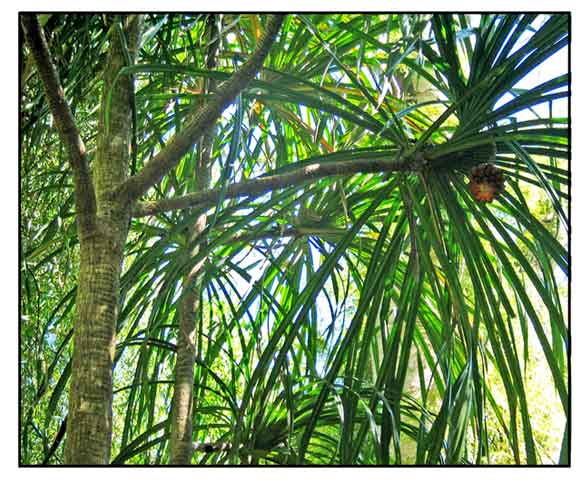
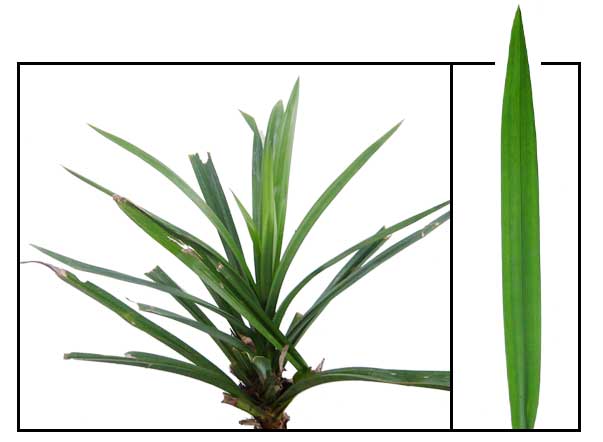
| Photos © Godofredo Stuart / StuartXchange |
| OTHER IMAGE SOURCE: Photograph / Pandanaceae : Pandanus luzonensis fruiting plants / Copyright © 2012 by Leonardo L Co [ref. DOL33692] / Non-Commercial Use / click on image to go to source page / Phytoimages.siu.edu |
Additional
Sources and Suggested Readings |
• |
DOI: It is not uncommon for links on studies/sources to change. Copying and pasting the information on the search window or using the DOI (if available) will often redirect to the new link page. (Citing and Using a (DOI) Digital Object Identifier) |
| List of Understudied Philippine Medicinal Plants |
• |
 |
|
