Botany
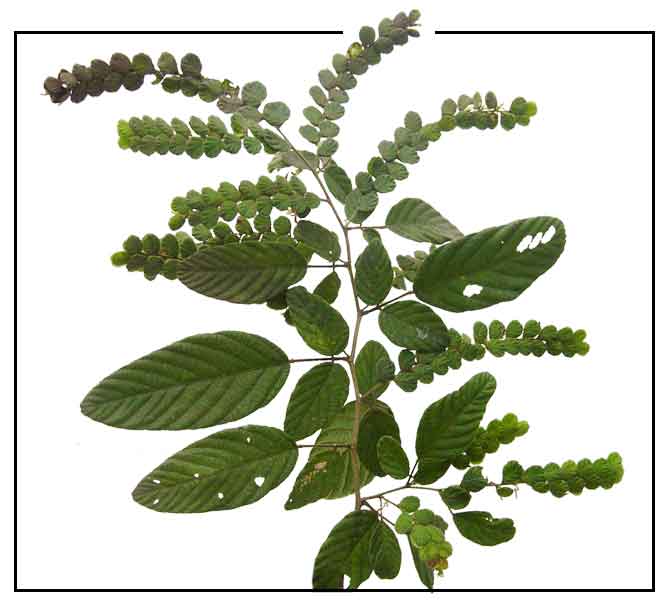
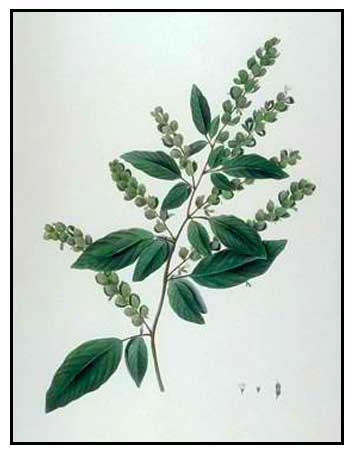
Payang-payang is an erect undershrub,
0.5 to 1.5 meters in height. Leaves are 3-foliate. Leaflets are finely hairy beneath, the terminal
one being oblong, 8 to 13 centimeters long, and more than twice as large as the two lateral
ones. Inflorescence is terminal and axillary, and 8 to 25 centimeters long. Flowers are white and about 6 millimeters long, umbellate or fascicled,
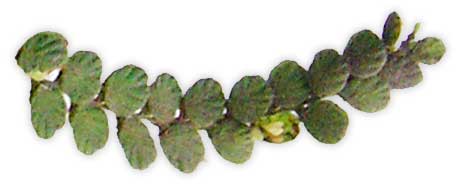
hidden by the distichous, orbicular bracts, which are 1 to 1.5 centimeters in
diameter. Stamens are 10, upper one free, other 9 united. Ovary is few- to
many-ovuled, superior. Fruits are pods, oblong, hairy and usually of 2, rarely 1- or 3
joints.
 Distribution Distribution
- Common in open
thickets, waste places, etc., in settled areas at low and medium
altitudes from northern Luzon to Palawan and Mindanao.
- Also occurs in India to China and Taiwan and southward to tropical Australia.
Properties
- Tart and cooling.
- Considered anthelmintic, antipyretic and anti-contusion.
- Studies suggest anti-inflammatory, analgesic, antioxidant, anti-diarrheal properties.
Constituents
- Study yielded a new glycoside, the 1-glucosylrhamnoside of physcion from the seeds of D pulchellum.
- Contains tryptamines.
- Roots yield betulin, α-amyrin, and ß-sitosterol.
- Study yielded fifteen simple indolic bases (I-XV) with three broad structural types, viz., indole-3-alkylamine, ß-carboline, and tetrahydro-ß-carboline. Fruits showed the major accumulation of Nb-oxides while the roots localized the quarternary bases.
(13)
- Aerial parts yielded four new cinnamylphenols, pulchelstyrenes A (1), B (2), C (3), and D (4), together with citrusinol, yukovanol, methyl piperitol, and 4-hydroxy-2,3-dimethoxybenzaldehyde. (see study below) (17)
- GC-MS analysis of leaf extract for bioactive components yielded 10 compounds. Major phytocompounds were 9-Octadecenamide, (Z) (18.89), 9-Cyclohexylnonadecane (15.93), 2,2,2-trifluoroethyl 2- methyltetrahydro-5-oxo-3-furancarboxylate (10.47). Minor compounds were 2,3,5,6-tetramethyl- benzenesulfonamide , 6-methyl tridecane, tetradecane, hexadecane, octadecane, phthalic acid butyl hept-2-yl ester, and phytol. (22)
- Phytochemical screening of leaf extract yielded alkaloids, flavonoids, steroids, terpenoids, tannins, saponins, and phenol. (see study below) (26)
- GC-MS analysis of leaf extract yielded 10 compounds with different therapeutic activities. The major phytocompounds were
9 - Octadecenamide, (Z) (18.89), 9 - Cyclohexylnonadecane (15.93), 2,2,2 - trifluoroethyl 2-methyltetrahydro-5-oxo-3-furancarboxylate (10.47). (27)
Parts utilized
- Roots, bark, flowers
and leaves.
- Collect leaves from May to October, roots the whole year round.
- Rinse, cut into sections or pieces, sun-dry.
 Uses Uses
Folkloric
· In the Philippines, leaves are applied to ulcers.
· In Java, the leaves are applied to pocks.
· Decoction of dried leaves used for colds and fever.
· Decoction of dried roots used for malaria, swelling and enlargement of liver and spleen, rheumatism,bone pains, and swelling due to contusion or sprain.
· Decoction of charred roots used for excessive menstrual flow.
· Malays use a decoction of roots after childbirth.
· Decoction of bark for diarrhea, eye afflictions.
· Decoction of bark used for hemorrhages, diarrhea, poisoning, and eye diseases.
· Decoction of flowers for bile and liver afflictions.
· In India, paste of root mixed with sugar candy used for abdominal and chest burning discomforts.
· In Bangladesh, bark decoction used in hemorrhage diarrhea, poisoning and eye diseases. Flowers used in biliousness. (12)
· In Andhra Pradesh, India, leaves used for wounds. (14)
· The Oraon tribe of Jashpur, India apply a root paste of salperni mixed with rice water on the umbilicus, genitalia and stomach to facilitate delivery. Plant decoction is drunk to reduce labor pain. Decoction of equal parts of salperni and chirayita is used for curing fever. (24)
Others
· Brewing: In India, the leaves of D pulchellum is one of 20 plant species used by the Deori tribe for the preparation of Mod pitha, a natural starter for the brewing of Sujen, a local rice beer.
· Repellent: The Ayta people of Porac, Pampanga burn the whole plant, stem or leaves as repellent against hematophagus insects.
· Le-Cao-Shi (LCS): : One of three ingredients of traditional Chinese medicine formula LCS (Acanthus ilicifolius, Phyllodium pulchellum, Cudrania cochinchinensis), a folk medicine in China used to treat viral hepatitis.
*see study below) (29)
Studies
• Pharmacologic effects: Effects of the extract from Desmodium pulchellum
in rats – Study of extracts on mice showed major effects on motor,
respiratory and cardiovascular systems. The bark extract showed to be
most potent.
• Alkaloid Effects on Collagen: Study showed the total alkaloid of Desmodium pulchellum could restrain collagen protein I, III, IV and synthesis of TGF ß1 for hepatic fibrosis in mouse liver. (2)
• DMT: Many of the psychedelic plants contain dimethyltryptamine. Desmodium pulchellum contains 0.2%
5-MeO-DMT, small quantities of DMT. DMT dominates in seedlings and young plants, while 5-MeO-DMT dominates in mature plant (whole plant, roots, stems, leaves, flowers). (5)
• Anthelmintic: Study on effects of D. pulchellum's root extract showed the herb may have an anthelmintic effect on the fluke Opisthorchis viverrini in hamsters. (6)
• Behavioral Effects: Study of extract of D. pulchellum in mice showed an activity mediated via the serotonergic system and suggested a potential for the extract as a useful antidepressant. (7)
• Anti-Hepatofibrotic: Study showed Desmodium pulchellum extract has anti-hepatic fibrotic effects on rats with hepatic fibrosis induced by CCl4. The mechanism may be through increasing the liver cell immunity against injury and indirectly reducing the formation of liver collagen protein. (8)
• Anti-Diarrheal / Leaf Extract: Study evaluated a methanol and petroleum ether extract for activity against castor oil-induced diarrhea and enteropooling and intestinal motility in rats. Results showed significant reduction of diarrheal severity and significant reduction of intestinal volume. Both fractions showed active ingredients, but the ethanol fraction showed better potential. (11)
• Cinnamylphenols / Cytotoxicity / Aerial Parts: Study of aerial parts yielded four new cinnamylphenols, pulchelstyrenes A (1), B (2), C (3), and D (4), together with citrusinol, yukovanol, methyl piperitol, and 4-hydroxy-2,3-dimethoxybenzaldehyde. Compounds 2, 3, and citrusinol exhibited marginal toxicity against KB cells, and citrusinol showed mild cytotoxicity against the HepG2 cell line. (17)
• Phenolic Contents / Antiproliferative / Roots: Study of 95% ethanol extract of roots yielded three new phenolic constituents (1-3). Compound 3 exhibited potent inhibitory activity against proliferation of acetaldehyde-stimulated HSC-T6 cells with an IC50 value of 7.6 µM. (19)
• Anti-Diabetic / Toxicity Study / Anti-Inflammatory / Bark: Study evaluated the effects of ethanolic extract of bark on alloxan-induced diabetic rats. Results showed reduction of blood glucose. Acute oral toxicity showed the extract to be safe until 4000 mg/kbw with no macroscopic organ abnormalities. On anti-inflammatory study using carrageenan induced paw edema, findings showed significant dose-dependent effect. (20)
• Effect on Liver Collagen Protein Content in Hepatic Fibrosis: Study investigated the effect of DP on the content of liver collagen protein of hepatic fibrosis rats induced by CCl4. Results showed an antihepatic fibrosis effect, with reduced liver collagen protein content probably through an immune response against injury. (21)
• Effect of Alkaloids on Monoamine Levels and MAO Activity: Study investigated the effects of alkaloid fractions isolated from roots of P. pulchellum on neurotransmitters monoamine levels and monoamine oxidase (MAO) activity in rat brain. Treatment resulted in reduction of DA (54.44%) and 5-HT (35.01%) levels in rat brain. The effect on monoamine metabolism was mainly related to MAO inhibition. Acute toxicity study showed P. pulchellum to be non-toxic. (23)
• Antioxidant / Leaves: Study evaluated the in-vitro antioxidant capacity of various leaf extracts of Phyllodium pulchellum by DPPH, ABTS radical scavenging assay, total antioxidant activity of phosphomolybdenum assay and hydroxyl radical scavenging activity. All four methods showed good antioxidant capacity. An ethanol leaf extract showed remarkable antioxidant activity on hydrogen peroxide scavenging with lowest inhibitory concentration of 50 values (155.40 µg/ml). Ascorbic acid was used as standard. (25)
• Antibacterial / Leaves: Study evaluated various solvent extracts of P. pulchellum leaves for antibacterial activity against six strains of test organisms viz. B. subtilis, S. aureus. S. pyogenes, P. aeruginosa, K. pneumonia, and E. coli. Crude plants extracts showed broad spectrum against all the bacteria, with highest inhibition shown by the ethanolic leaf extract. (see constituents above) (26)
• Hepatoprotective / Antioxidant / Effects on Collagen: Two fractions i.e., ethyl acetate and n-butanol fraction from P. pulchellum exhibited hepatoprotective and antioxidant activities. Chemical study of the active fractions isolated main constituents, including 11 flavonoids (1-11) and 8 indole alkaloids (12-19). Nine flavonoids were isolated from the ethyl acetate fraction, and 2 flavonoids (10 and 11) and 8 alkaloids (12-19) from the n-butanol fraction. Isolated compounds were evaluated for in vitro hepatoprotective effects on human normal hepatocyte cell line L-O2 injured by d-galactosamine and radical scavenging activities against DPPH. Flavonoids (-)-epigallocatechin (5) and (-)-epicatechin (6) exhibited prominent hepatoprotective activities with higher cell viability values than positive control. Results showed flavonoids isolated from P. pulchellum showed hepatoprotective and antioxidant activities. (28)
• Le-Cao-Shi / Polyherbal Anti-HBV: Le-cao-shi is a polyherbal Chinese tradition medicine consisting of Acanthus ilicifolius, Phyllodium pulchellum, Cudrania cochinchinensis, used to treat viral hepatitis. In a duck hepatitis B model, the extract of LCS was found to restrain the expressions of duck hepatitis B surface antigen (DHBsAg), hepatitis B e antigen *DHBeAg) and HBV-DNA (DHBV-DNA). LCS also decrease the levels of aspartate and alanine aminotransferases (AST and ALT) and ameliorated duck liver histological lesions. In a HepG2.2.15 cellular model, LCS could also significantly inhibit the secretions of HBsAg and HBeAg. Results showed LCS exerted potent anti-hepatitis effects against infection of HBV and provides basis for further exploration of a promising compound to treat hepatitis B disease. (29)
• Le-Cao-Shi / Hepatoprotective / CCl4-Induced Toxicity: Le-cap-shi is a polyherbal Chinese tradition medicine consisting of Acanthus ilicifolius, Phyllodium pulchellum, Cudrania cochinchinensis, used to treat viral hepatitis. Study evaluated the hepatoprotective activities of LCS water and ethanol extracts against carbon tetrachloride induced liver damage in vivo and in vitro. Results showed LCS can exert protective effect against CC;4-induced hepatotoxicity. Notably, the LCS-W showed better hepatoprotective activity than the ethanol extract. (30)
•Antinociceptive / Bark: Study evaluated the antinociceptive activity of
ethanolic extract and fractions of Desmodium pulchellum bark by acetic acid induced writhing method. The crude ethanolic fraction, petroleum ether soluble fraction and carbon tetrachloride soluble fraction at dose of 400 mg/kg showed significant antinociceptive activity. (31)
• Cardioprotective / Leaves: Study evaluated various extracts of D. pulchellum leaves for cardioprotective activity by thrombolytic assay, using streptokinase as standard. Results suggest the leaves possess significant cardioprotective activity and presents as a potential source of a safe, economical, and easily available source of natural agents for use in cardiovascular disorders involving blood clots. (32)
Availability
Wild-crafted.
|