Botany Botany
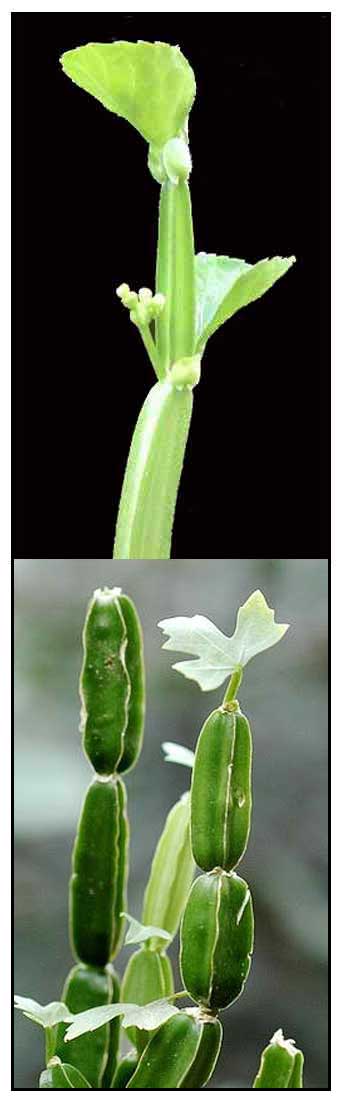
Sugpon-sugpon, a perennial climber, is a smooth vine with fleshy, green stout, four-angled stems which are 1 to 1.5 centimeters thick and much contracted at the nodes. Internodes, one from each node, are broadly ovate or triangular-reniform, 4 to 6 centimeters long, somewhat fleshy, distantly toothed with small, appressed, sharp teeth, blunt at the tip, broad and heart-shaped at the base. Flowers are pinkish, about 2.5 millimeters long and borne on small axillary cymes. Fruit is rounded, fleshy, and succulent.
 Distribution Distribution
- In dry thickets in and about towns at low altitudes, in Cagayan, Batangas, and Rizal Provinces in Luzon: in Negros, Cebu, and Siquijor.
- Certainly Introduced.
- Also reported from India to tropical Africa and Java.
Constituents
- Rich in carotenoids, triterpenoids and ascorbic acid.
- Rich source
of carotenoids, triterpenoids and vitamin C.
- Phytochemical studies have yielded flavonoids, triterpenoids, vitamin C, stilbene derivatives, piceatannon, resveratrol, pallidol perthenocissin and phytosterols.
- Phytochemical analysis of various extracts yielded alkaloids, glycosides, tannin-phenolic compounds, proteins and amino acid, gum and mucilage, flavones and flavonoids, saponins, steroids and sterols.
- Study of methanol extract of whole plant yielded
10 compounds. n-Hexadecanoic acid (25.63%) was the prevailing compound. Others were 1, 2-benzenedicarboxylic acid, bis (2-methylpropyl) ester (23.17%), hexadecanoic acid, ethyl ester (15.98), phytol (14.35%), hexadecanoic acid, ethyl ester (7.57), caffeine (3.20%) and dibutyl phthalate (2.00%). (25)
- Nutritive composition of Cissus powder (g/100g) yielded protein 6.44 g, fat 0.73 g, crude fiber 74.36 g, carbohydrate 63.73 g, energy 284.55 g.
(see study below) (34)
Properties
- Considered alterative, bone-healing, antibacterial, antifungal, antioxidant, anthelmintic, antihemorrhoidal, analgesic, anti-asthmatic, and stomachic.
- Studies suggest antioxidant, antimicrobial, bone healing, anti-ulcer, hepatoprotective, antidiabetic, cytoprotective, antihemorrhoidal, venotonic, anthelmintic, antiosteoporotic properties.
(21)
Parts used
Stems, roots, young shoots.
Uses
Edibility
- Ash of plant reportedly used as substitute for baking powder. (40)
Folkloric
- In the Philippines, sap or juice of stems used as drops for otorrhea and epistaxis.
- Also used as alterative for menstrual irregularities.
- Powdered roots used for fractures of the bones, with the effect of ordinary plasters.
Leaves of young shoots, dried and powdered, used for bowel complaints associated with indigestion. Also, used as powerful alterative.
- Used for scurvy and irregular menstruation.
- Paste used in asthma.
- Stem preparation boiled in lime-water used as stomachic.
- In Ayurveda, used as tonic, alterative, anthelmintic, digestive, analgesic, anti-asthmatic.
- Used for osteoporosis, asthma, cough, hemorrhoids and gonorrhea.
- Used for the treatment of gastritis, bone fractures, skin infections, constipation, eye diseases, hemorrhoids, anemia, asthma, irregular menstruation, burns and wounds.
- In Africa, used in the treatment of insomnia and epilepsy.
- In Thai medicine, used in treatment of hemorrhoids.
- In East Africa, used for treatment of gonorrhea. The Rongas apply pounded stems to wound to facilitate healing. (40)
- Stout fleshy stems used for treatment of gastritis, constipation, eye diseases, hemorrhoids, and anemia. (40)
Others
- Livestock: Plant fed to cattle to increase flow of milk. (40)
New uses
- Popular use as bone growth promoter supplement and as joint aid for athletes.
- Touted use to promote bone and tissue healing, treat infections, used as anabolic, and use in weight management.
Studies
• Antioxidant: Study evaluated the antioxidant property of different plant samples eluted by various solvents by FRAP, ABTS, and total antioxidant capacity assay. Samples showed concentration dependent increase in antioxidant activity. The stem and leaves extracted with methanol, ethanol, and PE showed higher antioxidant activity than the fruit and root samples by FRAP assay. (1)
• Anti-Obesity / Weight Loss / Metabolic Syndrome: (1) Study of C quadrangularis and a proprietary cissus-formulation showed both caused significant reductions in weight and blood glucose levels, lowered serum lipids with consequent improvement of cardiovascular risk factors. The increase in plasma 5-HT and creatinine hypothesizes a mechanism for controlling appetite and increasing lean body mass, providing support for the clinical data on weight loss. (2)
• CQ Formulation for Management of Weight Loss and Metabolic Syndrome: Study showed statistically significant net reductions in weight and central obesity, as well as reductions in fasting blood sugars, total cholesterol, LDL, triglycerides and C-reactive protein in subjects who received the formulation, regardless of diet. (4)
• Bone Healing: Study evaluating the effect of a methanolic extract of Cissus quadrangularis on the healing process of experimentally fractured radius-ulna of dog showed CQ treated animals revealed faster initiation of the healing process than the controlled animals on radiological and histopath exams.
(3)
• Fracture Healing: Study isolated a phytogenic anabolic steroid which may act on estrogenic receptors of the bone. CQ might act by stimulation of metabolism and increased uptake of minerals calcium, sulphur, and strontium by the osteoblasts in fracture healing.
• Anti-Ulcer: Study evaluated the anti-ulcer activity of a methanolic extract of Cissus quadrangularis in an aspirin-induced gastric ulcer model. Results showed CQE promotes ulcer protection by decreasing the ulcer index, as shown by histopath and analysis of CRP. Compared to ranitidine, CQE was found to have a better protective effect. (5) Study evaluated an ethanol extract of roots on indomethacin and ethanol induced gastric ulcers. Results showed dose-dependent protective effect in both ulcer models as evidenced by significant decrease (p<0.05) in number of ulcer lesions. (42)
• Ulcer Protective: Methanolic extract showed an ulcer-protective effect comparable to reference drug sucralfate. CQ significantly increase mucosal defensive factors like mucin secretion, mucosal cell proliferation, glycoproteins and life span of cells, and promoting healing by inducing cellular proliferation.
• Toxicity Study: Study in rats showed CQ did not produce any significant dose-related changes in hematological parameters and showed no histopathological lesion on any internal organ.
• Analgesic: Study exhibited significant dose-related analgesic activity compared to that of aspirin.
• Anti-Osteoporotic Effect: Study of ethanol extract of the plant significantly inhibited anti-anabolic effects, with beneficial effects on recovery of bone mineral density in post-menopausal osteoporosis.
• Anabolic and Androgenic Activity: In addition to enhancing the remodeling of bone, CQ leads to a faster increase in bone tensile strength. By exerting an anabolic, antiglucocorticoid effect, CQ preserves muscle tissue during physical and emotional stress.
• Anti-Inflammatory: Study confirmed CQ has an inhibitory effect on edema induced by carrageenin and arachidonic acid, with evidence of inhibition of both cyclooxygenase and lipoxygenase pathways. The anti-inflammatory activity is comparable to aspirin or ibuprofen.
• Antihemorrhoidal and Venotonic Activity: Phytochemical study yielded significant flavonoids. The bioflavonoids, especially diosmin, hesperidin, and oligomeric proanthocyanidin complexes have demonstrated potential in the treatment of hemorrhoids and varicose veins.
• Fracture Healing: An anabolic principle from C. quadrangularis showed marked influence on the rate of fracture healing by influencing early regeneration of connective tissues involved in healing and mineralization of callus. Hastening in fracture healing was attributed to the stimulation of all cells of mesenchymal origin, viz., fibroblasts, chondroblasts and osteoblasts, by Cissus quadrangularis. (8)
• Toxicity Study: In a 3-month sub-chronic toxicity study in Wistar rats, C. quadrangularis produced no significant dose-related changes in hematological chemistry parameters and no histopathological lesion in any internal organ. (9)
• Inhibition of Bone Loss / Ovariectomized Mice: Study evaluated the effect of C. quadrangularis on bone loss after ovariectomy in C57BL/6 mice. Results showed CQ effectively inhibited bone loss in cancellous and cortical bones of femur and proximal tibia in mice. (10)
• Anthelmintic: An alcoholic root extract of C. quadrangularis exhibited anthelmintic activity against earthworm Pheretima posthuma. Preliminary phytochemical screening yielded phenolic compounds, tannins, proteins, saponins, steroids, carbohydrates, glycosides, terpenoids, etc. (11)
• Intrauterine Stimulation of Fetal Bone Growth: Maternal administration of C. quadrangularis petroleum ether extract during pregnancy can stimulate the development of fetal bone growth during the intrauterine developmental period. (12)
• Antiosteoporotic / Ovariectomy-Induced Osteoporosis: Study was done to validate the anti-osteoporotic role of a petroleum ether extract on ovariectomy-induced osteoporosis in rats. Study results demonstrated the usefulness and benefits of CQ in the treatment of osteoporosis induced by ovariectomy. the plant extract is deemed a safe treatment for osteoporosis in the elderly. (13)
• Analgesic / Anti-Inflammatory / Antipyretic: Study of an ethanolic extract of CQ showed both peripheral and central analgesic activity, along with marked anti-inflammatory and antipyretic activity in rats. (14)
• Joint Pain Reduction in Exercise-Trained Men / Pilot Study: Strenuous, high-volume exercise is often associated with joint pain and inflammation. Study evaluating the therapeutic effects of CQ supplementation in healthy, exercise-trained men with joint-specific pain showed reduction of joint pain in a sample of 29 young men. (15)
• Review of Efficacy and Safety: Review of studies suggest Cissus extracts to be exceedingly safe and free of adverse effects at dose commonly used. In a few cases, specific physiological effects have been attributed to identifiable constituents. Standardization of extracts and more controlled human studies are suggested. (16)
• Immunomodulatory: Study showed C. quadrangularis possesses immunomodulatory activity which might be attributed to flavonoids and phenolic contents. (17)
• Enhancement of Biomineralization: Study of an ethanol extract of CQ may regulate osteoblastic activity by enhancing ALP activity and mineralization process, and the increased ALP effect is likely mediated by MAPK-dependent pathway. (18)
• Anti-Arhtritis of Biomineralization: Study evaluated the anti-arthritic activity of AFCQ (active fraction of Cissus quadrangularis) in a CFW (Complete Freund's Adjuvant) induced arthritis model in an in vivo experimental model of Wistar rats. Results indicate the AFCQ possess significant anti-arthritic activity, AFCQ dose of 100 mg/kbw was more efficient in inhibiting rat paw edema compared to standard drubs celecoxib and methotrexate. (20)
• Neuropharmacological Effects / Sedative / Roots: Study evaluated a methanolic extract of roots of Cissus quadrangularis for neuropharmacological effects in mice using various models. The CQ root extract significantly inhibited acetic acid-induced writhing and increased tail flick withdrawal response in mice. On CNS evaluation, the CQ extract produced reduction in spontaneous motor activity, exploratory behavior, and motor coordination and prolonged pentobarbitone sleeping time. Results suggest CQ contains some active principles that may be sedative in nature. On acute toxicity testing, LD50 was found to be 1000 mg/kg by ip route. (22)
• Effects on Pain and Bone Healing After Implant Placement: A pilot study evaluated the clinical efficacy of CQ in pain management and bone healing after implant placement. Results showed pain and swelling were minimal and bone healing was more in the study group. The rising level of serum alkaline phosphatase and good bone density indicated new bone formation benefiting osteointegration. (23)
• Hormonal Effect and Acceleration of Bone Fracture Healing: Study showed C. quadrangularis accelerates the fracture healing process and reduces the period of immobilization and early rehabilitation. CQ treated group showed elevation pattern of serum hPTH, early initiation of bone resorption and early initiation of osteoblastic activity and continuous bone maturation. (25)
• Antibacterial: Study of solvent chloroform extracts of C. quadrangularis showed antibacterial activity: E. coli > Pseudomonas putida > Staphylococcus aureus > ß-hemolytic streptococcus. (26)
• Antibacterial / Anticancer: Study evaluated the antibacterial activity of CQ against some pathogenic bacteria and in-vitro anti-cancer activity against MCF cell line. Results of in vitro anti-cancer activity showed the ethyl acetate extract with the lowest percentage of viability of cancer cells. Ethanol, methanol, and ethyl acetate extracts exhibited maximum activity against Klebsiella pneumonia. (27)
• Anticancer: Study evaluated CQ for anticancer activity along with safety profile on normal skin cells. Results showed CQ selectively induces cytotoxicity, ROS liberation and G1 phase cell cycle arrest only in HeLa cancer cells. (28) Study evaluated the anticancer activity of ethanol and chloroform extract of CQ by MTT assay. IC50 concentration of plant extract was 62.5 µg/ml against HeLa cell line and 125 µg/ml in Vero cell line. Cell death in HeLa cell line was confirmed as apoptosis by DNA fragmentation experiments. (36)
• Anticonvulsant / Sedative / Stems: Study of an aqueous extract of stems in in vivo animal models of epilepsy (maximal electroshock, n-methyl-d-asparate, pentylenetetrazol, isonicotinic hydrazid acid and strychnine-induced convulsions) and insomina (diazepam induced sleep) showed anticonvulsant and sedative properties in mice. (29)
• Immunomodulatory: Study evaluated the immuno-modulatory potential of C. quadrangularis. Results showed CQ is rich in polyphenolilc and flavonoid content. CQ sowed promising immunomodulatory potential on various models like DTH, carbon clearance test and effect of serum immunoglobulins. (30)
• Hepatoprotective / Rifampicin Toxicity / Stems: Study evaluated the hepatoprotective activity of methanol extract of Cissus quadrangularis against rifampicin-induced hepatotoxicity in rats. Pretreatment of rats with methanol extract significantly decreased lipid peroxidation and increased the antioxidant activities. The hepatoprotective effect may be attributable to the antioxidant effect of ß-carotene. (31)
• Gastroprotective / Neutrophil Mediated Tissue Injury by Aspirin: Study evaluated an ethanol extract of CQ against gastric toxicity induced by aspirin in rats. Pretreatment with CQE ameliorated the effects of aspirin in the gastric mucosa of ulcerated rats. The gastroprotective activity might be mediated through its antioxidant effect as well as by attenuation of the oxidative mechanism and neutrophil infiltration. (32)
• Anti-Inflammatory / Inhibition of IL-1ß / Alleviates Bone Deterioration: Study demonstrated for the first time the signaling mechanisms regulated by CQ and W. somnifera in OA and osteogenesis. The herbals demonstrated chondroprotective effects and regenerative ability via the upregulation of survivin that exerts inhibitory effects on the p38 MAPK signaling pathway. (33)
• Nutritive Value of Powder / Value Addition: Study showed that the blending of Cissus quadrangularis powder with rice flour as base with other ingredients is high acceptable. Blending of CQ powder with wheat flour and Bengal gram flours was more promising to treat obesity and oxidative stress associated problems. (see constituents above) (34)
• Wound Healing: Study evaluated the wound healing activity of CQ by incorporating the methanolic and total aqueous extract in simple ointment base in 0.5%, 1%, and 2% (w/w) concentrations in three rat models viz., excision, incision, and estimation of biochemical parameter. Wound treatment with 2% methanolic and 2% aqueous extract exhibited significant (p<0.001) wound healing activity. The activity was probably attributable to phenol constituents. (35)
• Antidiabetic / Leaves: Study evaluated the antihyperglycemic activity of ethanolic extract of leaves of CQ against alloxan induced diabetic rats. The EtCQ (400 mg/kg) showed significant antihyperglycemic effect. (37)
• Accelerated Healing of Experimental Bone Fracture: Study evaluated the effect of a methanolic extract of Cissus quadrangularis on the healing process of experimentally fractured radius-ulna of dog. CQ treated animals exhibited faster initiation of healing process than control on radiologic and histopathological examinations. Treated group showed a decrease in serum calcium. Healing was almost complete on the 21st day in treated animals and incomplete in controls. (38)
• Osteogenic in Maxillofacial Fracture / Accelerated Healing / Pilot Study: Study evaluated the effect of C. quadrangularis in healing process of maxillofacial fracture in patients treated by open reduction internal fixation method with postOP treatment with antibiotics and analgesics.Results with CQ supplementation showed reduction in pain, swelling, and fragment mobility and acceleration in the healing of fractured jaw bones. (39)
• Anti-Hemorrhoid Activities / Anti-Inflammatory: Study evaluated the anti-inflammatory and venoconstrictive effects of whole plant ethanol extract in rats. The extract exhibited 50% inhibition of the carrageenan-induced rat paw edema. It also showed a venoconstrictive effect with EC50 of 0.01 and 0.03 µg/mL for endothelium intact and denuded rat veins, respectively. A double-blind randomized-controlled clinical study of 160 hemorrhoid patients, 200 mg/twice daily of the tablet formulation was effective in the treatment of bleeding, pain, and prolapse of hemorrhoidal tissues. (41)
• Acute and Sub-Acute Oral Toxicity Studies: A 14-day acute oral toxicity study of whole plant ethanol extract in rats showed dose up to 5000 mg/kbw did not show signs of intoxication, gross pathologica lesions, or death. In sub-chronic toxicity testing of the enteric film coated tablets developed from the extract at maximum doses of 5000 mg/kbw did not result in treatment related abnormalities in clinical observations and biological parameters. (41)
• Antiviral / Anti-Herpes Virus: Study evaluated partially purified methanolic extract of Cissus quadrangularis for antiviral activity against HSV type 1 and 2 viruses.Results showed statistically significant antiviral activity (P<0.01) at 1:400 dilution. Phytochemical analysis yielded steroids and terpenoids. (43)
• Accelerated Healing
of Fracture in a 19-year old boy: Study evaluated the efficacy of an herbal dosage formulation for leg fracture of a 19-year old boy. The young patient's fracture showed accelerated healing while on the CQ tablet and lotion. The results suggest the herbal remedy might play a role in certain fracture cases, in controlling pain, reducing inflammation and accelerating bone healing. Further studies are warranted to examine the efficacy of the herbal remedy in bone fractures in different age groups of patients. (44)
• Osteogenic Potential / Osteopontin Expression: Study evaluated the osteogenic potential of Cissus quadrangularis in hastening the process of healing mandibular fractures in 60 patients aged 20-35 years. Group 1 patients were given CQ capsures and healing assessed with osteeopontin expression during treatment. The treated group showed better healing of fracture associated with significant levels of osteopontin protein and CD4+ cells esxpression of osteopontin. Results suggest CQ accelerated fracture healing and also cause remodeling of fracture callus. (45)
Availability
- Wild-crafted.
- Extracts, powders, capsules, and supplements in the cybermarket.
|