 |

Family • Moraceae
Tangisang-bayauak
Ficus variegata Blume
RED-STEM FIG
Za se rong
| Scientific names | Common names |
| Covellia racemifera (Roxb.) Miq. | Agi (Yak.) |
| Ficus amboinensis Kostel. | Banakal (Bag.) |
| Ficus cerifera Blume | Basikong (Bag.) |
| Ficus cordifolia Blume | Duoyog (P. Bis.) |
| Ficus domestica Zipp. ex Miq. | Dudang (Sul.) |
| Ficus ehretioides F.Muell. ex Benth. | Dudu (Ig.) |
| Ficus garciae Elmer | Kayahan (Ayta/Pamp.) |
| Ficus glochidiifolia Hayata | Lansones matsin (Tag.) |
| Ficus integrifolia Elmer | Laptai (Tag.) |
| Ficus konishii Hayata | Lapting (Ilk.) |
| Ficus latsonii Elmer | Ligtug (Bon.) |
| Ficus paucinervia Merr. | Lita (Ibn.) |
| Ficus racemifera Roxb. | Payahan (Sbl.) |
| Ficus subopaca Miq. | Rayaraya (Tag.) |
| Ficus subracemosa Blume | Tabgon (Bik.) |
| Ficus sum Gagnep. | Tañgisang-bayauak (Sbl.,Tag.) |
| Ficus sycomoroides Miq. | Tubol (Pang.) |
| Ficus teninbrensis S.Moore | Common red stem fig (Engl.) |
| Ficus variegata Blume | Red stem fig (Engl.) |
| Ficus viridicarpa Corner | Variegated fig (Engl.) |
| Variegated rubber plant (Engl.) | |
| Ficus variegata Blume is an accepted name The Plant List | |
| Other vernacular names |
| CHINESE: Za se rong. |
Distribution
Availability |
 Botany
 Constituents
Last Update June 2016

 |
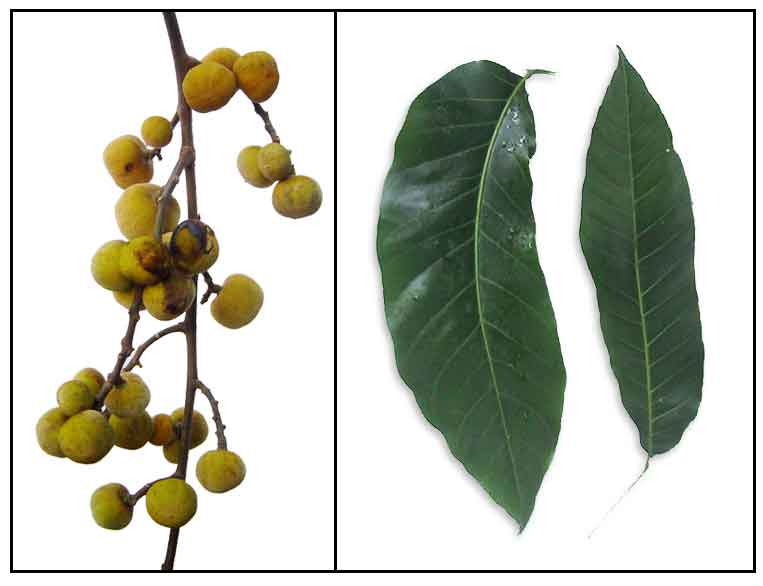
| Photos © Godofredo Stuart / StuartXchange |
| OTHER IMAGE SOURCE: Public Domain / File:Ficus variegata.JPG / WingkLee / Wikipedia |
| OTHER IMAGE SOURCE: / Illustration / Common Red Stemmed Fig (Ficus variegata) / The William Farquhar Collection of Natural History Drawings / Reminiscence |
| Additional
Sources and Suggested Readings (1) Herbal medicines used to cure various ailments by the inhabitants of Abbottabad district, North West Frontier Province, Pakistan / Arshad Mehmood Abbasi, Mir Ajab Khan et al / Indian Journ of Traditional Knowledge, Vol 9(1), January 2010, pp 175-183 (2) Ficus variegata Blume is an accepted name / The Plant List |
| It is not uncommon for links on studies/sources to change. Copying and pasting the information on the search window or using the DOI (if available) will often redirect to the new link page. |
• |
 |
• |
|

