Botany
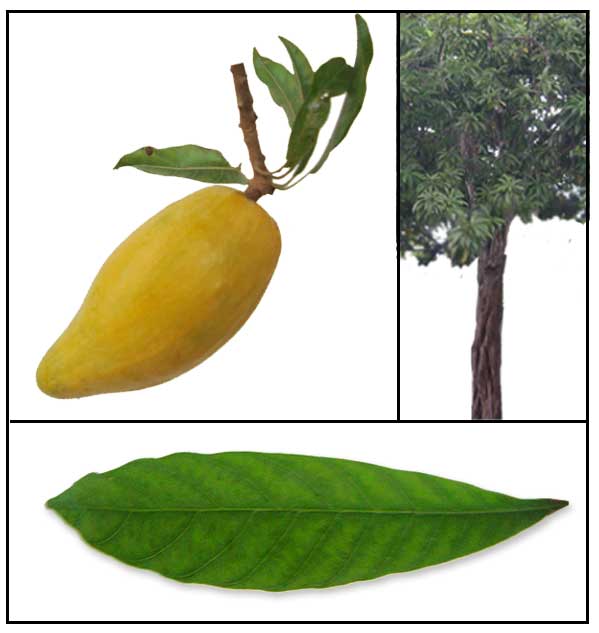
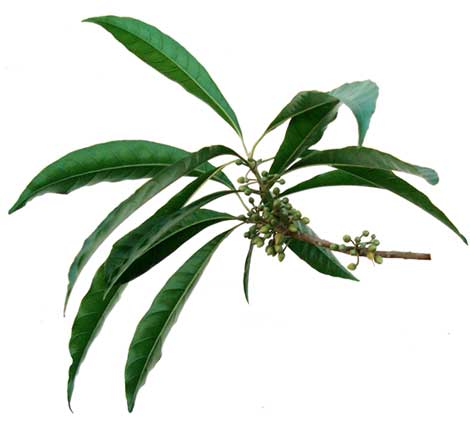
Tiesa is an erect tree growing to a height of 15 to 20 meters. Leaves are alternative,
smooth, dark green, elliptic to narrow-obovate with entire margins.
Flowers are greenish white, in axillary clusters. Pedicels are long.
Fruit is extremely variable in size and form, oval, subglobose, pear-shaped
or spindle-shaped, with or without an pointed apex or curved beak, yellow-orange
when ripe with an edible sweet and meatpulp.
 Distribution Distribution
- Indigenous to South America.
- Introduced to the Philippines during the Spanish times.
- Cultivated for its edible fruit and as shade tree.
Constituents
- Phytochemical screening of seeds yielded leucoanthocyanins, hydrolyzable tannins, saponins and glycoside. (8)
- Food value per 100 g of edible portion: Calories, 138.8; protein, 1.68 g; fat, 0.13 g; carbohydrates, 36.69 g, calcium, 26.5 mg; calcium, 26.5 mg; iron, 0.92 mg; thiamine, 0.17 mg, riboflavin, 0.01 mg, niacin, 3.72 mg, ascorbic acid, 58.1 mg; amino acids, tryptophan 28 mg, methionine 13 mg, lysine 84 mg.
- Ethyl acetate extract of leaves yielded six stilbenes and six flavonoid glycosides.
(See study below) (2)
- In a study of seeds, pulp, and peel, a 70%n ethanol extract from peel showed highest total phenolic content (2304.7 mg gallic acid equivalent/100 g dw) while the pulp showed highest total flavonoid content (6414.03 mg rutin equivalent/100 g dw). (see study below) (10)
- Study ethanolic leaf and seed extracts yielded six compounds: protocatechuic acid (1), gallic acid (2), quercetin (3), myricetin (4), myricetin-3-O-α-L-rhamnoside (5) and myricetin-3-O-β-galactoside (6). (see study below) (13)
- Nutrient analysis of fruit (per 100 g) yielded: energy value 580-630 kJ, water 57.2-60.6 g, protein 1.7-2.5 g, fat 0.1-0.6 g, carbohydrates 36.7-39.1 g, fiber 0.1-7.5 g, ash 0.6-0.9 gm, calcium 26.5-40 mg, phosphorus
30-37.3 mg, iron 0.-1.1 mg, carotene 0.32 mg, thiamine 0.02-0.17 mg, riboflavin 0.01-0.03 g, niacin 2.5-3.7 mg, vitamin C 43-58 mg. (Monton 1992) (14)
- Study of an ethyl acetate extract of stem bark of P. campechiana yielded 3ß, 28-hydroxy-lean-12-enyl fatty acid ester (1), a mixture of fatty acid ester of oleanolic acid (2a) and a fatty acid ester of betulinic acid (2b) in a 0.3:1 ratio, and spinasterol (3). (see study below) (19)
Properties
- Studies have shown antimitotic, antioxidant, antibacterial, immunomodulatory, hepatoprotective,. gastroprotective properties.
Parts
used
Bark, seeds.
Uses
Nutrition
- Fruit is edible; best when fully ripe for easy peeling, eaten out of hand,
laced with lime or lemon juice.
- Rich in niacin and carotene with a fair amount of vitamin C
- In other countries, fruit used for making milkshake, jams, jelly, marmalades and flavoring for
ice cream.
- Fruit is dehydrated into a nutritious powder and pudding mixes.
Folkloric
- In Mexico,
decoction of astringent bark used for fevers.
- In Cuba, decoction of
bark used for skin eruptions ; seeds used for ulcers; the fruits for
anemia.
- Used as remedy for coronary problems, liver disorders, epilepsy, skin diseases, and ulcers.
Others
- Latex: In Central American, latex extracted from the tree used to adulterate chicle.
- Timber: Strong, hard and heavy; valued for plank and rafter making.
- Pharmaceutical: In the 70s, seed derivative investigated for its activity against seborrheic dermatitis o the scalp; the study was stalled by the difficulty of procuring sufficient seeds for the study.
Studies
• Antimitotic:
Study yielded six stilbenes and six flavonoid glycosides. Stilbenes
have been shown to exhibit a wide range of biologic activities: anti-HIV,
antitumor, anti-inflammatory, antimicrobial and hepatoprotective. The
distilbene ampelopsin B was found to arrest mitosis in a cell-based
primary screen. (2)
• Polyphenolics / Antioxidants: Fresh
fruit yielded seven polyphenolic antioxidants were isolated from Pouteria
species. Highest activity was found in P sapota and lowest in P campechiana. (3) Study evaluated the total phenolics and antioxidant capacities of seeds, pulp, and peel of P. campecfhiana fruit using three extraction solvents. A 70% ethanol solvent extract exhibited the highest total phenolic content (TPC), total flavonoid content (TFC) and antioxidant activities. The peel yielded the highest TPC (2304.72 mg gallic acid equivalent/100g dw), while the pulp yielded the highest TFC (6414.03 mg rutin equivalent/100 g dw. Study suggests the pulp and peel of P. campechiana fruit can be utilized as a natural source of antioxidant components. (18)
• Seborrheic Dermatitis:
In the 70s, preliminary findings of a study showed it to be active against seborrheic dermatitis of the scalp.
• Antibacterial: Study on the stem of Pouteria campechiana showed slight activity against E coli and P aeruginosa, the fungi C albicans and T mentagrophytes. They were inactive against S aureus, B subtilis and A niger. (5)
• Immunomodulatory / Stem Bark: Study of the methanolic extract of stem bark of Pouteria cambodiana showed a potent immunological effect with a good dose-dependent effect in peritoneal macrophage phagocytosis and activated lysosomal enzyme activity. (6)
• Antibacterial: Study evaluated the antibacterial activity of P. campechiana seed against E. coli and S. aureus. The seeds showed higher zone of inhibition against Staphylococcus aureus than E. coli, but significantly lower than control. (8)
• Hepatoprotective / Acetaminophen-Induced Toxicity: Study evaluated a fruit extract of polyphenolic-rich P. campechiana for antioxidant and hepatoprotective effect against acetaminophen-intoxicated rats. Results showed concentration-dependent scavenging of free radicals. Treatment significantly reduced elevated liver marker enzymes, with restoration of normal functional ability of hepatocytes. Results showed strong antioxidant and significant hepatoprotective effect. (9)
• Antioxidant / Fruit Pulp and Peel: Study evaluated seeds, pulp, and peel of Pouteria campechiana fruit for total phenolics and antioxidant capacities. Pulp and peel ethanol extracts showed high antioxidant activities, but not the seeds. Results suggest pulp and peel can be use as a natural source of antioxidant components. (see constituents above) (10)
• Anti-Inflammatory / Gastroprotective / Seeds and Leaves: Study evaluated de-fatted ethanol extracts and n-hexane fractions of P. campechiana seeds and leaves. Seed ethanolic extract showed 85% inhibition of inflammation in rat paw edema test and maximum analgesic activity after 90 min (p<0.05) in hot plate test. Both seeds and leaves ethanolic extract showed significant decrease in gastric ulcer number and severity (p<0.05). (see constituents above ) (13)
• Antinociceptive / Antihyperalgesic / Herbal Mix: Study evaluated the antinociceptive and antihyperalgesic properties of an herbal preparation of four vegetal species (P. campechiana, C. cainito, C. limonum, and A. muricata) in a !:!:!:! ratio for each plant. Results showed a dose-dependent antinociceptive effect in rat formalin and rat capsaicin. The extract showed an antihyperalgesic effect in alloxan diabetic rats. Results support the use of the plant extracts in Mayan folk medicine. (15)
• Antimutagenic PotentIal: Study leaf extracts established the antimutagenic activity of C. ovatum, C. religiosa, P. campechiana, and P. odorata. (16)
• Antimitotic Activity / Leaves:Study evaluated the antimitotic activity of EA extracts of leaves of Pouteria campechiana. Study yielded six stilbenes and six flavonoid glycosides. Distilbene ampelopsin B was found to arrest mitosis in a cell-based primary screen to monitor cell-cycle progression. (17)
• Triiterpenes and Sterols / Antibacterial / Bark: Study of an ethyl acetate extract of stem bark of P. campechiana yielded 3ß, 28-hydroxy-lean-12-enyl fatty acid ester (1), a mixture of fatty acid ester of oleanolic acid (2a) and a fatty acid ester of betulinic acid (2b) and spinasterol (3). Antimicrobial tests on compound 1 and a mixture of 2a and 2b showed slight activity against E. coli, P. aerugnosa, and fungi C. albicans and T. mentagrophytes. (19)
• Antidiabetic / Acute Toxicity Study / Leaves: Study of an ethanol extract of leaves exhibited antidiabetic activity in alloxan induced diabetic wistar albino rats. On acute toxicity study of ethanolic extract of leaves using OECD guidelines, no toxicity or death was observed in various test dose levels. The LD50 was greater for the EE of leaves was greater than 2000 mg/kg (LD50>2000mg/kg). (20)
• Volatile Constituents / Fruits: GC and GC/MS analysis of fruits yielded 18.8 mg/kg total volatiles. Forty-nine compounds were identified, most prominent of which were methyl 2-hydroxy-4-methyl pentanoate (4.74 mg/kg) and S-methyl 2-propenethioate (2.48 mg/kg). (21)
• Immunomodulatory in Macrophage Functions / Leaves: Study evaluated the immunomodulatory properties of a MeOH extract of P. campechiana leaves in peritoneal macrophages of Balb/c mice. Results showed MeOH extract of leaves stimulated phagocytic activity and increased NO, H2O2, and cytokine production. The extract showed strong immunomodulatory effect in a concentration-dependent manner without affecting cell viability. (22)
• Gold Nanoparticles / Antibacterial / Fruit: Study reported on an easy and cost-effective method for synthesis of gold nanoparticles (AuNPs) using fruit of Pouteria campechiana extract. The synthesized NPs showed effective inhibitory activity against pathogens viz., S. aureus, E. coli, B. cereus, and P. aeruginosa. (23)
• Antinociceptive / Antihyperalgesic / Polyherbal Preparation: Study evaluated the antinociceptive and antihyperalgesic properties of an herbal preparation composed of four vegetal species viz., Pouteria campechiana, Chrysophyllum cainito, Citrus limonum and Annona muricata, PCCA, a combination common in traditional Mayan medicine for diabetes and pain. The polyherbal extract showed dose-dependent antinociceptive effect in rat formalin test and rat capsaicin test. The PCCA extract also demonstrated antihyperalgesic effects in alloxan diabetic rats. (24)
• Antihypertensive / Vasorelaxant / Cardiovascular Effects / Polyherbal Preparation: Study evaluated a polyherbal mix of P. campechiana, C. cainito, C. limonum and A. muricata (PCCA) on vasorelaxant and hypotensive effect on a rat model. The ethanolic polyherbal mixture at 1:1:1:1 induced significant vasorelaxation in a concentration dependent manner in aorta's endothelium-intact rings, an effect that was partially endothelium-depdendent. Acute oral administration of 200 and 300 mg/kg exhibited significant decrease in systolic blood pressure. (25)
Availability
Wild-crafted. |