 Gen info Gen info
- Araceae is a family of monocotyledonous flowering plants in which flowers are borne on a type of inflorescence called a spadix. Also known as the arum family, members are colloquially known as aroids. The family contains 114 genera and about 3,750 known species. (4)
- Pothos is a genus of flowering plants in the family Araceae.
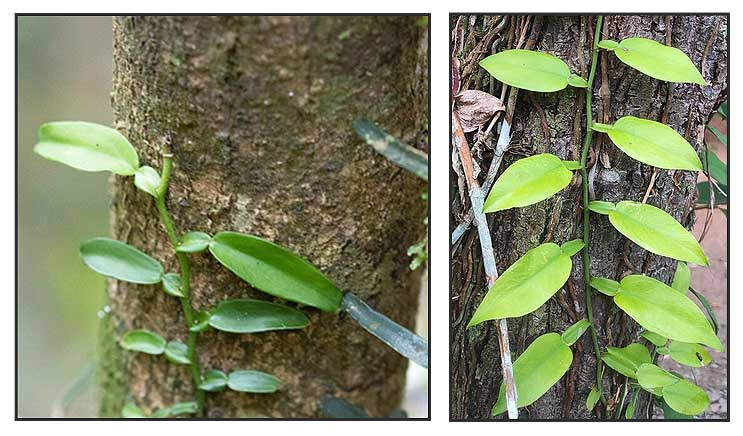
- Pothos scandens is a climbing tropical forest plant in the calla lily family Araceae. It is the type species of the genus Pothos.
- Etymology: The genus name Pothos derives from pota vael or "pōṭǣ ", the Sinhalese name for the plant in Sri Lanka. Carl Linnaeus adopted and formalized the local name when the officially described the genus in 1753. The specific epithet scandens derives from Latin verb scanere, meaning "to climb", "mount" or "ascend", referring to the plant's growth habit as a root-climbing aroid that scrambles up tree trunks and wet rocks. Hence, it's English name: Climbing Aroid.
Botany
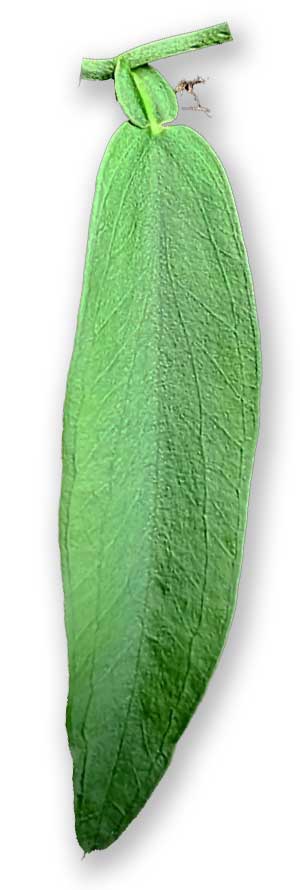
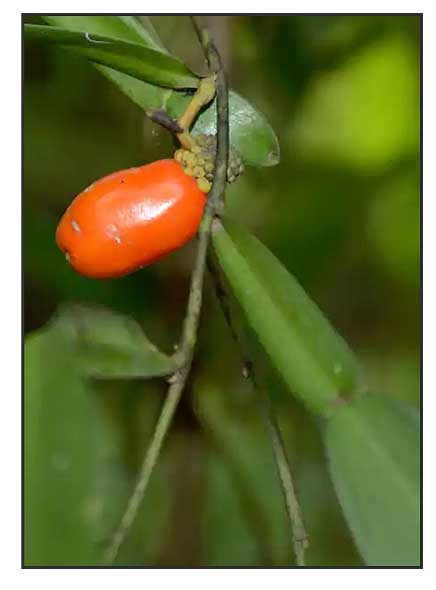
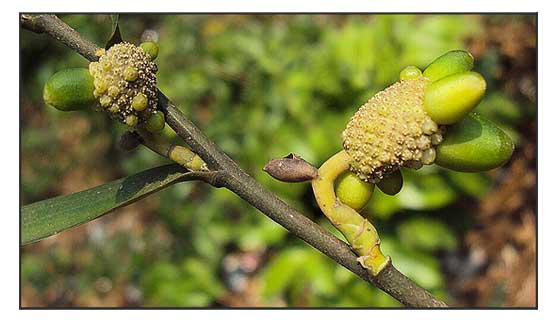
• A root-climbing liana up to 6 m long; stem weakly angled or terete, up to 1 cm in diameter. Leaves distichously alternate, simple and entire, ovate to elliptical or lanceolate, 3-14 cm × 2-10 cm, rounded to cuneate at base, attenuate-mucronate at apex, entire, with 2 intramarginal veins per side and numerous parallel small veins; petiole 2-14 cm long, broadly winged, truncate, rounded or auriculate at apex; stipules absent. Inflorescence a solitary spadix in leaf axil, with spathe at base; spadix with stipe sharply bent at anthesis, globose to ovoid, 4-10 mm in diameter, yellowish-green to dirty white; spathe ovate, 4-8 mm long, margins variously inrolled, greenish to maroon. Flowers bisexual, 1-2 mm in diameter, with 6 tepals, 6 stamens, and a superior, 3-celled ovary, stigma sessile, punctiform. Fruit an obclavate berry 1-1.5 cm long, 1-5 per infructescence, ripening to deep scarlet, 1-3-seeded. Seeds ellipsoid to compressed-globose, 3-6 mm in diameter, with smooth testa, lacking albumen. (PROSEA)
Distribution
- Native to the Philippines. (2)
- On trees and rocks in primary and secondary wet to dry lowland to evergreen tropical to subtropical forest; occasionally on sea cliffs, in hedges or scrub or in coconut plantations, on various substrates, including clay, limestone,, and granite. 0-1600 m. (2)
- In Alabat, Leyte, Samar, Mindoro; In Luzon: Albay, Bataan, Batangas, Cagaya, Camarines Sur, Laguna, NCR, Nueva Ecija, Quezon, Rizal, Zambales; in Mindanao: Agusan del Sur, Davao.(2)
- Also native to Andaman Is., Assam, Bangladesh, Borneo, Cambodia, China South-Central, Comoros, East Himalaya, India, Jawa, Laos, Lesser Sunda Is., Madagascar, Malaya, Maluku, Myanmar, New Guinea, Nicobar Is., Seychelles, Sri Lanka, Sulawesi, Sumatera, Thailand, Tibet, Vietnam, West Himalaya. (2)
 Constituents Constituents
- Phytochemical analysis of leaf, stem, and root sample revealed total phenolics and tannin content to be higher in the ethanol extract of stem; total flavonoids was higher in acetone extract of root. (see study below) (7)
Preliminary phytochemical studies of 90% ethanolic extract of leaves revealed alkaloids, proteins, and alkaloids. Aqueous extract revealed carbohydrates, protein, and flavonoids. (see study below) (15)
- Preliminary phytochemical analysis of ethanol and aqueous extracts of aerial parts revealed carbohydrates, fixed oil, proteins, alkaloids, glycosides, flavonoids, and phenolic compounds. (see study below) (16)
- Preliminary screening of leaves and stem extracts showed rich variety of phytoconstituents: alkaloids, tannins, flavonoids, phenols, carbohydrates, xanthoproteins, coumarins, etc. Ethanol extract of stem showed highest total phenolic content (TPC: 98.48 mg GAE/g extract) and total flavonoid content (TFC: 259.95 mg QE/g extract). Elemental analysis of shade dried leaf and stem powders revealed presence of calcium, magnesium, phosphate, sulphate, iron, and chloride.
(21)
Properties
- Studies have suggested anti-inflammatory, antioxidant, antipyretic, hypoglycemic, anthelmintic, sedative, CNS depressant, antiasthma, antimicrobial, anxiolytic, analgesic, neuropharmacological. burn wound healing, anticancer, apoptotic, estrogenic/antiestrogenic, anti-hyaluronidase, histamine-release inhibitory, cytotoxicity, thrombolytic properties.
Parts used
Roots, leaves, bark, aerial parts.
 Uses Uses
Edibility
- Caution: Not safe to eat raw because of sharp calcium oxalate crystals that can irritate the mouth and throat.
- Traditional used in some Asian cultures reported: as boiled decoctions or teas made from leaves or aerial parts for specific folk remedies.
- Leaves reportedly used as tea by the Dai ethnic minority.
Folkloric
- No reported medicinal use in the Philippines.
- In Sri Lanka, leaves used for treatment of traumatic swellings. In China, compressed fruits and leaves used as blood coagulants. In Thailand, tea made from aerial parts used for treatment of cancer. In India, leaf infusions sued for treating convulsions and epilepsy; paste of leave for wounds, and whole plant for bone fractures.
- In Peninsular Malaysia, leaves applied externally to abdomen of children to expel worms. Infusion of leaves used as bath to treat convulsions. Powder of leaves applied to smallpox. Steam from heated stem, mixed with camphor, is inhaled for treatment of asthma. (1)
- In Thailand, used as a blood coagulant, mainly for treating wounds. Also used as antipyretic. Fruits and leaves used as compress.(1)
- In Vietnam, stems and leaves used for treatment of fractures, bruises, swellings, ecchymosis, and rheumatism. (1)
- In Ayurveda, leaves and, occasionally, aerial roots used for cooling and soothing properties; leaf paste incorporated into wound-healing balms. Proposed Ayurvedic mechanisms involve balancing Pitta dosha by imparting a mild cooling rasa and pacifying Ushna veerya (hot potency) via local application. (9)
-
Folk healers use the leaves as cooling poultice for skin inflammation associated with insect bites. In traditional Tamil Siddha, the plant juice from crushed young leaves, with pinch of rock salt, applied to minor burns and scalds. In Western Ghats, sap used for treatment of fungal infections of feet. Oral history from the Cochin district tells of mothers using diluted leaf decoction for children with low grade fevers, believing the mild diaphoretic action will lower the temperature. (9) Bruised roots, fried in oil, used for treatment of abscesses. Leaves used as bath for treatment of convulsions and epilepsy. Powdered leaves used for smallpox. Whole plant used for swelling, burning sensations, asthma, and skin diseases. (12) Used in Indian traditional medicine for treatment of asthma. (13) Kannikkars use leaf and stem to reduce body heat and to help in conception. (•)
- In Sri Lanka, crushed leaves and stem used for treatment of snakebites. Crushed leaves used as dressings for wounds and ulcers; internally, used as cholagogue, diaphoretic, and as diuretic.
- In Bangladesh, used for treatment of skin problems, asthma, snake bites, diarrhea, cancer, smallpox, sprains, epilepsy, convulsions, and wounds. Stem, combined with camphor and smoked like tobacco, is used for relief of asthma.
Others
- Crafts: Lignified, tough central cylinder of stems used for binding and basket-works. (1)
Studies
• Anti-Inflammatory / Leaves: Study evaluated P. scandens ethanol extract (PSE) of leaves for anti-inflammatory potential in lipopolysaccharide-stimulated murine RAW 264.7 cells. The PSE reduced mRNA expression of inducible nitric oxide synthase and cyclooxygenase-2, followed by decrease in production of NO and prostaglandin E2. PSE also suppressed secretion of pro-inflammatory cytokines (IL-6, and IL-1ß). Immunoblotting analysis showed PSE inhibited phosphorylation of extracellular signal-regulated kinase and signal transducer and activator of transcription 3 protein. Results showed anti-
inflammatory activity and potential for development of anti-inflammatory agent. (6)
• Antioxidant / Antipyretic / Roots: DPPH assay and superoxide radical assay revealed the ethanol extract of root with remarkable free radical scavenging capacity with IC50 of 0.284 mg/mL and 70.84%, respectively. Antipyretic activity of root methanol extract by brewer's yeast-induced pyrexia on Wistar albino rats at 200 and 400 mg/kg, with paracetamol as standard, showed significant reduction of temperature. (see constituents above) (7)
• Hypoglycemic / Anthelmintic / Antioxidant / Roots: Study evaluated methanol extract and fractions of Pothos scandens leaves for hypoglycemic, anthelmintic, and antioxidant activities. The crude extract, along with PE, CCl4, and EA fractions showed potential reductions in blood glucose level, with decreases of 51.0%, 32.6%, 37.9%, and 29.4%, respectively, comapred to standard hypoglycemic glibencladmide at 41.7%. On anthelmintic activity, the crude extract exhibited promising anthelmintic activities in measures of paralysis time and death of earthworms, using albendazole as standard reference drug. For antioxidant activity, crude methanolic extract and PE, CCL4, and CHCl3 FXs showed IC50s of 109.5, 21.28, 49.28, and 39.12 µg/mL, respectively. (8)
• Sedative / CNS Depressant Effects / Leaves: Study evaluated the sedative effect of P. scandens leaves using a zebrafish model (danio rerio). Treatment with leaves extract showed slowing down of zebrafish in parameters of bending movements, tail movement, indicating reduction of activity. Results demonstrated Pothos scandens significantly modulated zebrafish locomotor behavior, confirming its CNS activity. The ethanol extract exhibited the most pronounced behavioral alterations, suggesting superior extract of bioactive phytoconstituents.
Significant decreases in bout speed, distance, and oscillations suggest a sedative or CNS depressant effect. Changes in tail amplitude indicate modulation of motor coordination and possible involvement of motor control pathways. Findings support the plant's traditional use and highlights its potential as source of neuroactive compounds. (10)
• Antiasthma / Aerial Parts: Studies have demonstrated elevated levels of histamine in the plasma of asthma patients. Study evaluated ethanolic and aqueous extracts of P. scandens aerial parts for antiasthma activity against ovalbumin (OVA) induced airway hyperresponsiveness (AHR) in babl/c mice. Results showed significant increase in total and differential leucocyte count, NO2, NO3, TNF-α, IL-6, and IL-13 in OVA induced AHR. PSE (ethanol extract) at 200 mg/kg showed significant restoration in all parameters. Study suggests interesting molecules in PSE for further research for asthma, with an approach via pro-inflammatory inhibitory pathway. And, P. scandens as a potential herbal medicine for allergy-induced asthma. (13)
• Antimicrobial / Bark: Study of bark isolated a compound: Octyl isonicotinate (1) by extensive NMR, FT-IR, and mass analysis. The compound exhibited significant antimicrobial activity against Escherichia coli and Candida albicans by Agar well diffusion method, with zone of inhibition of 9.16 mm and 12.5 mm, respectively, compared with standard Amikasin (19.33) and Fluconazole (15.9)(. MICs were 12.30 µg/ml and 6.50 µg/mL, respectively, compared to Amikacin 4.37 and Fluconazole 7.5 µg/mL. (14)
• Formulation of Herbal Gel / Leaves: Study reports on the formulation and pharmacology of a herbal gel of Pothos scandens. Different gel formulations of ethanol extract was preprared using Carbopol 940 in varying proportions of 0.5, 1.0, 1.5, and 2.0%. Skin irritation test showed no sign of reaction. Excision wound healing study in male albino rats showed wound healing by the 14th day, with an additional six days for complete wound healing. Results showed the ethanolic formulation exhibited effective wound healing in measure of percentage contraction of wounds. (15)
• Peritoneal Mast Cell Stabilization /of Herbal Gel / Aerial Parts: Study evaluated the peritoneal mast cell stabilization activity of Pothos scandens extract of aerial parts using rat allergic models. The ethanolic, 50% aqueous ethanolic and aqueous extracts of P. scandens showed dose dependent increase in number of intact cells compared with C48/80 at concentration of 10 and 100 µg/ml. Results showed P. scandens inhibits mast cell-derived immediate-type allergic reactions and mast cell degranulation, and suggests potential as anti-allergic anti-asthmatic agent. (16)
• Neuropharmacological / Anti-Depressant / Anxiolytic / Analgesic / Anti-Inflammatory / Whole Plant: Study evaluated the anxiolytic, antidepressant, analgesic, and anti-inflammatory potentials of acetone extract of whole plant (APS) on in vivo mice and rat models. APS showed dose dependent and significant analgesic effects in acetic acid-induced writhing (p<K0.05) and formalin-induced licking tests (p<0.01), and anti-inflammatory activity (p<0.001) compared to standard diclofenac sodium. GC-MS analysis identified 11 phytochemical constituents, and in silico docking suggested potential interactions of some compounds with CNS and inflammatory targets. (17)
• Herbal Emulgel / Burn Wound Healing Activity: Study reports on a formulation of herbal emulgel of ethanolic extract of Pothos scandens using three types of gelling agents - Carbopol 934, Carbopol 940, and HPMC K4M and evaluated or measures of physical appearance, pH, viscosity, spreadability, in vitro drug release, pharmacological activity and stability. Formulation 1 with 1% w/w Carbopol 940 was the most promising formulation. The herbal emulgel showed significant improvement in burn wound contraction, and a potential candidate for burn wound healing. (18)
• Cytotoxicity and Apoptosis in MCF-7 Breast Cancer Cell Line / Aerial Parts: Study evaluated the ability of 50% hydro-ethanolic extract of P. scandens aerial parts to induce cytotoxicity and apoptosis in MCF-7 cell lines. The extract showed significant cytotoxic activity against MCF-7 cells lines with IC50 of 90.18 µg/ml. Comet assay ascertained cell death of MCF-7 treated with crude extract was due to induction of apoptosis. Results suggest potential for use of the plant for development of novel anticancer drug. (19)
• Estrogenic / Anti-Estrogenic / Hyaluronidase Inhibitory / Histamine-Release Inhibitory / Stems and Roots: Study of stems and roots of P. scandens isolated 3 hemiterpene glucoside aromatic esters, pothobanosides A, B, and C (1,2 and 3), and a phenylisobutanoid, pothobanol (4), along with 14 known compounds. Isolates were tested for estrogenic/anti-estrogenic activity using estrogen-responsive human breast cancer cell lines MCF-7 and T47D. Syringoyl derivatives (2, 3, and canthoside B) showed strong inhibitory activity against both cell lines. Pothobanoside A showed significant hyaluronidase inhibitory activity among isolated compounds, similar to positive control rosmarinic acid. Because hyaluronidase produces an angiogenic response implicated in tumor invasiveness and metastasis, compound 1 could be a valuable anti-tumor compound. Pothobanoside C (3) and pothobanol (4) showed inhibition of histamine release similar to positive control epigallocatechin 3-O-(3"-O-methyl)-gallate The histamine release potency of the isolates may lend support to its traditional use in fold medicine. (20)
• Antidiabetic / Bronchodilator / Leaves: In in-vitro antidiabetic study by α-amylase enzyme inhibition, the extract showed an IC50 of 1.49 mg/ml, compared to standard acarbose at 1.40 mg/mL. In OGTT, the methanol extract of whole plant at 100 mg dose showed slight hypoglycemic activity, 200 and 400 mg doses showing moderate hypoglycemic activity, compared to positive control Gliclazide. Bronchodilator activity on Wistar rats showed 41.56% protection at 100 mg/dose compared to Salbutamol. The study focused on leaves showed source of bioactivity against diabetes and asthma. (22)
• Thrombolytic / In-Vitro Cytotoxicity / Leaves: Study evaluated a methanolic extract of leaf of Pothos scandens for thombolytic activity and cytotoxic activity by in-vitro brine shrimp lethality bioassay. The crude extract showed strong cytotoxic activity with LC50 of 14.195 µg/ml compared to 0.305 µg/ml with standard vincristine sulphate. Assay for thrombolytic activity showed 19.451% lysis of clot compared to standard streptokinase and water as positive and negative controls, with 69,480 and 3.06% lysis of clot, respectively. (23)
Availability
- Wild-crafted. |