 Gen info Gen info
- Amaranthus tricolor, also known as edible amaranth, is a species of flowering plant in the genus Amaranthus, part of the family Amaranthaceae.
- The plant is cultivated for ornamental and culinary purposes.
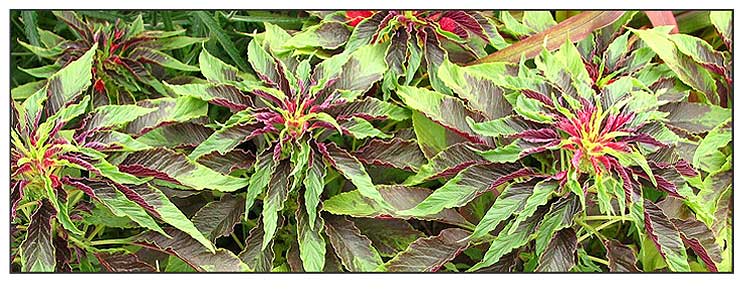
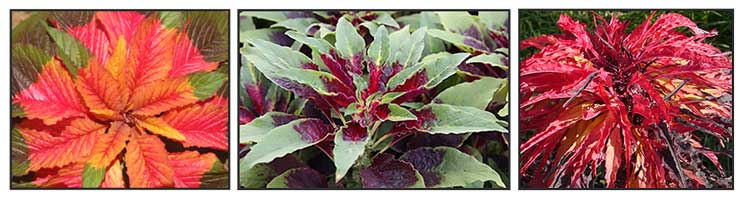
- Cultivars have striking yellow, red, and green foliage.
- Etymology: The genus name Amaranthus derives from the Greek work amárantos meaning 'unfading', referring to a group of plants known for their long lasting flowers. The specific epithet tricolor refers to its notable species flaunting vibrant purple and red colors. (14) Cultivars have striking yellow, red, and green foliage; hence, the name Joseph's coat.
- Coat of arms: A feature on the coat of arms of Gonville and Caius College, Cambridge, where it is called "flowers gentle" (semee of flowers gentil).
(3)
- Increasing recognized as a valuable crop throughout the world, especially in Africa, where it is grown as vegetables and pseudo-cereals. (14)
Botany
• Growth form: Erect, annual herb up to 1.5 m tall. Foliage: Red or light to dark green leaves are elliptical to lanceolate (oval to lance-shaped) or broadly ovate (egg-shaped). Flowers: Flowers occur in rounded clusters in the leaf axils (the space between the upper surface of the leaf and the stem). A spike inflorescence occurs near the stem tip which is typically short, but sometimes longer. Fruit: Dry, dehiscent fruit is known as a capsule. It is covered by a lid-like opening and contains black, glossy seeds. (Flora & Fauna Web)
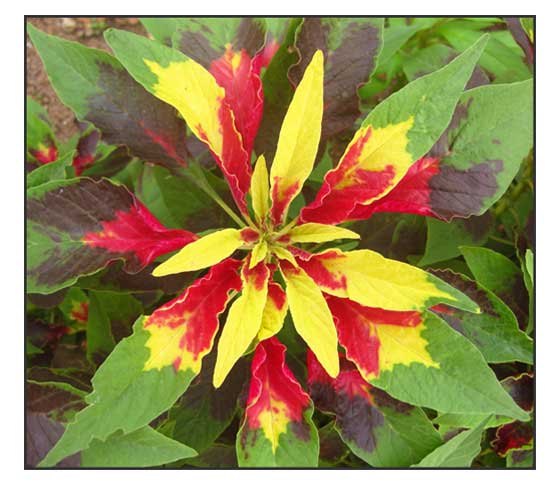 • Plants annual, glabrous. Stems erect, often branched, 0.8-1.5 m. Leaves: petiole 1/2 as long as blade; blade ovate, elliptic, rhombic, or lanceolate, mostly 4-12 to 1.4-6 cm, base tapering, margins entire, usually undulate, apex acuminate and short-mucronate; distal leaf blades green, red, scarlet, maroon, purple, yellow, and cream (unique to A. tricolor) . Inflorescences axillary glomerules. Bracts of pistillate flowers ovate to lanceolate, 5-6 mm. Pistillate flowers: Tepals 3, narrowly ovate to lanceolate, 5-6 mm, apex aristate; style branches spreading; stigmas 2-3. Staminate flowers intermixed with pistillate; tepals 3; stamens 3. Utriclesovoid, 2-2.5 mm, rugose, dehiscence regularly circumscissils. Seeds: black or brownish black, subglobose, 1 mm diameter, shiny. (Flora of North America) • Plants annual, glabrous. Stems erect, often branched, 0.8-1.5 m. Leaves: petiole 1/2 as long as blade; blade ovate, elliptic, rhombic, or lanceolate, mostly 4-12 to 1.4-6 cm, base tapering, margins entire, usually undulate, apex acuminate and short-mucronate; distal leaf blades green, red, scarlet, maroon, purple, yellow, and cream (unique to A. tricolor) . Inflorescences axillary glomerules. Bracts of pistillate flowers ovate to lanceolate, 5-6 mm. Pistillate flowers: Tepals 3, narrowly ovate to lanceolate, 5-6 mm, apex aristate; style branches spreading; stigmas 2-3. Staminate flowers intermixed with pistillate; tepals 3; stamens 3. Utriclesovoid, 2-2.5 mm, rugose, dehiscence regularly circumscissils. Seeds: black or brownish black, subglobose, 1 mm diameter, shiny. (Flora of North America)
Distribution
- Naturalized, per Leonardo Co's Digital Flora database. In Luzon to Mindanao; naturalized in waste places. (1)
- POWO lists it as native to the Philippines. (2)
- Also native to Assam, Bangladesh, Borneo, India, Jawa, Laos, Lesser Sunda Is., Line Is., Malaya, Maluku, Myanmar, Nepal, New Guinea, Solomon Is., Sri Lanka, Sulawesi, Sumatera, Thailand, Vietnam. (2)
- Cultivated for ornamental and culinary use.
 Constituents Constituents
- Study evaluated for composition and low-molecular biologically active antioxidant metabolites. A total of 37 low-molecular metabolites were identified by GC-MS study.
Actively photosynthesizing leaves predominantly accumulated ascorbic acid in fully formed blades, which was decreased in aging leaves. Aqueous extracts revealed amaranthine and iso-amaranthine as main betacyanins. Chromatography of aqueous extracts of leaves yielded highly active antioxidants e.g. arbutin-glucoside hydroquinone and oxycinnamic acid including ferulic, chlorogenic, oxybenzoic (gallic) acids. Ethanol extraction showed greater amount of colored components in the spectral range of 350-700 nm. (see study below) (6)
- Preliminary phytochemical screening of methanol extract of leaves revealed carbohydrates, amino acids, proteins, steroids, alkaloids, glycosides, flavonoids, and tannins.
(see study below) (7)
- Nutrient analysis revealed an appreciable amount of protein (26.60), fat (4.49), fiber 6.67), and carbohydrate (39.80)
. Potassium (1080.02 mg/100 g dry weight was major trace element. Seventeen amino acids were identified with glutamic acid as most abundant (23.61 mg/g). Total phenolic content, total flavonoid content, and total antioxidant activity were 30.27 mg GAE/g, 16.75 mg QE/g, and 62.91 mg ascorbic acid equivalent/g extract respectively. (see study below) (11)
- Mineral content in mg/100g dry weight revealed: Sodium (Na) 52.46, potassium (K) 1080.02, calcium (Ca) 39.76, iron (Fe) 0.57. (11)
-
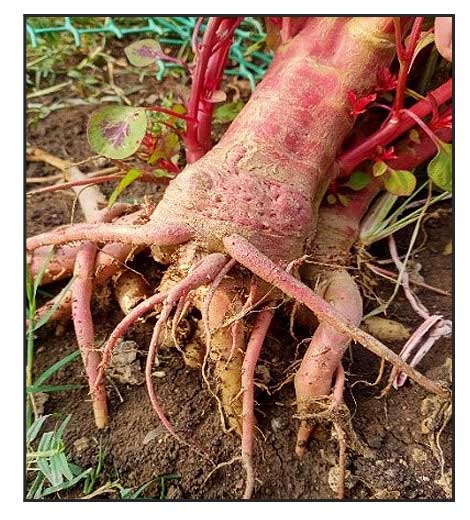
Phytochemical screening of roots showed presence of alkaloids, flavonoids, glycosides, tannins, proteins, and amino acids. Total ash, acid insoluble ash, water soluble ash, ethanol soluble extractive and water soluble extractive were 12.8%, 6.89%, 5.0%, 7.6%, and 20.0% w/w respectively. (16)
Properties
-
Studies have suggested antibacterial, antioxidant, hepatoprotective, antihyperglycemic, antinociceptive, sedative, anxiolytic, nutrient, anthelmintic, phytoremediation properties.
Parts used
Leaves, roots, whole plant.
 Uses Uses
Edibility
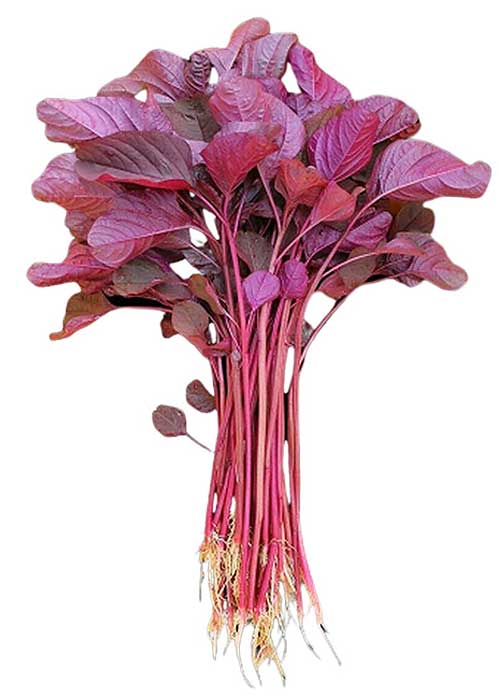
- Leaves and stems are edible, eaten as salad vegetable, raw or steamed.
- A popular leafy vegetable in Indonesia and Malaysia.
-
In China, stir-fried with garlic and salt.
- Korean cuisine, used as namul vegetable. Also considered a san-namul (wild green), growing abundant in the country side, and foraged rather than planted and harvested. It has an earthy and nutty flavor, mixes well with gochujang- and soup soy sauce-based seasonings, and bori-bap (barley rice). (3)
- Red amaranth is one of the most extensively consumed vegetables in Bangladesh due to its attractive color, nutritious value, and flavor, where it is consumed as fried vegetables and as ingredient for soup and noodle preparations.
Folkloric
- No reported folkloric medicinal use in the Philippines, (2)
- Elsewhere, used for external inflammation and for treatment of bladder problems.
- Root decoction used with Cucurbita moschata to control hemorrhage following abortion. Decoction of old plants drunk to improve vision and strengthen the liver. (5)
- In Ayurveda, used as astringent in menorrhagia, leucorrhea, dysentery, diarrhea, hemorrhagic colitis; also for cough, bronchitis, and externally as emollient. It has also been used for treatment of piles, blood disorders, bladder maladies, toothache, hemorrhage, and as diuretic and hepatoprotective. (8)
- In Bangladesh, used for treatment of pain, anemia, dysentery, skin diseases, diabetes, and as blood purifier. (8)
- The herb is used purifier tonic, ascaricide, for treatment of toothache, sore throat, cough, and bronchitis. Roots, leaves, and stems are used as appetizer, and eaten for relief of bilious disorders.; also used for leucorrhea, colic, gonorrhea, piles, and for its galactogenic properties. Root decoction used with Cucurbita pepo to control bleeding after abortion. Used as emollient or mouthwash for treatment of ulcerative diseases of the mouth and throat. Root paste in honey and rice water used for treatment of leucorrhea. (14)
Others
- Dyes: Whole plant yields yellow and green dyes. (5)
Studies
• Antioxidant / Leaves: Study evaluated the composition and content of low-molecular biologically active antioxidant metabolites of leaves. Analysis of leaves revealed the presence of powerful antioxidants - squalene, previously found only in seeds, ascorbic acid, comparable to that of pepper, gallic, ferulic, and chlorogenic acids, sugars, and their derivatives, triterpenes betacyanins. Results indicate vegetable amaranth is a promising source of antioxidants, with potential for use in functional foods and phytobiologicals. (see constituents above) (6)
• Antibacterial / Leaves: Study evaluated methanol extract of leaves for antibacterial activity against Staphylococcus saprophyticus, Enterococcus faecalis, Escherichia coli, Pseudomonas aeruginosa, Klebsiella pneumonia, and Proteus vulgaris by disc diffusion method and MIC. The ME showed notable antibacterial activity against tested microorganisms. Maximum activity was observed against E. coli (17.7mm), moderate activity against P. vulgaris (16.6mm),, and minimum activity against E, faecalis (13.3mm). MICs ranged from 5.0 to 0.36 mg/ml. (see constituents above) (7) (12)
• Hepatoprotective Against Paracetamol-Induced Toxicity / Roots: Study evaluated the hepato-protective activity of aqueous extract of roots against paracetamol (PCM)-induced toxicity evidenced by elevated serum enzymes SGOT, SGPT, ALP, and total bilirubin. Results showed significant hepato-protective effects evidenced by decreased serum enzyme activities, which was supported by histopatho-logical liver studies. The hepatoprotective activity was comparable to standard silymarin. (7) (9)
• Antihyperglycemic / Antinociceptive / Whole Plant: Study evaluated the antihyperglycemic and antinociceptive effects of methanol extracts of whole plants using glucose-induced hyperglycemic mice and acetic acid-induced gastric pain models in mice. Results showed maximum antihyperglycemic activity at 400 mg extract/kbw comparable to standard drug glibenclamide (10 mg/kbw). In antinoci-ception testing, the extract showed significant dose-dependent reduction in number of writhings induced in mice through intraperitoneal acetic acid, with maximum activity at 400 mg/kbw extract dose, which was comparable to standard aspirin at 200 mg/kbw. Results validate the folk medicinal use for diabetic patients and alleviation of pain. (8)
• Hepatoprotective Against CCl4-Toxicity / Leaves: Study evaluated an ethanolic extract of A. tricolor leaves (ATE) for efficacy against carbon tetrachloride-induced liver toxicity in rats. Results showed oral administration of ATE for 3 weeks significantly reduced elevated levels of GOT, GTP, GGT, ALP, bilirubin, cholesterol, LDL, VLDL, TG, and MDA induced by CCl4. ATE treatment also increased activities of NP-SH and TP in liver tissue. Prolongation of narcolepsy induced by pentobarbital was significantly shortened by the extract. Acute toxicity study showed no morbidity or mortality. The hepatoprotective activity was attributed to antioxidant properties of A. tricolor. (10)
• Antibacterial / Antiradical / Nutrient Analysis / Whole Plant: Study evaluated the antibacterial and antiradical activity of red amaranth plant. The IC50 for DPPH radical scavenging activity was 730.93 µg/mL. Plant extract showed modest bacterial growth inhibition. Gram-negative Salmonella typhi showed greater sensitivity than Gram-positive Listeria monocytogenes. (see constituents above) (11)
• Sedative / Anxiolytic / Leaves: Study evaluated the sedative and anxiolytic efficacy of methanolic extract in vivo. In sedative assay,, extract dose of 200 and 400 mg/kbw showed dose-dependent and statistically significant (p<0.05) suppression of locomotor activity of mice in both open field and hole cross test. In anxiolytic assessment, extract also showed increased percentage of entry in open arms at both doses. The 400 mg/kbw dose showed significant anxiolytic activity (p<0.05) comparable to standard diazepam. (12)
• Bioactive Phytochemicals / Quenching Activity of Radicals / Nutrient Health Benefits: A. tricolor vegetables are resistant to abiotic stress, including drought, and is a source of ample natural phyto-chemicals. Study evaluated selected drought-resistant amaranth genotypes for phytochemicals and antioxidant activity in an RCBD study with three replicates. Accessions revealed ample carbohydrates, protein, moisture, and dietary fiber, with macro- and microelements including iron, copper, manganese, zinc, sodium, molybdenum, boron, potassium, calcium, magnesium, phosphorus, and sulfur; phyto-pigments and plentiful phytochemicals, including ascorbic acid, flavonoids, polyphenols, and beta-carotene; and antioxidant potential. Bioactive phytopigments and phytochemicals of the accessions showed good free radical quenching capacity against ABTS and DPPH equivalent to trolox. Study showed plentiful proximate, nutraceuticals, phytopigments, bioactive phytochemicals, and antioxidant potentiality. Its drought resistance and quenching of ROS offer huge potential for promotion of health benefits and nutrition source for communities in drought-prone semi-arid and arid areas. (15)
• Antimicrobial / Antioxidant / Air-Dried Whole Plant: Study evaluated the antioxidant and antimicrobial activities of methanol extract and fractions of A. tricolor. The ethyl acetate (EtOAc) extract showed highest DPPH free radical-scavenging activity (IC50 of 16.43 µg/mL). Extract showed reducing power of 2.743 at 0.5 mg/mL and significantly and dose-dependently attenuated the production of ROS. Bioassay fractionation of EtOAc yielded two flavonoids, kaempferol (1) and quercetin (2), and one phenolic acid, gallic acid (3). Antimicrobial activity of compound 3 at dose of 63 µg/mL was superior to tetracycline control (250 µg/mL) against E. coli. Compounds 1 and 2 ( 63 µg/mL each) showed higher activities against Penicillium oxalicum and Staphylococcus aureus than control. (17)
• Anthelmintic / Leaves: Study evaluated the anthelmintic potential of A. tricolor using acetone, ethyl acetate, and ethanol solvents against adult Eisenia fetida earthworms. The acetone extract showed presence of most phytochemicals. All extracts exhibited dose dependent anthelmintic activity in both parameters of paralysis and death, and with more potency than standard Albendazole. Most promising result was with the acetone extract with paralysis within 5 minutes and death within 13 minutes. The vermicidal activity was attributed to presence of glycosidic and phenolic substances in the acetone extract. (18)
• Remediation of Strontium Contamination: Amaranthaceae are effective for cleaning soil contaminated with heavy metals and radionuclides. Study evaluated the response of A. tricolor to various concentrations of strontium ions (0.2, 0.6, 3 and 6 mM) to determine its possibility for remediation of strontium contamination. Maximal strontium content achieved were 8.75 mg/g dry wt in shoots and 1.71 mg/g dry wt in roots, when strontium concentration was 6 mM. Transfer factors ranged from 2.85 to 5.93, while bio-concentration factors ranged from 22.57 to 49.66. Results showed A. tricolor has excellent potential to remediate strontium contamination. (19)
• Wastewater as Source of Irrigation of Red Amaranth / Toxicity Study: Water deficiency is one of the main factors that limit sustainable agricultural development in most arid and semi-arid regions. The gradual decline in available fresh water for irrigation has seen the increase used of sewage farming in all urban areas in India. Study evaluated the long-term effect of domestic sewage wastewater irrigation on heavy metal concentrations in soil and plants. Study assessed the potential toxicity of acetone extract of A. tricolor on some essential parameters i.e. hematological and biochemical parameters, liver and kidney weight and histopathological study. Results of in vivo acute and subacute toxicity studies using a rat model showed no toxicity or mortality observed between domestic sewage water and well water irrigated to red amaranth A. tricolor. Study suggests that in domestic sewage water grown crops, uptake of metals may increase nutritional value and improve soil properties, plant growth, and yield without any contamination in soil and toxicity in the crop. However, continuous monitoring on quality of domestic sewage water irrigation, soil characters with practicing crop rotation are more viable and alternative option for sustainable development of crop production, maintenance of soil fertility, and healthy environment consortium including ewaat4r conservation, reutilization and recycling, food security and zero waste generating agroecosystem. (20)
Availability
- Wild-crafted.
- Seeds, herbal powders, capsules in the cybermarket. (SM) |


_02.jpg)
.jpg)



_01.jpg)
.jpg)
