Gen info
- Desmanthus is a genus of flowering plants in the mimosoid clade of the subfamily Caesalpinioideae of the pea family, Fabaceae. It contains about 24 species of herbs and shrubs. Members of the genus are commonly known as bundleflowers or donkey beans, the latter as a highly regarded fodder for these domestic drought animals. (3)
- Etymology: The genus name Desmanthus derives from Greek words desmos, meaning "bundle", and anthos, meaning "flower", referring to the clustered, button-like inflorescences. The specific epithet virgatus derives from Latin, meaning "wand-like," "twiggy" or "streaked," referring to the plant's slender, upright, or bending branches.
 Botany Botany
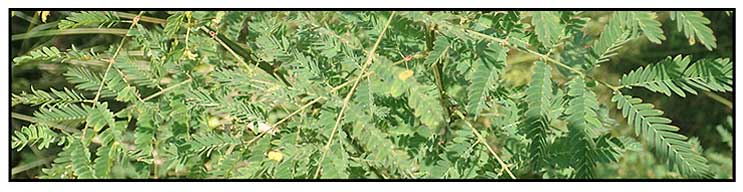
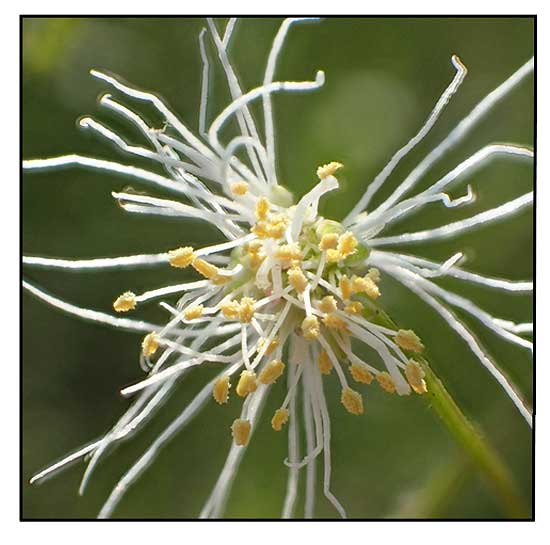
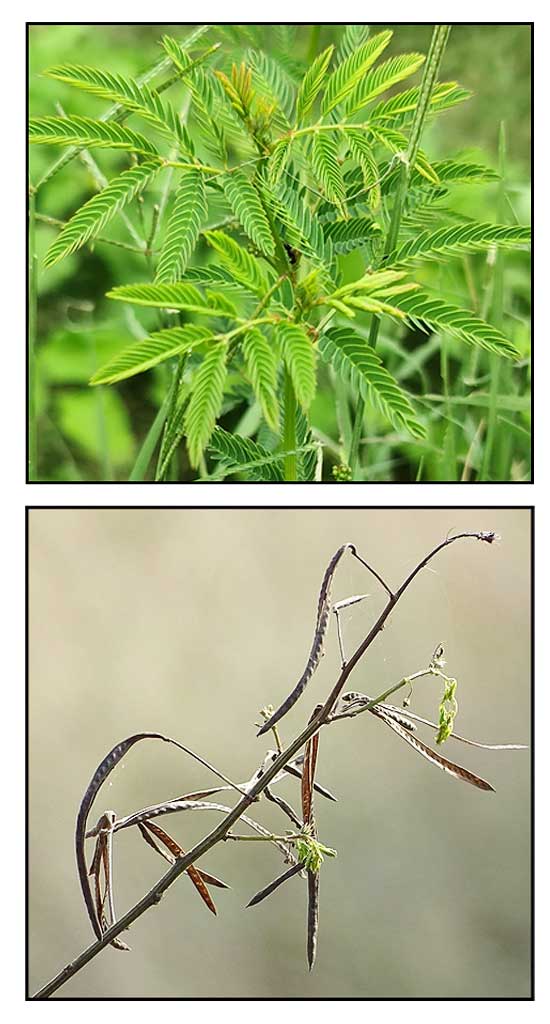
• Plant is a woody perennial herb or shrub growing up to 1.5 - 3 meters. Its herbage dies back to the woody taproot during dry conditions and sprouts up again when adequate moisture is available. One plant can grow up to 50 stems, becoming quite robust. The older stems are brown to red in color and are shiny and hairless. The leaves are bipinnate, divided into a few pairs of leaflets which are each subdivided into smaller leaflets that measure up to 7 to 9 millimeters long. Inflorescence is a head of up to 11 to 22 flowers. Plant bears perfect, male, and sterile flowers. Flowers are white to yellowish. A short stalk bears up to 11 legume fruit pods which are linear in shape, dark red to blackish in color, and up to 8.5 or 9 centimeters long. They dehisce along each edge to release up to 26 to 30 seeds each. Flowers and fruits are produced year-round in tropical locales with enough water. Outside the tropics it reproduces mainly in spring and summer. (4)
• Under-shrub or small shrub up to 2 m high, habit variable, nearly erect or (more commonly) diffuse or decumbent; branchlets glabrous. Leaves moderately small, bipinnate, closing when touched; 10 to 30 leaflet pairs per pinna; leaflets 2–9 mm long, 1–3 mm wide, margin sparsely hairy; petiole usually no more than 5 mm long; one oval gland near base of petiole or basal pair of pinnae; stipule 3–6 mm long, persistent. Inflorescence of axillary, pedunculate heads toward the tips of the twigs; head small, 10–30 mm diam., dense, few-flowered; the flowers all erect, whitish, sessile; Legume narrowly cylindrical, c. 50 mm long. (PlantNET)
 Distribution Distribution
- Naturalized. (2)
- Native range is Tropical & Subtropical America.
- Native to Argentina Northeast, Argentina Northwest, Aruba, Bahamas, Belize, Bermuda, Bolivia, Brazil Northeast, Brazil South, Brazil Southeast, Brazil West-Central, Cayman Is., Chile Central, Chile North, Colombia, Costa Rica, Cuba, Dominican Republic, Ecuador, El Salvador, Florida, Galápagos, Guatemala, Guyana, Haiti, Honduras, Jamaica, Leeward Is., Louisiana, Mexico Central, Mexico Gulf, Mexico Northeast, Mexico Northwest, Mexico Southeast, Mexico Southwest, Netherlands Antilles, Nicaragua, Panamá, Paraguay, Peru, Puerto Rico, Suriname, Texas, Trinidad-Tobago, Turks-Caicos Is., Uruguay, Venezuela, Venezuelan Antilles, Windward Is. (1)
- Considered a weed in many places.
Constituents
- LC-MS study of ethyl acetate extract of leaves identified 182 secondary metabolite compounds and 10 dominant compounds. Quercitrin and quercimeritrin were the dominant glycosides. (see study below) (5)
-
LC-MS analysis of ethyl acetate extract of leaves identified 182 phytochemicals with 25 dominant flavonoids.
(see study below) (6)
Properties
- Studies have suggested antirabies, antidiabetic, α-glucosidase inhibitory, antifungal, anthelmintic properties.
Parts used
Leaves.
Uses
Edibility
- No reports on human consumption.
Folkloric
- No reported folkloric medicinal use in the Philippines.
Others
- Fodder: In some areas, cultivated as a fodder or forage crop. (3) A highly palatable, perennial tropical legume used as fodder, with high protein content (10-20% forage, ~ 22% in leaves) and very drought tolerant. (•) Prostrate bundleflower is non-toxic and palatable to livestock. It contains ample protein. A good food plant for cattle and cows, but not promising as feed for pigs. Very tolerant for grazing, which actually stimulates the plant with more seedlings surviving under the pressure of grazing. Livestock help disperse the seeds throughout the rangeland, surviving passage through the gut. (4) Long periods of drought is not a hindrance to its wide distribution.
- Agroforestry: Helps control erosion, fixes nitrogen, improving the soil areas. (4) Desmanthus is a perennial, nitrogen-fixing tropical shrub that can be used as green manure, cover crop, and as livestock fodder. It can also be used as a living fence or in alley cropping. (10) Used for mulching, green fertilizing, nitrogen fixation, intercropping, recovery of degraded soils, and intensifier of the development of edaphic microorganisms and as pioneer species in successional formations (Fontenele et al, 2007; Rodrigues 2017) (12)

Studies
• Antirabies / Leaves: Study of evaluated the antirabies potential of dominant compounds in ethyl acetate extract of D. virgatus leaves through in silico approach. LC-MS identified 182 secondary metabolite compounds and 10 dominant compounds. The compounds along with seven antiviral drugs were docked against rabies virus glycoprotein. Quercitrin and quercimeritrin were the dominant glycosides in the EA extract of leaves that showed binding affinity values of -8.45 and -8.10 kcal/mol, respectively. Four compounds indicated potential as antirabies drug. Study suggests the leaf extracts contain compounds with potential antirabies activity, which merits further in vitro and in vivo testing. (5)
• α-Glucosidase Inhibitory / Antidiabetic / Leaves: Study of evaluated the inhibitory activity of ethyl acetate extract of D. virgatus leaves against α-glucosidase enzyme through in silico and invitro methods. LC-MS analysis identified 182 phytochemicals with 25 dominant flavonoids. Molecular docking showed luteolin-7-glucoside with strongest binding affinity (-9.52 kcal/mol) compared to acarbose (-9.25 kcal/mol). In vitro assays showed strong inhibitory effect with IC50 of 7.14 µg/mL, comparable to acarbose (4.64 µg/ml). Results suggest the EA extract of leaves exhibits promising α-glucosidase inhibitory activity and potential as antidiabetic agent. (6) Study evaluated compounds identified by LC-MS from ethanol extract of D. virgatus leaves for antidiabetic properties using α-glucosidase activity inhibition. LC-MS identified 160 compounds. By α-glucosidase inhibition to assess for antidiabetic effect, the EE of leaves showed IC50 values of 144.11 ppm in medium category for the extract, compared to 3.78 ppm for acarbose. (8)
• Antifungal / Leaves: Most fungal infections in humans are caused by Candida species, especially C. albicans, which is highly adaptable and resistant after prolonged exposure to antifungals. In silico and in vitro studies evaluated wild tantan leaves for natural antifungal materials. In silico test, 10 dominant compounds from LC-MS results using 2QZX protein yielded 3 compounds with most antifungal potential with binding affinity values lower than ketoconazole. In vitro test with agar diffusion method showed average inhibition zone wale of 0,01283 m, which classifies as strong. (7)
• Effect on Methane and Milk Production in Cattle: Methane is one of the greenhouse gases, which is normally emitted by rumen fermentation from dairy cattle, produced globally 15-30%, contributing to global warming, and representing a loss of feed energy by 8-12%. Study concludes the feeding of Desmanthus virgatus significantly (p<0.l01) decreased methane emission and save the calorific value by 199.26 kcal/animal/day, and could be used to increase milk production by 11.38%. (9)
• Herbicide Sensitivity and Effect: Desmanthus pastures are commonly sown into former cropping paddocks, which can be source of significant weed burden. Study evaluated the sensitivity of D. virgatus to herbicides at different stages of pasture development. Herbicides used included imazethapyr, trifluralin, bromoxynil, flumetsulam, terbuthylazine, isoxaflutole, and paraquat. Results suggest all the herbicides could be used on desmanthus. In established desmanthus pastures, 2,4-DB caused significant damage but not plant death. There were no ongoing effects of herbicide on plant productivity following cutting. (11)
• Anthelmintic / Comparable Vermicidal Potency on Haemonchus contortus: Study evaluated and compared the in-vitro efficacy of young leaves extracts of Desmanthus virgatus (EDMDV) and Acacia nillotica (EDMAN) as vermicidal against Haemonchus contortus. Results showed mortality percentage (vermicidal) of 2.5%, 3.5%, 4.5% and immersion time for 1, 3, 5, or 7 hours was 50%, 33%, and 12.5%, respectively, compared to EDMAN with 16.7%, 45.8%, and 12.5%, respectively. Results suggest EDMDV has more effective vermicidal power at 2.5% concentration. (13)
• Low Nutritive Value as Alternative Protein Source in Pig Diets: Study showed the apparently low nutritive value of desmanthus leaf meal makes it unsuitable as alternative protein source in pig diets. Its used as leaf meal in pig diets can only be justified if increase in nutritive value can be successfully developed. (14)
Availability
- Wild-crafted.
- Seeds in the cybermarket. |