 Gen info Gen info
- Apocynaceae is a family of flowering plants that includes trees, shrubs, herbs, stem succulents, and vines, usually known as the dogbane family, because some taxa were used as dog poison. Notable members include oleander, dogbanes, milkweeds, wax plants, and periwinkles. As of 2012, the family comprised some 5,100 species, in five subfamilies: Apocynoideae, Asclepiadoideae, Periplocoideae, Rauvolfioideae, and Secamonoideae. (17)
-
Streptocaulon is a genus of plants in the family Apocynaceae, consisting of 5 accepted species of shrubs and lianas characterized by their twining habits, simple leaves, and milky latex. It was first described in 1834 bu Robert Wight and William Arnott in their Contributions to the Botany of India. (14)
- Streptocaulon juventas is a species of oleander first described by Loureiro, and given its current name by Elmer Drew Merrill.
(16)
- Etymology: The genus name Streptocaulon derives from Greek words streptos meaning "twisted" and kaulon meaning "stem), referring to the characteristic twining or climbing habit of its stems. (14) The specific epithet juventas derives from Latin meaning "youth" or "young age", perhaps referring to its use herbal use as a restorative or anti-aging tonic.
Botany
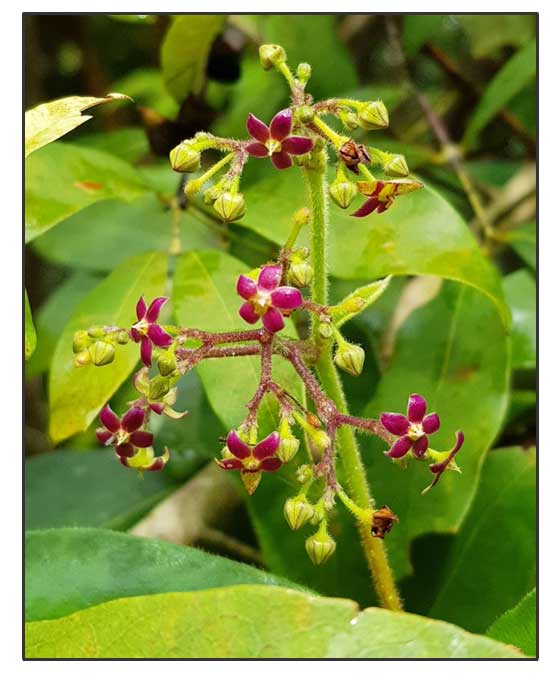
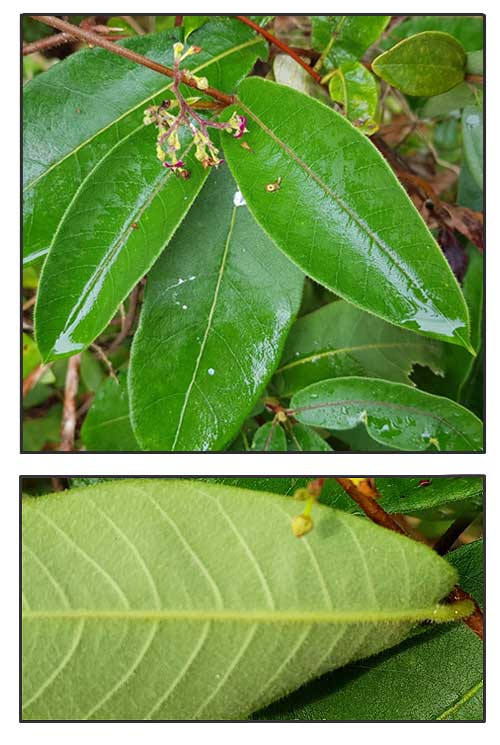
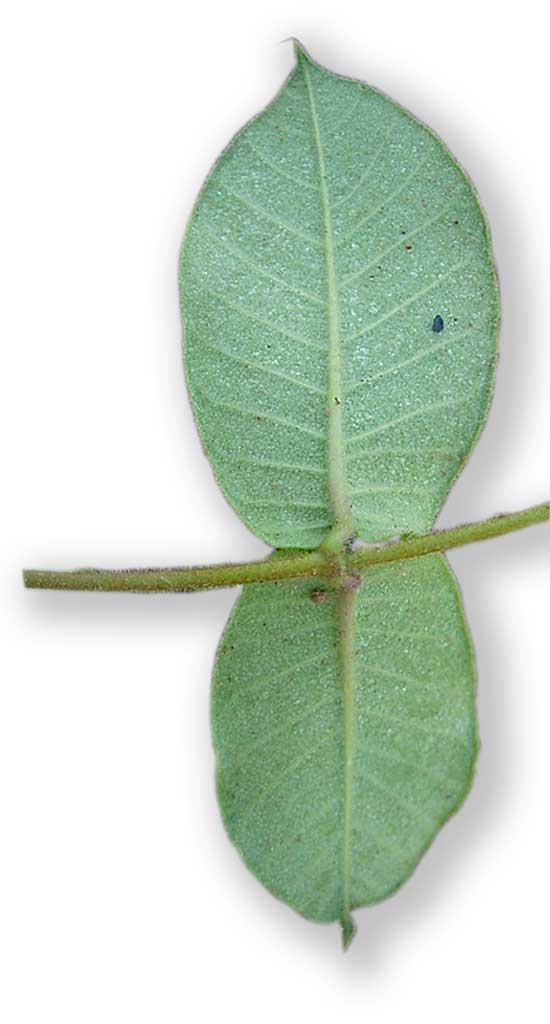
• Lianas to 8 m, densely tawny pilose except for corolla. Petiole 3-7 mm; leaf blade obovate or broadly elliptic, 7-15 × 3-9.5 cm, leathery or thick papery, base rounded to cordate, apex acute or rounded and apiculate; lateral veins 14-20 pairs, subparallel. Inflorescences 4-20 cm, sometimes thyrsoid; sessile or with peduncle to 8 cm; flowers densely clustered in young inflorescences. Flower buds subglobose to ovoid, ca. 3 × 3 mm. Sepals ovate, ca. 1.3 × 1 mm, acute. Corolla yellow-green outside, yellow-brown inside, glabrous; tube short; lobes ovate, ca. 3 × 1.5 mm. Corona lobes longer than anthers. Ovaries densely pubescent. Follicles oblong or oblong-lanceolate in outline, 7-13 cm × 5-10 mm, horizontal. Seeds oblong, 6-9 × 2-3 mm; coma 3-3.5 cm. (Flora of China)
Distribution
- Native to the Philippines. (1)
- Note:Its presence in the Philippines is based on PPI 7521 Reynoso, Sagcal & Garcia (P.B. Pelser) (1)
- Native to Cambodia, China South-Central, China Southeast, Laos, Malaya, Myanmar, Thailand, Vietnam. (2)
- Montane forests, thickets, often clinging to trees. 300-1,000 m. (3)
 Constituents Constituents
- Study of methanolic extract of roots of S. juventas isolated 16 cardenolides including five new ones and two new hemiterpenoids, two known phenylpropanoids and a well known phenylethanoid. (see study below) (7)
- Study isolated three new C21 steroids, i.e., (3β,17α,20S)-pregn-5(6)-ene-3, 17, 20-triol-3-O-β-d-digitalopyranosyl-(1 → 4)-β-d-digitalopyranoside (4), (3β,17α,20S)-pregn-5(6)-ene-3, 17, 20-triol-20-O-β-d-glucopyranosyl-(1 → 6)-β-d-glucopyranosyl-(1 → 2)-β-d-digital-opyranoside (8), (3β, 20R)-pregn-14(15)-ene-3, 20, 21-triol-3-O-β-d-glucopy-ranoside (10), along with ten known C21 steroids. (see study below) (11)
- Study of aqueous fraction of roots of SJ isolated a new cardiac glycoside, periplogenic 3-O-ß-gentiobioside (1) together with six known ones (2-7). (see study below) (14)
- Column chromatography of ethyl acetate fraction of methanol extract of stems and leaves isolated four pure compounds: lupeol (1), 11-oxo-α--amyrin acetate (2), ursolic acid (3), and 3-α--O-acetyl betulinic acid (4). (13)
- Study S. juventas roots isolated one new cardiac glycoside, periplogenin 3=-O-ß-gentiobioside (1) together with six known ones (2-7). (see study below) (20)
- Study of C3 chloroform extract of leaves and stem vines of S. juventas isolated four natural compounds identified as ß-sitosterol (1), lupeol (2), neoilexonol acetate (3), and 1ß,3ß-dihydroxy-urs-9(11),12-dien (4). (22)
 Properties Properties
- Studies have suggested wound healing, antitumor, anti-inflammatory, anticancer, antidiabetic, antiproliferative properties.
Parts used
Roots, leaves.
Uses
Edibility
- No information found on edibility.
Folkloric
- No reported folkloric medicinal use in the Philippines.
- Roots used for treatment of dysentery and stomachache. Long-term use of roots have a rejuvenating effect. Reportedly turns white hair black. For treatment of snake bites, root juice is swallowed and the residue used as poultice. (3)
- In Vietnam, traditionally used for treating wounds. Roots also used for treating anemia, chronic malaria, rheumatism, menstrual disorders, neurasthenia, and dyspepsia. (3)
- In Vietnam,
used for treatment of snakebites, premature graying of the hair, swelling and pain, and for clearing heat and detoxifying. Used as a tonic to treat depression and neurologic diseases, for strengthening bones, and for blackening the hair and beard. (23)
- In traditional Chinese medicine, widely used for treatment of dysentery and traumatic injuries since ancient times. (18)
Studies
• Wound Healing / Roots: Study evaluated an ethanolic extract of roots for wound healing activities in a mouse excision wound model. The extract at 100 mg/kg/day significantly reduced wound closure time, exhibited a 2.3 fold decreased in inflammatory cells, a 1.7-fold increase in fibroblasts and enhanced angiogenesis. Molecular analysis showed down-regulation of TNF-α and NF-kB1 gene expression by 4.7 and 3.7 times, respectively. TGF-ß1 BS VEGF gene expression were up-regulated 1.9 and 6.5 times respectively. Results suggest the EE has remarkable wound healing activity. (4)
• Antiproliferative / Anti-Diabetic / Leaves: Study evaluated leaf extracts of S. juventas for in vitro anti-proliferative activity against B16F10 (murine melanoma) and HepG2 (human hepatocellular carcinoma) cell lines and its α-glucosidase inhibitory potential. MTT assay the hexane and dichloro-methane fractions exhibited strongest cytotoxic effects of B16F10 cells with IC50s of 36.09 and 45.91 µg/mL, respectively. Hexane fraction demonstrated potent activity against HepG2 with IC50 of 36.65 µg/mL. In vitro assays for antidiabetic activity showed the hexane and EA extracts displayed strongest α-glucosidase inhibition, with IC50s of 221.59 and 265.73 µg/mL, respectively. Results suggest the leaf extracts possess selective pro-apoptotic activity against cancer cells and a potential natural source for discovery of anti-diabetic agents. (5)
• Cytotoxic Cardiac Glycosides: Previous studies have isolated and identified cardiac glycosides from the anti-tumor fraction of S. juventas root. Study evaluated the cytotoxic activities of 43 cardiac glycosides on three cell lines: human lung A549 adenocarcinoma, large cell lung cancer NCI-H460 cell, and normal human fetal lung fibroblast MRC-5 cell. Most of the tested compounds showed potent inhibitory activities toward the three cell lines. Study showed the activities of the compounds exhibited different variation trends between A549 and NCI-H460 cell line, indicating the compounds could selectively inhibit cell growth. Results provide a foundation for further research on new anti-tumor drug development. (6)
• Antiproliferative Against Human HT-1080 Fibrosarcoma Cell Line / Roots: Study of methanolic extract of roots of S. juventas, having shown strong antiproliferative activity against highly metastatic human HT-1080 fibrosarcoma cell line, isolated 16 cardenolides including five new ones and two new hemiterpenoids, two known phenylpropanoids and a well known phenylethanoid. The isolated cardenolides strongly inhibited proliferation of HT-1080 cell line with IC50 values of 0.054-1.6 µM and A549 cell line with IC50 of 0.016-0.65 µM. Morphological changes and ladder-like DNA fragmentation in cells treated with cardenolides suggested antiproliferative activity was due to induction of apoptosis. (7)
• Periplogenin and Digitoxigenin / Two Wound Healing Components: Study evaluated the wound healing effects of two components determined by UPLC-QqQ-MS/MS on rats subjected to full-thickness resection on the back. Content of periplogenin and digitosigenin from 13 batches of SJ extracts ranged from 43.26 to 97.15 µg/g and 18.04 to 55.55 µg/g respectively. The compounds significantly increased rate of wound healing in rats, increased content of hydroxyproline in wound tissue, and improved the pathological state of wound skin tissue. (8)
• Component of Cosmetic Formulation for Alleviating Skin Inflammation / Invention: Invention is a cosmetic composition of Streptocaulon juventas and 12 other medicinal plant extracts for alleviating skin irritation and inflammation caused by nitric oxide (NO) mediated inflammation and retinoids. Retinoids are widely used as active ingredient in wrinkle improvement cosmetics and used for treatment of skin diseases such as acne, psoriasis, and keratin abnormalities. However, retinoids are known to cause dry skin, erythema, itching, burning, among others, which are common in retinoid-specific irritant contact dermatitis. (9)
• Corchorusoside C / Caspase-Dependent Apoptosis in Prostate Cancer: Corchorusoside C (1), isolated from S. juventas, was found nontoxic in a zebra fish (Danio rerio) model and to induce cytotoxicity in several cancer lines with notable selective activity against prostate DU-145 cancer cells with IC50 of 0.08µM. The compound induced DU-145 cell shrinkage and cell detachment. Corchorusoside C increased both activity and protein levels of caspases 3 and 7, and also induced sub-G1 population increase of DU-145 cells and modulated caspases in zebrafish. Corchorusoside C induces apoptosis in DU-145 cells and targets the same pathways both invitro and invivo in zebrafish. Study suggests use of zebrafish assays has potential for wider application for evaluation of potential anticancer agents of natural origin. (10)
• C21 Steroids / Apoptosis in HepG2: Study of S. juventas isolated three new C21 steroids, along with 10 known C21 steroids. All isolated compounds were screened for invitro cytotoxicity against human liver cancer cells (HepG2). Compounds 1-3, 5, 10-12 displayed cytotoxic activities in HepG2 cells. Compound 10 exhibited good inhibitory activity with IC50 of 11.7 µM and high SI value of 3.5. Compound 10 also showed induction of HepG2 cells apoptosis by flow cytometry. (see constituents above) (11)
• Digitoxigenin / Protection of LLC-PK1 Cells: Study identified a unique active cardiotonic steroid, digitoxigenin, and verified that it can protect LLC-PK1 cells from hypoxic injury, suggest potential use in ischemic/reperfusion injury and inducing collagen synthesis in primary human dermal fibroblast cells. Study implicates the compound is the molecular basis of wound healing activity of S. juventas. (12)
• Antiproliferative / Human Lung A549 Adenocarcinoma Cells: Study of 75% ethanol extract of Streptocaulon juventas (SJ), which has shown strong inhibitory effect on proliferation of human lung A549 adenocarcinoma cells, evaluated an active fraction (SJF) for in vivo effect on lung cancer in athymic nude mice with A5490 tumors. Results showed SJF significantly inhibited tumor growth without physical side effects. Main components of SJF were identified as digitoxigenin, periplogenin, and peri-
plogenin glucoside. (13)
• Anticancer Cardenolide Glycoside / NCI-H460 and HeLa Cells / Roots: Study of aqueous fraction of roots of SJ isolated a new cardiac glycoside, periplogenic 3-O-ß-gentiobioside (1) together with six known ones (2-7). Compound 1 showed moderate cytotoxicity against non-small cell lung carcinoma MCI-H460 and ovarian cancer HeLa cells. Compounds 2 and 3 exhibited remarkable cytotoxicity against NCI-H460 with IC50 values of 0.34 and 0.068 µM, respectively. (14)
• Antiproliferative Cardenolides / Apoptosis / Roots: Study of roots isolated 16 cardenolides, 2 hemiterpenoids, 2 phenylpropanoids, and a phenylethanoid. Compounds were evaluated for antiproliferative activity towards three human-derived (HT-1080 fibrosarcoma, lung A549 adenocarcinomal, cervix HeLa adenocarcinoma) and three murine-derived (colon 26-L5 carcinoma, Lewis lung carcinoma, B16-BL6 melanoma) cell lines. The cardenolides selectively and strongly inhibited proliferation of HT-1080 (IC50s 0.054-1.6 µM) and A549 (IC50 0.16-o.65 µM) cell lines. Morphological changes and ladder-like DNA fragmentation in cardenolide treated cells indicated antiproliferative activity was due to induction of apoptosis.
(15)
• Wound Healing Mechanisms: Study evaluated the wound healing activity of S. juventas extract (ESJ) in rat full-thickness wound models and sought to clarify its underlying molecular mechanisms. ESJ significantly accelerated wound healing and promoted hydroxyproline production in wounds. Network pharmacology and transcription analysis revealed SJ might promoted wound healing by activating AKT and MAPK pathways. In L929 cells, ESJ significantly promoted cell proliferation, migration, and increased expression of collagen I and α-SMA. ESJ also increased phosphorylation of AKT, mTOR, ERK and p38 in a time- and dose-dependent manner. (18)
• Periplogenin and Digitoxigenin / Wound Healing Components: Cardiac glycosides, especially periplogenin, digitoxigenin, and their glycosides are main constituents of SJ. Study evaluated the wound healing activity of the two components in rats subjected to full-thickness skin resection on the back. Average content of periplogenic and digitoxigenin in 13 batches of SJ extracts ranged from 43.26 to 97.15 µg/g and 18.04 to 55.55 µg/g respectively. Periplogenin and digitoxigenin significantly increased rate of wound healing in rats, increased content of hydroxyproline in wound tissue, and improved pathological state of wound skin tissue. (19)
• Cytotoxic Cardenolide Glycosides / Roots: Study S. juventas roots isolated one new cardiac glycoside, periplogenin 3-O-ß-gentiobioside (1) together with six known ones (2-7). Compound 1 showed moderate cytotoxicity against non-small cell carcinoma NCI-H460 and ovarian cancer HeLa cells. Compounds 2 and 4 showed remarkable cytotoxicity against NCI-H460 cell with IC50s of 0.34 and 0.068 µM, respectively. (20)
• Antitumor Efficacy and Therapeutic Potential of Constituents / Review: Review assessed six databases reporting the anticancer activity of SJ. TXA9 and corchorusoside C exhibted notable in vitro cytotoxicity against various cancer cell lines, TXA9 exhibited IC50s in the low micromolar range alongside the Taxol control in certain lung cancer models (A549 and NCI-H1299). The compounds worked via NF-kB inhibition, apoptosis induction, and ROS-species mediated DNA damage. In vivo, TXA9 and its active fractions significantly suppressed tumor growth in mice. Study suggest potential for SJ cardenolides as promising anticancer leads, and for further nanotechnology research to overcome pharmacokinetic barriers and enhance targeted delivery. (21)
Availability
- Wild-crafted.
- Seeds in the cybermarket.
|


.JPG)