  Gen info Gen info
- Mitragyna is a genus of trees in the family Rubiaceae found in the tropical and subtropical regions of Asia and Africa. As of February 2026, POWO lists10 species.
- Etymology: The genus name Mitragyna derives from Greek words mitra, meaning headband, and gyne, meaning women. (27) The species epithet parviflora means 'small leaves.'
-
Mitragyna parviflora is a tree species found in Asia, native to India and Sri Lanka.
- Literary snippets: According to ancient literature, this is the 'true Kadam", which is associated with Lord Krishna in Vrindavana.
It is also found in Sangam Literature. D. Stephen, a Botany professor at the American College, notes that the forests in Sangam naturally host only the Mitragyna parvifolia species of Kadamba, while other related species are either introduced or cultivated. (22)
Botany
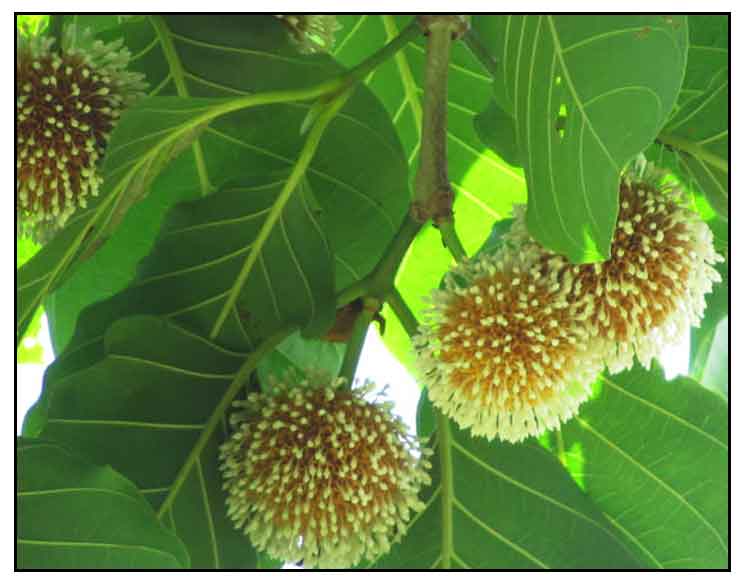
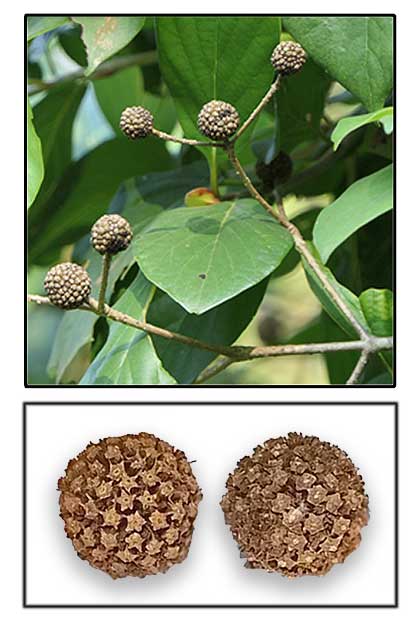
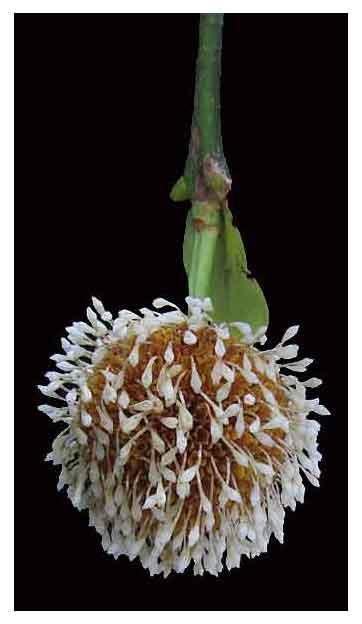
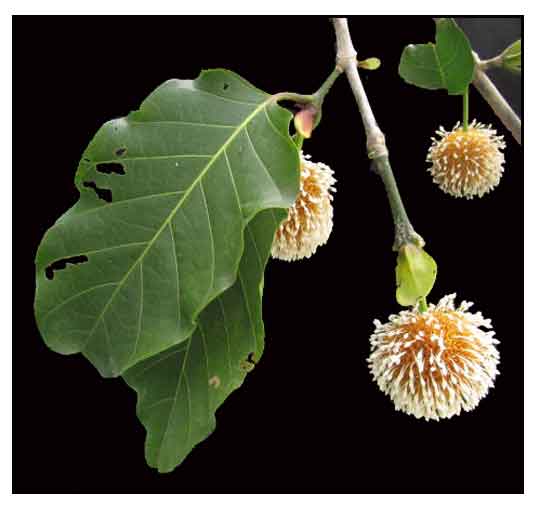
• Mitragyna parvifolia is a large tree growing 40 to 50 feet in height. Stem is erect and branching. Leaves are dark green, simple, opposite, smooth, rounded and decussate. Petioles are 1 to 4 centimeters long. Flowers are in terminal heads, fragrant, creamy-white or yellow, in ball-shaped clusters; peduncle supported by a pair of bract like oblong leaves. Fruits are capsules arranged in globose heads, 2 to 3 millimeters lone, ribbed. Seeds are many, small, 10-ribbed.
Distribution
- Tree was spotted in Butuan.
- Native to Andaman Is., Bangladesh, Cambodia, India, Myanmar, Nepal, Nicobar Is., Sri Lanka, West Himalaya. (16)
- Native to the Philippines (?).
 Constituents Constituents
- Stem and bark yield alkaloids, flavonoids, glycosides, and tannins.
- An alcohol extract of bark yielded carbohydrates, alkaloids, phenols, tannins and phytosterols. A benzene extract yielded carbohydrates, flavonoids, and sterols. (2)
- Leaves yield six major oxindolic alkaloids viz. mitraphylline, isomitraphylline, pteropodine, isopteropodine, speciophylline, and uncarine F. Other plant alkaloids are rotundifoline, rhynchophylline, isorotundifoline, rhynchociline, speciocilitine, speciofoline, mitragynine. Plant also yield compounds like pyroligneous acids, aldehydes, ketones, scopoletin, thermophylline, daucosterol, quinovic acid, ß-sitosterol and methyl acetate. (18)
- Leaves yielded four hetero-yohimbine type oxindole alkaloids from an acid base treated chloroform fraction of ethanolic extract of leaves: 16, 17-dihydro-17b-hydroxy isomitraphylline (1), 16, 17- dihydro-17b-hydroxy mitraphylline (2), together with two known alkaloids, isomitraphylline (3) and mitraphylline (4). Mitraphylline was the main alkaloid. (19)
- Phytochemical screening of leaf extract revealed presence of alkaloids, terpenoids, phenols, tannins, and flavonoids. GC-MS analysis identified 24 phyto-constituents, including the major alkaloid "mitraphylline." (23)
- The hydroethanolic extract (HEE) yielded maximum extraction efficiency (11.6%) with presence of phenols, alkaloids, flavonoids, saponins, terpenoids, glycosides, and steroids. HEE yielded greater levels of TPC (120.78 mg GAE/g) and TFC (76.89 mg QE/g). FITR confirmed presence of alkanes, alkenes, carboxylic and hydroxy groups indicating alcohols, phenols, terpenoids, alkaloids. GC-MS profiling revealed 12 major bioactive phyto-chemicals, mainly 9-octadecenoic acid, methyl ester (60.67%), Hexadecanoic acid, methyl ester (10.41%), Squalene (1.96%), and Pterin-6-carboxylic acid (1.25%). (see study below) (28)
- GC-MS analysis of leaf and bark methanolic extract identified: isobutanoic acid, 2-ethylhexyl ester (19.36%), 4 methyl mannose (53.13%), mitraphylline (21.59%), isomitraphylline (3.37%) and 1, 2 Hydrazine dicarboxylic acid, diethyl ester (3.50%), α-dimethyl mucconic acid (22.97%), isobutanoic acid, 2-ethylhexyl ester (43.83%), α-D-glucopyranoside, α-D-glucopyranosyl (27.21%) respectively.
(see study below) (30)
Properties
- In Ayurveda, used for antipyretic, anti-arthritis, anticonvulsant, anthelmintic, antimicrobial, antiproliferative, antioxidant, larvicidal, antibacterial, antifilarial, anti-inflammatory properties.
- Studies have shown analgesic, antipyretic, anti-inflammatory, antimicrobial, antiarthritic, antinociceptive, anticonvulsant, antidiabetic, anxiolytic, antiviral, immunosuppressive, antiurolithiatic, antihypertensive, vasorelaxant, antihyperlipidemic, antioxidant properties.
Parts used
Root bark, leaves, sap, fruits.
 Uses Uses
Edibility
- No information on edibility.
Folkloric
- No reported folkloric medicinal use in the Philippines.
- In Ayurveda, bark used for blood-related diseases.
- In traditional Indian medicine, bark and roots used for fevers colic, muscular pains, stomach burning, poisoning, gynecological problems, cough and edema. Also used as aphrodisiac. Bruised leaves used to promote healing of wounds and ulcers and to alleviate pain.
-
In some parts of India, rice is treated with various tree and seed extracts. Fruit juice used to enhance breast milk secretion in lactating mothers. Also used as lectodepurant.
- In Andhra Pradesh, fresh leaf juice used to treat jaundice. In Karnataka, India, stem bark used for biliousness. Bark paste applied externally for muscular pains. Bark decoction used for fevers. Powdered bark boiled with fruits and inhaled through the mouth for toothache.
- Leaves used to alleviate pain and swelling; used for healing of wound and ulcers. Stem bark used for treatment of rheumatic pain. Bark and roots used for treatment of fever, colic, muscular pain, poisoning, gynecological disorders, cough, and edema; also used as aphrodisiac. (22)
- Sap used by various Indian tribes for treatment of jaundice.
Others
- Timber: Used for making furniture, agricultural implements, cooperages, paper industry, etc.
- Yellow Gold: In some countries, marked as a "Yellow Gold"—as a kratom product or cheaper substitute for kratom. However, to kratom users, it fails in comparison in overall effects.
- Food plant: Species used as food plant by caterpillars of the commander (Limenitis procris), a brush-footed butterfly. (22)
- Religion and culture: According to ancient literature, this is the "true Kadam" associated with Lod Krishna in Vindavana, rather than the well-known Neolamarckia cadamba. M. parviflora is not only native to the Vindavana forests but is their dominant tree. (22)
Studies
• Leaf Alkaloids: Leaves yielded two alkaloids, 16,17-dihydro-17b-hydroxy isomitraphylline (1) and 16, 17- dihydro-17b-hydroxy mitraphylline (2), with two known alkaloids, isomitraphylline and mitraphylline. (3)
• Anthelmintic / Stem Bark / Leaves: Study evaluated a methanolic stem bark extract for anthelmintic activity in vitro against adult earthworm Pheretima posthuma. Results showed significant dose dependent anthelmintic activity at 100 mg/ml. (4) Study of ethanolic and aqueous extract of leaves of M. parvifolia showed significant anthelmintic activity against Pheretima posthuma, demonstrating significant paralysis of worms at higher concentrations of 50 mg/ml, as compared with albendazole (10 mg/ml) as standard reference. (Sahu et al., 2009) (17) (32)
• Anticonvulsant / Leaves: An ethanol extract of leaves was evaluated for effects in seizures induced by pentylenetetrazole (PTZ) and maximal electroshock convulsive methods in Swiss albino mice. Results showed dose-dependent anticonvulsant effects in both models. (5)
• Antimicrobial / Bark: Study evaluated the antimicrobial efficacy of M. parvifolia bark and Butea monosperma leaves against human pathogenic microbial strains. M. Parvifolia extracts showed better activity than B. monosperma extracts. (6)
• Anti-Inflammatory / Antinociceptive: An ethanolic extract of dried leaves of Mitragyna parvifolia showed anti-inflammatory activity in a carrageenan-induced paw edema model with an effect equivalent to phenylbutazone. The extract also exhibited marked antinociceptive activity comparable to standard drug Ibuprofen. (7)
• Antioxidant / Leaves: Study on leaves showed high levels of antioxidant activity in successive methanolic extracts which was attributed to high phenolic content. (8)
• Anti-Oxidative Stress Effect/ Leaves: Study evaluated the anti-oxidative stress efficacy in STZ-induced diabetic rats. Significantly increased levels of malondialdehyde were restored to near normal levels with an ethanolic extract of leaves. The anti-oxidative stress effect may be due to the presence of alkaloids, flavonoids, saponins, glycosides and triterpenoids in the extract. (9)
• DHIM / Alkaloid / DPP IV Inhibitor / Anti-Diabetic: DHIM is an indole alkaloid isolated from M. parvifolia. DHIM exhibited marked inhibition of DPP IV. In an in vivo study on neonatal Wistar albino rats treated with STZ, chronic administration of DHIM markedly reduced plasma glucose concentration, increased glucose tolerance in response to glucose loading. GLP-1 and IL-1 were significantly increased in treated diabetic rats. Assay showed DHIM stimulates ß-cell proliferation and reduced pancreatic cell apoptosis. (10)
• Anxiolytic / Stem-Bark: Study evaluated stem-bark extracts and fractions for anxiolytic activity in mice. Results showed all the extracts showed dose-dependent anxiolytic-like activity. The alkaloid rich fraction showed more potency. The activity was probably mediated via the GABAergic system. (12)
• Analgesic / Anti-Inflammatory / Fruits: Study of ethanolic extract of fruit showed very significant analgesic and anti-inflammatory potential. Phytoconstituent study yielded pyroligenous acid, methyl acetate, ketones and aldehydes. (14)
• Anti-Bovine Herpes Virus-1: Study screened 10 medicinal plants for activity against Bovine Herpes virus type-1, causing infectious Bovine Rhinotracheitis disease, abortion in 5-7 month pregnancy in bovines with high economic loss. Four plants, including Mitragyna parvifolia, showed 40-62% protection against BHV-1. (15)
Antioxidant / Antibacterial / Leaves: Study of ethanolic extract of M. parvifolia leaves showed concentration dependent antioxidant activities compared with standard antioxidants BHA and ascorbic acid, with highest antioxidant activity observed with 500 µg/ml of extract. On antibacterial testing, extract also showed significant inhibition of S. aureus, and some degree of inhibition against P. aeruginosa and E. coli. (Kaushik et al., 2009) (17)
• Anxiolytic / Stem Bark: Study evaluated various extracts of stem bark of M. parvifolia for anxiolytic activity using elevated plus maze (EPM) and marble burying test (MBT) in mice. While all extracts (methanolic, EA, and alkaloid rich fraction) were effective in a dose dependent manner, the alkaloid rich fraction was more potent in producing anxiolytic effects. Results suggest the anxiolytic-lke activities were mediated via GABAergic system. (18)
• Immunosuppressive / Cytotoxic: Study isolated the flavonoids from leaves of three medicinal plants viz. Mitragyna parvifolia, Mangifera indica, and Aegle marmelos and evaluated their in vitro effects on human peripheral blood mononuclear cells using Hepatitis B vaccine containing HBsAg. Results showed the flavonoids at higher doses (25 mg/mg; 50 µl) inhibited HBsAg stimulat4d proliferation of human PBMC cells as well as NO production and also blocked the activation of CD14 monocyte surface marker which re necessary for T cell activation. Results suggest the crude flavonoids from these plants has potential for development as immunosuppressive and cytotoxic agent. (20)
• No Diuretic Effect / Effect on Experimental Urolithiasis: Study evaluated the diuretic efficacy of alcoholic extract of M. parvifolia root and its antiurolithiatic activity in Wistar rats. Root extract failed to show significant diuretic activity. However, the extract significantly (p<0.001) normalized elevated levels of urine and serum parameters in lithiatic rats, with significant improvement in antioxidant status of the kidney. Results suggest utility for the treatment of urinary calculi. (21)
• Potential for Lymphatic Filariasis / Antibacterial / Larvicidal / Leaves: Lymphatic filariasis is a prevalent neglected tropical disease, which poses a significant threat to over 882 millions individuals across 44 countries. It is caused by filarial nematode worms Wuchereria bancrofti, Brugia malayi and Brugiatimori using mosquitoes as mode of transmission. Study evaluated the medicinal potential of M. parvifolia leaves for treatment of lymphatic filariasis (LF). The extract exhibited significant antibacterial activity against Staphylococcus epidermis, Bacillus cereus, and Salmonella typhi. In vitro macrofilaricidal screening demonstrated dose-dependent inhibition of worm motility and MTT reduction, indicating potential as a macrofilaricidal agent. Larvicidal bioassay showed notable efficacy against Culex quinquefasciatus larvae, with 1% concentration showing highest larvicidal activity. Extract also exhibited concentration-dependent antioxidant activity using DPPH assay with 100 µg/ml showing hhighest antioxidant potential. (see constituents above) (23)
• Anti-Inflammatory / Leaves: S. parvifolia has demonstrated anti-inflammatory potential, while its mechanisms remains underexplored. Study evaluated the anti-inflammatory mechanisms of Mp focusing on its potential as a therapeutic agent for anti-inflammatory diseases. Study revealed 13 compounds targeting 97 genes, affecting IL-17 and TNF pathways. Soxking and dynamics showed strong MMP9/PTGS2 binding, MMP9-Corynan-17-ol complex showing. highest stability in simulations. Supercritical C02 extract inhibited COX-2 (73%), denaturation (73%) and HRBC (75%). Results showed significant anti-inflammatory properties through modulation of key pathways and targets, and suggest potential for development of a natural, safer, anti-inflammatory. (24)
• Antipyretic / Leaves: Study evaluated the antipyretic activity of ethanol extract of leaves in Brewer's yeast-induced pyrexia in rats. Extract dose of 25, 50, and 100 mg/kg showed dose-dependent reduction in normal body temperature and yeast-provoked elevation in temperature. Effect was significant at 60 min at highest dose of 100 mg/kg. (25)
• Acute Oral Toxicity: Acute oral toxicity following OECD guideline - 420 fixed dose procedure found that increasing the dose to 2000 mg/kbw showed no toxicity or mortality in experimental rats. The LD50 of the ethanol extract is greater than 2000 mg/kg. (25)
• Antidiabetic / Anti-Dyslipidemic / Anti-Inflammatory / Leaves: Study evaluated the effect of an ethanolic extract of M. parvifolia leaves on hyperglycemic in streptozotocin-induced type-2 diabetic rats. Results showed no toxicity up to a dose of 2000 mg/kg and better glucose consumption in oral glucose tolerance test. Oral treatment with various doses reduced serum glucose, reduced elevated levels of tumor necrosis factor-α (TNF-α), IL-6 in the serum of diabetic rats. Result suggest the MP extract exerted antidiabetic effects and reduced complications such as dyslipidemic and inflammation. (26)
• Phytochemicals / Antioxidant / Extraction Yield / Bark: Study evaluated the effect of different solvents (methanol, ethanol, aqueous, and hydroethanol) on extraction yield, phytochemical content and antioxidant potential of M. parvifolia bark. HEE also showed strongest DPPH and NOSA radical scavenging potential with IC50 of 114.27 µg/mL and 123.47 µg/mL, respectively. (see constituents above) (28)
• Antihyperlipidemic Phytoconstituents / Insilico Docking Study: Study evaluated the antihyperlipidemic effect of M. parvifolia against HMGCR receptor, Mpc1I1, Fxr and Ppara targets. Docking simulation of active compounds from M. parvifolia against HMGCR receptor showed 3-Isoajmalicine with highest binding affinity of -7.8 kcal/mole. In binding to NPC1L1 receptor, Pteropodine showed highest binding affinity (-7 kcal/mole). For FXR receptor, Tetrahydroalstonine showed impressive binding affinities with docking score of -8.8 kcal/mole. Docking studies of PPARα showed highest binding energy with Pteropodine (-7.76 kcal/mole) and Uncarine F (-7.7 kcal/mole). On basis of binding affinity and pharmacokinetic parameters, results suggest potential of M. parvifolia phytoconstituents as daily medicinal herb supplement to treatment of hyperlipidemia. Further studies suggested for mechanism of action of antihyperlipidemic effects. (29)
• Antibacterial / Stem Bark and Leaves: Study evaluated the antibacterial activity and MICs of methanolic extracts of M. parvifolia stem bark and leaves by disc diffusion study against E. coli, P. aeruginosa, and B. subtilis. Highest antibacterial potential was observed with leaves and bark extracts against E. coli (31mm and 31.5 mm ZOI), which was greater than chloramphenicol. MICs for both extract was 12 mg/ml for same bacterial strain. Lowest MIC was seen against B. subtilis. Among the compounds isolated from the leaf, a pentacyclic oxindole alkaloid, mitraphylline, is known for its anti-inflammatory and antiproliferative activities. Antibacterial activity was attributed to several compounds identified by GC-MS analysis. (see constituents above) (30)
• Antihypertensive / Vasorelaxant / Root: Study evaluated the antihypertensive activity and vaso-relaxant potential of alcoholic extract of M. parvifolia root. Hypertension was induce by uninephrotectomy followed by administration of 1% w/v NaCl with drinking water and s.c. injection of desoxy-corticosterone acetate 20 mg/kg. Root extract was administered at doses of 200 and 400 mg/kg. Vasorelaxation was evaluated on isolated rat thoracic aorta against CaCl2 induced contractions. Test dose of 400 mg/kg was effective in controlling hypertension. Extract at concentrations of 1 and 10 mg/ml was found effective in countering CaCl2 induced contractions on isolated tissue. Results suggest antihypertensive and vasorelaxation potentials of alcoholic extract of Mp root. (31)
Availability
Wild-crafted. |





_Korth._(52456561110).jpg)