Gen info
- The genus Acrostichum comprises three species of mangrove ferns, namely: Acrostichum aureum, A. speciosum, and A. danaeifolium. Acrostichum aureum occurs in both Indo-West Pacific and Atlantic East Pacific regions. (25)
- In Bangladesh, A. aureum is called "tiger fern" because the plant provides hiding places for tigers to prey on animal and human victims.
(25)
- Acrostichum aureum, the golden leather fern, is a large species of fern that grows in mangrove swamps and other wet locations.
Botany
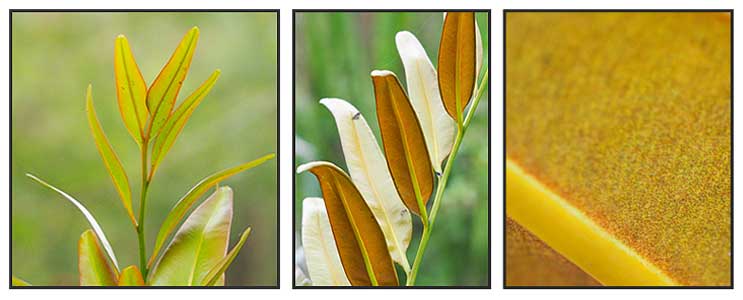
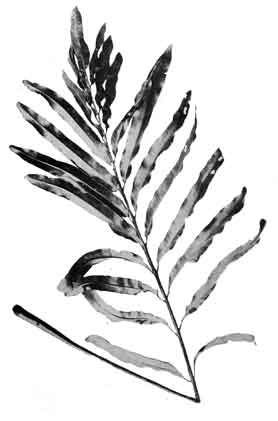
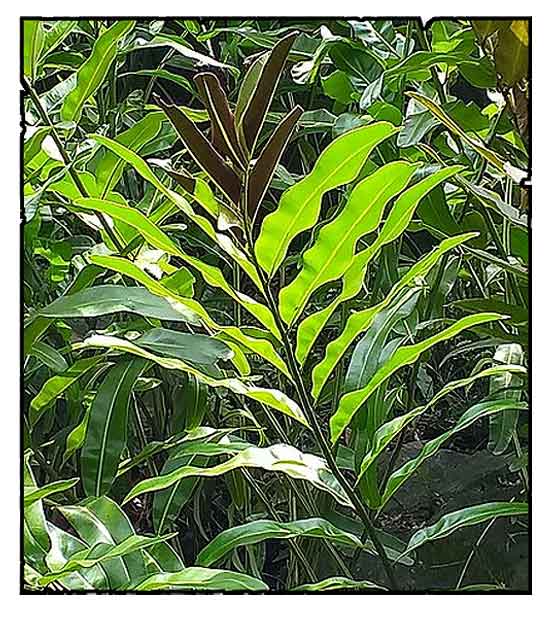
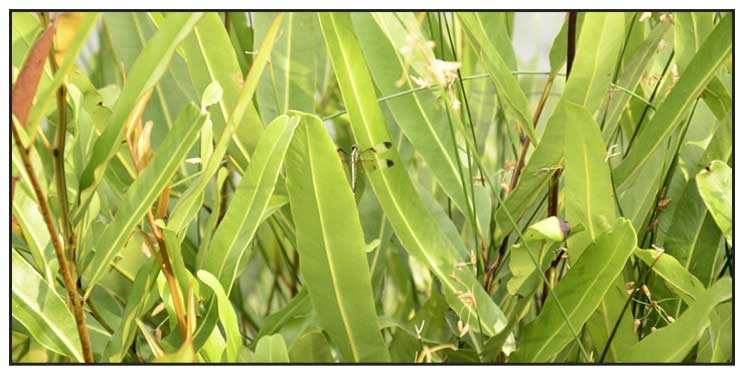
• Lagolo is a coarse fern growing to a height of 2 meters. Root stocks are stout, woody and scaly. Stipes are clustered, stout and glabrous, 30 to 50 centimeters long. Fronds are leathery, pinnate, 50 to 200 centimeters long. Leaflets are 20 to 50 centimeters long, 4 to 6 centimeters wide. Terminal part of the frond has fertile pinnae covered with brownish sporangia. Fertile upper pinnae are smaller than the lower sterile ones.
• The golden leather fern has large fronds growing to a length of 1.8 meters (six feet). The leaves are glossy, broad and pinnate, the pinnae being dark green, leathery, alternate and widely spaced. The outer fronds arch over sideways but the central ones are nearly straight. Some of the larger fronds bear sporangia (reproductive organs) on the upper five to eight pairs of pinnae. These are brick red and give the pinnae a felted appearance. (Wikipedia)
Distribution
- Native to the Philippines.
-
Abundant in open mud flats, in mangrove swamps, and along tidal streams.
- Occasionally planted as an ornamental.
- Widely distributed in the tropics of both hemispheres.
Constituents
- Phytochemical studies have yielded beta-sitosterol, alkaloid, flavonoids, phenolics, catechins, saponins, tannins.
 - An ethanolic plant extract yielded reducing sugars, alkaloids, glycosides, tannins, flavonoids, gums, and terpenoids. (see study below) (9) - An ethanolic plant extract yielded reducing sugars, alkaloids, glycosides, tannins, flavonoids, gums, and terpenoids. (see study below) (9)
- Petroleum ether, chloroform, ethyl acetate, and methanol
extracts of whole plant yielded triterpenoids, steroids, glycosides, saponins, alkaloids, flavonoids, and tannins. (11)
- Study of leaves yielded five phytosterols: stigmasterol, y-sitosterol, campesterol, cycloartanol, and 24-methylene cycloartanol. (see study below) (17)
- Various extracts of whole plant yielded triterpenoids, steroids, glycosides, saponins, alkaloids, flavonoids, and tannins. (19)
-Study of methanolic extract of aerial parts yielded two new sesquiterpenes, (2R,3S)-sulfated pterosin C (1) and (2S,3S)-sulfated pterosin C (2), along with two known derivatives,
(2S,3S)-pterosin C and (2R)-pterosin P. (see study below) (22)
- Phytochemical screening of various extracts of leaves
(petroleum ether, PE; Benzene, B; ethyl acetate, EA; ethanol, E; methanol,M) yielded: steroids (B, EA, E, M), saponins (PE, E, M), flavonoids (EA, M), phenols (all), proteins (all), glycosides (all), terpenoids (PE, E, M), with absences of alkaloids, coumarins, tannins, quinone, anthroquinones, carbohydrates, reducing sugars.
- Phytochemical screening of crosier extracts identified alkaloids, glycosides, flavonoids, tannins, phenols, saponins, proteins, and carbohydrates.
(see study below) (33)
Properties
- Considered emollient, vulnerary, febrifuge, purgative.
- Studies have suggested antibacterial, anti-inflammatory, cytotoxic, analgesic, wound healing, antioxidant, anticancer, phytoremediative, gastroprotective, antiviral, antidiarrheal, anti-acne, anxiolytic properties.
Parts
utilized
Leaves, roots, crosiers, rhizomes.
 Uses Uses
Edibility
• In the Philippines, Malaysia, and Indonesia, young shoots are eaten as vegetable.
• In Cambodia, young leaves are eaten in salads. In the Indian state of Goa, the fern crosiers (young fiddleheads) are cooked in spicy coconut-based gravy (tonak) and consumed as delicacy.
Folkloric
• Traditionally used for treatment of non-healing ulcers, boils, wounds, snakebite, bleeding, worm infection, asthma, sore throat, constipation and elephantiasis. (30)
• Rhizomes are used for the healing of stubborn ulcers.
• Leaves used topically as emollient.
• In Malaya and Borneo, powdered or grated rhizomes applied as paste to wounds and boils.
• In Sri Lanka fronds used as antidote for snake bites; rhizomes used for boils and wounds.
• In Kerala whole plant is used as styptic and anthelmintic, and as an astringent in hemorrhage.
• Fertile fronds, along with the roots, are applied to syphilitic ulcers.
• In Fiji, used for sore throat, chest pains and elephantiasis, for constipation and as purgative; also, as febrifuge.
• In Bangladesh, leaves used for cloudy urination in women.
• In Bangladesh,
rhizomes and leaves used for treatment of wounds, peptic ulcer, and boils; extracts of leaves used from colon and breast cancers. In Costa Rica, leaves used as emollients. The Cuna people of Panama and Columbia use young fiddleheads to extract fish bones from the throat and as medicinal bath for infants. (27)
• In Malaysia, used for wound healing.
• In India, used for treating pharyngitis, chest pains, and diabetes. (16)
• In India, used for treatment of ulcers, wounds, and boils. Pounded or grated leaves and rhizomes are applied as paste to wounds, ulcers and boils all over South-East Asia. Also used for treatment of chest pains, pharyngitis, and as purgative.
Others
• Litter used for cattle and roof thatching.
• In the Matang mangroves in Malaysia, stalks are sold to vegetable farmers as plant support. (25)
 Studies Studies
• Cytotoxic:
In a study of 16 listed Bangladeshi plants screened against human gastric, colon, and breast cancer cell lines, Acrostichum aureum showed the most potent selective cytotoxicity. (1)
• Antibacterial / Fronds:
Fronds were evaluated for phytochemical contents and antibacterial potential. Flavonoids and phenols were observed in various extracts. A methanol extract showed maximum activity towards Pseudomonas aeruginosa, a resistant strain to Amoxicillin and Chloramphenicol. (4)
• Anti-Inflammatory / Root:
An ethanol crude extract of root was evaluated for anti-inflammatory activity. Results showed significant anti-inflammatory activity in a carrageenan-induced edema in rats, comparable to results obtained with indomethacin. (7)
• Antioxidant / Analgesic:
Study of ethanolic plant extract showed significant free radical scavenging activity in DPPH both qualitatively and quantitatively. In acetic acid writhing test in Swiss albino mice, the plant showed statistically significant dose dependent analgesic activity (P<0.01). (see constituents above) (9)
• Wound Healing / Rhizomes:
Study evaluated Acrostichum aureum and A. speciosum in excisional wound models in rabbits. Based on wound contraction, epithelization period and histopathological study, the aqueous extract of rhizomes and leaves of A. aureum showed the best wound healing properties with more collagen and fibroblasts proliferation and complete epithelized cells. (10)
• Biosorption of Heavy Metal: Study evaluated the biosorption behavior of the mangrove fern A. aureum leaf biomass for the removal of heavy metals (Cu, Pb, Zn) from aqueous solution. Kinetic studies indicated the biosorption of heavy metal followed the pseudo second order. Study identified the potential of a new cost-effective and easily available bioadsorbent for removal of heavy metal ions from aqueous solution. (12)
• Phytoremediation of Antibiotic Contaminated Sediment: In Vietnam's coastal wetlands, antibiotic sediment of fluoroquinolones are often detected in former shrimp plants. Study investigated the potential of A. aureum and R. apiculata for phytoremediation of fluoroquinolones (ciprofloxacin and norfloxacin). The antibiotics were found mainly in roots. Results showed both AR and RA can be both valuable for phytoremediation of antibiotic-contaminated sediments. (13)
• Cytotoxicity Screening / Anti-Cancer Compounds: A. aureus showed low cytotoxicity against mouse fibroblast (IC50>2.5 mg/mL) but selective potent toxicity against cancer cells (IC50 0.2-2.3 mg/mL). Study isolated one compound from an n-hexane fraction and 12 compounds from the methanolic fraction. Of the 13 compounds, compounds 3, 4, 5, 6, and 13 showed cytotoxic activity, with di-(20methylheptyl)phthalate (compound 3) and (2S,3S)-sulfated pterosin C (compound 5) showing the most potent cytotoxicity against all tested cell lines. (14)
• Novel Cytotoxic Compounds: Study isolated 13 compounds. Three compounds (1, 2 and 5) were identified as novel natural products. Eight known compounds were isolated for the first time, viz. di-(2-methylheptyl) phthalate (3), (2S, 3S)-pterosin C (4), (2R)-pterosin P (7), tetracosane (6), quercetin-3-O-β-D-glucosyl-(6→1)-α-L-rhamnoside (9), quercetin-3-O-α-L-rhamnoside (10) and quercetin-3-O-α-L-rhamnosyl-7-O-β-D-glucoside (11), and patriscabratine (13). Compound 5 showed the most potent cytotoxicity against gastric and colon adenocarcinoma cells lines. The mode of action was through induction of apoptosis. (15)
• Antioxidant /
Rachis: Study evaluated various extracts of rachis of A. aureus for antioxidant activity using DPPH, hydroxyl, and superoxide radical scavenging activities, antioxidant activity by ABTS and reducing power assays. Results showed dose dependent antioxidant activity in all assays. Study suggests A. aureus has potential for use against free radical associated oxidative damage. (16)
• Anti-Tumor
/ Sterols / Leaves: Study of leaves yielded five phytosterols: stigmasterol, γ-sitosterol, campesterol, cycloartanol, and 24-methylene cycloartanol. In silico analysis of cytotoxicity for tumor cell lines highlighted potential to suppress adenocarcinoma, carcinoma, and mesothelioma. (17)
• Cytotoxicity / Patriscabratine and Tetracosane / Flavonoids / Aerial Parts: Study evaluated the cytotoxic properties of secondary metabolites from methanol extract of aerial parts of A. aureum. Seven known compounds were isolated: patriscabratine (1), tetracosane (2) and 5 flavonoids (quercetin-3-O-β-d-glucoside, quercetin-3-O-β-d-glucosyl-(6→1)-α-l-rhamnoside, quercetin-3-O-α-l-rhamnoside, quercetin-3-O-α-l-rhamnosyl-7-O-β-d-glucoside and kaempferol). Patriscabratine showed moderate cytotoxicity against AGS, MDA-MB-231 and MCF-7 cells. Tetracosane showed some toxicity against AGS, MDA-MB-231, HT-29, and NIH 3T3 cells. (18)
• Wound Healing: Study evaluated the in vitro wound healing properties of various extracts and fractions of A. aureum and A. speciosum using scratch wound assay on NIH/3T3 cell line. Results showed the cell line treated with aqueous extract of rhizomes and stems of both species improved migration rate. Results showed beneficial effects of both extracts for wound healing. (20)
• Antioxidative / Anti-Inflammatory
Against Ethanol-Induced Gastric Ulcers: Study evaluated the gastroprotective effect of water extract of A. aureum in ethanol-induced gastric injury model.
Pretreatment dramatically decreased gastric ulcer are and ameliorated the pathological damage induced by alcohol in rat's gastric tissue. The extract also reduced secretion of pro-inflammatory cytokines and decreased expressions of phosphorylation of IkBa and p65. The therapeutic efficacy may be associated with suppression of oxidative stress and inflammatory response. (21)
• (2S,3S)-Sulfated Pterosin C / Cytotoxic Sesquiterpene / Aerial Parts: Study of methanolic extract of aerial parts yielded two new sesquiterpenes, (2R,3S)-sulfated pterosin C (1) and (2S,3S)-sulfated pterosin C (2), along with two known derivatives, (2S,3S)-pterosin C and (2R)-pterosin P. The pterosins were evaluated for cytotoxic activity against AGS, HT29, MDA_MB-231, and MCF-7 human cancer cell lines using MTT assay. Lowest IC50 of 23.9 µM was recorded against AGS gastric adenocarcinoma cells. Compound 2 exhibited an apoptotic effect on AGS cells. (22)
• Nutritional Analysis of Rhizome and Starch: Study evaluated nutritional and phytochemical characteristics of rhizome and extracted starch. The rhizome showed to be a rich source of starch (24%) and essential nutrients like protein, fiber, ash, and minerals. Amylose content of the starch was 24%. Starch pH was slightly acidic. Results suggest the starch has potential as food substitute and pharmaceutical application. (23)
• Novel Phthalic Acid Ester / Antiviral Activity / Aerial Parts: Study isolated and elucidated novel antiviral secondary metabolites from a methanol extract of aerial parts. A novel phthalic acid ester (2’’-(methoxycarbonyl)-5’’- methylpentyl 2’-methylhexyl phthalate) was isolated and tested for antiviral activity. The novel phthalate showed antiviral activity against dengue virus, human parainfluenza virus and chikungunya. The most potent activity was against hPoV3 (EC50 29.4 µM), slightly higher than positive control. The compound was non-toxic against Vero and LLC-MK2 cells. (24)
• Antidiarrheal / Roots: An ethanol root extract of A. aureum showed antidiarrheal effect on mice with castor oil-induced diarrhea. At dose of 400 mg/kg, the extract reduced the diarrhea by 55% compared to loperamide, the standard drug, which showed 66% reduction (Hossain et al, 2012) (25)
• Wound Contraction and Epithelization Effects / Leaves and Rhizomes: Study evaluated the wound healing properties of aqueous and ethanolic extract of A. aureum rhizomes, leaves, and stems on an excisional wound model in rabbits. All extracts possessed tannins with the ethanol extract showing higher tannin content compared to the aqueous extracts. The 5% aqueous extract of leaves was the most effective wound healing agent in enhancing higher percentage wound contraction, rapid epithelization period, with higher collagen and fibroblast proliferation. (26)
• Antibacterial / Leaves: Study evaluated leaves of A. aureus for antibacterial activity against E. coli, S. paratyphi, S. aureus, and P. aeruginosa. Results showed a significant difference in growth of microbes on different concentrations of A. aueum. There was higher effect on E. coli and S. aureus. (28)
• Antibacterial / Anti-Acne / Leaves: Study evaluated the bioactive compounds and antibacterial activity of methanolic extract of A. aureum against Propionibacterium acnes. The ME revealed 5 bioactive compounds viz., alkaloids, flavonoids, tannins, steroids, and saponins. No inhibition zones were noted at 5% to 75% concentration. At 100% concentration, there was strong inhibition of P. acnes growth (16 mm). Results concludes strong antibacterial activity against P. acnes at 100% concentration. (31)
• Rachis as Source of Phytoconstituents: Study evaluated the chief phytoconstituents of Acrostichum aureum and how they relate to the plant bioactivities. Study showed the rachis had the highest number of phytochemicals compared to other solvent extracts. Results suggest the rachis holds the greatest potential to treat various human diseases and hold prfound medical applicability. (32)
• Anxiolytic Crosiers: Study evaluated the nutritional content, phytochemical composition and anxiolytic activity of crosiers (curled top of young fern) in Wistar albino rats using elevated plus maze and light and dark model. Nutritional analysis revealed crosiers to be a rich source of dietary fiber (18%RDA), essential minerals (copper 19% RDA), and vitamins (A>100% RDA, C 15% RDA, B1 15% RDA, B7 17% RDA, B9 37% RDA). Absence of significant heavy metal contamination suggests safety for consumption. The aqueous extract at 400 mg/kg exhibited significant (p<0.05) anxiolytic activity in rats. (see constituents above) (33)
• Toxicity Studies / Safety / Leaves: Study evaluated acute and sub-acute toxicity of ethanol leaf extract of A. aureum (ELAA) in female Sprague Dawley rats. Median lethal dose (LD50) of the ethanol extract is greater than 5000 mg/kbw. Oral-subacute toxicity doses of 100, 200, 500, and 750 mg/kbw of the ELAA for 28 days was also non-toxic, showing no alterations in hematologic and biochemical parameters. (35)
• Anti-inflammatory / Leaves: Study evaluated the anti-inflammatory activity of A. aureum ethanolic leaf extract in carrageenan-induced edema in rats. Results showed considerable anti-inflammatory effect with decrease in paw edema of 65.90% equivalent to standard drug indomethacin (66.66%) after 24 h at dose of 400 mg/kbw. Results support its use in folkloric medicine. (36)
• Wound Healing / Leaves and Stems: Study evaluated the wound healing activity and antimicrobial properties of secondary metabolites from stem and leaf of A. aureum using wound excision model. Results showed crude extract and butanol fractions of both leaves and stems elicited significant (p<0.05) reduction in wound size. Crude extract of both AAS and AAL showed best antibacterial activities against Staphylococcus aureus, Pseudomonas aeruginosa and Escherichia coli. HPLC-DAD identified compounds: quercetin-3-galactoside, rocaglamide, palitantin and isorhamnetin diglycoside, which were proposed to be responsible for bioactivities observed. (37)
Availability
Wild-crafted. |