
HOME      •      SEARCH      •      EMAIL    •     ABOUT


Family Fabaceae
Mangkit-parang
TAYAM
Grona heterocarpos (L.) H.Ohashi & K.Ohashi

ASIAN TICK TREFOIL / FALSE GROUND NUT
Jia di dou

Scientific names  Common names
Desmodium heterocarpon (L.) DC. Huyop (If.)
Grona heterocarpos (L.) H.Ohashi & K.Ohashi Huyop-huyop (If.)
Hedysarum heterocarpon L. Mangkit-parang (Tag.)
Meibomia heterocarpon (L.) Kuntze Mani-mani (P. Bis.)
Pleurolobus heterocarpon (L.) J.St.-Hil. Mani-manian (Tag.)
Accepted infraspecifics (3) Naangkonod (Mbo.)
G. heterocarpos var. gymnocarpa (Schindl.) H.Ohashi & K.Ohashi Tagiktik (Mbo.)
Desmodium heterocarpon var. gymnocarpum Schindl. Tayam (Tag.)
Grona heterocarpos subsp. heterocarpos Timbalau (Basg.)
Desmodium buergeri Miq. Asian tick trefoil (Engl.)
Desmodium heterocarpon f. albiflorum (Ridl.) H.Ohashi Carpon desmodium (Engl.)
Desmodium heterocarpon var.buergeri (Miq.) Hosok. False ground nut (Engl.)
Desmodium polycarpon var. albiflorum Ridl.  
Desmodium polycarpon f. hirsutum Pamp.  
Desmodium polycarpon var. trichocaulum (DC.) Benth.  
Desmodium spectabile Sweet  
Desmodium toppinii Schindl.  
Desmodium trichocaulum DC.  
Desmodium trinerve Graham  
Desmodium tuberculatum G.Don  
Grona repens Lour.  
Hedysarum patens Roxb.  
Hedysarum purpureum Roxb.  
Hedysarum spectabile Bojer ex Sweet  
Hedysarum tuberculosum Labill.  
Hippocrepis barbata Lour.  
Meibomia buergeri (Miq.) Kuntze  
G. heterocarpos var. strigosa (Meeuwen) H.Ohashi & K.Ohashi  
Desmodium distans Royle ex Baker  
Desmodium gyroides Hassk.  
Desmodium heterocarpon f. strigosum (Meeuwen) Fosberg  
Desmodium heterocarpon var. strigosum Meeuwen  
Desmodium hippocrepis DC.  
Desmodium nervosum Vogel  
Desmodium patens G.Don ex Wight.  
Desmodium polycarpon (Poir.) DC.  
Desmodium pulchelum Blume ex Miq.  
Desmodium purpureum Hook. ex Arn.  
Desmodium serpens Wall.  
Desmodium siliquosum (Burm.f.) DC.  
Hedysarum polycarpon Poir.  
Hedysarum siliquosum Burm.f.  
Mangkit is a shared common names for (1) Dikit-dikit (Desmodium gangeticum Linn.) and (2) Dalupang (Urena Lobata Linn.) and (3) Tayam (Desmodium heterocarpus Linn) also called mankit-parang.
Grona  heterocarpus (L.) H.Ohashi & K.Ohashi. is an accepted species. KEW: Plants of the World Online

Other vernacular names
BENGALI: Banmethi, Karpo modi.
CAMBODIA: Baay dam'nnaëp.
CHINESE: Jia di dou.
INDIA: Kaadu moovile (Kannada); Nilathuvara (Malayalam); Jambhali dashami (Marathi); Salaparni (Sanskrit); Chepputattaa (Telugu); Kattumoojire (Tulu); Hlah-tha (Mizo); Gahate, Baakhre ghaans, Daampaate, Saakhino jhaar (Nepali).
INDONESIA: Buntut meyong sisir, Kaci, Akar entimor.
MALAYSIA: Rumput kerbau derapah, Kacang kayu betina.
VIETNAM: Tra[n]g qu'a di qu'a.

Gen info
• Fabaceae or Leguminosae, commonly known as the legume pea, or bean family, is a large and agriculturally important family of flowering plants that includes trees, shrubs, and perennial or annual herbaceous plants, which are easily recognized by their fruit (legume) and their compound, stipulate leaves. It is widely distributed and is the third largest land plant family, behind only Orchidaceae and Asteraceae, with about 765 genera and nearly 20,000 known species. (11)
- Grona is a genus in the flowering plant family Fabaceae, with native range in the worldwide tropics and subtropics. There are about 50 species in the genus. It was previously included in its relative Desmodium. (12)
- Grona was first described by João de Loureiro in 1790 based on specimens from Cochinchina (modern-day Vietnam), long subsumed within Desmodium, but reinstated as distinct in 2018 following molecular phylogenetic analysis. (14)
- Grona heterocarpos is a species of shrub, also called Asian ticktrefoil, in the flowering plant family Fabaceae and genus Grona.
- Etymology: The genus name Grona is an obscure term from Greek root words, possibly referring to grono meaning "a cave." The specific epithet herterocarpos derives from heteros meaning "different" meaning "fruit", referring to the distinct or variable joints of the seed pods.

Botany
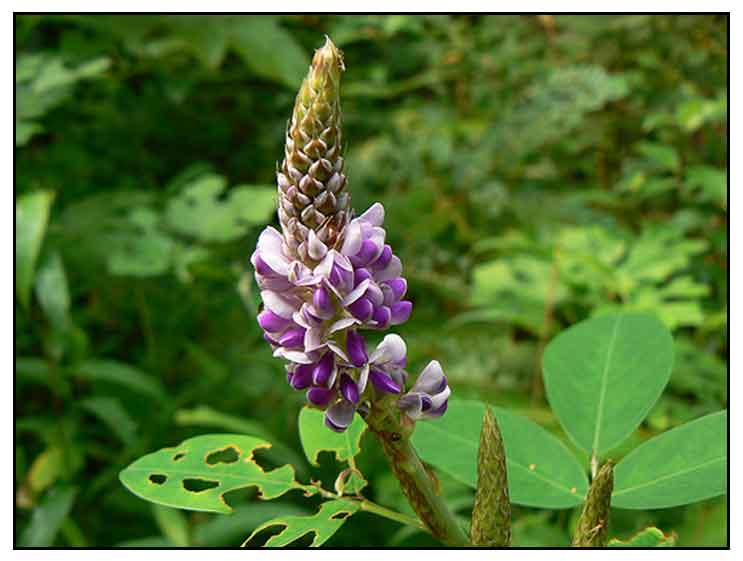
• Tayam is an erect or sub-erect perennial undershrub or creeping woody rootstock, with slightly angular and slender branches, clothed upwards with short, adpressed, gray hairs. Leaves usually have three leaflets, but single leaflets may be found on the lower stems of mature plants. Leaflets are green, hairy above, and thinly clothed with adpressed hairs beneath; the end one obovate-oblong, 2.5 to 7.5 centimeters long, the side ones smaller. Racemes are terminal and lateral, 2.5 to 7.5 centimeters long. Pods are 1.2 to 2 centimeters long.

• Shrubs or subshrubs, erect or prostrate, 30-150 cm tall, much branched from base of stem. Leaves 3-foliolate; petiole 1-2 cm, slightly pubescent; terminal leaflet blade elliptic, nar­rowly elliptic, or broadly obovate, 2.5-6 × 1.3-3 cm, abaxially white adpressed pubescent, adaxially glabrous, base obtuse, apex rounded or obtuse, emarginate, mucronate. Racemes ter­minal or axillary, 2.5-7 cm; rachis with white, spreading, hooked hairs or yellowish or white, straight, appressed hairs, densely flowered. Pedicel 3-4 mm. Calyx 1.5-2 mm, 4-lobed; upper lobes slightly 2-toothed at apex. Corolla purple, purple-red, or white, ca. 5 mm; standard obovate-oblong, shortly clawed; wings obovate, auriculate, clawed; keel extremely curved, apex obtuse. Infructescence crowded. Legume erect, narrowly oblong, 1.2-2 cm × 2.5-3 mm, upper suture shallowly undulate, both sutures hooked hairy, 4-7-jointed; articles quad­rate. 
(Flora of China)

Distribution
- Native to the Philippines. (4)
- In thickets and open grasslands at low and medium altitudes from northern Luzon to Mindanao.
- Also native to Andaman Is., Assam, Bangladesh, Borneo, Cambodia, Caroline Is., China South-Central, China Southeast, East Himalaya, Fiji, Hainan, India, Japan, Jawa, Korea, Laos, Lesser Sunda Is., Malaya, Maluku, Myanmar, Nansei-shoto, Nepal, New Caledonia, New Guinea, New South Wales, Nicobar Is., Northern Territory, Queensland, Samoa, Sri Lanka, Sulawesi, Sumatera, Taiwan, Tanzania, Thailand, Tonga, Vanuatu, Vietnam, Wallis-Futuna Is., West Himalaya, Western Australia. (4)

Constituents
- Study isolated
eight compounds identified as betulic acid,friedelin ,n-hexadecanoic acid, β-sitosterol, (Z,Z)-9,12-octadecadienoic acid,1-hentetracontanol, octacosane, and vitexin. (3)
- Study of aerial parts yielded new 2-carboxy-dihydrostilbene glucoside, 2-carboxy-3,5,4′-trihydroxydihydrostilbene 3-O-β-d-glucopyranoside (1) and a new flavan diglycoside, (2S)-5,7,4′-trihydroxyflavan 7-O-β-d-apiofuranosyl-(1 → 6)-O-β-d-glucopyranoside (3), together with five known compounds, lunularic acid 4′-O-β-d-glucopyranoside (2), vitexin (4), isovitexin (5), (−)-epi-catechin 3-O-β-d-glucopyranoside (6), and (−)-epi-afzelachin 3-O-β-d-glucopyranoside (7).  (10)
- Study of D. heterocarpon extracts of stems and roots isolated six compounds, including genistein (1), hexadecanoic acid (2), salicylic acid (3), ß-sitosterol-D-glucoside (4), 2,3-dihydroxybenzoic acid (5), and 2,5-dihydroxybenzoic acid (6). (see study below) (13)
- Methanolic extract of whole plant yielded alkaloids, tannins, steroids, saponins, gums, and reducing sugars. (see study below) (16)

Properties
- Tonic.
- Most Desmodium species are considered anti-inflammatory.
- Studies have shown antimicrobial, antioxidant, cytotoxic, insecticidal, tyrosinase inhibitory, skin whitening, hepatoprotective, analgesic, anti-inflammatory, antipyretic properties.

Parts used
Leaves, roots.

Uses
Edibility
- No information on edibility or culinary use.
Folkloric
- Boiled roots used as poultice for sore breasts.
- Plant decoction considered tonic and useful for coughs.
- In West Java, roots and leaves used for women's problems.
- Santals use a plant preparation for fainting and convulsions.
- Plant used for reducing fever and treating contusions and strains. (7)
Others
• Fodder: Practical and resilient long-term grass-legume pasture.

• Ground cover: Used as weed-controlling ground cover. Shade-tolerant and can be used as cut-and-carry for restoration of degraded soils. (7)

Studies
Antimicrobial / Cytotoxic / Antioxidant:
Study evaluated a methanolic extract and fractions of powdered whole plant for antimicrobial, cytotoxic, and antioxidant activities. Fractions Fc and Fd showed mild antimicrobial activity. Significant free radical scavenging (DPPH) activity was shown by ME (IC50 19.14±0.14 µg/mL) and Ff (IC50 29.71±0.44 µg/mL). Fractions Fb and Fd showed strong cytotoxicity in brine shrimp lethality bioassay with LC50 of 8.19±0.08 µg/ml and 6.46±0.09 µg/ml, respectively. (2)
Antioxidant: In a study that evaluated 10 Desmodium species for antioxidant activity, D. heterocarpon showed strong antioxidant activity in the ABTS and DPPH assays. (4)
Antimicrobial / Leaves: Study evaluated a methanolic leaf extract of DH for antimicrobial activity against various bacterial and fungal strains. Results showed very good antibacterial activity against Salmonella typhi and excellent antifungal activity against all test fungal strains (A. niger, P. chrysogenum, S. cerevisiae, and Candida albicans). The antifungal activity showed more inhibition zone than standard drug ketoconazole. (5)
Repellent / Insecticidal: Desmodium heterocarpon whole plant showed insecticidal activity against adult beetles of T. castaneum. (6)
• Antioxidative / Anti-Inflammatory: Study evaluated ethanol extract of D. heterocarpon for antoxidative and anti-inflammatory activities. The EE showed potent antioxidative activity by DPPH assay and induced expression of antioxidative enzyme heme oxygenase 1 (HO-1) in a dose-dependent manner. The EE also effectively suppressed H2O2-induced ROS on RAW 264.7 murine macrophage cells. The EE also inhibited LPS-induced NO formation as a consequence of iNOS down-regulation. (8)
• Cytotoxicity / Brine Shrimp Lethality / Leaves: Study evaluated the cytotoxicity of jiinjit leaves using Brine Shrimp Lethality Test. Results showed cytotoxic activity against Artemia salina Leach larvae with LC50 value <1000 µg/ml. (9)
Tyrosinase Inhibitory / Stems and Roots: Tyrosinase is an important enzyme in the biosynthesis of melanin. Many skin-whitening agents from natural sources that inhibit tyrosinase activity have been identified. Study evaluated 114 samples from 54 Fabaceae plants for antityrosinase activity using a dopachrome method. Results showed D. heterocarpon stems and roots demonstrated the highest tyrosinase inhibitory activity at 20 µg/mL (92.50%). Study isolated six compounds, of which 2,5-dihydro-xybenzoic acid demonstrated potential tyrosinase inhibitory effect with IC50 of 57.38 µg/mL. (see constituents above) (13)
• Hepatoprotective: Study evaluated the hepatoprotective property and underlying mechanisms of extracts of D. hetercarpon and extract fractions using a mouse model of acute liver damage (ALI) caused by CCl4. Results showed the ethyl acetate fraction exhibited significant hepatoprotective effects, largely attributed to its flavonoid-rich composition. Protective effects are mediated through antioxidant pathways, particularly Keap1/Nrf2 signaling pathway. Results suggest a promising source of hepato-
protective agents. (15)
• Anti-Inflammatory / Analgesic / Antipyretic: Study evaluated a methanolic extract of whole plant for anti-inflammatory, analgesic, and antipyretic activity. Extract concentration-dependently inhibited protein denaturation, with highest % inhibition at 320 µg/mL. Crude extract exhibited significant analgesic effect in dose dependent manner in acetic acid induced writhing method. The extract showed statistically significant antipyretic effect at 200 mg/kbw, better than standard paracetamol at 100 mg/kbw. (see constituents above) (16)

Availability
Wild-crafted.

Updated July 2026 / March 2019 / May 2017 / June 2015

PHOTOS / ILLUSTRATIONS
IMAGE SOURCE: Closeup of flower / Desmodium herterocarpon / Dinesh Valke / Sept 30,2007 / click on image to go to source page / CC / Creative Commons Attribution-NonCommercial / flickr /
IMAGE SOURCE: Grona heterocarpos / Dinesh Valke / CC BY-SA 4.0 International / Image modified / Click on image to go to source page / Wikipedia
IMAGE SOURCE: Desmodium heterocarpon - Asian Tick Trefoil / Jee & Rani Nature Photography / CC BY-SA 4.0 International / Image modified / Click on image to go to source page / Wikipedia
IMAGE SOURCE: Desmodium heterocarpon - Close-up of flower / Jee & Rani Nature Photography / CC BY-SA 4.0 International / Image modified / Click on image to go to source page / Wikipedia
SOURCES

Additional Sources and Suggested Readings
(1)
Grona heterocarpos / Wikipedia
(2)
Antimicrobial, Cytotoxic and Antioxidant Activities of Desmodium heterocarpon / Abdullah Al Hasan, Choudhury Mahmood Hasan and A.T.M. Zafrul Azam* / Bangladesh Pharmaceutical Journal, Jan 2011; Vol 14, No 1
(3)
Study on Chemical Constituents of Desmodium heterocarpon / HUANG Zhong-bi, ZHANG Qian-jun, KANG Wen-yi, LI Chuan-kuan, CHEN Qing / Chinese Journal of Experimental Traditional Medical Formula, 2010-17
(4)
Grona heterocarpos / KEW: Plants of the World Onlline
(5)
Antimicrobial studies of leaf extracts from Desmodium heterocarpon (L.) DC / Arora Shefali, Yadav  Vandana, Kumar Pankaj, Kumar Deepak / International Journal of Phytomedicines and Related Industries, 2014; Vol 6, Issue 3 / DOI: 10.5958/0975-6892.2014.00011.2
(6)
REPELLENT ACTIVITIES OF SOME INDIGENOUS MEDICINAL PLANTS AGAINST THE STORED GRAIN PESTS TRIBOLIUM CASTANEUM (HBST.) (COLEOPTERA: TENEBRIONIDAE) /  Z. Yesmin Roly, Md. M. Islam , Md. P. Ebna Shaekh , S. Md. Shahik , S. Ala Moududee , S. Mohammad Nur, A.S.M.H.K Chowdhury, Tasnim Faizah Nishi and Md. Khalekuzzaman /  http://dx.doi.org/10.13040/IJPSR.0975-8232.IJP.1(9).579-86
(7)
Desmodium heterocarpon / Useful Tropical Plants
(8)
Anti-oxidative and Anti-inflammatory Activities of Desmodium heterocarpon Extract in RAW 264.7 Cells / Lee Su Hyeon, Jim Kyong-Suk, Son Yu Ri, Kwon Hyun Ju, Kim Byung Woo /
Journal of Life Science, 2018 Feb; 28(2): pp 216-222 / DOI : http://dx.doi.org/10.5352/JLS.2018.28.2.216
(9)
Citotoxic Test of Etanol Extract of Jinjit Leaves (Desmodium heterocarpon (L.) D.C var.Strigosum Van Meeuwen) Against Artemia salina Leach Larvae Using Brine Shrimp Lethality Test (BSLT) method. / Prayogi KramyTriawantiAstri Widiarti /  DOI 10.5281/zenodo.1498593
(10)
2-Carboxy-dihydrostilbene and flavan glycosides from Desmodium heterocarpon / Poolsak Sahakitpichan, Piyawadee Chadmuk et al / Phytochemistry Letters, Marcj 2017; Vol 19: pp 94-97 / https://doi.org/10.1016/j.phytol.2016.12.011
(11)
Fabaceae / Wikipedia
(12)
Grona / Wikipedia
(13)
Phytochemical Investigation and Biological Activities of Desmodium heterocarpon Extract as Anti-Tyrosinase: Isolation of Natural Compounds, In Vitro and In Silico Study / Suthinee Sangkanu, Wanlapa Nuankaew, Thanet Pitakbut, Sukanya Dej-adisai / Life (Basel)., 2-024; 14(11): 1400 /
DOI: 10.3390/life14111400
(14)
Grona / Grokipedia
(15)
Unveiling the hepatoprotective mechanisms of Desmodium heterocarpon (L.) DC: Novel flavonoid identification and Keap1/Nrf2 pathway activation / XingNa Pu, Cheng Lu, Xing Yang, YanPing Li et al / Phytomedicine, 2025 / DOI: 10.1016/j.phymed.2024.156323
(16)
IN VITRO AND IN VIVO ANTI-INFLAMMATORY, ANALGESIC AND ANTIPYRETIC ACTIVITY TESTS OF METHANOLIC EXTRACT OF DESMODIUM HETEROCARPON (L.) DC / Shams Ara Khan, Mst Shahina Akter, Apu Kumar Das et al / World Journal of Pharmacy and Pharmaceutical Sciences, 2026; 15(7) /         ISSN: 2278-4357

DOI: It is not uncommon for links on studies/sources to change. Copying and pasting the information on the search window or using the DOI (if available) will often redirect to the new link page. (Citing and Using a (DOI) Digital Object Identifier)

Potential Herbal Medicines and Drug Interactions
Story Behind the Medicinal Plant Compilation
Herbal Supplements: The Good, The Bad, The Ugly
Latest Updated Tagalog and English Lists of Philippine Medicinal Plants
Herb-Drug Interactions
List of Plants with Known Toxicity
                                                            List of Understudied Philippine Medicinal Plants
Abuse and Plagiarism of the Compilation on Philippine Medicinal Plants
Under the Guise of Fair Use
                                          New plant names needed
The compilation now numbers over 1,750 medicinal plants. While I believe there are hundreds more that can be added to the collection, they are becoming more difficult to find. If you have a plant to suggest for inclusion, native or introduced, please email the info: scientific name (most helpful), local plant name (if known), any known folkloric medicinal use, and, if possible, a photo. Your help will be greatly appreciated.

Bahay Kubo

The Illustrated Medicinal Plant Song
Alternative Medicine Dictionary
Un-Abbreviated Dialect Sources of Common and Local Names
Plant Names
List of Philippine Medicinal Plants with Chinese Names
SOURCES
HOME      •      SEARCH      •      EMAIL    •     ABOUT