|
Gen info
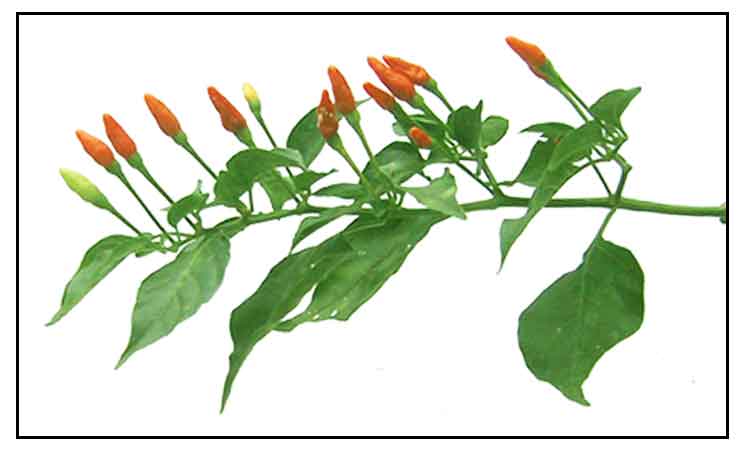
- Capsicum frutescens is a wild chili pepper having genetic proximity to the cultivated pepper Capsicum chinense. It is native to Central and South America. Pepper cultivars of C. frutescens can be annual or shhirt-lived perennial plants.
- Cultivars and varieties: Wiri wiri from Guyana; Cabai rawit from Indonesia; Malaguete pepper;
Piri piri or African Bird's Eye or African Devil; Siling labuyo from the Philippines; Tabasco pepper (used for making Tabasco Sauce); Xiao mi la pepper (little rice pepper) from Yunnan province in China. (40)
- Siling labuyo, the local cultivar of C. frutescens in the Philippines, was introduced during the Spanish colonial era.
- Etymology: Capsicum frutescens translates from Latin as "shrubby pepper." Capsicum probably derives from Greek kapto "to gulp/bite" or Latin capsa "box/pod." The specific epithet frutescens derives from Latin, meaning "becoming shrubby", referring to the species' multi-branched, wood, shrub-like growth habit.
 Botany Botany
• Siling-labuyo is an erect, branched
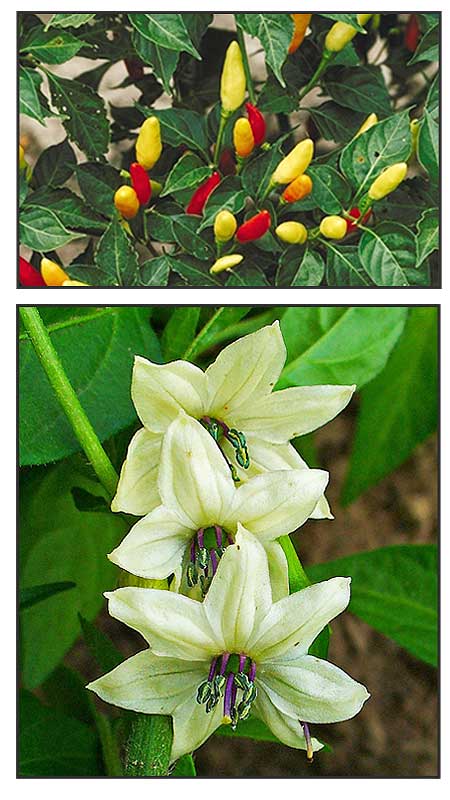
and half-woody plant, growing to a height of 0.8 to 1.5 meters. Leaves are oblong-ovate to ovate-lanceolate, 3 to 10 centimeters long, and pointed at the tip. Flowers are solitary or several in each axil, stalked, pale green or yellowish-green, and 8 to 9 millimeters in diameter. Fruit is commonly red when ripe, oblong-lanceolate, 1.5 to 2.5 centimeters long. Seeds are numerous and discoid.
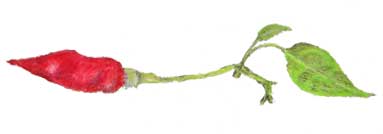
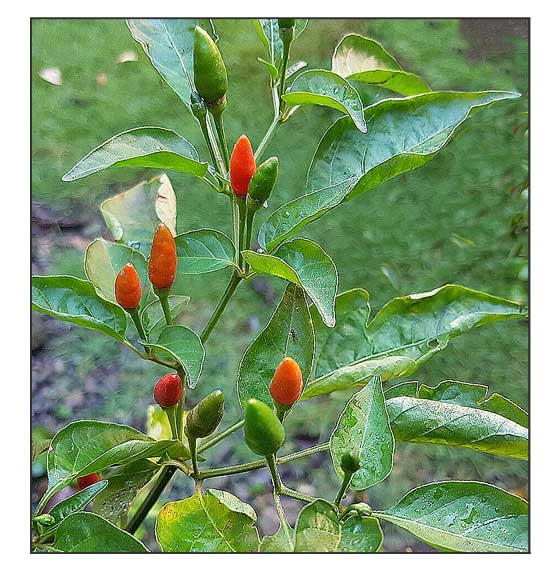
• Flowers of Capsicum frutescens are white, with a greenish white or greenish yellow corolla. They are either insect or self-pollinated. Berries typically grow erect and are ellipsoid-conical to lanceoloid shaped, usually very small and pungent, growing 10–20 mm (0.4–0.8 in) long and 3–7 mm (0.1–0.3 in) in diameter. Fruit typically grows a pale yellow and matures to a bright red, but can also be other colors.
• Growth form: A shrubby plant. Roots:The plant is supported by a short to long taproot with many spreading lateral roots and fibrous roots. Stems: Stem of mature plants are woody but moderately soft and weak. Older branches are light gray. Flowers: Greenish-white with blue or yellow anthers occur in groups of two or more at the nodes. The common features of frutescens cultivars are their greenish flowers and their steeply upwards direction pedicles; also the small and pointed fruits keep their upright position until maturity. Fruit: Berries are red when mature, tapered. (Flora & Fauna Web)
Distribution
- Introduced.
- Naturalized.
-
Found throughout the Philippines, planted there and there about dwellings, but also thoroughly established in open, waste places in settled areas.
- Native to Belize, Bolivia, Brazil North, Brazil Northeast, Brazil Southeast, Brazil West-Central, Colombia, Costa Rica, Cuba, Dominican Republic, El Salvador, Guatemala, Guyana, Haiti, Honduras, Jamaica, Leeward Is., Mexico Gulf, Mexico Southeast, Mexico Southwest, Panamá, Peru, Puerto Rico, Trinidad-Tobago, Venezuela, Windward Is. (23)
 Properties Properties
- Stimulant, digestive,
rubefacient, stomachic, sialagogue, alterative, antispasmodic, febrifuge,
depurative.
- Studies have suggested analgesic, anti-H. pylori, anti-ulcer, diuretic, antibacterial, antifungal, antidiabetic, anthelmintic, cardioprotective, diuretic, mosquito repellent, insecticidal, burn-wound healing, anti-malarial, insulinotropic, cytotoxic, anti-arthritic, hair growth-promoting, analgesic, anti-inflammatory, anesthetic properties.
Constituents
- Fruit contains the active principles: capsaicin, 0.14% and capsicin.
- Capsaicin (trans-8-methyl-N-vanillyl-6-nonenamide) is the principal pungent component in hot peppers, including red chili peppers, jalapeños, and habaneros.
- Cayenne pepper contains fatty oil, 15-20%; some volatile oil; capsaicin, 0.15 - 0.5%; starch, 0.8-1.4%; pentosans, 8.57%; and pectin, 2.33%.
- Study yielded two chemical compounds: Ortho- hydroxy- N- benzyl- 16- Methyl- 11, 14- diene- octadecamide and 9, 12-diene-octadecanoic acid.
- Yields ester, terpenoids, noncarotenoids, lipoxygenase derivatives, carbonyls, alcohols, hydrocarbons, capsaicin, dihydrocapsaicin, capsiconinoid, and capsinoid.
- Qualitative studies have yielded the presence of reducing compounds saponins, alkaloid salts, alkaloids, quartenary bases, anthracenosides, flavanosides, flavonols, coumarin derivatives, steroid glycosides, and anthocyanosides. (28)
- Phytochemical analysis of methanol extract of Cf yielded alkaloids ++, glycosides +, cardiac glycosides +, terpenoids +, flavonoids +++, steroids +, tannins +, saponins ++, with absence of phlobatanins and anthraquinone glycosides. (47)
- In a comparative study with C. anuum fruits on total phenolic content, C. frutescens demonstrated significantly higher phenolic content (~19 ng GAE/g) compared to C. annuum (!5 mg GAE/g), a 3.8-fold difference. (see study below) (47)
Parts used
Leaves, mature fruit.
 Uses Uses
Edibility
- Fruit is a popular condiment.
- Mixed with or made into pickles, and is a principle ingredient in Indian curries.
-
The leaves are used as vegetable, with a very pleasant and somewhat piquant flavor.
- In tropical countries, eaten fresh to promote digestion.
- In Taiwan and the Batanes Islands, leaves used in soup.
-
An excellent source of calcium and
iron, a good source of phosphorus and vitamins A and B.
Folkloric
- Bruised berries used as powerful rubefacient; used for sore throats. Also used as gargle.
- Externally, a strong rubefacient that acts gently with no danger of vesication.
-
Arthritis and rheumatism:
Crush fruit, mix with oil and apply on affected part.
- Dyspepsia and flatulence: Eaten as condiment or drank as infusion as
a stimulant and antispasmodic.
- Infusion of the fruit is stimulant, stomachic and antispasmodic; used
for dyspepsia and flatulence.
- Infusion preparation: 3-10 grains every 2 hours to a cup of boiling
water.
- Toothache: Juice of the pepper pressed into the tooth cavity.
- Rheumatism: Poultice of cayenne applied over affected parts.
- Fomentation of leaves and fruits applied to rheumatic pains.
- Leaves of some varieties used for dressing wounds and sores.
- Strong infusion of fruit of hotter varieties applied as lotion for ringworm of the scalp.
- Used in typhus intermittent fevers and dropsy.
- Externally, used as rubefacient , and internally as stomachic.
- Chile vinegar, made from pouring hot vinegar upon the fruit, used as stomachic.
- Chillies, combined with cinchona, used for lethargic affections, atonic gout, dyspepsia with flatulence, tympanites and paralysis.
- As rubefacient, mixed with with 10 to 20% cotton-seed oil, applied as cataplasm or as liniment.
- Powder or tincture used for relaxed uvula.
- Used in typhus intermittent fevers, gout, dyspepsia, cholera.
- Ancient Mayans used it
for treatment of coughs, sore throat and coughs.
- In Jamaica, used by traditional healers to treat diabetes mellitus.
- Aztecs used chile pungency for toothaches
Others
- In the Philippines, plant commonly used for dyeing in green shades.
- In Taiwan, used as ornaments and for rituals.
Preparation of Capsicum
Liniment
Materials
- Siling labuyo fruits.
- Vegetable oil.
Procedure
- Macerate siling-labuyo fruits in enough vegetable oil to cover the fruits.
- Keep jar covered.
- After one week, strain to separate the fruits from the oil. The macerated fruits may be discarded or leave the macerated mixture in the jar and just decant the oil as needed.
- If turbid, heat the oil gently at low temperatures (Do not boil) until the mixture becomes clear.
- Transfer to medicine bottles.
Studies
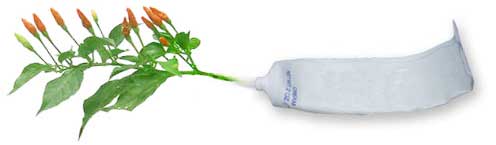
• Capsaicin:
Capsaicin for medicinal use comes from Capsicum frutescens and is the
active ingredient in the extract of hot peppers. It is most concentrated
in the rib or membrane, less in the seeds, least in the flesh. Capsaicin
depletes substance P in the afferent type C sensory nerve fibers, affecting
only proprioception. Unlike other treatments for neuropathy, such as
local anesthetics, opiates, anti-seizure medications or tricyclic antidepressants,
capsaicin specifically treats pain without impairing other aspects of
the nervous system. In incomplete depletion of substance P from suboptimal
use, it may cause paradoxical increase of pain. (See: Capsaicin / Drug Interactions)
 • Uses: Post-herpetic neuralgia, post-mastectomy
pain, hemodialysis-associated pruritus, psoriatic itching and pain,
painful neuropathies, especially diabetic neuropathy, arthritic pains,and other superficial
neuropathies. • Uses: Post-herpetic neuralgia, post-mastectomy
pain, hemodialysis-associated pruritus, psoriatic itching and pain,
painful neuropathies, especially diabetic neuropathy, arthritic pains,and other superficial
neuropathies.
• Capsaicin
and Dyspepsia: In
a small trial in Italy (Dr. Mauro Bortolotti et al, University of Bologna),
30 patients with functional dyspepsia were randomized on daily capsules
of 2.5 g of red pepper or placebo. The capsaicin content (trans-8-methyl-N-vanillyl-6-nonenamide)
was 0.7 mg/g of red pepper power. After 3 weeks, upper gastrointestinal
symptoms of epigastric pain, fullness, nausea and early satiety were
all significantly reduced in the capsaicin group and not in the placebo
group. The mechanism of action is believed to be the desensitization
of gastric nociceptive C fibers, which carry pain sensations to the
central nervous system. (NEJM.346[12]:947-48,2002) Clinical Capsules (1)
• Chronic Low Back Pain:
Study showed a capsicum plaster preparation
to have application in chronic non-specific back pain. (2)
• Postoperative pain:
Study showed capsicum plaster applied
at Korean hand acupuncture points reduced postoperative sore throat. (3)
• Anti-H pylori / Anti-ulcer:
Study to demonstrate in vitro activity
of capsaicin on metronidazole-susceptible and -resistant H pylori showed
bactericidal effect even at lowest concentration (25 ug ml). Capsaicin.
the active ingredient of hot pepper showed in vitro activity against
H pylori and presents a possible alternative treatment strategy for
antibiotic resistant strains of H pylori, a reasonable meal supplement
for those with duodenal and gastric ulcer, and for developing countries,
a cheaper alternative. (4)
• Anti-H pylori: Study showed capsaicin to have a dose-dependent
inhibition of the H pylori, suggesting chili ingestion as possibly protective
against H. pylori-associated gastroduodenal disease. (5)
• Anti-inflammatory effect
in H pylori-infected gastric epithelial cells:
Study showed capsaicin inhibited the
release of pro-inflammatory cytokine, interleukin-8 (IL-8) by H. pylori-infected
gastric epithelial cells. (7)
• Hypoglycemic Principle: Study led to the extraction of the active principle, capsaicin. Results showed the capsaicin to be the major constituent of C frutescens that is responsible for the hypoglycemic episodes seen in dogs, an effect apparently mediated by insulin release. (8)
• Gastric Acid Secretion:
Aqueous extracts of C annuum or C frutescens induced gastric acid secretion dose-dependently. (9)
• TPRV1 / Conflicting Glucose Effects:
The action of capsaicin is mediated by TPRV1 (vanilliod receptor) belonging to the ion channel group. TPRV1 has been found on pancreatic beta cells, and activated by capsaicin to increase insulin secretion. However, another study reported pure capsaicin activating glucagon secretion and increasing plasma glucose. At present, capsaicin glucose effects are still conflicting. (11)
• Antibacterial / Anthelmintic:
Phytochemical analysis of a methanol extract yielded saponins, tannins, alkaloids, glycosides and steroids. Study showed dose-dependent antibacterial and anthelmintic activity. Among the bacteria, Staphylococcus aureus was most susceptible, followed by K pneumonia and P aeruginosa. The anthelmintic effect at all concentrations was lesser when compared to standard. Results suggest the methanolic extract can be used for bacterial and anthelmintic infections. (12)
• Hypoglycemic:
Study found 5 grams of capsicum provided capsaicin levels associated with a decrease in plasma glucose levels and the maintenance of insulin levels. Results suggest potential implications in the management of type 2 diabetes.
• Burning Mouth Syndrome:
Study showed topical application of capsaicin as mouthwash proved itself as an alternative treatment for symptoms in patients with BMS (burning mouth syndrome). (14)
• Antimicrobial / Fruits:
Ethanol extracts of fruits of three kinds of Capsicum showed similar potencies in antimicrobial activities against Gram(+) and Gram(-) bacteria and fungi, although they contained different levels of capsaicin. Capsaicin was the main antimicrobial component. Similarity in antimicrobial activity of the hottest and least hot pepper suggests presence of synergism between capsaicin and other components of the fruit extracts. (15)
• Antifungal / Leaf and Fruit:
Study evaluated the antifungal potential of aqueous leaf and fruit extracts of C. frutescens against four major strains associated with groundnut storage. Leaf extract showed strong activity against A. flavus, while the fruit extract showed good activity against A. niger.
• Antibacterial / Fruits:
Study evaluated methanol and ethanol fruit extracts of Capsicum annuum and C. frutescens for antibacterial activities selected bacteria. Both extracts were effective against Vibrio cholera, Staphylococcus aureus, and Salmonella typhimurium. The methanol extracts showed higher antibacterial activity, and C. annuum showed greater activity than C. frutescens. (16) Study evaluated the antibacterial activities of various extracts of C. annuum, C. annuum var. globriusculum, and C. frutescens. Results showed the methanol extract of C. annuum was effective on Helicobacter pylori and Campylobacter jejuni, while its water extract was highly effective on Arcobacter cryaerophilus. (36)
• Effect on Glucose Absorption and Metabolism:
Study evaluated the effect of 5 g fresh chili pepper on glucose response after a glucose drink and metabolic rate in Thai women. Results showed significant inhibition of postprandial plasma glucose during absorption period, with increased metabolic rate sustained up to 30 minutes postprandially. (17)
• Antidiabetic / Cardioprotective Effect:
Study evaluated the effect of Capsicum frutescens diet supplementation on fasting blood glucose levels and biochemical parameters in alloxan induced diabetic Wistar rats. Results showed improvement in all biochemical parameters, blood glucose, and body weight suggesting cardioprotective and anti-diabetic properties. (18)
• Mosquito Repellency / C. frutescens and Carica papaya:
Study evaluated the mosquito repellency of distillates of fruits of C. frutescens and C. papaya. The extracts showed better repellency when combined. However, the repellency did not seem to be simply additive but rather a complex interaction of constituents of the mixture. (19)
• Insecticidal / Aedes aegypti:
Study evaluated the insecticidal activity of different concentrations of methanol extract of fruits and leaves of C. frutescens against 2nd and 3rd instar larvae of Aedes aegypti. The fruit extract showed more killing effect than the leaf extract. The mortality of the larvae was found to be concentration dependent. (20)
• Diuretic Potential:
Study evaluated the diuretic potential of C. frutescens, C. oliturius and A. esculentus in albino rats. All three exhibited diuretic potential. Decoctions were comparable to furosemide. (21)
• Anticancer / Capsaicin: The anticancer effects of capsaicin have been reported in different types of cancer. Anticancer activity of capsaicin, both in vitro and in vivo, against growth of prostate cancer cells through induction of apoptosis associated with an increase of antibodies p53, p21, and Bax. Anticancer effect has also been seen on human colorectal cancer and studied on HCT116, Lovo, SW480, and Colo 205 cell lines. (26)
• No Fungal Activity: Study evaluated the antifungal properties of a leaf extract of Capsicum frutescens using ethanol and chloroform as solvents and negative control and Fluconazole as positive control. The 100% leaf extract of C. frutescens showed no antifungal property against Candida albicans. (38)
• Topical Capsaicin for Dermatologic Afflictions: Topically applied capsaicin, a known inhibitor or cutaneous vasodilation produces relief on moderate and severe psoriasis, reducing scaling, erythema, burning, stining, itching, and skin redness. Topical capsaicin was shown to decrease perfusion by 15% in skin lesions and pityriasis rubra pilaris (PRP), which is characterized by skin redness and scaling. It can be used for treatment of prurigonodularis, an eruption of excoriated nodules caused by intractable pruritus. It has also been successfully used for treatment of acute lipodermatosclerosis and acute lobular panniculitis in pregnant women. (41)
• Anti-Obesity Effect / Weight Management: Capsaicin has been found to reduce body fat accumulation in animal experiments and clinical studies. Capsaicin markedly altered thermogenesis and lipid metabolism related proteins. Studies showed body temperature and oxygen consumption increase with regular intake of capsaicin and can promote reduction of body weight and oxidation of body fat via increased energy expenditure and reduction of appetite. (41)
• Antidiabetic Activity / Fruit: Crude extract of fruit was found to inhibit intestinal glucose absorption, which may be partially responsible for lowering blood sugar. Regular consumption of chili may attenuate postprandial hyperinsulinemia. Alpha-glucosidase and alpha-amylase inhibitory activities may also play a role in antidiabetic activity. (41)
• Anticancer Activity / Capsaicin: Capsaicin anticancer activity has been recorded in different types of cancers. Dihydrocapsaicin induced autophagy in HCT116 human colon cancer cells. Capsaicin also inhibited the growth of leukemic cells. It can selectively inhibit the growth and induce apoptosis of immortalized or malignant cell lines, but not normal cell lines. Capsaicin has been reported to be effective in vitro and in vivo against growth of prostate cancer cells, inducing apoptosis of both androgen receptor positive and negative prostate cancer cell lines associated with an increase of antibodies p53, p21, and Bax. (41)
• Insulinotropic vs Hypoglycemic: Study evaluated whether a diet with low (0.5%) or high (2.0%) but tolerable dietary dose of red chili (RC) Capsicum frutescens can ameliorate diabetes related complications in a high-fat (HF) diet-fed streptozotocin (STZ)-induced type 2 diabetes model in Sprague Dawley rats. After 4 weeks, FBS in both RC fed groups were not significantly different. Serum concentration was significantly (p<0.05) increased in the RCH (red chili high) group compared to control and RCL. Results suggest 2% dietary RC is insulinotropic rather than hypoglycemic in the experimental condition. (42)
• Healing Effect on Second Degree Thermal Burns: Study evaluated the effect of C. frutescens (sili) ointment in healing second degree thermal burns on male albino mice. Second degree burns were inflicted on the right gluteal region of each mouse. Sili ointment, silver sulfadiazine ointment, and petroleum jelly for negative control were used. Base on a median healing scores, C. frutescens (sili) ointment applied locally is effective for healing of inflicted second degree thermal burns. (43)
• Herb-Drug Interactions: Moderate: (1) Anticoagulant and anti-platelet drugs: Taking capsicum along with such drugs that also slow blood clotting might increase the risk of bruising and bleeding. (2) Theophylline: Capsicum can increase the absorption of theophylline and increase the effects and side effects of theophylline. (3) Antidiabetic drugs: Capsicum might lower blood sugar, and when taken with antidiabetic medications might lower blood sugar too low. (4) Aspirin: Capsicum might decrease the absorption of aspirin and reduce the effects of aspirin. (5) Ciprofloxacin: Capsicum might increase the absorption of ciprofloxacin, and increase the effects or side effects of ciprofloxacin. (44)
• Antimalarial / Fruit: In Nigeria, Capsicum frutescens fruit is used to treat fever and malaria. Study evaluated the in vivo antiplasmodial activity of C. frutescens fruit extracts (aqueous, ethyl acetate, n-hexane) in chloroquine-sensitive Plasmodium berghei (NK-65) infected mice. Study established in vivo antimalarial potential of C. frutescens fruit using different solvents had LD50 > 20 mg/kg and in vivo antiplasmodial efficacy in crude extracts and aqueous fractions. Results suggest the aqueous extraction is preferable for Capsicum, and justifies the use of water for preparation as alternative medicine. (45)
• Anti-Ulcer / Fruit: Study evaluated the effect of aqueous extracts of red chili pepper (RCP) and some spicy foods on healing of aspirin-induced gastric ulcer in rats. Oral administration of RCP extract at dose of 600 mg/kbw caused high decrease in length of gastric ulcer. Results showed oral administration of RCP extract at 600 mg/kbw caused high decrease in length of gastric ulcer, reduced volume of gastric juice, and histopathological changes. RCP extracts increased pH value of gastric juice. Results suggest RCP can be used for healing acute gastric ulcer disease. (46)
• Comparative Profiling of Capsicum frutescens and C. annuum / Antioxidant / Antibacterial / Cytotoxicty / Anti-Arthritic / Fruits: Comparative study evaluated the nutritional composition, phytochemical constituents, and biological activities of CF and CA fruits. C. frutescens demonstrated 2.5-fold superior antioxidant capacity (DPPH IC50 111.96 vs 284.57 µg/mL, p<0.001), stronger antibacterial efficacy (inhibition zones: 8-22 vs 7-14), and 2-fold greater cytotoxic potential in brine shrimp lethality assay (LC50 29.24 vs 59.37 µg/mL). Both species showed equivalent anti-arthritic activity (99.57 vs 99.42% compared to diclofenac 99.78%). (see constituents above) (47)
• Siling Labuyo as Hair Tonic / Fruit: A 1996 study evaluated the capsaicin extract from siling labuyo for the production of hair tonic. Each 50 g sample was homogenized with ethyl alcohol. Extract was formulated into 1 mg and 5 mg of capsaicin and tested on rabbits. TLC showed capsaicin % of 21.7% and 31.6%. Test showed "positive results". (48)
• Hair Growth-Promoting / Leaves: Capsicum frutescens leaves contain saponins to increase blood flow to hair follicles and flavonoids that inhibit free radicals that cause hair loss. Study formulated a hair tonic from delipidated ethanol extract of Cf leaves and evaluated its hair growth-promoting effects on male rabbits (Oryctolagus cuniculus). Formulations of 5%, 10%, and 20% were used. The delipidated extracts at 5,10, and 20% showed hair-promoting growth potential. At 20% the hair growth-promoting activity is roughly equivalent to hair tonic containing 2% Minoxidil (positive control). (49)
• Potential Topical Hair Tonic / Leaves: Study evaluated the effect of cayenne leaf extract in concentrations of 10, 20, and 30% in increasing the length and amount of hair on mice (Mus musculus). The cayenne leaf extract significantly influenced the length and amount of hairs in mice, with the 10% concentration showing optimum results as trigger for hair growth. Results suggest potential as hair tonic. (50)
• Anti-Inflammatory / Analgesic / Capsaicin: Study evaluated and compared the anti-inflammatory effect of either ethyl acetate extract of C. frutescens or capsaicin (Fluka Biotechnika-CPF) to nonsteroidal anti-inflammatory analgesics (NSAIDS). Inflammation was induced in rat's hind paw by subplantar injections of fresh egg albumin. Diclofenac was used as reference drug. Results showed capsaicin in both forms (CFE and CPF) produced anti-inflammatory effects comparable to diclofenac in the experimental rat model (p<0.05). Capsaicin showed both analgesic and anti-inflammatory properties. (51)
• Analgesic and Healing Effects in Periodontitis / Increase TRPV-1: Study evaluated the effect of capsaicin on transient receptor potential vanilloid-1 expression and TNF-α and TLR-4 toward pain using an experimental model of male Wistar rats (rattus novegicus) induced with Aggregatibacter actinomy-cetemcomitans serotype b and green chili extract applied to the surface of the gingiva on maxillary first molar. Results showed capsaicin can increase TRPV-1 and decrease IL-1ß but did not affect TLR-4. Capsaicin can be used to decrease pain and accelerate healing process in periodontitis. (52)
• Topical Local Anesthetic / Comparative Study / Fruit: Study evaluated the efficacy of the topical local anesthetic effect of fruit extract of C. frutescens (siling labuyo) in comparison to EMLA (Lidocaine or Prilocaine) in rabbits. Anesthetic effect was measured using the skin twitch response. Among various concentrations of the fruit extract, only the 0.75 concentration showed a topical local anesthetic effect, which was similar to EMLA. (53)
• Gastroprotective / Anti-Gastric Ulcer / Fruit: Despite available conventional therapy, the mortality rate due to gastric ulcers across the globe is 11% with range of 3-23%. Study evaluated the effect of ethanol fruit extract of C. frutescens on gastric acid production determinants in ibuprofen-induced gastric ulcers in male Wistar rats. Capsicum frutescens reduced the ulcer index. The H+/K+ ATPase enzyme activity was significantly decreased (p<0.01), along with decreased concentration of gastrin (p<0.01) and significant (p<0.01) decrease in mean number of parietal cells. Results showed ulcer healing property attributed to reduction of the HKATPase enzyme activity, gastrin release, and number of parietal cells in the stomach. (54)
• Synergism with Probiotic Against Methicillin Resistant Staphylococcus aureus (MRSA): Probiotics are known for their immunomodulatory and antimicrobial effects. Study evaluated the synergistic potential of capsaicin with probiotic Bifidobacterium breve. The capsaicin extract was added to B. breve BS2-PB3 cultures and tested against MRSA. Results showed a significant increase in clear zone diameter with capsaicin supplementation, indicating synergistic potential in enhancing antimicrobial activity. (56)
• Hepatoprotective / Isoniazid-Rifampin Hepatotoxicity / Leaves: Study evaluated the hepato-protective effect of methanolic extract of leaves against INH-rifampin-induced hepatotoxicity. Results showed CF extract at 100 mg/kg has significant effect on AST and ALT levels (p=0.006), with lower levels compared to 200 mg/kg. The biochemical results were not supported by histopathological findings. (57)
Availability
- Wild-crafted.
- Ubiquitous market produce.
- Cultivated for its edible fruit.
- Capsaicin is available as fresh and dried peppers, and in many countries,
in various formulations viz. capsules, tablets, tinctures and creams for external application in
potencies ranging from 0.1% to 0.75%.
|




_2.jpg)


