|
 Gen info
- Rosaceae, the rose family, is a family of flowering plants that includes 4,828 known species in 91 genera. The family includes herbs, shrubs, and trees; most deciduous, some are evergreen. They include economically important fruits such as apples, pears, plums, peaches, strawberries, etc. It includes popular ornamental trees and shrubs such as roses, meadowsweets, etc. The name Rosaceae is derived from the type genus Rosa. (18)
- Fragaria is a genus of flower plants in the rose family, Rosaceae, commonly known as strawberries for their edible fruits. There are more than 20 described species and many hybrids and cultivars. (19)
- Etymology: The genus name Fragaria derives from fragum (strawberry) and -aria, as suffix.
- The origin of the English name is unclear: perhaps, from an old practice of gathering strawberries by stringing them on a straw or stalk.
Alternatively, it may refer to the long, thin runners found on some genus members. (19) The specific epithet vesca derives from Latin, meaning "thin" or "feeble"; or, perhaps, vescor, "to eat", referring to edibility.
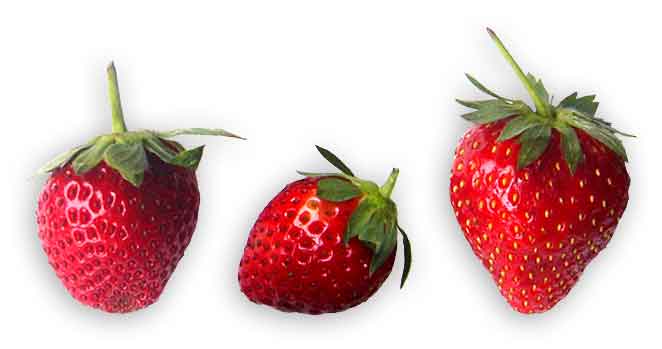
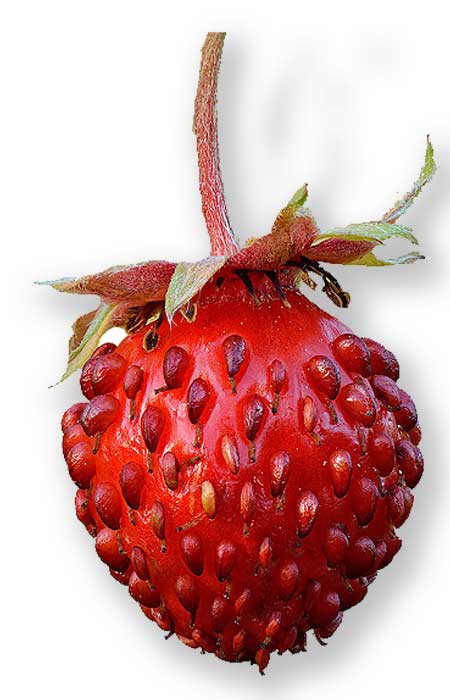
- Trivia and Snippets: Archaerological evidence suggests Fragaria vesca has been consumed by humans since the Stone Age. (•) Strawberries are not berries in the botanical sense. The fleshy edible part of the fruit is a receptacle, and the parts mistakenly called "seeds" are achenes, and therefore true botanical fruits. (19)
Botany
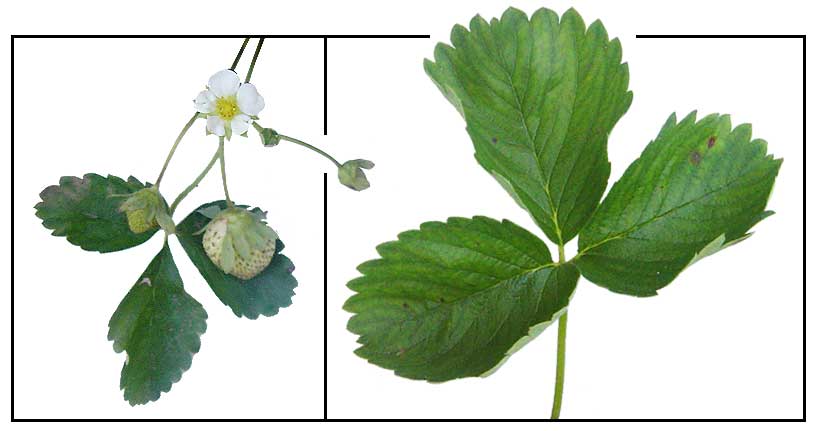
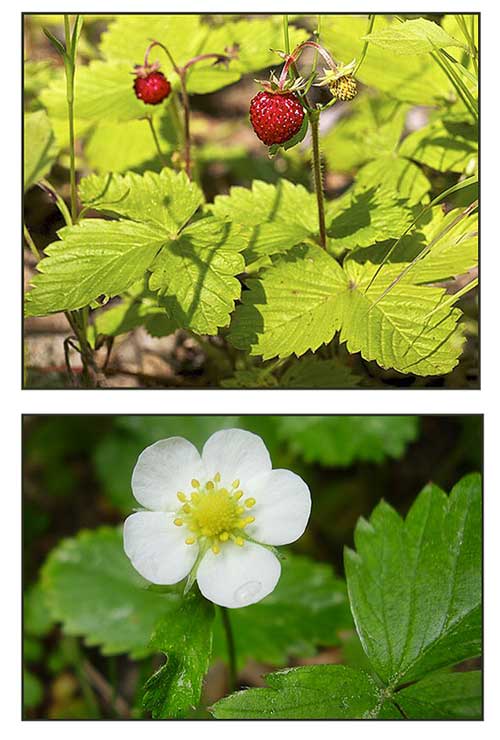
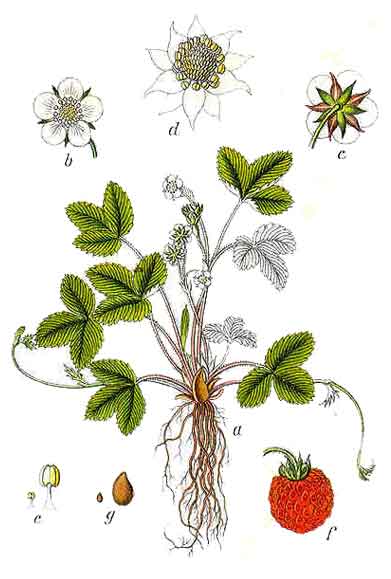
• Fragaria vesca is perennial herb spreading through
runners, 5-20 centimeters high with short rhizomes. The leaves , borne on long stalks, are compound with three-foliate
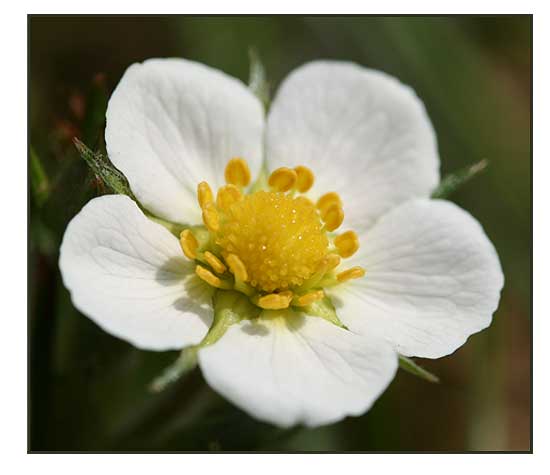
and toothed . The flowers are white with five petals that fall off shortly
after pollination, and from the receptacle forms the sweet and red fruit.
• Five to eleven soft, hairy white flowers are borne on a green, soft fresh-hairy 3–15 centimeters (1–6 in) stalk that usually lifts them above the leaves. The light-green leaves are trifoliate (in threes) with toothed margins. The plant spreads mostly by means of runners (stolons), but the seeds are viable and establish new populations. The fruit persist for an average of 1.2 days, which is possibly the shortest persistence of any fleshy fruit in Europe. It bears an average of 46.8 seeds per fruit, which is possibly the highest per fruit of any in Europe. Fruits average 84.0% water, and their dry weight includes 21.0% carbohydrates and 5.5% lipids one of the higher lipid values among European fleshy fruits. (20)
Distribution
- Cultivated; not naturalized.
-
Widely cultivated in the Trinidad
valley of Benguet.
- Native range is N. America to Guatemala, Macaronesia, Europe to Siberia and Xinjiang. A perennial that grows primarily in the temperate biome. (7)
Parts
utilized
Whole plant.
 Constituents
- Studies have yielded ellagic acid,
flavonoids, carotenoids and terpenoids responsible for antioxidant activity.
- Leaves and roots yield tannins (argimonin and pedunculagin), vitamin C, traces of oil, proanthocyanins, flavonoids (quercetin and rutin), phenolic acids (salicylic acid, coffee acid and chlorogenic acid), among others, (15)
- Fruit yields salicylic acid, invert sugar ( a mixture of glucose and fructose( vitamins A and B, and anthocyanin *fragarine." (15)
- Leaf and fruit yield flavonoid, tannin, borneol and ellagic acid.
- Fruit and leaves have been shown to contain: cissotanic, malic and citric acids, sugar, pectin, vitamin C, potassium, manganese, fiber, ellagitannins, ellagic acid, pelargonidin, cyanidin, anthocyanins, omega-3 FA, riboflavin, folate, magnesium, copper.
- Study for secondary metabolites in fruits yielded flavonoids, phenolic acids, tannins, and anthocyanins.
There was greater yield of anthocyanins in wild strawberry than in cultivated ones. Mean phenolic concentration ranged from 1.648 mg/g-2.348 mg/g, with higher yield in the wild form. (9)
- Nutrient analysis for raw strawberries per 100 g yielded: (Proximates) water 90.95g, energy 32 kcal or 136 kJ, protein 0.67 g, total lipid (fat) 0.30 g, ash 0.40 g, carbohydrates by difference 7.68 g,
total dietary fiber 2.0 g, total sugars 4.89 g, sucrose 0.47 g, glucose 1.99 g, fructose 2.44 g, starch 0.04 g; (Minerals) calcium 16 mg, iron 0.41 mg, magnesium 13 mg, phosphorus 24 mg, potassium 153 mg, sodium 1 mg, zinc 0.14 mg, copper 0.048 mg, magnesium 0.386 mg, selenium 0.4 µg, fluoride 4.4 µg; (Vitamins) vitamin C 58.8 mg, thiamin 0.024 mg, riboflavin 0.022 mg, niacin 0.386 mg, pantothenic acid 0.125 mg, vitamin B6 0.047 mg, total folate 24 µg, total choline 5.7 mg, betaine 0.2 mg, vitamin A RAE 1 µg, beta carotene 7 µg, vitamin A 12 IU, lutein +zeaxanthin 26 µg, vitamin E (alpha-tocopherol 0.29 mg, vitamin K (phylloquinone) 2.2 µg; (Lipids) total saturated fatty acids 0.015 g, total monosaturated FA 0.043 g, total polyunsaturated FA 0.155 g, transfat 0, cholesterol 0, phytosterols 12 mg; along with amino acids, flavanones, flavones, flavonols, isoflavones, and proantocyanidins. (16)
Properties
- Considered alterative, anti-inflammatory, antioxidant, anticarcinogenic, astringent, calmative, depurative, diuretic, laxative,
refrigerant and tonic.
- Studies have suggested
analgesic, antioxidant, diuretic, nephroprotective, diuretic, antibacterial, anti-inflammatory, hypolipidemic, anticancer, antimelanogenic, cosmeceutical, hepatoprotective properties.
 Uses
Edibility
- Fresh leaves used to make tea.
- In India, roots used to make a coffee substitute.
Folkloric
- The leaf tea claimed to improve the appetite; also as a mild astringent
for diarrhea and digestive upsets and a cleansing diuretic for rheumatic
disorders
- The leaf decoction also used for chronic diarrhea.
- Used for dyspepsia.
- The roots has same medicinal properties.
- Fruit used for intestinal worms, gout, arthritis, jaundice, liver and
stomach problems.
- For bladder stones, the juice of fresh strawberry is taken before breakfast;
also, preventive.
- Also used for podagra.
- In Campania, Italy, leaf
infusion used as appetizer. Leaves used topically on wounds. source
- In folk medicine elsewhere, for diabetes, cancer, hypertension,
tuberculosis, tumors, and urogenital problems.
- In Ayurveda, traditional healers in the Himalayas used brewed iced leaf decoctions to calm pitta imbalances and used fruit poultices for minor skin irritations.
- During the middle ages, German folk healers carried sprigs of the plant to ward off infections, believing the fragrant leaves might "cleanse the air." Anglo-Saxon texts mention the chewing of dried or fresh berries as remedy for mouth ulcers.
Scandinavian herbalists added the fruit to tonics used for menstrual discomfort. In Italian folk medicine, tea leaf used to ease hiccups and minor stomach aches. (27)
Others
Cosmetics: Fruit has been used for toning and whitening the skin, for combating wrinkles and freckles, soothing sunburn and whitening teeth.
 Studies
• Cardiovascular
Effects / Vasodilatory Activity / Leaves: Study on the aqueous extracts of wild strawberry
leaves showed direct, endothelium-dependent vasodilation activity mediated
by NO and cyclooxygenase products, with a potency similar to hawthorn
aqueous extract. (1)
• Analgesic: Study
evaluated ethanolic extracts of fruit and whole plant for analgesic activities in experimental animal models using tail flick method (central action) and acetic acid-induced writhing (peripheral action). Results showed significant
central and peripheral analgesic activity, the the fruit extract showing
better analgesic effect than the plant extract. (2)
• Antioxidant: Study
of 23 Bulgarian medicinal plants included Fragaria vesca to be one of
five plants extracts that exhibited higher antioxidant activity. A positive
correlation between antioxidant activity and polyphenol content. (3) Study data indicated that wild strawberries have a slightly higher total antioxidant capacity content than cultivated strawberries. Altitude did not report differences. (4)
• Diuretic / Nephroprotective / Fruits: Study
evaluated the diuretic and nephroprotective activity of different extracts of Fragaria vesca fruits in rats. Results showed good diuretic activity by Lipschitz method with increase in urine volume and K+ ion excretion. The fruit extracts showed moderate nephroprotective effect against gentamicin induced nephrotoxicity. (10)
• Ellagitannin / Anti-Cancer / Fruits: Study evaluated the anticancer properties of an ellagitannin-enriched fraction from Fragaria vesca leaves in human hepatocellular carcinoma cells (HepG2). Results showed EEF promoted cell cycle arrest at G2/M checkpoint and modulated autophagy, processes that are targets for therapeutic strategies in oncological diseases. (11)
• Antibacterial / Leaves: In a study comparing the antibacterial activity of ethanolic extracts of various plants, Fragaria vesca leaf extract showed zones of inhibition against Pseudomonas aeruginosa. (12)
• Antibacterial against Metallo-Beta-Lactamase VIM-2 Producers P. aeruginosa: Study evaluated F. vesca extract and polyphenol rich fractions against isolates of MBL VIM-2 producers P. aeruginosa. Results showed interesting activity against the PA clinical isolates. One or more of the polyphenols can have potential as novel antibacterial therapies against these bacteria. (13)
• Hypolipidemic / Leaves: Study evaluated the hypolipidemic activity of ethanolic and aqueous extracts of F. vesca in high fat diet induced hyperlipidemia in Wistar rats. Results showed significant hypolipidemic activity. The ethanolic extract at 500mg/kg was almost equal to atorvastatin. (14)
• Anti-Inflammatory / Leaves: Study evaluated a hydroalcoholic extract from F. vesca leaves for anti-inflammatory activity through inhibition of nitric oxide production and expression of pro-inflammatory proteins in lipopolysaccharide-triggered macrophages. The extract showed direct nitric oxide scavenging activity supporting its traditional use for anti-inflammatory disorders. The extract also affected the proteolytic systems. (15)
• Cosmetic Potential / Leaves: F. vesca leaves have shown antiseptic, emollient, and dermatologic protection properties,due to presence of bioactive compounds, such as flavonoids, phenolic acids, ellagitannins, and proanthocyanidines. Study evaluated F. vesca extract for ROS scavenging activity, cytotoxicity assays in HaCaT cells and tyrosinase inhibitory activity. The most active extract was incorporated in a hydrogel with hydroxyethylcellulose 2% (w/w). The optimized extract was rich in elagitannins and showed anti-melanogenic potential, and promise as an antioxidant cosmetic ingredient. Ctytotoxicity assay showed suitability for topical application, and suitable ROS scavenging properties in the presence of H2O2 after UVB radiation exposure. Results showed the extract-based hydrogel exhibited cutaneous compatibility, acceptability, and antioxidant efficacy, stable and suitable for topical application. (21)
• Cosmetic Potential / Leaves: Study screened the pharmaceutical potential of various extracts of F. vesca from field-grown leaves and fruits, and in-vitro grown leaves and callus using specific bioassays (antibacterial, antioxidant, antiumor, toxicity, and anticancer). Field grown leaves and fruits showed better antibacterial activity than in-vitro grown leaves and callus. E. cloacae was most vulnerability to antibacterial activity of field grown extracts. Field-grown leaves showed highest antioxidant activity and TFC. Ethanolic extract of fresh fruit showed highest anti-tumor activity. Field-grown leave and fruits showed more toxicity in brine shrimp toxicity test. Field-grown leaves and fruits showed strongest anticancer action on MCF-7 breast cancer cell line. Results showed naturally grown leaves were most efficient in terms of pharmaceutical potential. (22)
• Hepatoprotective in Paracetamol-Induced Toxicity: Study evaluated the hepatoprotective activity of F. vesca extracts in paracetamol-induced toxicity in male Wistar rats. There was significant increase in AST activity in the paracetamol only group, and decreased AST activity in the group receiving strawberry extract, 400 mg/kg/day from day 1-10 (p<0.001). (25)
• Reduced MDA and Slowed Physical Exhaustion Time: Study evaluated the effect of strawberry ethanol extract (SEE) on reducing plasma MDA levels and prolonging the exhaustion time of male Wistar rats induced by intermittent anaerobic swimming. Results showed SEE reduced plasma MDA level and prolonged exhaustion time induced by intermittent anaerobic swimming, comparable to the effect of vitamin E. (26)
Caution
• Pesticides: Strawberries not organically grown probably contain pesticides, especially in the U.S. On average, strawberries receive a dose of up to 500 pounds of pesticides per acre. Other countries use less-than-stringent regulations for pesticide use. (5)
Availability
- Cultivated.
- Leaf tinctures, dried herbs, organic dried leaves, tinctures, homeopathic pellets in the cybermarket.
|