 Gen info Gen info
- Gynostemma is a genus of perennial climbing vines in the cucumber, gourd, and melon familuy, comprising at least 19 species, with a wide distribution outside China (with 9 endemic), from India and Bangladesh to Southeast Asia to Japan and Korea to New Guinea.
-
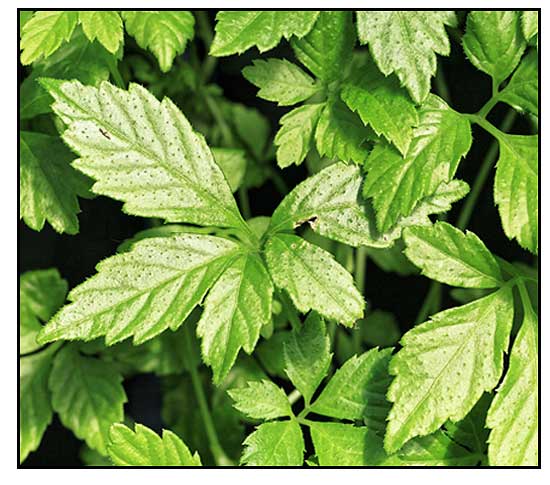
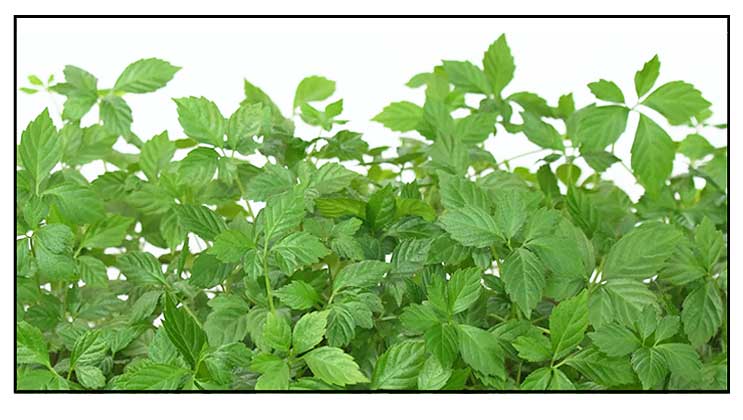
Gynostemma pentaphyllum, also called jiaogulan (twisting blue plant), is a dioecious, herbaceous climbing vine of the family Cucurbitaceae.
- Historical snippers: Gynostemma pentaphyllum has been in use for more than 500 years. Throughout the Ming Dynasty (1368-1644 AD), the textbook "Herbs for Famine" records the plant's used as vegetable and as nutritional complement during times of starvation. It was first described in 1406 CE by Zhu Xiao, who presented it in the book Materia Medica for Famine as a survival food. Its earliest recorded use is in Li Shizhen's book Compendium of Materia Medica published in 1578, where it summarized the usage and curative effect of the Gynostemma pentaphyllum.
- The plant's discovery outside China originated from research in sugar substitute.
- In the European Union, jiaogulan is considered a novel food following a 2012 court ruing that prohibited its sale as food.
- Gynostemma was first described by German-Dutch botanist Carl Ludwig Blume from two species he names: G. pedata and G. simplicifolia. G. pedatum is now considered to be a synonym of Gynostemma pentaphyllum
.
- Commerce: As early as 1986, the Ministry of Science recognized G. pentaphylla as the first "precious Chinese medicine" developed under the "Spark Program". Since the emergence of GP tea in 1979, its economic value has significantly surpassed other renowned teas with nearly a century of consumption history. Its rapid growth cycle, high yield, nutritional and medicinal content, and extensive medical applications, has helped boost its status as one of the most efficient tea varieties in the market. Since 2015, its sales volume has rocketed from tens of thousands to tens of millions in two to three years. (5)
 Botany Botany
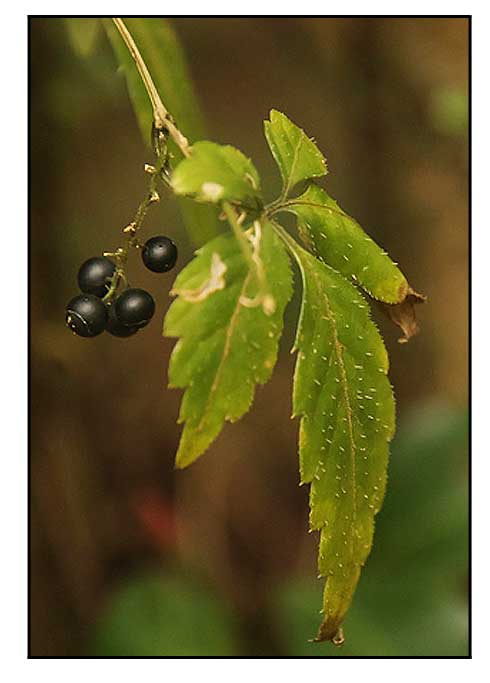
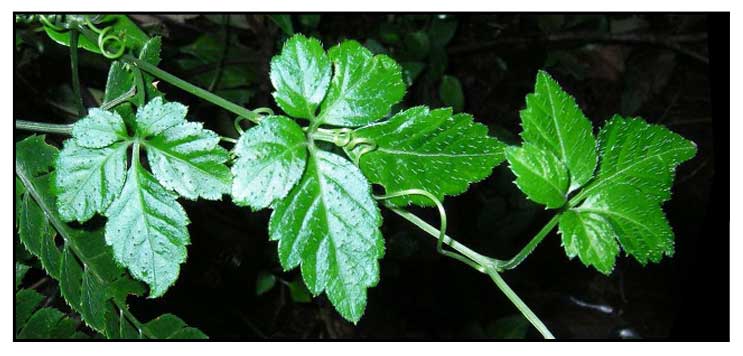
• Growth form: Herbaceous climber that grow to 8 m. Foliage: Leaves are compound, usually 5–7-foliolate, sometimes 3–9-foliolate. Both upper and lower surfaces are covered with coarse stiff hairs (hispid). Tendrils are very slender (filiform) and forked into two. Stems:Stem is slender, cylindrical and stout. Mostly glabrous or sparsely hairy, stem is beset with fine longitudinal lines or grooves. Flowers: Flower is greenish white with 5 deep lobes. Flowers are borne in the form of panicle, where female flowers have shorter panicle than male flowers. Female and male flowers are found on separate plants. Fruit: Fruit is indehiscent and black when matured. Densely hairy fruit is globose, about 5 – 6 mm wide. Fruit contains 2 brown seeds. Seeds are papillose and ovate-cordate, about 4 mm wide. (Flora & Fauna Web)
• Stem and branches slender, angular-sulcate, glabrous or sparsely pubescent. Leaves pedately 3-9-foliolate, usually 5-7-foliolate, membranous or papery, pubescent or glabrous; leaflets ovate-oblong or lanceolate, median leaflets 3-12 × 1.5-4 cm, lateral leaflets smaller, both surfaces sometimes hispid, lateral veins 6-8 pairs, base attenuate, margin crenate, apex acute or shortly acuminate; petiolule 1-5 mm. Tendrils filiform, 2-fid. Male flowers in panicle; peduncle filiform, 10-15(-30) cm, many branched; pedicels filiform, 1-4 mm; bracteole subulate; calyx tube very short; segments triangular, ca. 0.7 mm, apex acute; corolla pale green or white; segments ovate-lanceolate, 2.5-3 × ca. 1 cm, 1-veined, apex long acuminate. Female flowers: panicle shorter than that of male flowers; calyx and corolla as in male flowers; ovary globose, 2- or 3-loculed; styles 3; stigmas 2-lobed; staminodes 5, short. Fruit indehiscent, black when mature, globose, 5-6 mm in diam., 2-seeded, glabrous or densely hispid and pubescent. Seeds brown, ovate-cordate, ca. 4 mm in diam., compressed, both surfaces papillose, base cordate, apex obtuse. (Flora of China)
Distribution
- Native to the
Philippines. (1) (2)
- In Basilan, Camiguin, Catanduanes, Cebu, Leyte; In Luzon: Abra, Bataan, Benguet, Cagayan, Camarines Sur, Ifugao, Ilocos Norte, Kalinga, Laguna, Mountain Province, Quezon, Rizal, Sorsogon; in Mindanao: Bukidnon, Cotobato, Davao Orienta, Lanao del Sur, Misamis Occidental, Surigao del Sur, Zamboanga, Sibugay; Mindoro, Negros, Palawan, Panay, Samar.
- Also native to Assam, Bangladesh, Borneo, China North-Central, China South-Central, China Southeast, East Himalaya, Hainan, India, Japan, Jawa, Korea, Kuril Is., Laos, Lesser Sunda Is., Malaya, Maluku, Myanmar, Nansei-shoto, Nepal, New Guinea, Sri Lanka, Sulawesi, Sumatera, Thailand, Vietnam, West Himalaya. (1)
 Constituents Constituents
- Studies have revealed numbers of bioactive compounds, including saponins (gypenosides, GPS), polysaccharides (GPP), flavonoids, and phytosterols.
-Database analysis shows over 100 saponins extracted and characterized by researchers in China in 1976. Eight of the saponins are identical to protopanaxadiol-type ginsenosides Rb1 (Gypenoside III), Rc, Rb3 (Gypenoside IV), Rd (Gypenoside VIII), F2, Rg4, malonyl-Rb1, and malonyl Rd originated in P ginseng. The overall saponin content is greatest before blooming. And saponin content varies according to species, emergent location, and instance of collection. The saponins are primarily responsible for G. pentaphyllum's therapeutic benefits. (7)
- Principal sugar types include b-D-glucose, b-D-xylose, a-L-arabinose, and a-L-rhamnose. Among the frequent sterols in minute quantities are ergostanol, sitosterol, and stigmasterol. Flavonoids, omuibin, ombuoside, rutin, carbohydrates, vitamins, minerals, carotenoids, and amino acids are other ingredients documented. No alkaloids have been recorded. (7)
- Study of water extract of GP isolated two major saponins: 20(S)- dammar-24-ene-3b, 12b, 20 triol and 20(S)- dammar-24-ene-3b, 6a, 12b, 20 tetrol, which are the same compounds from ginsenoside Rb1 and Rg1 from ginseng (Panax spp.).
- Study of aerial parts isolated and characterized six new dammarane-type saponins, gypenosides CP1-6 (1-6), along with 19 known compounds (7-25).
(see study below) (23)
Properties
- Studies have suggested anticancer, antidiabetic, α-glucosidase inhibitory, hypolipidemic, prebiotic, anti-obesty, analgesic, anti-inflammatory, hepatoprotective, chrondroprotective, sedative, anxiolytic, sleep-enhancing, anti-skin aging, antioxidant, immuno-modulatory, cardioprotective properties.
Cultivation
- Cultivation is inexpensive, simple, and requires no special care or supervision. It is harvested when the vine reaches a length of 2-3 meters, and harvested 4-5 times a year in the subtropics and tropics. Collection may occur every 20-30 days depending on growth conditions and luxuriance. A high yield patch can generate 4000-5000 kg of dry herb per hectare. (7)
Parts used
Leaves, aerial parts.
Uses
Edibility
- Used to make sweet tea; also eaten as vegetable.
- G. pentaphylla-derived additives incorporated into beverages, sports drinks, cookies, bread, and noodles. (5)
Folkloric
- No reported folkloric medicinal use in the Philippines.
- Li Shizhen's compendium of Materia Medica documents its use for the treatment of hematuria, swelling of the throat and neck, tumors, and wounds. Chinese Pharmacopoeia reports on its ability to dispel diseases and eliminate evil, clear heat, and detoxify. In traditional Chinese medicine, mention is made of use for treatment of muscle twitches, chest tightness, viral hepatitis, chronic gastroenteritis, bronchitis, hyperlipidemia, hypertension, fatty liver, insomnia, headaches, disorientation, migraine, amnesia, tinnitus, fatigue, immune enhancement, liver protection, and cholesterol reduction. (5) (7)
- Herb used for relaxant and memory-enhancing
properties, and for treatment of insomnia.
Others
- Commerce: Gp is widely used as health supplement in beverages, biscuits, and noodles, and for making face washes and bath oils. (3)
Studies
• Toxicity study: In rats, a concentrated extract of G pentaphyllum did not result in mortality or toxic symptoms, taken daily for 90 days, with not statistical difference among hematological and biochemical values compared to control. (7)
• Safety concerns and interactions: Safety: Possibly safe when used as tea for up to 3 months. Side Effects: Most common are diarrhea and nausea. Pregnancy: Probably unsafe taken by mouth during pregnancy. One chemical constituent has been linked to possible birth defects. Breast feeding: Not enough info. Best to avoid. Bleeding: Jiaogulan might slow blood clotting and increase the risk of bleeding during and after surgery.l Stop jiaogulan at least 2 weeks before surgery. Immune system: Jiaogulan may cause the immune system to become more active and increase the symptoms of auto-immune diseases. Interactions: (1) Antidiabetic medications: Jiaogulan might lower blood sugar and more so along with antidiabetic medications Monitoring of blood sugar closely. (2) Anticoagulants / Antiplatelets: Jiaogulan might slow blood clotting, and more so when taken with medicines that slow blood clotting, increasing the risk of bruising and bleeding. (WebMD) (6)
• Anticancer: In 1993, an experimental testing of 59 patients with established malignant tumor administered a G. pentathlete formula has 11.9 and 8.5% cancer recurrence and spread, respectively, compared to 72..4 and 55.2% in the control group. Frequency of T lymphocyte activation and acid-naphthyl acetate esterase (ANAE+) capacity rose 8.1% after P. pentaphyllum therapy. An observational study showed treatment with Gp formula resulted in substantial decreases in cancer recurrence and spread, along with lower mortality and enhanced immunity performance. Gp also boosted the immune system following chemotherapy, suggested by an improved T lymphocyte activation rate, lower IgG and IgM levels in women with breast cancer. Postulated mechanisms of action are: cell cycle blockage, apoptosis initiation, prevention of colonization and metastasis, glycolysis restriction and immune regulation. (7)
• Antdiabetic: a 2-week treatment with saponin components from G. pentaphyllum (Gp)effectively reduced plasma glucose in streptozotocin (STZ)-induced diabetic rats. Gp phenoside enhanced insulin secretion from isolated rat pancreatic islets. Phenosides boost glucose tolerance & amplify plasma insulin concentrations in hyperglycemic rats when administered orallly. Gyneposides improved insulin receptor sensitivity and lowered exogenous glucose-induced hyperglycemia in Zucker diabetic fatty rats. (7)
• α-Glucosidase Inhibition: α-Gluocosidase, a membrane-bound enzyme in the small intestine's brush border, helps digest carbohydrates. Acarbose, miglitol, and voglibose are ingredients that make up the inhibitors of this enzyme, which can delay and lower post-postprandial blood glucose levels. Gp has been shown to inhibit α-glucosidase in a dose-dependent manner. Gp may be able to encapsulate the substrate, enzyme, or both, improving the capacity to block α-glucosidase. (7)
• Lipid Lowering / Review of Clinical Trials: Study evaluated the lipid-lowering effect and safety of Gp used alone or as adjunctive therapy for dyslipidemia. Review of 22 randomized, controlled trials (RCTs) suggested very low certainty evidence (LCE) that GPs effects on TC, TG, and HDL-C were comparable to that of lipid-lowering agents. LCE showed red yeast rice was superior to GP. Low to moderate certainty evidence showed GP plus lipid-lowering agents were superior to lipid-lowering agents on TG, LDL-C, and HDL-C. GP use for more than 8 weeks appears safe. (8)
• Anticancer / Review: Search of literature revealed more than 230 compounds have been isolated from GpM (Gynostemma pentaphyllum Makino), and that most the compounds (189) were saponins known as gypenosides. Remaining compounds were sterols, flavonoids, or polysaccharides. Various extracts and fractions of GpM and isolated pure compounds exhibited inhibitory activity towards prolifer-ation of cancer cells in vitro and in vivo. Various mechanisms of action include cycle arrest, apoptosis, inhibition of invasion and metastases, inhibition of glycolysis, and immunomodulating activities. (9)
• Prebiotic Properties in Gut Microbiome / Saponins (GpS): Review focuses on the prebiotic and therapeutic aspects of saponins and polysaccharides of jiaogulan tea summarized from literature on cancer, obesity, antioxidant activity, and immune-modulatory properties. Studies have shown that GpS (G. pentaphyllum saponins) improves gut microbial composition by promoting growth of beneficial bacteria and suppressing potential pathogens. GpS showed a stimulating effect on abundance of Lactococcus, Bifidobacterium,, Lactobacilllus and short-chain fatty acids (SCFAs) producing bacteria. Growth of potential pathogens like Dysgonomonas spp., Helicobacter spp, and sulfate-reducing bacteria, were suppressed after GpS introduction to mouse gut. (10)
• Anti-Obesity Effect / Amelioration of High-Fat Diet-Induced Obesity / Leaves: Study evaluated the anti-obesity effect and mechanism of Gp extract (GPE) enriched in gypenoside L, gypenoside LI, and ginsenoside Rg3 in 5-week old male C57BL/6N mice. GPE inhibited increases in body weight, fat mass, white adipose tissue, and adipocyte hypertrophy. GPE reduced total cholesterol, LDL-C, and triglyceride without affecting HDL-C. GPE significantly increase AMPK activation and suppressed adipogenesis by decreasing mRNA expression of C/EBPα, PPARγ, SREBP1c, PPARγ co-actvator-1α, FAS, AP2 and SIRT1. Study demonstrated the ameliorative effect of GPE on obesity and elucidated the underlyting molecular mechanism. (11)
• Anti-Inflammatory / Analgesic / Chondroprotective in Osteoarthritis: Study evaluated GP's efficacy in inhibiting pain, functional decline, and cartilage destruction in monosodium iodoacetate-induced OA and acetic acid-induced writhing models. Anti-inflammatory effects were assessed via mRNA and protein expression in rat knee cartilage and lipopolysaccharide-induced RAW 264-7 cells. Results showed significant pain relief, functional improvement, and cartilage protection. GP inhibited key inflammatory mediators, including IL-1ßm IL-6, MMP-3, and MMP-13, COX-2, and prostaglandin E receptor 2. Results suggest promising potential as a disease-modifying OA drug. (12)
• Sedative-Hypnotic / Anxiolytic / Sleep-Enhancing / Saponin-Rich Fractions: Study evaluated the sleep-enhancing activities of G. pentaphyllum saponin-rich fractions of GPMBand GPMS. The GPMS (67.5%) contained higher saponin content than GPMB (40.7%). Administration of GPMB and GPMS exhibited sedative and anxiolytic effects, evidence by reduced immobility time in tail suspension test, shortened sleep latency, and prolonged sleep time in sodium pentobarbital-induced sleeping assay.
GPMB and GPMS significantly reversed PCPA-induced insomnia symptoms. GPMB was more effective in regulating 5-HT1A, 5-HT2A, and TNF-α. GPMS exhibited greater potency for GABAARα2, GABAaRα3, GAD 65/67 and IL-1β expression. Potency and selectivity of GPMB and GPMS differed, which might explain bioactivity difference. Results suggest GPMB and GPMS probably exerted sleep-enhancing effects by regulation serotonergic, GABAergic, and immune systems. (13)
• Effects of Processing: Roller Drying vs Shade Drying: Study evaluated the anti-NAFLD (non-alcoholic fatty liver disease) effect of shade dried and roller dried G. pentaphylum. Shade-dried G. pentaphyllum (SDGPs) contained monosaccharide and disaccharide saponins, while roller-dried GP (RDGPs) contained trisaccharide and tetrasaccharide saponins. SDGPs, especially monosaccharide saponins, provide greater therapeutic benefits in NFLD treatment, likely via activation of FXR-FGF15 signaling pathway. Findings suggest shade drying may be the more effective method for enhancing the therapeutic potential of Gp for NAFLD treatment. (14)
• Anti-Skin Aging / Antoxidant: Study evaluated the effects of G. pentaphyllum extract of dermal fibroblast, as it relates to skin aging, on the hypothesis that the plant extract contributes to retardation of skin aging. One of the pathophysiologic process of skin aging involves oxidative stress, which accelerates aging and apoptosis. Study suggests the prolongation of cell viability following UV induced oxidative stress served as parameter for inferring that Gp extract acted as antioxidant. The extract may significantly reduce the effects of oxidative stress on human dermal fibroblasts and also reduce aging and apoptosis of cells. Study serves as a foundation for development of new cosmeceutical products such as antiaging and antioxidant creams and lotions. (15)
• Neuroprotective / Review: G. pentaphyllum has demonstrated neuroprotective potential through antioxidant, anti-inflammatory and neurogenic activities. Evidences indicates Jiaogulan mitigates neuronal injury via multiple mechanisms including activation of Nrf2/ARE signaling, inhibition of NF-kB/MAPK pathways, modulation of BDNF and P13K/Akt signaling, protection against mitochondrial dysfunction, and acetycholinesterase inhibition. Studies suggest a promising natural neuroprotective agent with potential as a novel therapeutic candidate for prevention and management of neurodegenerative diseases such as Alzheimer's and Parkinson's disease. (16)
• ActivAMP® / Weight Reduction / Effect on Body Composition in Overweight Patients: Study evaluated the effect of herbal supplement containing G. pentaphyllum (Gpp) extract (ActivAMP®) on body composition in overweight males and females. Sixteen weeks of supplementation with Gpp or placebo was given to 117 men and women over age 18. Results showed Gpp was capable of altering fat mass and fat distribution in overweight and obese males and females compared to placebo. (17)
• Attenuation of Nonalcoholic Fatty Liver Disease: NAFLD is the most common type of liver disease in developed countries. Oxidative stress plays a role in its progression. Study evaluated the potential protective effects and mechanisms of GP extract on NAFLD. In vivo results showed GP extract could alleviate fatty degeneration and hepatic fibrosis in NAFLD mice. Network pharmacology showed Gypenoside XL (GXL) could upregulate protein level of PPARα in NAFLD. Transcription levels of several PPARα downstream target genes such as ACO and CPT-1 also increased after GXL treatment. Overexpression of ACO and CPT-1 may involve the hepatoprotective effects of GP and GXL on NAFLD by regulating mitochondrial fatty acid ß-oxidation. (18)
• Cardioprotective / Leaves: Study evaluated the cardiovascular activity of aqueous extract of G. pentaphyllum leaves in anesthetized guinea pigs, and compared with two isolated gypenosides (III, VIII) and with verapamil, a Ca-antagonist drug. Results showed IV administration of decoction (2.5, 5, and 10 mng/kg) produced protective effect against pitressin-induced coronary spasm, arrhythmias and pressor response. Extract also increased the dose of ouabain required to induce ventricular tachy-arrhythmias and lethality. Results showed gypenosides III and VIII showed protective effects in both models. (19)
• Improved Insulin Sensitivity / Tea: Study evaluated the effect of traditional Vietnamese herb G. pentaphyllum tea on insulin sensitivity in drug-naive type 2 diabetic patients. Patients received GP or placebo tea 6 g daily for four weeks. FBG and steady-state plasma glucose were lower after GP treatment. Glycometabolic improvments were achieved without any major change in circulating insulin levels. Results suggest GP tea exerted antidiabetic effect by improving insulin sensitivity. (21)
• Lipid Lowering / Dammarane-Type Glycosides: G. pentaphyllum has a long history of food and supplement use in China. In search of proprotein convertase subtilisin/kexin type 9 (PCSK9) inhibitors, study isolated 14 new triterpenoid saponins called gyneposide LXXXVIII-FI (1-14) along with 6 known compounds (15-20). Eight isolates were evaluated for inhibitory effect on PCSK9 in HepG2 cells. Results showed 3 dammarane-type glycosides (2, 3, 15) remarkably reduced PCSK9 expression at 10 µM concentration. Study suggests further investigation to find small molecule PCSK9 and facilitate their use as functional food ingredients. (22)
• Antiproliferative / Dammarane-type Saponins / Aeriial Parts: Study of aerial parts isolated and characterized six new dammarane-type saponins, gypenosides CP1-6 (1-6), along with 19 known compounds (7-25). Eight dammarane-type saponins, 2, 5, 6, 7, 11, 12, 13, and 15, exhibited greatest antiproliferative effects against two human tumor cell lines (A549 and HepG2). (23)
• Complementary to Panax ginseng: In Chinese traditional medicine, G. pentaphyllum is a herbal drug of extreme versatility. The dammarane saponins isolated from it, gypenosides and gynosaponins, are believed to be the active compoents responsed for its biologic and clinical effects. In vitro and in vivo evidence suggests G. pentaphyllum may complement the popular herbal medicine, Panax ginseng, as it also contains high ginsenoside content with similar biologic activities. (24)
Availability
- Wild-crafted.
- Tea, tablets, powders, capsules, oral liquids in the cybermarket.
|