Gen info
- Boenninghausenia is a monotypic genus of flowering plants in the family Rutaceae. Its sole species is Boenninghausenia albiflora. There are two accepted subspecies. (19)
- The species was first described by William Jackson Hooker, and given its current name by Heinrich Gottlieb Reichenbach and Carl Daniel Friedrich Meisner. (3)
-
Etymology:The genus name Boenninghausenia honors Clemens Maria Franz von Boenninghausen (1785-1864), a lawyer, Dutch and Prussian civil servant, agriculturalist, botanist, physician and pioneer in the field of homeopathy. Alternatively, Bönninghausen is topographic, derived from the Westphalian Germanic elements bon, meaning "a marshy locality" and haus, meaning "house," translating to "a house near a marsh". The specific epithet derives from Latin words albus meaning "white" and flos (floris) meaning "flower." Taken together, it translates to "Bönninghausen's white-flowered plant."
 Botany Botany
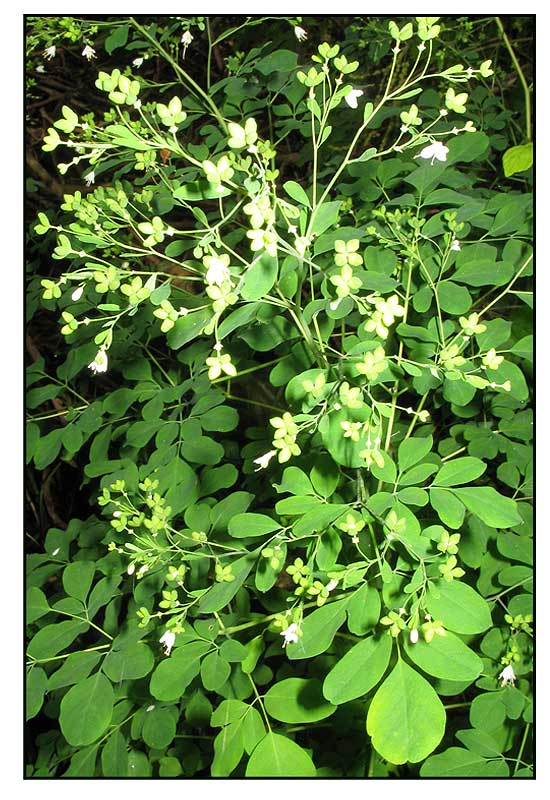
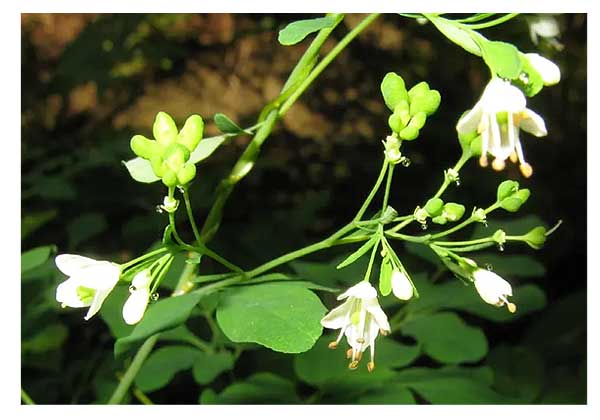
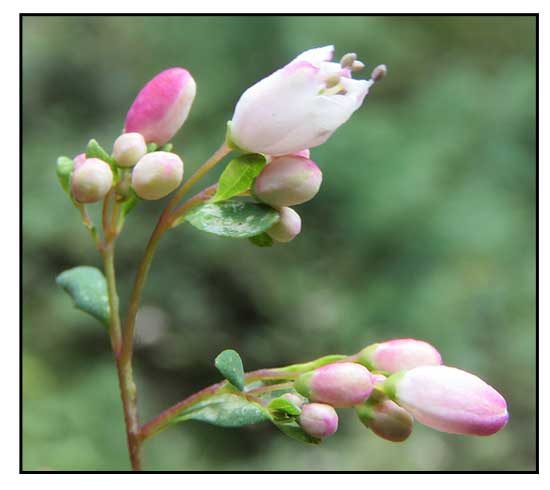
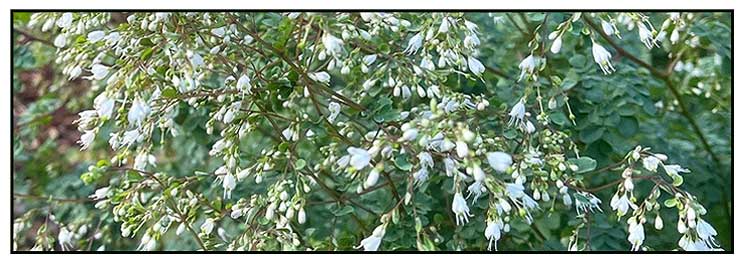
• White Himalayan Rue is a graceful autumn-flowering plant about 2 feet high, with leaves resembling those of the common rue, only more glaucous and finely divided. It is often mistaken for a Thalictrum because of it's sprays of white flowers. I It is a slender, branched, perennial herb, growing to 30-60 cm high, woody at the base. Stems are brownish-red, hairless or sometimes sparsely velvety. Leaves are alternately arranged, multiply divided (3-5-pinnate). Leaflets are 6-18 mm long, 5-12 mm wide, obovate to obcordate, with slender and wiry stalks. The small white flowers are borne profusely in large terminal drooping panicles. Flowers are small, on very slender stalks. Petals are 4-5, about 5 mm long, oblong. Stamens 6-8, filaments slender, unequal, longer than the petals. Capsule 6-8 mm in diameter, membranous, ripe capsule splitting into distinct fruitlets. (Flowers of India)
• Plants to 1.2 m tall. Stems, branches, leaves, and inflorescences glabrous to pubescent. Larger leaves 4-16 cm; leaflet blades elliptic to obovate to broadly obovate to suborbicular, 0.5-2.5 × 0.4-1.5 cm. Inflorescences to 60 cm. Flowers globose to ovoid to ellipsoid to oblong in bud. Sepals 0.5-1.3 mm. Petals elliptic to obovate, or broadly so, 3.5-6 mm, apex acute to broadly rounded. Disk 0.3-0.5 mm. Gynophore in flowers at anthesis 0.3-1.5 mm, in fruit 0.6-5.5 mm. Fruit follicles 2.5-5 mm.
(Flora of China)
Distribution
- Native to the Philippines.
(1) (2)
- In Luzon: Benguet, Mountain Province.
- In mossy forest at higher mountans, 2000-2400 m.
- Also native Assam, China North-Central, China South-Central, China Southeast, East Himalaya, Japan, Jawa, Laos, Lesser Sunda Is., Myanmar, Nepal, Pakistan, Sulawesi, Taiwan, Thailand, Tibet, Vietnam, West Himalaya (1)
 Constituents Constituents
- GC-MS study of acetone extract of leaves revealed 30 compounds including coumarin group, 2-isoprenryl-2,3,-dihydro-furo [3,2-G] chromen-7-one (22.89% w/v) as highest % compound. Other coumarin identified were suberosin and dehydrogeijerin. (see study below) (4)
- Qualitative phytochemical screening of various extracts of aerial parts (C:chloroform, EA: ethyl acetate, M: methanol, A: aqueous)
revealed: alkaloids (C,EA), carbohydrates (all), cardiac glycosdies (all), tannins (all), terpenoids (C, EA), coumarins (all), flavonoids (all), saponins (EA, M, A). (6)
- Essentila oil molecular docking score (kcal/mol) displaced binding affinity of docked ligands with proteins 2ACE: Spathulenol
(-8.1 kcal/mol), E-caryophyllene (-8.1), Germacrene D (-7.7) ß-pinene (-6.l3), Sabinne (-6.2), ß-Ocimene (-5.6), Myrcene (-5.6), physostigmine (-8.1 kcal/mol). (see study below) (7)
- GC-MS analysis evaluated leaves, stems, and flowers for essential oil and yielded a total of 54 compounds, accounting for 97% of total oil. Main compounds were cinnamyl propyl ether 22%, linalool 22%, (E)-cinnamaldehyde 15%, (E)-cinnamyl alcohol 5%.
Monoterpenes and sesquiterpene hydrocarbons were major component while diterpenes were minor components. (10)
- GC-MS analysis of ME of leaves revealed the extract rich in bioactive terpenoids, with
α-pinene (16.56%), (+)-sylvestrene (q16.27%), ß-pinene (14.82%), and carvone (6.51%) as major constituents. (see study below) (13)
- Leaves and roots were analyzed by by GC and GC-MS for essential oil composition. Major constituents of leaf EO were ß-myrcene, (Z)-ß-guaiene, (Z)-ß-ocimene, and ß-caryophyllene, while root EO yielded bicyclogermacrene, α-terpinyl acetate, geijerene, and ß-copaene-4α-ol. (14)
Properties
- Studies have suggested antioxidant, pesticidal, antifeedant, antimicrobial, antimalarial, antidiabetic, hepatoprotective, RXR-agonist, anti-inflammatory, insecticidal properties.
Parts used
Leaves, fruits.
 Uses Uses
Edibility
- No information found on edibility.
Folkloric
- No reported medicinal use in the Philippines.
- Traditionally used as wound remedy, for treatment of bleeding and infection. Leaf squash also used as treatment of skin diseases.
All parts of the species are used to relieve headaches by placing them under a pillow while sleeping. Boiled roots are used for treating malaria. (4)
- Pounded leaves applied to cuts and wounds as styptic
and to promote wound healing. Crushed leaves placed in nostrils for treatment of malaria. Leaves externally applied for treatment of scabies. Leaf juice applied to forehead for relief of headaches. (5)
Others
- Repellent: In Pakistan, crushed leaves. emitting a strong fetid smell, is used as flea powder. (10)
Studies
• Antioxidant / Leaves: Study evaluated the phytoconstituents and antioxidant activity of B. albiflora leaves. Antioxidant activity was measured by DPPH method. GC-MS analysis yielded 30 compounds including coumarin group, 2-Isoprenyl-2,3-dihydro-furo [3,2-G] chromen-7-one (22.89% w/v) as the highest percentage compound. IC50 values of the leaves extract was 194.3 ppm, which was higher than propyl gallate. Results suggest a potential source of anticancer, anti-inflammatory and antioxidant compounds. (see constituents above) (4)
• Pesticidal / Essential Oil Blends: Study evaluated the chemical composition and synergistic interactions of essential oils (EOs) from Boenninghausenia albiflora from 4 locations in Uttarakhand, India, with focus on their pesticidal properties. Major compounds identified were myrcene (23.0% to 39.3%) and ß-pinene (11.3%). The nematicidal and antifeedant activities of the EOs and their combinations (1:1:1:1) synergistically catalyzed the highest egg-hatchng inhibition and juvenile mortality against Meloidogyne incognita. (see constituents above) (7)
• Antibacterial / Aerial Parts: Study evaluated various organic and aqueous extracts of aerial parts of B. albiflora for antimicrobial activity against 8 animal and plant pathogenic bacteria (Bacillus subtilis, Staphylococcus aureus, Erwinia chrysanthemi, Escherichia coli, Proteus vulgaris, Xanthomonas phaseoli, Agrobacterium tumefaciens, and Xanthomas campestris) using disc diffusion method. Out of 32 tests, 27 showed antibacterial activity at 1000 µg/ml concentration, with 15 instances of zone of inhibition ≥ 10 mm at same concentration. Activity was higher than standard antibiotics used i.e. ampicillin (10 mcg) and erythromycin (15 mcg). (8)
• Antimalarial / Aerial Parts: Study evaluated crude ethanolic extracts of aerial parts for in-vitro anti-plasmodial activity against two strains of Plasmodium falciparum: MRC-pf-20 (chloroquine resistant) and MRC-pf-303 (chloroquine sensitive) strain, using pLDH assay. The crude extracts showed good anti-plasmodial activity (IC50 ≤ 50 µg/ml). On fractionation, the dichloromethane fraction showed stronger anti-plasmodial activity than crude ethanolic extracts. The DCM extract showed antiplasmodial activity with IC50 of 12.32 µg/ml on MRC-pf-20 strain and IC50 of 17.41 µg/ml on MRC-pf-303 strain. (9)
• Hepatoprotective / Antidiabetic / Essential Oils: Study evaluated the hepatoprotective potential of EO from different parts in vivo against carbon tetrachloride induced hepatotoxicity in Wistar albino rats. All EOs exhibited hepatoprotective activity in measures of effects on biomarkers. On antidiabetic activity of EOs in alloxan induced diabetic rats, both doses of 50 and 200 µL/kbw showed hypoglycemic effect, with the higher dose exhibiting better control. Results showed potential of EO for liver protection and management of diabetes. (11)
• Novel Retinoid X Receptor Agonist: Retinoid X receptors (RXRs) are nuclear receptors involved in various crucial biological processes, such as gene regulation, metabolism, and cell differentiation. They act as therapeutic targets for different conditions, such as cancer and metabolic disorders. Synthetic RXR agonists, such as bexarotene, used in clinical settings, can cause adverse side effects. Study isolated 14 coumarins including 1 new compound from B. albiflora var. japonica. Daphnoretic methyl ether (14), a known biscoumarin, was found to exhibit subtype-nonspecific RXR agonist activity. (12)
• Pesticidal / Leaves: Insect pests such as Agrotis ipsilon and Plecoptera reflexa can cause severe defoliation and economic losses in forestry plantations. Study evaluated the pesticidal potential of various leaf extracts of B. albiflora against these two major forest insect pests under laboratory conditions. A methanol extract showed highest extraction yield (18.58%) and insecticidal activity, with 60% mortality in P. reflexa and 56.66% mortality in A. ipsilon at 1% concentration at 72 h. The ME at concentrations of 0.25-1% demonstrated a dose-dependent increase in larval mortality. LC50s ranges from 0.81 to 0.89 for P. rreflexa and 0.86 to 0.96% for A. ipsilon. GC-MS analysis of ME showed the extract rich in bioactive terpenoids, known to possess insecticidal, repellent, and neurotoxic effects against insect pests. Results suggest the leaf extract with significant insecticidal activity, with potential as eco-friendly botanical alternative for management of forest insect pests. (see constituents above) (13)
• Toxicological Evaluation of EO: Study evaluated essential oils of seven plants for toxicological effects using Wistar rats. Boenninghausenia albiflora affected many markers including RBC, MCV, triglycerides, HDL, LDL, urea, and sodium. Study suggests all oils except for B. albiflora can be considered safe for internal use. (15)
• Anti-Inflammatory / Coumarin Derivatives: Study isolated 11 previously undescribed coumarin derivatives from B. sessilicarpa: Bonenncarpas A-K (1-11), along with 3 known analogues (12-14). All compounds were evaluated for inhibitory effects on lipopolysaccharide-induced nitric oxide production in RAW 264.7 macrophage cells. At concentration of 10 µM, several of the isolated compounds inhibited LPS-induced NO production. (16)
• Insecticidal Against Spilarctia obliqua / Essential Oil: Study evaluated essential oils of B. albiflora and Teucrium quadrifarium as pesticidal and insect growth regulator against Spilarctia obliqua. B. albiflora revealed presence of 31 compounds. Topical application of the oils on ventral mesothoracic region of 3rd instar larvae caused extended larval and pupal periods, increased larval mortality and adult deformity and decreased larval and pupal weight, adult emergence, fecundity of female and egg fertility, which were significant compared to control. Results suggest EOs possessed potential growth regulatory properties, making them suitable as new natural insecticides of integrated pest management programs for management of S. obliqua. (17)
• Insecticidal Coumarin / Leaves: Study of leaves isolated an insecticidal coumarin identified as murraxocin (7-methoxy-8-[1′-ethoxy-2′-hydroxy-3′-methyl-but-3′enyl]-coumarin) (1). The compound was tested against important forest insect pests viz., Plecoptera reflexa, Clostera cupreata, and Crypsiptya coclesalis at concentrations from 1.0% to 5% w/v. Crude extract showed 70% mortality, while compound 1 showed 80% mortality at 1.0% concentration, with insect mortality increasing in a dose-dependent manner. (18)
Availability
- Wild-crafted.
- Plants in the cybermarket.
- Homeopathic globules.
|


.jpg)