Gen info
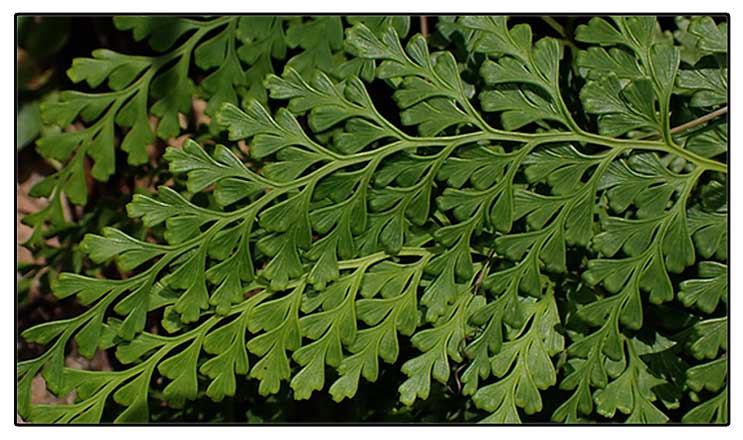
- Odontosoria biflora is a species of fern in the family Lindsaeaceae. As in other species in the family, it has been placed in different genera.
-
Tubho tea is harvested from wild plants in the Batanes Islands, particularly in the southernmost islands of Sabtang.
- The DOST (Department of Science and Technology) in Cagayan has developed a powdered version of the tea, which is available in Sabtang town. It has pledged to commercialize the traditional "tubho tea" industry of the Ivatans.
Botany
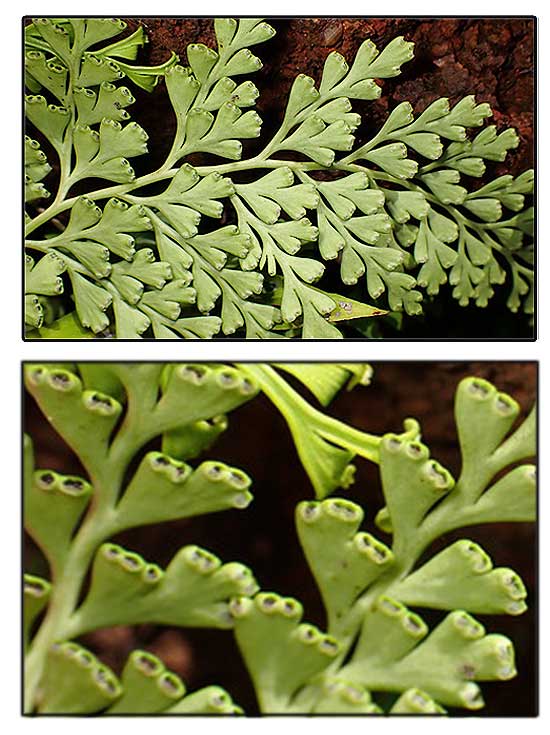
• Rhizomes shortly creeping, densely scaly; scales dark brown, stiff, 2-3 mm, 3-6 cells wide at base, acicular at apex. Stipe stramineous or castaneous, 15-30 cm, abaxially sulcate except toward base; lamina triangular-ovate, 10-20 × 10-15 cm, thickly papery to leathery, 3- or 4-pinnate, base broadly cuneate to rounded, apex acuminate; pinnae 8-10 pairs, alternate, slightly to distinctly ascending, lanceolate or narrowly triangular, 2- or 3-pinnate at base, base broadly cuneate and stalked, apex ± abruptly acuminate, gradually becoming smaller upward; ultimate pinnules or segments cuneate, to 7 mm wide, apex broadly rounded to truncate, its margin entire to irregularly crenulate when fertile, erose when sterile, revolute in thicker segments; veins immersed or slightly raised adaxially, complanate to slightly raised on both surfaces in thinner laminae, concolorous with laminar surface. Sori terminal on 2-4 vein ends; indusia basally and entirely adnate laterally, denticulate to erose, rarely repand, distinctly shorter than or rarely coterminous with adaxial lamina. Spores ellipsoid, monolete. (Flora of China)
Distribution
- Native to the Philippines. (1) (2)
- In Batan, Batanes; In Luzon: Batangas, NCR, Quezon. 0-1300 m.
(2)
- Also native to China Southeast, Japan, Kazan-retto, Korea, Marianas, Nansei-shoto, Ogasawara-shoto, South China Sea, Taiwan. (1)
Constituents
- Study of methanolic extract identified multiple metabolites including including 1,4-dihydroxyanthra- quinone, flavonoid 8-C glycosides, 2-O-rhamnosylvitexin, khellin, isovitexin, apigenin-8-C glucoside, benzoic acid, and pterosin. (see study below) (3)
- Untargeted UPLC-ESI-QTOF-MS analysis of OBE-HEX yielded putative identification of 2-O-rhamnosylvitexin and 7-methoxy-9,10-dihydrophenanthrene-2,5-diol. (see study before) (4)
Properties
- Studies have suggested neuroprotective, antioxidant properties.
 Parts used Parts used
Roots, leaves.
Uses
Edibility
- In the Philippines, traditionally consumed as herbal tea: sun-dried leaves and stems used in making tubho tea.
- Fern is dried and used as substitute for coffee.
- In Sabtang, dried fronds are boiled until the water turns dark brown. (see preparation below)
Folkloric
- In the Philippines, highly valued by Ivatans for promoting health and long life. (3)
Others
- Preparation of Tubho tea: Tea is prepared from mature fronds, wilted and dried while still on the plant; so preferred, being less bitter. Dried fronds are boiled in water until the water turns dark brown. Leaves can be reused as long as it continues to turn the water dark brown on boiling. Tea imparts a slightly bitter and nutty taste. The tea is served hot or iced, with cream, honey, or lemon.
Studies
• Neuroprotective Potential in Parkinson's Disease / Antioxidant / Dried Stems and Leaves: Parkinson's disease is a neurodegenerative disorder characterized by progressive dopaminergic neuronal loss, with oxidative stress and inflammation as key contributors to its pathogenesis. Study evaluated the pharmacological potential of Odontosoria biflora extract (OBE) in Caenorhabditis elegans models of Parkinson's disease (PD). Initial assay determined the effects of four OBEs (hexane, ethyl acetate, methanol, and aqueous) on dopaminergic neuronal loss in transgenic C. elegans. The methanol extract (MOBE) showed most pronounced effect. MOBE significantly reduced dopaminergic neuronal loss, decreased α-synuclein aggregation, extended life span, and improved mechanosensation and locomotion in transgenic C. elegans compared with both negative and positive controls. Antioxidant assays showed strong radical scavenging activity consistent with phenolic content of 22.3 mg GAE/g.G. Study suggests MOBE possesses pharmacological potential in C. elegans PD models and suggests further evaluation in mammalian systems. (see constituents above) (3)
• Effect on Mucin-Degrading Bacterium: Akkermansia muciniphila is a mucin-degrading gut bacterium linked to metabolic health, O. biflora was sequentially extracted and screened for growth-supporting activity toward A. muciniphila. The most active fraction (Hexane: OBE HEX) was assessed in a high-fat/ high-sugar diet plus alloxan-induced diabetic model. Results suggest O. biflora hexane extract exhibits direct growth-supporting activity toward A. municiphila in vitro and is orally tolerable. However, the effects do not translate into sustained in-vivo enrichment under diabetic conditions, underscoring limitations of extrapolating culture-based microbiota screening related to host-associated systems. (4)
Availability
- Wild-crafted.
- Tubho tea leaves in the cybermarket. |