|
 Gen info Gen info
• Rutaceae is a family of flowering plants, using placed in the order Sapindales, commonly known as rue or citrus family. The most economically important genus in the family is Citrus, which includes orange (C. x sinensis), lemon (C. x limon), grapefruit (C. x paradisi) and lime (various). (39)
• Taxonomy: The genus was first described by the French botanist Antoine Laurent de Jussieu in his 1789 book Genera Plantara. (39)
• Lime refers to the fruit of several
species of citrus, most of which are hybrids within the genus Citrus in the family Rutaceae. The term "Lime" is used for a variety of citrus fruits, including Key lime (Citrus x aurantiifolia), Persian lime (Citrus x latifolia)), Kaffir lime (Citrus hystrix), finger lime (Citrus australasica), blood lime (hybrid), and desert lime among others. (40)
• Key lime (Citrus x aurantiifolia) is also known as West Indian lime, Mexican lime, or Egyptian lime. Although treated as a species in botanical classification it orginated as
a natural hybrid between Citrus micrantha (a wild papeda) and Citrus medica (citron). (41)
• Etymology: The Engliish word lime traveled a derivation journey: via Spanish then French, from the Arabic word lima, which derived from the Persian limu. Key derived from Florida Keys, where the fruit was naturalized. (41)
 Botany Botany
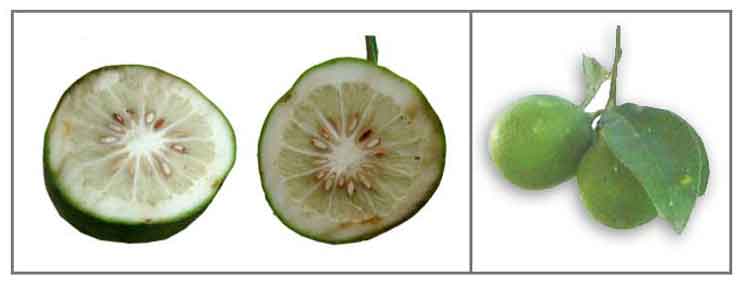
• Dayap is a small tree or shrub,
2 to 4 meters high, smooth throughout, branching with slender, solitary,
sharp spines 1 centimeter or less. Leaves are oblong-ovate to elliptic-ovate,
4 to 6 centimeters long. Petioles are 1 to 1.5 centimeters long, and narrowly winged. Racemes are short and axillary, bearing
few flowers which are white and fragrant. Petals are 4, oblong, 10 to 12 millimeters long.
The fruit is almost spherical, 3 to 5 centimeters in diameter, yellow, thin-skinned,
10-celled or more.
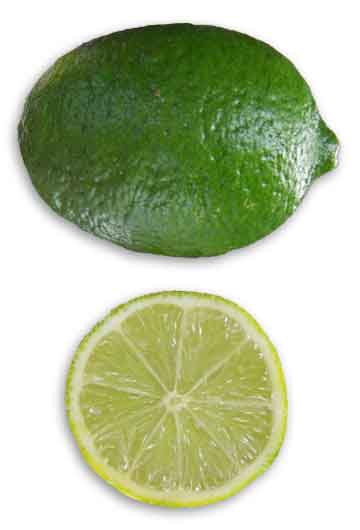
• Citrus aurantiifolia is a shrubby tree, growing to 5 metres (16 feet), with many thorns. Dwarf varieties exist that can be grown indoors during winter months and in colder climates. The trunk, which rarely grows straight, has many branches, and they often originate quite far down on the trunk. Leaves are ovate, 2.5–9 centimetres (1–3+1⁄2 inches) long, resembling orange leaves. Flowers are 2.5 cm (1 in) in diameter, are yellowish white with a light purple tinge on the margins. Termed small-fruited acid lime, as opposed to large-fruited acid lime (Tahitian or Persian lime), it has a spherical fruit, 3-6 cm in diameter, sometimes with apical papillae, greenish-yellow; peel very thin, very densely glandular; segments with yellow-green pulp-vesicles, very acid, juicy and fragrant. Seeds are small, plump, ovoid, pale, smooth with white embryos (polyembryonic). (41)
Distribution
- Widely cultivated as a fruit tree; occasionally naturalized, and undoubtedly of prehistoric introduction.
-
Planted throughout the Philippines in settled areas.
- Native of the Indo-Malayan region.
- The native range of this hybrid is a cultigen from E. Himalaya.(11)
- Now pantropic.
 Constituents Constituents
- Lime juice in the West Indies contains 7.0 to 7.55 citric acid with small amounts of malic acid and tartaric acids, sugar up to 2.5%, pectin, and small amounts of salts.
-
Pulp yields 4.24% sugar;
0.66% ash, and the juice yields citric acid, 7.67%; vitamin C.
- Preliminary screening of methanol extract yielded alkaloids, flavonoids, tannins saponins, steroids, cardiac glycosides, and reducing sugars.
(see study below) (17)
- Essential oil yielded major constituents of limonene (58.4%), beta-pinene (15.4%) gamma-terpinene (8.5%), and citral (4.4%). (see study below)
(19)
- Study on fruit juice concentrates yielded alkaloids +. phenols +. flavonoids +. steroids +. terpenoids +. reducing sugar ++. saponins +. and cardiac glycosides ++. (35)
- Secondary metabolites are alkaloids, carotenoids, coumarins, essential oils, flavonoids, phenolic acids, and triterpenoids. Other important constituents are apigenin, hesperetin, kaempferol, limonoids, quercetin, naringenin,, nobiletin, and rutin. (see study below) (42)
- Study isolated and purified five putative compounds from lime seeds viz., limonin, limonesic acid (LNA), isolimonexic acid (ILNA), ß-sitosterol glucoside (SG), and limonin gucoside (LG). (see study below) (43)
- Nutritional content of raw C. aurantiifolia fruit juice per cup (242g): total calories 60.5 kj, protein and amino acids 1.0 g, total carbohydrate 20g, dietary fiber 1.0 g, sugar 4.1g, total fat 0.2g, vitamin A 121IU, vitamin C 172 mg, vitamin E 0.5 mg, vitamin K 1.5 mg, thiamine 0..1 mg, niacin 0.3 mg, pyridine 0.1 mg, fo9late 24.2 mg, pantothenic acid 0.3 mg, choline 12.3 mg, betaine 0.5 mg, calcium 33.9 mg, iron 0.2 mg, magnesium 19.4 mg, phosphorus 33.9 mg, sodium 4.8 mg, zinc 0.2 mg, copper 0.1 mg, selenium 4.8 mg, and ash 0.8 mg. (47)
- Study of essential oil yielded main volatile components of
α-phellandrene (48.5%) and p-cymene (16.5%). (see study below) (48)
- Chemical profiling of essential o9il from unripe C. aurantiifolia yielded 9 constituent phytochemicals: Germacrene isomers 61.2%, pinene 14%, linalool dimmer 2.9%, bornane 11%, citral 2.9%, anethole 1.5%, safrole 0.3%, and demitool 0.6%. (see study below) (57)
Properties
- Juice is regarded as antiseptic, tonic, antiscorbutic, astringent, diuretic.
- Root bark is febrifuge.
- Generally considered safe. (see toxicity study below: 57)
- Studies have suggest anticancer, antiproliferative, apoptotic, antifungal, antiaflaxotoxigenic,
antimicrobial, antifertility, antinephrolithiatic, antioxidant, cholinesterase inhibitory, spasmolytic, hypolipidemic, antihypertensive, anxiolytic, anti-anxidty, fluoxetine-potentiating, nephoprotective, anthelmintic, abortifacient, insecticidal, shelf-life extending, enterovirus-inhibiting, vasorelaxant properties.
Parts utilized
Fruit, roots, bark, rind.
 Uses Uses
Edibility
- Makes a pleasant ade.
- Used as substitute for true lemon.
- Good source of vitamin C.
- In Malaya, the young dayap is preserved in syrup.
- Malays salt the fruit or preserve it in vinegar for use as pickle.
Folkloric
- In the Cordilleras, used to treat nausea, headache, fainting, malaria, and sore throat.
-
Nausea and fainting: Squeeze
rind near nostril for irritant inhalation.
- Decoction of roots used for dysentery; root-bark as febrifuge.
- Crushed leaves applied to forehead for headaches.
- Leaf decoction for eyewash and to bathe a feverish patient.
- Mouthwash and gargle for sore throat and thrush.
- Decoction of pounded leaves, with leaves of Areca catechu, drunk for stomachache.
- Externally, fresh juice is used to clean wounds; roasted, for chronic
sores.
- Juice used for irritation and swelling of mosquito bites.
- Poultice of leaves applied to ulcer wounds.
- Lime oil extracted by steam distillation of the fruit rinds used
for colds, sore throats, bronchitis, asthma.
- Used for arthritis, obesity,
cellulite and as tonic and astringent.
- Malays sip the fruit juice as a remedy for coughs.
- In Senegal and Sierra Leone, juice, sometimes mitigated by being mixed with oil, used as vermifuge.
- Poultice of leaves for skin diseases or on the abdomen after childbirth.
- In Malaya, root decoction used for dysentery.
- In Yucatan, root decoction used for gonorrhea.
- In southwest Nigeria, roots, bark, stem,
twigs, leaves and fruit used in treatment of malaria.
- In Nigeria, decoction of pounded leaves drunk for stomach ache, used as eyewash, and to bathe the feverish patient. Poultice of leaves applied to ulcer wounds, skin diseases, and applied to the abdomen after childbirth. Crushed leaves applied to the forehead to treat headache; also squeezed near the nostril for irritant inhalation to treat nausea and resuscitate faintness. Infusion of leaves used for treatment of jaundice, sore throat and oral thrush. Flower decoction used to help induce sleep in patients with insomnia. (47)
- In Malayan medicine, juice is considered a tonic for libido and poison antidote. Also used for dysfunctional uterine bleeding, as facial wash to rejuvenate the skin, and to remove stains. (47)
- Bark decoction used for relief of flatulence.
- In Pakistan, Northern Ethiopia, and Nigeria, plant and fruit used in the treatment of hypertension and other cardiac problems. (17)
- In ancient Chinese Medicine, lime peel was used to treat cramps, colic pain, and colds, and as appetite stimulant.
Others
- Fumigant: As fumigant, steaming brew of leaves under the blanket.
- Repellent: Use for repelling mosquitoes, moth from cloth, and cats from gardens.
- Aromatherapy: Essential oil used in aromatherapy.
- Feeds: Pulp of fruit peels used as cereal substitute in ruminant feeds for its high energy content and good digestibility in ruminant species. (47)
Studies
• Essential
oils / Antifungal: Study
on essential oils of three varieties of C. aurantifolia showed the plant
to be very rich in monoterpenes, with limonene its major compound. The
three extracts showed fungicidal inhibiting action to Phaeoramularia
angolensis and presents an alternative to chemical fungicides used for
Citrus fruit crops. (1)
• Antiproliferative / Anti-cancer:
Study of in vitro effects of several concentrations of lime juice
(CLJ) showed significant inhibition of proliferation of human breast
carcinoma cell line and assumes that protein components of the CLJ extract
may have anti-proliferative effects on tumor cell lines. (2)
• Antimicrobial:
Study investigating the
antibacterial effects of two plants extracts showed Citrus aurantifolia
showing promising broad spectrum antibacterial effects on human pathogens. (3)
• Antimicrobial: Antimicrobial study of bitter leaf (V. amygdalina) extract and lime (Citrus aurantifolia) juice against five organisms concluded both are potential antimicrobial agents. (11)
• Antiaflatoxigenic:
The essential oils of we medicinal plants were studied for
its inhibition of the toxigenic fungus Aspergillus parasiticus. Citrus
aurantifolia was found to inhibit both A. parasiticus and aflatoxin
production. The study suggests some medicinal plants may be potential
candidates for protection of food and feeds from toxigenic fungus growth
and subsequent AF contamination. (4)
•
Antiproliferative / Colon Cancer Prevention:
Study of the lime volatile oil of CA yielded 22 compounds,
D-limonene, D-dihydrocarvone among the major compounds. The oil
showed 78% inhibition of human colon cancer cells, DNA fragmentation
and apoptosis induction, results that suggested potential antiproliferative
benefits in colon cancer prevention. (5)
• Anti-Nephrolithiasis: Consumption of Citrus aurantifolia Swingle in idiopathic calcium renal stone with hypocitraturia increased the urine volume, pH level and total citrate value, total potassium and decreased the calcium ration to urine citrate with consequent decrease of renal stone recurrence. (6)
• Fertility Effects: Lime juice causes irregularity of the estrous cycle, partially blocks ovulation, and may possibly compromise fertility. (7)
• Toxicity Studies: Acute and subchronic toxicity studies of water extract from roots of Citrus aurantifolia in rats showed no signs of toxicity and no significant histopathological changes in the internal organs. (8)
• Weight Reduction / Decreased Food Intake / Limonene: Study investigated the effects of lime (Citrus aurantifolia) essential oils in reducing body weight, alone or in combination with ketotifen, an antihistamine drug that causes weight gain. Lime essential oil treatment displayed a reduction of body weight and food consumption in mice. In combination with ketotifen, there was significant suppression of weight gain, as well as decreased body weight. Oil analysis yielded 22 main components, with limonene (28.27%) as the principal one. (10)
• Antioxidant: Study showed both juice and peel demonstrated antioxidant properties. In contrast to lime peel, excessive consumption of lime juice seems not to be beneficial and may be harmful because of an inadvertent U dose response. (12)
• Antimicrobial: Study evaluated the antimicrobial potency of fruit plant (juice of the fruit and burnt rind known as "epa-ijebu") and the oil from steam distillation of the fruit. Study showed the antimicrobial potency of lime fruit is enhanced by the type of solvent used (ex: Schnapps or palm wine), indicating that active ingredients for antimicrobial and antifungal effect are released in conjunction with a particular solvent. (14) In a study of fruit juice concentrates for antimicrobial activity against five bacterial and three fungal strains, MIC and MBC values ranges from 12.5 to 200 µg/mL. Lemon and lime juice concentrates had lower MIC and MBC values with orange and tangerine showing the highest values. (35)
• Antioxidant / Cholinesterase Inhibitory Activity: Study evaluated the antioxidant capacity and acetylcholinesterase (AChE) and butyrylcholinesterase (BChE) inhibitory activity of peel essential oils from three Citrus species. Study yielded essential oils limonene, α-pinene, ß-pinene, y-terpinene, and linalyl acetate. C. aurantifolia oil showed the highest radical scavenging activity on ABTS assay and inhibited AChE more selectively. (15)
• Hypocholesterolemic: Study evaluated the effects of C. aurantifolia peel essential oil on serum cholesterol and triglycerides in Wistar rats. Results showed significant decrease in cholesterol and suggest a potential for cardiovascular risk reduction in humans. (16)
• Cardiovascular Effects / Antihypertensive / Toxicity Testing / Fruits: Study evaluated the cardiovascular and antihypertensive effects of methanol extract of C. aurantiifolia fruit on three experimental hypertensive models in rats. Doses of 0.25, 0.5, and 0.75 g/kg were given orally to normotensive rats. Dose of 0.75mg orally significantly (p<0.01) reduced systolic blood pressure, mean blood pressure, diastolic blood pressure, heart rate and body weight of Sprague Dawley rats in both normotensive and hypertensive experimental models. Acute toxicity testing showed doses of up to 3 g is safe and 3.5 g as toxic dose. (17)
• Spasmolytic Effect / Essential Oil: Study of essential oil of fruits (limes) showed spasmolytic effects on isolated rabbit jejenum, aorta and uterus. Activity was attributed to its major constituents:limonene, beta-pinene, gamma-terpinene, and citral. (see constituents above) (19)
• Antibacterial: In a study of eleven medicinal plants of the Cordillera Region in the Philippines, four plants showed antibacterial activity: A. dammara, E. triplenerve, C. aurantifolia, and T. diversifolia. C. aurantifolia juice was the most effective with inhibition of E. coli, B. subtilis and S. aureus at lower concentration of 62.5µg/ml. (20)
• Antifertility Potential / Partial Blockage of Ovulation / Lime Juice: Study evaluated the effect of lime juice on histomorphological alterations of the ovaries and uterus of cyclic Sprague-Dawley rats. Results showed possible compromise of fertility with reduction of ova shed and irregularity in the histology of the reproductive organs (uterus and ovaries). (21)
• Antihypertensive Effect: Study evaluated the effects of an aqueous extract of CA on arterial blood pressure and on isolated heart and aorta activities. Results showed a dose dependent and significant decrease in rabbit blood pressure and both negative inotropic and chronotropic effects on heart contractile activity in albino Wistar rats. Results suggest antihypertensive activity which could be related to cardiodepression and vasorelaxation, and possible activation of the endothelial NOS by the active principles. (22)
• Arrest and Apoptosis in Human Gastric Cancer AGS Cells / Flavonoids: Study evaluated the anti-cancer effect of flavonoids isolated from C. aurantium in human gastric cancer AGS cells. Results showed an antiproliferation effect on AGS cells through both G2/M arrest via modulation of cell-cycle-related proteins, cyclin B1, cdc 2, and cdc 25c and triggering apoptosis via upregulation of caspase-3 activity and cleavage of PARP. (23)
• Male Antifertility Effect: Study evaluated the effect of various dosages of CA treatment on fertility promoters and indices in male albino wistar rats. Results showed antifertility potential with significant lowering effects on LH, significant increase in testosterone, significant decrease in motility and sperm morphology. (24)
• Anxiolytic Effect on Preoperative Anxiety / Blossoms: A randomized double-blind study of 30 patients evaluated the anxiolytic effect of C. aurantium blossom on preoperative anxiety. Results showed CA blossom may be effective in reducing preoperative anxiety before minor surgery. (25)
• Anti-Anxiety Effect / Fluoxetine Potentiation: Study investigated the effect of C. aurantium essential oil on anxiety using anxiety using elevated plus maze test. and its interference with the serotonergic pathway. Results showed CA essential oil can reduce anxiety in male mice, and as evidenced by fluoxetine potentiation the herb may express its effect, in part, via the serotonergic system. (26)
• Acute and Subchronic Toxicity Studies / Roots: Study of water extract from the roots of C. aurantifolia in both male and female rats showed no acute or subchronic toxicities. A dose of 1,200 mg/k/d caused a significant increase in liver enzymes within normal range, but no significant histopathological change in internal organs. (27)
• Comparative Antioxidant Activity / Ripe and Unripe Fruits: Study evaluated the in-vitro antioxidant activities of both unripen and ripen C. aurantifolia fruits by DPPH and TAC assay. Results showed unripe juices showed more antioxidant activity compared to ripen juices. The lower antioxidant activity of ripe fruits may be due to possible reduction in ascorbic acid and total phenolic content during ripening. (28)
• Aromatherapy / Blossom Oil During First Stage of Labor: Study evaluated the efficacy of aromatherapy with Citrus aurantium oil in reducing anxiety during first stage of labor. There significant lowering in levels of anxiety at dilation of 3-4 and 6-8 cms with aromatherapy. Results suggest a simple, inexpensive, noninvasive and effective intervention for reducing anxiety during labor. (29)
• Additive Antihyperglycemic Effect in Garlic and Lime Combination: Study in STZ-induced diabetic rats showed significant and dose-dependent decrease in plasma glucose levels. (30)
• Effect in Paroxetine Induced Hyponatremia: Study evaluated the effect of CA juice in paroxetine induced hyponatremia in albino mice. Results showed hypernatremic effects and reversal of alterations in serum proteins, cholesterol, triglycerides, sodium, potassium and calcium back to normal on treatment with CA juice. (31)
• Anthelmintic Against Heligmosomoides Bakeri / Fruit Peels: Study evaluated the in vitro ovicidal and larvicidal properties of extracts of C. aurantifolia fruit on eggs and first stage larvae of Heligmosomoides bakeri. All extracts showed significant anthelmintic effect. (32)
• Nephroprotective: Study evaluated the protective role of C. aurantium against gentamicin induced renal damage. Results showed nephroprotective activity attributed to its known flavonoid contents and antioxidant properties. (33)
• Prevention of Ketotifen-Induced Weight Gain / Lime Essential Oils: Study evaluated the effects of lime essential oils in reducing body weight, alone or in co-administration with ketotifen, an antihistaminic drug that causes weight gain using a mice model. Results showed lime essential oil plays an important role in weight loss and has the potential in the treatment of drug-induced obesity and related diseases. (34)
• Antioxidant Activity: In a study of fruit juice concentrates for radical scavenging activity, lime juice concentrate showed (% inhibition: mg/mL) of 2.85 ± 0.20 (0.5) and 6.25 ± 0.06 (1.0). Ferric-reducing antioxidant potential (FRAP) value showed 173.25 ± 0.25 µmol.L Fe(II)/g of extract. Ascorbic acid showed 312.88 ± 5.61. (35)
• Antibacterial Synergism with
Honey: Study evaluated the synergistic antibacterial potentials of Citrus aurantifolia and honey against bacterial isolated from sputum. Morphological exam showed the bacterial isolates to belong to genera S. aureus, Streptococcus spp, P. aeruginosa, K. pneumonia, and E. coli. Results suggest lime and honey showed more activity than when used singly. (36)
• Abortifacient with No Teratogenic Effect: Study evaluated the effect of lime juice on the fetal parameters of Sprague-Dawley rats. Results showed aqueous lime juice had a abortifacient effect as evidenced by significant reduction of fetuses of treated rats, but no obvious teratogenic effect. Authors recommend that lime juice should not be consumed during pregnancy. (37)
• Anticancer / Review: The pharmacological activities and anticancer property was studied for its effect against carcinogenesis by mechanisms such as stopping cancer cell mobility in circulatory system: inhibiting metastasis, blocking angiogenesis, and inducing tumor suppressor gene and apoptosis. Study by Bae et al., Li et al reported the relationship between citrus consumption and reduction of cancer incidence among 42,470 Japanese adults, aged 40-79. Wang et al reviewed the protective effects of polymethoxyflavones from citrus and proposed it inhibits carcinogenesis by several pathways in metastasis, cell mobility, proapoptosis, and angiogenesis. (42)
• Inhibition of Human Pancreatic Cancer Cells via Apoptosis: Study isolated and purified five putative compounds from lime seeds viz., limonin, limonexic acid (LNA), isolimonexic acid (ILNA), ß-sitosterol glucoside (SG), and limonin gucoside (LG). The compounds exhibited significant inhibition of Panc-28 cells with IC50s in range of 18-42 µM in MTT assay. Expression of apoptosis related protein showed apoptosis via induction of p53 by p21 dependent manner and cytochrome-c mediated caspases driven intrinsic pathway. The order of induction of apoptosis was ILNA > LNA > SG > limonin > LG. This was the first report on isolation and identification of LNA, SG, and LG from lime and their mechanism on inhibition of human pancreatic cancer cells. (43)
• Breast Cancer / Combination of Lime Peels with Doxorubicin / Increase Apoptosis on MCF-7 Cells: Previous study showed C. aurantiifolia lime peels ethanolic extract (CPE) increased sensitivity of MCF-7 cells against doxorubicin. Study evaluated the mechanism of combination of CPE and doxorubicin in cell cycle modulation and apoptosis of MCF-7 cells. Results showed CPE 6 µg/mL induced apoptosis and cell accumulation at G1 phase, while CPE 15 µg/mL induced apoptosis and cell accumulation at Ge/M phase. Evidence of apoptosis and protein expression of p53 and Bcl-2 indicated both single applications and combinations of CPE and doxorubicin increase apoptotic bodies of MCF-7 cells by increasing protein expression. Results suggest potential for CPE as co-chemotherapeutic agent with doxorubicin on breast cancer cells. (44)
• Antibacterial / Peel / Review: Review highlighted the lime peel as an antibacterial agent. Strong antibacterial activity is exhibited by lime peel essential oils, extracts, and fractions. One component that contributes to its antibacterial property is limonene. Infections including cariogenic bacteria and acne bacteria can be treated using lime peel. (46)
• Essential Oil / Decay Control / Preservation of Agri Products / Insecticidal: Study evaluated the biological activity of C. aurantiifolia essential oil (CAEO) for antioxidant, insecticidal activity, and antimicrobial effect of its vapor phase in situ on various food models. Antimicrobial activity was pronounced against Gram(-) bacteria with inhibition zones of 12.66-15.33 mm and MIC of 2.36-8.26 µL/mL. Antimicrobial activity of CAEO vapor phase was high at highest concentration tested (500 µL/mL), with inhibitory effect seen at all concentrations tested. Effect was observed on all types of micro-organisms and all types of model foods. Results suggest CAEO has potential for use in storing and extending shelf-life of agricultural products. Insecticidal activity was concentration dependent at 10-90%. The significant insecticidal effect suggests potential of CAEO as natural insecticidal, larvicidal, or repellent preparation. (48)
• Effect Against S. aureus / Leaves Oil: Study evaluated effect of fresh parts of lime leaves against a strain of Staphylococcus aureus, using concentrations of 10, 50 and 90%. The 90% concentration of lime leaf extract showed highest antibacterial effect. (50)
• Beta citronellol / Effect Against S. aureus / Leaves Oil: Human Enterovirus is an RNA virus affecting millions globally, particularly children, causing a range of symptoms from mild to severe, including meningitis and AFP. Study evaluated the potential of beta citronellol compound from Citrus aurantifolia as inhibitor of entero-virus activity in in-silico study. Results showed good antiviral activity against enteroviruses evidenced by toxicity prediction and molecular docking analysis on beta citronellol against the 3j3z protein indicating the compound has high and specific potential as a receptor candidate for the enterovirus target. (51)
• Antihypertensive / Vasorelaxant / Fruit: Study evaluated an aqueous methanol extract of plant fruit for its hypotensive/antihypertensive, vasorelaxation, and safety profiles. In hypotensive studies, fruit extract exhibited a concentration--dependent reduction of SBP, DBP, and MAP, and heart rate. In coronary arteries,the extract potentiated relaxations induced by cGMP- and cAMP-dependent relaxing agonists. Exposed to PDEs, the extract dose-dependently subdued cGMP-hydrolyzing activity of different PDEs with IC50s of 40-130 µg/mL. The extract elicited endothelium-independent vaso-relaxation, possibly via direct action on smooth muscles of the coronary artery and by increasing cGMP and cAMP via nonselective inhibition of vascular PDEs. (53)
• Effect of Mixture of Lime Juice and Ogogoro (Local Gin) on Ascariasis and on Hepato-Renal Inflammatory Biomarkers: Study evaluated the medicinal effects of mixture of Citrus aurantiifolia lime juice and Ogogoro (local Nigerian gin) on ascariasis. in primary school children. Mixture was taken twice daily for five days. Results showed significant in infection with ova of Ascaris lumbricoides from 2+ to nil in 70% of school children. No statistically significant effects (p>0.05) were observed on hepatorenal and inflammatory biomarkers. Results suggest medical potency of the mixture for treatment of ascariasis. (54)
• Attenuation of Nephrotoxicity Induced by Doxorubicin / Peel: Doxorubicin (DOX) is an anthra-cycline antibiotic primarily used in treatment of various solid tumors. However, nephrotoxicity related to its use restricts its clinical use. Study evaluated the potential protective effect of Citrus aurantifolia peel extract (CAPE) in alleviating the nephrotoxicity caused by doxorubicin (DOX) injection in Wistar albino rats. The DOX caused kidney injury after a single i9ntraperitoneal injection, evidenced by changes in kidney biomarkers, histological irregularities, and reduction of antioxidant defense mechanisms (reduced glutathione, SOD, and catalase). CAPE treatment resulted in significant improvements in the renal biomarkers (urea, creatinine, albumin, and uric acid), hematological parameters, antioxidative markers, and malondialdehyde. Results showed CAPE could reduce lipid peroxidation (LPO) and reactive oxygen species production. CAPE is a potential alternative for prevention of DOX-related nephrotoxicity. (55)
• Antioxidant / Hypolipidemic / Essential Oils / Lime Peels: Study evaluated essential oil from lime peels for antioxidant and hypolipidemic effects. GC/MS analysis identified 60 volatile compounds, with predominant constituents of limonene, γ-terpinene, and ß-pinene. Antioxidant activity on DPPH and ABTS assays showed IC50s of 2.36 and 0.26 mg/mL, respectively. Protective effects of EO against lipid-induced hyperlipidemia showed improved serum TC. triglyceride, LDL, ALT, and AST levels. (56)
• In vivo Toxicity of Unripe C. aurantiifolia Essential Oil: Study reports on the chemical composition and in vivo oral toxicity of unripe C. aurantiifolia essential oil found in Ghana. Toxicity was evaluated by two methods: acute toxicity single dose study (SDS) and repeated dose method. The EO showed no acute toxicity. However, in sub-chronic studies, effects were dose- and time-depedent. Histopathological studies revealed necrosis, edema, inflammatory reaction in the liver, spleen, and kidneys. Marginal upsurge of biochemical parameters above normal and elevated levels of lymphocytes demonstrated mild toxicity at 100 and 500 mg/kg dose groups at subchronic stage. Low levels of hemoglobin along with high levels of liver enzymes confirmed mild toxicity at sub-chronic stage. Although the EO is generally considered non-toxic to vital organs and cells overall, results demonstrate, it can have mild hepatotoxic, nephrotoxic, and hepatotoxic effects. (see constituents above) (57)
• Anti-Cholinesterase / Antioxidant / Peel and Leaves: Study evaluated various extracts of C. aurantiifolia peel and leaves for antioxidant property using DPPH, ferric reducing ability and ß-carotene bleaching test and anticholinesterase activity. Methanol extracts showed strongest radical scavenging activity. Most abundant flavonoids in the extracts were apigenin, rutin, quercetin, kaempferol, and nobiletin. The n-hexane fractions of both peel and leaves exhibited good acetylcholinesterase inhibitory activity with IC50s in the range of 91.4 to 107.4 µg/mL. GS/MS analysis revealed monoterpenes and sesquiterpenes as most common components. Results suggest potential use of peel and leaves as supplements for human health. (58)
Availability
Commercial cultivation.
Extracts, essential oils and supplements in the cybermarket. |