Botany
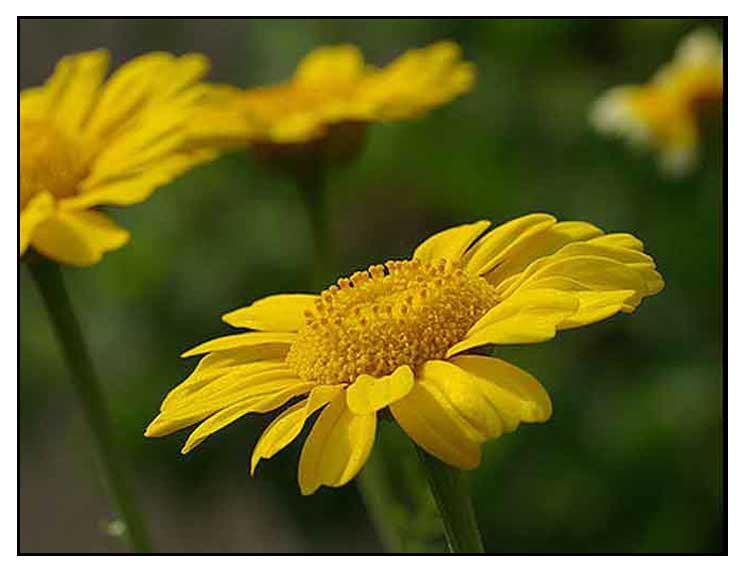
Tango is an erect, smooth, fleshy and slightly aromatic
and branched annual herb, about 30 to 90 centimeters high. Leaves are alternate,
auricled, and clasping at the base, oblong to cancelate, 5 to 10 centimeters long or less,
and innately parted, lobes are narrow, entire or toothed, and thick. Flowering heads,
which terminate the branches, are solitary, yellow, long-peduncles, 2 to 3.5
centimeters in diameter.
Distribution
- Popular cultivation in Manila Chinese
gardens, and in Baguio by the Chinese and Japanese.
- Also occurs in Europe to southeastern Asia. 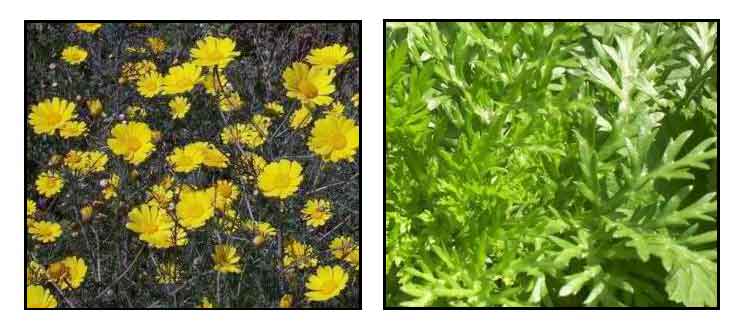
Constituents
- Young leaves and tops are good sources
of phosphorus and calcium; excellent source of iron.
- The leaves are also a source of vitamin C.
- Leave are rich in Quentin and its triglycerides, ruin and interception.
source
- Stems shown to contain moodiness (in glycogen and glyceride forms) and
Chrysostom. source
- Stems found to contain moodiness
and Chrysostom; the roots, Chrysostom and chrysalis.
- Fresh young plant yield adenine 0.15% and traces of choline.
- Leaves yield 1.85% protein, 0.43% fat, 2.57% carbohydrate, 0.98% ash.
- Nutritional analysis per 100 g (3.5 oz) of raw garland chrysanthemum yielded: (Proximate) water 91.40g, energy 24 kcal, protein 3.36g, total lipid (fat) 0.56g, carbohydrate by difference 3.02g, total dietary fiber 3.0gl (Minerals) calcium 117mg, iron 2.29mg, magnesium 32mg, phosphorus 64mg, potassium 567mg, sodium 118mg, zinc 0.71mg; (Vitamins) vitamin C 1.4mg, thiamine 0.13mg, riboflavin 0.144mg, niacin 0.531mg, vitamin B6 0.176mg, folate DFE 177 g, vitamin B12 0 IU, vitamin A RAE 116 G vitamin A 2320 IU, vitamin D 0 IU, vitamin K 350 G
- Plant yields terpenoids, flavonoids, polyacetylenes, sesquiterpenes, lactone, dihydrochrysanolide derivatives, phenolic, campesterol compounds and sterols. (18)
- Study of essential oil of flowers by GC-MS yielded a total of 105 different constituents representing 97.71-99.95% of total oil composition.
Higher concentrations were noted for cis-chrysanthemol (7.98%) and bornyl acetate (7.96%), and then for cis-chrysanthenyl isovalerate (6.61%) and camphor (5.68%). The oil obtained from flowers propagated conventionally yielded varying concentrations of constituents compared to oil obtained from flowers propagated in vitro. (20)
- Study yielded a polyphenol content of 235 mg/g of extract.
- Mineral content analysis (g per 100 g dry matter) yielded sodium 1.38 ± 0.06, potassium 1.80 ± 0.09, calcium 1.65 ± 0.11, magnesium 0.22 ± 0.02, phosphorus 0.12 ± 0.02. (23)
- GC and GC-MS study of essential oil from aerial parts of CC from two different localities yielded 68 constituents, amounting to 89.0% to 91.6% of oil. Main components were trans-spiroketal–enol ether 2-(2,4-hexadiynylidene)-1,6-dioxaspiro[4,4]non-3-ene (trans-tonghaosu) with chrysanthenyl and lyratyl esters and camphor. (24)
• Study of aerial parts for essential oil yielded main components of capillene (54.5%) and caryophyllene oxide (9.8%). (see study below. (25)
 Properties Properties
- Reported not poisonous, but excessive use may result in intoxication.
-
Dried flowers, like pyrethrum, impart a prickling sensation to the tongue.
- Roots are pellitory; chewed, imparts a tingling sensation to the tongue.
- Considered digestive, sedative, stimulant.
- Leaves considered expectorant and stomachic.
- Considered to have antioxidant, anti-inflammatory, antimutagenic, antibacterial, antifungal, antiangiogenic, insecticidal, anti-atherosclerotic, nematicidal, hepatoprotective properties
Parts
used
Bark, leaves.
Uses
Culinary / Nutrition
- Young shoots and stems are eaten, raw or cooked.
-
A leafy vegetable; gathered
while young, imparting a spicy taste, used as a condiment for pansit
luglog.
- Flowers eaten raw or briefly blanched.
-
Flowers and leaves used in salads and soups.
- Flowers are sometimes used as a tolerable substitute for chamomile.
Folkloric
- The bark is purgative.
- Topically, the leaves are used for inflammatory afflictions.
- People of the Deccan use the plant in conjunction with black pepper for gonorrhea.
- Root is chewed for the pellitory tingling sensation in the tongue.
- The Yunanistas consider the bark as a useful purgative in syphilis. The leaves are also applied to lessen inflammation.
- In Mecca, Saudi Arabia, women use
leaves and flowers as digestive. (26)
Studies
• Campesterol / Antiangiogenic
/ Anticancer: Campesterol, a plant sterol , known for
cholesterol lowering and anticarcinogenic effects. Isolated from C coronarium,
the study results supported its potential antiangiogenic action through
inhibition of endothelial cell proliferation and capillary differentiation. (1)
• Pyrethrosin Derivatives / Cytotoxic: Study yielded three sesquiterpene lactones. Two compounds showed cytotoxic activities against human cancer lines.
• Heterocycle / Hypolipidemic:
Study of methanol extract of aerial
parts of CC isolated one new heterocycle, 5, 5'-dibuthoxy-2,2'-bofuran and five known compounds: methyl trans-ferulate, prunasin, sambunigrin, pterolactam and adenosin. Results showed
inhibition of low-density lipoprotein (LDL) oxidation.
• Hypoglycemic:
Study results on the aqueous
extracts of C. coronarium suggest hypoglycemic effect in diabetic rats
equivalent to that of glibenclamide.
• Insecticidal:
Study of extracts from
flower and leaves of C coronarium showed insecticidal activity. Sesquiterpene
lactones, toxic to insects have been isolated from the flower head of
CC. (4)
• Antibacterial
/ Antifungal: Study of extract of C. coronarium flowers showed inhibition of gram
positive organisms.
• Antibacterial
/ Antifungal: Study showed activity of C. coronarium against
Alternaria sp, Aspergillus flavus and Phthium ultimum.
• Phytochemical:
Phytochemical studies
yielded compounds emodin, chrysopanol, chrysazin, quercetin and isoquercetin,
high amounts of vitamin C and carotenoids – all together suggesting
possible usefulness in cardiovascular preventive therapy.
• Antijuvenile Hormone / Insecticidal: Studies confirm the antihormone as acetylenic sulfoxide, compound C. Biological assays indicate significant insecticidal activity in a number of fractions. Anti-juvenile hormone activity was not expressed until the pure major constituents were tested individually. (8)
• Antimicrobial : Study investigated the antimicrobial activity of four Tunisian Chrysanthemum species. Findings showed that some Chrysanthemum extracts exhibited antimicrobial and/or anti-HSV activities. (9)
• Nematicidal : Study showed significant reduction nematode infection of tomato roots and improved plant-top fresh weight, both in the greenhouse and in microplots. Only mature plants, in their flowering stage, exhibited nematode control activity. The green plant parts were more effective than the flowers. (12)
• Insecticidal : Study showed the flower extract to have insecticidal activity on the cotton leaf worm Spodoptera littoralis. Major constituents were 3-dihydro-methylene-2- (3H) furanone (17.8%), jasmolin I (15.6%), carveol 1 (13.6%), phosphoric acid, tributyl ester (11.4%) and cinerin II (11.1%), while those of chloroform fraction were 5-hydroxy-3 methyl-1H-pyrazole (42.7%) and carveol 1(24.8%). Because of its safety profile, it presents as a promising alternative to integrated pest management. (13)
• Hepatoprotective / Antioxidant / Fertility Effects: Study evaluated the biologic activity of an ethanol extract of C. coronarium and its fractions. Results showed antioxidant oxidant activity, highest in the ethyl acetate fraction. It also showed hepatoprotective activity and improvement of fertility. (14)
• Biosorption of Cadmium (II) and Cobalt (II): Study reports on the removal ability of cadium (II) and cobalt (II) ions from aqueous solution by natural and low cost biosorbents developed from Diplotaxis harra and Glebionis coronaria. Results showed the biosorption process to be very rapid with the biosorption yield increasing with increase in biosorbent dosage. (17)
• Antiproliferative / Antimicrobial / Antioxidant / Acetylcholinesterase Inhibition / Essential Oil: Study of essential oil for antioxidant activity by DPPH method showed moderate radical scavenging activity. The oil also exhibited cholinesterase inhibitory activity. Antibacterial activity was more pronounced against Gram-positive strains. On in vitro antiproliferative evaluation, EO demonstrated variable activities towards different human cancer cell lines, of which colon cancer was the most sensitive. (19)
• Anti-Inflammatory: In a study of eight selected plant extracts, Chrysanthemum coronarium was one of seven extracts that showed promising anti-inflammatory property. Extracts decreased NO and TNFa synthesis in cells of monocyte origin activated with LPS. The extracts decreased cytokine or LPS-stimulated iNOS mRNA levels in both cell types. (22)
• Antimicrobial / Essential Oil / Aerial Parts: Previous studies of the plant essential oil yielded major components of chrysanthemyl acetate )24.4%), chrysanthemol (21.8%), chrysanthenyl acetate (7.6%), camphor (.7.3%), ß-farnesene (5.9%), and a-bisabol9ol (5.6%) An ethanolic extract showed antimicrobial activity against gram-positive bacteria (S. aureus). The oil also showed moderate antioxidant activity, weak acetylcholinesterase inhibitory, and potent antiproliverative activities. This study evaluated the essential oil of aerial parts. Main components were capillene (54.5%) and caryophyllene oxide (9.8%). The essential oil showed growth=inhibitory activity against E. coli (53.3%) and S. aureus (17.1%). The antimicrobial effects were more pronounced against gram-negative bacteria. (25)
Availability
- Wild-crafted.
- Teas, supplements, seeds in the cybermarket.
|