|  General
info General
info
First called "Estragon"
derived from the Arabic word "tharkhoum'" and the Latin word
"dracunculus" meaning "little dragon" probably from
the way the roots curls up like a dragon. The French refer to
it as the "King of Herbs," flavoring many of its classic cuisine.
 Botany Botany
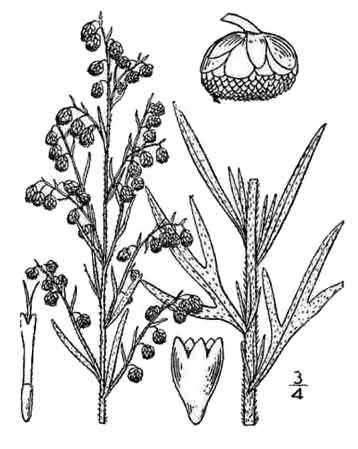
Tarragon is an aromatic perennial
small shrub with slim woody branching stems growing to a height of 2 to 3 feet. Leaves are linear or lanceolate , 1 to
4 inches long, with small globe-shaped yellow or greenish-white flowers
in terminal panicles.
Distribution
Cultivated.
Constituents
- Estragole is the main constituent of tarragon essential oil.
- Active secondary metabolites are essential oil (0.15%-3.1%), coumarins (>1%), flavonoids, and phenolcarbonic acids.
- Analysis of essential oil yielded main components of 3,7-dimethyl-1,3,7-octatriene (38.43%), 1S-alpha-pinene (36.96%), 1-methoxy-4-(2-Propenyl)-benzene (8.57%), limonene (6.33%), 1R-alpha-pinene (3.40%), etc. (17)
- Study of essential oil extracted from air-dried shoots yielded
34 compounds. Major constituents were trans-Anethole (28.06%), Z-β-ocimene (15.79%), α- Terpenolene (10.12%), Elemecin (10.08%), 1, 8 cineole (7.71%) and α- copaene (2.78%), etc. (18)
- Nutrient analysis of herb per 100 g of herb yielded (Principles) energy 295 Kcal, carbohydrates 50.22 g, protein 22.77 g, total fat 7.24 g, cholesterol 0 mg, dietary fiber 7.4 g, (Vitamins) folates 274 µg, niacin 8.950 mg, pyridoxine 2.410 mg, riboflavin 1.339 mg, thiamin 0.251 mg, vitamin A 4200 IU, vitamin C 50.0 mg, (Electrolytes) sodium 62 mg, potassium 3020 mg / 64% RDA, (Minerals) calcium 1139 mg, copper 0.677 mg, iron 32.30 mg / 403% RDA, magnesium 347 mg, manganese 7.967 mg / 346% RDA. zinc 3.90 mg. (19)
- Study of essential oil yielded 19 compounds with main compounds of methyl chavicol (84.83%), trans-ocimene (3.86%), z-β-ocimene (3.42%), limonene (1.79%) and α-pinene (0.57%). Total phenols were 10.16 ± 0.08 mg/g gallic acid equivalent. (see study below) (23)
- GC-MS analysis of essential oil from leaves and stems yielded
10 major peaks. The first was alpha pinene(17%) followed by eucalyptol (15.46). The EO of leaves and stems revealed the presence of alkenes, aliphatic fluoro compounds, alcohols, ethers, carboxylic acid, esters, nitro compounds, alkanes, aldehydes, and ketone compounds. (41)
- Study of a dichlormethane extract isolated five metabolites viz., anethole (1), β-stigmasterol (2), herniarin (3), (2E,4E)-N-isobutylundeca-2,4-dien-8,10-diynamide (4) and (2E,4E)-1- (piperidin-1-yl)undeca-2,4-diene-8,10-diyn-1-one (5). (see study below) (43)
Properties
- The French variety has
the aromatic oils lacking in Russian tarragon.
- The undiluted oil may be irritating to the skin.
- A rich plant source of potassium.
- Considered antiscorbutic, diuretic, emmenagogue, febrifuge, hypnotic,
stomachic and vermifuge.
- Studies have suggested antibacterial, anti-inflammatory, hepatoprotective, and antihyperglycemic properties.
Caution
- Shares a common name with
Artemisia vulgaris.
- Cross-allergenicity in those sensitive to plants in the Asteraceae/Compositae
family; i.e., ragweed, chrysanthemums, marigolds and daisies.
Parts utilized
Above ground parts.
Uses
Culinary
- A culinary herb with distinctly
flavored leaves that enhances the flavors of food (fish, poultry, pork,
lamb, etc.). Used fresh in salads and as garnishes. Use in small amounts.
Bitter when overcooked.
- Leaves used in the making of tarragon vinegar.
Folkloric
- Used for digestive disorders,
toothache.
- To promote menstruation.
- Used as a diuretic and to enhance the appetite.
- In Iranian folk medicine, used for its
anticoagulant activity; also as antiepileptic.
Others
- Tarragon oil is extracted
from the leaves and flowering tops. Used as a fragrance in soaps and
cosmetics.
- Essential oil used in aromatherapy for digestive and menstrual problems.
Studies
• Anti-Diabetic:
Polyphenolic compounds were isolated from A dracunculus which inhibited
PEPCK gene expression and gluconeogenesis in a hepatoma cell line. Results
suggest the isolated compounds maybe responsible for its glucose-lowering
activity. (1) Study evaluated the antidiabetic effect of Artemisia dracunculus against alloxan induced diabetes in Wistar rats. Results showed significant anti-diabetic activity. Glibenclamide was used as standard. (29)
• Anti-Platelet Adhesion and Aggregation:
Study of extracts of Artemisia dracunculus showed inhibition of
platelet adhesion, aggregation and secretion and supports its traditional
use as an anticoagulant. (3)
• Benzodiazepines: Study showed binding activity in the extracts of Artemisia dracunculus
showed a binding affinity to the central human benzodiazepine receptor. (4)
• Antifungal:
Study isolated antifungal constituents, 5-phenyl-1,3-pentadiyne
and capillarinin - from the essential oil fraction of AD. It also isolated
methyleugenol, another antifungal constituent of the oil. (5)
• Toxicological Evaluation / Tarralin: Tarralin is an ethanolic extract of A dracunculus (Russian tarragon). No signs of toxicity were noted in an acute limit test in rats and in an oral subchronic 90-day toxicity study. Results suggest tarralin is safe and non-toxic with no observed adverse effects in rats up to 1000 mg/kg/day. (6)
• Comparative Study / Inhibition of Blood Platelet Adhesion, Aggregation and Secretion: Study compared the inhibitory effects of methanol extracts of three herbs viz., Artemisia dracunculus (tarragon), Satureja hortensis (summer savory) and Origanum marjoram (marjoram) on adhesion of activated platelet to laminin-coated platelets, aggregation, and protein secretion. At concentration of 200 µg/ml, the herbs showed platelet inhibition by 51%, 48%, and 40%, respectively. In addition to alteration of cell adhesive properties, self aggregation and protein secretion of treated platelets were also affected by treatment with methanol extracts. Results provide basis for traditional use of the herbs in treatment of cardiovascular diseases and thrombosis. (7)
• Antimicrobial: Study showed the methanol extract of A dracunculus is more effective against tested organisms than chloroform or acetone extracts. There was inhibition of P aeruginosa, E coli, Shigella, L monocytogenes. (8)
• Anticonvulsant / Sedative: Study of the essential oil revealed the presence of trans-anethole, limonene, a-pinene, allo-ocimene, methyl eugenol, ß-pinene, a-terpinolene, bornyl acetate and bicylogermacrene. Results showed anticonvulsant and sedative effects probably related to the presence of monoterpenoids in the essential oil. (9)
• Anti-Platelet Adhesion / Cardiovascular Thrombosis: Platelet hyperactivity, resulting in platelet adhesion to the vessel wall, is one of the most important factors in thrombosis and incidence of cardiovascular diseases. Study of the methanol extracts of three herb spices, including Artemisia dracunculus, showed inhibition of platelet adhesion. In addition to alteration of cell adhesive properties, cell aggregation and protein secretion were also affected in the treated platelets. Results provide a basis for the use of the herbs in the treatment of cardiovascular disease and thrombosis. (11)
• Tarralin / Safety Studies: Tarralin, an ethanolic extract of Artemisia dracunculus, a common medicinal and culinary herb, was shown to be safe and non-toxic in studies, with no-adverse effects in rat study at 1000 mg/kg/day.
• Hypoglycemic Effects / Screening / Tarragon on Insulin Action in Humans: Results are awaited on study of PMI-5011, investigated on its effects on improving carbohydrate metabolism by enhancement of molecular events of insulin action in skeletal muscle. (13)
• Antinociceptive / Anti-Inflammatory / Leaves: Study evaluated the nociceptive and anti-inflammatory effects of leaf aqueous extract on fructose drinking water (FDW) in male rats. Results showed FDW causes pain response score to increase and cause proinflammatory cytokines in a rat model. The AD leaf aqueous extracts showed anti-inflammatory and analgesic effects. (20)
• No Significant DPPIV Inhibition: Study evaluated if extracts of A. dracunculus can act as a dipeptidyl peptidase-4 (DPPIV) inhibitor for the control of type 2 diabetes. Results sowed the extract could not significantly control DPPIV activity. (21)
• Antinociceptive / Essential Oil: Study evaluated the antinociceptive effect of essential oil of A. dracunculus in various experimental models. Results showed peripheral and central nociceptive activity (formalin and hot-plate test. (22)
• Antibacterial / Antioxidant / Natural Preservatives / Essential Oil: The essential oil showed antioxidant and antibacterial activities. The major aromatic compound was The compounds may have potential in the prevention of cancer and atherosclerosis, through the inhibition of lipid oxidation. Results suggest potential for use as natural preservative in food models to replace synthetic preservatives in foods. (see constituents above) (23)
• Anticoagulant / Leaves: Study evaluated the presence of coumarins in tarragon leaves and the extract with major amount of coumarin derivatives. Purified extracts and fractions from plant residue after essential oil distillation showed the best anticoagulant activity. The methanol extract at concentration of 5% showed best anticoagulant activity. (24)
• Antidiarrheal / Essential Oil: Study evaluated the effects of essential oil of A. dracunculus on rat alimentary tract. Results showed inhibition of castor oil-induced diarrhea at 75 and 100 mg/kg dose. The EOAD delayed the onset of diarrhea. (25)
• Hemolytic Effect: Study evaluated the effect of three extracts (A. dracunculus, Cuminum cyminum, and Heracleum persicum) on biological membrane. A. dracunculus showed the highest hemolytic effect. (26)
• Increased Glucose Uptake in Human Skeletal Muscle Culture: Animal pilot studies have shown an effect to improve glucose levels. Study evaluated an alcoholic extract of AD to promote glucose disposal in a major insulin sensitive tissue, i.e., skeletal tissue. Results showed AD has potential to improve glucose disposal in insulin sensitive tissues and may selectively increase IRS-2 abundance. (27)
• Inhibition of PEPCK Gene Expression and Gluconeogenesis in Hepatoma Cell Line: Study evaluated an ethyl acetate extract of AD and its fractions for inhibitory activity of Dex-cAMP-induced PEPCK gene expression in an H4IIE rat hepatoma cell line. Study isolated two polyphenolic compounds that inhibited PEPCK mRNA levels were isolated and identified as 6-demethoxycapillarisin and 2',4'-dihydroxy-4- methoxydihydrochalcone with IC50 values of 43 and 61 µM, respectively. Results suggests the extract and compounds have a potential for use in the prevention and treatment of diabetes and related disorders. (28)
• Stimulation of Insulin Secretion: Study evaluated the effect of Artemisia dracunculus extract (PMI-5011) on ß-cell function and number of ß-cells in pancreatic islets. Results showed enhancement of insulin release from primary ß-cell, isolated mouse and human islets, and maintained ß-cell number. The PMI-5011 suppressed LPS/INFy-induced inflammation and inflammatyory mediator/s in macrophages. PMI-5011 also inhibited nitric oxide (NO) production and expression of iNOS and attenuated pro-inflammatory cytokine (IL-6) production in macrophages. Results suggest a potential for diabetes treatment via increasing insulin release from ß-cells and decrease capacity of macrophages to combat inflammation. (30)
• Mitigation of Role of Ceramides in Attenuating Insulin Signaling in Rat Skeletal Muscles: The botanical extract of A. dracunculus (PMI5011) has been shown to improve insulin action. Study evaluated the mechanism by which PMI5011 improves insulin signaling. The effect of PMI5011 on ceramide accumulation and ceramide-induced inhibition of insulin signaling was evaluated PMI5011 had no effect on ceramide formation or accumulation but increased insulin sensitivity via restoration of Akt phosphorylation and attenuated FFA induced upregulation of a negative inhibitor of insulin signaling. (31)
• Nano-Encapsulated Tarragon / Sustained Release Nano-Larvicide: Study evaluated tarragon essential oil (TEO) encapsulated in chitosan nanoparticles using ion gelation technique. Results suggest the easy, fast, and green method for prepared nanoformulation could be introduced as an alternative to synthetic larvicides. (32)
• Effect on Cellular Insulin Signaling in Primary Human Skeletal Muscle Culture: Study evaluated the effect of an active fraction on insulin signaling in human skeletal muscle (HSKM) culture. Results showed AS160 levels were higher in lean individuals, but does not appeared altered in the presence of F7. The active fraction, F7, may have the ability to increase insulin stimulated Akt phosphorylation in human primary cell culture. (33)
• Antioxidant / Hepatoprotective / CCl4-Induced Hepatotoxicity / Acute Toxicity Study / -Aerial Parts: Study evaluated the antioxidant and hepatoprotective activity of hydroalcoholic extract of aerial parts of A. dracunculus against CCl4-induced hepatotoxicity in rats. Total phenolic content was 197.22 ± 3.73 mg gallic acid E/g dry weight. The extract exhibited powerful activity in FRAP. DPPH. and ABTS tests. Acute toxicity study showed an LD50 of >5000 mg/kg. Results showed hepatoprotective effect as evidenced by significant decrease in altered biochemical markers along with histopathological studies. (34)
• Antibacterial / Essential Oil: Study evaluated the antibacterial activity of A. dracunculus essential oil on burn isolates of Acinetobacter baumannii. Results showed potential use of the essential oil for control of multi-drug resistant Acinetobacter baumannii infections. 14.5% of the isolates were sensitive to all tested concentrations of A. dracunculus essential oil. (35)
• Larvicidal Against Anopheles stephensi / Anti-Malarial / Essential Oil: Study evaluated the larvicidal activity of three medicinal plants essential oils viz., Artemisia dracunculus (branches and leaves), Carum carvi (seeds), and Rosmarinus officinalis (branches and leaves) against larvae of Anopheles stephensi. Results showed high larvicidal potential for essential oils of A. dracunculus and C. carvi. (36)
• Wound Healing / Combination with Chitosan: Study evaluated the effect of Artemisia dracunculus in combination with chitosan nanoparticle biofilm on MRSA infected excisional wounds in a rat model. Animals with infected wounds treated topically with A. dracunculus and dressed with chitosan nanoparticle biofilm showed significant difference (p<0.05) in measures of microbiology, reduction in wound area and hydroxyproline contents. Results showed reproducible wound healing potential. (37)
• Essential Oil as Meat Preservative: Study evaluated the antioxidant and antibacterial effects of Tarragon essential oil on beef burger products. Tarragon EO 9.25% at storage temperature of 4° ±1°C decreased growth rate of S. aureus in beef burger (p<0.05). Results suggest the EO can be used as an anti-bacterial and flavor enhancer in meat products such as beef burger. (38)
• Effect of Drying Methods on Leaves Color: Study showed the greatest effect in color change occurred in removing 1-10% moisture. Color changing of tarragon leaves is a function of time and temperature of drying. Faster drying in relation to applied temperature resulted in less color changes, seemingly observed in shadow method and industrial oven drying at both 70°C and 100°C. (39)
• Promotion of Psychological Resilience / Mouse Model of Depression: Study demonstrated that oral administration of botanical extract PMI 5011 promoted resilience to repeated social defeat stress (RSDS)-mediated depression-like phenotypes. Behavioral improvements were also associated with attenuation of stress-mediated induction of inflammatory cytokines in the periphery and alteration of synaptic plasticity in the nucleus accumbens (NAc). Results suggest potential for development of PMI 5011 as novel therapeutic for treatment of stress disorders and anxiety in humans. (40)
• Mutagenicity and Liver Toxicity Assessment: Study evaluated the mutagenicity and liver toxicity of the herb tarragon using single cell gel (comet) electrophoresis. The study demonstrated a direct correlation between tarragon extract dosage and three major outcome variables: MI, serum liver enzyme activity, and liver histopathology. Outcomes were probably due to the presence in tarragon of methylchavicol and other genotoxic compounds. Findings provide a guide for risk assessment of tarragon use in diet and in other possible therapeutic applications. (42)
• Inhibitory Effect Against Carbonic Anhydrase I and II Isoenzymes: Study of a dichlormethane extract isolated five metabolites viz., anethole (1), β-stigmasterol (2), herniarin (3), (2E,4E)-N-isobutylundeca-2,4-dien-8,10-diynamide (4) and (2E,4E)-1- (piperidin-1-yl)undeca-2,4-diene-8,10-diyn-1-one (5). A. dracunculus and the pure metabolites were investigated against human carbonic anhydrase I and II isoenzymes. Results showed strong inhibitory effects in the range of 8.65-486.2 µM of IC50 values for carbonic anhydrase I and II. (see constituents above) (43)
• Immunomodulatory / Estragole from Essential Oil: Study evaluated the immunomodulatory and anti-inflammatory potentials of estragole and methy-eugenol free extract of tarragon. Results showed aqueous extract of tarragon can inhibit pro-inflammatory cytokines and induce anti-inflammatory macropages and has as potential as natural immunomodulatory. (44)
Availability
- Cultivated.
- Essential oil in the cybermarket. |