 Gen info Gen info
- Croton is an extensive plant genus in the spurge family Euphorbiaceae. The plants of the genus were described and introduced to Europeans by Georg Eberhard Rumphius. (39)
- Croton tiglium is a well-known member of the gen us, a shrub native to Southeast Asia, first mentioned in European literature by Cristobal Acosta in 1578 as "lignum pavanae".
- The seed oil is a violent purgative. It is currently considered unsafe and no longer listed in the pharmacopeia of many countries. (39)
- Etymology: The genus name Croton derives from the Greek wore krotos, meaning "tick", referring to the shape of the seeds of some species. (39) The specific epithet tiglium is of obscure origin, It may be derived from the Greek tiglos, meaning "diarrhea", possibly referring to its purgative property. Alternatively, it may refer to one of the Maluku islands in Indonesia, ostensibly the home habitat of the species. (40)
- Croton tiglium is one of the 50 fundamental herbs used in traditional Chinese medicine.
Botany
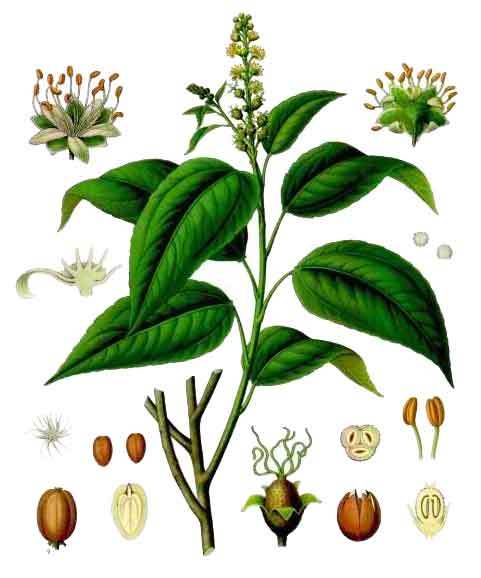
• Tuba is an erect
or more or less spreading shrub or very small tree. Leaves are alternate, ovate 7 to 12 centimeters in length, usually somewhat
rounded at the base, pointed at the tip and toothed at the margins. Flowers are very small, borne on terminal inflorescences, with
the female flowers situated toward the base of each inflorescence. Fruits is a capsule, ellipsoid or obscurely 3-angled, 1.5 to
2 centimeters long and contains a single seed. Seeds are ovoid or oblong, 12 to 15
millimeters in length and 3-angled, the testa dark-brown or blackish, thin and
brittle and of faint odor; the albumen and the embryo are yellowish.
Seeds are at first mild in taste and subsequent acrid and pungent.
 Distribution Distribution
- Native to the Philippines.
-
Usually planted, in and
about towns, throughout the Philippines
- Of prehistoric introduction from Malaya.
- Also native to Assam, Bangladesh, Borneo, Cambodia, China South-Central, China Southeast, East Himalaya, Hainan, India, Jawa, Lesser Sunda Is., Malaya, Maldives, Maluku, Myanmar, Nepal, Sri Lanka, Sulawesi, Sumatera, Taiwan, Thailand, Vietnam. (14)
Constituents
- Roots contain tannin, 65%.
- Seeds have a fixed oil (croton oil), 30-56%, containing croton globulin and croton albumin, arginine, and lysine; alkaloid ricinine (toxic); lipase; invertase, amylase, raffinase; proteolytic enzyme, crotone resin, tiglic acid, croton oleic acid, stearic, palmitic, myristic, lauric, oenanthrallic, capronic valerianic, butyric, isobutyric, acetic and formic acids; tannin, 65%.
- Chemical analysis of seeds yielded eight new phorbol esters (three phorbol diesters, 1-3, and five 4-deoxy-4α-phorbol diesters, 4–8), together with 11 known phorbol diesters (nine phorbol diesters, 9–17, and two 4-deoxy-4α-phorbol diesters, 18 and 19). (see study below) (16)
- Leaves yielded two new compounds, badounoids A and B, together with 13 known norsesquiterpenes.
(19)
 - GC-MS study of ethanolic extract of leaves yielded 41 compounds, with major compounds of glycoside, phenolic, palmitic acid, terpene alcohol, polyenoic fatty acid, phytol ester and phytoesterol.
(32) - GC-MS study of ethanolic extract of leaves yielded 41 compounds, with major compounds of glycoside, phenolic, palmitic acid, terpene alcohol, polyenoic fatty acid, phytol ester and phytoesterol.
(32)
- Study of seeds isolated seven compounds
elucidated as bis(2,3-dihydroxypropyl) nonanedioate (1), 12-O-(α-methyl)butyrylphorbol-13-decanoate (2), 12-O-tiglylphorbol-13-decanoate (3), (9S,10R,11E,13R)-9,10,13-trihydroxyoctadec-11-enoic acid (4), methyl (9S,10R,11E,13R)-9,10,13-trihydroxyoctadec-11-enoate (5), 4(1H)-quinolinone (6), and 5-hydroxy-2-pyridinemethanol (7). (see study below) (36)
- Study of stems isolated an undescribed tigliane diterpenoid, 13-acetyl-12,17-di-O-tiglylphorbol (1), along with thirty-three known components. (see study below) (43)
- Study of seeds showed a fixed oil (croton oil 30-45%) as major constituent, along with protein (approx. 20%). The oil consists of fatty acids - myristic acid, oleic acid, linoleic acid, arachidic acid, palmitic acid, formic acid, stearic acid, acetic acid, and smaller amounts of tiglic acid, butyric acid, lauric acid, and valeric acid.
- Study of leaves isolated three new sesquiterpenes, crotiglinins A, B, and C (1-3). (see study below)
(51)
- Study of leaves isolated one new tigliane-type diterpene, 20-acetyl-13-O-(2-metyl)butyryl-phorbol (1), and nine known (2–10) analogues. (see study below) (56)
- Study of leaves isolated 15 compounds, including five new phorbol esters (1-5) and 10 known metabolites.
Structure of the isolates were identified as (2′S)12-O-2-(methyl)butyryl-phorbol-13-(4Z,7Z)-decanoate (1), (2′S)12-O-2-(methyl)butyryl-phorbol-13-(4Z,7Z)-decanoate (2), 12-O-tigloyl- phorbol-13-(4Z)-decanoate (3), 12-O-tigloyl-phorbol-13-(4Z, 7Z)-decanoate (4), 13-O-isobutyryl-7-oxo-6,7-dihydrophorbol-5-ene (5), phorbol-12-(2-methyl)butyrate (6), 12-O-tiglylphorbol-13-acetate (7), 12-O-tiglylphorbol-13-decanoate (8), (-)-alloaromadendrane-3β,9β-diol (9), 4β,10β-aromadendranediol (10), guaianediol (11), ent-4(15)-eudesmene-1α,6β-diol (12), 1β,11-dihydroxy-5-eudesmene (13), cyperusol C (14), and caryolane-1β,9β-diol (15).
(see study below) (60)
 Properties Properties
- Oil is yellow, orange, or brown, according to age.
-
Pungent and burning taste, warming, antipyretic.
- Nauseating odor.
- Toxic in excessive internal use.
- Roots, bark, leaves, and seeds possess drastic purgative properties.
- Croton oil is considered rubefacient and counterirritant.
- Croton oil's property as external vesicant and internal purgative is attributed to the presence of croton oleic acid.
- Poison / Toxicity: All parts of the plant are poisonous. Seeds are very poisonous, used as fish poison and for criminal activities. Four seeds can be a lethal dose for a human adult. Symptoms of croton oil poisoning manifests as pain that starts at the back of the throat and then in the anal canal. A dose of bismuth is the immediate antidote.
-
Differentiation between croton poisoning from ptomaine poisoning: In croton poisoning, pain is felt at the back of the throat, sometime after the poison has been swallowed. Pain is also felt at the anus. Also, croton poisoning is immediately relieved by doses of bismuth, not so with ptomaine poisoning.
- Studies have suggested purgative, laxative, anticancer, antibacterial, antifungal, insecticidal, antidermatophytic, antinociceptive, smooth muscle relaxant, anti-termite, antioxidant, anticonvulsant, antifertility, mollusicidal, anti-alopecia, antiobesity, anthelmintic, anti-inflammatory, neuroprotective , acaricidal, anti-liver fibrosis, hair-growth, alpha-amylase inhibitory, antidiabetic, antitubercular properties.
Parts
utilized
Roots, seeds, fresh leaves.
Uses
Folkloric
· For rheumatic
pains of the legs and waist: use 3 to 6 gms of dried material in the
form of decoction.
· Pounded fresh leaves may be applied as poultice for snakebites
or may be used as insecticide.
· Poultice of leaves applied or rubbed on area of snake and insect bites.
· For sprains and bone pains: Oiled leaves or bark material are
heated and applied to painful areas.
· Croton seed oil has been used as purgative.
· Seed oil used for treatment of schistosomiasis and other intestinal parasites.
 · Roots, bark, seeds, and leaves considered a drastic purgative. · Roots, bark, seeds, and leaves considered a drastic purgative.
· Bruised root applied to carbuncles and cancerous sores.
·Testa used for fluxes.
· In Annam, bark used as a tonic.
· In Java and Kelantan, roots are finely shredded, mixed with water, and drunk by women as abortifacient.
· Diluted tincture of croton seeds used as a stimulant and applied in certain cutaneous affections, like eczema, ichthyosis and erythema.
· Seeds, while half-roasting over a lamp or candle flame, is inhaled through the nostril to relieve asthma.
· Croton oil is rubbed on the skin as rubefacient and counterirritant.
· Internally, croton oil us used as a powerful hydragogue, cathartic, and purgative. In excessive doses, it can cause severe purging, collapse and death.
· Liniment used as stimulant and applied to chronic rheumatism, neuralgia, glandular and other indolent swellings, chronic bronchitis and other pulmonary affections.
· Croton oil is used in dropsy, obstinate constipation, intestinal obstructions, and lead poisoning; as a preliminary laxative in leprosy; and as a revulsive in apoplexy. A few drops at the base of the tongue produces catharsis.
· As a blister, applied to the scalp in acute cerebral diseases, to the cord in spinal meningitis, to the chest in chronic bronchitis, and to the throat in laryngitis. Used in lock-jaw and mania.
· In Ayurveda, considered purgative; known as Kumbhini, used in the treatment of constipation after Sodhana (the traditional Ayurvedic detoxification process) of seeds with Godugdha (cow's milk). (15)
- In Unani medicine, Croton tiglium seeds and Zingiber officinalis rhizome extract has been used in equal ratio as a paste formulation for the treatment of Safa (alopecia areata). (17)
Others
· Fish and Arrow Poison: Plant is universally used as fish poison. Pounded ripe fruit is used in Java and by the Dayaks of Borneo to poison fish. In the Philippines, fruit or crushed leaves are similarly used. The leaves are one of the constituents of the Batak arrow poison. The Arbor arrow poison of the northeast frontier Assam is a paste believed to be made from pounding soft plant parts. When seeds are used, they are pulverized, put in sacks, and placed in ponds or rivers.(•) C. tiglium is widely used in fish poisoning by the tribal people of Arunachal Pradesh, India. (32)
Croton-Phenol Peel
· Minute quantities of croton oil with phenol as solvent, diluted in water and saponified has been used as a peeling agent. The mechanism of interaction between oil and skin continues is yet to be fully explained. (8) (related study below: 54)
Studies
• Purgative / Laxative:
A study of the ethanol extracts of three
Chinese medicinal plants —Croton tiglium (Badou), Rheum palmatum
(Dahuang) and Cannabis sativa (Huomaren)— known for their laxative
properties, showed an effect on the rat intestinal epithelial cells
providing evidence for the pharmacologic mechanism on the intestinal
tract. (1)
• Laxative: An Indonesian study on an ethanol extract of seed showed laxative properties.
• Purgative / Laxative: Study of a 50% EtOH extract of dried nuts showed a dose-dependent cathartic effect in albino rats. Results suggest a purgative effect probably through a increase in gut motility via muscarinic receptor activation.
• Tumor-Enhancing / Seeds:
A 1965 study isolated 2 active co-carcinogenic agents from
the seed of CT. Both were potent cocarcinogens at very low dosage. Phorbol
myristate acetate, a semisynthetic compound from the croton resin, showed
promoting activity. (2)
• Tumor-Enhancing Principles:Study of active fractions of croton resin showed a high incidence of malignancy and low incidence of tumor regression. Alone, croton resin gives rise to a very few tumors; croton oil elicits low incidence of malignancy. In contrast, croton oil elicits a low incidence of malignancy, a markedly higher incidence of tumor regressions, and applied alone is notably tumorigenic. (3)
• Gastrointestinal
Motility Modulation / Oil: Study showed Croton tiglium oil
might modulate gastrointestinal motility and induce intestinal inflammation related to immunological milieu and motor activity. Results highlight its folkloric
use in gastrointestinal disorders. (4)
• Anti-HIV Phorbol Ester / Seeds: A methanol extract of seeds of Croton tiglium yielded five phorbol diesters, together with three known ones. Study evaluated the compounds ability to inhibit an HIV-induced cytopathic effect (CPE) on MT-4 cells and to activate protein kinase C (PKC) associated with tumor-promoting action. 12-O-Tetradecanoylphorbol-13-acetate (TPA) was found to be not only the most potent inhibitor of HIV-1-induced CPE (IC100 value of 0.48 ng/ml), but also the most potent activator of PKC (100% activation at 10 ng/ml). (5)
• EBV-Inducing:
TPA, a tumor-promoting agent, 12-0-tetradecanoyl-phorbol-13-acetate,
was isolated from the seeds and stalk of Croton tiglium. Study has shown
it to be a potent EBV-inducer in vitro while also decreasing EBV-specific
cellular immunity and enhancing EBV-induced transformation.
• EBV-Inducing / Combined Extracts:Combined usage of oily extracts from C tiglium, E lathyris and E tirucalli exerted a marked induction of EBVirus-associated early (EA) and viral capsid (VCA) antigens in genome-carrying human lymphoblastoid cell lines with implications in EBV-associated diseases. (7)
• Antifungal / Antibacterial: Study isolated a novel antimicrobial protein from the seed of Croton tiglium. The protein was found to possess a strong and broad spectrum antimicrobial activity. (9)
• Insecticidal / Anti-Termite / Croton Oil: A home study of Croton oil from leaves mixed with ethyl alcohol showed anti-termite effects and suggests a non-toxic environment-friendly alternative to termite control. (11)
• Antinociceptive / Smooth Muscle Relaxant: Study in mice evaluated the seed of C. tiglium (SCT) for antinociceptive activity with a dose-dependent effect in a writhing test, although weak when compared to aspirin. Study on spontaneous smooth muscle contractions of isolated rabbit jejunum showed the C. tiglium possessed spasmogenic and spasmolytic properties. (13)
• Toxicity and Detoxification of Seeds / Sodhana: Toxicity of C. tiglium seeds may be due to the presence of phorbol esters and crotonic acid along with other constituents. The toxic components may be removed by cow milk during process of Sodhaba, a purification process that decreases the toxicity of C. tiglium seeds. (15)
• Cytotoxic Phorbol Esters / Hepatic Tumor Cell Line: Chemical analysis of seeds yielded eight new phorbol esters, together with 11 known phorbol diesters. Cytotoxicity was evaluated against the SNU387 hepatic tumor cell line, and compound 3 showed the most potent activity. (16)
• Combined Paste Formulation of C. tiglium and Z. officinalis for Alopecia Areata: - In Unani medicine, Croton tiglium seeds and Zingiber officinalis rhizome extract has been used in equal ratio as a paste formulation for the treatment of Safa (alopecia areata). This case study reports on a patient with Safa treated with the Unani herbal drug formulation and significant regrowth of hair was noted. (see folkloric use section above) (17)
• Insecticide: Out of ten plants screened for efficacy as eco-friendly insecticide, Leea sambucina and Croton tiglium were the most effective. (20)
• Anti-Dermatophytic / Stems and Seeds: Dermatophytosis is caused mainly by genera of Trichophyton, Epidermophyton, and Microsporum. Study evaluated the antidermatophytic activity of stems, leaves, and seeds of Croton tiglium against Trichophyton mentagrophytes, T. rubrum, and Epidermophyton floccosum. Oleic acid and hexadecanoic acid were the major components of the stem extract that demonstrated strong anti-dermatophytic activities. The ethanolic extract of stem or seed exhibited strong antidermatophytic activities and can be considered for antifungal application after appropriate processing. (21)
• Apoptosis
in Human Lung Cancer A549 Cells Via Bax/Bcl-2 Pathways: Study investigated the effect of Croton tiglium extract on cellular proliferation and apoptosis in non-small cell lung cancer cell line (A549) in vitro. Results showed inhibition of A549 cell proliferation in a dose- and time-dependent manner and promotion of apoptosis through Bac/Bcl-2 pathways. (22)
• Toxic Proteins / Pro-Inflammatory Effect: Study determined the toxic targets of proteins from C. tiglium and investigated the potential mechanism of their toxicity. Oral medication of croton proteins caused significant gastrointestinal damage with edema and diarrhea. Toxic reactions of the crude protein were associated with inflammation. In vivo, the crude protein caused release of inflammatory mediator PGE2 in mice by intraperitoneal injection. In vitro, pro-inflammatory cytokines, including TNF-α and IL-1ß were produced in macrophages in a dose- and time-dependent manner. In clinical applications, effective components of C. tiglium frequently coexist with toxic ingredients, including croton oil and protein, that may cause gastrointestinal toxicity, which may have a synergistic effect. (23)
• Antioxidant Efficiency of Seeds Incorporated with Ag Nanoparticles / Increased Cytotoxicity Against Colon Cancer Cells: Study aimed to enhance the efficiency of C. tiglium seed extracts by incorporation with silver nanoparticles through raised cytotoxicity against growth of human colon cancer cells. Seed contained phytoconstituents i.e., carbohydrates (glycosides), flavonoids, sterols (triterpenes), alkaloids, and proteins. Incorporation of AgNPs into the extract caused no toxicity on test animals. Median lethal doses (LD50) of ethanolic, PE, and aqueous seed extracts Ag nanocomposites were 7.95, 5.2, and 65 ml/kg, respectively. Incorporation of AgNPs into different extracts enhanced the antioxidant properties through increasing of total antioxidant capacity, total reducing power, and free radical scavenging activity. Nanoparticulated extracts exhibited elevated cytotoxicity against growth of human colon cancer cells. (24)
• Alternative
Biodiesel Source / Extraction and Esterification / Seeds: An alternative for fuel reserve is the use of biodiesel from C. tiglium oil seed feedstock. Study determined the optimum process conditions for producing the highest extract yield and quality biodiesel from seeds. Study reports on maceration time, material/solvent ratio, and extract yield. The oil quality of C. tiglium seed is good for biodiesel material based on value of density, kinematic viscosity, total glycerin, iodine, and saponification. (25)
• Anticonvulsant / Seeds: Study evaluated the anticonvulsant effect of hydroalcoholic seed extract of Croton tiglium in rats and mice in seizures induced by ECM and pentylenetetrazole. Sodium valproate was used as standard. Results showed dose dependent anticonvulsant effect in electrically induced seizures, with only minimal protective effect in PTZ-induced seizures. (26)
• Toxic Effects of Crotocaudin / Molluscicidal / Stem Bark: Crotocaudin extracted from C. tiglium was evaluated for toxicity to freshwater vector snail Lymnaea acuminata and Fasciola gigantica which cause immense harm to man and his domestic animals. Study suggest that the extracted compound crotocaudin may be used as a potent source of molluscicides. Plant products are less expensive, easily available, easily soluble in water, and safer for non-target animals than synthetic molluscicides. (27)
• Acute and Subchronic Toxicity Studies / Seeds: Study evaluated the acute and subchronic toxicity of Tiglium seed extract in rats after oral administration using OECD guidelines. Single oral dose up to 2000 mg/kg of seed extract resulted in no mortality of abnormal clinical signs. In 13-week toxicity study, the extract exhibited no dose-related changes (mortality, body weight, hematology and clinical biomarkers, and histopathology) at dos3 of up to 500 mg/kg. Results suggest the seed extract appears to be safe for human consumption. (28)
• Biochemical and Hematological Effects of Mixing Seeds with Animal Diet: Study evaluated the toxic effects of C. tiglium seeds mixed with animal diet on plasma and blood parameters in male albino rats. Results showed croton seeds administration at doses of 10% and 20% have little effect on some hematological indices, especially those relating to RBCs and WBCs. (29)
• Antitermitic / Seeds: Study evaluated the antitermitic potential of seed extracts of Withania somnifera (Indian ginseng), Croton tiglium (jamalgoota) and Hygrophila auriculata (talimkhana). The seed extracts caused changes in tunneling behavior, number of bacterial colonies in hindgut and activities in midgut of Odontotermes obesus. C. tiglium showed the lowest LT50 (12.85 and 2.65 h) among the three seed extracts at 50% concentration, and 100%, respectively. (30)
• Phorbol Ester-Type Diterpenoids / Weak Cytotoxicity Against Cancer Cell Lines: Study of ethanol extract of twigs and leaves isolated two new phobol esters (1 and 3) and seven known ones (3-9). The compounds were evaluated for cytotoxic activities on human cancer cell line A549. Compounds 3 and 7 showed weak activities. (31)
• Induction of Apoptosis in Human Lung Cancer A549 Cells: Study demonstrated that Croton tiglium extract could inhibit the proliferation of A549 cells by regulating apoptosis in vivo. It has potential to provide biologically active compounds for treating NSCLC and deserves consideration as new plant-derived anticancer agent. (33)
• Treatment of Alopecia Areata /
Herbal Preparation of Croton tiglium and Zingiber officinalis: An herbal preparation for local application was prepared as a paste in 1:1 ratio of powdered Jamal gotta (Tiglium tiglium) and Adrak (Zingiber officinalis). The paste was applied on area of alopecia areata, once daily before going to bed, for one month. Regrowth of white hairs was marked on the 10th day of treatment. White hairs gradually turned almost completely black after 45 days. (34)
• Anti-Fertility
/ Seeds: Study investigated the anti-fertility and anti-implantation properties of C. tigilum seeds on female albino rats. At 200 mg/kbw daily for a week, ethanol extract of Croton seeds was 100% effective in preventing implantation sites in uterine horn of female animals. The endometrium may be histopathologically affected to decrease contact and adhesion between blastocytes and uterine epithelium. (35)
•
Cytotoxicity Against Human Lung Cancer Cell Line / Seed: Study of seeds isolated seven compounds. Compounds 2 and 3 showed cytotoxicity against human lung cancer cell line A5449 with IC50s of 47.8 and 7.0 µmol/L, respectively. (see constituents above) (36)
• Anti-Obesity Effects of Gambi-Hwan: Gambi-hwan in a mixture of herbal drugs: bitjis martensi kirsch (Chinese scorpion) and Croton tiglium (Badou). Study evaluated the anti-obesity effects of Gambi-hwan extract on obese rats induced by high-fat diet through expression of UCP-1 and PPAR-delta. Results indicated Gambi-hwan extract upregulated the expression of UCP-1 and PPAR-d in adipose tissue, which may contribute to reducing the weight of adipose tissue. (37)
• Brine Shrimp Toxicity Study: Study evaluated 23 Bangladesh medicinal plants used in traditional medicine for brine shrimp lethality toxicity. Of the 23 plants, 80% were toxic to brine shrimp (LC50 < 30 g/ml). Among all extracts, the methanolic extract of Croton tiglium exhibited highest toxicity to brine shrimp (LC50=0.0924 g/ml). Vincristine sulfate was used as reference standard. (38)
• Neuroprotective / Anti-Inflammatory: Activated microglia secrete many pro-inflammatory factors and induce neuronal cell death. Study evaluated the effect of Croton tiglium extract (CTE) on the production of pro- and anti-inflammatory mediators in microglia and astrocytes via RT-PCR, Wester blot, and nitric oxide assay. CTE significantly inhibited the production of neurotoxic inflammatory factors, including NO and TNF-α, and increased the production of neurotrophic factor, brain-derived neurotrophic factor, and the M2 phenotype of microglia. Increased survival of neurons indicated the neuroprotective effect of CTE. Results suggest CTE inhibited pro-inflammatory response and increased the neuroprotective ability of microglia. Study suggests that although CTE is known to be a poisonous plant and listed on the FDA poisonous plant database, it can be used as medicine in properly controlled amounts. Results suggest potential benefits of CTE as therapeutic agent for various neurodegenerative disorders involving inflammation. (41)
• Toxic-Effect Relationship / Use of Oil in Treatment of Cold Accumulation Constipation: Study evaluated the therapeutic effect and toxicity of Croton tiglium oil on rats with cold accumulation constipation. Rats were treated with 10% 2°C activated carbon solution for 3 consecutive days to replicate the model of cold constipation. Results showed Croton oil could shorten the time of first defecation and number of defecations within 3 h. Croton oil did not increase the contents of ALT, AST. and TP. Croton oil at doses of 3.78, 2.83, and 1.89 g/kg-1 can exert a dose-dependent purgative effect, but it also induced colonic mucosal injury in rats by regulating the inflammatory response mediated by the MyD88/NF-kB pathway. At 0.94 and 0.47 g/kg, croton oil did no cause colon injury, but still had a weak purgative effect, suggesting the best concentration for the treatment of cold accumulation constipation may be between 0.94 and 1.89 g/kg. (42)
• Amelioration of Loperamide-Induced Constipation Via Regulation of GI Hormones and Gut Microbiota / Seeds: Study evaluated the effects of CF (Crotonis Fructus - seeds of C. tiglium) and CP (Crotonis Semen Pulveratum - processed cream of CF) on loperamide-induced constipation and the underlying mechanism. Results showed CP and CF could ameliorate loperamide-induced constipation via regulation of gastrointestinal hormones secretion, reducing the levels of inflammatory cytokines and improving the disturbance of gut microbiota. Results provide new evidence for the processing mechanism and clinical application of CF and CP. (43)
• Antiproliferative and Pro-Apoptotic in A549 Lung Cancer Cell Lines/ Essential Oil: Study evaluated the chemical composition of C. tiglium essential oil (CTEO) extracted from seeds and its cytotoxicity and antitumor effect in vitro. Analysis of EO identified 28 compounds representing 92.39% of total oil identified. The CTEO showed significant antitumor activity on A549 cancer cells with IC50 of 48.38 µg/mL. In vitro antitumor experiments showed CTEO treatment significantly inhibited proliferation and migration of A549 cells disrupted the cell cycle process, and reduced expression of cyclin A, cyclin B, and CDK1. CTEO can also reduce mitochondrial membrane potential, activate caspase-dependent apoptosis pathway, and induce apoptosis. Results suggest potential as an anti-cancer drug. (44)
• Neuroinflammation Inhibitory Activity / Stems: Study of stems isolated an undescribed tigliane diterpenoid, 13-acetyl-12,17-di-O-tiglylphorbol (1), along with thirty-three known components. Neuro-inflammatory effects were evaluated in LPS-induced BV-2 microglia. Thirteen compounds showed significant inhibitory activities, especially compounds 10, 16, 18, and 21 with IIC50s in the range of 12.39 to 17,80 µM, comparable to positive control minocyline with IC50 of 13.92 µM. (46)
• Zinc Oxide Nanoparticles / Cytotoxic Activity / Seeds: Study evaluated Croton tiglium seeds extracts incorporated with zinc oxide nanoparticles against chemically-induced colon cancer in rats. Seeds revealed high contents of total protein (27.43 g/100g), carbohydrate (18.29 g/100 g), and lipid (46.31 g/100g). Invitro biological activities assessment showed the aqueous extract (AE) to possess the highest antioxidant and scavenging activities, highest inhibitory effect on α-amylase (41.89%) and acetyl-cholinesterase (AChE) (23.00%), and higher anti-arthritic activity. All biologic activities increased after incorporating ZnO-NPs. It showed highest activity after incorporating ZnONPs against human colon carcinoma (CACO-2) cells. The AE incorporated with ZnONPs arrested growth of CACO-2 dells at G2/M and increased percentage of total apoptotic cells and necrosis. LD50 showed extracts incorporated with ZnONPs were safer than native extracts. (47)
• Anthelmintic Against Haemonchus contortus / Seeds: Haemonchus contortus is a blood-sucking parasite whose habitat is the abomasum (4th stomach) of ruminants and can cause anemia, hypoproteinemia, reduced exercise tolerance and subcutaneous edema that can result in death of animals. Study evaluated the anthelmintic activity of C. tiglium seed extract against H. contortus using an adult worm motility test. Six graduated extract concentrations (25, 50, 75, 100, 125, and 150 mg/ml) were used. Concentrations of 100, 125, and 150 mg/ml caused significantly higher mortality, and similar to ivermectin that caused death of nematodes within 6 h. Increase concentration is proportional to increase in damage to integumentary. Results showed all concentrations of the ME of seeds produced anthelmintic activity. (48)
• Shodhana Purification Process for Reduction of Seed Toxicity: In Ayurvedic texts, Jayapala or croton tiglium seeds are known as khumbini for its severe purgative action. It is used for the treatment of constipation after shohana (detoxification) of the seed with godugdha (cow's milk). Study summarizes the purification and detoxification process. HPTLC identified the presence of Crotonoside or iso-guanosine in the seed extract before and after purification process of the seed. HPLC analysis showed the % of crotonoside was reduced 2.43% in the chloroform extract, and 21.26% in the ethanol extract after shodhana process. Study reports that the detoxification process, per classical texts, showed effective depletion in the quantity of crotonoside in processed seeds. (49)
• Impact of Shodhana on Cytotoxicity and Mutagenicity of C. tiglium: Study evaluated the impact of Ayurvedic Purification process on cytotoxicity and genotoxicity of C. tiglium. Results showed decrease in cytotoxic concentration (IC50) of seeds after purification from 3.03 to 0.99 mg/mL in aqueous extract and 18.56 to 5.45 mg/mL in the aqueous extract. The seeds are non-genotoxic in strains like S. typhi, TA98, 100 and 102. Although both concentrations are practically non-toxic, the decrease in cytotoxic concentration indicates Shodhana definitely increased the potency of seeds of C. tiglium. (50)
• Cytotoxic Sesquiterpenes / Leaves: Study of leaves isolated three new sesquiterpenes, crotiglinins A, B, and C (1-3). Compounds 1-3 showed cytotoxic activities against HepG2 cells with IC50s of 20.67, 10.13, and 9.65 µM, respectively. Further studies were suggested to evaluate potential as anti-liver cancer agent. (51)
• Isoguanosine / Antitumor Activity Sesquiterpenes / Leaves: Study (1994) reports on the isolation of isoguanosine from C. tiglium and its cytotoxic effect against several tumor cell lines. Isoguanosine showed antitumor activity against implanted S-180 ascitic tumor mice. Isoguanosine is effective at dose of 24 mg/kg/day x 5, with T/C value of 168%. It inhibits the growth of S-180 and Ehrlich solid tumor in mice at optimal doses of 96 mg/kg/day x 12 and 48 mg/kg/day x 12, with 1-T/C values of 65% and 60% respectively. (52)
• Silver Nanoparticles Against Azoxymethane Induced Colon Cancer / Seeds: Colorectal cancer (CRC) is considered the most common type of gastrointestinal cancers. Study evaluated C. tiglium extract incorporated by AgNPs against colon cancer induced by azoxymethane (AOM) in rats. AOM caused significant elevation (p≤0.05) in hematological and biochemical measurements. The nano-extract exhibited ameliorative effect against the biochemical and molecular alterations induced by AOM in nano-extract post-treated group. (53)
• Activity of Croton tiglium Oil in Heavy Phenol-Croton Oil Chemical Peels: Croton oil is used by dermatologists and plastic surgeons in deep chemical peels. It is mixed with phenol, water, and a soap in Baker-Gordon's or Hetter's formulas. Study evaluated the controversy as to whether CO or phenol is the active agent in the dermal effect of deep chemical peels. Results suggest coagulative necrosis of the epidermis, superficial fibroblasts, and vasculature can be attributed to the action of phenol. Phorbol esters on CO could be responsible for the dense deep acute inflammation and distinctive neocollagenesis. (54)
• Protein Kinase C Activator for Inhibition of Non-Small Cell Lung Cancer: Non-small cell lung cancer (NSCLC) accounts for about 85-90% of lung cancer. Study evaluated the effect of B10G5, a natural product isolated from C. tiglium, in human non-small cell lung cancer as a protein kinase C (PKC) activator. Results showed B10G5 suppressed cell proliferation and colony formation and migration ability of NSCLC cells, without significant toxic effect on normal lung cells. B10G5 induced apoptosis. Ira inhibitory effect was related to cell cycle arrest at G2/M phase. Results suggest B10G5 is a naturally occurring phorbol ester with potential for treatment of NSCLC. (55)
• Anti-Fibrosis Effects / Schistosomula-Killing / Diterpenoids / Leaves: Previous studies have shown the ethyl acetate extract of C. tiglium leaves has good anti-schistosomiasis liver fibrosis effects. Study isolated one new tigliane-type diterpene and nine known (2-10) analogues from the leaves. All diterpenoids showed stronger insecticidal effect on schistosomula, and compounds 2, 4, and 10 had good anti-liver fibrosis effects. Compound 2 significantly downregulated the protein and mRNA expression of COL-I, COL-III, α-SMA, and TGF-ß1 on TGF-ß1-induced liver fibrosis. Results suggest the C. tiglium diterpenoids have potential as schistosomula-killing and anti-liver fibrosis agents. (see constituents above) (56)
• Acaricidal / Anti-Tick / Seeds: Ticks are destructive ectoparasites that feed o the blood of domestic animals. Its spread can cause significant losses in meat, milk, and leather production. Of the more then 800 ticks known worldwide, Hyalomma dromedarii is one of the ticks that attack camels as their main host. Study evaluated the acaricidal activity of C. tiglium and Laurus nobilis seed extracts against H. dromedarii ticks. From 30 min after exposure, at concentration of 100 mg/ml of C. tiglium seed extract
resulted in higher mortality (p<0.05) compared to cypermethrin. At 24 hr after exposure, tick mortality of all estimated plant extracts increased with raise exposure time and concentration. Results suggest the studied plants has potential as alternative to commercially available medicines. (57)
• Hair Growth Potential / Croton Oil Formulations: Traditionally, croton tiglium seed oil has been reported as very effective for hair loss. Study evaluated the effectiveness of C. tiglium with different oils in the treatment of alopecia. Three herbal formulations were prepared by mixing croton oil with olive oil and pure coconut oil. Formulations were applied on shaved skin area of rats daily for 21 days. All three formulations showed potential hair growth activity, with formulation 3 showing more potent effect. (58)
• α-Amylase Inhibitory / Antioxidant: Study evaluated the hydrogen peroxide scavenging activity and α-amylase inhibitory activity of C. tiglium extract. Results showed strong invitro antioxidant activity with % inhibition of hydrogen peroxide with 20, 40, 60, 80, and 100 µg/ml at 12,24m 26.35, 42.52, 62.97, and 81.27 % respectively, and % inhibition of α-amylase of 23.52, 32.54, 42.82, 55.09 and 74.15%, respectively. Study suggests potential as antidiabetic agent. (59)
• Larvicidal / Insecticidal / α-Glucosidase Inhibitory / Leaves: Study of leaves isolated 15 compounds, including five new phorbol esters (1-5) and 10 known metabolites. The new compounds 1-4 possessed significant insecticidal activity, inhibiting Plutella xylostella with LC50s ranging from 0.081 to 0.114 µg/mL, while sesquiterpenoids 11 and 15 showed noticeable α-glucosidase inhibitory activity with IC50s of 11.27 an d 8.13 µM, respectively. (see constituents above) (60)
• Cytotoxic / Antitubercular / Tigliane-Type Diterpenoids / Leaves: Study of leaves isolated 5 new tigliane diterpene esters (1-5), together with 3 known analogues (6-8). The compounds showed strong cytotoxic activities against K562 cell line, with inhibition effects close to the positive control Taxol. Compounds 1, 2, 6, and 7 showed potent antitubercular activities with MICs of 19.5, 20.9, 20.5, and 13.4 µM, respectively. (61)
Availability
- Wild-crafted.
- Croton seeds, fruit, tinctures and oil in the cybermarket.
|