Gen info
- Fabaceae or Leguminosae, commonly known as the legume pea, or bean family, is a large and agriculturally important family of flowering plants that includes trees, shrubs, and perennial or annual herbaceous plants. It is widely distributed and is the third largest land plant family, behind only Orchidaceae and Asteraceae, with about 765 genera and nearly 20,000 known species. (11)
-
Euchresta is a genus of flowering plants in the family Fabaceaei. It includes four species (Euchressta formosana, E. horsfieldii, E. japonica, E. tubulosa) native to eastern and southeastern Asia, from the east Himalayas to Indochina, souther China, Korea, Japan, Taiiwan, and Malesia. (3)
 Botany
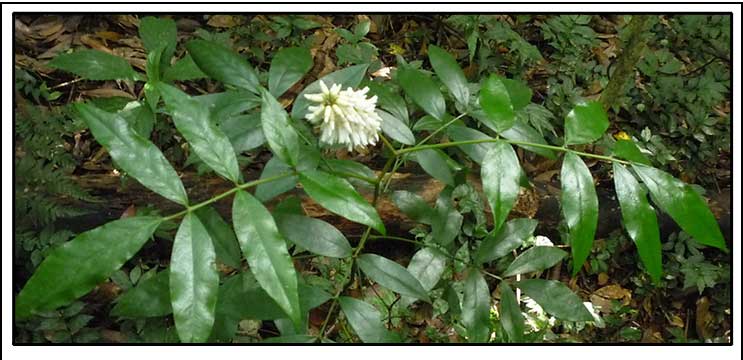
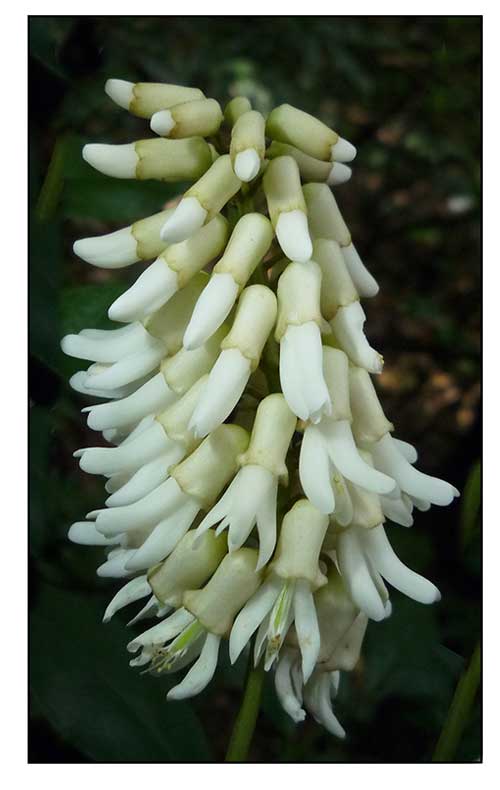
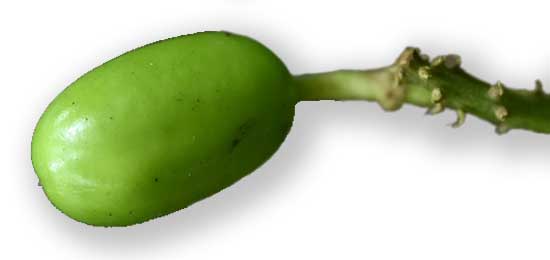
• An erect shrub up to 2 m tall, with glabrous branchlets. Leaflets (3-)5-9, elliptical to lanceolate, 8-15 cm × 2.5-4.5 cm. Flowers with white to purplish corolla, c. 1.5 cm long. Fruit ellipsoid, c. 2 cm long, bluish-black. (PROSEA)
• Shrubs. Branches flexuose, very fine fulvous pubescent at apex. Leaflets (3-)5-7(-9), narrowly elliptic to elliptic-lanceolate, papery to membranous, base cuneate, apex acuminate; terminal leaflet ca. 9 × 3.5 cm, petiolule ca. 1.2 cm; lateral leaflets 6-8 × 2.5-2.8 cm, petiolule ca. 2 mm. Racemes 10-15 cm; flowers congested; peduncle brown appressed pubescent; pedicel 2-6 mm; bract lanceolate, small, ca. 2 mm. Flowers purple-white. Calyx campanulate, ca. 8 × 6-7 mm at tip, both surfaces very shortly pubescent; teeth short, blunt. Standard spatulate, ca. 1.5 cm × 5.5 mm, tapering to base, both surfaces pubescent at base, without stalk; wings suboblong, ca. 9 × 3 mm, base auriculate, stalk linear, ca. 6 mm, less than 1 mm wide, glabrous; keel oblong, ca. 8 × 4 mm, base auriculate, apex blunt, stalk linear, ca. 5.5 mm, less than 1 mm wide; filament equal to keel, outside pubescent at base. Anther short. Ovary stipitate, compressed, ca. 7 mm, glabrous. Legume glossy, dark at apex, oval, ca. 2.2 cm, carpopodium ca. 1 mm at base. Seed 1. (Flroa of China)
Distribution
- Native to the Philippines. (1) (2)
- In Mindanao: Davao oriental (1)
- Also native to Nansei-shoto (Ryukkyu Islands), Taiwan. (2)
- In evergreen forest in the mountains, up to 2000 m altitude.
Constituents
- Study of methanol extract isolated 34 compounds. Among the compounds are: tectorigenin (1), 3'4'5-trihydroxyisoflavone (3), and euchretin F (19); felmiphyllin B, quercetin (13)
, euchretin M (23) and formosanatin C (26). (see study below) (6)
- Study of methanolic extract of roots
isolated a new flavanone, euchrenone a 1 7 (1). along with 18 known compounds: glabrol (2), euchrenone a 2 (3), formononetin (4), 7-methoxy-2',4'-dihydroxyisoflavone (5), 3-(3,4-dimethoxy-phenyl)-7,8-dihydroxy-chromon-4-one (6), 5,7,2'-trihydroxy-4'-methoxyisoflavone (7), 2'-hydroxygenistein (8), euchrenone b 1 (9), euchrenone b2 (10), euchrenone b 1 6 (11), vanillin (12), p-hydroxybenzoic acid (13), medicagol (14), octadecyl ferulate (15), (+)-syringaresinol (16), β-sitosteryl-D-glucoside (17), and a mixture of β-sitosterol (18) and stigmasterol (19). (8)
- Study of methanolic extracts of E. formosona isolated five new compounds, euchretins JN (1-5), along with 12 known compounds, euchretin A (6), C, D, F, H, I, (+)-matrine, (-)-cytisine, quercetin, trifolirhizin, retusin 8-methyl ether, and genistein.
(see study below) (9)
- Study of roots isolated 3 new prenylflavanones, euchrenones a1, a2 and a3, which are used in Japan to treat tumors. (10)
Properties
- Studies have suggested cytotoxicity, apoptotic, anti-metastatic, anti-platelet aggregation, anti-HIV, vasodilatory, thermoregulating properties.
Parts used
Roots.
Uses
 Edibility
- Not a culinary plant due to risks associated with potent alkaloid content.
Folkloric
- In the Philippines, roots chewed to treat snakebites. (13)
- In China, the Tujia minority in the Wu-ling Mountains
traditionally use E. japoonica to alleviate sore throat and abdominal pain. In Japan, roots are used for anti-inflammatory, antiarrhythmic, anticancer, and antiulcer effects. (10)
Studies
• Cytotoxicity and Apoptosis Induction in Human Hepatocellular Cell Line / Radix: Study evaluated the effects of 95% ethanol extract of E. formosana radix (EFR) on cell cycle and apoptosis in human hepatocellular carcinoma (HCC) Hep3B cells. EFR decreased DNA synthesis and viable Hep3B cell numbers in a concentration-dependent number. EFR induced p21- and p27-dependent cell cycle arrest in S-phase and apoptosis of Hep3B cells. EFR induced ROS production. EFR-promoted apoptosis was associated with increasing activation of caspases 3, 7, and 9 and enhanced poly(ADP-ribose) polymerase cleavage and increased expression of p21, p27, Bax and Bad. Levels of Bcl-xl decreased after EFR treatment. Alteration of key anti- and pro-apoptotic proteins could contribute to increase in p53-independent apoptosis in the Hep3B cells. (4)
• Inhibition of Invasion and Migration of Human Hepatocellular Carcinoma Cells / Radix: Study evaluated the effect of EFR on cell migration and invasion by HCC cell line Hep3B. Hep3B cells treated in vitro with EFR migrated and invaded less cells than calls treated with phosphate-buffered saline (PBS) control. Results showed EFR inhibits invasion and migration by liver cancer cells by down-regulating proteins associated with these processes, resulting in reduced metastases. Study suggests potential as therapeutic agent for inhibiting primary tumor growth and preventing metastasis. (5)
• Antiplatelet Aggregation / Anti-HIV Constituents: Study of methanol extract isolated 34 compounds and evaluated for antiplatelet aggregation and anti-HIV activities. Among the compounds, tectorigenin (1), 3'4'5-trihydroxyisoflavone (3), and euchretin F (19) were most effective anti-platelet aggregation compounds, exhibiting both AA- (arachidonic acid) and collagen-induced platelet aggregation. Compounds felmiphyllin B, quercetin (13)
, euchretin M (23) and formosanatin C (26) inhibited HIC replication in H9 lymphocyte cells. (6)
• Metabolic Effects / Respiratory and Vasomotor Activities / Thermoregulation / Shan-Dou-Gen: Systemic administration of Shan-Dou-Gen produced dose-dependent hypothermia in rats at 22*C and below. The hypothermia was attributed to both cutaneous vasodilatation and decreased metabolic heat production. here were no changes in respiratory evaporatiive heat loss. At 30*C, Shan-dou-gen produced no changes in rectal or other thermoregulatory variables. The hypothermia may be mediated through serotonin release within the brain. (7)
• Cytotoxic Coumaronochromones: Study of methanolic extracts of E. formosona isolated five new compounds, euchretins JN (1-5), along with 12 known compounds, euchretin A (6), C, D, F, H, I, (+)-matrine, (-)-cytisine, quercetin, trifolirhizin, retusin 8-methyl ether, and genistein. Compounds 1, 4 and 6 exhibited cytotoxicity against 59T cell line, and compound 1 showed activity against SCM-1 cell lines. (9)
• Metabolomic Profile / Health Promoting Potential: Study of E. japonica for targeted metabolome at six different tissues identified 2,140 metabolites, including flavonoids, phenolic acids, amino acids, lipids, and alkaloids. Among them, 305 were annotated as key active ingredients, 364 were active pharmaceutical ingredients of 9 human disease-resistance, with 206 co-annotated. Metabolic profiles varies significantly across tissues, with medically active metabolites highly concentrated in lateral roots and inflorescences, indicating great medical potential. Overall, lateral roots and inflorescences exhibited the strongest potential for disease treatment, particularly for chronic and multifactorial diseases. Study underscores the plant's potential as valuable resource for novel therapeutic applications. (10)
• Formononetin / Roots: Formononetin is a naturally occurring isoflavonoids isolated from methan9lic extracts of E. formosana roots. While not studied specifically on E. formosana, formonetin has been reported to exhibit beneficial activities viz., yeast α-glucosidase inhibition, antibacteria, antioxidant, anti-inflammatoory, and cytotoxicity activities, along with estrogenic and angiogenesis properties. (12)
Availability
- Wild-crafted. |