 |

Family • Apocynaceae
Adelfa
Nerium oleander L.
SOUTH SEA ROSE / OLEANDER
Ou zhou jia zhu tao
|
| Scientific names | Common names |
| Nerion oleandrum St.-Lag. | Adelfa (Tag.) |
| Nerium atropurpureum Bürger | Baladre (Tag.) |
| Nerium carneum Dum.Cours. | Ceylon Tree (Engl.) |
| Nerium coccineum Bürger | Dog bane (Engl.) |
| Nerium flavescens Spin | Nerium (Engl.) |
| Nerium floridum Salisb. | Oleander (Engl.) |
| Nerium grandiflorum Desf. | Rose bay (Engl.) |
| Nerium indicum Mill. | Rose laurel (Engl.) |
| Nerium indicum var. aurantiacum Poit. | South sea rose (Engl.) |
| Nerium indicum subsp. kotschyi (Boiss.) Rech.f. | |
| Nerium indicum f. leucanthum (Makino) Okuyama | |
| Nerium indicum var. leucanthum Makino | |
| Nerium indicum f. lutescens (Makino) Okuyama | |
| Nerium indicum var. lutescens Makino | |
| Nerium indicum var. luteum Poit. | |
| Nerium indicum var. ochroleucum Poit. | |
| Nerium indicum var. odorum (Aiton) Poit. | |
| Nerium indicum var. oxiacantholens Poit. | |
| Nerium indicum var. plenum Makino | |
| Nerium indicum var. ragonotii C.Morren | |
| Nerium indicum var. splendens Poit. | |
| Nerium japonicum Gentil | |
| Nerium kotschyi Boiss. | |
| Nerium latifolium Mill. | |
| Nerium lauriforme Lam. | |
| Nerium luteum Nois. ex Steud. | |
| Nerium madonii M.Vincent | |
| Nerium mascatense A.DC. | |
| Nerium odoratissimum Wender. | |
| Nerium odoratum Lam. | |
| Nerium odorum Salisb. | |
| Nerium odorum Aiton | |
| Nerium oleander Linn. | |
| Nerium oleander var. album G.Lodd. | |
| Nerium oleander var. atropurpureum Van Houtte | |
| Nerium oleander var. atropurpureum-plenum Hovey | |
| Nerium oleander var. flore-variegato G.Lodd. | |
| Nerium oleander var. indicum (Mill.) O.Deg. & Greenwell | |
| Nerium oleander subsp. kurdicum Rech.f. | |
| Nerium oleander var. luteomarginatum Van Geert | |
| Nerium oleander var. madonii-grandiflorum Hovey | |
| Nerium oleander var. pictum-argenteum Van Geert | |
| Nerium oleander var. radicans Poit. | |
| Nerium splendens Paxton | |
| Nerium thyrsiflorum Paxton | |
| Nerium verucunbum Salisb. | |
| Oleander indica (Mill.) Medik. | |
| Oleander vulgaris Medik. | |
| Nerium oleander L. is an accepted species. KEW: Plants of the World Online | |
| Other vernacular names |
| AFRIKAANS: Selonsroos |
| ARABIC: Defla, Difla, Sammul hibar, Ward Al-hemar, Sim Al-hemar. |
| ASSAMESE: Diflee, Sammulhimar. |
| BENGALI: Karavi. |
| CHINESE: Jia zhu tao, Ou zhou jia zhu tao. |
| FRENCH: Laurier rose, Oleandre/ |
| GERMAN: Oleander |
| HINDI: Kaner, Kanail. |
| INDIAN: Karavira. |
| ITALIAN: Oleandrio |
| JAPANESE: Kyochiku-to |
| KANNADA: Kanagilu, Kharjahar, Kanigale, Kanagile. |
| MARATHI: Kanher. |
| PORTUGUESE: Espirradeira, Loendro, Oleandro. |
| PUNJABI: Kanir. |
| SPANISH: Adelfa, balandre, Laurel rosa, Pasua. |
| TAMIL: Alari. |
| TELUGU: Erra ganneru, Jannerat. |
| URDU: Kaner. |
|
Parts used 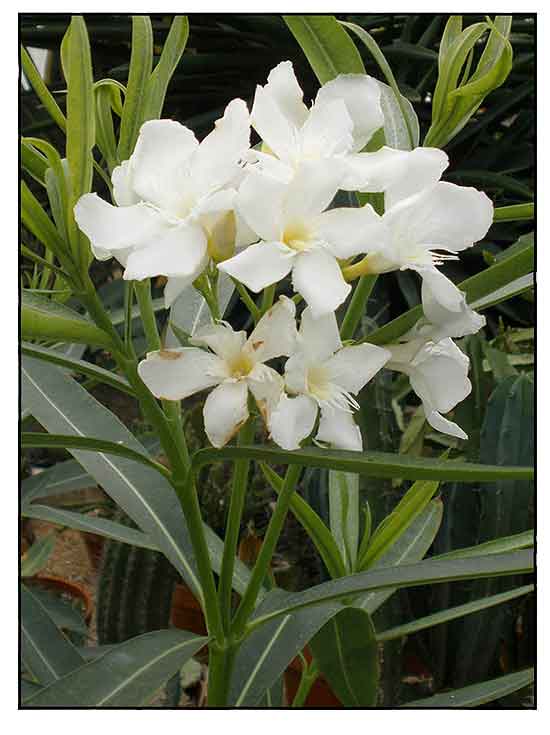 Uses UsesFolkloric - Herpes zoster (skin): Crush leaves, mix with oil and apply on lesions. Do not apply on raw surface. Milky juice of the plant is irritating. Caution: Not to be taken internally. - Herpes simplex: Mix 1 cup of chopped leaves and bark with 2 tablespoons of oil. Apply to lesions 3 times daily. - Ringworm: Chop a foot long branch and mix with 1 cup chopped fresh young leaves. Mix the juice with 5 drops of fresh coconut oil. Apply 3 times daily. - Snake bites: Pound 10 leaves and a piece of branch. Apply poultice to the wound. - Root used, locally and internally, by women in western and southern India and in the central Malay Peninsula for suicide and for procuring criminal abortion. - Past of bark of the roots is applied externally for ringworm. - Used in leprosy, skin eruptions, and boils. - In the Punjab and Cashmere areas, roots are used for asthma. - Leaves used in the treatment of malaria and dysmenorrhea; also used as abortifacient. - Roots, made into paste with water, used for hemorrhoids. - Leaves and bark used externally for eczema, snake bites and as insecticide; internally, used for epilepsy. - Dried leaves used as sternutatory. - Infusion of leaves and fruit used a cardiac regulator. - In Morocco, fresh leaves applied to tumors to hasten suppuration. - In traditional Chinese medicine, the flowers and leaves have been used to stimulate the cardiac muscles, relieve pain and eliminate blood stasis. Others - Skin care: Formulated as age-defying skin care product. Studies • Molluscicidal activity / Bark: Study evaluated the molluscicidal activity of N. indicum bark against Lymnaea acuminata. Toxicity of different bark preparations was both time and dose dependent. (31) Study showed the bark of Nerium indicum as an important source of botanical molluscicide and is an effective insecticide against Blatta orientalis. Glycosides, steroids and terpenoids were also isolated from Nerium indicum. • Primary Metabolites: Study on the quantification of primary metabolites in N. indicum yielded carbohydrates, proteins, phenols, lipids, etc. N. indicum's stem contains higher levels of phenol which has immuno-modulating, anti-tumor and antibacterial activities. (1) • Cardiovascular Effect / Tincture: Tincture Karveer is a potent cardiotonic drug which is also purported to relieve symptoms of cor pulmonale as a bronchodilator and cough sedative. The tincture is considered safe and helpful, and promising for the treatment of CHF in humans. (2) • Neuroprotective / Polysaccharides / Flowers: Study of isolated polysaccharides from the flowers of N. indicum (J6) showed potential as a neuroprotective agent against neuronal death in Alzheimer's disease through a mechanism that may primarily rely on inactivation of the JNK signaling pathway. (3) • Polysaccharides / Nerve Growth Factor-like Effect: Study of polysaccharides J1 (a rhamnogalacturonan) and J2 (a xyloglucan) from the whole flowers of N. indicum were tested on the proliferation and differentiation of PC12 pheochromocytoma cells and found to have nerve growth factor-life effect. (4) • Analgesic: Study of extract of flowers and roots of N. indicum showed promising antinociceptive activity mediated through the prostaglandin pathways with analgesic principles interfering with the biosynthesis of prostaglandins. (5) • Larvicidal: Study of larvicidal lethality of extracts of lattices of N indicum and E royleana on Culex quinquefasciatus showed significant delay in embryonic development of Culex larvae. (6) • Antimicrobial / Antifungal / Dried Leaves: In a study of the ethanolic extracts of dried leaves of N. indicum and Martynia annua, N indicum showed significant antibacterial and antifungal activity compared to M. annua. (7) • Anti-Angiogenesis: Study yielded three oligosaccharides. Bioactivity angiogenesis testing showed two of the oligosaccharides significantly inhibited the HMEC-1 cell tube formation. (8) • Cytotoxicity / Anticancer: Most of the compounds isolated from the leaves of N. indicum exhibited strong cytotoxicity against HeLa cell. Odoroside-A exhibited the strongest cytotoxicity. (9) • Molluscicidal / Bark: Study of different bark preparations showed varying degrees of time- and dose-dependent molluscicidal activity. (10) • Anti-Ulcer: Study of a methanol extract against pylorus-induced gastric ulcer and indomethacin-induced ulcer in rats showed significant antiulcer activity in all models with significant reduction of gastric volume, free acidity, and ulcer index. Results suggest an antisecretory effect. (11) • Anti-Diabetic / Leaves: Study investigated the antidiabetic activity of a leaf extract in alloxan-induced diabetic albino rats. Results showed significant antidiabetic activity which may be due to improvement of the glycemic control mechanisms. (32) • CNS Effects / Sedative / Hypnotic : Study on behavior pattern in mice showed fractions of leaves extract induced sedation at low dose and hypnosis at high doses. Fractions also showed significant decrease in locomotion counts, decrease in motor performances and enhancement of hexobarbital sleeping time. Effects are possibly through GABA-ergic modifications. (12) • Anti-HIV / Anticancer: In a small clinical trial (20 patients in a DB, placebo controlled study) in a Johannesburg AIDS clinic evaluating the effectiveness of supplements ingredients (Nerium oleander and Sutherlandia frutescens) against HIV results showed significant improvement with an increase in CD4 count while the placebo group declined. (14) • Hepatoprotective / CCl4-Induced Liver Injury: A methanolic plant extract showed remarkable hepatoprotective activity against carbon-tetrachloride induced hepatotoxicity in rats. (15) Study showed antioxidant and hepatoprotective activity of methanol flower extract on CCl4-induced hepatotoxicity. (40) • Toxicity Studies: Study evaluated the toxic effects of a crude watery extract in male adult guinea pigs. The lowest nonlethal dose was 300 mg/kbw and doses of 450 to 900 caused varying frequency of mortality. The LD50 is 540 mg/kbw. (16) • Toxicity Studies / Experimental Poisoning in Sheep: Study reported clinical, ECG, and pathologic findings in goats consistent with those reported in sheep and cattle. Main signs were related to the gastrointestinal and cardiovascular systems. Study concludes goat is susceptible to oleander toxicosis just like other domestic ruminants. However, the unpalatable nature of the plant and the selective feeding habit of the goat, make poisoning in this species infrequent. (17) • Anvirzel / Antitumor / Anticancer: Study evaluated the cell killing effects of Anvirzel, an extract of oleander, and Oleandrin, a derivative compound, on human, canine, and murine tumor cells. Both Anvirzel and Oleandrine were able to induce cell killing in human cancer cells, but not in murine cancer cells. The cell-killing potential of Oleandrin was greater than that of Anvirzel. Results conclude both act in a species-specific manner. (20) • CNS Activities / Anticonvulsant / Flower Extract: Study evaluated the CNS activity of a 50% hydroalcoholic flower extract in mice. Results showed significant reduction of spontaneous motor activity, potentiation of pentobarbital-induced sleep, and protection against electroshock-induced convulsions. (21) • Antidiabetic / Leaf Extract: Study investigated the antidiabetic effect of a leaf extract in alloxan induced diabetic albino rats. The extract showed significant antidiabetic activity and prevented weight loss in diabetic rats. The antihyperglycemic action may be due to improvement of glycemic control mechanisms. Standard used was glibenclamide. (22) • Anti-Inflammatory / Leaf Extract: Study of various leaf extracts of Nerium oleander showed significant anti-inflammatory and antipyretic activity. The antipyretic effect was almost equivalent to paracetamol. (23) • Antioxidant / Phenolic Content: Study evaluated various extracts of N. oleander for antioxidant using various assays and total phenolic content. Methanolic and aqueous methanolic extracts showed the highest amount of total phenolic content. Results showed flowers can be a potential source of natural antioxidants. (24) • Toxicity / Seed Extract / Rodenticide: Study evaluated to basic toxicity of seed extract of Indian oleander on the bandicoot rat, Bandicota bengalensis in the laboratory. Results showed the seed extract can be used as an effective bio-rodenticide with suitable bait bases. (25) • Biomonitoring of Lead Pollution: Study examined the concentration of Pb, Cd, and Cu in leaves of N. oleander and Robinia pseudoacacia plants in biomonitoring of atmospheric pollution. Results showed Nerium oleander can be used for biomonitoring of Pb. (26) • Antibacterial / Antioxidant / Cytotoxicity / Leaves and Flowers: Study showed methanol extracts to have high antioxidant activity on DPPH assay. Trichloromethane and methanol extracts showed strong antibacterial activity. The dichloromethane extract showed high cytotoxic effects against T47D, HepG-2 and K562 cell lines. (27) • Antihyperlipidemic / Flowers: Study evaluated the toxicity profile of 50% hydroethanolic extracts of flowers using brine shrimp lethality assay and MTT cytotoxicity assay. Results showed no toxicity with a wide safety margin and a significant ameliorative action on elevated lipids and lipoproteins in a dose-dependent manner. (28) • Antibacterial / Leaves: Study evaluated the antibacterial potential of Nerium indicum leaves. Results showed a benzene extract to be more effective than an ethanolic extract in inhibition of Bacillus subtilis. Standard used was Ofloxacin. Both extracts showed negligible activity against E. coli. Phytochemical screening yielded cardiac glycosides, tannins and phenolic compounds, alkaloids, and flavonoids. (29) Study evaluated various extracts of N. oleander for antimicrobial effect and MIC against B. subtilis, S. lutea, E. coli, and K. pneumonia. A petroleum ether extract inhibited the growth of all tested bacteria. Highest inhibition was against E. coli (1.0 cm) with MIC of 2 µg/ml. (58) • Anthelmintic / Roots: Study evaluated various extracts for anthelmintic activity against adult Indian earthworm, Pheretima posthuma. The ethanolic extract was more active, demonstrating paralysis and death of worms in less time compared to the other extracts and albendazole at higher concentrations. (30) • Toxicity / Cardiac Glycosides / Oleandrin & Oleandrigenin: Considered a poisonous plant because of compounds that exhibit toxicity, especially in animals, when consumed in excessive amounts, for example, the cardiac glycosides oleandrin and oleandrigenin. However, despite "poisonous" designation, there are very few reports of toxicity in humans. In 2002 there were 842 human exposures reported in the U.S., with only 3 reported deaths from 1985 through 2005. Fatalities were associated with ingestion; no toxicity or deaths have been reported from contact or topical administration. (33) • Antibacterial / Anticancer: Extracts of N. oleander showed antibacterial activity with inhibition of pathogenic bacteria E. coli and Staphylococcus aureus. It anti-cancer activity compared with anticancer drug cisplatin on the growth of (L20B) cell line. (33) • Larvicidal / Flowers / Culex quinquefasciatus: Study of crude hexane and aqueous extract of Nerium oleander flowers showed larvicidal activity against filarial vector, Culex quinquefasciatus. Studies are needed to identify the active ingredients responsible for the larvicidal activity. (34) • CNS Depressant Activity: Study investigated various extract of leaves of N. oleander on CNS activity in rat and mouse. Extracts showed CNS depressant activity with a significant reduction in spontaneous activity, exploration, muscle relaxant activity and significantly potentiated phenobarbitone sodium-induced sleeping time. (35) • Cardiotonic / Leaf: Study investigated the cardiotonic activity of hydroalcoholic leaf extract of Nerium indicum. Results showed dose dependent positive ionotropic effect on perfused hypodynamic frog heart and isolated rabbit heart. (36) • Toxicity / Repellent / Larvicidal: Diet based on Nerium oleander leaves halted the development of fourth instar larvae of the desert locust Schistocerca gregaria larvae. Weight loss was due to low food intake related to the repellent and anti-palatable effect of the plant. The toxic effect of N. oleander could be due to toxic secondary compounds contained in the leaves. (37) • Polysaccharide J6 / Neuroprotective / Flowers: Polysaccharide J6 isolated from the flowers of N. indicum can serve as neuroprotective agent against neuronal death in Alzheimer's disease. The neuroprotective mechanism may rely on the inactivation of JNK signaling pathway. (38) • Antiulcer / Flowers: Study of flowers extract in gastric ulcer model in rats induced by indomethacin and pylorus ligation showed significant antiulcer activity. Cimetidine was used as reference drug. (39) • Effect on Fat and Glucose Metabolism in T2 Diabetic Rats: In vivo and in vitro studies suggest the considerable beneficial effect of NO distillate in both fat and glucose metabolism in type 2 diabetes rats fed for 2 weeks on a high-fat diet. (42) • Toxicity / Leaves: Study evaluated N. oleander leaves extract for toxicity in wistar rats. Results showed the leaves extract caused significant effects on experimental animals due to its toxicity. There was significant variations in hematologic parameters. Histopath studies showed changes ranging from noticeable infiltration of inflammatory cells with low level vascular damage to hepatic necrosis, widening of sinusoidal spaces and mild level of vascular damage. (43) Study evaluated the median lethal dose of aqueous leaf extract subcutaneously injected in rabbits. LD50 was 157.37 mg/kbw. (69) • Analgesic / Anti-Arthritic / Gel Formulation: Study showed Nerium oleander extract (Iranian Delfi gel) has effective impact on the reduction of pain and knee stiffness and improvement of physical function in patients with knee osteoarthritis. (44) • Toxicologic Effects / Hematologic Indices and Heart and Lung Tissues / Leaves: Study evaluated the effects N. oleander on hematological parameters and histopathological changes in the heart and lungs of rabbits treated with sub-lethal doses of aqueous leaf extract for over 28 days. Results showed significant increase (p<0.05) in RBC and WBC and Hb concentration, together with a significant decrease (p<0.05) in platelet counts. Microscopic exam showed interstitial pneumonitis and degeneration and necrosis of muscle fibers in the heart. (45) • Antibacterial / Solvent Extract of Root, Leaf and Stem: Study evaluated the antibacterial activity of crude extracts of N. oleander from root, stem and leaf extracted using polar and nonpolar solvents against Gram-negative (E. coli, K. pneumonia, and A. tumefaciens) and Gram-positive bacteria (S. aureus and B. subtilis). Results showed great antibacterial potential against all five tested pathogens. Range of MIC and MBC was 1.25-0.078 mg/ml and 0.625-0.039 mg/ml, respectively. (46) • Skeletal Muscle Relaxant / Flowers: Study evaluated the skeletal muscle relaxant activity of aqueous extract of Nerium oleander flowers in Swiss albino rats. Results showed skeletal muscle relaxant activities with the Actophotometer and Rotarod tests showing significant reduction (p<0.05) in motor coordination of tested animals. Diazepam was used as comparison drug. (47) • Acute Phase Reaction (APR) / Hepatic Damage: Study evaluated the histopathological effects from an injection of leaves extract on noninjured rat liver. Results showed induced sterile muscle abscess from N. oleander may have time-dependent effects and may induced APR resulting in changes in serum hepcidin, ferritin and total iron levels as well as hepatic damage as evidenced by recruitment of hepatic inflammatory cells. (48) • Mosquito Larvicidal / Culex pipiens: Study evaluated the insecticidal activity of N. oleander ethanol extract on larval stages 3 and 4 of Culex pipiens. Results showed lethal concentrations LC50 and LC90 of 57.57 mg/mL and 166.35 mg/mL, respectively. Results suggest a potential larvicidal and effective natural biocide against mosquito larvae, Cx. pipiens. (49) • Anti-Cancer Study / Oleandrin / Phase 1 Clinical Trial: Study reports on cases of advanced cancer patients (9 cases of metastatic cancer) taking N. oleander extract in a Phase 1 clinical trial. Oleandrin, a phytochemical constituent of the extract, has multiple anticancer activities including NF-kappaB inhibition and induction of apoptosis. A renal cell patient experienced tumor regression for 12 months on the extract alone; 3 pancreatic cancer patients and a colon cancer patient experienced disease stabilization. Survival time was extended on all patients from 32 months to 11 years. Study showed good clinical outcomes and low toxicity. (50) • Chronic Toxicity Study / Leaves: Study evaluated the chronic toxicity effect of multiple exposure of rabbits to aqueous leaf extract of N. oleander at dose rate of 10 mg/kbw. After 30 days, clinical manifestations of toxicity included restlessness, crying, pawing, convulsions, polyuria, emaciation, increased heart sound intensity, paralysis and death. Toxicity was attributed to two potent cardiac glycosides, oleandrin and neriin, a strychnine like toxin, and a heart-active cardiac glycosides. Study reported on the hematolgical changes and correlation of the biochemical changes in the chronic toxicity of the aqueous leaf extract. (51) • Toxicity and Teratogenic Effects / Leaves: Study evaluated a methanolic extract of plant for toxicity and teratogenic effects on chicken embryo as an animal model. Results showed increasing toxicity and mortality with increasing concentration. In low concentrations the extract had negligible toxicity and teratogenic effects which can be used as therapeutic aims. (52) • Hepatoprotective / Thioacetamide Toxicity / Leaves: Study of aqueous extracts of N. oleander leaves showed significant hepatoprotective activity against thioacetamide induced liver damage in rats. (53) • Cardioprotective / Antioxidant / Flowers: Study of a hydroalcoholic extract of N. oleander flowers showed cardioprotective activity in an isoproterenol-induced myocardial oxidative stress in an experimental rat model. The cardioprotection was attributed to improvement of the antioxidant defense system during experimental myocardial necrosis. (54) • Anticancer / Oleandrin / Anvirzel: Many studies have focused on the anticancer activities of oleandrin because of its apoptotic effects in various cancer cell lines. It also increases sensitivity of PC-3 human prostate cells to radiotherapy and reduces gentamycin toxicity. Anvirzel, a hot water extract of the plant developed as treatment for cancer, AIDS, and CHF, consists of a mixture of oleandrin and glycone oleandrigenin. An early study showed safety in humans when injected intramuscularly. Anvirzel is not an approved cancer treatment in the United States. Until more date on efficacy and toxicity are available, it should not be used outside of clinical trials. (55) • Restorative Effect on Diabetic Neuropathy: Study evaluated the possible role of N. oleander distillate in the treatment of diabetic neuropathy on diabetes-induced electrophysiological alterations in an animal model. With its antioxidant nature, NeOL treatment produced nearly complete restorations of the diabetes-induced alterations. (57) • Intoxicating Multiorgan Effects / Leaves: Study investigated the histological effects on extrahepatic organs, hepatic iron deposition and gene expression of some iron regulatory proteins in rats after sterile muscle abscess during acute intoxication of NO leaves decoctions. Results showed inherent toxins present in N. oleander can induce acute phase cytokine expression, cause severe changes in organ architecture, marked changes in the regulation of iron regulatory proteins. (60) • Invention / Anticancer / Leaves: The invention relates to the use of a sterile non-toxic pyrogen free cold extract from leaves of N. oleander as a supplementary medication to cancer chemotherapy, hormone therapy and/or radiotherapy to restore and/or ameliorate the immune system and to decrease the side effects and increase the antitumor effects of chemo- and radiotherapies, particularly in combination with taxol, adriamycin, cisplatin, 5-FU etc., for possible use in various cancers i.e., bladder, kidney, liver, ovary, pancreas, uterus, testicle, vagina, pleuramesotheliomas and Hodgkin's lymphoma. (61) • Bioactive Pregnanes / Cytotoxic Against Cancer Lines: Study yielded three new pregnanes (1,2,3) , along with two known compounds (4,5). Compound 4 (neridienone A) showed in vitro anti-inflammatory activity based on inhibition of induction of intercellular adhesion molecule-1 (ICAM-1). Compounds 1-5 were evaluated for cytotoxic activity against four human cancer cell lines. Compound 4 (neridienone A) showed significant cell growth inhibition of VA-13 (malignant tumor cells induced from WI-28: normal human fibroblast cells) and HepG2 cells (human liver tumor cells). Compounds 1, 2, and 5, showed significant calcein accumulation, a measure of its MDR-reversal activity based on the amount of calcein accumulated in MDR human ovarian cancer 2780AD cells in each compound. (63) • Antimicrobial / Antioxidant / Flowers: Study evaluated the antimicrobial and antioxidant properties of flower extract of Nerium oleander. The ethanol extract showed considerable scavenging capacity by DPPH assay and remarkable reducing power. Antimicrobial evaluation showed activity against selected microorganisms, maximum with the ethanol extract zone of inhibition against Pseudomonas aeruginosa (28mm), Salmonella typhi (25mm), Staphylococcus aureus (21mm), Escherichia coli (20mm), and Bacillus subtilis (17mm). The extract showed maximum zones of inhibition against Aspergillus flavus (18mm) and Rhizopus species (18mm). (see constituents above) (64) • Experimental Oleander Poisoning in Goats / Leaves:Dried oleander leaves at single lethal dose of 110 mg/kbw were administered orally to five native female goats. Clinical toxicosis began to appear in an hour, manifesting as abdominal pain, ruminal atony, tympany, frequent urination, bradycardia, tachycardia, tachyarrhythmia, depression, weakening, convulsive movements, and death at end stage. Histopath study showed cardiomyopathic changes, varying degrees of hemorrhages in internal organs, extensive renal tubular necrosis, scattered necrosis of hepatocytes, etc. All livestock are susceptible to oleander toxicosis, infrequent only because of the unpalatable nature of the plant. Cattle are more prone to eating of leaves. Studies suggest 110 mg/kbw of dried leaves is lethal for ruminants. High doses (250 and 1000 mg/kbw have been used for experimental induction of acute toxicosis. (65) • Larvicidal / Leaves:Study evaluated crude aqueous extracts of N. oleander leaves for larvicidal activity against Thaumetopoea wilkinsoni, the most important defoliator in the Mediterranean Basin. Larval defoliation of the pest decreases the annual diameter increment of host trees. The aqueous leaf extract exhibited highest larvicidal activity with 3rd and 4th instar mortality with LD50 of 322.50 ppm and 190.00 ppm after 24 and 48 hours respectively. (66) • Gold Nanoparticles / Anticancer / Catalytic / Stem Bark: Study reports on the green synthesis of stable gold-nanoparticles utilizing phytochemicals (flavonoids, steroids, and other metabolites) from the stem bark of Nerium oleander. The gold NPs showed highly effective apoptosis of MCF-7 breast cancer cells. Study also demonstrated the stabilized AuNPs as a catalyst. (67) • Antioxidant / Anti-Inflammatory / Anti-Apoptotic / Skin Regenerative / Aloe-Based / Leaves: Study evaluated the effects of Aloe vera-based Nerium oleander extract (NAE-8®) compared to A. vera extract alone (ALOE) and an aqueous extract of N. oleander (AQ-NOE) in relation to dermatologic potential, antioxidant protection, anti-inflammatory effects and cytokine profiles in vitro. Results showed NAE-8®, a novel component of a commercial cosmetic product, exhibited beneficial antioxidant protection in several cellular models, without induction of leukocyte activation and secretion of inflammatory cytokines. The biological efficacy of NAE-8® was unique from both ALOE and AQ-NOE. (70) • Anti-Anxiety / Flowers:Study evaluated the anti-anxiety effect of various extracts of N. oleander flowers using an EPM model, and diazepam as standard drug. A chloroform and ethyl acetate extract of N. oleander flowers showed significant increases in open arm entries and mean time spent in open arms with the most pronounced effect produced by 25 and 200 mg/kg for CE and EAE, respectively. (72) • Subacute Toxicity / Oleandrin and Neriin / Leaves: Study evaluated the toxic effects of an ethanolic extract of N. oleander leaf on hematological cardiac, inflammatory and serum biochemical parameters, as well as histopathological changes in the heart. Results showed significant increases in MCV, white blood cell counts, platelet counts, interleukins (IL-1 and IL-6), tumor necrosis factor alpha, C-reactive protein, ALT, LDH, creatine kinase and CK-MB, especially at high doses, along with marked pathological changes in the heart tissue. (74) • Antimicrobial / Burn Infection Isolates / Leaves: Study evaluated aqueous and ethanol extracts of leaves against gram positive and gram negative bacteria isolated from burns infection culture using broth dilution and disc diffusion method. Ethanol extract showed higher activity than aqueous extract. Highest activity was against Staphylococcus aureus and Klebsiella spp. The plant extracts against gram negative bacteria showed activity in acidic pH only. (see constituents above) (77) • Antiviral / Anti-Polio Virus: Study evaluated the antiviral activity of hot and cold water extra ct of N. oleander against six different virus ie herpes simplex virus type 1 (HSV-1), polio virus type 1 (Sb-1), vesicular stomatitis virus (VSV), reovirus type-1 (Reo-1), human immunodeficiency virus type-1 (HIV-1), and yellow fever virus (YFV). Results of plaque reduction assay showed both hot and cold extracts of NO inhibited Sb-1 viral infection. The NO exerted its effect after infection period, particularly during the first two hours post infection. (78) • Anti-Inflammatory / Leaf, Stem, Roots: Study evaluated oleander leaf, stem, and root extracts on phagocytosis and free radical-related activities of murine peritoneal macrophages. Results showed increase in phagocytosis and decrease in myeloperoxidase (MPO) were in the order of leaf > root > stem. Inhibition of cell adhesion, nitric oxide (NO) and elevation of respiratory burst activity was in order of leaf > stem > root. Leaf extract bioactivity was much higher than stem and root extracts. Results showed N. oleander possesses the capacity to modulate macrophage activities attributable to numerous phytochemicals in the extracts. (79) • Antitumor / Antioxidant / Antimicrobial / Flower Essential Oil: Study evaluated the antioxidant, antimicrobial, and antitumor activities of essential oil extracted from flower of N. oleander. DPPH, ß-carotene/linoleic acid bleaching, and ferric reducing power assays showed significant antioxidant activity compared to synthetic antioxidants (trolox and BHT). Antitumor activity testing by growth inhibition of Ehrlich ascites carcinoma cells showed gradually increasing antitumor activity with increasing oil concentration. Antimicrobial activity by agar disc diffusion technique showed variable degrees of activity against different strains tested with MICs ranging from 125-500 and 250-2000 µg/mL for bacteria and fungi respectively. Toxicity testing of the essential oil in animal model systems using LD50s, GTP activity, LDH, and creatinine levels indicated no adverse effect in all concentration of EO range. (80) • Inhibition of Glycolysis / Selective Killing of Cancer Cells / Synergism with Cisplatin / Leaves: Study evaluated a hydroalcoholic extract of leaves containing 4.75% cardenolides for cytotoxic activity in A549 lung cancer cells vs MRC5 non-malignant lung fibroblasts. Results showed cytotoxicity of the extract was significantly higher against the cancer cell line, with a potency and selectivity similar to anticancer drug cisplatin. Pretreatment of A549 cells with antioxidants N-acetylcysteine and catalase slightly prevented the cytotoxicity of the extract, suggesting formation of reactive oxygen species (ROS) participates in its cytotoxic activity, although not in a major role. Induction of DNA damage may play a role in the extract's cytotoxicity. The extract induced marked inhibition of glycolysis inhibitor dichloroacetate. There was moderate synergism when NO extract was administered after cisplatin but a moderate antagonism when added before cisplatin. Results support phase II clinical trials. (81) • Insecticidal / Bactericidal / Leaves: Study evaluated crude ethanolic extracts of NO leaves for insecticidal and antibacterial activities. Stored grain pest, Trogoderma granarium and fruit fly Drosophila rufa larvae were used as insect models. Results showed N. oleander extract was totally ineffective as contact poison against larvae of T. granarium and D. rufa. At higher doses (100 mg concentration), 10% mortality was observed in T. granarium larvae in both 2nd and 5th instar larvae. In feeding experiments with D. rufa, 10% and 15% mortality of larvae were found after 48 and 72 hours exposure to the leaf extract at 20 mg dose. The extract showed antibacterial activity in all tested gram positive bacterial strains, with remarkable growth inhibition of Bacillus cereus. (82) • Antidiabetic / Leaves: Study evaluated the antidiabetic effect of a standardized hydromethanolic extract of N. oleander leaves in alloxan induced diabetic mice. The leaf extract demonstrated antihyperglycemic activity by reducing 73.70% blood glucose level after 20 days of treatment. OGTT showed 65.72% reduction in blood glucose after 3h post treatment. There was significant decrease in liver marker enzymes, triglyceride and cholesterol levels. Peroxidase and catalase activities in the liver, kidney, and skeletal muscles were significantly restored along with marked reduction in lipid peroxidation and normalization of hepatic glycogen level. (83) • Arrhythmogenic Activity / Leaves: Nerium oleander is reported to possess a wide range of pharmacological activities attributed to different glycosides (CG), primarily oleandrin, which can potentially impair the sodium-potassium ATPase (NKA) pump activity and caused inotropic effects on the heart. Study evaluated the potential arrhythmogenic effects of hydroalcoholic extracts of N. oleander leaves in invivo experiments with guinea pigs. The extract elicited severe cardiac arrhythmias that can lead to death with minimal tissue damage. Invitro experiments suggest the extract causes electro-mechanical disturbances in the heart due to inhibition of Na+/K+ pump, mitochondrial swelling, and modulation of sarco(endo)plasmic Ca2+-ATPase. The arrhythmias are mainly associated with impaired cardiomyocyte dysfunction rather than anatomical remodeling and/or autonomic dysfunction. Results revealed potential cardiotoxicity and positive inotropic effect of the extract and an important role in modulation of cardiomyocyte electrophysiology. (84) • Antiviral Activity / Oleandrin / PBI-06150 / SARS-CoV-2: Study reports an invitro evidence for significant inhibition of SARS-CoV2 by oleandrin and a defined extract of of N. oleander (PBI-06150). Using Vero cells, prophylactic oleandrin (as pure compound or as PBI-06150) at concentrations as low as 0.05 µg/ml exhibited potent antiviral activity against SARS-CoV-2, with 800-fold reduction in virus production, and a 0.1 µg/ml dose resulted in a greater than 3000-fold reduction in infectious virus production. Concentrations of oleandrin up to 10 µg/ml were well tolerated in Vero cells. Study presented evidence of safety and efficacy of defined oleander extract administered to Syrian hamsters in preparation as high as 130 µg/ml of oleandrin. Potent prophylactic and therapeutic antiviral activities demonstrated in the study, along with evidence of safety and efficacy in a hamster model, support further development of oleandrin and/or defined extract containing the molecule for treatment of SARS-CoV-2, associated COVID-19 disease, and reduction of virus spread. (85) Availability - Wild-crafted. - Plants, extracts, supplements, and anti-aging products in the cybermarket. |

 |
PHOTOS / ILLUSTRATIONS |
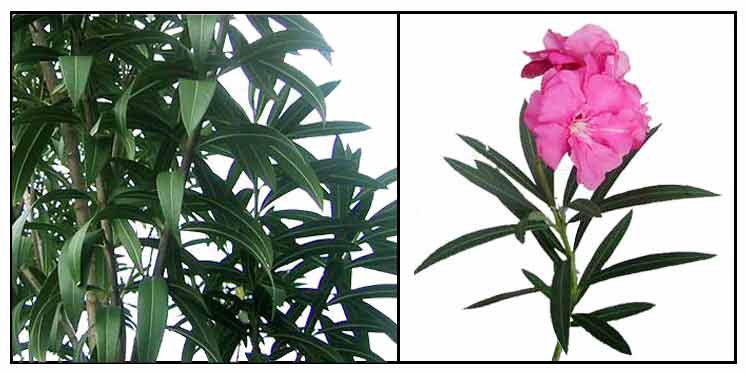
| Photos © Godofredo Stuart / StuartXchange |
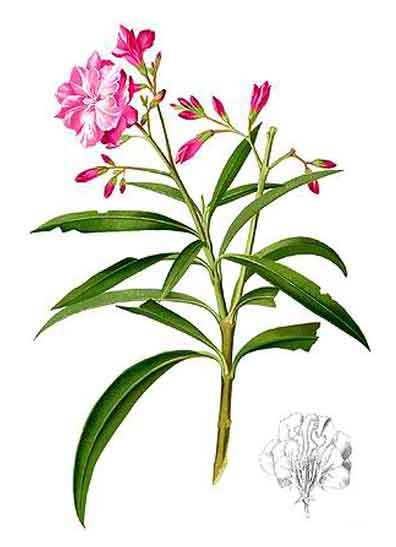
| OTHER IMAGE SOURCE: Plate from book / File:Nerium oleander Blanco1.37.jpg / Flora de Filipinas / 1880 - 1883 / Francisco Manuel Blanco (O.S.A) Public Domain / Modifications by Carol Spears / Wikimedia Commons |
| OTHER IMAGE SOURCE: Nerium oleander / Flowers and leaves / Alvesgaspar / CC BY 2.5 / click on image or link to go to source page / Wikipedia |
| OTHER IMAGE SOURCE: Apocynaceae : Nerium oleander / Habit of plant in flower / Copyright © 2009 by D L Nickrent (contact: dn277@cornell.edu)) [ref. DOL17248] / Non-Commercial Use / Click on image or link to go to source page / Phytoimages.siu.edu |
Additional
Sources and Suggested Readings |
• |
DOI: It is not uncommon for links on studies/sources to change. Copying and pasting the information on the search window or using the DOI (if available) will often redirect to the new link page. (Citing and Using a (DOI) Digital Object Identifier) |
| List of Understudied Philippine Medicinal Plants |
| New plant names needed The compilation now numbers over 1,300 medicinal plants. While I believe there are hundreds more that can be added to the collection, they are becoming more difficult to find. If you know of a plant to suggest for inclusion, please email the info: local plant name (if known), any known folkloric medicinal use, scientific name (most helpful), and, if possible, a photo. Your help will be greatly appreciated. |
• |
 |
|
 Botany
 Toxicity
