 Gen info Gen info
- Cyanthillium cinereum is a species of perennial plants in the sunflower family. The species is native to tropical Africa and tropical Asia.
- The species can be confused with Emilia sonchifolia, but the flower bracts of the latter are much longer and vase-shaped.
(13)
- Etymology: The genus name Cyanthillium derives from Greek words kyanos, meaning dark blue, referring to the color of the corollas, and anthyllion, meaning "little flower".
Botany
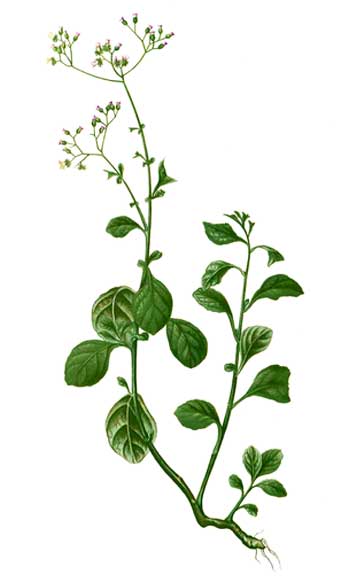
• Agas-moro is an erect, slender, sparingly branched,
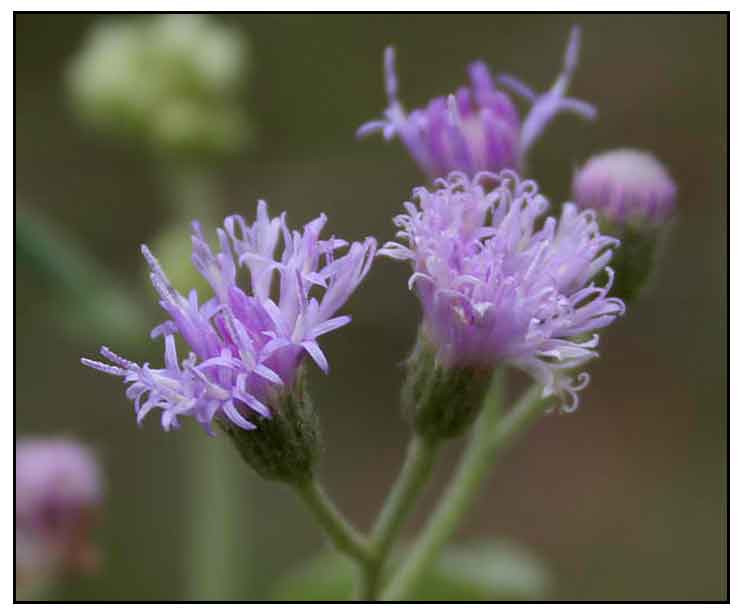
somewhat pubescent annual herb, growing up to 20 to 80 centimeters high. Leaves, smaller at higher altitudes, are oblanceolate to obovate, 2 to 6 centimeters long, with pointed or obtuse tips, with shallowly
toothed margins. Heads are small, stalked, borne in open, lax corymbs, and about 7 millimeters long and 2.5 millimeters in diameter. Flowers are rather bright-purple, all perfect, the corolla all equal, tubular,
slender 5-lobed, about 20 in each head, twice as long as the involucral
bracts which are linear and silky. Fruits are achenes, striate, ribbed or angled; pappus hairs numerous.
• Herbaceous plant grows up to 1 m tall but is typically found as a small herb about 0.3 m tall. Foliage: Green leaves of widely variable size are oval with shallow teeth along the leaf margin. Leaf arrangement is alternate with 1 leaf per node or position on the stem. Flowers: Green leaves of widely variable size are oval with shallow teeth along the leaf margin. Leaf arrangement is alternate with 1 leaf per node or position on the stem. Flowers: Composite flowers are composed of white to light purple disc florets with no ray florets. Fruit: Small, brown fruits have fluffy white hairs called 'pappus' which help to disperse the fruits by wind. Each pappus is lined with 2 rows of bristly hairs. Fruits are arranged with the pappus facing outwards, forming a puffball shape. (58)
 Distribution Distribution
- Native to the Philippines.
-
Throughout the Philippines in open, waste places in all settled
areas at low and medium altitudes.
- A
common weed, flowering all the year.
- Also native to Andaman Is., Angola, Assam, Bangladesh, Benin, Burkina, Burundi, Cambodia, Cameroon, Cape Verde, Caroline Is., Central African Republic, Chad, China South-Central, China Southeast, Christmas I., Comoros, Congo, East Himalaya, Eritrea, Ethiopia, Fiji, Gabon, Gilbert Is., Guinea, Guinea-Bissau, Gulf States, Hawaii, India, Ivory Coast, Japan, Jawa, Kazan-retto, Kenya, KwaZulu-Natal, Laccadive Is., Laos, Madagascar, Malaya, Maldives, Mali, Maluku, Marianas, Marshall Is., Mozambique, Myanmar, Nansei-shoto, Nepal, New Caledonia, New Guinea, New South Wales, Nicobar Is., Nigeria, Northern Provinces, Ogasawara-shoto, Oman, Pakistan, Pitcairn Is., Queensland, Saudi Arabia, Senegal, Solomon Is., Somalia, South China Sea, Sri Lanka, Sudan, Swaziland, Taiwan, Tanzania, Thailand, Togo, Tuamotu, Uganda, Vietnam, West Himalaya, Yemen, Zambia, Zaïre, Zimbabwe.
 Constituents Constituents
- Phytochemical screening yielded steroids glycosides, triterpenoids and esters in a methanolic extract of stem bark and leaves. Study also yielded lupeol, 12-oleanen-3-ol-3ß-acetate, stigmasterol, ß-sitosterol in an n-hexane fraction. (15)
- Methanol extract of whole plant yielded 3 major components, i.e., (n- hexadecanoic acid (42-88%) 1,2 benzenedicarboxylic acid, diisoocty ester (23.00) and squalene (11.31%) and six minor compounds, i.e., caryophyllene oxide (2.31%) guaiol (1.75% 3,7,11,15 tetramethyl -2- hexadecen -1-01(2.87) decanoic acid, ethyl ester (2.10%) 9,12 octadecanoic and(z-z)-(9.38) and octadecanoic and (4.,41%). (26)
- Study of hexane extract of flowers isolated a new sesquiterpene lactone, 8a-hydroxyhirsutinolide (2), and a new naturally occur- ring derivative, 8a-hydroxyl-1-O-methylhirsutinolide (3), along with seven known compounds (1 and 4– 9). (See study below) (31)
- GC-MS analyzed volatile fractions and essential oils obtained from flowers and leaves. The most abundant compounds from the volatile fractions of flowers yielded α-cadinol (14.4%), δ-cadinene (11.0%), thymohydroquinone dimethyl ether (7.0%), α -humulene (6.4%), τ-muurolol (5.8%), and terpinen-4-ol (5.1%). Volatile fraction of leaves yielded α -cadinol (20.3%), δ-cadinene (11.7%), germacrene D-4-ol (9.1%), τ-muurolol (6.5%), terpinen-4-ol (5.8%), and elemol (5.1%). Main compounds of flower essential oil were δ-cadinene (15.8%), -cadinol (15.7%), α -humulene (9.6%), τ -muurolol (6.1%), thymohydroquinone dimethyl ether (5.5%), and τ -cadinol (4.4%); from the leaves, α -cadinol (23.2%), elemol (10.6%), δ -cadinene (9.9%), τ-muurolol (8.2%), germacrene D-4-ol (6.1%), and terpinen-4-ol (4.9%). (52)
- Phytochemical analysis of whole plant extract yielded alkaloids, catecholic tannins, saponins, flavones, volatile oils, phenols and steroids. (see study below) (54)
- GC-MS study of aerial parts for essential oil
yielded caryophyllene oxide (16.7%) as the major compound followed by n-hexadecanoic acid (8.9%) and phytol (7.1%). (see study below) (55)
Properties
- Considered cooling, febrifuge, sedating, anti-infectious, stomachic, tonic, astringent.
-
Root is bitter; considered anthelmintic and diuretic.
- Seeds considered anthelmintic and alexipharmic.
- According to Ayurveda, the herb is sweet, cold, tonic, stomachic, astringent.
- Studies have shown anti-inflammatory, antioxidant,
nephroprotective, diuretic, bactericidal, antipyretic, analgesic, larvicidal, antifungal, hepatoprotective, antitumor, antidiarrheal, immunomodulatory, radioprotective, antihyperglycemic properties.
Parts
used
Whole plant, leaves, roots, flowers.
 Uses Uses
Folkloric
• In the Philippines infusion of plant taken internally for cough.
• Ayta communities in Dinalupihan, Bataan, reported to use the plant for treatment of measles, tuberculosis, ringworm, chicken pox, helminthiasis, rabies and malaria. (48)
• The Ilongot-Egongot community of Bayanihan, Aurora, Philippines, drink root decoction for body pain and stomachache. (53)
• In Zamboanga del Sur, poultice of leaves applied to sprains.
• Plant also used for wounds infections and fever.
• Decoction of leaves used against humid herpes, eczema, etc.
• Used for colds and fever; also for acute jaunditic hepatitis.
• Plant decoction used by Hindus to promote perspiration in febrile affections.
• Combined with quinine, used for malarial fevers.
• Expressed juice of plant used for hemorrhoids.
• Plant paste used to treat paralysis.
• In Chuta Nagpus whole plant used as remedy for bladder spasms and strangury.
• Root given for dropsy.
• Flowers used for conjunctivitis; also reported useful for fevers.
• In Patna, leaves employed as alexipharmic and anthelmintic.
• In the Nighantas plant used for asthma, bronchitis, and consumption.
• Neurasthenia, insomnia, night urination among infants, infected
sores, mastitis, snake bites, sprains, furuncle.
• Dosage: 15 to 30 gms dried material (among infants, 9 to 15 gms),
30 to 60 gms fresh material in decoction.
•
Poultice of fresh material used for eczema, carbuncle and snake bites.
• In India, whole herb juice is used most frequently – for
eye problems. Also used for poisonous insect and snake bites. As a tonic,
taken twice a month with milk. For ringworm, applied to affected parts
with milk. Used for all types of fever and considered one of the best
remedies for typhoid.
• In India seeds used for cough, flatulence, intestinal colic. Paste of seeds with lime juice used to treat pediculi. Flowers used for conjunctivitis, rheumatism, fever.
• In Ayurveda, used for consumption, asthma, bronchitis
and fevers.
• In Senegal and French Guinea plant infusion used to wash newborn infants; also used for children with incontinence of urine.
• Bitter root used as vermifuge.
• In Ceylon, used for wounds and sores; taken internally to promote sweating.
• In Tamil Nadu, India, root extract taken 3-4 times daily to treat diarrhea. Leaf juice taken twice daily to treat cough. (40) Leaves used for skin diseases: Handful of leaves pound and boiled in coconut oil and oil extract applied three times daily to treat leprosy and scabies. (43)
• In Thailand, used as aid in smoking cessation.
- In India, leaf juice (15cc)
mixed with equal amount of leaf juice of of Ocimum tenuiflorum given twice daily for 20 days in treatment of kidney stone. (56)
Studies
• Anti-Arthritic / Anti-Inflammatory:
An alcoholic extract from the flower of Vernonia cinerea was tested in
adjuvant arthritic rats. The extract reversed major histopathological
changes in the arthritic hind paws. Phytochemical studies revealed the
presence of alkaloids, saponins, steroids and flavanoids. The study concluded
that the extract contains a yet-unidentified anti-inflammatory principle. (2)
• Free Radical Scavenging: The levels of oxygen
derived free radicals, antioxidant enzymes (superoxide dismutase, catalase,
glutathione peroxidase and glutathione) were studied in experimental rats. (3)
• Nephroprotective: A study on three extracts from the plant showed promising nephrocurative
activity and nephroprotective activity in rat-model of cisplatin-induced
renal toxicity. Cisplatin is a potent antitumor agent with limited clinical
use because of its renal toxicity. (11)
• Nephroprotective: In a study of extracts of aerial parts in cisplatin-induced nephrotoxicity in albino rats, an alcoholic extract showed pronounced curative activity, an EAE showed good prophylactic activity, and a petroleum ether extract showed moderate protection in curative and prophylactic models.
• Antioxidant / Anti-Inflammatory: Methanol extract of VC was found to scavenge hydroxyl radicals and nitric oxide. It also significantly inhibited carrageenan-induced inflammation together with down regulation of pro-inflammatory cytokine level and gene expression. (5)
• Diuretic / Anti-Diuretic Effects: The chloroform extract of leaf induced significant diuresis while the methanol and aqueous extracts induced significant anti-diuresis in rats. In both, the effects were dose-dependent. (6)
• Smoking Cessation Treatment: Veronia cinerea has been used in traditional Thai medicine to relieve cigarette craving. A 24-week, randomized, single-blind, placebo-controlled, parallel trial on 64 subjects randomized to an infusion of 3-gm crushed dried whole plant of VC in infusion three times daily or placebo. Results were promising and suggest that VC may be a potential alternative to treatment for smoking cessation with significant cost savings. Large scale trials are needed to verify its efficacy. (7)
• Bioactive Constituents: Study isolated four compounds: (+)-Lirioresinol B, stigmasterol, stigmasterol-3-O-beta-D-glucoside and 4-sulfo-benzocyclobutene. Three of the compounds showed cytotoxicity on PC-12 and three compounds showed inhibition activity. Compound 4 induced NGF-activity. (8)
• Anti-Inflammatory: Methanol extract of the whole plant of VC exhibited significant dose-dependent activity against all phlogistic agents. In the chronic model, it exhibited significant anti-inflammatory activity compared with the standard drug phenylbutazone.(9)
• Antipyretic / Analgesic / Anti-Inflammatory: Chloroform, methanolic and ether extracts of VC showed to possess analgesic, anti-inflammatory and antipyretic effects together with changes in behavioral activities. (10)
• Bactericidal Against Ocular Pathogen: VC was one of 40 different medicinal plants that showed bioactivity against Corynebacterium macginleyi. (12)
• Toxicity Study: A methanol extract which exhibited antimicrobial activity was tested for toxicity in mice. The extract did not show toxic effects in mice and brine shrimp in acute toxicity study. (4)
• Larvicidal / Quinquefasciatus: Study of leaf extracts against common filarial vector, Culex quinquefasciatus third instar larvae showed effective results with an LC50 of 1.63 mg/ml after 24 hours. Results show potential for use in filarial and mosquito management programs. (25)
• Antifungal / Candida albicans: Study of methanol extract screened screened for activity against pathogenic yeast Candida albicans showed complete inhibition and prolonged anti-yeast activity. (19)
• Antinociceptive / Amelioration of Vincristine-induced Painful Neuropathy: Study investigated the antinociceptive potential of V. cinerea on vincristine-induced painful neuropathic pain in rats. Pretreatment showed significant dose-dependent attenuation of vincristine-induced painful behavioral, biochemical and histological effects. Results may be due to antioxidative, neuroprotetive, and calcium inhibitory action. (20)
• Hepatoprotective / CCl4-Induced Dysfunction: A herbal powder prepared from leaves showed ameliorative hepatoprotective activity on both pre- and post-treated groups of CCl4-induced hepatic dysfunction in rats. (21)
• Antitumor / Dalton's Ascitic Lymphoma: Study evaluated various extracts against Dalton's Ascitic Lymphoma (DAL) in Swiss albino mice. Results suggest an ethanolic extract and chloroform extract possess significant antitumor effect. (23)
• Antidiarrheal: Study evaluated the antidiarrheal activity of whole plant of V. cinerea. Results showed a reduction in peristaltic movement of the GI tract of animals., with significant and dose-dependent decrease in the number of wet faeces and total number of faeces compared to control rats. (24) Study evaluated the anti-diarrheal activity of aqueous extract of whole plant of V. cinerea against castor oil-induced diarrhea, enteropooling and small intestine transit models in rats. Results showed anti-diarrheal effects in all test models and substantiates the folklore claim as anti-diarrheal agent. (41)
• Antifungal / Anti-Dandruff / Leaves: Study evaluated an ethyl acetate extract for antifungal activity against Candida albicans, C. parapsilosis and C. tropicalis. Results showed very good antifungal activity at all concentrations tested. It also exhibited excellent anti-dandruff activity against Pityrosporum ovale and P. folliculitis. (27)
• Immunomodulatory / Human Peripheral Mononuclear Cells: Study evaluated the toxicity of hexane extract of V. cinerea trunk and its anti-inflammatory effect on peripheral blood mononuclear cells. The hexane extract significantly reduced pro-inflammatory cytokine level (IL-6) which may be due to inhibition of NF-kB nuclear translocation. Results suggest an immunomodulatory effect on human PBMCs. (28)
• Antihyperglycemic: A sesquiterpene lactone, Compound 1, possible a Hirsutinolide type, isolated from V. cinerea was evaluated against alloxan induced diabetic rats. Results showed a significant reduction of blood glucose, possibly through potentiation of insulin effect of plasma by increasing pancreatic secretion of insulin from ß cells of the islets of Langerhans or its release from bound form. (29)
• Anti-Diarrheal / Anxiolytic / Antimicrobial / Membrane Stabilizing: Study evaluated a crude extract for anti-diarrhea, anxiolytic, antimicrobial and membrane stabilizing activities. There was significant and dose-dependent anti-diarrheal activity in the castor-oil induced diarrhea model in mice. The anxiolytic effect was compared with standard anxiolytic drug diazepam. There was moderate antimicrobial activity against Blastomyces dermatitidis. There was inhibition of heat-induced hemolysis of RBCs in RBC stability test. (30)
• Radioprotective Effect: Study evaluated the radioprotective effect of VC extract against gamma-radiation induced immunosuppression and oxidative stress in balb/c mice. Treatment reduced enzyme elevations (ALP and GPT) and lipid peroxidation after irradiation. There was reduction of pro-inflammatory cytokines that increased with irradiation. Administration of V cinerea did not compromise the anti-neoplastic effects of radiation; rather, there was a synergistic action of radiation and V. cinerea in reduction solid tumors. Results suggest potential as adjuvant during radiation therapy. (31)
• Anti-Inflammatory Sesquiterpene Lactone / Flowers: Study of hexane extract of flowers isolated a new sesquiterpene lactone, 8a-hydroxyhirsutinolide (2), and a new naturally occur- ring derivative, 8a-hydroxyl-1-O-methylhirsutinolide (3), along with seven known compounds (1 and 4– 9). Isolated compounds were evaluated for cancer chemopreventive potential. Compounds 1, 2, 4, 5, and 9 inhibited TNF-α-induced NF-kB activity, while compounds 4 and 6–9 exhibited significant NO inhibitory activity. (32)
• Antimetastatic Activity: Study strongly suggests the antimetastatic potential of V. cinerea and Vernolide-A. VC and vernolide-A inhibited tumor cell invasion and metastasis through stimulation of CMI and regulation of MMPs, VEGF, prolyl hydroxylase, lysyl oxidase, ERK-1, ERK-2, TIMPs, nm23 and proinflammatory cytokine gene expression in metastatic lung tissue. (33)
• Safety Evaluation: Study evaluated the safety of ethanol extract of Vernonia cinerea whole plant in acute and chronic toxicity studies in rats. On acute toxicity study, extract was found safe at doses of 2000 mg/kbw orally with no toxicity or death. In chronic toxicity study in rats in doses of 100, 200, and 400 mg/kg once weekly for six weeks, no significant changes were noted in hematologic, renal, and hepatic parameters at the termination of the study. (36)
• Decreased Smoking Rate with Supplementation: Study showed the supplementation with V. cinerea and exercise provided benefit related to reduced smoking rate, which may be related to oxidative stress and beta-endorphin levels. (37)
• Neuroprotective / Ameliorative Potential In Sciatic Nerve Injury and Neuropathic Pain: Study evaluated the ameliorative potential of ethanol extract of whole plant of VC in chronic constrictive injury (CCI) of sciatic nerve induced neuropathic pain in rats. Results showed dose dependent attenuation in pathologic changes induced by CCI, similar to attenuation of the pregabalin pretreated group. The effect may be due to the presence of flavonoids and attributed to antioxidative, neuroprotective, and calcium channel modulation. (38)
• Cytoprotective on Endothelial Cells from Nicotine Toxicity: Study evaluated the cytoprotective effect and mechanisms of whole plant extract on human umbilical vein endothelial cells (HUVECs) from nicotine toxicity. Results showed a cytoprotective effect possibly via intracellular antioxidant mechanism, catalase. (39)
• Anticataleptic in Haloperidol Induced Catalepsy: Study evaluated the anticataleptic effect of ethanol extract in haloperidol induced catalepsy in rats using block method, locomotor activity in actophotometer and exploratory behavior in hole board apparatus. Results suggest the protective effect against symptoms of Parkinson's disease (catalepsy) may be due to regulation of neurotransmitters such as dopamine, serotonin, glutamate. (42)
• Gold Nanoparticles / Anti-Malarial: Study reports on synthesis of gold mediated biocompatible nanocomposite of lactone-enriched fraction from Vernonia cinerea. Study showed the ability of lactone-enriched fraction gold nanopartices to restrict parasitaemia and extended mean survival time of mice infected with Plasmodium berghei. Lack of toxicity suggests a potential for application of nanoparticles in malaria therapy. (44)
• Anti-Diabetic / Randomized Double-Blind Crossover Clinical Trial: A randomized, DB crossover clinical trial investigated the effects of an herbal preparation containing V. cinerea in T2DM patients. Results showed significant decrease in glucose, hemoglobin A1c, cholesterol, LDL cholesterol, and triglyceride levels. There was no adverse effect noted on liver and renal function. (45)
• Protection Against Free Radical Associated Oxidative Damage: Study evaluated the therapeutic potential of polar (methanolic and aqueous) and nonpolar (hexane and chloroform) crude extracts of whole plant for antioxidative protection of DNA against free radical oxidative damage. All free-radical generating assay models exhibited positive scavenging activity. Only the hexane extract showed significant H2O2 scavenging effect. All extracts showed high degree of inhibition of lipid peroxidation. Oxidative damage to erythrocytes was hindered by all extracts. Results suggested potential for C. cinereum as preventing medicine against free radical associated oxidative damage and related degenerative diseases involving metabolic stress, genotoxicity and cytotoxicity. (46)
• Anti-Cataractogenesis / Selenite-Induced Cataract: Previous studies suggested that plants can retard the process of cataractogenesis by scavenging of free oxygen radicals. This study evaluated the efficacy of a methanolic extract of Vernonia cinerea on in-vivo selenite induced cataract in Sprague Dawley rats. Results suggest V. cinerea has potential against selenite induced cataract and could be useful against lens damage caused by ROS generation under oxidative stress. Study also suggests it is nontoxic in small doses. (49)
• Antispasmodic / Leaves: Study evaluated the antispasmodic activity of ethanolic extract of leaves of Cyanthillium cinereum on isolated frog rectus abdominus muscle. Results showed antispasmodic activity when compared to standard antispasmodic agent atropine. At 100 µg/ml concentration, the plant extract showed 50% inhibition of acetylcholine action. Results suggest an alternative to existing drugs, with high degree of safety and efficacy. (50)
• Antibacterial / Roots: Root extract of C. cinereum exhibited high antibacterial activity against Staphylococcus aureus. The root extract exhibited inverse dose-esponse, with anti-staphylococcal activity highest at lowest concentration (25 mg/ml), decreasing as concentration increased. (51)
• Comparative Antibiotic Potency with Synthetic Antibiotics: Study compared the antibiotic potency of C. cinereum and Moringa oleifera against Ampicillin and Erythromycin comparing zone of inhibition against against S. aureus, K. pneumoniae and P. aeruginosa. The largest ZOI was observed with C/ cinereum extract at 5% concentration against S. aureus followed by P. aeruginosa. (54)
• Antibacterial / Essential Oil of Aerial Parts: Molecular docking study of aerial parts essential oil for antibacterial activity against bacterial proteins showed caryophyllene with highest activity. Study suggests essential oil compounds act as antibacterial by inhibiting cell wall synthesis and protein synthesis. (see constituents above) (55)
• Anti-Inflammatory / Antimicrobial Against Common Oral Pathogens / Leaves: Study of C. cinereum leaves showed strong antimicrobial activity against oral pathogens such as Streptococcus mutans, Staphylococcus aureus, and Enterococcus faecalis. Protein denaturation assay showedbetter anti-inflammatory activity than standard values. Results suggest potential applications in the pharmaceutical industry. (59)
• Standardized Extraction / Antioxidant and Anti-Inflammatory: Study reported on a standardized C. cinereum extract preparation method and its biologic activities. Results showed Microwave-Assisted Extraction (MAE) method with 75% EtOH was the most suitable method. The MAE obtained apigenin and luteolin at 0.32 and 0.487 mg/g respectively. A 50% plus 75% EtOH fractions showed high apigenin (91.20 mg/g) and luteolin (167.00 mg/g) contents and exerted potent bioactivities. Standardized extract exhibited high NO inhibitory activity with IC50 of 7.88 µg/mL, and exerted DPPH scavenging activity with IC50 of 8.88 µg/mL and quercetin equivalent at 137.50 mg/g by FRAP assay. (60)
• Antibacterial / Anticancer / Leaves: Study evaluated the antbacterial and anti-cancer activity of C. cinereum leaves extract. Cell apoptosis and MTT assay were carried out in MCF-7 breast cancer cell lines. Zone of inhibition against E. coli was 21 mm, and 19 mm for S. aureus. The extract treated cells showed typical features of decrease in cells and cell death at morphological level such as rounding off of cells, cell shrinkage, and detachment from substrate. The extract exhibited dose dependent cytotoxic and cell viability effect. Results showed antibacterial and anti-cancer activity with wide range of applications in the pharmaceutical industry. (61)
• Accelerated Wound Healing / Sirangak Oil: Study evaluated the effect of Sirangak oil in accelerating wound healing induced by superficial slice cutting in adult mice by enhancing hematological performances. Results showed Sirangak oil could significantly accelerate wound healing by 85.6% compared to control with 71.6% wound recovery. Sirangak oil increase the erythrocyte count snf hemoglobin concentration (MCHC). Study suggests Sirangak oil could potently accelerate wound healing via enhancement of the hematological effects, particularly the erythrocyte and hemoglobin level. (62)
• Antifungal / Wound Healing / Sirangak Oil: Study evaluated the virulence factors and resistance profile of Candida species isolated from urine samples of invitro efficacy of C. cinereum, Lippia multiflora, and Khaya senegalensis. Fifty-one different Candida strains were isolated from urine samples with predominance of C. albicans (52.94%) and C. glabrata (17.64%). All identified species were sensitive to amphotericin B and nystatin. Six virulence factors were identified with high frequency of hydrophobicity (96.08%) and adhesin (94.12%). At 100 mg/mL, the plant extracts were active on tested strains with better activity with C. cinereum and K. senegalensis. (63)
Availability
Wild-crafted. |


_in_Talakona_forest,_AP_W_IMG_8552.jpg)
_W_IMG_2850.jpg#/media/File:Cyanthillium_cinereum_(Ash_Fleabane)_W_IMG_2849.jpg)