|
Gen info
- Premna is a genus of flowering plants in the mint family, Lamiaceae.
-
Premna odorata is a species of flowering plant in the Lamiaceae family.
- The island of Siargao in the Philippines is named after P. odorata, known as siargaw or saliargaw in local languages. (39)
- Etymology: The genus name Premna derives from Greek 'premon', which means tree stump. referring to the twisted and short trunks of P. serratifolia, which was the first discovered species of the genus. The specific epithet odorata means fragrant or perfumed.
Botany
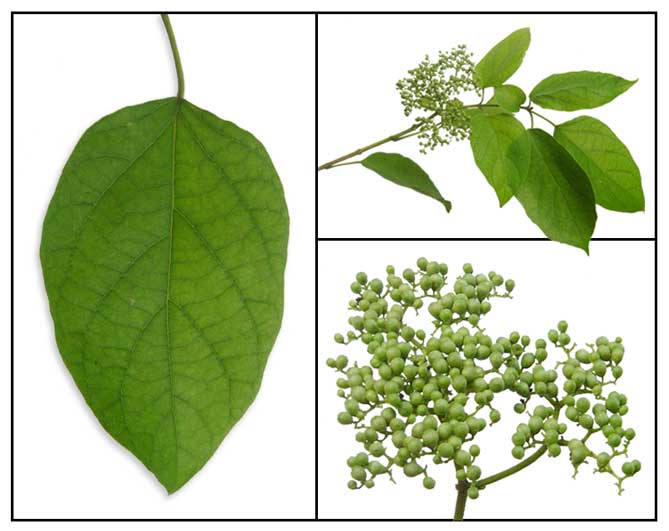
Alagau is a small hairy tree,
3 to 8 meters high. Leaves are ovate to broadly ovate, 10 to 20
centimeters long, with broad, rounded, or somewhat heart-shaped base, and pointed
tips. Under surface of the blade is usually covered with
short hairs, aromatic when crushed. Flowers are greenish-white
or nearly white, 4 to 5 millimeters long and borne on terminal inflorescences
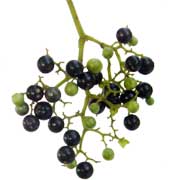
(cymes) 8 to 20 centimeters in diameter. Fruit is fleshy, dark purple, rounded,
about 5 millimeters in diameter.
Distribution
- Native to the Philippines.
-
Common In thickets and
secondary forests at low altitudes from the Batan Islands and northern Luzon to Mindanao, in most islands and provinces.
- Also native to Assam, Bangladesh, Bismarck Archipelago, Borneo, Cambodia, Christmas Is., Hainan, India, Jawa, Laos, Lesser Sunda Is., Malaya, Maluku, Myanmar, New Guinea, Northern Territory, Philippines, Queensland, Sri Lanka, Sulawesi, Sumatera, Taiwan, Thailand, Vietnam. (13)
 Constituents Constituents
- Leaves do not contain
alkaloid, tannin, saponin or cyanogenetic substance.
- Leaves yield 0.02 percent yellowish-green essential oil with a characteristic
scent.
- Study isolated two iridoid glycosides: 2″- and 3″-caffeoyl-6-α-l-rhamnopyranosylcatalpol respectively.
(6)
- Study isolated ten 10-O-acylated derivatives of catalpol and asystasioside E from a 1-butanol-soluble fraction of a methanol extract of leaves.
- Study isolated acyclic monoterpenediol diesters, premnaodorosides A, B, and C, together with
phenethyl alcohol glycosid4es, verbscoside, isoacteoside, bioside (decaffeoylverbascoside) and cistanoside F. (10)
- Leaves yielded premnethanosides A and B, premnaodorosides A,B, and C, premnosides A-D, 2''-caffeoyl-6-α-L-rhamnopyranosylcatalpol, and 3''-Caffeoyl-6-α-L-rhamnopyranosylcatalpol. (17)
- Crude leaf extract yielded steroids, terpenoids, flavonoids and hydrolysable tannins. (see study below) (19)
- GC-MS analysis of P. odorata lipoidal extract yielded 25 compounds representing 72.15% of total identified compounds consisting mainly of fatty acids in free and ester forms (%). Linoleic acid and its ester form were the main compounds representing 18.58% and 19.00% of total compounds, respectively. (see study below) (21)
- GC-MS analysis showed the volatile oil consisted of monoterpenes, sesquiterpenes, diterpenes, and higher alkanes; monoterpens and sesquiterpenes were the major oil fractions. Trans-caryophyllene (29.403% and 14.638%) and ß-phellandrene (22.390 and 11.701%) were major compounds in leaves and young stem oils, respectively.
(see study below) (24)
- GC-MS and GC-FID study of leaf essential oil yielded 97 constituents accounting for 94.19%, 92.27%, 91.95% and 92.63% for POS (spring), POM (summer), POA (autumn) and POW (winter) whole essential oils. β-Caryophyllene was the main metabolite in the oil in the different seasons. (see study below) (30)
Properties
- Sudorific, pectoral, carminative.
- Studies have suggested antimicrobial, antiviral, cardiotonic, anticoagulant, hepatoprotective, antitubercular, antitumor, antimutagenic, anti-parasitic, antioxidant properties.
Parts utilized
Leave, shoots, fruits, and flowering tops,
fresh or dried.
Uses
Culinary
Young leaves used in the cooking of "paksiw" and "bopis."
Folkloric
· In the Philippines, sugared
decoction of leaves with a little "calamansi" as tea helps loosen up phlegm and effective for coughs.
- The Ayta community of Dinalupihan, Bataan, Philippines apply decoction of leaves and shoots directly to wounds to facilitate healing. (25)
- Ati negrito
use external application of boiled leaves for postpartum bleeding. (27)
- The Ilongot-Egongot community of Aurora, Philippines apply leaves and stem-bark
to wounds. (28)
· Decoction of fresh leaves used for vaginal irrigation.
· Decoction of leaves for fever and colds, cough and bronchitis, fever blisters of the lips and stomachaches.
· "Kochoi," a local patent preparation, is claimed to benefit tuberculosis.
· Decoction of leaves used for flatulence (gas pains) in adults; in children, crushed leaves mixed with a little coconut or sesame oil are applied to the abdomen.
· Crushed leaves applied to forehead and temples for headaches.
· Leaf decoction has been used for tuberculosis.
· Roots are chewed and the saliva swallowed for cardiac troubles.
· Infusion of leaves is carminative.
· Decoction of roots, leaves, flowers, and fruits used as sudorific, pectoral, and carminative.
· Decoction of shoots used as parasiticide.
· Decoction of leaves used for bathing infants; also used as treatment for beriberi.
· Extract of leaves for cleaning wounds and for ticks and fleas.
· Leaves applied over the bladder facilitates urination.
Others
• Pito-pito: Leaves are one of the
seven ingredients of the popular herbal Filipino tea blend – alagaw,
banaba, bayabas, pandan, manga, anis and cilantro. (See: Pito-Pito)
• Ethno-Veterinary / Fumigation: Dried leaves and bark used for fumigation of poultry houses, reportedly effective for getting rid of lice and ticks. (11)
New
• Decoction of leaves and flowering tops used as vaginal wash
or douche; antiseptic properties make it useful for cleansing and incorporation
with bath-care products.
Studies
• Collagen Network / Acetoside: Study of methanol extract of leaves of Premna
odorata exhibited a promotion of collagen network formation by M cells
and isolated acetoside, an phenylethanoid with a variety of biological
activities. Acetoside may contribute to wound healing. (1)
• Anti-Viral Activity: Study of 61 medicinal plants in Malaysia showed P odorata was 1 of 11 plants to show selective activity against vesicular stomatitis (VSV) viruses. (2)
• In-vitro Photo-Cytotoxic Activity: A study of 155 extracts from 93 species of plants in Malaysia screened for in vitro photo-cytotoxic activity using a human leukemia cell line, P odorata was one of 29 plants that was able to reduce in vitro cell viability by more than 50% when exposed to broad spectrum light. (3)
• Hepatoprotective / Cytotoxic Activity: Study showed the alcoholic extract with significant hepatoprotective activity evidenced by decrease of serum enzymes, bilirubin and lipid peroxidation, comparable to drug silymarin. It also exhibited significant in-vitro cytotoxic activity. Results showed the alcoholic extract not only as an effective hepatoprotective agent, but with also significant antitumor activity. (4)
• Antiparasitic Activity: In a study of 18 medicinal plants in New Caledonia evaluated in vitro against several parasites, Scaevola balansae and Premna serratifolia were the most active against Leishmania donovani. (5) Study evaluated the anti-parasitic activity of three invasive verbena species (Premna odorata, Lantana camara, and Duranta erecta) against earthworm Lumbricus terrestris and roundworm Ascaris lumbricoides. All three plant extracts were active against earthworm and roundworms. For the alagao extract death time ranged from 0.30 to o.45 minutes for earthworms and 32.52 to 47.48 minutes for roundworms. (22)
• E. Coli Inhibitory Activity / Bark: Various extracts were tested against E. Coli. A 100% ethanol bark extract showed activity against E. coli, while aqueous extract concentrations were inactive against E. coli. However, the inhibitory activity could not compete with ciprofloxacin. (7)
• Diosmetin / Acacetin: Study of leaves isolated diosmetin and acacetin. Diometin has been commercially available as the glycoside diosmin, used as a vasotonic agent for the treatment of varicose veins, hemorrhoids and other venous diseases.
• Flavones / Antimicrobial / Anti-Inflammatory / Chemopreventive: Partitioning and fractionation of crude ethanolic extract of leaves yielded two amorphous powders identified as flavone aglycones — acacetin and the non-widespread diosmetin. Earlier studies reported antimicrobial, anti-inflammatory, and chemopreventive activities. (8)
• Antitubercular Constituents / Leaves: Study evaluated the antitubercular property of crude extract and sub-extracts of leaves and isolated the bioactive principles from active fractions. Crude methanolic extract and sub-extracts showed poor inhibitory activity against MTb H37Rv. However, increased inhibitory potency was seen from fractions eluted from the DCM extract. Purification of the most active fraction yielded 1-heneicosyl formate (1), 4:1 mixture of β-sitosterol (2), stigmasterol (3) and diosmetin (4). Compound 1 had an MIC of 8 µg/mL. (14)
• Cytotoxicity Against Selected Human Cancer Cell Lines / Bark and Leaves: Study evaluated the cytotoxic activities of P. odorata leaves and bark, A. camansi and G. sepium against selected human cancer cell lines. Results showed the leaves and bark hexane fractions of P. odorata and A. camansi leaves to be highly cytotoxic against the cancer cell lines. The PO bark hexane extract showed highest selectivity index for HCT116, MCF-7 and A549 cancer cell lines. (15)
• Antibacterial / Leaves: Study evaluated the antibacterial activity of leaves extract against selected human pathogens viz. Bacillus subtilis, E. coli, S. aureus. Results showed antibacterial activity with dose dependent inhibition. (16)
• Phlebotonic Diosmetin / Leaves: Study isolated phlebotonic diosmetin from the leaves of Premna odorata. On brine shrimp lethality assay, the LC50 of the crude ethanolic extract was 564 µg/ml while a decoction was 685 µg/ml. Among the partitioned fractions, the hexane-soluble fraction (HSF) had the highest bioactivity at 81.2% lethality. The diosmetin from the dichlormethane fraction (DMF) showed 76.9% lethality, which suggested no observable synergistic effects on diosmetin's bioactivity by other principles present in the crude ethanolic extract. Results justify the isolation and use of pure diosmetin as medicinal. (18)
• Antinociceptive / Anti-Inflammatory / Leaves: Study investigated the antinociceptive and anti-inflammatory activities of Premna odorata crude leaf extract in in-vivo and in-vitro methods. No toxicity was seen at dose of 2000 mg/kbw. In-vivo testing showed antinociceptive and anti-inflammatory activities. At 1000 mg/kbw, there was significant inhibition of hind paw edema with suppression of early phase of inflammation. The crude leaf extract showed significant inhibition of 5-lipoxygenase (41.38%) and selective inhibition of cycloxygenase-2 (54.51%) enzymes, suppressing the release of inflammatory mediators. (19)
• Antimutagenic / Leaves: Study investigated selected Philippine plants for their ability to inhibit chromosomal damage induced by tetracycline in an in-vivo micronucleus test (MT). Study established the antimutagenic activity of C. ovatum, C. religiosa, P. campechiana and Premna odorata. (20)
• Anti-Inflammatory / Composition / Lipoidal Extract: Study evaluated a lipoidal extract for chemical constituents and anti-inflammatory activity. The n-hexane extract showed anti-inflammatory activity which interferes with COX-II and IL-6 roles during progression of inflammatory disease. (see constituents above) (21)
• Acylated Iridoids and Rhamnopyranoses / Transcription Factor Receptor Inhibitor for Control of Breast Cancer: Study yielded three new acylated iridoid glycosides (1-3) and two new acylated rhamnopyranoses (9 and 10) along with ten known compounds. Results showed the acylated rhamno-pyranoses are potential novel c-Met inhibitors to control c-Met-dependent breast malignancies. (23)
• Antitubercular (Anti-TB Activity) / Volatile Oil: Study evaluated the volatile oil isolated from different plant organs (leaves, young stems, and flowers) for anti-tuberculosis activity. Results showed the VO exhibited anti-TB activity would could be related to the presence of cyclic terpenes (major) and acyclic oxygenated terpenes (minor) compounds. (see constituents above) (24)
• Antimicrobial and Antioxidant / Natural Preservative in Ointment Formulation: Preservatives are substances added to food and pharmaceutical to extend shelf-life. Synthetic preservatives have been reported to cause adverse effects. Study evaluated
the preservative efficacy of five plants ie., Psidium guajava, Premna odorata, Mimosa pudica, Allium sativum and Zingiber officinale. Ethanolic extract of all the studied plants yielded sapogenins and glycosides. AAS analysis showed the extracts are safe. Among the five plants, P. guajava and P. odorata exhibited highest antioxidant activity in DPPH assay at 0.25-0.50 mg/ml and 1-5 mg/mL, respectively. P. guajava showed highest preservative capability. (26)
• Antifungal: Fungal organisms are opportunistic pathogens commonly found in the oral cavity and vagina. Study evaluated the antifungal activity of P. odorata extracts against two clinical fungal isolates. ChMa extracts demonstrated significant antifungal activity against Candida albicans, Monilinia spp., higher than a water extract. DES2 reported the highest phenolic contents (3.58 mg GAE/100 g DW) and total flavonoid content (0.028 mg RE/100g DW). Results suggest a friendly green alternative with low toxicity with potential application in antifungal therapy. (29)
• Anti-Ageing Potential / Leaf Essential Oil: Study showed that different compounds in essential oil of P. odorata leaves exhibited binding to active sites with variable degrees suggest anti-ageing potential. Palmitic acid displayed the highest fitting for both collagenase and elastase active centers in both pH-based and rule-based ionization methods. In vitro assays showed considerable anti-elastase and anti-hyaluronidase potential as evidenced by IC50s of 49.3 and 37.7 µg/mL, respectively. The EO displayed mild anti-collagenase potential. Results suggest anti-ageing potential for a naturally occurring deg that can be incorporated in anti-ageing and anti-skin wrinkling cosmetics. (30
• Neuroprotective / Aluminum Toxicity: Study the neuroprotective effect of P. odorata extracts in rats with aluminum-induced toxicity. Aluminum toxicity resulted in decline of GSH, elevation of MDA and AChE activity. Except for decreased GABA, there was marked increased in amino acid and monoamine neurotransmitters, and increase in mRNA expressions of TNF-α and COX-2. Results showed the P. odorata extract reduced oxidative stress and counteracted the augmentations in AChE, along with marked improvements in most measured neurotransmitters with downregulation of pro-inflammatory gene expression, and restoration of altered histopathology induced by AlCl3. (31)
• Hepato-Nephroprotective / Aluminum Toxicity: Study evaluated the effect of P. odorata on hepatic and nephrotoxicity induced by aluminum chloride (AlCl3) in Wistar rats. AlCl3 significantly increased the activities of liver enzymes and increased total cholesterol, triglyceride, urea, and creatinine concentrations, and significantly reduced glutathione content and increased catalase activity, malondialdehyde, and TNF-α in the liver and kidney tissues. Co-treatment of extract with AlCl3 alleviated its harmful effects on biochemical parameters and reduced histopathological alterations induced by AlCl3. Study suggests the potent protective effect against oxidative stress induced by Al toxicity may be via downregulation of MMP9 and TGF-ß gene expression. (32)
• Immunomodulatory in Mycobacterium tuberculosis / Volatile Oils from Leaves, Flowers, and Stems: Study evaluated the in vivo anti-TB efficacy of volatile oils of P. odorata from different parts of P. odorata in mice. TB-infected mice showed significant increase in serum levels of TNF-α, IFN-γ, IL-1ß and mRNA expression levels of TLR-4 & NF-kB and decrease in IL-10 and total antioxidant capacity. Treatment with VOs from leaves, flowers, young stems, and combination of the three oils reversed these effects. Study suggests the immunomodulatory effects of VOs against TB infection involve the TLR-4/NF-kkB signaling pathway and antioxidant effects. (33)
• Hepatoprotective / Anti-Inflammatory / Antioxidant / Leaves: Study evaluated crude extract of leaves for scavenger activity on HepG2 human liver cancer cell line and hepatoprotective effect in alcohol-inflamed liver in female Wistar albino rats. Treatment with defatted crude and n-hexane extract of leaves significantly improved liver damage evidenced by reduction of elevated biochemical parameters. Reduced levels of GSH and TAC were normalized and histological collagen fiber distribution returned to its normal pattern. The anti-inflammatory and antioxidant effects may be partly due to combined effects of phytochemicals and synergistic interactions. (34)
• Silver Nanoparticles / Leaves: Study reports on the eco-friendly and cost-effective biosynthesis of silver nanoparticles using the Alagaw plant as reducing agent. (35)
• Antidiabetic / Aerial Parts: Study evaluated in vitro α-amylase, α-glucosidase, and glucose diffusion inhibition activities of aerial parts of P. odorata. DCM bark and fruit/flower extracts showed significant
α-amylase and α-glucosidase inhibitory activities. The bark extract and flower/fruit extracts also promoted increase (89% and 97%) in glucose uptake in yeast cell and significant glucose diffusion inhibition (73% and 69%) across dialysis membrane, respectively. Results suggest antidiabetic effects and a potential source of novel compounds for treatment of diabetes. (36)
• Triple-Negative Breast Cancer Suppressive Activity / Antioxidant / Stems: Study of young stems yielded four new acylated rhamnopyranoses 1-4, along with 14 known compounds 5-19. Isolated compounds were evaluated for cell proliferation and migration inhibition activities against invasive human triple-negative breast cancer cells MDA-MB-231 and MCF-7. and normal cell line MCF-10A. Compound 1 was the most active as antiproliferative agent, showing high to moderate antiproliferative effect with IC50s of 4.95 and 17.7 µM against MCF-7 and MDA-MB-231, respectively. Compounds 1-10 suppressed MDA-MB-231 cell migration in the wound healing assay at 10 µM concentration. Compounds 1-5 exhibited highest DPPH radical scavenging activities with IC50s range of 17.5-200.43 µg/mL. Acylated rhamnopyranoses can be considered good scaffolds for developing new anti-breast cancer and antioxidant compounds. (37)
• Antimicrobial / Icetexane Diterpenoids / Roots: Study of ethyl acetate extract of roots isolated two icetexane diterpenoids, PPA-1 and PPA-2. PPA-1 showed medium activity against Bacillus pumilus and weak activities against B. subtilis, Staphylococcus aureus, Candida albicans, and E. coli. PPA-2 showed medium activities against B. pumilus, C. albicans and weak activity against E. coli. (38)
Availability
Wild-crafted. |