 |

Family • Fabaceae / Leguminosae
Aroma
Acacia farnesiana (Linn.) Willd.
SWEET ACACIA
Jin he huan
|
| Scientific name | Common names |
| Acacia acicularis Willd. | Aroma (Span., Tag.) |
| Acacia densiflora (Small) Cory | Kandaroma (Ilk.) |
| Acacia edulis Humb. & Bonpl. ex Willd. | Romas (Tag.) |
| Acacia farnesiana (Linn.) Willd. | Kambang jipoun (Sul.) |
| Acacia ferox M.Martens & Galeotti | Ant acacia (Engl.) |
| Acacia indica (Poiret) Desv. | Cassie flower (Engl.) |
| Acacia lenticellata F.Muell. | Huisache (Engl.) |
| Acacia minuta (M.E.Jones) R.M.Beauch. | Mimosa bush (Engl.) |
| Acacia pendunculata Willd. | Needle bush (Engl.) |
| Acacia smallii Isely | Sweet acacia (Engl.) |
| Farnesia odora Gasp. | |
| Farnesiana odora Gasp. | |
| Mimosa acicularis Poir. | |
| Mimosa farnesiana Linn | |
| Mimosa indica Poiret | |
| Mimosa pendunculata (Willd.) Poir. | |
| Mimosa suaveolens Salisb. | |
| Pithecellobium acuminatum M.E.Jones | |
| Pithecellobium minutum M.E.Jones | |
| Poponax farnesiana (L.) Raf. | |
| Vachellia densiflora Small | |
| Vachellia farnesiana (L.) Wight & Am | |
| Acacia is a name shared by many species of Philippine plants, both scientific and common names: (1) Acacia concinna, acacia, a prickly shrub found in La Union, Benguet, and Ilocos Sur provinces of northern Luzon; (2) Albizzia lebbect, acaci, langil, mimosa; (3) Samanea saman, rain tree, acacia, for Acacia concinna; (4) Acacia farnesiana, aroma; (5) Acacia glauca, ipil-ipil; (6) Acacia niopo, kupang; (7) Acacia crassicarpa. | |
| Acacia farnesiana (L.) Willd. is an accepted name. The Plant List | |
| Other vernacular names |
| ARABIC: Futnā, Sunt alanbr. |
| ASSAMESE : Tarua kadam. |
| BENGALI : Guva babul, Guya babla, Guya babula, Guya bebula. |
| BURMESE: Huan lon gyaing, Mawk-nawn-hkam, Nan-lon-kyaing. |
| CHINESE: Ya zao shu, Jin he huan. |
| CZECH : Akácie farnesova, Vonná mimóza . |
| DANISH : Duftakacie. |
| FRENCH: Acacia jaune, Acacia de Farnèse, Acacia odorant, Acacie odorante, Cassie ancienne, Cassie odorante, Cassier de Farnèse, Cassier du levant. |
| GERMAN : Antillen-Akazie, Cassia-Blütenöl, Farnesische Akazie, Süsse Akazie, Schwammbaum, Westindische Akazie. |
| GREEK: Akakia i farneziani, Amperiá, Gatzia. |
| GUJARATI: Gandhelo babul, Gandhelokhair, Gu baval, Jheribaval. |
| HINDI: Belati babool, Belati babul , Belaiti kikar, Dei babul, Deobabul, Gabur, Ghand babul, Gukikar, Passi babul, VVilayati babul, Vilayati kikar. |
| JAPANESE: Kingoukan, Kingoukan, Kingoukan. |
| KANNADA: Banni mara, Guh babul, Jali, Karijali, Pissi babul, Sannajali, Vilayati babul, Vilayati kikar. |
| MALAYALAM : Kariveelum, Pikharu vil, Pivelam, Pivelum. |
| MARATHI : Deobabul, Gubabul, Gukikar, Guyababul, Vilayatibabul, Yeribabul. |
| MEXICO: Huizache. |
| NEPALESE : Ganhaune khayar. |
| ORIYA : Gonddhoguanria, Gudoyaboburo, Kapur, Vitkira. |
| POLISH : Akacja farnesa . |
| PORTUGUESE : Acácia-de-dioscoróides,, Acácia-esponja, Esponjeira (Brazil), Espinilha, Espinilho. |
| RUSSIAN: Akatsiia Farneza, Akatsiia farnezskaia. |
| SANSKRIT : Arimaedah, Arimeda, Arimedaka, Asimeda, Irimeda, Godhaskanda, Girimeda, Kalaskandha, Krimishatrava, Marudruma, Rimeda, Vita, Vitkhadira. |
| SINHALESE : Seenidda. |
| SPANISH: Aroma, Aroma amarilla, Aromo, Aromo creole (Cuba), Aromo macho, Cachito, Cuji aromo, Cuji cimarrón, Espinial, Espinillo blanco, Espino blanco (El Salvador), Espino ruco (El Salvador), Huisache (Mexico), Huisache dulce, Mimosa. |
| SWEDISH : Doftakacia. |
| TAMIL : Kadivel, Kasthurivel, Kasturi velam, Odaimaram, Pikkaruvel, Pivel, Vedda vala, Vedda vela, Vedumul, Vedavali. |
| TELUGU : Arimdamu, Kamputumma, Kasturitumma, Kusthuri, Murikitumma, Murki tumma, Nagatumma, Nuga tumma, Piketumma, Piyyatumma. |
| THAI: A jao chiu, Boo ngaa in doh nee siia, Daawk khahm dtaI. |
| TURKISH : Akasya, Akasya çiçeği, Akasyası, Amber agact.. |
| URDU : Knebawal. |
| OTHERS: Chingonglei hangampal (Manipur, India). |
|
Botany Distribution Constituents Properties Parts utilized
• Anti-Inflammatory / Cytotoxicity: Study yielded four new diterpenes–acasiane B, farnesirane A, farnesirane B with three known diterpenes and eight flavonoids. Some of the compounds exhibited cytotoxicity to human cancer cell lines while some showed moderate anti-inflammatory activity. (1) • Vibrio cholera inhibition: Study of 32 medicinal plants showed the ethanolic extracts of A farnesiana and Artemisia ludoviciana effectively inhibited bacterial growth of Cholera vibrio strains, effects on enterotoxin production and adhesion were also studied. (3) • Natural Herbicide: In a study screening 6 potentially allelopathic plant species, the seed extract of A. farnesiana exhibited 32% inhibition of growth of L. aequinoctialis. (4) • Anti-Inflammatory: (1) A study of 14 plants of the Mexican medicinal flora was studied for its anti-inflammatory activity. Acacia farnesiana plant extract showed activity against induced hind-paw edema. (2) Study of ethanolic extract showed significant anti-inflammatory activity in both carrageenan-induced paw edema and cotton pellet-induced granulation models. • Antimalarial: In a study of 10 vegetal extracts, eight including Acacia farnesiana showed good activity against Plasmodium falcifarum. (6) • Antimicrobial / Antioxidant: Study of ethanol extract showed a response to all antioxidant assays in a concentration dependent manner. The extract also exhibited antimicrobial activity against Bacillus subtilis and Saccharomyces cerevisiae. The extract yielded flavonoids galloylglycoside and flavonoids glycosides. Quercetin deoxyhexoside was tentatively identified as the major constituent of the extract. Absence of toxicity was observed from the brine shrimp lethality assay. (10) • Antidiarrheal / Acute Toxicity Evaluation: Study of extracts of stems and leaves using a charcoal meal method showed inhibition of movement of gastrointestinal content. Results support the use of T. mucronatum and A. farnesiana as antidiarrheal agents. Extracts did not induce immediate toxicity in the experimental test conditions. LD50 (g/kg) of aqueous and ethanol extracts were 1.499 and 0.775, respectively. (13) • Antimicrobial: Study of various extracts of fruits showed the benzene, chloroform, methanol, and water extracts showed activity against Gram-positive bacteria (Bacillus cereus, Micrococcus roseus, Staphylococcus aureus), Gram-negative bacteria (E. coli and Pseudomonas aeruginosa) and fungal species (Candida tropicalis). (14) • Antihyperglycemic Activity: Study evaluated an active fraction from an aqueous extract for anti-hyperglycemic activity in alloxan-induced diabetic rats. Results showed promising anti-diabetic activity. The active fraction was devoid of conspicuous toxic symptoms. (15) Study evaluated extracts of Acacia farnesiana for anti-hyperglycemic activity. A water extract significantly lowered the blood glucose level. Activity was found in the soluble fraction. Results suggest a direct stimulatory effect of the active fraction on glucose uptake without involvement of insulin, which may be the major mechanism. (17) • Phytoremediation / Lead: Study showed the suitability of A. farnesiana for lead-phytostabilization purposes. Lead concentrations below 500 mg/L had no significant effect on lipid peroxidation and enhanced the glutathione content. (16) • Defluoridation / Adsorbent: Study evaluated activated Acacia farnesiana carbon as adsorbent for removal of Fluoride ions from aqueous solution. Results showed effective removal of F ions by indigenously prepared activated carbon, and presents an alternative adsorbent as commercial activated carbon for water treatment for removal of Fluoride ions. (18) • Antiulcer / Adsorbent: Study evaluated the ulcer healing activity of Acacia farnersiana methanol leaf extract against ulcer induced model in rats. Results showed the methanol extract significant reduced the ulcer index compared to control Ranitidine. (19) • Acetylcholinesterase and NADH Oxidase Inhibitory Activity: Acetylcholinesterase catalyzes the hydrolysis of neurotransmitter acetylcholine and termination of nerve impulses in the cholinergic system. A methanolic extract of aerial parts exhibited significant AChE inhibitory and NADH oxidase inhibitory activity. (20) • Anti-Inflammatory / Lectin-Like Protein: Study evaluated the anti-inflammatory activity of AFAL (Acacia farnesiana lectin-like protein) in a carrageenan model. AFAL binding to carrageenan can be explained by absence of sixth ß-strand (posterior beta sheets) and two ß strands in the frontal region. Study suggests AFAL probably has the capacity to interfere in the inflammatory process through reduction of IL-8 and simultaneously exert its activity of binding to carbohydrates as demonstrated by inhibition tests and competition with selectins. (21) • Cyclopropenoid Fatty Acids: Study of seed oils yielded the presence of unusual fatty acids, cyclopropenoid fatty acids (CFA), characterized as 7-(2-octacyclopropen-1-yl) heptanoic acid (malvalic acid) (5%) and 8-(2-octacyclopropen-1-yl) octanoic acid (sterculic acid) (4%). The fatty acid profile suggests the possibility for potential industrial application. (22) • Bronchodilator / Anti-Inflammatory: Study reports the smooth muscle relaxant and anti-inflammatory effect of a glycosidal fraction obtained from unripe pods of Acacia farnesiana. Results showed a direct relaxant effect on bronchial muscles and inhibition of carrageenan and formaldehyde induced inflammation. (24) • Antioxidant / Protection Against Oxidative Induced Damage: The antioxidant protection of acacia pods extracts (Acacia shaffneri and Acacia farnesiana) suggest the possible transference of antioxidant components and protective effects to animal products (milk, meal, and by-products) from Acacia pods with this vegetation is included in the diet. (26) • Antibacterial / Antioxidant / Anti-Inflammatory: In a study of ethanolic extracts of five plants viz., Acacia farnesiana, S. alata, S. grandiflora, S. cumini, and T. divaricata, all tested extracts showed antioxidant and antibacterial activity. All extracts exerted anti-inflammatory activity as evidenced by reduction of interleukin (IL)-6 secretion and/or tumor necrosis factor (TNF)-a production. (28) • Damage to Membranes of Vibrio cholerae: Study evaluated the effects of various extracts of edible and medicinal plants on Vibrio cholerae cells. Results showed methanolic plant extracts (Ocimum basilicum, Opuntia ficus-indica, Artemisia ludoviciana, Acacia farnesiana) were most active with MBC (minimum bactericidal concentrations) ranging from 0.5 to 3.0 mg/ml. The extracts were able to disrupt the cell membranes of V. cholerae cells causing increased membrane permeability, decrease in cytoplasmic pH, cell membrane hyperpolarization, and decrease in cellular ATP concentration. Results suggest potential alternative for control of V. cholerae contamination in foods and diseases associated with the microorganism. (29) • Essential Oil / Antifungal: Study evaluated the essential oils of two Thai medicinal plants: Frankincense oil (Boswellia carteri Bird.) and Cassio oil (Acacia farnesiana Linn.) against 7 species of economically important rice pathogenic fungi vis. A brassicola, A flavus, B oryzae, F moniliforme, F proliferatum, P arisea and R solani. Results showed the antifungal properties on both mycelial growth and spore germination. (31) • Antiproliferative Against Cancer Cell Lines / DNA Cleavage Activity / Pod: Study evaluated the antiproliferative activity of various solvent extracts (n-hexane, dichlormethane, and methanol) of A. farnesiana pod on four cancer cell lines viz., chronic myelogenous leukemia (K562), breast cancer (MCF-7), hepatocellular carcinoma (HepG2), colorectal adenocarcinoma (Colo205) and DNA cleavage activity on CT DNA. The n-hexane contract showed activity against MCF-7 (21.70%) cell line and methanol extract against K562 (24.5%) and HepG2 (23.3%) cell lines. DNA cleavage was exhibited by extracts and fractions. (34) • Anti-Inflammatory / Antinociceptive / Globulins / Seeds: Study evaluated the anti-inflammatory and analgesic activities of proteins isolated from A. farnesiana seeds. Five different protein fractions isolated (albumin, globulin, prolamin, acidic and basic glutelins) were evaluated for protein pattern, hemagglutinating and proteolytic activities. Globulins reduced paw edema inducted by carrageenan in a dose-dependent manner along with reduction of myeloperoxidase activity. Pre-treatment with globulins reduced abdominal constrictions induced by acetic acid as well as paw licking time induced by formalin. (35) • Anti-Urolithiatic: Study evaluated the in vitro anti-urolithiatic activity of A. farnesiana. Highest dissolution of calcium oxalate crystals was observed in the aqueous extract. Neeri was used as standard drug. (36) • Anthelmintic / Leaves: Study evaluated the invitro anthelmintic activity of methanolic leaf extract of A. farnesiana against Indian earthworm Pheretima posthuma. Albendazole was used as standard drug. Results showed significant anthelmintic activity at highest concentration of 100 mg/ml in measures of time for paralysis and death. (38) • Antibacterial / Cytotoxic / Toxicity Study: Study evaluated the in vitro antibacterial activity of extracts of A. aroma and its toxicity on Vero cell. Extracts showed in vitro inhibitory activity against Staphylococcus aureus and Listeria spp. The extract was not cytotoxic to Vero cells. Concentrations below 1000 µg/ml were considered non-toxic. Studies validate the external use of A. aroma extracts as complementary or alternative medicines to combat pathogenic organisms. (39) • Anti-Ulcer / Leaves: Study evaluated the ulcer healing activity of Acacia farnesiana leaves in ethanol-induced ulcers in male Wistar albino rats. Results showed a methanol extract of leaf (200mg/kg) showed greater ulcer protection (58.35 compared to 61.12 % of RD). (40) • Arsenic Tolerance / Phytostabilization Potential: Study evaluated the tolerance and bioaccumulation of As by A. farnesiana. Results showed a remarkable tolerance to AsV and also an ability to bioaccumulate considerable amounts of As, suggesting potential use for phytostabilization purposes. (41) • Silver Nanoparticles / Antibacterial / Antioxidant / Seeds: Study reports the green synthesis of silver nanoparticles (AgNPs) using A. farnesiana seed extract as reducing agent under microwave irradiation. The in vitro antibacterial screening of AgNPs showed the bio-capped AgNPs have higher inhibitory actio for E. coli and S. aureus followed by B. subtilis and P. aeruginosa. The AgNPs also showed good antioxidant property. (42) • Antitubercular and Antidysentery Activities: Study evaluated various extracts for chemical composition and activity against Mycobacterium tuberculosis and dysentery bacteria. Extracts showed antitubercular (MIC 100-200 µg/mL) and antidysentery activity (MIC 100-200 µg/mL). Methyl gallate and its acetylated derivative showed activity against sensible strain M. tuberculosis H37Rv with MICs of 50-25 µg/mL, respectively. Flavanone prunin showed activity against MDR M. tuberculosis G122 (MIC 50 µg/mL). Methyl gallate, gallic acid and prunin showed activity against C. jejuni (MIC 50 µg/mL). (see constituents above ) (43) • Damage to Cell Membranes of V. cholera: Study evaluated the changes in membrane integrity, membrane potential, internal pH, and ATP synthesis in Vibrio cholerae cells after exposure to various plant extracts. Acacia farnesiana, Ocimum basilicum, Opuntia ficus-indica, Artemisia ludoviciana were the most active against V. cholerae. The plant extracts were able to disrupt cell membranes of V. cholerae cells causing increased membrane permeability, decrease in cytoplasmic pH,, cell membrane hyperpolarization, and decrease in cellular ATP concentration in all strains tested. The plant extracts have potential as future alternatives to control V. cholerae contamination in foods and diseases associated with the organism. (44) • Novel Encapsulated Herbicide Delivery Mechanism / Mimosa Bush Control: Study evaluated a novel herbicide delivery mechanism that minimizes risk of spray drift and potential non-target damage. The formulation involves implantation of the encapsulated granular herbicides into the stem of intact plants or into the stump after cutting off plants close to ground level. Aminopyralid + metsulfuron-methyl was consistently most effective on cut stump and intact plants, while clopyralid provided highest mortality when applied to cut stumps and single-stemmed intact plants. Highest efficacy was achieved on single stemmed plants. The method resulted in reduction in use of herbicide and environmental contamination while improving speed of treatment. (45) • Antioxidant / Analgesic/ Antidiarrheal: In a study of methanol extract and its different fractionates, the ethyl acetate soluble fraction (EASF) exhibited highest free radical scavenging capacity (IC50 21.49 µg/mL) compared to standard BHT (IC50 20.41 µg/mL). Phenolic content was 39.26 mg GAE /g extract. At 400 mg/kbw, the extract reduced castor oil-induced diarrhea in a mice model, statistically significant (P<0.05) 47.62% compared to standard loperamide at 66.67% reduction of diarrheal feces. Central and peripheral analgesic activity of the crude methanol extract was evaluated by tail flick and acetic acid-induced writhing methods in Swiss albino mice. In tail flick method at doses of 200 and 400 mg/kbw, there was 221.09 and237.09% elongation of pain response time, compared to morphine at 518.34%. The same doses cause 63.27 and 69.39% reductions in acetic acid-induced abdominal constrictions in mice, compared to ASA with 75.51% inhibition. Results suggest the ME possesses antioxidant, antidiarrheal, and analgesic activities. (47) • Whole Pods (Flesh and Seeds) as Alternative Feed for Sheep: Two studies evaluated the use of pods of Huizache (A. farnesiana) in measures of performance and digestibility in hair growing ewe lambs. Results showed huizache pods may be an alternative feed when included up to 12% of dry matter in diets for sheep growing moderately. (48) • Lectin-Like Protein / Phytopathogens / Antibacterial / Seeds: Acacia farnesiana lectin-like protein (AFAL) showed bacteriostatic effects against Gram negative Xanthomas axonopodis pv. passiflorae and gram-positive Clavibacter michiganensis, probably due to ability of AFAL to interact with the bacterial cell wall it induced macroscopic change. Antibacterial effect of flavonoids (rutin, quercetin and morin) was observed with low concentrations against both bacterial strains. Against root-knot nematode Meloidogyne incognita, AFAL showed reduction in larval mobility. Results suggest that lectins probably play a role in plant defense not only against invertebrate phytopathogens, herbivores and fungi but also against bacteria. (49) • SecoCassine Diterpenoids / Cytotoxicity / Roots: A preliminary study showed a methanolic extract of root of A. farnesiana with selected cytotoxicity against HSC-3 cancer cell line. after partitioning, n-hexane- and EtOAc- soluble fractions led to isolation of six new diterpenoids, farnesiranes CI, CII, DII, EI, and EII, together with 18 known compounds. Farnesirane CI in 30 µM showed cytotoxic activity against HSC-3 cell line. (50) • Hypoglycemic / Antioxidant / Leaves: Study evaluated the hypoglycemic and antioxidant potential of leaves extracts from Delonix elata and Vachellia farnesiana in streptozotocin-induced male diabetic rats, using measures of HbA1c, protein and lipid profiles, creatinine, BUN, ALT, AST, MDA, serum insulin, GPx and CAT levels. Results showed the extracts exhibited significant antioxidant and hypoglycemic activity. (52) Availability - Wild-crafted. - Plants in the cybermarket. |

 |
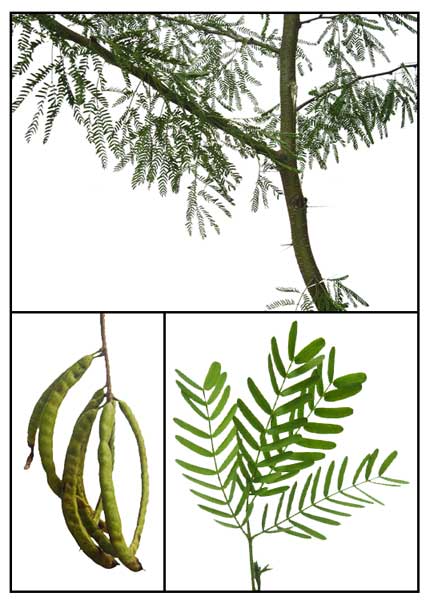
Photo © Godofredo Stuart / StuartXchange |
| OTHER IMAGE SOURCE / SEEDS / Acacia farnesiana / Steve Hurst - USDA-NRCS PLANTS Database - Not copyrighted image / USDA / alterVISTA |
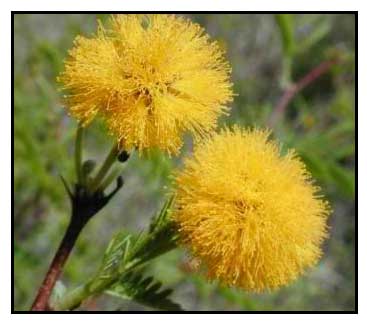
| OTHER IMAGE SOURCE / Flowers / Acacia farnesiana / Forest & Kim Starr - Plants of Hawaii - Creative Commons Attribution / alterVISTA |
Additional
Sources and Suggested Readings |
α•(5) |
DOI: It is not uncommon for links on studies/sources to change. Copying and pasting the information on the search window or using the DOI (if available) will often redirect to the new link page. (Citing and Using a (DOI) Digital Object Identifier) |
PHOTOS / ILLUSTRATIONS |
| List of Understudied Philippine Medicinal Plants |
α•(5) |
• |
 |
• |
|
 Gen info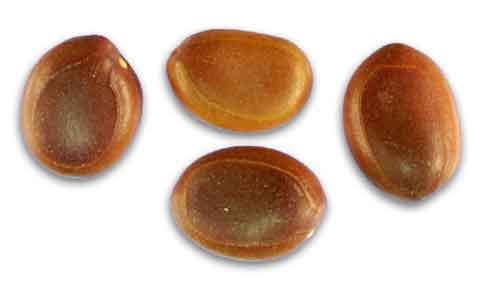
 Uses
Uses
