|
 General info General info
- One of the most important edible legume crops, grown on more than 6 million hectares worldwide (about 8.5% of global pulse area).
- Relatively drought-tolerant, low-input crop, with short growth cycle (about 70 days). (35)
- Etymology: Mung is from a similar Hindi word mung, which is derived from the Sanskrit word mudga.
Botany
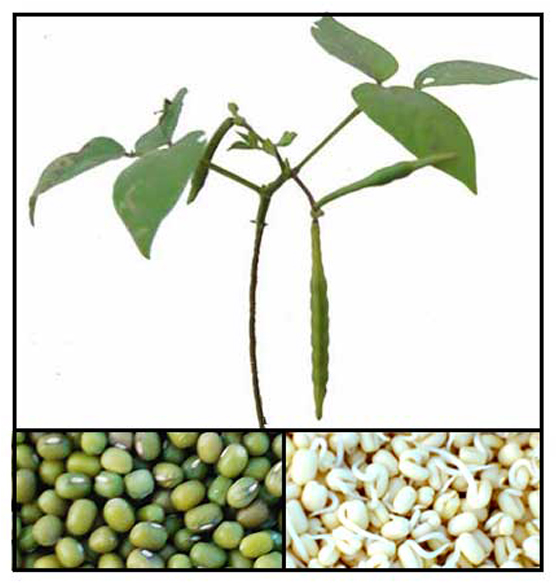
Mungo is an erect, annual herb branching
at the base, more or less clothed with spreading, brownish hairs. Leaves are
long-petioled, compound, with three leaflets which are ovate and
entire, broad based with pointed tips, 8 to 15 centimeters long, the
lateral ones being inequilateral. Flowers are yellow, about 1 centimeter
long, arranged near the end of the short stalks. Pods are
linear, hairy, spreading, 6 to 8 centimeters long, about 6 millimeters wide, and covered with scattered, long, brownish hairs.
Seeds are 4 to 6 millimeters in length.
Distribution
- Introduced.
-
Cultivated throughout the Philippines.
- Scarcely naturalized.
- Also occurs in India to China and Malaya, in cultivation.
- Native Assam, Bangladesh, India, Laos, Lesser Sunda Is., Myanmar, New South Wales, Northern Territory, Pakistan, Queensland, Sri Lanka, Taiwan, Thailand, Vietnam, West Himalaya, Western Australia. (11)
 Constituents Constituents
- Seeds are high in carbohydrate (>45%)
and protein (>21%); fair source of calcium, iron, vitamins A and
B. deficient in vitamin C.
- Sprouts are a good source of vitamin B.
- Raw green gram contains trypsin inhibitor which is destroyed by cooking.
- Mung beans contain greater carbohydrate content (50%-60%) than soybeans; starch is the predominant carbohydrate of the legume. Mung beans yield about 20%-24% protein, with globulin and albumin the main storage proteins in seeds, making up 60% and 25% of total mung bean protein, respectively. (12)
- Mung bean protein is rich in essential amino acids viz., total aromatic amino acids, leucine, isoleucine, and valine, but deficient in threonine, total sulfur amino acids, lysine and tryptophan.
(12)
- Methanol extract of sprouted beans yielded glycosides, steroids, phenols, saponins, alkaloids, and flavonoids as major active constituents.
- Proximate analysis of whole V. radiata yielded moisture content 9.74 ± 0.19 %, ash content 2.91 ± 0.072 %, fiber content 2.9 ± 0.61 %, fat 1.35 ± 0.048 %, protein content 22.5 ± 0.24 %. (20)
- Nutritional value for mung beans (1 cup/124g) yielded: (Proximity) 25 Kcal, 0.99 Kcal from fat, 115.8 g water,
109 kJ energy, 2.52 g protein, 0.11 g total fat (lipid), 0.37 g ash, 5.2 g carbohydrate, 1 g total dietary fiber, 3.52 g total sugars; (Minerals) copper 0.151 mg, iron 0.81 mg, manganese 0.174, zinc 0.58 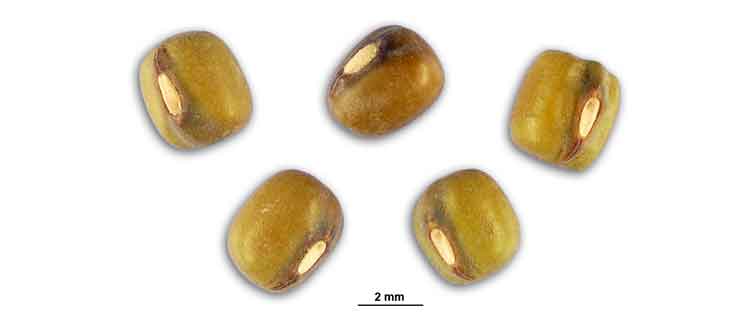 mg, phosphorus 35 mg, magnesium 17 mg, potassium 125 mg, calcium 15 mg, selenium 0.7 µg, sodium 12 mg; (vitamins) vitamin K 28.1 µg, vitamin C 14.1 mg, vitamin B1 (thiamin) 0.062mg, vitamin B2 (riboflavin) 0.126 mg, vitamin B3 (niacin) 1.013 mg, vitamin B5 (pantothenic acid) 0.301 mg, vitamin B6 (pyridoxine) 0.067 mg, vitamin B9 (folate) 36 µg, choline 12.3 mg, vitamin E (alpha tocopherol) 0.09 mg, vitamin A 1 µg, beta carotene 5 µg, alpha carotene 5 µg, beta cryptoxanthin 5 µg; (Lipids) total saturated fatty acids 0.031 g, total unsaturated FA 0.04 g, total monounsaturated FA 0.015 g; (Amino Acids) tryptophan 0.035 g, isoleucine 0.122 g, valine 0.12 g, histidine 0.064 g, lysine 0..153 g, threonine 0.072 g, tyrosine 0.047 g, cystine 0.015 g, methionine 0.031 g, phenylalanine 0.107 g, arginine 0.181 g, alanine 0.091 g, aspartic acid 0.44 g, glutamic acid 0.149 g, glycine 0.057 g, serine 0.03 g. (https://ndb.nal.usda.gov/ndb/foods/show/2847) (21) mg, phosphorus 35 mg, magnesium 17 mg, potassium 125 mg, calcium 15 mg, selenium 0.7 µg, sodium 12 mg; (vitamins) vitamin K 28.1 µg, vitamin C 14.1 mg, vitamin B1 (thiamin) 0.062mg, vitamin B2 (riboflavin) 0.126 mg, vitamin B3 (niacin) 1.013 mg, vitamin B5 (pantothenic acid) 0.301 mg, vitamin B6 (pyridoxine) 0.067 mg, vitamin B9 (folate) 36 µg, choline 12.3 mg, vitamin E (alpha tocopherol) 0.09 mg, vitamin A 1 µg, beta carotene 5 µg, alpha carotene 5 µg, beta cryptoxanthin 5 µg; (Lipids) total saturated fatty acids 0.031 g, total unsaturated FA 0.04 g, total monounsaturated FA 0.015 g; (Amino Acids) tryptophan 0.035 g, isoleucine 0.122 g, valine 0.12 g, histidine 0.064 g, lysine 0..153 g, threonine 0.072 g, tyrosine 0.047 g, cystine 0.015 g, methionine 0.031 g, phenylalanine 0.107 g, arginine 0.181 g, alanine 0.091 g, aspartic acid 0.44 g, glutamic acid 0.149 g, glycine 0.057 g, serine 0.03 g. (https://ndb.nal.usda.gov/ndb/foods/show/2847) (21)
- Study of amino acids in mung bean proteins isolates yielded in mg/g: total amino acids 800.2, total essential amino acids 348.2 (43.51%), total aromatic amino acids 6,7 (12.08%), total sulfur amino acids 13.0 (1.62%); phenylalanine + tyrosine 90.3, leucine 74, lysine 62.4, valine 46.3, isoleucine 39.1, histidine 27.9, threonine 28.4, methionine + cysteine 13, tryptophan 6.4, glutamic acid/glutamine 125.4, aspartic acid/asparagine 85.3, arginine 66., serine 385, alanine 36.6, glycine 32.2, peoline 30. (37)
- GC-MS study of green gram sprout extract revealed various secondary metabolites such as flavonoids, steroids, terpenoids, alkaloids, amino acids, polyphenol, glycoside, and protein. Major chemical compounds were n-hexadecanoic acid, stigmasterol, caffeine, hexadecanoic acid, cholest-5-en-3-ol (3.beta.)-, and cyclopentane. (see study below) (50)
- Preliminary phytochemical screening of aqueous extract revealed presence bioactive compounds tannin, sterol, flavonoid, coumarin, quinine, alkaloid, glucosides, sugar, and phenols. (see study below) (51)
Properties
- Seeds are considered tonic and aperient.
- Studies suggest antioxidant, hypolipidemic, anti-irritant, hypotensive, antiatherogenic, antimicrobial, anti-inflammatory, anti-ageing, antiarthritic, antidiabetic, anti-colon cancer, anti-anemic, skin whitening properties.
 Uses Uses
Edibility
- Seeds and sprouts are extensively used in Philippine cuisine, in salads or boiled, in soups or stews.
- In China, consumed as common food for more than 2000 years. Bean sprouts are considered a yin or cooling food.
- Seeds and sprouts of mung beans are widely used as salad vegetable and common food in India, Bangladesh, SE Asia and western countries. (26)
- Edibility is produced by boiling dried beans until they are soft. Mung bean paste can be made by hulling, cooking, and pulverizing the beans to a dry paste.
In Karnataka, Mahashtra, Kerala and Tamil Nadu, whole mung beans are boiled to make a dry preparation often served with congee. In Madhya Pradesh and Rajasthan, mung beans are partially mashed, fermented, and made into fritters (mangode) and served as tea-time snack. In Goa, sprouted mung beans are cooked in coconut milk based, mild curry (moonga gaathi). (46)
Folkloric
- Decoction of seeds used as diuretic in cases of beriberi.
- The seeds, boiled or raw, used in maturative poultices.
- Extracts used for its protective and curative properties in polyneuritis galinarum.
- Roots considered narcotic, used for bone pains.
- In India, seeds are used, internally and externally, for paralysis, rheumatism and a variety
of nervous system ailments.
- Used for fevers.
- The seeds are used for coughs, hemorrhoids and liver afflictions.
- Powdered beans used to promote suppuration.
- Seeds used in anorexia.
- Poultice used for checking secretions of milk and reducing distention of the mammary glands.
- Powdered beans rubbed into scarifications over tumors and abscesses to promote suppuration.
- In Indo-China, seeds considered antiscorbutic and diuretic.
- In Chinese medicine, used for detoxicification, to refresh mentality, alleviate heat stroke.
- In the book Ben Cao Qiu Zhen, the mung bean is recorded as beneficial for treatment of gastrointestinal upset and for moisturizing the skin.
(26)
Studies
• Hypotensive: The study showed all the extracts were hypotensive and contained bioactive
proteinaceous substances and stimulated urine flow. Combinations of
the extracts showed subtractive or additive effects. (1)
• Anti-irritation:
Clinical studies on the anti-irritation effects of mung bean
(Phaseolus aureus) extract in cosmetics: The study of extracts
applied to irritant-containing cosmetic formulations showed considerable
anti-irritation efficacy and suggesting a potential use for cosmetic
products. (2)
• Cardiovascular Effects: Previous studies have shown the hypotensive effect of green beans, common rue and kelp. In this study, green beans and kelp showed negative chronotropic effects, while rue showed positive chronotropic and inotropic effects. A combination of all three showed subtractive effects on the decrease of atrial rate. The three plants interacted to modify their various cardiovascular effects. (3)
• Hypolipidemic / Antiatherogenic: Changes
in serum lipids in normal and diabetic guinea pigs on feeding Phaseolus
aureus (Green gram): Study showed green gram feeding showed lowering of both free and esterified fractions of cholesterol, significant lowering of triglycerides and decreased
the total cholesterol / phospholipid ration indicating its antiatherogenic
nature. (4)
• Hypolipidemic: Hypercholesterolemic rats supplemented
with Isoflavones biochanin A and formononetin) from three pulses, including
P mungo, and p-coumaric acid showed hypolipidemic activity.
• Anti-Irritation Effects / Cosmetics / Vitexin / Isovitexin: Ethanolic extract isolated vitexin and isovitexin, previously suspected of antioxidant and anti-inflammatory activities. Study confirmed anti-irritation effects and suggests that the mung bean extract could be applied to cosmetic products. (5)
• Germination and Antioxidant Capacity: The study evaluated the effect of germination of raw mung beans and sprouts on antioxidant capacity and content of antioxidant compounds. Results showed germination of mung beans and soybean seeds is a good process for obtaining functional flours with greater antioxidant capacity and more antioxidant compounds than the raw legumes. (9)
• Trypsin Inhibitor / Pancreatic Effects: Study evaluated the effect of green gram trypsin inhibitor (GGTI) and raw green gram meal (RGG) on experimental animals. Elevated levels pf protease and amylase were observed in the pancrease, with a significant variation in amylase activity, together with active proliferation of acinar cells. Histological study showed hyperplasia of the acinar cells. (10)
• Anticonvulsant / Leaves: Study evaluated the anticonvulsant activity of chloroform and methanol extracts of leaves of Vigna radiata in albino Wistar rats on electrically and chemically induced seizures. In MES (maximal electroshock seizures), Vr leaves sowed most significant (p,0.01) anticonvulsant effect. (13)
• Antimicrobial / Sprouts: Study of chloroform and methanol extracts of mung bean sprouts showed antimicrobial activity against all tested gram negative bacteria ( P. aeruginosa, E. coli, Salmonella spp.)with the exception of K. pneumonia. The methanol extract showed more significant activity against P. aeruginosa compared to the chloroform extract. (14)
• Antibacterial / Sprouts: Study evaluated the antibacterial activities of extracts of Vr against pathogens causing food borne diseases. Methanol extracts showed significant concentration dependent antibacterial activity against almost all the test pathogens. (see constituents above) (15)
• Antisepsis / Sprouts: HMGB1, a nucleosoma protein, has been established as a late mediator of lethal systemic inflammation. Study explored the HMGB-1 inhibiting capacity and therapeutic potential of mung bean coat (MBC) extract in vitro and in vivo. The MBC extract dose-dependently attenuated LPS-induced releases of HMGB-1 and several chemokines in macrophage culture. Results suggest MCH extract if protective against lethal sepsis possibly by stimulating autophagic HMGB1 degradation. (16)
• Anticancer / Cytotoxicity / Immunomodulatory / Sprouts: Study evaluated the anticancer and immunomodulatory activity of mung bean sprouts (MBS) against human cervical and hepatocarcinoma cancer cells. Results showed significant cytotoxic effects exerted by MBS extract against the cancer cell lines. The cytotoxicity to HeLa and HepG2 was highly selective. The MBS extract was a potent inducer for apoptosis in treated human cancer cells via caspase-dependent and maybe caspase-independent pathways. The effects may involve strong, multi-mechanisms, and synergistic anticancer and/or immunomodulatory effects. (17)
• Anti-Inflammatory / Mung Bean Testa: Study investigated the effects of ethanol extracts of mung bean testa (MBT) on metabolic inflammation-induced lipogenesis in gastrocnemius muscle of KK-Ay diabetic mice. An in vitro pilot study with 3T3-L1 cells showed vitexin, the functional chemical in MBT, inhibited inflammation induced-lipogenesis with lower amounts of IL-6 and MCP-1. Functional compounds in MBT ethanol extracts such as vitexin and isovitexin may regulate intracellular lipogenesis and adipogenesis via anti-inflammatory mechanisms and MEK/ERK pathways in KK-Ay mouse model. (18)
• Silver Nanoparticles / Callus Culture: Study showed callus cultures of Vigna radiata are suitable for the biosynthesis of bio-compatible nanoparticles as compared to microbes or plant parts. (19)
• Lectin / Antidiabetic Potential: Study evaluated lectins from Vigna radiata for antidiabetic activity. Seeds yielded a galactose specific lectin and evaluated for antidiabetic activity in an alloxan induced diabetic model in Wistar rats. Results showed significant (p<0.001) reduction in elevated sugar levels. Activity was attributed possibly to an insulinmimetic mechanism as evidenced by binding with insulin antibodies in Western Blotting Analysis. (22)
• Major Lectins / Alpha- and Beta-Glucosidase Activity / Seeds: Study of Vigna radiata seeds using exchange and gel filtration chromatography yielded two major D-galactose-specific lectins, MBL-I and MQBL-II. MBL-I was found to have alpha-glucosidase activity, while MBL-II was associated with beta-galactosidase activity. (23)
• Whitening Effect / Inhibition of Melanogenesis / Vitexin and Isovitexin / Seeds and Sprouts: Study evaluated the inhibitory effects on melanogenesis of EA and MC fraction of 80% methanol extracts of mung bean seeds and sprouts. Results showed inhibition of melanogenesis more effectively than argutin, a known whitening agent. Also, the in-vitro tyrosinase inhibitory activity on mushroom tyrosinase was higher in the EA fraction. Active components of the EA fraction were identified as flavones vitexin and isovitexin. (24)
• Antidiabetic: Study of an aqueous extract of V. radiata in STZ-induced diabetic mice showed significant antidiabetic activity at 200 mg/kg and 300 mg/kg, the latter showing higher activity. (25)
• Effect of Germination and Sprouting: Germination of mung beans is accompanied by a spectrum of significant changes in metabolite contents, such as decrease in antinutrient concentrations and increased levels of free amino acids. Compared to cereals, mung beans contain higher amounts of protein. Proteolytic cleavage of proteins during sprouting leads to significant increase in levels of most amino acid. Organic acids also increase during sprouting. (26)
• Effect of Germination on Seeds: The nutritional composition of Vigna radiata seeds were estimated in measures of carbohydrate, free amino acids, protein, chlorophyll and fat content pre- and post-germination and assessed the biochemical changes in seeds. Carbohydrate content was slightly higher after germination. Amino acid and protein content were appreciably increased compared to dry seeds. There was insignificant difference in fat, chlorophyll a and b. Results suggest the nutritional content and quality of seeds improves after germination. (27)
• Bioactivie Compounds and Antioxidant Activity During Germination: Study evaluated the bioactive compounds and antioxidant activity of germinated mung bean, soybean, and black bean sprouts. Results showed the optimum germination time for sprouts was 3-5 days when total bioactive compound and antioxidant activity both reached peak values, which provide theoretical bases for dietary processing. (28)
• Antimicrobial Against Highly Resistant Bacteria and Fungi: Study revealed potential antibacterial and antifungal activity by mung bean sprouts against 11 out of 12 bacteria and 2 out of 10 fungi including remarkable activity against high infectious MDR bus such as MRSA, MDR E. coli, MDR P. aeruginosa, K. pneumonia, S. aureus and S. typhimurium. Results suggest a potential source for novel antimicrobials that are inexpensive and readily available for large scale pharmaceutical use. (29)
• Source for Biotransformation of Hydroquinone to Arbutin: A suspension culture of V. radiata was selected for biotransformation of hydroquinone to its ß-D-glucoside form (arbutin) as an important therapeutic and cosmetic compound. The bioconversion capacity increased by adding hydroquinone in two portions, which was comparable to adding an elicitor. (30)
• Antioxidant / Protective against Lipoprotein Oxidation / Seeds: Mung bean extracts were found to have potent scavenging activity against all of the reactive species tested as well as inhibitory effect on low-density lipoprotein oxidation. The studied mung bean was very effective against evaluated pro-oxidant species, including ROS and on reactive nitrogen species. (31)
• Anti-Ageing / Sprouts: Study evaluated green moong beans in its ability to reverse signs of memory loss in aged mice using passive avoidance paradigm (PAP) and elevated plus maze (EPM) as exteroceptive behavioral models and ageing-induced amnesia as interoceptive behavioral model. Pretreatment with MBS significantly (p<0.01) reduced the transfer latency (TL) in aged mice, Green moong bean sprouts also produced remarkable reduction in AChE activity in aged mice, along with increase in GSH and decrease in MDA suggesting good antioxidant activity. Results suggest the sprouts significantly attenuated ageing-induced amnesia in mice. (32)
• Hypoglycemic / Hypolipidemic / Processed Mung Bean Powder: Study evaluated the in vivo hypolipidemic and hypoglycemic effect of processed mung bean powder incorporated experimental diets compared with raw mung bean powder and casein powder in rats. Results showed processed mung bean incorporated diets modulated both serum lipids and glucose in wistar rats. (33)
• Anti-Inflammatory / Antiarthritic / Sprouts: Study evaluated Vigna radiata for in vitro anti-inflammatory using membrane stabilization and protein denaturation method and in vivo antiarthritic activity using complete Freund's adjuvant model in rats. Treatment with ethanolic extract exhibited significant membrane stabilization activity and protein denaturation activity and significantly attenuated biochemical changes induced by administration of complete Freund's adjuvant. (34)
• Protective Effects Against High-Fat-Induced Oxidative Stress: Study evaluated the investigated the protective effects of mung beans and peas against high-fat-diet-induced rats. The addition of 50% mung beans or peas could significantly restore the levels of serum total cholesterol, LDL-C and HDL-C. The antioxidant defense system and antioxidant gene expression markedly improved . Ethanol extracts possessed high antioxidant activities via their ability to scavenge ABTS and DPPH, reduce Fe++, along with anti-lipid peroxidation capacity. There was restoration of levels of intracellular lipid, malonaldehyde, and antioxidant enzyme systems in oleic acid-induced HepG2 cells. Results suggest a potential source of natural antioxidant agents. (36)
• Increased Antioxidant Activity and Polyphenol Metabolites / Methyl Jasmonate Treated Sprouts: Study evaluated the optimal concentration of exogenous methyl jasmonate (MeJA) for promotion of sprouting in mung beans (Vigna radiata). By DPPH scavenging assay, MeJA application resulted in significantly improved antioxidant capacity in sprouts. Polyphenols correlated with antioxidant activity. Main polyphenols were isovitexin, kaempferol-3-O-rutinoside, daidzein, genistein, isoquercitrin, p-coumaric acid and caffeic acid. MeJA promoted the production of polyphenols, metabolites, and antioxidants in the sprouts, which may allow the sprouts to be prepared more quickly and increase its nutritional value. (38)
• Effect of Supplementation of Mung Bean Sprouts and Vitamin E in High Fat Diet-Fed Rats: Study evaluated the effect of mung bean sprouts and vitamin supplementation on total cholesterol and MDA plasma levels in fats fed high fat diet. Results suggest significant prevention of oxidative stress as indicated by lower total cholesterol and MDA plasma level (p<0.05). (39)
• Anti-Anemic / Sprouts: Study evaluated the anti-anemic activity of sprouts of Vigna radiata against phenylhydrazine induced anemia in albino rats. Rats treated with sprouted V. radiata at dose of 600 mg/kbw for 13 days showed significant changes in biochemical and hematological parameters. (40)
• Effect on Physical Stress-Induced Atherosclerosis / Sprouts: Study evaluated the effect of mung beans sprout extract on the thickness of tunica intima media on physical stress-induced atherosclerosis of male wistar rats. Results showed significant decrease of MDA serum level in the treatment group. (41)
• Vicilin Protein as Functional Food / Hypocholesterolemic: Study isolated the mung bean vicilin and evaluated its in vitro effect on 3-hydroxy-3-methyl-glutaryl-CoA reductase (HMG CoAr), the enzyme responsible for endogenous cholesterol synthesis. Results revealed an 8S globulin protein with four bands of polypeptides. Fractions 10, 12, 14, 22 and 31 of the eluate from Sephadex G25 exhibited significant inhibition of HMG CoAr. (42)
• Effect of Cell Phone Radiations on Early Growth of Mung Bean / Biochemical Alterations: Study evaluated the impact of cell phone electromagnetic field (EMF) radiations (power density, 8.55 µW cm2) on germination, early growth, proteins, carbohydrate contents and activities of some enzymes in V. radiata. Cell phone radiations significantly reduced the seedling length and dry weight of V. radiata after exposures of 0.5, 1, 2, and 4 hours. The contents of proteins and carbohydrates were reduced in EMF exposed plants. Results suggests cell phone EMFs impair early growth by induction of biochemical changes. (43)
• Mung Bean as Yoghurt Ingredient: Study evaluated the potential of mung bean as a functional ingredient in yoghurt. Yoghurt enriched with a 10% mung bean paste demonstrated overall high sensory acceptability. Total solids, Brix, and fat contents of mung bean enriched yoghurt were 25.94%, 21%, and 3.5%, respectively. The enriched yoghurt conformed to national standards. Results suggest yoghurt enriched with mung bean paste can be considered a novel dimension to fermented dairy products. (45)
• Antidiabetic / Seeds: Study evaluated the antidiabetic effects of methanol extract of V. radiata seeds in alloxan-induced diabetic Swiss albino mice. Extract treatment significantly decreased total cholesterol, LDL and triglyceride levels and increased HDL levels, and also significantly decreased levels of AST, ALT, and glycated hemoglobin compared to control. It raised insulin levels and liver glycogen. The antidiabetic effect of the ME of seeds were at par with glibenclamide. (47)
• Anti-Colon Cancer / Anti-Inflammatory / Seeds: Study evaluated the cytotoxicity, anti-inflammatory and anticancer activities of natural and sprouted seeds in rats. Cytotoxicity testing showed no toxicity of extracts towards shrimp larvae. An ethanolic extract of germinated mung bean seeds exhibited highest anti-inflammatory activity at 95.13 % inhibition. Cancer induction with DMH (1,2-dimethylhydrazine) was inhibited by both mung bean and sprouted bean extracts. (48)
• Effect of Mung Bean Food on Tacrolimus Blood Trough Level / A Concern for Transplant Patients: Tacrolimus, a calcineurin inhibitor (CNI), has been widely used to prevent allograft rejection for decades. As an immunosuppressant agent, tacrolimus is also approved for the treatment of various immune-mediated diseases, including interstitial pneumonia associated with polymyositis (PM) and dermatomyositis (DM), refractory rheumatoid arthritis, refractory atopic dermatitis, and refractory uveitis, etc. it is essential to monitor the blood levels of tacrolimus routinely in clinical practice. Tacrolimus is metabolized mainly by cytochrome P450 (CYP) 3A enzymes, and is a substrate of P-P-glycoprotein (P-gp). Drugs and foods, which influence the activity or expression of CYP3A enzymes or P-gp, may cause the fluctuation of tacrolimus blood levels, leading to adverse events or treatment failures. Study reports on a rare case of considerable decrease in tacrolimus blood trough level after intake of mung bean soup in a patient with DM. A retrospectory study revealed that the mean blood trough level of cyclosporine A (CsA) decreased by 26% (287 ng/mL vs. 390 ng/mL), after consuming mung bean food, rice-mung bean or mung bean soup, for 1-2 weeks in six renal transplantation patients, and one developed acute rejection. It is possible that the induction of CYP3A enzymes and/or P-gp, mediated by flavonoids in the mung bean, contributed to the marked decrease of tacrolimus blood trough level in our case. Further pharmacokinetic studies are warranted to examine the food-drug interaction (FDI) between mung bean food and tacrolimus, and elucidate the underlying mechanisms. Clinicians and pharmacists should be aware of the possible FDI between mung bean food and tacrolimus. And patients taking tacrolimus, or medicines, whose therapeutic index are narrow and oral bioavailabilities are very likely to be influenced the activity of CYP3A enzymes and/or increase P-gp, should avoid mung bean food. (49)
• Silver Nanoparticles / Antioxidant / Antibacterial: Study reports on the simple synthesis of silver nanoparticles using green gram sprout extract of V. radiata. Percentage of DPPH activity increased with increasing concentration of AgNPs. In vitro antibacterial effect was evaluated against gram negative K. aerogenes and E. coli and gram positive B. subtilis and S. aureus bacterial strains. Results suggest the AgNPs have good antibacterial and antioxidant activity with potential for bioactive components. (see constituents above) (50)
• Inhibitory Effect on Metabolizing Enzymes and Glucose Absorption: Study evaluated the antidiabetic activity potential of aqueous extract of V. radiata. Results showed significant invitro antidiabetic inhibitory activity on carbohydrate metabolizing enzymes α-amylase and α-glucosidase to reduce postprandial blood sugar level. (see constituents above) (51)
Availability
- Wild and cultivated.
- Seeds in the cybermarket.
|