|
 Gen info Gen info
- Pongamia pinnata is a species of tree in the pea family, Fabaceae. It is the sole species in the genus Pongamia.
Botany
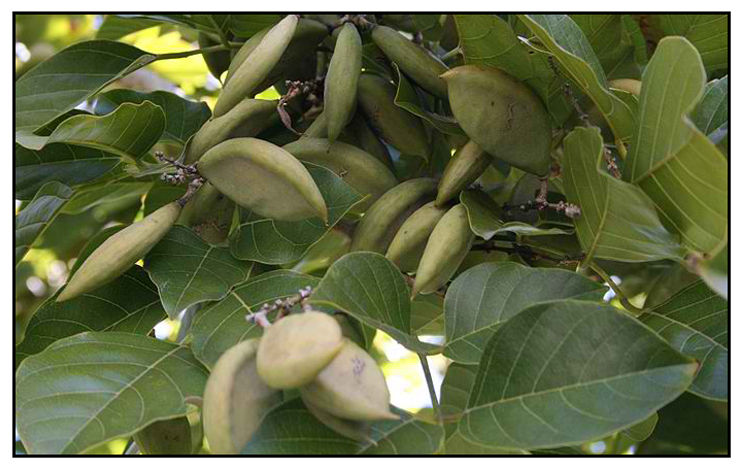
• Bani is a smooth tree growing
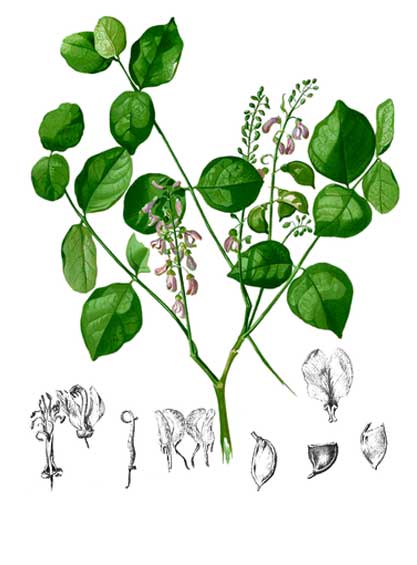
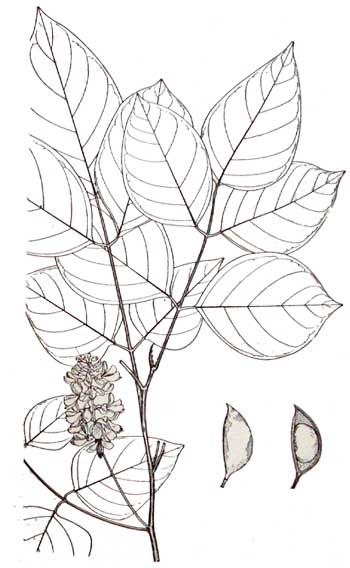
to a height of 8 to 25 meters. Leaves are compound, 20 to 25 centimeters long,
with 5 to 7 leaflets that are smooth, ovate, 6 to 15 centimeters long, with the terminal one larger than the others, pointed at the tip and usually rounded at the base.
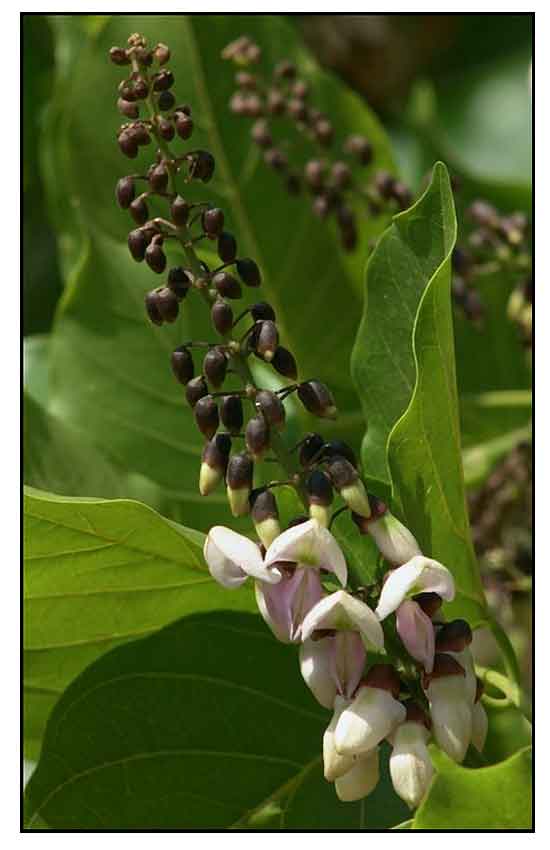
Flowers are fragrant and numerous, purplish, pink or nearly white, 1.5
centimeters long, borne on axillary and hairy racemes 15 to 20 centimeters long. Pods are woody,
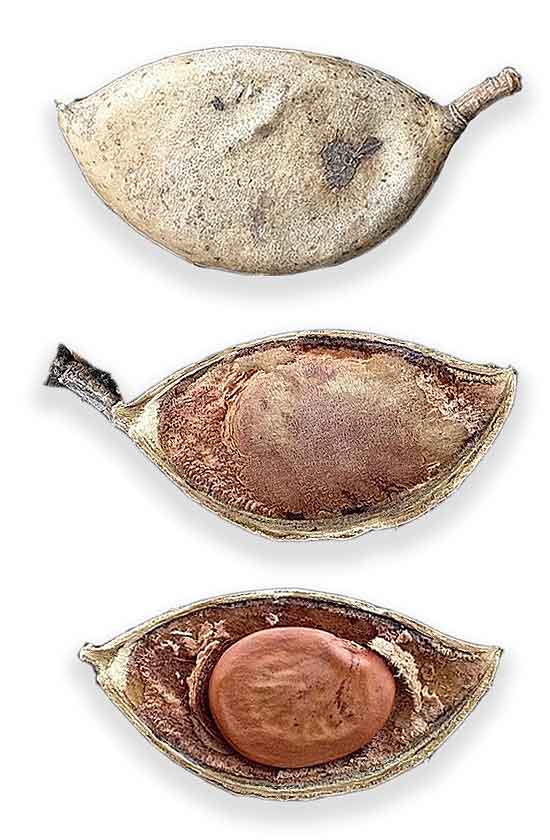
smooth, and oblong, 5 to 7 centimeters long, 5 to 8 millimeters thick, beaked at the apex,
with a single seed measuring 3.5 to 5 centimeters long.
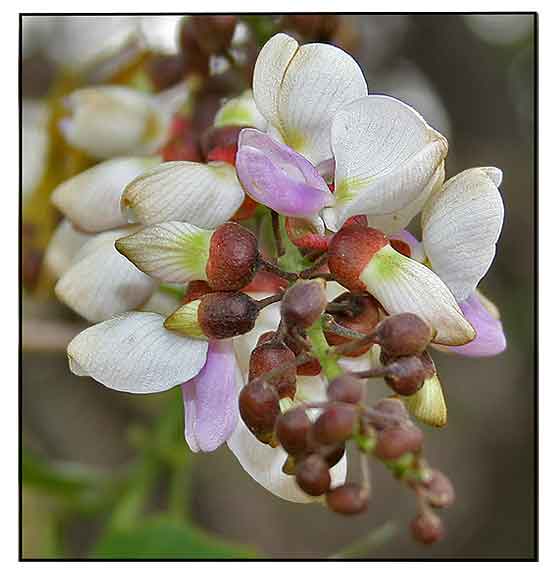 • Pongamia pinnata is a legume tree that grows to about 15–25 m (50–80 ft) in height with a large canopy that spreads equally wide. It may be deciduous for short periods. Trunk is straight or crooked, 50–80 cm (20–30 in) in diameter, with gray-brown bark, which is smooth or vertically fissured. Wood is white colored. Branches are glabrous with pale stipulate scars. Imparipinnate leaves of the tree are alternate, short-stalked, rounded, or cunete at the base, ovate or oblong along the length, obtuse-acuminate at the apex, and not toothed on the edges. They are a soft, shiny burgundy when young, and mature to a glossy, deep green as the season progresses, with prominent veins underneath. Flowers occur in small clusters of white, purple, and pink, blossoming throughout the year. Raceme like inflorescences bear two to four flowers that are strongly fragrant and grow to be 15–18 mm (0.59–0.71 in) long. Calyx of the flowers is bell-shaped and truncated, while the corolla is a rounded ovate shape with basal auricles and often with a central blotch of green color. Croppings of indehiscent pods can occur by 4–6 years. Brown seed pods appear immediately after flowering, and mature in 10 to 11 months. Pods are thick-walled, smooth, somewhat flattened, and elliptical, but slightly curved with a short, curved point, containing one or two bean-like brownish-red seeds, but because they do not split open naturally, the pods need to decompose before the seeds can germinate. The are about 1.5–2.5 cm (0.59–0.98 in) long with a brittle, oily coat, and are unpalatable in natural form to herbivores. • Pongamia pinnata is a legume tree that grows to about 15–25 m (50–80 ft) in height with a large canopy that spreads equally wide. It may be deciduous for short periods. Trunk is straight or crooked, 50–80 cm (20–30 in) in diameter, with gray-brown bark, which is smooth or vertically fissured. Wood is white colored. Branches are glabrous with pale stipulate scars. Imparipinnate leaves of the tree are alternate, short-stalked, rounded, or cunete at the base, ovate or oblong along the length, obtuse-acuminate at the apex, and not toothed on the edges. They are a soft, shiny burgundy when young, and mature to a glossy, deep green as the season progresses, with prominent veins underneath. Flowers occur in small clusters of white, purple, and pink, blossoming throughout the year. Raceme like inflorescences bear two to four flowers that are strongly fragrant and grow to be 15–18 mm (0.59–0.71 in) long. Calyx of the flowers is bell-shaped and truncated, while the corolla is a rounded ovate shape with basal auricles and often with a central blotch of green color. Croppings of indehiscent pods can occur by 4–6 years. Brown seed pods appear immediately after flowering, and mature in 10 to 11 months. Pods are thick-walled, smooth, somewhat flattened, and elliptical, but slightly curved with a short, curved point, containing one or two bean-like brownish-red seeds, but because they do not split open naturally, the pods need to decompose before the seeds can germinate. The are about 1.5–2.5 cm (0.59–0.98 in) long with a brittle, oily coat, and are unpalatable in natural form to herbivores.
Distribution
- Native to the Philippines.
-
Along the
seashore throughout the Philippines.
- In some localities it extends inwards (Laguna) and near the border of lakes.
- Also native to Andaman Is., Assam, Bangladesh, Bismarck Archipelago, Borneo, Caroline Is., China Southeast, Christmas I., East Himalaya, Fiji, Hainan, India, Japan, Jawa, Lesser Sunda Is., Malaya, Marianas, Myanmar, Nansei-shoto, New Caledonia, New Guinea, Nicobar Is., Northern Territory, Pakistan, Queensland, Samoa, Sri Lanka, Sumatera, Taiwan, Thailand, Vanuatu, Vietnam, Wallis-Futuna Is., West Himalaya. (36)
 Constituents Constituents
- Contains alkaloids demethoxy-kanugin,
gamatay, glabrin, glabrosaponin, kaempferol, kanjone, kanugin, karangin,
neoglabrin, pinnatin, pongamol, pongapin, quercitin, saponin, ß-sitosterol
and tannin.
- Seeds yield a thick, reddish brown oil known as pongam oil (also called
pangamol or hongay oil) employed medicinally and as an illuminant and
in the manufacture of soaps and candles.
- Seeds yielded six compounds (two sterols, three sterol derivatives and one disaccharide) together with eight fatty acids (three saturated and five unsaturated). Metabolite yield consisted of ß-sitosteryl acetate and galactoside, stigma sterol, its galactoside, and sucrose. Of the fatty acids, oleic acid occurred in highest amount (44.24%), followed by stearic (29.64%) and palmitic (18.58%) acids.
- The bark contains a bitter alkaloid.
- Fatty acids in the oil include myristic, palmitic, stearic, arachidic, lignoceric, dihydroxystearic, linolenic, linoleic, and oleic acids.
- A watery extract yields mucilage, which is gelatinized by ferric chloride.
- Study of a 50% ethanol syrup of stem bark yielded seven flavonoids, pongaflavone (1), karanjin (2), pongapin (3), pongachromene (4), 3,7-Dimethoxy-3', 4'-methylenedioxyflavone (5), millettocalyxin C( 6), 3,3',4', 7-tetramethoxyflavone (7). (25)
- A methanol extract of dry stems yielded a new chlorinated flavonoid, 2′,6′-dichlore-3′, 5′-dimethoxy-[2′′,3′′:7,8]-furanoflavone (1) together with 29 known compounds, including flavonoids (compounds 2–17), isoflavonoids (compounds 18–23), chalcones (compounds 24–25), flavonones (compounds 26–27), triterpenes (28–29) and alkaloid (30). (see study below) (34)
- Study of various extracts yielded alkaloids, anthraquinone glycosides, flavonoids, coumarins, carbohydrates and steroid.
- GC-MS analysis of ethanolic extract of leaves yielded
alkaloids, carbohydrates, reducing sugars, flavonoids, tannins and phenolic acids, saponins. (39)
- Study of defatted seeds of Pongamia pinnata yielded five sugars viz., d-mannose, d-glucose, d-xylose, raffinose, L-fructose,
along with five amino acids alanine, phenylalanine, tyrosine acid, tryptophan and threonine. (46)
- Phytochemical screening of crude extracts of leaf, bark, flower and root yielded alkaloids, flavonoids, triterpenes, tannins, carbohydrates, phenols, coumarins, saponins, phlobatannins, and steroids. (see study below) (52)
- Phytochemical screening of leaves yielded alkaloid, steroid, carbohydrate, tannin, flavonoids, terpenoid, coumarins, phenol and quinone. (56)
- Phytochemical screening of hydroalcoholic extract of leaves yielded flavones, alkaloids, glycosides, proteins and amino acids, gum and mucilage, flavonoids, saponins, and steroid hormones. (see study below) (
 Properties Properties
- Seed has a bitter taste, probably from the resinous bitter principle.
-
Seeds are febrifuge, tonic and antiseptic.
- Bark decoction give a blue-black color with iodine solution.
- Oil is used as antiseptic and stimulant, stomachic and chologogue. It is applied to skin diseases, scabies, sores and herpes. For eczema, the oil is mixed with zinc oxide.
- An embrocation of equal parts of oil and lemon juice applied in muscular and articular rheumatism, psoriasis, porrigo capitis, and pityriasis.
- Oil also used in pityriasis versicolor and other fungal skin afflictions.
- Oil taken internally as stomachic and chologogue for dyspepsia and sluggish livers.
- In Ayurvedic medicine, the root and bark are anthelmintic.
- In Ayurveda and Unani medicine, used as anti-inflammatory, anti-plasmodial, antinoniceptive,
antihyperglycemic, anti-lipidoxidative, anti-diarrheal, anti-ulcer, anti-hyperammonic
and antioxidant.
- Studies have suggested antibacterial, antioxidant, hypolipidemic, hypoglycemic, anti-lice, anti-lipid peroxidative, gastroprotective, anticonvulsant, anti-hyperammonemia, antipyretic, hepatoprotective, cardioprotective, anti-psoriatic, nephroprotective, phytoremediative, anti-anxiety, CNS depressant properties.
Parts used
Seeds, leaves, roots, stems, bark.
 Uses Uses
Folkloric
- In the Philippines, decoction of leaves given
to children for bronchitis and cough.
- Juice of leaves used for itches and herpes.
- In the Island of Guimaras, bark used by the natives as abortifacient.
- Decoction of leaves used for a variety of gastric maladies (tympanism,
dyspepsia, diarrhea).
- Decoction of leaves used as bath for rheumatic joints.
- Juice of stems, leaves, and roots for painful joints.
- Juice of roots used for cleaning foul ulcers and closing fistulous sores.
- For hemorrhoids, poultice of finely pounded leaves, rolled into an elongated
mass, insert into rectum as a suppository, at bedtime.
- For skin diseases, roasted seeds are pounded and applied over affected areas.
- For skin ulcers, leaves of crushed roots or leaves are applied over affected areas.
- Mixture of oil and zinc oxide used for eczema.
- In Tanjore, juice of roots mixed with coconut milk and lime water used as a remedy for gonorrhea.
- Oil also used for pityriasis versicolor and other fungal skin problems.
- Seed oil used to treat scabies, herpes and rheumatism.
- Poultice of leaves used for wounds infested with maggots.
- Juice of roots with coconut milk used for treatment of gonorrhea.
- Flowers used for diabetes.
- Used to relieve vaginal itching.
- Bark yields a black gum used for treating wounds from poisonous fish.
- In India, fruits and sprouts used for abdominal
tumors, bronchitis, chronic fevers, whooping cough; young shoots used for rheumatism. Seed oil used in scabies, leprosy, hemorrhoids, ulcers, liver pain and lumbago.
- In Sri Lanka, seeds used for keloid tumors. Decoction of leaves used for pain.
- In Vietnam, plant derived powder used for
tumors.
- Oil used as liniment for rheumatism.
- Leaf juice used for cold, cough, diarrhea, dyspepsia, flatulence, gonorrhea
and leprosy.
- Young leaves applied to bleeding hemorrhoids.
- Bark used internally for bleeding piles.
- Powdered seeds, after decortication, used as specific for whooping cough; also used as febrifuge and tonic in asthenic and debilitating conditions.
- Roots used for cleaning gums, teeth and ulcers.
Others
- Oil: Seed oil used as illuminant
and in the manufacture of soaps and candles.
- Rope: Bark used for making strings and rope.
- Fish poison: Roots and seeds are used to poison fish in Australia and Madoera.
- Repellent: Dried leaves used in stored grains to repel insects.
- Fodder: Leaves used as fodder in India.
- Twigs used as chewstick for cleaning teeth.
- Dye: Ash of wood used for dyeing.
 Biofuel Biofuel
• Biofuel plant source: Studied for
potential use as biodiesel plant. A pilot project in India showed pongamia
biodiesel to require little or no engine modification in up to 20% blend
with diesel, with substantial 30% reduction in un-burnt hydrocarbons,
20% carbon monoxide, and 25% particulate matter, no sulfur, with a 10%
inbuilt oxygen that is a plus for combustion with a favorable Cetane
of 51 (46, the lower limit for good combustion rating). It yields fruits
and seeds by the 4th to 7th year, with seed yield from 10-250 kilos
per tree. Pongamia's non-edible "Karanja oil" has properties
similar to conventional diesel, but with cleaner emissions, nonopolyaromatic,
with lesser toxic smoke and soot. Pongamia by-products can be used as
cattle feed supplement. The leftover portion of Pongamia seeds contains
up to 30 per cent protein and can be fed to cattle, sheep and poultry.
• Experimental Study of Oil as Diesel Substitute: Various blends of non-edible vegetable oil, honge (P. pinnata) in India, prepared and tested over a wide range of engine load showed a 15 to 20 percent pongamia methylester-diesel blend could be a better fuel in terms of fuel efficiency and power developed, with improvement in brake thermal efficiency and reduction in brake-specific fuel consumption.
• Biodiesel Feedstock / Industrial Applications: Major fatty acids in Pongamia pinnata crude oil were palmitic acid, stearic acid, linoleic acid, eicosanoic acid. The oil extracts showed good physic chemical properties with potential as biodiesel feedstock and industrial applications. (28)
• Synthesis and Use of Catalyst / Biodiesel from Seed Oil: Study showed the presence of sodium methoxide-treated algae catalyst played a substantial role in increasing the conversion of Pongamia pinnata seed oil in biodiesel production. (51)
Studies
• Antibacterial: Pongam
oil has shown inhibitory effects on Bacillus anthracis, Bacillus
mycoides, Bacillus pulilus, Escherichia coli. Pseudomonas mangiferae,
Salmonella typhi, Staphylococcus aureus and albus, Xanthomas campestris. (2) Phytochemical screening revealed carbohydrates, alkaloids, flavonoids, glycosides, steroids, tannins and saponins. Results showed a wide range of antibacterial activity.
• Antioxidant / Hypoglycemic / Flowers: Study evaluated the antihyperglycemic and antilipidperoxidatve effects of aqueous extract of P. pinnata flowers in alloxan-induced diabetic rats. Results showed potent anti-lipid peroxidative and antioxidant effects. Not only did it reduce glucose levels and lipid peroxides, but also enhanced antioxidants to a level similar to glibenclamide in alloxan-induced diabetic rats. (6)
• Effect in Infectious Diarrhea / Leaves: Study evaluated a crude decoction of dried leaves for antimicrobial effect and its effect on production of enterotoxins. The decoction had antibacterial, antigiardial and antirotaviral activity, but showed reduced production of cholera toxin and bacterial invasion to epithelial cells. Results showed selective antidiarrheal action with efficacy against cholera and enteroinvasive bacterial strains causing bloody diarrheal episodes. (3)
• Anti-Hyperammonemia: Hyperammonemia is a major contributor to the neurologic abnormalities of hepatic encepalopathy. Study showed a anti-hyperammonemic effect attributed to a nephroprotective effect by detoxifying excess urea and creatinine, free-radical scavenging and its antioxidant property. (7)
• Anticonvulsant: Ethanolic extract showed significant anticonvulsant activity by lowering the duration of extension phase. The effect is attributed to flavonoids.
(5)
• Anti-Lice: Study showed the petroleum ether extract to possess excellent anti-lice activity. It presents a potential in using P pinnata leaves against P humanus capitis situations resistant to synthetic anti-lice agents. (9)
• Anti-Ulcer / Gastroprotective: Phytochemical tests yielded the presence of flavonoids in the methanolic seed extract of Pongamia pinnata. It showed dose-dependent ulcer protective effects. The effect may be attributed to flavonoids with actions on the mucosal offensive and defensive factors. (10)
• Karanjin / Gastroprotective / Antioxidant : Study evaluated the gastroprotective properties of karanjin from karanja (P. pinnata) seeds in adult male albino rats with experimentally induced ulcers. Karanjin exhibited ulcer protection and inhibition of oxidative stress. Results suggest karanjin can be an effective anti-ulcer agent, and being non-toxic, can be used in combination with other nutraceuticals in the management of oxidative stress-induced disease conditions. (14)
• Antihyperglycemic / Anti-lipidperoxidative / Flower: Study of flower extract in alloxan-induced diabetic rats showed significant antihyperglycemic and anti-lipid-peroxidative effects with enhancement of antioxidant defense systems. Results suggest a potential for a safe alternative antihyperglycemic drug for diabetic patients. (15)
• Antioxidant / Flowers: Ethanolic extracts and fractions of P. pinnata were tested for antioxidant activity. Total phenolic content was determined as gallic acid equivalents and total flavonoids as quercetin equivalents. Extracts exhibited significant antioxidant activity. (18)
• Biofuel / Pongame: Pongame oil is a non-edible oil extracted from the seeds of P. pinnata. Study investigated the potential of Pongame oil as an alternative source of bioenergy (biodiesel). Seeds yielded 35% oil by weight. The fuel properties of the oil were very close to high-speed diesel. Results suggest Pongame biodiesel is a good alternative for renewable energy that could reduce dependency on imported foreign oil. (20)
• Antioxidant: Study evaluated the antioxidant activity of a hydroalcoholic extract of P. pinnata using various assays (DPPH free radical, Nitric oxide scavenging assays, Superoxide ion scavenging assays, ABTS and iron chelating methods). Results showed a significant correlation between extract concentrations and percentage inhibition of free radicals. The activity was presumed related to phenols and flavonoids in the extracts. (19)
• CD4-Th2 Cytokine Stimulation: Immune cells produce cytokines in response to various stimuli. The cytokine immune cells milieu have a positive outcome on the immune response generated. In a study of immune stimulation of P. pinnata on healthy human peripheral blood mononuclear cells, results showed P. pinnata extracts induced abundant IL-10 production, suggesting it to be a strong inducer of Th-2 cytokines with a potential to treat Th-1 cytokine mediated pathology. (21)
• Anticonvulsant / PTZ-induced Convulsions: Study evaluated the anticonvulsant effect of a leaf extract of Pongamia pinnata in pentylene tetrazole induced convulsion (PTZ) in rats. An ethanolic extract showed significant anticonvulsant activity with lowering of the duration of the extension phase. (23)
• Alkaloids and Oil from Seed: Study of karanja seed oil yielded alkaloids and 32% bitter, red brown thick oil . The alkaloids and oil were recovered from seeds and defatted kernels by two extractions. (24)
• Analgesic / Leaves: Study evaluated an ethanolic extract for in vivo analgesic activity using Eddy's Hot plate method in mice. Results showed significant dose-dependent analgesic activity. Phytochemical screening yielded carbohydrates, amino acids, fixed oils, phytosterols, glycosides, flavonoids, tannins and phenolic compounds, which may be partly responsible for the anti-pyretic and analgesic activity. Â (26)
• Antiulcer / Leaves: A methanolic extract produced significant reduction in ulcer index in both HCl - ethanol and aspirin-induced ulcer models in Wistar rats. (27)
• Anti-Diabetic / Leaves: Study of a methanolic leaf extract on streptozotocin induced diabetic rats showed potent anti-diabetic effects. (29)
• Anti-Pyretic / Leaves: Study evaluated the anti-pyretic activity of methanol extracts of P. pinnata leaves using experimental animal models. Results showed significant anti-pyretic activity using the brewer's yeast-induced pyrexia in rats. (30)
• Antiviral / Herpes Simplex Virus / Seed: Study evaluated P. pinnata for antiviral properties against herpes simplex virus. A crude aqueous seed extract completely inhibited the growth of HSV-1 and HSV-2 at concentrations of 1 and 20 mg/ml, as shown by complete absence of of cytopathic effect. (31)
• Lack of Diuretic Activity / Leaves: A water extract of P. pinnata does not possess significant diuretic activity in rats as was claimed in traditional and folkloric medicine. (32)
• Hepatoprotective / IR Induced Hepatic Reperfusion Injury: Study investigated the possible protective effect of P. pinnata hydroalcoholic leaf extract on hepatic ischemia/reperfusion (I/R) injury. Results showed the leaf extract at a dose of 400 mg/k/day reduced I/R induced organ injury through its ability to balance the oxidant/antioxidant state. (33)
• Potential for Neurodegenerative Diseases: Study of dichloride methane extract of dry stem yielded a new chlorinated flavonoid together with 29 known compounds. Pongaglabol methyl ether (20, lonchocarpin (24) and glabrachromene II (25) were selected as potential therapeutic agents for neurodegenerative diseases because of their significant anti-neuroinflammatory activities. (see constituents above) (34)
• Acute Oral Toxicity / Seeds: Study of crude seed extracts for acute toxicity in female albino Wistar rats showed safety up to a dose of 2000 mg/kg body weight. (37)
• Antibacterial: In a study for antibacterial activity against Staphylococcus aureus, an ethanolic extract of Pongami pinnata showed to be more effective than aqueous and methanolic extracts. (see constituents above) (38) Study of seed extracts showed good bactericidal activity against selected Hospitalized pathogens with maximum activity exhibited on Pseudomonas aeruginosa with inhibition zone of 20 mm by methanol extract and 18.5 mm by ethanol extract in comparison to Ceftazidime. (53)
• Protective in Ischemia-Reperfusion Injury and Cerebrovascular Insufficiency States / Roots: Study evaluated an ethanolic root extract on oxidant-antioxidant status and histopathological changes in acute ischemia-reperfusion injury in rat forebrain. Results showed attenuation of ischemia-reperfusion induced increase in lipid peroxidation, SOD activity, and fall in T-SH (tissue sulfhydryl) values, together with amelioration of histopathological changes and inflammatory cell infiltration in the frontoparietal region of the rat brain. There was also alleviation of anxiety and listlessness, with improvement of learning and memory deficits. Results suggest a protective role in ischemia-reperfusion injury and cerebrovascular insufficiency states. (41)
• Cardioprotective / Stem Bark: Study evaluated the effect of petroleum ether extract of stem bark of P. pinnata on cardiomyopathy in streptozotocin-nicotinamide induced diabetic rats. Results showed decrease in blood glucose, improved ECG and hemodynamic parameters, controlled levels of cardiac biomarkers, and improved oxidative stress. The extract presents a promising remedy against diabetic cardiomyopathy. (42)
• Antipsoriatic Ayurvedic Ointment / Bark: Study evaluated an aqueous extract of bark of Pongamia pinnata in a commercial preparation SUEX GEL for antipsoriasis effect in a rat ultraviolet ray photodermatitis model. The irradiated rat skin treated with SUEX FEL containing aqueous extract of bark of P. pinnata showed significant reduction in total epidermal thickness, retention of stratum granulosum and absence of neutrophil movement. Results suggest efficacy for potential use in the treatment of psoriasis. (43)
• Antihistaminic / Antispasmodic / Seeds: Study evaluated the antihistaminic and anti-spasmodic potential of ethanol extract of Pongamia pinnata seeds using isolated goat tracheal chain and chicken ileum preparation. Results showed a significant decrease in contraction induced by histamine in isolated goat tracheal chain and chicken ileum preparation. (44)
• Synergistic Hypoglycemic Effect of Pongamia glabra and Ficus glomerata: Study showed a synergistic antihyperglycemic effect of low doses of methanolic extracts of Pl glabra and Ficus glomerata in comparison with individual treatments in normal and alloxan induced diabetic rats. Results showed significant (p<0.01) synergistic antihyperglycemic effect with low doses of combination therapy. Â (45)
• Anti-Ulcer and Anti-Secretory / Roots: Study evaluated the anti-ulcer potential and antisecretory properties of methanol extract of P. pinnata root extract against gastric ulcerations induced by aspirin, alcohol, and pylorus ligation models. The methanol extract at doses of 20 and 25 mg/kg showed significant (p<0.001) inhibition of ulcer formation. In vitro antioxidant activity evaluation showed significant correlation between concentration of extract and percentage of inhibition of free radicals. The antioxidant property may be related to flavonoids and polyphenols present in the extract. Results suggest the root extract of P. pinnata is effective against free radical mediated ulcer disease.
|




.jpg)