|
Botany
Bignay is a small, smooth, dioecious
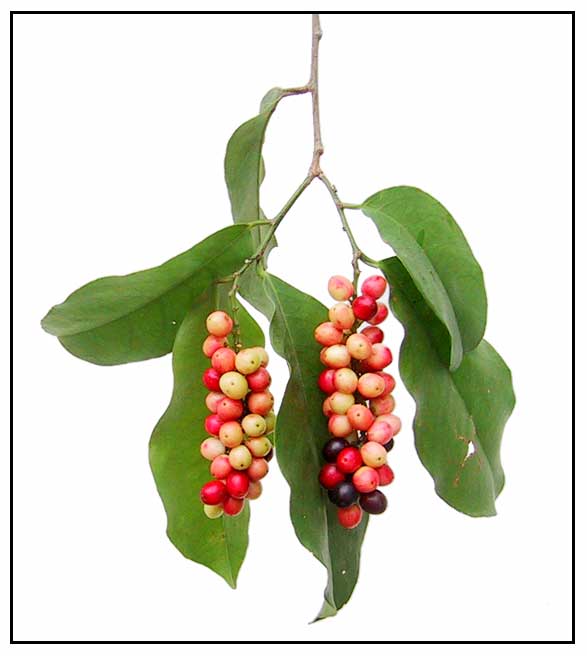
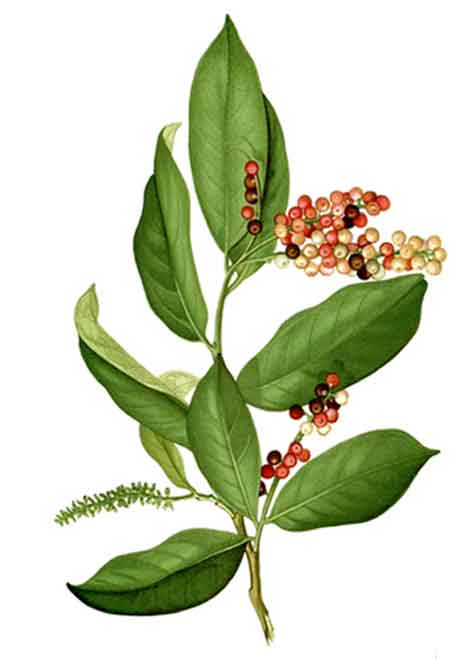
tree, 4 to 10 meters high. Leaves are shiny, oblong, 8 to 20 centimeters long, pointed at the tip, rounded or pointed at the base. Spikes are axillary or terminal, simple, and usually 5 to 15 centimeters long. Flowers are small and green. Male flowers are about 1.5 millimeters in diameter, borne on spikes, while the female flowers grow out on racemes. Fruit is fleshy, red, acid, edible, ovoid, and about 8 millimeters long, single-seeded, and borne in grapelike pendant clusters (often paired), wrinkled when dry, the seed becoming somewhat compressed.
Note: The plant
is very similar to Binayuyo (Antidesma ghaesembilla) differing
in the general outline of the leaves which is broadly elliptic
or obovate and being more rounded on both ends. The dorsal surface
is beset with soft hairs. The corolla lobes of the male (staminate)
flower is 5-parted.
 Distribution Distribution
- Common from northern Luzon to Mindanao, in thickets, etc., in the vicinity of towns and settlements, and occasional in forests.
- Also reported in Sri Lanka, India, eastern Himalaya, Burma, Indo-China, China, Thailand, Indonesia, and Australia.
Constituents
- The bark is poisonous, containing an toxic alkaloid.
- Contains phenolics, flavonoids, anthocyanins and carotenoids.
- Methanol extract of leaves yielded six polyphenols, viz.,
corilagin, gallic, ferrulic, and ellagic acids, together with flavone vicinin II and dimmer amentoflavone. (See study below) (10)
- Study yielded six known compounds viz. aristolochic acid I (AA-I) (1), aristolochic acid I methyl ester (2), aristolochic acid-IVa methyl ester (3), antidesmone (4), 5-methoxyseselin (5) and barbatumol A (6). (see study below) (14)
- Nutritional value per 100 g of edible portion yields 91.11-94.80 g moisture, 0.75 g protein, 0.57-0.78 g ash, 0.12 mg calcium, 0.04 mg phosphorus, 0.001 mg iron, 0.031 mg thiamine, 0.072 mg riboflavin, and 0.53 mg niacin.
(19)
- Fractionation of methanolic extract of leaves yielded six polyphenols, namely, corilagin (1), gallic (2), ferrulic (3) and ellagic (4) acids in addition to the flavone vicinin II (5) and the dimmer amentoflavone (6). Total phenolic content was estimated at 90 mg/ml of gallic acid equivalent (GAE) per 100 g plant extract. (see study below) (10)
- Phytochemical screening for fruits yielded alkaloids, steroids, anthraquinones, saponins, polyphenols, flavonoids, and tannins. (25)
- Study for major polyphenols yielded malic acid (I), caffeic acid (II), methyl benzoate (III), (+)-catechin (IV), (-)-epicatechin (V), epicatechin (4ß-->8)-catechin (procyanidin B1, VI) and epicatechin-(4ß-->8)-epicatechin (procynanidin B2, VII). (see study below) (32)
Properties
- Acidic tasting, warming
nature.
- Astringent, antidysenteric.
- Thirst quenching, induces salivation.
- Antioxidative, anti-cancer.
- Leaves are sudorific.
- Caution: There are some reports on the toxicity of roots and bark, which contain alkaloids, and may induce abortion.
- Studies have shown cytotoxic, antioxidant, antidiabetic, pesticidal, hypolipidemic properties.
Parts
utilized
· Roots, leaves, and fruits.
· Roots and leaves, collected the year round.
· Fruits, collected May to July.
· Sun-dry.
Uses
Edibility / Nutrition
- Fruits made into jam and
jelly.
- Fermented into vinegar, wine and brandy.
- The leaves when young are edible, eaten raw, in salads, or stewed with rice.
- Leaves used as substitute for tomato or vinegar to flavor fish and meat stews.
- A good source of calcium and fair source of iron.
Folkloric
• Decoction of dried materials used for parched tongue,
lack of appetite, indigestion, and sprains.
• Leaves used for snakebites.
• Leaves and fruits used for anemia and hypertension.
• Juice of fruits used for heart disease.
• Used for syphilitic affections.
• In Vietnam, stem-bark used for fevers.
• In India, solution from boiled leaves used for bathing patients with painful joints. (12)
Others
• Wood: Used for
fence posts, tool handles, walking sticks.
• Cordage: Bark yields a strong fiber for rope and cordage.
• Dye: Fruit is source of blue dye.
• Wine: Bignay wine yields flavonoids including catechin, procyanidins B1 and B12.
Studies
• Phytochemicals / Flavonoids: Analysis
on Flavanoids Contents in Mao Luang Fruits of Fifteen Cultivars (Antidesma
bunius), Grown in Northeast Thailand: Study showed 15 cultivars
to possess different amounts of flavonoids of catechin, procyanidins
B1 and B2. (2)
• Cytotoxicity: Biological
Activity of Bignay [Antidesma bunius (L.) Spreng] Crude Extract in Artemia
salina: Study suggests that bignay possibly contains compounds
with potential cytotoxic activity. (3)
• Flavonoid
and Phenolic Content: An
analysis on flavonoids, phenolics and organic acids contents in brewed
red wines of both non-skin contact and skin contact fermentation techniques
of Mao Luang ripe fruits (Antidesma bunius) harvested from Phupan Valley
in Northeast Thailand: Skin
contact Mao Luang red wine showed higher amounts of flavonoids, phenolic
acids, anthocyanins of procyanidin B1 and procyanidin B2, organic acids
than non-skin contact red wine. (4)
• Antioxidant: Study showed methanolic extracts of bignay berries exhibit a potential use as natural antioxidants.
• Cultivar Flavonoid Contents: Study to analyze the flavonoid contents in ripe fruits of 15 Mao Luang cultivars yielded three different kinds of flavonoids, i.e., catechin, procyanidin B1 and procyanidin B2. (7)
• Antidiabetic: Study of bignay extracts in rats showed glucose lowering effect on fasted non-diabetic and alloxan-induced diabetic rats. The effect had the same therapeutic effect as glibenclamide and was attributed to phenolic contents and flavonoids. (8)
• Hepatoprotective / Antioxidant / Polyphenols: Study of methanol extract of A. bunius leaves yielded six polyphenols, namely, corilagin (1), gallic (2), ferrulic (3) and ellagic (4) acids, together with flavone vicinin II (5) and the dimmer amentoflavone (6). In vitro evaluated of leaves extract sowed high antioxidant potency. The leaves, together with compound 1, showed high hepatoprotective activity in an invitro assay. (10)
• α-Glucosidase Inhibitory Activity / Antidiabetic: In a study of six plants of indigenous medicinal use, all showed α-glucosidase inhibition. Anitdesma bunius showed significant inhibition (99.7%), with the methanol fraction showing greatest potency. (11)
• Pesticide / Fruit Extract: Study evaluated the potential of Antidesma bunius fruit extract as an organic pesticide against Epilachna ssp. of the family Coccinellidae. The pure fruit extract proved effective against Eplachna spp. and suggests it can serve as a novel source of alternative organic pesticide. (13)
• Aristolochic Acid Concern / Cytotoxic / Roots: Study identified aristolochic acid (1) and antidesmone (4) as two major cytotoxic agents from the roots of A. bunius. Aristolochic acid has been shown to be a carcinogenic agent for humans, and is also highly nephrotoxic. The presence of aristolochic acid in trace amounts in a methanol extract of combination of stems, fruits and leaves raises a concern. Compounds 2, 3, 5, and 6 were observed to induce apoptosis in HT-29 cells by reducing the mitochondrial transmembrane potential. (See constituents above). (14)
• Anthocyanin / Natural Food Colorant Acid from Fruits: Study evaluated the stability of anthocyanins extracted from Buni fruits. Ethanol 70% acidified with citric acid 3% was the optional solvent for anthocyanin extraction. Anthocyanin extracts from Buni fruits have been used for making jelly. The colorless jelly turned red after adding the anthocyanin extracts. Result showed Buni fruit anthocyanins as a potential natural dye. (15)
• Antiradical Activity / Polyphenolic Content: Study investigated the physiochemical properties, antiradical activity, and accumulation of polyphenolic compounds in Maoluang fruits. Total anthocyanin contents was highest at the over ripe stage. Highest antiradical activity was observed at at the immature stage. The main polyphenol compounds were procyanidin B2, procyanidin B1, (+)-catechin, (–)-epicatechin, rutin and tran-resveratrol whose levels increased during fruit development and ripening. The over ripe stage showed the highest antioxidant levels, suggesting the appropriate time of harvest. (16)
• Anti-Ophidian: Leaf extract considered to have anti-ophidian property. (17)
• Hypoglycemic / Hypolipidemic Activity: Study of ethanol seed extract of Antidesma bunius showed hypoglycemic and hypolipidemic effects. The extract increased WBC and HDL, but reduced cholesterol, LDL, and TG in both normal and diabetic treated rats. The ABSE did not produce any symptoms of acute toxicity and mortality in rats. There were alteration in renal and hepatic parameters (BUN, creatinine, albumin, total protein, and ALP). (20)
•
Antioxidant / Antimutagenic / Ripe Fruits: Study evaluated the total antioxidant capacity, lipid peroxidation inhibition, genotoxicity, and antimutagenicity of ripe fruit extracts. The fruit extract showed dose-dependent antioxidant capacity and lipid peroxidation inhibition, although lower than L.-Ascorbic Acid. The extract did not induce genotoxicity to DNA repair-deficient E. coli PQ37 and reduced the chromosomal aberrations in onion root cells. Results showed promising antioxidant and antimutagenic activity. (21)
• Antidiabetic / Increased Insulin & Increased Glycogen: Study investigated the hypoglycemic activities of methanolic extracts of A. bunius in type 1 alloxan-induced diabetic rats. Extract exhibited an significant reduction in blood glucose level (80.5%) along with an increase in serum insulin (134%), lipase (90.7%), and liver glycogen level (160%). Moreover, there were significant decreases in amylase (28.2%) activity, total cholesterol (40.2%) and triglyceride (28.8%) levels. Results suggest antidiabetic activity through enhancement of glycogen storage and regeneration of islet of Langerhans. (22)
• Antidiabetic / Seeds: Study investigated the antidiabetic and antioxidant activity of 80% ethanolic seed extract in STZ-induced diabetic rats. DPPH scavenging assay showed relatively low antioxidant activity. There was significant reduction (p<0.05) of blood glucose level. The antidiabetic effect showed insulin secretion is not involved. (23)
• Antidiabetic / Fruits: Study evaluated chromatographic fractions of A bunius fruit ethanolic extract for hypoglycemic activity in alloxan induced hyperglycemic Balb/C mice. Fractions F2 and F3 exhibited the highest blood glucose lowering activity. Phytochemical screening of F2 and F3 fractions yielded tannins and indoles. Results suggest a potential herbal drug for diabetes therapy. (24)
•
Antidiabetic / α-Glucosidase Inhibition / Stems Bark and Leaves: Study evaluated fractions of 80% ethanol extract from A. bunius stem barks and leaves for α-glucosidase inhibitory activity. An ethyl acetate fraction of stem bark and methanol fraction of leaves showed the highest α-glucosidase inhibitory activity with IC50 f 5.73 and 8.04 ppm. (26)
• Anti-Angiogenic / Leaves: Study of Bignay dried leaf extract focused on polyphenol content and its antiangiogenic role against cancer. Total phenolic content was 0.65 mg/g GA equivalent/g. Median lethal concentration (LC50) as antiangiogenic agent was 53.71%. On Duct Chorioallantoic Membrane (CAM) Assay, the 40% concentration showed the greatest anti-angiogenic activity in terms of decrease number of blood vessels. (27)
• Effect on Fat Metabolism: Obesity and dyslipidemia are major risk factors in associated with non-alcoholic fatty liver disease (NAFLD). NAFLD refers to accumulation of fat of more than 5% in the liver without without alcohol consumption. Study evaluated the effect of Maoberry extract on fat metabolism in liver tissues of high fat diet-induced rats. Results showed improvement in fat metabolism in liver tissues of rats fed the Maoberry extract. The underlying mechanism links to fat metabolism accompanied by down-regulation of gene expression of key enzymes of lipid production, antioxidant activity, and anti-inflammatory properties of the extract which contain high levels of phenolic and flavonoid compounds. (28)
• Cardioprotective / Amelioration of Oxidative Stress and Inflammation in Cardiac Tissue: Chronic consumption of fat=rich diet is associated with increased risk of cardiovascular diseases. Study evaluated the effect of supplementation of maoberry. extract, an antioxidant-rich tropical fruit, on oxidative stress and inflammation in cardiac tissues of rats fed a high-fat diet (HFD). Results showed significantly reduced oxidative stress (malondialdehyde levels) and enhanced antioxidant capacity in cardiac tissues of rats. The maoberry remarkably ameliorated the expressions of genes involved as pro-inflammatory, such as TNF-a, IL-6, VCAM-1, MCP-1 and eNOS. Results suggest maoberry extract has remarkable effects in preventing progression of cardiac tissue deterioration at least through lovering of oxidative stress and inflammation. (29)
• Increase Paraoxonase-1 Gene Expression / Anthocyanin / High-Fat Diet Fed Mice: Study evaluated the effectiveness of buni-berry extract in increasing PON1 mRNA gee expression in BALB/c mice fed with a high-fat diet. Results showed significantly increased PON1 mRNA expression in extract treated mice. (PON1 may protect against harmful effects of organophosphorus compounds. PON1 may also protect against the development of atherosclerosis and also help the body's immunity.) (30)
•
Antidiabetic / α-Glucosidase Inhibition / Antioxidant / Fruits: Study demonstrated the a-glucosidase inhibition and antioxidant properties of partially purified ethanolic extracts of A. bunius fruits as possible herbal drug candidates. Of five fractions, fraction A1 showed highest radical scavenging activity via DPPH assay (97.39 ± 2.48%. (31)
•
Antimicrobial / Cytotoxic / Aerial Parts: Study evaluated various extracts of aerial parts of Antidesma bunius for phytochemical constituents, antimicrobial, and cytotoxic effects. Compounds I-VII showed strong to moderate antimicrobial activity, with MICs in the range of 1.95-125 µg/mL except for compounds I and IV, which showed no effect. All tested samples showed dose-dependent cytotoxic effect against tested cell lines viz., HepG2, MCF-7 and HCT cell lines, The antimicrobial activity and cytotoxicity effects could be attributed to plant contents of phenolic acids, flavan-3-ols and/or proanthocyanidins. (32)
•
Effect of Ripening on Polyphenol Content and Antioxidant Activity of Fruits: Study evaluated the influence of fruit development and ripening on the changes in physico-chemical properties, antiradical activity and accumulation of polyphenolic compounds in Maoluang fruits. Total phenolics (TP) gradually decreased from the immature to the over ripe stages. However, total anthocyanin (TA) content showed highest content at the over ripe stage. Highest antiradical activity (AA) of the methanol extract by DPPH was observed during immature stage accompanied by highest content of gallic acid and TP. Levels of main polyphenol compounds, procyanidin B2, procyanidin B1, (+)-catechin, (-)-epicatechin, rutin, and trans-resveratrol, increased during fruit development and ripening. At over ripe stage, the fruit possessed highest antioxidants. Results suggest the over-ripe stage is the appropriate time to harvest when taking nutrition into consideration. (33)
•
Improvement of Glucose Metabolism: Study evaluated the effects of maoberry on immune functions, lipid profiles, and oxidative stress in HFD-induced hypercholesterolemia in Sprague--Dawley rats. Study showed maoberry was helpful in reducing atherogenic risk factors such as lipid profiles, especially triglycerides, inflammation, oxidative stress related to cardiovascular disease and lesions in spleen histopathogology. (34)
Availability
Wild-crafted.
|