Gen info
• Acmella oleracea is a species of flowering herb in the family Asteraceae.
• Etymology: Specific epithet oleracea derives from Latin, meaning "vegetable or herbal".
• A few of the common names-buzz buttons, electric daisy, ting flowers-derives from properties of the flower buds: A grassy taste followed by a strong tingling or numbing sensation in the throat, often excessive salivation and a cooling sensation in the throat. (7)
Botany
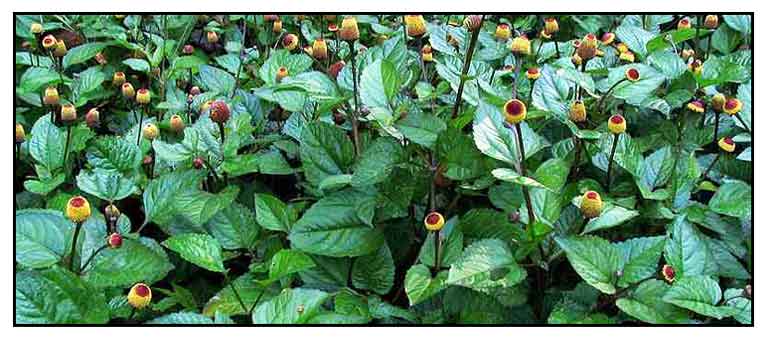
• Biri is an erect, branched, annual herb which reaches a height of 15 to 60 centimeters. Leaves are opposite, smooth or nearly so, ovate or ovate-lanceolate, and 1.5 to 3 centimeters long, with pointed tip and wedge-shaped base, and with toothed or wavy margins. Conical heads occur singly at the ends of long stalks, and are about 1 centimeter in length. Flowers are yellow. Achenes are flattened, oblong, dark-brown and enclosed separately in scales.
 • Herbs, annual. Stems decumbent to usually erect, not rooting at nodes, green to red, glabrous. Petiole 2-6.4 cm, glabrous to very sparsely pilose, narrowly winged; leaf blade broadly ovate to deltate, 5-10 × 4-8 cm, usually glabrous on both surfaces, base truncate to shortly attenuate, margin dentate, apex shortly acuminate to usually acute. Capitula discoid, 10.5-23.5 × 11-17 mm; peduncles 3.5-12.5 cm, glabrous to very sparsely pilose; phyllaries 15-18, 3-seriate, herbaceous, entire to sinuate, sparsely ciliate, those of outer series 5 or 6, 5.8-7.3 × 2.1-2.8 mm, usually narrowly ovate to lanceolate or sometimes ovate, acute; receptacle 8.3-21.5 × 3.5-8.5 mm. Florets 400-600; corollas 2.7-3.3 mm, yellow, 5-lobed; tube 0.5-0.7 × 0.2-0.4 mm; lobes 0.3-0.6 × 0.2-0.4 mm; stamens 1.4-1.7 mm. Achenes 2-2.5 × 0.9-1.1 mm, moderately to densely ciliate with straight-tipped hairs; pappus of 2 subequal bristles, longer one 0.5-1.5 mm, shorter one 0.3-1.3 mm. (Flora of China) • Herbs, annual. Stems decumbent to usually erect, not rooting at nodes, green to red, glabrous. Petiole 2-6.4 cm, glabrous to very sparsely pilose, narrowly winged; leaf blade broadly ovate to deltate, 5-10 × 4-8 cm, usually glabrous on both surfaces, base truncate to shortly attenuate, margin dentate, apex shortly acuminate to usually acute. Capitula discoid, 10.5-23.5 × 11-17 mm; peduncles 3.5-12.5 cm, glabrous to very sparsely pilose; phyllaries 15-18, 3-seriate, herbaceous, entire to sinuate, sparsely ciliate, those of outer series 5 or 6, 5.8-7.3 × 2.1-2.8 mm, usually narrowly ovate to lanceolate or sometimes ovate, acute; receptacle 8.3-21.5 × 3.5-8.5 mm. Florets 400-600; corollas 2.7-3.3 mm, yellow, 5-lobed; tube 0.5-0.7 × 0.2-0.4 mm; lobes 0.3-0.6 × 0.2-0.4 mm; stamens 1.4-1.7 mm. Achenes 2-2.5 × 0.9-1.1 mm, moderately to densely ciliate with straight-tipped hairs; pappus of 2 subequal bristles, longer one 0.5-1.5 mm, shorter one 0.3-1.3 mm. (Flora of China)
Distribution
- Introduced. In open waste places, old clearings, etc., at low and medium altitudes.
- In Benguet Subprovince, Cagayan, Nueva Viscaya, Rizal, and Laguna Provinces in Luzon, and in Mindoro and Balabac.
- Pantropic in distribution.
- Native to Brazil: Cultivated year-round as an ornamental and medicinal plant.
 Constituents Constituents
- Study has isolated an active principle, spilanthol (C14H25NO), an isobutylamide, a known insecticidal.
- Leaves yield alkaloids, carotenoids, essential oils, sesquiterpenes, amino acids.
- Phytochemical analysis of leaves yielded alkamides (spilanthol), isobutylamide derivatives, a- and ß-amyrin esters, stigmasterol, triterpenoidal saponins, amino acids, and alkaloids.
- Study isolated bioactive compounds: phenolics (vanillic acid, trans-ferulic acid, and trans-isoferulic acid), coumarin (scopoletin), and triterpenoids like 3-acetylaleuritolic acid (1), β-sitostenone (3), stigmasterol and stigmasteryl-3-O-β-D-glucopyranosides. (17)
- Studies on secondary metabolites yielded spilanthol, undeca-2E,7Z,9E-trienoic acid isobutylamide, undeca-2E-en-8,10-diyonic acid isobutylamide, 2E-N-(2-Methylbutyl)-2-undecene-8,10-diynamide, 2E,7Z-N-Isobutyl-2,7-tridecadiene-10,12-diynamide, 7Z-N-Isobutyl-7-tridecene-10,12-diynamide, ß-sitosterol, stigmasterol, α-amyrin, ß-amyrin, limonene, ß-caryophyllene, (Z)-ß-ocimene, germacrene-D, myrecene,
3-acetylaleuritolic acid, vanillic acid, ß-sitosterone, scopoletin, trans-ferulic acid, trans-isoferulic acid. (32)
- Bioassay-guided isolation yielded bioactive compounds such as phenolics (vanillic acid, trans-ferulic acid, and trans-isoferulic acid), coumarin (scopoletin), and triterpenoids ( 3-acetylaleuritolic acid, β-sitostenone, stigmasterol and stigmasteryl-3-O-β-D-glucopyranosides), in addition to a mixture of stigmasteryl- and ß-sitosteryl-3-O-ß-D-glucopyranosides. (see study below) (33)
- In a study of aerial parts for essential oil, the terpene fraction was mainly represented by ß-pinene (10.8%), myrcene (12.3%), (E)-caryophyllene (19.4%), and α-humulene (1.1%). (see study below) (55)
 Properties Properties
- The flower buds when chewed impart grassy taste followed by a strong tingling or numbing sensation in the throat, often excessive salivation and a cooling sensation in the throat. (7)
-
Adaptogenic, antibacterial, anti-inflammatory, anti-scorbutic, digestive, diuretic, immunomodulatory, insecticidal,larvicidal, lithotriptic, sialogenic, tonic.
- Saliva-inducing and trigeminal effects attributed to spilanthol.
- Studies have shown anti-inflammatory, analgesic, diuretic, antioxidant, antibacterial, antihypertensive, antimalarial, immunomodulatory, vasorelaxant, mosquitocidal, larvicidal, insecticidal, anti-tumor, hepatoprotective, bactericide, antibiofilm, pesticidal, anti-premature ejaculation, tyrosinase and hyperpigmentation inhibition properties.
Parts used
Roots, leaves, leaf juice.
Uses
Edibility / Culinary
- In some Asian countries, used as spice.
- Flower heads used by Japanese as spice for appetizers.
- In India, flower buds are used as flavoring in chewing tobacco. (7)
- In Madagascar, where it is known as bredes mafane, it is a main ingredient in the national dish called Romazava. In northern Brazil, especially in the state of Para, fresh or cooked leaves are used in dishes like Tacacá. (7)
Folkloric
- Root decoction used as purgative - 4 to 8 grams to a cup of water.
- Infusion used for itches and psoriasis.
- Decoction of plant used as diuretic and as solvent for vesical calculi.
- Leaf juice and bruised leaves applied to wounds and atonic ulcers.
- Whole plant used in treatment of dysentery and rheumatism.
- Leaves, mixed with Blumea balsamifera and Tamarindus indica, used to prepare aromatic baths for convalescents, rheumatics and pregnant women.
- Tops and decoction of roots used as vulnerary.
- Decoction of roots used as purgative.
- Flower heads, the most pungent of parts, chewed by Hindus to relieve toothache, as it produces numbness, redness of the gums and salivation.
- Flower heads used as hemostatic and analgesic.
- Tincture of flower heads used for toothache in lieu of tincture of pyrethrum.
- Used for inflammation of the periosteum of the jaws.
- In Old Calabar, used for toothaches.
- In South Africa, powdered leaf placed in carious tooth; rubbed on lips and gums for sore mouth in children.
- In Sri Lanka, flowers used for its diuretic activity.
- In the Cameroons, flowering heads are rubbed on the forehead for headaches. Also, combined with other plants, chewed and swallowed for snake bites and as local treatment for wounds.
- In Assam, used after childbirth.
- In Ayurvedic medicine, flower heads and roots are used in the treatment of scabies, psoriasis, scurvy, toothache, gum and throat infections; also used for stammering in children.
- Used in traditional Amazonian medicine to treat sexual dysfunction. (51)
- In India, leaves and inflorescences used for treatment of buccal and throat ailments.
Others
• Fish Poison: Among the Mundas of Chota Nagpur, crushed plants used a fish poison.
• Flavoring / Masticatory: Extract of flowers (jambu oil or jambu extract)used as flavoring material for food, gum, and dentrifices. In India, flower buds used as flavoring in chewing tobacco. (17)
Studies
• Anti-Inflammatory / Analgesic: Study of aqueous extract of S. acmella in experimental animal models showed dose-dependent inhibition of paw edema and increased pain threshold indicating significant anti inflammatory and analgesic properties. (2)
• Diuretic: Study of cold-water extract showed a marked increase in urine output, marked increase in urinary Na and K levels and reduction of urine osmolarity suggesting loop diuretic activity. It may also inhibit ADH release and/or action. (3)
• Anti-Inflammatory / Spilanthol: Study has isolated spilanthol which has shown to have significant anti-inflammatory activity on lipopolysaccharide-activated murine macrophage model, partly from inactivation of NF-kappaB which negatively regulates production of proinflammatory mediators.
• Vasorelaxant / Antioxidant: Study showed SA extract exerts maximal vasorelaxation in a dose-dependent manner, although less than acetylcholine-induced NO vasorelaxation. Chloroform extract showed the highest vasorelaxation and antioxidant activity. (9)
• Immunomodulatory / Antioxidant: Total ethanolic extract of leaves showed significant activation of macrophages and enhanced their function as compared to control, suggesting the herb as a potential natural drug for immunostimulant effect. (4)
• Bioactive Compounds / Spilanthol: Study analyzing the active chemical compounds of S. acmella revealed the naturally occurring insecticide, spilanthol, in the mother plant, flower heads and in vitro plantlets. Antioxidants, butylated hydroxytoluene (BHT) and fatty acids (n-Hexadecanoic acid and tetradecanoic acid) were obtained from all the sample extracts. (8)
• Spilanthol / Larvicidal: Study showed spilanthol to be a major constituent of ethanolic extract of flower heads, with potent ovicidal, larvicidal and pupicidal activity. It exhibited 100% mortality of eggs, larvae, and pupae of Anopheles culex and Aedes mosquito. (10)
• Antioxidant: Study showed the methanolic extract of stem of SA to have the highest superoxide radical scavenging activity while leaves showed maximum DPPH scavenging activity.
• Bioactive Compounds / Spilanthol / Insecticidal: Study detected the naturally occurring insecticide, spilanthol, in the mother plant, flower heads, and in vitro plantlets. N-isobutyl-2E, 4Z, 8Z, 10E- dodecatetraenamide was also detected in in vitro plantlets of S. acmella. It is a potent mosquito larvicide with 100% mortality against third instar larvae of A. aegypti.
• Antimicrobial: Study of various extracts of leaves of Spilanthes acmella showed the ethyl acetate and methanol extracts with activity against bacterial strains of Klebsiella pneumoniae and the water and EAE with good activity against fungal strains of Rhizopus stolonifer and R. arrhigus. (11)
• Diuretic / Antihypertensive: Leaf extracts were evaluated for diuretic activity in animals. The alcohol extract showed significant and marked increase in urine output, with a pattern of diuresis similar to that induced by furosemide. Results suggest a potential traditional use of the plant as diuretic in the treatment of hypertension. (13)
• Analgesic / Fresh Flowers: Study evaluated the analgesic potential of fresh flowers as used by Sri Lankan traditional practitioners to treat toothache. Results showed a dose-dependent analgesic activity. The analgesic was rapid and of short duration, not blocked by naloxone. The activity was presumed mediated supra-spinally accompanied by sedation. (12)
• Local Anesthetic / Antipyretic: Study evaluated an aqueous extract for local anesthetic activity by intracutaneous wheal in guinea pigs and plexus anesthesia in frogs, with xylocaine as standard drug in both models. Antipyretic activity was tested using yeast-induced pyrexia in rats, with aspirin as standard drug. Results showed significant anesthetic and antipyretic activities. (14) Study evaluated the local anesthetic action of ethanol extract of S. acmella in guinea pigs and frogs' sciatic nerves. Results showed S. acmella possessed local anesthetic activity. (30)
• Bioactive Metabolites / Alkamides: Major isolates are lipophilic alkylamides or alkamides bearing different number of unsaturated hydrocarbons, such as spilanthol or affinin ((2E,6Z,8E)-N-isobutyl-2,6,8- decatrienamide) and amide derivatives. Alkamides are structurally related to animal endocannabinoids, highly active in the CNS. Anandamide (N-arachidonoyl-ethanolamine) is an endogenous cannabinoid cerebral neurotransmitter. (15)
• Insecticidal Toxicity / Spilanthol / Plutella xylostella: Study showed the potential of S. acmella seed extract for insecticidal toxicity for the management of P. xylostella and other insects of agricultural importance. (16)
• Antioxidant / Roots: Study of root extracts of Spilanthes acmella in in vitro DPPH assay showed radical scavenging activity with an IC50 of 16.3 µg/ml. (18)
• Sexual Stimulant / N-Alkylamide / Flowers: Study evaluated ethanolic extracts of flowers and its effect on general mating patter, penile erection and serum hormone levels of normal male Wistar albino rats, compared with sildenafil citrate. The orally administered extract had a dose-dependent effect on mounting frequency, intromission frequency and ejaculation frequency, with a dose-dependent effect on FSH, LH, and serum testosterone levels. The effect might be attributable to N-alkylamide. Study lends support to the traditional use of S. acmella as a sexual stimulating agent. (19)
• Modulation of Genotoxic Damage Induced by Cyproterone Acetate: Study showed an extract of S. acmella modulated the genotoxic damage induced by cyproterone acetate in cultured human peripheral blood lymphocytes. (20)
• Phytopesticidal / Leaves: Study evaluated the antifeedant and larvicidal activities of various extracts of S. acmella leaves against Earias vitella, Helicoverpa armigera and Spodoptera litura. The leaves extract exhibited larvicidal activity, with maximum mortality in the dichloromethane extract. Results suggest a potential for the development of an eco-friendly pest control agent. (21)
• Antibacterial / bla Genes: An alcoholic extract of plant and its callus showed good antibacterial activity against gram positive and gram negative bacterial and also effectively controlled the growth of most resistant bacteria harboring bla genes. (23)
• Laxative / bla Genes: Study evaluated a methanolic extract of Spilanthes acmella for its laxative effect in animal models. Crude extract showed laxative properties, increasing the total number of feces. (24)
• Insecticidal / Anti-Cockroach: Study evaluated the potential insecticidal activity of Spilanthes acmella. Extracts were shown to be toxic against American cockroach, Periplaneta americana. The active component isolated was identified as N-isobutyl-2,6,8-decatrienamide (spilanthol). Spilanthol was more toxic than carbaryl, bioresmethrin, and lindane. Electrophysiological studies showed immediate hyperexcitation followed by complete inhibition of cockroach cercal nerve activity. (25)
• Anti-Tumor / Cytotoxicity: Study evaluated the cytotoxicity of a hydroalcoholic extract of inflorescence of S. acmella and its effects on the cytoskeleton of tumour cells. Results showed high cytotoxicity—the actin cytoskeleton arrangement of HEp2 cells showed depolymerization of the filaments, causing loss of morphology and compromised cell adhesion. (26)
• Larvicidal and Pupicidal: Study evaluated the effect of two plant extracts (Spilanthes acmella and Andrographis paniculata) on different larval instar and pupae of mosquito vector Aedes aegypti. S. acmella flower extract showed more effect than A. paniculata. Results suggest plants as alternative insecticidal to synthetic pesticides for vector control. (27)
• Hepatoprotective / CCl4-Induced Liver Toxicity: Study evaluated various extracts of S. acmella for hepatoprotective activity in CCl4-induced liver toxicity in rats. Results showed concentration dependent protection in the reduction of enzymes. The methanol extract showed the best activity. (28)
• Bioactive N-isobutylamides / Flower Buds / Mosquitocidal and Larvicidal: A hexane extract of dried flower buds yielded three N-isobutyl amides: spilanthol, undeca-2E,7Z,9E- trienoic acid isobutylamide and undeca-2E-en-8,10-diynoic acid isobutylamide. All were active against Aedes aegypti and Helicoverpa zea. (29)
• Anti-Malarial / Alkylamides: Alkylamides, spilanthol and undeca-2E-ene-8,10-diynoic acid isobutylamide,
isolated from S. acmella showed IC50s of 16.5 µg/mL and 41.4 µg/mL on Plasmodium falciparum strain PFB and IC50 of 5.8 µg/mL and 16/3 µg/mL for chloroquine resistant P. falciparum K1 strain, respectively. Lower concentrations of spilanthol and water extract reduced parasitemia by 59% and 53% in mice infected with P. yoelii. Results provide evidence of active constituents and antimalarial activity. (31)
• Bioactive Metabolites / Antibacterial / Antioxidant: Study isolated bioactive metabolites from S. acmella. Results showed fractions from the chloroform and methanol extracts inhibited the growth of many test organisms, e.g., Corynebacterium diphtheriae NCTC 10356 with MIC of 64-256 µg/mL and Bacillus subtilis ATCC 6633 with MIC of 128-256 µg/mL. All tested fractions exhibited antioxidant properties in both DPPH and SOD assays. Potent radical scavenging activity was observed in the DPPH assay. (33)
• Antifungal / Flower Head: Study evaluated Spilanthes acmella flower head extract for antifungal activity. Study showed the flower head possesses remarkable fungi toxic activity against many human and agricultural pathogens. Among fungal species, high inhibition zones were observed in Fusarium oxysporim (2.3 cm) and Fusarium moniliformis (2.1 cm) followed by Aspergillus niger and Aspergillus parasiticus. (34)
• Antimicrobial / Topical Antifungal: Study evaluated the potential of novel vesicular carrier, ethosomes, containing the methanolic extract of S. acmella, for anti-inflammatory action via transdermal route and the potential of the extract as antimicrobial in oral mucoadhesive gel formulation. Results validated the use of Akkalkara in traditional medicine as local anti-inflammatory and antimicrobial and confirmed the suitability of the ethosomes for transdermal delivery of herbal constituents. (35)
• Anthelmintic / Antioxidant / Cell Cultures: Study verified the potential of Spilanthes as a reservoir of bioactive agents and substantiated the value of callus cultures as a new source of anthelmintic and antioxidant compounds. (36)
• Increased Testosterone Level and Osteoblast Cells: Study evaluated the effect of S. acmella and physical exercise in increasing testosterone and osteoblast cells of femoral's trabecular glucocorticoid-induced osteoporosis in male mice. Results showed a 70% ethanol extract of S. acmella has an additive effect to weight-bearing exercise in glucocorticoid-induced osteoporosis in male mice. (37)
• Antibacterial / Antifeedant / Leaves: Study evaluated the antibacterial and antifeedant activities of various extracts o Spilanthes acmella against selected bacterial strains and larvae of Leucinodes orbonalis Guen. A dichlormethane extract of leaves showed broad spectrum antibacterial activity against all tested bacteria with maximum inhibition against E. coli. Phytochemical screening of leaves yielded the presence of alkaloids, terpenoids, phytosterols, saponins, steroid, tannins and phenolic compounds. (38)
• Antimicrobial /
Leaves and Flowers: Study evaluated the antimicrobial activity and chemical composition of crude extracts of flowers and leaves of S. acmella. All crude extracts of leaves were more effective than flowers against fungal strains of Aspergillus niger. All extracts showed maximum inhibition against E. coli and B. subtilis. (39)
• Neuroprotective on Pesticide-Induced Neuronal Cells Death: Study evaluated the protective effects of S. acmella extracts against pesticide-induced neuronal cells death and underlying mechanisms in dopaminergic (SH-SY5Y) cell lines. Pretreatment of SH-SY5Y cells with S. acmella extract significantly increased the dopaminergic neurons in pirimicarb-induced neurotoxicity. Pretreatment led to decreased calpain but increased calpastatin protein levels. The extract exerted a neuroprotective effect via an alteration of calcium homeostasis, against pirimicarb induced neurotoxicity. (40)
• Herb-Drug Interactions: (1) Cytochrome P4502E1 (CYP2E1) substrates: Spilathol significantly inhibits CYP2E1 and may increase adverse effects of substrate drugs, including those used in anesthesia such as isoflurane and sevoflurane. (2) Antiandrogen Drugs (bicalutamide, flutamide, abiraterone): S. acmella may increase testosterone levels and counter the effects of these drugs. (3) Diuretics: S. acmella has loop diuretic activity and may have additive effects with other diuretic drugs. (41)
• Anti-Inflammatory: Study evaluated the anti-inflammatory properties of methanol extracts of S. acmella (MSA) in murine macrophages. The MSA at ≤300 µg/ml inhibited NO production in lipopolysaccharide (LPS)-stimulated RAW 264.7 macrophages through transcriptional inhibition of inducible NO synthase expression in a dose-dependent manner. The MSA inhibited excessive inflammatory responses in LPS-stimulated murine macrophages by inhibition of phosphorylation of MAPKs and NF-kB, suggesting potential for use in treatment of severe inflammatory states. (42)
• Zinc Nanoparticles / Leaves: Study reports on the green, ecofriendly, cost-effective biological synthesis of zinc nanowires using Spilanthes acmella leaves extracts as reducing agent. (43)
• Hepatocurative / Paracetamol Induced Toxicity / Gel: Study evaluated the hepatocurative effect of S. acmella extract based gel in paracetamol intoxicated rabbits. Treatment caused a significant reduction in elevated serum markers (SGOT, SGPT, ALP). (45)
• Spilanthol / Bactericide / Antibiofilm Activity against Streptococcus mutans / Leaves and Stems: Study evaluated the extractive yield, spilanthol content, bactericide and antibiofilm properties of aqueous and hydroethanolic extracts of two regional variations of Acmella oleracea against the cariogenic bacteria Streptococcus mutans. The aqueous extract of leaves showed higher extractive yield. The leaves and stems showed high contents of 99.17 and 99.97%. On antimicrobial assays, the extracts exhibited equal MIC and MBC of 125 µg/ml against S. mutans. In antibiofilm assay, a variant at 500 µg/mL showed inhibition of 50.89% (p<0.05) similar to that after chlorhexidine gluconate 0.12% treatment. Results suggest the spilanthol-rich extracts showed remarkable antibacterial activity against cariogenic S. mutans and has potential has an affordable coadjuvant in dental products for prevention and control of dental caries. (46)
• Analgesic Activity / Review: Review provides an overview on Acmella oleracea and its activities, which includes 99 eligible studies on anti-inflammatory, analgesic and antioxidant properties. The anti-inflammatory and antioxidant activities reports on transcription factors of NF-kB triggering iNOS, COX-2, and other pro-inflammatory mediators such as IL-6, IL-1ß, and TNFα. The antinociceptive effects are related to various processes: inhibition of prostaglandin synthesis, activation of opioidergic, serotoninergic and GABAergic systems, and anesthetic activity through blockage of voltage-gated Na channels. Acmella oleracea presents potential for pain management, especially in chronic degenerative diseases. (47)
• Pesticidal against Stored Grain Arthropods / Review: Study effects of extracts of A. oleraceae aerial parts against eight important arthropod pests attacking stored products. Extraction was based on yield and content of spilanthol and other N-alkylamides analyzed by HPLC-DAD-MS. Two extracts, n-hexane and methanol, at 500 and 1000 ppm, were tested in measures of mortality after days of exposure. In general, the n-hexane extract was more efficient against all species and stages. The order in susceptibility of species/stage was: Cryptolestes ferrugineus adults > Alphitobius diaperinus larvae > C. ferrugineus larvae > Trogoderma granarium adults > Tenebrio molitor larvae > Oryzaephilus surinamensis adults > O. surinamensis larvae > Tribolium confusum larvae > Tribolium castaneum larvae > Acarus siro adults > T. molitor adults > A. siro nymphs > T. granarium larvae > T. castaneum, adults > T. confusum adults > A. diaperinus adults. Results provide useful information on the efficacy of N-alkyladmides-rich A. oleracea extracts as grain protectors, and the importance of targeting the most susceptible species and developmental stages. (48)
• Spilanthol / Review: Study presents a literature review on spilanthol, its occurrence, chemistry, extraction and biological activities. It is found in the Acmella oleracea and many other plants used in traditional remedies throughout the world. It exerts a wide variety of biological and pharmacological effects including analgesic, neuroprotective, antioxidant, antimutagenic, anticancer, anti-inflammatory, antimicrobial, antilarvicidal, and insecticidal activities. (49)
• Chronic Toxicity Study / Spilanthol / Flowers: Ultra-performance liquid mass spectometry (UHPLC-ESI-QTOF-MS/MS) study of hydroalcoholic extract of A. oleracea flowers (EHFAO) yielded spilanthol as the foremost major compound at concentration of 97.7%, followed by scopoletin 1.53% and d-limonene 0.77%. Oral administration of the EHFAO extract for 60 days in spontaneously hypertensive (SHR) and Wistar (WR) rats did not affect animal weight. Moderate alterations were observed in the hepatic enzymes, while no relevant histopathological alterations were found. Chronic treatment with EHFAO was found safe at concentration of 100 mg/, with no interference in blood pressure levels and no appreciable toxic effects. (50)
• Pharmaceutical Formulation for Premature Ejaculation / Inflorescences / Pilot Study: Acmella oleracea is a plant species used in traditional Amazonian medicine to treat sexual dysfunction. Study evaluated the clinical action of a nano-formulation containing an ethanolic extract of A. oleracea inflorescences on patients with premature ejaculation. A spray preparation was applied 5 min prior to sexual intercourse. The nano-formulation increased participant IELT (intravaginal latency time for ejaculation) and increased participant IELT values (M=293s) compared with baseline values (193s). The formulation is presumed to promote penile desensitization, which is attributed to the presence of spilanthol derived from flower extracts. Results suggest a clinical effect in patients with premature ejaculation and a potential as a therapeutic alternative treatment for premature ejaculation. Larger studies were suggested to confirm the observations. (51)
• Spilanthol / Tyrosinase Inhibition / Prevention of Hyperpigmentation or Depigmentation: Study evaluated the effect of A. oleracea methanolic extract, hexane (84.28% spilanthol) and dichloromethane (about 100% spilanthol) fractions A. oleracea on tyrosinase enzyme. The dichloromethane fraction showed stronger inhibition effect on the tyrosinase enzyme in the first 10 min. Results suggest potential of spilanthol formulations for topical use, which may prevent and/or slow skin hyperpigmentation or depigmentation processes. (52)
• Increase Collagen Content / Spilanthol Benefit on Tendon Reorganization: Acmella oleracea contains spilanthol, which possesses analgesic and anti-inflammatory effects that can favor tendon reorganization. Study evaluated the effect of A. oleracea on content and organization of collagen in injured tendons using male Lewis rats with partially transected calcaneal tendon and treated with topical application of 20% A. oleracea ointment. Results showed topical application of 20% ointment increased the molecular organization and collagen content, suggesting a potential application in tendon repair. (53)
• Botox-Like Effect / Anti-Wrinkle / Invention: Spilanthol in the form of A. oleracea extract inhibits contractions in subcutaneous muscles, notably of the face, and can be used as an anti-wrinkle product. Botox or botulinum toxin, extracted from the bacterium Clostridium botulinum, has the main disadvantage of toxicity. The invention relates to the used of spilanthol for its botox-like action and anti-wrinkle activity without the toxicity of botox. (54)
• Spilanthol-rich Essential Oil / Microwave-Assisted Extraction / Aerial Parts: Most applications of A. oleracea relates to the presence of active ingredients, namely alkylamides, among which spilanthol is the most important one. Large scale cultivation will result in plant biomass with potential to yield an essential oil for industrial applications, such as a larvicide against vector mosquitoes. Study reports on the extraction of essential oil from aerial parts by microwave-assisted extraction (MAE), which allows a higher yield and spilanthol content than traditional hydrodistillation (0.47 v 0.22% and 13,31 vs 2,24%, respectively). EO encapsulated into a nanoemulsion (NE) contained 6% EO using a high-energy method. The EO and NE, along with isolated spilanthol, were evaluated for acute toxicity against 3rd instar larvae of Culex quinquefasciatus, a filariasis and arbovirus vector of public importance, achieving LC50s of 16.1, 407.5, and 3.1 µL/L respectively. Testing LC50s, the A. oleracea-borne products showed significant impact on larval development, fecundity, fertility, and natality of C. quinquefasciatus. Results suggest potential for development of new mosquito larvicides. (see constituents above) (55)
• Increase Antioxidant Potential as Adjunct in Brewing Beer / Flower: The application of plant extracts as brewing adjuncts is increasingly being studied, along with consumption of low alcoholic beverages. Study evaluated the production of craft lager beer with addition of plant extract and reduced alcohol content by partial replacement of malt with malt bagasse. Physical-chemical analysis of beer produced showed it was possible to reduce alcohol content by 40%. The addition of Acmella oleracea extract was added to the beer's significantly increased its antioxidant activity. Results suggest potential for using jambu flower extract as a prominent antioxidant adjunct in beer. (56)
• Effect on Sexual Behavior in Male Rats / Flowers: Study evaluated ethanolic extract of flower extract and its effect on general mating pattern, penile erection, and serum hormone levels of normal male Wistar albino rats and compared with sildenafil citrate. Orally administered extract showed dose-dependent positive effect on mounting frequency, intromission frequency, and ejaculation frequency; the most significant effects were observed at 150 mg/kg, even after a lapse of 7 and 14 days of discontinuance of drug treatment. A dose dependent effect was observed on FSH, LH, and testosterone levels. The aphrodisiac potential of the ethanolic extract was demonstrated in vitro and in vivo. The improved sexual potential may be attributed to N-alkylamides. Results support its traditional use as a sexual stimulating agent. (57)
• Molecular Effect on Urine Concentrating Mechanism / Diuretic Potential: Study evaluated the molecular effect of Acmella oleracea extract and its main alkylamide spilanthol on two major processes involved in urine concentrating mechanism: Na-K-Cl symporter (NKCC2) activity in the thick ascending limb, and water channel aquaporin 2 accumulation at the apical plasma membrane of collecting duct cells. Spilanthol-induced inhibition of cAMP production negatively modulates urine-concentrating mechanisms, thus holding great promise for its use as diuretic. (58)
• Antitumor / Mitochondrial Activity and Cell Damage / Leaves: Application of an increasing concentration of leaf extract of A. oleracea on cell cultures of HEp-2 neoplastic cells and L929 fibroblast yielded a significant reduction in cell viability using ANOVA test, causing visible damage to cytoskeleton actin filaments. The cytotoxicity of the leaf extract may be due to components, including flavonoids. Results suggest great cytotoxic activity on tumoral cells with potential for antitumor therapy. However, because of toxicity to non-tumoral cells, efficacy of sub-fraction compounds should be evaluated, and the population should be alerted on traditional use of the plant and potential damage for the consumer. (59)
• Larvicidal / Ae. aegypti and Cx. quinquefasciatus / Leaves: Study evaluated the larvicidal activity of hydroethanolic extract of A. oleracea leaves against 3rd instar larvae of Ae. aegypti dengue vector and Cx. quinquefasciatus filariasis vector. After 24 hours of exposure, LC50s were 11.41 ppm for Ae. aegypti and 32.40 ppm for Cx. quinquefasciatus. The extract showed very low ecotoxicity, suggesting use without causing environmental damage. Results suggest an alternative to synthetic larvicides. (60)
• Use as Local Anesthetic in Dentistry / Review: Review discusses the merits, limitations, safety, and potential applications of using S. acmella as a local anesthetic drug. Various anesthetic forms are available as gel form, chitosan-based muco adhesive film, and solution form. Its potential as local anesthetic has been proven in invitro investigations and animal studies using guinea pigs frogs, and mice Its analgesic, anesthetic, antimicrobial, and anti-inflammatory properties make it versatile and with a potential for various applications in dentistry. (61)
• Potential for Male Sexual Dysfunction / Review: Review presents a primer on male sexual dysfunction, including epidemiology, physiopathology, and conventional treatments, along with medicinal plants used against male sexual dysfunctions. It provides an overview of A. oleracea, including animal and clinical trials, formulations, and possible mechanisms of action. Acmella oleracea is a promising plant to be used against male sexual dysfunctions due to the action of its N-alkylamides, mainly spilanthol. (62)
Availability
- Wild-crafted.
- Supplements in the cybermarket.
|