|
Gen info
- Native to South America, The first
species recorded in the Philippines was Bougainvillea
spectabilis. The other species, B.
glabra and B. peruviana
were introduced much later. The cultivated hybrids have produced a considerable
variety in size, color, form and numbers of showy bracts.
-
The genus
attributes its name to Antoiine de Bougainville, first Frenchman to
cross the Pacific.
Botany
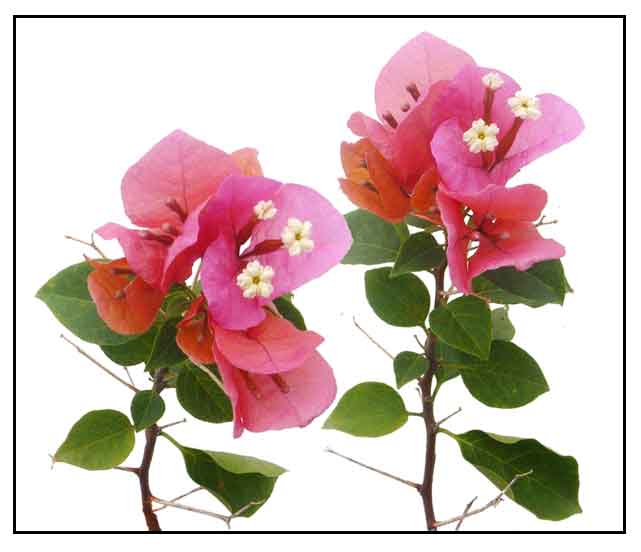
Bogambilya is a woody climber that can grow to a
height of more than 10 meters, with large thorny stems and long drooping
branches. The leaves are dark green, petioled, alternate, ovate, with entire margins,
6 to 10 centimeters long, broadest near the base. Thorns are the axils assist
the plant in climbing. Flowers are in groups of threes, forming clusters at the terminal portion of the branches, each group subtended
by three, broad, purplish, oblong-ovate and acuminate bracts, about 3 to 5 centimeters long. Flowers are small,
each inserted on a bract, tubular, inflated midway through its length,
of varying colors.
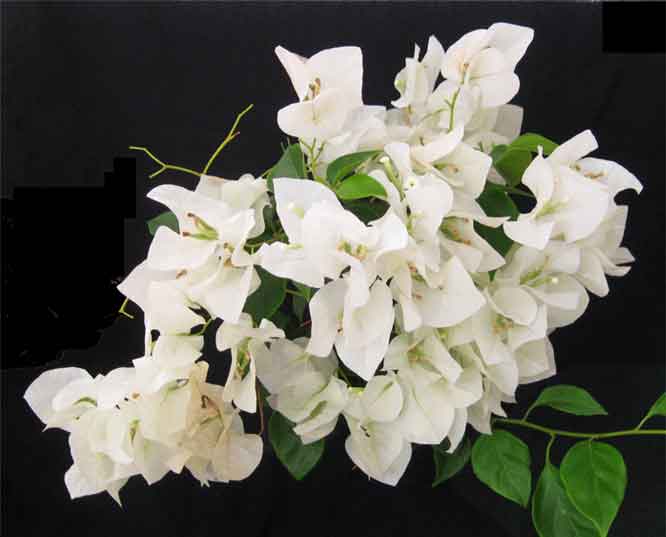
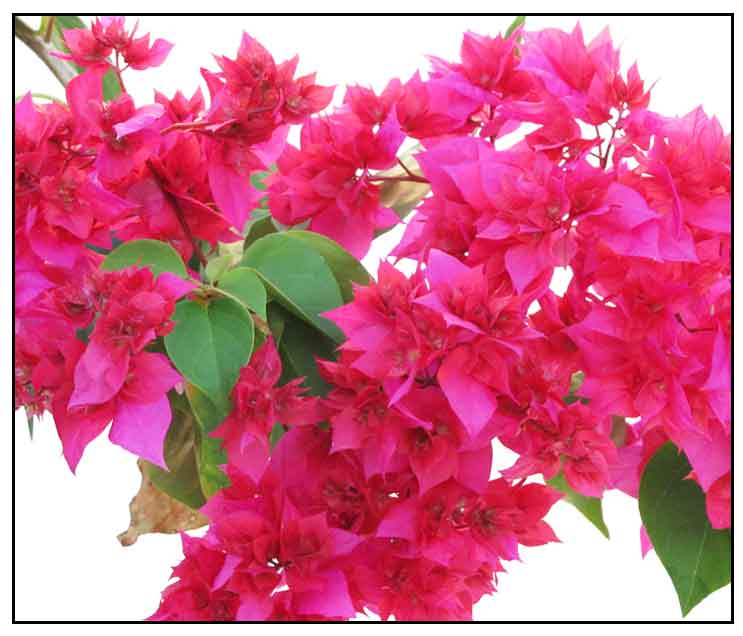
Numerous cultivars are cultivated in the Philippines, with single or multiple bracts, in varied colors of red, purple, pink, yellow or white.
 Distribution Distribution
- Native to South America.
- One of the most popular ornamental plants in the Philippines.
- Cultivars with variegated leaves were recently introduced.
Constituents
- Reported constituents on B. glabra
are pinitol, betacyanine, flavonoids, tannins and alkaloids.
- Study showed the presence of plastid-bound oxalic acid oxidase in the leaves.
- Studies have isolated flavonoids, phenolic compounds, ribosome inactivating proteins, amylase inhibitors, oxidase and pinitol.
- Hydoalcoholic and petroleum ether extracts yielded alkaloids, glycosides, carbohydrates, anthraquinone, flavanoids, terpenoids, saponins, steroids, proteins, fixed oils, fats, and tannins.
(28)
- Qualitative analysis of methanol and ethanol leaf extracts yielded carbohydrates, proteins, amino acids, flavonoids, phytosterols, alkaloids, saponins, triterpenoids, tannins, anthraquinones, furanoids, and phenols. (see studies below) (33)
-
Study of ethanolic extract of leaves, stems, and flowers for phenolic content yielded a total of 25 compounds: 1 phenolic acid (sinapic acid), 3 betacyanins (betanidine, gomphrenin I and bougainvillein V) and 21 flavonoids (catechin, chrysoeriol, isorhamnetic, myricetin, dihydromyricetin, apigenin, quercetin, rutin, genestein rutinoside, naringin, hesperdin, among others). (34)
- Phytochemical analysis of various extracts of stems, leaves, and flowers yielded the presence of alkaloids, flavonoids, glycosides, phlobatannins, saponins, steroids, tannins, and terpenoids. (see study below) (36)
- Phytochemical screening of flowers yielded alkaloids,
carbohydrates, tannins, proteins, flavonoids, and phenolic compounds. (see study below) (41) Screening of flower extracts yielded alkaloids, flavonoids, phlobatannins and terpenoids. (47)
- Study of ethanol extract of stem bark yielded five new flavones, bougainvinones I-M (1-5) along with three known congeners, 2′-hydroxydemethoxymatteucinol (6), 5,7,3′,4′-tetrahydroxy-3-methoxy-6,8-dimethylflavone (7) and 5,7,4′-trihydroxy-3-methoxy-6,8-dimethylflavone (8),
(see study below) (53)
Properties
- Leaves considered to have anti-inflammatory activity.
- Pinitol considered antidiabetic.
- Studies have shown antimicrobial, antidiabetic, anti-inflammatory, antifertility, amylase inhibitory, antihyperlipidemic, radical scavenging, anti-atherogenic, thrombolytic, analgesic, antipyretic, anthelmintic, antiulcer properties.
 Parts utilized Parts utilized
Leaves, stems, flowers
Uses
Edibility
- Flower bracts used for making an attractive, violet-colored drink, Agua de Buganvilia, imparting a refreshing, delicate taste. (58)
Folkloric
- Not
known in the Philippines for any medicinal use.
- Traditional practitioners in Mandsaur
use the leaves for a variety of disorders, for diarrhea, and to reduce
stomach acidity.
- Used for cough and sore throat.
- For blood vessels and leucorrhea: a decoction of dried flowers, 10 g
in 4 glasses of water.
- For hepatitis, a decoction of dried stems, 10 g in 4 glasses of water.
- In Panama, an infusion of the flowers of B. glabra used as treatment
for low blood pressure.
- Nupe people of Niger use a crude extract of leaves for diabetes.
- Plant decoction used for fertility control by tribal people in many countries. (35)
Studies
• Hypoglycemic
/ Stem Bark: Study evaluated the hypoglycemic potential of B. spectabilis stem bark extract in albino rats. Results showed significant anti-hyperglycemic effect by the stem bark, 22.2% more potent than oral hypoglycemic drug, glibenclamide 0.2 mg/kg. (1)
• Pinitol / Insulin-like effect:
Pinitol, an active principle of the traditional antidiabetic plant
B. spectabilis, is claimed to exert insulin-like effects. The study
supported the view that D-pinnitol (3-O-methyl-chiroinositol) may exert an insulin-like effect
to improve glycemic control in hypoinsulinemic STZ-diabetic mice. D-
pinitol may act via a post-receptor pathway of insulin action affecting
glucose uptake. (3)
• Antibacterial / Leaves:
Study on various solvent extracts of Bougainvillea spectabilis leaves
showed maximum inhibitory effect on tested bacteria (S aureus, B subtilis,
S faecalis, Micrococcus luteus, E coli, P aeruginosa, S typhii, K pneumonia,
P vulgaris, S marcescens, S flexneri. (4) Study of B. spectabilis and B. variegata ethanolic and methanolic extracts of leaves showed significant antimicrobial activity. (33)
• Antidiabetic:
Study of B spectabilis aqueous and methanolic extracts showed good glucose
tolerance and significantly reduced intestinal glucosidase activity,
with regeneration of insulin-producing cells and increase in plasma
insulin. Results suggest a potential for development of new neutraceutical
treatment for diabetes.
• Amylase Inhibition:
Study of the chloroform extract of B spectabilis showed significant
alpha-amylase inhibitory property. (10)
• Color and Bioactivity of Flowers:
Study of the methanolic extracts of B spectabilis flowers of five different colors, screened biologically on antibacterial, antifungal, brine shrimp lethality and phytotoxicity assays showed that the extract of the white flowers was the most biologically active. (11)
• Anti-Fertility / Leaves:
Study showed the leaf extract showed adverse effects on male and female reproductive organs: male mice showed more degeneration of gonads in comparison to female mice, with decrease in total sperm count and titer of testosterone; extended the reproductive cycle of female mice by 1-2 days with prolonged metaestrus and decrease in serum estrogen. (12)
• Antihyperlipidemic / D-pinitol:
Study showed the antihyperlipidemic effect of D-pinitol in STZ-induced type 2 diabetic rats, with significant lowering of LDL and VLDL cholesterol levels and significant increase in HDL cholesterol levels. (13)
• Radical Scavenging Activity:
Study found the aqueous extracts of B spectabilis produced more free radical scavenging than B divaricata. Results were superior to common synthetic antioxidants used in the food industry and presents a potential for applications in pharmaceutical or alimentary preparations. (14)
• Effects on Liver and Kidney Functions in Rats:
Study of extracts showed dose-dependent decrease in potassium ion concentration, possibly a result of cellular uptake of glucose effected by pinitol which may be accompanied by cellular uptake of potassium ion. An observed decrease in serum calcium ion concentration may be the result of impaired intestinal absorption of calcium and/or impaired conversion of vitamin D to the active 1,25-dihydroxyvitamin D3. Results suggest the repeated administration of B. spectabilis extract may compromise the integrity of kidney and liver.
• Hypoglycemia / Root-Bark:
Permanent hyperglycemia in alloxan-induced diabetic rats was reversed with a week's treatment with an ethanol extract of root bark. In the study, no considerable signs of toxicity were observed in the albino Wistar rats. (16)
• Natural Red Pigment:
Study reported extraction of a red pigment with good solubility, light fastness, heat-resisting property, and good stability. The extraction is simple, the pigment reportedly non-toxic. (17)
• Lipid-Lowering / Antiatherogenic / Leaves:
Study of alcoholic extract of leaves on albino rats fed with a high-fat diet showed an excellent lipid lowering potential, with significant reduction in total cholesterol, triglycerides, LDL, VLDL and a significant increase in HDL. There was also significant improvement in atherogenic index. (18)
• Renal and Liver Effects:
Study showed repeated administration of B. spectabilis may compromise the kidney and liver functions. There may also be ill-effects on patients with osteoporosis, renal diseases , and liver problems. (21)
• Antimicrobial:
Study of the methanolic extracts of leaves of B. spectabilis and B. variegata showed significant antimicrobial activity, suggesting a potential to replace commercially known antibiotics. (22)
• Hematologic and Lipid Effects / Anemia / Leaves:
Study of ethanolic extract of leaves in rats showed possible beneficial effects on serum cholesterol reduction. However, it also has the potential of adversely affecting hematological indices, with significant reduction in packed cell volume, Hb concentration and RBC count and reduction in WBC count. (23) Study of crude extract of B. spectabilis leaves (800 mg/k BW) given to mice for 30 days showed a significant decline in the level of hemoglobin, RBC count and PCV. (52)
• Lead Absorption Ability / Leaves:
Studies have shown Bougainvillea can reduce heavy metal pollution through absorption and adsorption in air and water. This Metro Manila study showed that Bougainvillea lead uptake may vary from various environmental factors, such as lead concentration in the soil, climatic condition, degree of pollution and complexes of lead in other soil components. (24)
• Thrombolytic Activity / Leaves:
Studies evaluated the in-vitro thrombolytic activity of Bougainvillea spectabilis leaf extract. Results showed dose-dependent enhancement of the percentage of clot lysis along with incubation time factor. Preliminary study suggests a valuable addition to the list of natural products with thrombolytic activity, with therapeutic implication in atherothrombotic diseases like myocardial infarction or cerebral infarction. (25) Study evaluated the in-vitro thrombolytic activity of B. spectabilis leaves. Results showed maximum clot lysis (81%) at 72 hours incubation in a dose-dependent manner. (61)
• Antidiabetic / Glucose-6-phosphate Dehydrogenase Activity:
Aqueous and methanolic extracts of Bougainvillea spectabilis showed significant increase in glucose-6-phosphate dehydrogenase activity and hepatic, skeletal muscle glycogen content. There was also regeneration of insulin-producing cells and a corresponding increase in plasma insulin and c-peptide levels. Results suggest a potential for a neutraceutical for diabetes treatment. (26)
• Antidiabetic:
Study using in vivo diabetic murine model investigated various extracts of A. indica and B. spectabilis for biochemical parameters important for controlling diabetes. Extracts showed good oral glucose tolerance and significantly increased glucose-6-phosphate dehydrogenase activity. There was regeneration of insulin-producing cells and an increase in plasma insulin and c-peptide levels. Results suggest good candidates for developing new neutraceuticals for the treatment of diabetes. (27)
• Anthelmintic / Flowers:
Study evaluated the in vitro anthelmintic activity of ethanolic and aqueous extracts of flowers of B. spectabilis against worms Pheretima posthuma. Both extracts exhibited dose-dependent anthelmintic activity, with best activity observed at highest concentration of 50 mg/mL. (28)
• Antibacterial / Leaves, Flowers and Stems:
Study evaluated extracts from dried powdered plant parts for phytochemical analysis and antimicrobial activity. Study yielded alkaloids, flavonoids, glycosides, phlobatannins, saponins, steroids, tannins and terpenoids. Leaves showed the highest antibacterial activity, followed by flowers and stems. (29)
• Analgesic / Leaves:
Study evaluated the analgesic effects of Bougainvillea spectabilis in mice models by tail flick, tail immersion, and writing tests. Results showed significant peripheral analgesic activity at 50 mg/kg. (30)
• Antiulcer / Leaves:
Study evaluated an ethanol extract of leaves for antiulcer activity against aspirin plus pylorus ligation induced gastric ulcer and other ulcer models in rats. B. spectabilis showed significant cytoprotective effect with reduction in gastric volume, free acidity, total acidity and ulcer inhibition. (31)
• Antihyperglcemic / Antihyperlipidemic / Antioxidant / Leaves:
Study documented the antihyperglycemia, antihyperlipidemic, and antioxidative potentials of aqueous extract of Bougainvillea spectabilis leaves without any toxicity in streptozotocin-treated Wistar rats. (see constituents above) (33)
• Antioxidant / Antihyperlipidemic / Leaves: Total ethanolic extract of leaves of B. spectabilis showed potent antioxidant activity (97% potency compared to standard vitamin E) and antihyperlipidemic activity (86% potency in lowering serum cholesterol, 90% potency for triglycerides, and 80% for LDL-C. The EA leaf extract showed more potent activity than simvastatin in raising serum HDL-C. The antioxidant activity was attributed to flavonoids viz. myricetin, formononetin-7-O-rutinoside and genestein 7-O-rutinoside. Genistein 7-O-rutinoside was also shown to have antihyperlipidemic activity. (see constituents above) (34)
• Antifertility Effect:Review article attributes the antifertility effect of B. spectabilis to the inhibition of the spermatogenic pathways leading to decrease in number, motility, and variability of sperm. It also affects females by disruption of the estrous cycle. The plant decreases sex hormones testosterone and estrogen. (35)
• Antibacterial Activity Against Salmonella typhi: Study evaluated various extracts of B. spectabilis for antibacterial activity against S. typhi. Leaves showed highest activity followed by flowers and stems. In stem extracts, activity was highest in methanol, ethanol in leaves, and methanol and ethanol in flowers. (see constituents above) (36) Bacteriocins are natural antimicrobial peptides. Study of ethanolic and methanolic extracts of flowers and leaves were more active against S. typhi. B. spectabilis and bacteriocins inhibition activity suggest them as potential alternative antimicrobial agents against human pathogens. (46)
• Anti-Inflammatory / Leaves: Study evaluated the potential anti-inflammatory activities of fresh dried leaf extracts of BS in experimental models of animal inflammation (carrageenan-induced acute inflammation, dextran-induced edema and arthritic model). Results showed the methanol extract of leaves exhibited significant anti-inflammatory and immunoregulatory activity. (37)
• Mosquitocidal / Leaves: Study evaluated the leaf extract of Bougainvillea spectabilis for mosquitocidal activity against Ae. aegypti. A relationship was observed between plant extract dose and percentage of egg hatchability, and larval and pupal mortality. (38)
• Peltogynoids . Boudainvinones / Cytotoxic / Stem Bark of Purple Bougainvillea: Study yielded eight new peltogynoids, bougainvinones A-H from the stem barks of B. speciosa. Compound 7 showed cytotoxicity against five cancer cell lines, KB, HeLa S-3, HT-29, MCF-7, and HepG with IC50 in range of 7.4-9.7 µM and compounds 2 and 3 showed cytotoxicity against KB cell line with IC50 values of 6.5 and 9.0 µM. (39)
• Biomethane Potential of B. spectabilis Waste: Study investigated the biomethane potential of Bougainvillea spectabilis plant waste when subjected to mesophilic anaerobic digestion. Results showed maximum daily methane yielded of B. spectabilis flowers, leaves, and stems were 65.95, 56.29, and 18.8 mL/g, respectively. (40)
• Antibacterial / Flowers: Study evaluated phytoconstituents and antibacterial activity of ethanol extract of B. spectabilis flowers. An ethanolic extract exhibited maximum inhibitory activity on E. coli than S. aureus. (41)
• Dust Monitoring: Dust pollution is a common problem in urban air produced by increasing demand of construction activity, agricultural activity, and vehicular traffic. Study evaluated the efficiency of B. spectabilis in monitoring dust. Leaves showed significant variations in their dustfall values. Easy availability, less maintenance, and good dust capturing capacity make the plant suitable fr phytomonitoring. (42)
• Biogenic Synthesis of Selenium Nanoparticles / Flowers: Study reports on a cost effective, simple, and ecofriendly method for the biogenic synthesis of selenium particles using the flower of Bougainvillea spectabilis. (43)
• Nephroprotective / Gentamycin Induced Renal Dysfunction / Leaves: Study evaluated the protective effects of B. spectabilis on gentamycin-induced renal dysfunction in Wistar albino rats. Results showed decreased in the increased levels of BUN, serum creatinine, urinary protein and extent of renal dysfunction. Acute oral toxicity testing produced no observable side effects, including death, up to 400 mg/kbw in rats even after 9 days of observation. (44)
• Flower Pigment as Titration Indicator: Study evaluated flower pigment extracts obtained from Bougainvillea spectabilis bracts as a titration indicator. Results showed that all titrations evaluated the BS bract extracts were found to be accurate and useful for indication end point (neutralization point.) Results suggest a potential source for a novel, very useful, economical, simple, accurate, environmentally and user-friendly indicator. (45)
• Antimicrobial / Flowers: Various flower extracts (chloroform, EA, ethanol, and water) of B. spectabilis were investigated for antimicrobial activities. Maximum antibacterial activities were observed with the ethanol and water extracts, and maximum fungal activity was observed with chloroform and ethanol extracts. (47)
• Protects Against Rotenone Induced Toxicity: Study evaluated extracts of yellow and pink/purple flowers on brain oxidative stress and neuronal damage caused in Sprague-Dawley rats by systemic rotenone injection. Rotenone caused a significant increase in brain DNA and nitric oxide content along with decreased brain glutathione. B. spectabilis flowers extracts exerted a protective effect against toxic effects of rotenone on brain, liver, and kidney. The extracts decreased brain lipid peroxidation and prevented neuronal death due to rotenone. Results suggest a potential in the treatment of Parkinson's diseases. (48)
•
Bioactivity Against Acanthoscelides obtectus / Insecticidal / Leaves: Acanthoscelides obtectus is a common insect pest that attack stored beans causing major loses to farmers. Bougainvillea spectabilis leaf powder showed mortality potential against A. obtectus with highest mean mortality recorded at 10g concentration. (49)
• Hepatoprotective Against Aflatoxin Induced Hepatotoxicity / Leaves: Aflatoxins are secondary metabolites produced by several strains of filamentous fungi (Aspergillus flavus and A. parasiticus). Elevated dietary exposure of aflatoxin can induced liver cancer in humans. Study investigated the protective effect of oral administration of ethanol extract of B. spectabilis leaves against aflatoxin B (AFB) induced hepatic injuries in male Swiss albino mice. Results showed markedly decreased lipid peroxidation along with stimulation of antioxidants. The hepatoprotective effect may be attributed to the amounts of flavonoids, alkaloids, and phenolic compounds in the leaf extract. (50)
• Pinitol / Antidiabetic Principle from Stem Bark: Study isolated an antidiabetic principle, Pinitol, from the methanol extract of stem bark of Bougainvillea spectabilis, along with quercetin and quercetin-3-O-a-L-rhamnopyranoside. (51)
• Cytotoxic Flavones / Anticancer Against KB and HeLa Cell Lines / Stem Bark: Study of ethanol extract of stem bark yielded five new flavones, bougainvinones I-M (1-5) along with three known congeners (6-8). The isolated compounds were tested for in-vitro cytotoxicity against five cancer cell lines. Compound 5 showed the most promising cytotoxic activity against KB and HeLa S-3 cell lines, with IC50 of 7.44 and 6.68 µM. The other compounds exhibited moderate cytotoxicity against KB cell line.(see constituents above) (53)
• Comparative Anti-Diabetic Effect / B. spectabilis and B. alba / Flowers: Study evaluated the anti-diabetic activity of B. spectabilis and B. alba flowers using α-amylase inhibition, glucose diffusion, and non-enzymatic glycosylation of hemoglobin assay. B. spectabilis flower extract exhibited glucose tolerance and anti-diabetic effects than B. alba. (54)
• Antibacterial / Leaves: Study evaluated the disinfectant effect of ethanolic extract of fresh green leaves of Bougainvillea spectabilis. Results showed it can retard the growth of gram negative Escherichia coli and gram positive Micrococcus aureus. Activity was attributed to the presence of myristic acid and to some extent palmitic acid. Results suggest solvent extract of B. spectabilis can be used as first aid disinfectant for minor wound dressings prior to proper medicinal clinic evaluation and treatment. (55)
• Low Cost Adsorbent / Charcoal from Leaves: Biosorption is one of the effective way of removing metals from aqueous solutions/industrial effluents. Study evaluated a low cost and ecofriendly material to remove iron metal from aqueous solution using charcoal produced from B. spectabilis leaves. The charcoal was activated using HCl and HNO3. The activated charcoal synthesized from Bougainvillea leaves showed to be an excellent adsorbent for removal of iron metal from aqueous solution. (56)
• Protective Effect on Induced Polycystic Ovary Syndrome / Leaves: Study evaluated the possible protective effect of B. spectabilis leaves extract on ovarian folliculogenesis using a rat model of estradiol valerate (EV)-induced polycystic ovary syndrome (PCOS). PCOS caused massive primordial follicle loss and development of cystic follicles with increase in fibrosis, COX2 immunosuppression. There was a significant reduction in LH, estrogen, and serum glucose levels and increase in FSH and antioxidant serum levels between EV+extract group and EV treated group. The BSL extract had a significant role in restoration of ovarian folliculogenesis and reduction of biochemical, histological and immunohisto-chemical changes. (57)
• Larvicidal / Culex quinquefasciatus / Leaves: Study evaluated the larvicidal activity of B. spectabilis leaf extracts against the filarial vector Culex quinquefasciatus. Methanol and acetone leaf extracts showed larvicidal activity with LC50s of 358.8 and 56.9 ppm at 24 hr, respectively. (59)
• Co-Administration of B. spectabilis and Catharathus rosea / Effect on Phosphatases / Leaves: Study evaluated the biochemical alterations due to co-administration of B. spectabilis and C. roseus leaf extracts on female diabetic albino rats. Results showed significant decrease in acid and alkaline phosphatase content. Activity may be due to phytoconstituents like flavonoids, saponins, etc. (60)
• Silver Nanoparticles / Antibacterial / Flowers: Study reports on the synthesis of silver nanoparticles using flower extract of Bougainvillea spectabilis. The AgNPs showed activity against both gram-positive and gram-negative bacterial strains, having higher activity against the former than the latter. (62)
• Extracts Encapsulated in Alginate Beads / Release Rate: Study evaluated the extraction of coloring compounds from B. spectabilis under aqueous and ethanolic conditions and the encapsulation of the extract in alginate beads. Ethanolic extraction yielded higher values for total phenols, betacyanins, betaxanthines, and inhibition capacity. Results showed encapsulation is efficient to protect the bioactive compounds from B. spectabilis extracts. (63)
Availability
- Cultivated.
- Extracts in the cybermarket.
|