Gen info
- Folklore: In Trinidad and Tobago folklore, the tree is the "Castle of the Devil," where Bazil, the demon of death, was lured and imprisoned by a carpenter. In 2002, the tree was cut down by government non-believers, releasing the resident demon who has caused a skyrocketing of crime.
Botany
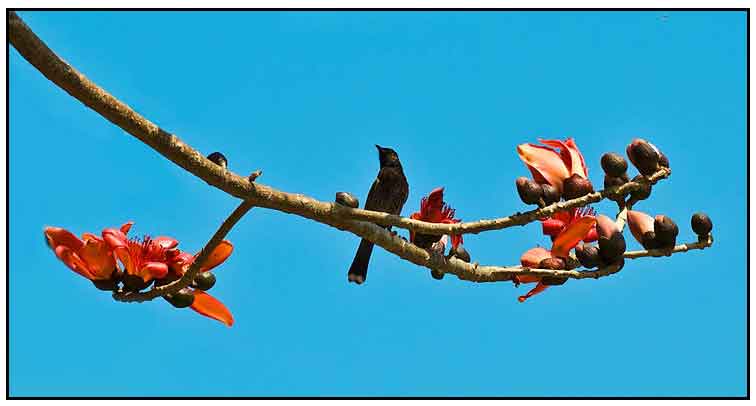
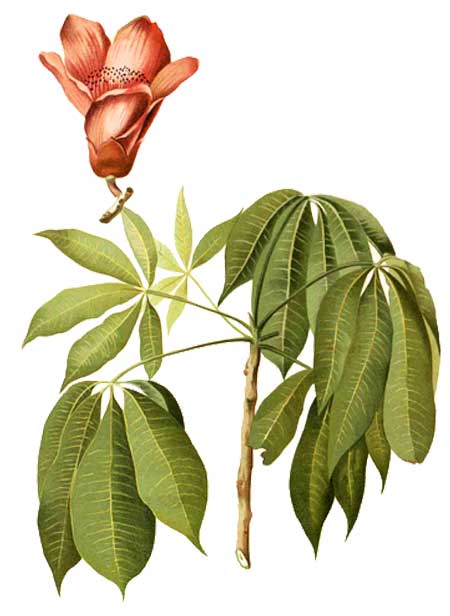
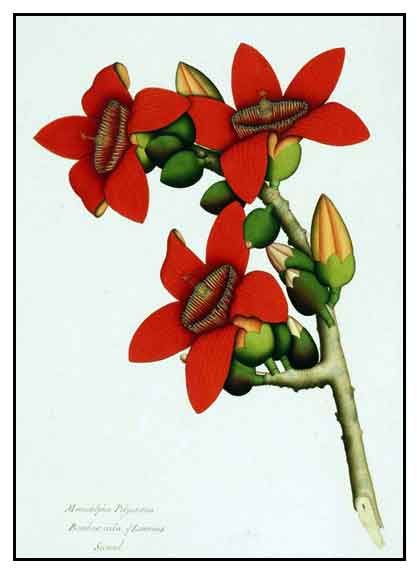
Buboi-gubat is a large tree growing to a height of 25 to 30 meters or more. Trunk is up to 3 meters in diameter, covered with few or many, very large conical prickles with corky bases. Leaves are deciduous and smooth. Leaflets are 5 to 9, oblong or oblong-lanceolate, 10 to 20 centimeters long. Flowers are large, red, 8 to 10 centimeters long, appearing before the leaves, fascicled at or borne near the ends of the branches. Capsules are hard, woody, oblong, about 15 centimeters long. Valves are silky within. Seeds are numerous, smooth, obovate and embedded in silky hairs.
Distribution
- Found in Abra, Bulacan, Nueva Ecija, Bataan and Rizal Provinces in Luzon; in Mindoro; in Camiguin de Misamis; and in Mindanao.
-
Scattered in secondary and primary forests, at low and medium altitudes.
- Also reported from India to southern China, and southward to Sumatra and Java.
- Native to Assam, Bangladesh, Bismark Archipelago, Borneo, Cambodia, China, East Himalaya, Hainan, India, Jawa, Laos, Lesser Sunda Is., Malaya, Maluku, Myanmar, New Guinea, Northern Territory, Pakistan, Philippines, Solomon Is., Sri Lanka, Sulawesi, Taiwan, Thailand, Vietnam. (24)
Constituents
- Gum for the bark yields katechuic acid, sugar, 'semulrot,' ash with CaCO3, MgCO3, etc.
- Study reports gum yields tannic and gallic acids.
- Seed oil yields 94.5% mixed fatty acid of oleic acid as major constituent, along with myristic, palmitic, arachidic, and linoleic acid.
- Flowers yielded seven
flavones: vicenin, linarin, saponarin, cosmetin, isovitexin, xanthomicrol, and apigenin.
- Seeds yield n-hexacosanol, palmitic acid, octadecyl palmitate, gallic acid tannic acid, 1-gallyl-B-glucose, ethyl gallate and a mixture of a, B, and y-tocopherol.
- Chemical analysis of flowers yielded ten flavonoids, quercetin, quercetin-3-O-ß-D-glucopyranoside, quercetin-3-O-ß-D-glucuronopyranoside, rutin, sexangularetin-3-O-sophoroside, vitexin, isovitexin, vicenin 2, kaempferol-3-O-rutinoside, and kaempferol-3-O-ß-D-glucuronopyranoside; three xanthones, isomangiferin, mangiferin, and 7-O-methyl mangiferin; four coumarins, esculetin, scopoletin, fraxetin, and scopolin; and seven other compounds, blumenol C glucopyranoside, benzyl-ß-D-glucopyranoside, phenylethyl rutinoside, protocatechulic acid, chlorogenic acid, methyl chlorogenate and vanillic acid. (18)
- Flowers yielded twenty-four compounds, including 10 flavonoids: quercetin (1), quercetin-3-O-ß-D-glucopyranoside (2), quercetin-3-O-ß-D-glucuronopyranoside (3), rutin (4), sexangularetin-3-O-sophoroside (5), vitexin (6), isovitexin (7), vicenin 2 (8), kaempferol-3-O-rutinoside (18), and kaempferol-3-O-ß-D-glucuronopyranoside (23); three xanthones, isomangiferin (9), mangiferin (10), and 7-O-methyl mangiferin (11); four coumarins, esculetin (12), scopoletin (13), fraxetin (14), and scopolin (21); and seven other compounds, blumenol C glucopyranoside (15), benzyl-ß-D-glucopyranoside (16), phenylethyl rutinoside (17), protocatechulic acid (19), chlorogenic acid (20), methyl chlorogenate (22) and vanillic acid (24).
(20)
- Study of leaves yielded eleven compounds: taraxeryl acetate (1), squalene (2), taraxerone (3), beta-sitosterol palmitate (4), taraxerol (5), 4-methyl stigmast-7-en-3-ol (6), 1H-indole-3-carboxylic acid (7), 6-O-palmitoylsitosteryl-D-glucoside (8), 12beta-hydroxyl-pregnane-4, 16-diene-3, 20-dione (9), loliolide (10) and 5-(hydroxymethyl) furfural (11). (22)
- Methanol extract of flower yielded alkaloids, cardiac glycosides, carbohydrates, flavonoids, phenols, phlobatannins, proteins, saponins, tannins, teropenoids, and quinones, with absence of sterols. (31)
- Study of 95% ethanol extract of roots isolated a new lignan, bombasinol A (1), along with three known compounds, elucidated as 4-)4[(3,5-dimethoxyphenyl)hexahydrofuro[3.4-c]furam-1-yl)-2-methoxy-phenol (1), 5,6-dihydroxymatairesinol (2), (+)-pinoresinol (3) and matairesinol (4). (see study below) (35)
- Study of stem bark isolated a new aromatic glycoside, shamiminol, along with known constituents stigmasta-3,5-diene, lupenone, (+)-lyoniresinol 2-a-O-ß-D-glucopyranoside and opuntiol. (37)
- Phytochemical screening of ethanol extract of young roots yielded flavonoids, phenolics, tannin, steroids, alkaloids, and glycosides. (see study below) (39)
- Proximate analysis of bark and seeds powder yielded ash (bark 1.1 g, seeds 2.5 g), moisture ( 7.6, 9.9), fat (0.21, 0.17), fiber (14.4, 17.6) and protein (5.3, 4.0). (43)
- Phytochemical screening of bark powder distilled water extract
yielded alkaloids, glycosides,flavonoids, saponin, tannin, terpenoids, phytosterols, with absence of steroids. A methanol extract yielded same constituents except for absence of steroids and terpenoids. Seed powder distilled water extract yielded alkaloids, glycosides, steroids, flavonoids, saponin, tannin, terpenoids, with absence of phytossterols; (43)
- Phytochemical screening of methanol and water extracts of root yielded carbohydrates, protein and amino acid, anthraquinone glycosides, saponin glycosides, flavonoid glycosides, alkaloids, tannins and phenolic compounds, with absence of fats and oils, steroid, and cardiac glycosides. (44)
- Study of stem bark isolated two new aromatic compounds, simalin A and B (1 and 2), along with five known compounds, shamiminol (3), (-)-epicatechin-7-O-ß-xylopyranoside (4), (-)-catechin-7-O-ß-xylopyranoside (5), (+)-isolarisiresinol-9'-O-ß-glucopyranoside (6) and (+)-lyoniresinol-9'--O-ß-glucopyranoside (7). (53)
Properties
- Considered astringent, cooling, stimulant, diuretic, aphrodisiac, demulcent, anti-dysenteric, and tonic.
- Studies have suggested antioxidant, antimicrobial, anti-inflammatory
, analgesic, anabolic, hepatoprotective, hypotensive, hypoglycemic properties.
-
Seeds are surrounded by silky hairs similar to those of Ceiba pentandra but whiter.
- Bast of the tree is colored orange-buff.
- Fiber is often confused with 'buboi.'
- Roots are considered astringent, restorative, alterative, aphrodisiac.
- Gum is very astringent and styptic.
- Roots are considered stimulant and tonic.
- Tap-root, especially of young plant, is considered demulcent, tonic, slightly diuretic and aphrodisiac.
- Bark considered demulcent, diuretic, tonic and slightly astringent.
- Flowers considered laxative and diuretic.
Parts used
Roots, leaves, gum, bark, flowers.
 Uses Uses
Folkloric
- Roots used for diarrhea, dysentery, boils, diabetes, snake bites, leucorrhea,.
-
Roots used as restorative for phthisis.
- Roots externally applied for swellings and rheumatic pains.
- Tap root used for gonorrhea and dysentery; also as an emetic.
- Bark used externally as paste for inflammation and skin eruptions.
- Stems and bark used for headaches, snake bites, asthma, dental caries.
- Gum used for diarrhea, dysentery, menorrhagia.
- Fruits used for urinary problems.
- Leaves, ground and mixed with milk, used for urgency and painful urination.
- Leaves, ground into a paste, used for skin eruptions.
- Flower petals, squeezed and soaked in human's or cow's milk, used as soothing application for infant's conjunctivitis.
- Dry young fruit used for calculous affections and chronic inflammation of the kidney and urinary bladder; used for strangury and all causes of mechanical dysuria.
- Fruit used for weakness of the genitalia.
- Seeds, alone or combined with cumin and anise-seeds and an eighth part of silicious bamboo secretion, used for gonorrhea and associated urethral discharge, chronic cystitis, consumption, catarrhal infections
- "Cotton" used externally for padding splints and covering burnt and inflamed surfaces.
- In Guinea, roots as used as emetic.
Others
- Pillows: Fiber used for stuffing pillows.
- Ropes: Bast of tree used for making ropes; of good tenacity, but too scarce for commercial production. Rope produced from it said to be suitable for use in the dry season.
- Festivals / Rituals: The tree is traditional burned during Holikadahan, an important festival of North India. An ethnobotanical survey revealed about 1,500-2,000 trees or branches of B. ceiba were cut and burned during the Holi festival in villages around the city. (26)
Studies
• Antiangiogenic / Lupeol / Stem Bark: Study of methanol extract of stem barks of Bombax ceiba exhibited significant antiangiogenic activity on in-vitro tube formation on human umbilical venous endothelial cells. Bioactive-guided fractionation yielded lupeol as an active principle. (1)
• Hypotensive / Shamimicin / Stem Bark: Study yielded shamimicin from the stem bark of Bombax ceiba, along with lupeol, which was found to possess potent hypotensive activity. (2)
• Antioxidant: Study of methanol extract of Bombax ceiba showed antioxidant activity in assays – DPPH, lipid peroxidation and myeloperoxidase activity.
• Blood Glucose Reduction: In Sprague-Dawley rats, a dose of 500 mg/kg of Shamimin, a C-flavonol glucoside from B Ceiba, produced a significant reduction of glycemia.
• Blood Glucose Reduction: In a comparative study of herbal plants, chloroform and alcoholic extract of bark of B. ceiba showed significant reduction of blood glucose level in alloxan-induced diabetic Wistar rats compared to control and glibenclamide.
• Free Radical Scavenging: Phytochemical screening showed high amount of phenolics (30.95%) and tannins (15.45%) and very good dose-dependent DPPH radical scavenging activity. The strong in vitro and in vivo antioxidant potential of the root powder validates its use in diabetes mellitus and heart disease as described in traditional medicine. (6)
• Hepatoprotective / INH and Rifampin: Study concluded the methanolic extract of BC did not completely revert the hepatic injury caused by INH and Rifampin, but it could limit their effects to the extent of necrosis. The reason for the hepatoprotective effect may be due to the flavonoids and sesquiterpenoids with its free-radical scavenging. (7)
• Antimicrobial: Study of methanol extract showed activity against multi-drug resistant Salmonella typhi• • Antimicrobial / Bark: Study of various extracts of BC bark for antibacterial and antifungal activity showed effective activity against all tested pathogens: S. aureus, S. pyogenes, K. pneumonia, E. coli, K. aerogenes, N. gonorrhea and Candida albicans. An aqueous extract showed a higher zone of inhibition.
• Anti-Helicobacter Pylori Activity: Ethanolic extracts of Bombax malabaricum exhibited strong anti-Helicobacter pylori activities.
• Aphrodisiac: Root extract was evaluated for aphrodisiac activity in sexually active and inactive male mice. The extract significantly reduced mount latency, intromission latency, ejaculation latency, and post-ejaculatory interval. (9)
• Anabolic Effect / Root Powder: Root has been traditionally used for debility and impotence. In this case study of a patient with involuntary and idiopathic weight loss treated with CB root powder with milk, weight lost was regained, with normal body mass, a 147% rise in fibrinolytic activity and marked improvement in total antioxidant status. Results document the anabolic potential of BC root powder. The effect may be possibly explained by the presence of high amounts of steroids in the root, with an activity like 5-a-reductase, an enzyme catalyzing the conversion of testosterone to 5-a-dihydrotestosterone (DHT), which might provide the androgenic effect. (10)
• Cardioprotective Effect / Flower: Study showed a cardioprotective potential of an aqueous flower extract against Adriamycin-induced myocardial infarction in rats. An antioxidant effect is suggested. (11)
• Diuretic Effect / Fruits: Study investigated the diuretic effects of aqueous ethanol extracts of fruits in an acute model in rats. Results showed a diuretic action, with marked increase in urinary Na+ and K+ levels. The diuresis induced was almost similar to furosemide and HCTZ. (16)
• Anti-Inflammatory Effect / Fruits: Study evaluated the in-vitro anti-inflammatory activity of crude extracts of Bombax ceiba bark by HRBC membrane stabilization method. Results showed the ethanol extract exhibited significant (p<0.001) response followed by aqueous extract (p<0.01) when compared to standard diclofenac potassium. (17)
• Antioxidant Effect / Bark: Study evaluated the antioxidant potential of aqueous and ethanolic extracts of bark of B. ceiba in antioxidant screening models such as DPPH, ABTS, NO and superoxide radical scavenging activity, lipid peroxidation inhibition, ferric oxide reduction, and total antioxidant capacity. The extracts showed potent antioxidant activity in all models studied. (18)
• Immunomodulatory / Antioxidant / Bark: Study evaluated the antioxidant and immunomodulatory activity of methanol extract of bark in normal and immunosuppressed mice models. Extract showed a significant upregulation of cytokines (IL-6 and TNF-α) in comparison to control. The immunostimulant property was attributed, in part, to its antioxidant capacity. (21)
• Effect on Spermatogenesis, Sexual Behavior and Erectile Function: Study evaluated aqueous extracts of roots for effects on sexual behavior and spermatogenesis in male albino rats. Mount, intromission and ejaculation frequencies were significantly improved. Penile erection index was higher. An increase in serum testosterone was also observed. (22)
• Antidiabetic / Hypolipidemic / Bark: Study evaluated B, ceiba bark extract for hypoglycemic and hypolipidemic potential in streptozotocin-induced diabetic rats. A 600 mg/kg dose was the most effective with significant (p<0.001) hypoglycemic and/or hypolipidemic effects on STZ-induced diabetic rats. The same dose significantly (p<0.001) lowered total cholesterol and triglycerides. Phytochemical and GC-MS studies confirmed the presence of triterpenoid compounds, which may be responsible for the hypoglycemic effect. (25)
• Hypotensive / Hypoglycemic / Shamimin / Leaves: Study evaluated the hypotensive and hypoglycemic activity and toxicity of B. ceiba leaf extract, fraction, and one of its most abundant, recently isolated, new compound, shamimin, a C-flavonol glycoside. Shamimin showed significant hypoglycemc activity and hypotensive effect in Sprague-Dawley rats. It showed caused no mortality in mice at dose of 1 g/kg, but had a lethal dose of 500 mg/kg in rats. (27)
• Silver Nanoparticles / Anti-Staphylococcus aureus Activity / Thorns: Study reports on green biosynthesis of silver nanoparticles using thorn extract of B. ceiba. The AgNPs showed notable activity against Staphylococcus aureus with ZOI of 27.2 mm at MIC of 25 µg/ml. (28)
• Free Radical Scavenging / Phytosomes / Leaves: Phytosomes are herbal formulations with superior absorption with superior bioavailability when administered orally or topically. The ethanolic extract of phytosome was prepared in soya lecithin. Combination of B. ceiba and soya lecith8n can result in synergistic effect with free radical scavenging activity in a DPPH model. (29)
• Neuroprotective / Leaves: Study evaluated the neuroprotective activity of ethanolic and hexane extracts from Curcuma maxima seeds, Caesalpinia bunduc seeds, and Bombax ceiba flowers estimating cholinesterases (acetylcholinesterase and butyrylcholiinesterase), monoamine oxidase (MAO), and NaKTPase activities. The ethanolic and hexane extracts of the plants inhibited acetylcholinesterase and butyrylcholinesterase (43.32-69.94%), comparable with standard drug donepezil. p-Coumaric acid and gallic acid were the major constituents of B. ceiba. (30)
• Amelioration of High Fat Diet Induced Obesity / Stem Bark: Study evaluated the ameliorative potential of Bombax ceiba to high fat diet (HFD) induced obesity in Wistar rats and its possible mechanism of action.,Results showed the methanolic extract of stem bark has significant ameliorative potential against HFD induced obesity in rats possibly through modulation of FAS and PTP-1B signaling due to the presence of flavonoids and lupeol. Lupeol is known to inhibit PTP-1B, adipogenesis, TG synthesis and accumulation of lipids in adipocytes and adipokiines, while flavonoids has FAS inhibitory activity. (32)
• Anti-Urolithiasis / Fruit: Study evaluated the efficacy of B ceiba aqueous and ethanol fruit extracts as curative agents in experimentally induced calcium oxalate urolithiatic rats. Urolithiasis was induced by oral administration of 0.75% ethylene glycol for 14 days, with resultant hyperoxaluria and increased renal excretion of calcium and phosphate. Extract treatment significantly (p<0.05) reduced elevated urinary oxalate, showing a regulatory effect on endogenous oxalate synthesis, Results suggest the fruit possesses lithontriptic activity with potential for curative treatment of urolithiasis. (33)
• Hepatoprotective / Antioxidant / Carbon Tetrachloride Toxicity / Flowers: Study evaluated the effect of aqueous extract of flowers of Bombax ceiba on carbon tetrachloride induced toxicity in rats. Hepatoprotective activity was evidenced by prevention of elevations in SGOT, SGPT, AP, bilirubin and triglycerides, and decreased total protein levels. Extract showed presence of antioxidant phytochemicals and showed scavenging action on DPPH radicals. Activity was comparable to silymarin and attributed to its antioxidant potential. (34)
• Anti-Hepatitis B Virus Activity / Bombasinol / Roots: Study of 95% ethanol extract of roots isolated a new lignan, bombasinol A (1), along with three known compounds, 5,6-dihydroxymatairesinol (2), (+)-pinoresinol (3) and matairesinol (4). The compounds were evaluated for anti-hepatitis B virus (HBV) activity. The compounds showed inhibitory activity against HepG2 2.2.15 cell lines. Compounds 1-4 showed relative differences in HBsAg secretion inhibition, with IC50s of 118.3, 123.7, 118.9 and 218.2 mM, respectively. (35)
• Cancer Cell Growth Inhibition / Antioxidant / Flowers: Study evaluated di-ethyl ether (DE) and light petroleum ether (PE) extracts of flowers of Bombax ceiba for chemical composition, antioxidant effects, and antiproliferative activity against seven human cancer cell lines. Both PE and DE extracts showed highest antiproliferative activity against human renal adenocarcinoma (ACHN) in a concentration-dependent manner. The PE extract showed highest radical scavenging activity against DPPH radical, while DE extract showed more activity in the ß-carotene bleaching test. ß-sitosterol and some fatty acids may contribute to the bioactivity of the flower extracts. (36)
• Wound Healing / Leaves: Study evaluated the wound healing activity of B. ceiba leaves in an ointment formulation in concentrations of 2% and 5% (w/w) in excision and incision models in rats. Results were comparable to standard drug povidone iodine in measures of wound contracting ability, wound closure time, tensile strength. The 5% w/w methanolic extract exhibited significant (p<0.001) wound contracting ability and period of epithelization. Significant tensile strength was observed in both ointment concentrations. (38)
• Antidiabetic / Hypolipidemic / Hepatoprotective / Roots: Study evaluated the effects of young roots of B. ceiba (BCYR) on diabetes and hepatic toxicity in alloxan induced diabetic mice. Results showed significantly (p<0.05) reduced blood glucose and significantly (p<0.001) increased HDL level, and reduced LDL, TG, and TC. Treatment also significantly decreased hepatotoxicity with decreased SGOT and SGPT. (see constituents above) (39)
• Anti-Anxiety / Leaves: Study evaluated the anti-anxiety potential of ethanolic extract of B. ceiba leaves on rats using elevated plus maze test. Extract at 400 mg/kg significantly increased the time duration and number of entries into the open arm (p<0.05). Results showed anti-anxiety potential of leaves at higher concentration. (40)
• Silver Nanoparticles / Antibacterial / Bark: Study reports on the eco-friendly, green mediated synthesis of silver nanoparticles using a bark extract for reduction of aqueous silver ions. The AgNPs showed potential antimicrobial effect against infectious microorganisms such as E. coli, P. aeruginosa, S. typhi, K. pneumonia and S. aureus. (41)
• Osteogenic Activity / Anti-Osteoporotic / Stem Bark: Study evaluated the osteogenic activity in-vitro and anti-osteoporotic activity in vi-vivo of B. ceiba stem bark in surgical ovariectomy model in female Wistar albino rats. In vitro osteoblastic proliferation study was done using UMR-106 cell lines. Results showed amelioration of the state of bone fragility and fracture possibly due to estrogenic modulation, confirmed by in-vitro osteogenic activity which may be due to the presence of lupeol, gallic acid and ß-sitosterol constituents of the plant. (42)
• Antibacterial / Anthelmintic / Leaves and Bark: Phytochemical screening of leaves and bark yielded carbohydrates, glycoside, saponin, phytosterol phenol, tannins flavonoid, proteins and diterpenes, with absence of alkaloids in all solvent extracts. Study showed activity against both gram positive (S. aureus) and gram negative (]Shigella dysenteriae) bacteria. An ethanolic extract of leaves showed moderate anthelmntic activity. (45)
• Antimicrobial and Antitumor Potential: Study screened fractions of methanol crude extract of Bombax ceiba for antimicrobial and antitumor potential using disc diffusion method and brine shrimp lethality bioassay. The methanolic crud extract showed an LC60 (50% mortality) of 3.90 mg/ml. On antimicrobial screening, the carbon tetrachloride fraction showed most prominent zone of inhibition against a number of bacterial and fungal strains. (46)
• Amelioration of Methylglyoxal-Induced Oxidative Stress / Antioxidant and Antiglycation Activities / Calyxes: Non-enzymatic reactions between proteins and methylglyoxal (MG) result in the formation of AGEs (advanced glycation end products) which play an important role in the development of diabetic complications. Study evaluated the effect of aqueous methanol extract of B. ceiba calyxes (BCCE) on MG induced protein glycation and oxidative stress. BCCE inhibited MG induced AGE formation in vitro and restrained AGE-nduced RAGE upregulation in HEK-293 cells. BCCE significantly (p<0.001) reduced MG induced increase in ROS, NOX, and mitochondrial dysfunction. GC-MS analysis revealed the presence of antioxidant and antiglycation compounds such as myo-ionisitol, scopoletin, D-sedoheptulose, succinic acid, and xylitol in B. ceiba calyxes. (47)
• Biologic Activity of Roots / Antioxidant / Clot Lysis: Study reported on the bioactivities of the methanolic crude extract of roots. An aqueous soluble partitionate showed highest free radical scavenging by DPPH method with IC50 of 3.33 ± 0.25 µg/ml. Brine shrimp lethality bioassay showed significant lethality by the hexane soluble partitionate with LC50 1.19 ± 0.10 µg/ml. The aqueous soluble partitionate showed highest percentage of clot lysis with 44.55 ± 0.12%. The crude extract showed promising antidiarrheal, hypoglycemic, analgesic activities in Swiss albino rat model. (48)
• Amelioration of Hepatosteatosis Induced by Ethanol and HFD / Flowers: Study evaluated the therapeutic effect of methanol extract of flowers against hepatic steatosis due to alcohol induced liver damage. BCE significantly decreased body and liver weights, ameliorated the effect of alcohol induced increase of liver enzyme activities, increased hepatic liver antioxidants and decreased MDA level, and also significantly decreased serum lipid profiles. BCE treatment also improved fatty changes induced by alcohol. Anti-inflammatory, antioxidant, and anti-steatosis activities against alcohol induced liver damage were attributed to flavonoids and other phenolic compounds. (49)
• Bombax Gum / Calyx: Study reports on the extraction of gum from dried calyx by hot and cold water processes. Hot water extract yielded more gum. Physiochemical testing showed the gum possesses interesting properties that make it a candidate for pharmaceutical use and allied industries. (50)
• Immunomodulatory / Anticancer / Leaves: Study evaluated on the immunomodulatory and anticancer activity of methanolic extract of B. ceiba leaves in vitro and in vivo. The ME of leaves showed antioxidant activity by hydrogen peroxide scavenging and DPPH scavenging assays. The ME significantly increased neutrophil adhesion, carbon clearance from the blood, DTH response and cyclophosphamide-induced myelosuppression. The MTT assay showed significant increase in death of HL-60 cell line. There was also a rise in caspase-3 activity and sub-G1 population. (51)
• Anticonvulsant / Stem Bark: Study evaluated the anticonvulsant potential of a methanolic extract of stem bark of Bombax ceiba in albino mice using maximal electroshock induced seizures, pentylene tetrazole induced seizures, and strychnine induced seizure models. The ME significantly reduced duration of seizures by induced by MES and delayed onset of tonic seizures induced by PTZ and strychnine. The anticonvulsant effect may be via non-specific mechanisms by effect on voltage dependent sodium ion channels, and involvement of the GABAergic and glycinergic systems as suggested by delayed seizure latency by PTZ and strychnine. (52)
• Protective Against Benzo[a]pyrene-Induced Cytotoxicity / Flower: Study evaluated the protective effect of a methanolic extract of B. ceiba flower against cytotoxicity induced by benzo[a]pyrene (BaP) in HT1080 cells. Study isolated 16 compounds, including four butyrlactones and two ascorbic acid derivatives, as well as mangiferin. Among the isolated compounds, a butyrolactone derivative, (-)-loliolide, and two flavonoids, kaempferol 3-O-ß-D-glucopyranoside and quercetin 3-O-ß-D-glucopyranoside, protected the cells against BaP-induced cytotoxicity. (54)
• Hypoglycemic / Leaves: Study evaluated the hypoglycemic effect of ethyl acetate (EA), n-Butanol (nB) and hydroalcoholic (30:70) (HA) extracts of leaves in experimental animals. All extracts showed hypoglycemic activity in normoglycemic rats and OGTT model compared to standard Glibenclamide. The HA extract was superior in a dose dependent manner. Acute oral toxicity study by OCED guidelines showed no mortality at dose of 2000 mg/kbw. (55)
• Neuroprotective / ß-Amyrin / Scopolamine Induced Memory Impairment / Leaves: Study evaluated the neuroprotective potential of B. ceiba leaves extract in scopolamine induced memory impairment in rats. Results showed the B. ceiba leaves extract has potential antioxidant and neuroprotective effects against Alzheimer-type dementia and memory impairment induced by scopolamine. BCLE ameliorated both behavioral and neurochemical parameters of the rats/ brains, along with restoration of normal histological architecture of the brain tissues. Leaves content of triterpenoids, fatty acid esters, and steroidal content may be responsible for ameliorating oxidative stress and cholinergic dysfunction in Alzheimer-type dementia induced by scopolamine. (56)
• Functional Dyeing of Linen Fabric / Flower Extract: Kapok flower is an unexplored source of natural dyestuff which can be utilized for functionalization of cellulose-based textiles. The flower extract was utilized as a functional dye for dyeing linen fabric in the presence of metallic mordants. Dyes fabrics were evaluated for coloration properties (color values, color coordinates and fastness properties) and functional properties (antibacterial activity, UV protection and antioxidant activity). Dyeing was achieved with acceptable fastness. Dyed fabrics displayed excellent antibacterial activity and efficient level of UV protection and radical scavenging activity. (58)
• Mangiferin / Diabetic Nephropathy / Leaves: Study evaluated the effect of an ethanol extract of B. ceiba leaves (BCE) and its main constituent mangiferin (MGF) on diabetic nephropathy on STZ-induced diabetic mice. BCE and MGF ameliorated biochemical parameters and restored STZ-induced renal injury in model mice. Results indicated both BCE and MGF had protective effects on diabetiic renal injury and prevented oxidative stress in mesangial cells by regulation of hexokinase II binding and Nox4 oxidase signaling. (59)
• Antiproliferative / Mammary Gland Carcinoma / Flowers: Study evaluated the potential therapeutic effects of a methanol extract of Bombax ceiba flowers on cancerous changes in the mammary glands of rats. The extract minimized cancer-cell proliferation, as evidenced by substantial reduction in levels of all markers in both serum and tissues and supported by histopathological findings and immunosuppression of Ki-67.B.Ceiba. Results suggest the flower extract has anticancer potential via induction of cancer-cell apoptosis and decrease proliferation. (60)
• Antifungal / Antioxidant / Bark: Study evaluated the antioxidant, total phenolic and flavonoid content, and antifungal potential of stem bark extract of Bombax ceiba. Total phenolic content was 147.45 ± 0.15 mg GAE/gm and flavonoid content was 12.54 ± 0.10 QE/gm. IC50 for radical scavenging potential was 9.37 ± 0.12 µg/ml, compared to ascorbic acid at 45.93 µg/,L. Extract showed moderate activity against Trichophyton rubrum, weak activity against Aspergillus niger, Microsporum canis and Fusarium lini. There was no activity against Candida albicans. (61)
• Antipyretic / Leaves: Study evaluated the antipyretic activity of methanol extract of B. malabaricum leaves in rats. Paracetamol was used as standard. Phytochemical screening yielded alkaloids, steroids, carbohydrates, tannins, fixed oils, protein, triterpenoids, deoxy-sugar, flavonoid, cyanogenetic and coumarin glycosides. The extract at 200 and 400 mg/kg significantly reduced yeast-induced pyrexia (p<0.05, p<0.01, respectively). (62)
Availability
Wild-crafted.
|





.jpg)