 Gen info Gen info
-Ceiba pentandra is the national tree of Guatemala. It is the national emblem of Puerto Rico and Equatorial Guinea. (59)
- Among the Mayan and Aztec civilizations in the Meso-America, the Ceiba species is considered as a sacred "World Tree"
-The Indian kapok tree, Bombax ceiba, is worshipped by the Hindu community in North India as a nakshatra tree and home of the female spirits Yakshi. (56)
- In the folklore of Tobago and Trinidad,
th tree is the "castle of the devil" where Bazil, the demon of death, was imprisoned by a carpenter. who carved seven trees and tricked the demon into entering the tree. (59)
- Ceiba pentandra is one of the largest trees in the world,
with reports of growth up to 252 feet (77 m)
-
Flowers are an important source of nectar and pollen for hney bees and bats. (59)
Botany
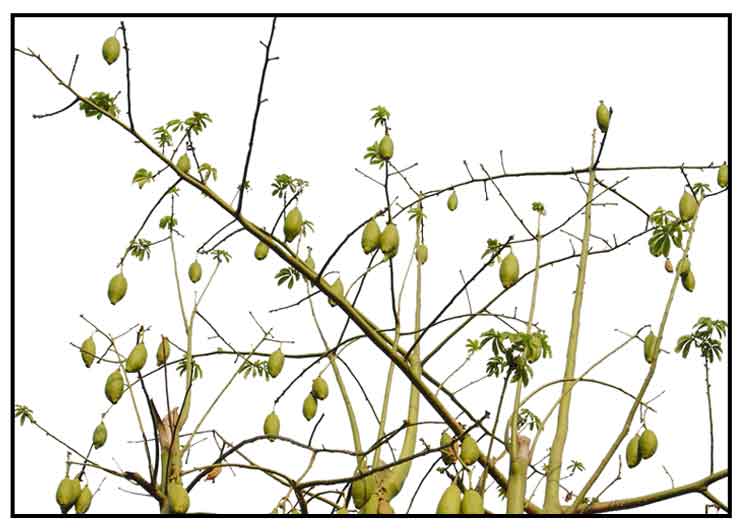
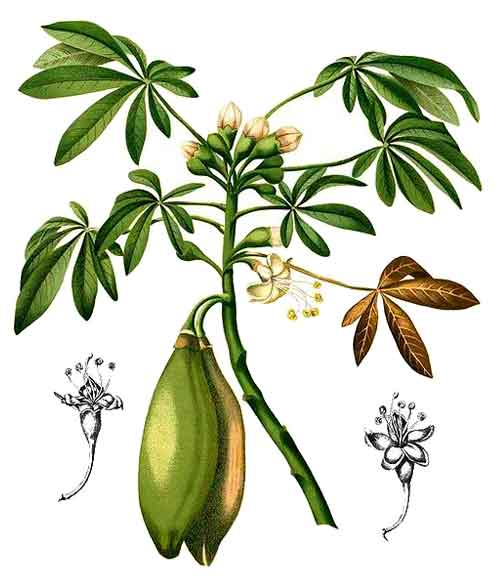
Buboi is an erect, deciduous tree,
growing to a height of 15 meters or less. Trunk is cylindric, usually bearing scattered, large spines. Branches are in distant whorls, spread horizontally. Leaves are compound, with 5 to 8 leaflets, lanceolate, 6 to 15 centimeters long,
pointed at both ends. Flowers are numerous large, fragrant, and creamy white, about 3 centimeters long.
Fruits are capsules, oblong, pendulous, leathery, oblong, about 15 centimeters long, 5 centimeters thick, containing
numerous black seeds, which are compressed-globose, smooth, and embedded in fine, silky hairs.
 Distribution Distribution
- Planted in settled areas throughout the Philippines.
- Native to tropical America.
- Now pantropic.
Constituents
- Seeds contain oil, 24.2%; ash, 5.22%; crude fiber, 23.9 %; albuminoids,
18.9%; carbohydrates and others, 15.9%.
- The oil is a mixture of fatty acid, 70% liquid, 30% solid palmitic acid.
- Kapok oil has a composition similar to American cotton-seed oil.
- Study yielded bioactive compounds: phenolics, alkaloids, flavonoids, tannins, saponins, phytate, trypsin inhibitors, and hemagglutinin inhibitors.
- Proximate analysis of leaf contained 4.891% moisture, 12.97% protein, 52.06% carbohydrate, 4.35% fat, 7.54% ash, 18.15% crude fiber, 0.73 µg/g vitamin A, 4.91 mg/g vitamin C, 0.18 mg/g vitamin E. Bioactive components yielded phenolics, alkaloids, flavonoids, tannins, saponins, phytate. (11)
- Proximate analysis of leaves yielded a high percentage of moisture (47.37%), protein (16.81%), carbohydrate (25.23%), low percentage of fiber (4.47%), fats (2.23%) and ash (2.14%). Phytochemical analysis yielded alkaloids, terpenoids, flavonoids, polyphenol, and saponins. Vitamin composition yielded vitamin A 2.323 µg/g, vitamin C 0.6863 mg/100g, vitamin E 1.883 mg/100g.
(See study below) (26)
- Phytochemical screening of aerial parts yielded
carbohydrates, glycosides, steroids, tannins, flavonoids, saponins, resins, fats, and oils. (32)
- Phytochemical analysis of leaves, stems, and roots yielded tannin, alkaloid, saponin, sterols, flavonoid, and phenols.
Comparative qualitative analysis showed the leaves to yielded highest % components: tannin 2.61 ± 0.02, alkaloids 632 ± 0.71, saponin 3.75 ± 0.7, cyanogenic glycosides 18.71 ± 2.0, sterols 0.13 ± 0.012, flavonoid 1.26 ± 0.015, and phenol 0.17 ± 0.01. (42)
- Proximate analysis of leaves, stems, and roots yielded % of carbohydrates 40.59, 31.85, 35.06, ash content 7.26, 1.43, 3.73, moisture content 14.34, 12.39, 18.71, crude fiber 18.64, 19.75, 23.64, ether extract 2.41, 0.98, 0.69, and crude protein 12.32, 9.74, and 6.84, respectively. Of the mineral components, the highest was potassium at 0.36, 0.13, and o0.25 % for leaves, stems, and roots, respectively. (42)
- GC-MS analysis of ethanol extract of leaves yielded nine phytochemicals: 3,7,11,15-Tetramethyl-2-hexadecen-1-ol (1), Hexadecanoic acid (2), Phytol (3), 5,9,13-Pentadecatrien-2-one (4), Squalene (5), Vitamin E (6), Olean-18-ene (7), 2,4,4-trimethyl-3-hydroxymethyL-5A-(3-methyl-but-2-enyl)-Cyclohexe (8), and Cyclotrisiloxane (9).
(see study below) (44)
- Study of heartwood of C. pentandra isolated a new naphthoquinone, 2,7-dihydroxy-8-formyl-5-isopropyl-3-methyl-1,4-naphthoquinone (1) together with known naphthoquinone, 8-formyl-7-hydroxy-5-isopropyl-2-methoxy-3-methyl-1,4-naphthoquinone (2). (50)
Properties
- Roots are diuretic, aphrodisiac, antipyretic, tonic.
- Bark is acrid, bitter, thermogenic, diuretic, emetic, febrifuge, purgative
and tonic.
- Unripe fruit considered demulcent and astringent.
- Young leaf extremely high in fiber content.
- Studies have suggest antioxidant, nephroprotective, antifungal, phytoremediative, hypoglycemic, hepatoprotective,
antivenom, antiurolithiasis, antidiarrheal, hemolytic, antiulcerogenic, anti-inflammatory, antibacterial, diuretic, antitumor properties Parts utilized
Bark, roots, leaves, fruit.
Uses
Edibility / Nutrition
- In Malaya, Java and Celebes, young leaves eaten as
vegetable.
- Sprouts and young pods are also edible.
- In Nigeria, leaves are cooked into a slurry sauce, like okra.
- In West Africa, young leaves cooked and eaten as soup herb.
- Young leaves are very good sources of calcium and iron.
Sprouts and young pods are also edible.
- In Cameroon, seeds roasted with salt consumed as groundnuts (appetizers). (41)
Folkloric
- Bark is reported to be
vomitive and aphrodisiac.
- Decoction of bark used for catarrh.
- Tender fruit used as emollient.
- Decoction of bark regarded as a specific in febrile catarrh.
- Gum is astringent; used for bowel complaints. In children, gum with milk, given as cooling laxative. Also used for urine incontinence in children.
- Gum used as styptic, given in diarrhea, dysentery, and menorrhagia.
- In Liberia, Infusion of bark used as mouthwash.
- Infusion of leaves, onions, and a little tumeric, used for coughs.
- Young roots, shade-dried and powdered, is a chief ingredient in aphrodisiac medicines.
- Tap-root of young plant used for gonorrhea and dysentery.
- Bark in diuretic; in sufficient quantities, produces vomiting.
- In Cambodia, bark used for fevers and diarrhea. Also, as a cure for inebriation, used to bring about perspiration and vomiting.
- Malays used the bark for asthma and colds in children.
- In India, roots used for gonorrhea, dysuria,
fevers. Decoction of bark used for chronic dysentery, diarrhea, ascites, and anasarca. Tender leaves also used for gonorrhea.
 - In Java, bark mixed with areca nuts, nutmegs, and sugar candy, used as diuretic and for treatment of bladder stones. Infusion of leaves used for cough, hoarseness, intestinal catarrh, and urethritis. Leaves also used for cleaning hair. - In Java, bark mixed with areca nuts, nutmegs, and sugar candy, used as diuretic and for treatment of bladder stones. Infusion of leaves used for cough, hoarseness, intestinal catarrh, and urethritis. Leaves also used for cleaning hair.
- In the Cameroons, bark, which has tannin, is pounded and macerated in cold water and applied to swollen fingers.
- In French Guiana, decoction of flowers used for constipation.
- In Mexico, used for boils, insect bites, mange; used as anti-inflammatory; bark and leaf decoctions used as poultices. Bark decoction taken internally as emetic, diuretic and antispasmodic.
- Bark used for liver and spleen conditions, abdominal complaints, flatulence,
constipation.
- Leaves used as emollient. Decoction of flowers is laxative.
- In Nigerian folk medicine, used for treatment
of diabetes and infections. Leaves used as alterative and laxative, and as infusion for colic in man and in livestock. Seed oil used in rheumatism. Also, leaves used as curative dressings on sores and to maturate tumors.
- Compressed fresh leaves used for dizziness; decoction of boiled roots used to treat edema; gum eaten to relieve stomach upset; tender shoot decoction used as contraceptive; leaf infusion taken orally for cough and sore throat.
(34)
- In India and Malaya, used for bowel complaints.
- In the Ivory Coast, mucilage obtained by boiling used to remove foreign bodies from the eye. Also, bark sap given to sterile women to promote conception.
- In West Africa, used for diarrhea and gonorrhea.
- In Samoa, bark used for asthma.
- In the northern part of Cameroon, bark and roots used as aphrodisiac. Fali men chew barks and roots to keep their manhood. Decoction of young leaves mixed with palm kernel oil taken by women as antibiotic. Young flowers used to treat gonorrhea and syphilis. Roots also used for dysentery. Fali use kapok ashes to treat cough.(41)
Others
- Fibers: Pod fibers are used in
the stuffing of pillows, cushions, mattresses and the manufacture and
life-preservers.
- Oil: Kapok oil, extracted from the seeds, used in the manufacture of soap;
also, a substitute for cotton-seed oil. Also used for cooking and as lubricant.
- Wood: Tree is used for fencing and telephone poles. (•) In the northern Cameroon, wood used for the manufacture of spatulas, mortars, musical drums, furniture, doors, and canoes. (41)
- Dye: Ashes of the fruit used by dyers in Malaysia.
- Study showed the C. pentandra fiber may be useful in recovering
oil spilled in seawater.
- Fodder: Sheep, goats, cattle relish the foliage. Pressed cake as cattle feed yields about 26% protein. (34) Fresh cake used as stock feed. (•)
- Folklore / Mythology / Rituals: The tree is considered sacred in Mayan mythology, with the belief that the souls of the dead climb up the branches which reach into heaven. (40) In the folklore of Trinidad and Tobago, a huge kapok tree deep in the forest is considered the castle of the demon of death, Bazil, imprisoned within. (40) In the Far-North regions of Cameroon, the Mundang anoint newborns with a mixture to powdered roots and dried and crushed bark with palm kernel oil to drive out evil spirits. (41) In Saint Lucia, prickles are placed over doors and windows to protect against black magic. (44) In India, the burning of the tree in Holi or Holiika-dahan, a religious festival, causes immense damage and threatens the survival of the plant in Udaipur district. (52)
STUDIES
• Hypoglycemic / Bark:
A study of aqueous bark extract of Ceiba pentandra
in streptozotocin-induced diabetic rats caused a statistically
significant reduction of plasma glucose supporting the hypoglycemic
effects of C pentandra. (1)
• A New Isoflavone Glycoside from Ceiba
pentandra (L.) / Bark: A bark extract study of C. pentandra isolated
a new isoflavone with other known isoflavones, vavain and vavain glucoside. (3)
• Two New Isoflavones / COX-Catalyzed Prostaglandin Biosynthesis: Study of bark yielded two new Isoflavones from Ceiba pentandra: the new isoflavone glucoside vavain 3′-O-ß-D-glucoside (1) and its aglycon, vavain (2), together with the known flavan-3-ol, (+)-catechin. Compounds 1 and 2 exhibited inhibitory effects on cyclooxygenase-1-catalyzed prostaglandin biosynthesis. (5)
• Toxicological Studies: Toxicological studies reveal that C pentandra has a very low toxicity profile in all tested animals and is relatively safe for herbal oral medication. (7) Study evaluated a methanolic extract for acute and subacute toxicity in adult Wistar rats. Results showed no toxicity effects, reflecting innocuous nature of the extracts on hepatic, renal and hematopoetic system of rats. (31)
• Anti-Fungal: Alcohol and water extracts of C citratus, C pentandra and L bengwelensis were investigated for antifungal activities. Phytochemical studies yielded saponins, tannins, fats and oils, alkaloids and phenol. All the extracts inhibited the growth of test organisms: E flocosum, M canis, T rubrum and Candida albicans. The activity was attributed to the presence of saponins and phenols. (8)
• Adsorbent / Removal of Lead and Zinc: Study investigated the ability of low-cost activated carbon from C pentandra hulls, an agricultural waste material, for the removal of zinc and lead from aqueous solutions. (10)
• Nutritional / Medicinal Potential: Study showed C. pentandra contain nutrients and mineral elements useful in nutrition, while bioactive compounds explained the medicinal action of plant leaves and provide scientific basis for its folkloric use.
• Hepatoprotective: Study showed the ethyl acetate fraction of a methanolic extract of C. pentandra possesses hepatoprotective potential against paracetamol-induced hepatotoxicity in rats. (12)
• Antihyperglycemic / Antilipidperoxidative / Bark: Study of an ethanolic bark extract of CP showed potent antihyperglycemic and antilipidperoxidative potential in STZ-induced diabetic rats. (13)
• Anti-Inflammatory / Seeds: Study of petroleum ether and ethanolic extract of seeds showed anti-inflammatory effects when assessed by carrageenan-induced rat paw edema. (14)
• Anti-Diarrheal / Stem Bark: Study evaluated a methanolic extract of stem bark of Ceiba pentandra for antidiarrheal activity. Extract showed significant protection against castor oil-induced diarrhea but no significant delay in intestinal transit time. (16)
• Biodiesel from Kapok Seed Oil: Study showed Kapok seed oil can be used as raw material for the production of biodiesel. CaO catalyst can be regenerated up to 3 times with the smallest yield of 64.3%. (17)
• Antioxidant / Seed Oil: Ceiba pentandra seed oil exhibited remarkable phytochemical and antioxidant properties in DPPH, FRAP, reducing power assay, and hydroxyl radical scavenging activity. Phytochemical screening yielded phenols, flavonoids, alkaloids, and tannins. (18)
• Hypoglycemic / Antidiabetic / Roots: Study of a methylene chloride/methanol
root extract of Ceiba pentandra in normal and diabetic rats showed hypoglycemic effects. The extract was capable of ameliorating at lower doses, hyperglycemia in STZ-induced diabetic rats. (19) (•)
• Anti-Venom / Di-n-octyl Phthalate / Leaves: Study evaluated the efficacy of Di-n-octyl phthalate isolated from the leaves of Ceiba pentandra for its anti Echis ocellatus venom properties. The isolate was biologically active in dose-dependently inhibiting PLA2 activity. Results suggest the isolated compound has a potential for a highly effective therapeutic agent for reducing snake envenomation. (20)
• Antiulcer / Di-n-octyl Phthalate / Leaves: Study evaluated the effect of Ceiba pentandra on ethanol-induced and pylorus-induced ulcers in rats. Results showed a dose-dependent antiulcerogenic effect with significant reduction of the index of gastric lesion in both ulcer induced models. (21)
• Antibacterial / Leaves and Stem Bark Extracts: Study evaluated the antibacterial activities of an ethanol extract of leaf, stem bark, and their combination in vitro against selected human pathogens: K pneumonia, P aeruginosa, S aureus, and E coli. The extracts and their combination showed significant antibacterial activity, without synergistic or additive effects with the combined extract. (22)
• Hypoglycemic / Root Bark: Study showed a root bark extract of Ceiba pentandra has hypoglycemic effect in normal and alloxan-induced diabetic rats. (23)
• Oily Water Filtration / Kapok Fibers: A deep-bed kapok filtration column showed to be successful in achieving oily water separation. The oil and water front movements were influenced by the affinity of liquid to kapok fibers. Results show excellent physiochemical property of Malaysian kapok for oil removal from water. (24)
• Anti-Urolithiasis: Study evaluated aqueous and alcohol extracts of bark of C. pentandra on calcium oxalate urolithiasis in male albino Wistar rats. The extracts significantly reduced elevated urinary oxalate showing a regulatory action on endogenous oxalate synthesis. Results suggest a potential curative agent for urolithiasis. (25)
• Nutritional Potential / Leaves: Proximate analysis of leaves yielded a high percentage of moisture (47.37%), protein (16.81%), carbohydrate (25.23%), low percentage of fiber (4.47%), fats (2.23%) and ash (2.14%). Phytochemical analysis yielded alkaloids, terpenoids, flavonoids, polyphenol, and saponin, and the presence of vitamins A, C, and E. Results found C. pentandra leaves as rich in certain nutrients and phytochemicals supporting its ethno-medical usages. (26)
• Hemolytic / Antioxidant / Fruits: Study of various extracts (aqueous, methanol, chloroform, ethyl acetate) of spike and young fruit extracts of Ceiba pentandra showed significant antioxidant and antihemolytic activities. The antihemolytic activity was attributed to the ability of phenolic compounds including flavanoids in neutralizing free radicals generated by H2O2 and thereby protecting the erythrocytes membrane from destruction and lysis. (27)
• Antiulcerogenic / Anti-Oxidative / Leaves: Study evaluated the protective effects of a methanol extract of C. pentandra leaves on indomethancin and ethanol induced gastric ulcer and on oxidative stress indices on alloxan-induced diabetic rats. Results showed potent anti-ulcerogenic and anti-oxidative properties and a potential use as herbal remedy for the treatment of gastrointestinal ulcer and management of diabetes. (29)
• Antidiabetic / Hypolipidemic / Combination with Amaranthus viridis: Ethanolic extracts of Amaranthus viridis and Ceiba pentandra and their combination showed a significant decrease in serum glucose, triglycerides, LDL, VLDL, and a significant increase in body weight, HDL, liver glycogen and tissue glycogen levels. (30)
• Anti-Inflammatory / Analgesic / Stem Bark: Study evaluated the anti-inflammatory (carrageenan induced paw edema in mice) and analgesic activity (Eddy's hot plate method in albino mice) of a methanol extract of stem bark of C. pentandra. Results showed significant anti-inflammatory and analgesic effect compared to standard drugs, indomethacin and pentazocine, respectively. (33)
• Fiber as Component of Metal Sensor for Lead: The kapok fiber contains lignocellulosic materials and has been used as metal-binding substance in a carbon paste electrode and used in the voltammetric analysis of heavy metals. Analysis showed it can detect lead ions and has a potential application in testing for the purity of domestic and industrial waters. (35)
• Anti-Obesity / Hypolipidemic / Leaves: Study evaluated the anti-obesity and hypolipidemic activity of the ethanolic leaf extract of C. pentandra in Cafeteria diet treated Wistar albino rats. Results showed C. pentandra has an anti-obesity activity which may be partly mediated via inhibition of intestinal lipid absorption and thermogenesis, with a therapeutic potential in the management of obesity. (36)
• Biorefinery Study on Seed and Secondary Waste: The combination of methanol transesterification and pyrolysis processes transforms kapok seed and its secondary waste into biodiesel, bio-oil, and char. (37)
• Antibacterial / Seeds: Study evaluated various extracts of Ceiba pentandra seeds for antibacterial activity against E. coli, S. aureus, K. pneumonia, E. aerogenes, P. aeruginosa, S. typhimurium, S. typhi, S. epidermis, and P. vulgaris. The acetone extracts showed the widest range of antibacterial activity against the bacterial pathogens. Phytochemical screening yielded alkaloids, flavonoids, glycosides, saponins, tannins, and phenolic compounds, with absence of anthroquinones and steroids. (42)
• Antitumor / Cytotoxicity Against Cancer Cells / Bark: Study evaluated the cytotoxic potential of bark extracts in vivo on Ehrlich ascites carcinoma and in vivo on EAC (liquid tumor) and Dalton's lymphomas ascites (DLA) model. Three potent extracts (petroleum ether, acetone, and ethanol) were evaluated for acute toxicity in mice and was found to be safe up to 300 mg/kg. In the EAC, there was a significant (p<0.05) improvement in mean survival time and maximum decline in tumor induced increase in body weight. In DLA, all extracts showed 50% reduction in tumor weight and significant reduction (p<0.05) in tumor volume. Results suggest both cytotoxic and antitumor activity. (43)
• Antibacterial / Antioxidant / Leaves: Study evaluated the in-vitro free radical scavenging activity and antimicrobial activity of ethanol extract of leaves. The EE was found high dose-dependent activity against E. coli and S. aureus. In antioxidant evaluated by DPPH, NO, and hydroxyl assay, the extract showed high free radical scavenging activity with IC50 of 27.4, 24.45, and 51.65 µg/ml, respectively. (see constituents above) (44)
• Control of Urinary Tract Infection / Antioxidant / Leaves: Study evaluated a hexane extract of of leaves for treatment of urinary tract infections caused by pathogens B. subtilis, E. coli, K. pneumonia, and Pseudomonas sp. Phytochemical screening of leaves yielded phenolic compounds, flavonoids, steroids and triterpenoids, fats and oils and tannins. A 50% radical scavenging was observed at 2.0 µg/ml concentration of the hexane extract, with a highly significant IC 50 of 3.65 µg/ml. (45)
• Anti-Virulence / Quorum-Sensing System Inhibition / Bark: Inhibition of quorum sensing system (QSS-I) is a novel strategy in the treatment of bacterial infections. Study showed the hexane and dichlormethane extracts of Ceiba pentandra and C. aeculifolia exhibited QSS-I activity. Study identified four fractions rich in terpene and sterol compounds with ability to attenuate virulence factors in Pseudomonas aeruginosa. (46)
• Glucose Lowering / Acute Oral Toxicity / Leaves: Study evaluated C. pentandra ethanol extract of leaves for glucose lowering activity in alloxan induced diabetic rats. Results showed C. pentandra has glucose lowering effect and can ameliorate the biochemical abnormalities associated with diabetes mellitus. On acute oral toxicity study, the safe dose (LD50) of the extract was greater than 5,000 mg/kg body weight. (47)
• Hypoglycemic / Antihyperglycemic / Bark: Study evaluated an ethanolic extract of C. pentandra bark for hypoglycemic and antihyperglycemic effect in normal and STZ induced diabetic rats. A single dose study showed significant reduction of blood glucose in diabetic rats with no significant hypoglycemic effect in normal rats. In long-term study (21 days), C. pentandra significantly decreased blood glucose level, total cholesterol and triglycerides, prevented degeneration of the liver and pancreas, and increased the serum level of insulin and liver glycogen in diabetic rats. Acute toxicity study showed no toxicity up to dose of 2000 mg/kbw. (48)
• Diuretic / Anti-Inflammatory / Resin: Kapok bark yields resin. The resin extractive exhibited significant dose-dependent anti-inflammatory activity in a carrageenan-induced edema model with % inhibition of 58.14% at 500 mg/kg and 62.79% at 1000 mg/kg. The 1000 mg/kg dose was almost as effective as aspirin. Study also showed potential diuretic effect. (49)
• Antimicrobial / Seed Oil: Ceiba pentandra seed oil was evaluated for antimicrobial effects and spectro-photometric parameters. The crude oil was found to show good to moderate activity against bacteria, especially Gram-positive (B. cereus, B. subtilis, and S. aureus), Gram-negative (E. coli and P. aeruginosa), and fungal strains, specifically A. flavus, A. niger, C. albicans and S. cerevisiae. The physiohcemical characteristics were similar to cotton seed oil. Spectrophotometric analysis of the oil suggests the presence of unsaturated fatty acids, alkaloids, carotenoids, flavonoids, tannins, and phenolic compounds. (51)
• Analgesic / Antipyretic / Seed: Study of petroleum ether and ethanolic extract of seeds of Ceiba pentandra by tail immersion model and brewer's yeast-induced model, respectively. Results showed significant analgesic activity and antipyretic effect, respectively. (53)
• Occupational Hazard Concern / Chronic Bronchitis: A 1977 Sri-Lankan study reports on an investigation into the health of 41 kapok workers in five ginneries. Mill fever occurred in 28 (77.8%) of the 36 workers who were able to provide a history. Chronic bronchitis was detected in seven workers with an average of 20.9 years of service in the industry. Study suggests chronic bronchitis is an occupational hazard in chronic kapok dust exposure. (55)
• Nephroprotective Against Methotrexate Induced Renal Damage / Antioxidative / Fresh Aerial Parts: Methotrexate is a chemotherapeutic agent and immunosuppressant used to treat cancers and autoimmune diseases. Ceiba pentandra ethyl acetate extract showed powerful in vitro radical scavenging potential. In vivo, it improved renal antioxidant capacity and decreased MTX-inducted oxidative stress. It inhibited MTX-initiated apoptotic and inflammatory cascades, and attenuated MTX-induced renal histopathological changes. Results suggest nephroprotective effect against methotrexate induced kidney damage. (57)
• Cytotoxicity / Anticancer Effects / Computer-Based Screening: Sstuart reports on GC studies of fatty acids and other related lipids and hydrocarbons on non-polar methylene chloride fraction of C. pentandra extract. Purification yielded eight pure known constituents: 3ß-taraxerol (1), 3ß-taraxerol acetate (2), all-trans-squalene (3), oleic acid (4), 1-hexacosanol (5), ß-amyrin (6), ß-sitosterol (7), and ß-sitosterol-3-O-ß-D-glucopyranoside (8), which are relatively abundant in the fraction. A computer-based bioactivity study suggested cancer treatment and/or prevention potential of compounds 1-3 and 6. Experimental cytotoxicity assessment of MC fraction demonstrated prominent cytotoxicity effects against cancer cell lines HepG2 (IC50 14.895 µg/mL) and MCF-7 (IC60 18.895 µg/mL). (58)
Availability
Wild-crafted.
Cultivated for ornamental use. |