| Gen info
- Caesalpinia is a genus of flowering plants in the family Fabaceae.
- It includes 10 species. However, membership within the genus has been highly variable, with different publications varying from 7o to 165 species,, depending on inclusion or exclusion of species under the genera such as Hoffmannseggia. (48)
- Etymology: The genus name honors Andrea Cesalpino (1519-1603), a botanist, physician, and philosopher. (48)
- Caesalpinia pulcherrima is the national flower of the Caribbean island of Barbados. It is depicted on the upper left and right corners of the Queen Elizabeth II's personal Barbadian flag. (1)
Botany
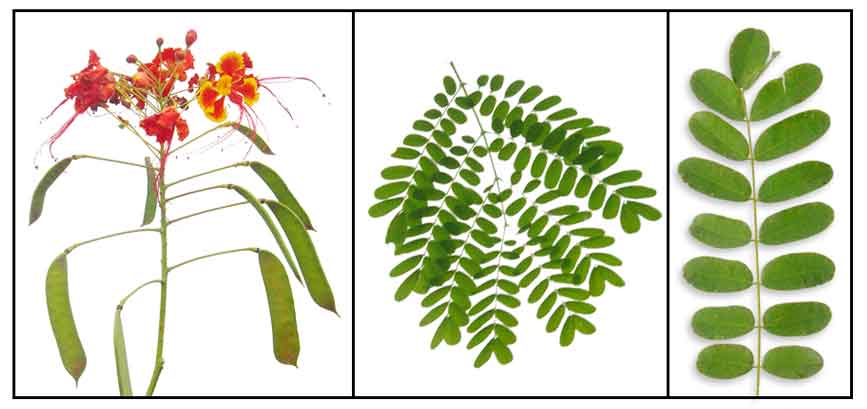
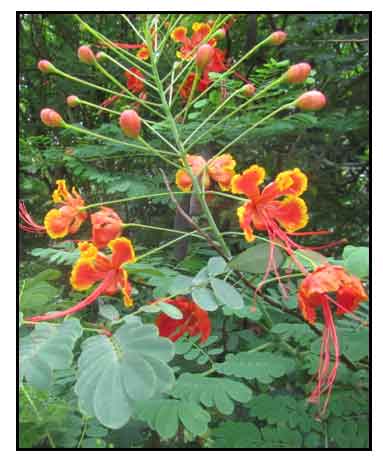
• Bulaklak ng Paraiso is an erect, smooth shrub or
small tree, 1.5 to 5 meters high. Branches are armed with a few
scattered spines. Leaves are bipinnate. Pinnae are 4-8 pairs, 6 to 12 centimeters long.
Leaflets are stalkless, 7 to 11 pairs, elliptic, and 1 to 2 centimeters long.
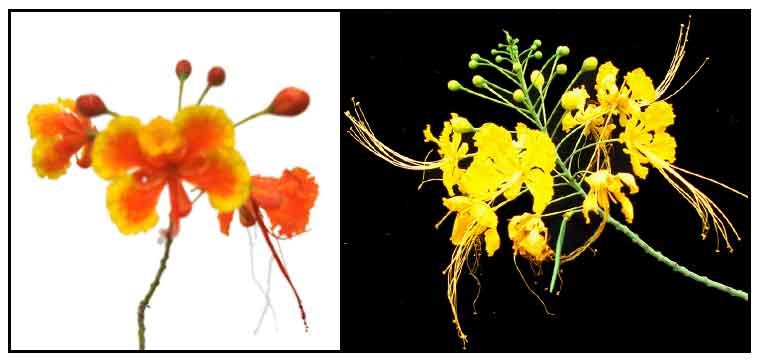
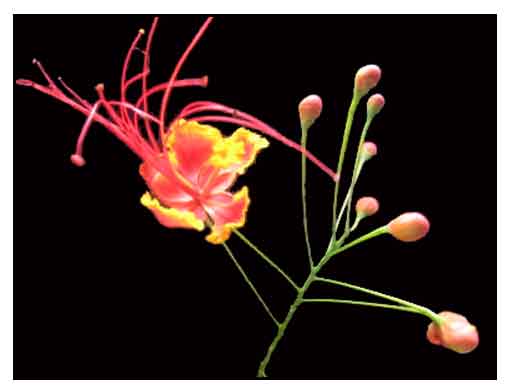
Flowers are red and yellow, or yellow, borne on terminal, lax racemes, about 4 centimeters in
diameter. Petals are crisped and clawed. Stamens are long-exserted. Pod is nearly straight, flat,
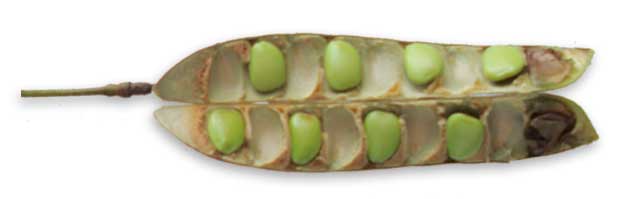
smooth, 5 to 9 centimeters long and 1.5 centimeters wide, containing 6 to 8 seeds.
Distribution
- Introduced; naturalized.
-
Mostly cultivated for ornamental
use throughout the settled areas in the Philippines.
- Naturalized in some regions.
- Native to Belize, Costa Rica, Guatemala, Mexico Southeast, Nicaragua. (27)
- Now pantropic.
 Constituents Constituents
• Plant yields diterpenoids, isovouacaperol, sitosterol, and flavonoids.
• Leaves contain gallic
acid, a red coloring matter, gum, tannins, resin, benzoic acid, and salts.
• Study isolated five flavonoids: 5,7-dimethoxyflavanone, 5,7-dimethoxy-3,4'-methylenedioxyflavanone, isobonducellin, 2'-hydroxy-2,3,4'-6'-tetramethoxychalcone and bonducellin, all with anti-inflammatory activities.
• Stems contain peltogynoids, bhonducellin, 6-methoxypulcherrimin, and homoisoflavonoids. Study of the stems isolated a cassane-type diterpene ester, pulcherralpin.
• Flowers yield lupeol, B-sitosterol, flavonoids and myricetin.
• Phytochemical screening of stem bark yielded saponins, flavonoids, phenols, terpenoids, tannins, and alkaloids. Two known compounds, Pulcherrin J (1) and 6-cinnamoyl-7-hydroxyvouacapen-5-ol (2) were isolated from the HEEA fraction. (see study below) (37)
• Phytochemical screening of leaves yielded alkaloids, phytosterols, saponins, tannins, phenols, flavonoids, and lignins. (see study below) (39)
• Phytochemical screening of hydroalcoholic extract of stem bark yielded
phenols, sterols, and flavonoids. (see study below) (43)
• Study of pulverized leaves of red and yellow varieties of C. pulcherrima yielded 0.50 and 0.52% v/w of essential oils on hydrodistillation. GC-MS analysis of the oils of red and yellow varieties yielded 58 and 53 compounds, with percentage compositions of oxygenated monoterpenes of 70.4 and 85.1%, respectively. Sesquiterpene content in the leaf oil was 28.8% in the red variety and 5.1% in the yellow variety. Principal oil constituents were y-terpinene (44.4%), germacrene B (14.3%), myrcene (5.6%), allo-ocimene (5.9%), ß-caryophylene (5.1%) and α-pinene (4.2%) in the red variety, and citronellal (58.0%), geranial (17.5%), ß-caryophylene (5.1%), linalool (2.5%) and α-terpineol (2.3%) in the yellow variety. (47)
• Study of chloroform extract of roots isolated 10 known furanocassane diterpenoids: vouacapen-5α-ol (1), 8,9,11,14-didehydrovouacapen-5α-ol (2), 6β-cinnamoyl-7β-hydroxyvouacapen-5α-ol (3), pulcherrin A (4), pulcherrin B (5), pulcherrin J (6), pulcherrimin A (7), pulcherrimin B (8), pulcherrimin C (9), and pulcherrimin E (10). (see study below) (51)
• Phytochemical study of flowers yielded alkaloids, glycosides, saponins, tannins, phenolics, terpenoids, and steroids. Proximate content study yielded 6.20%, 15.00%, 1.80%, and 7.00% for moisture, crude fiber, crude lipid, and total ash. (see study below) (52)
• Qualitative screening of C. pulcherrima roots revealed phytochemicals such as alkaloids, glycosides, steroids, anthraquinones, terpenoids, tannins, saponins, and reducing sugar, in which methanol and aqueous extracts showed absence of essential oil, and ethanol showed absence of terpenoid and essential oil. (see study below) (63)
• Study of aerial parts isolated 16 cassane diterpenoids (CAs), including four undescribed lactam-type, four unreported lactone-type, along with eight known ones. (see study below) (65)
 Properties Properties
• The odor of the plant resembles savin.
• Leaves reported to be purgative and emmenagogue.
• Flowers are reported to be tonic, purgative, febrifuge, and emmenagogue.
• Seeds, flowers and roots are reported to be abortifacient.
• Bark is considered a powerful emmenagogue and abortifacient.
• Roots reputed to be poisonous.
• Studies have suggested antimicrobial, antidiabetic, antiviral, anti-inflammatory, cytotoxic, analgesic, mosquito larvicidal, repellent,
CNS depressant, antidiarrheal, analgesic, immunomodulatory, anti-arthritic, antiplasmodial, antiulcer, antibiofilm, membrane stabilizing, antifertility, antidiabetic, wound healing, anthelmintic, anticonvulsant, leishmanicidal, antifungal, immunostimulant properties.
Toxicity
• Leaves, flowers, bark and seeds of C. pulcherrima were used by American Indians in traditional medicine as abortifacients and for suicide of enslaved people. Indians maltreated by their Dutch masters use the seeds to abort their children, so that they do not suffer their lifes as slaves as their parents did. (1)
• All seeds of Caesalpinia are poisonous. Seeds of some species are edible before
they reach maturity (immature seeds of C. pulcherrima) or after treatment (C. bonduc after roasting). (1)
Parts
utilized
Roots, leaves, flowers, seeds
and bark.
 Uses Uses
Edibility
- In L
Folkloric
- In La Union, decoction or infusion of leaves, flowers, roots, and bark used as purgative and emmenagogue.
- In Angola, decoction of roots used for
intermittent fevers.
- In Nicaragua astringent infusion used as wash for the teeth and gums. Infusion of leaves, roots, and bark used for colds, fevers, skin ailments and purging; also used as emmenagogue.
- Reported to be abortifacient.
- In Mexico, a decoction of leaves used for liver affections and as mouth wash and gargle for mouth and throat ulcers.
- In the West Indies, decoction of leaves used for fevers.
- Flowers reputed to be purgative, febrifuge and emmenagogue.
Decoction of flowers used for erysipelas and inflammation of the eyes.
- Powdered flowers used as insecticide; also used as tonic.
- Seeds also used as abortifacient.
-
Fruit is astringent and used for diarrhea and dysentery.
- In the Amazon, leaf juice used for fevers;
the flower juice for sores.
- Seeds used for cough, chest pains, breathing difficulty.
- Roots used to induce first trimester abortion.
- Leaves are purgative; used for renal stones, malaria, bronchitis.
- In Ayurvedic medicine, used for fever,
jaundice, colic, flatulence, malignant tumors.
- In Nicaragua, astringent infusion of the
bark is used as a wash for teeth and gums.
- In the West Indies, decoction used for
fevers.
- In the Antilles, the leaves are used as
emmenagogue and abortifacient. A sweetened infusion is used as purgative.
- In Jamaica, decoction of leaves used as a purgative.
- In the East Indies, pods and leaves used as substitute for senna.
- In India, infusion of flowers used as pectoral and febrifuge; also used in bronchitis, asthma and malarial fevers. Leaves used as antipyretic and antimicrobial.
- In the Caribbean, used for fever, pain and cough.
- In Nigeria, used for treatment of malarial fever. (66)
Studies
• Antimicrobial: Antimicrobial
activity of Caesalpinia pulcherrima, Euphorbia hirta and Asystasia gangeticum:
Studies on the ethanolic extracts of the dry fruits of C. pulcherrima
showed a broad spectrum of antimicrobial activity against E. coli (enteropathogen),
Proteus vulgaris, Pseudomonas aeruginosa and Staphylococcus aureus. (3)
• Antibacterial: Study on the antibacterial effects of selected Indian medicinal plants was evaluated on strains of B. cereus, S. aureus, E. aerogenes, E. coli and K. pneumonia. The most active antibacterial plant was Caesalpinia pulcherrima.
• Antiviral / Quercetin: In a study in search of new antiviral agents, study evaluated pure flavonoids and aqueous extracts of C. pulcherrima for activity against a series of viruses, i.e., herpes viruses (HSV-1 and HSV-2) and adenoviruses (ADV-3, ADV-4, and ADV-11). The aqueous extracts of CP and its flavonoid quercetin showed a broad spectrum of antiviral activity. The antiviral activity of some compounds may be derived from the flavonoid of quercetin. The mode of action of quercetin against HSV-1 and ADV-3 was in the early stage of multiplication. (4)
• Anti-inflammatory: The study showed anti-inflammatory activity attributed to flavonoids. Results support the
use of Caesalpinia pulcherrima for the treatment of inflammatory conditions
in traditional medicine.
• Furanoid Diterpenes / Antibacterial /
Antifungal : Study
isolated four new cassane-type furanoditerpenoids from the leaves of
CP. Antimicrobial testing showed activity against bacteria (S aureus,
E coli, P aeruginosa and B subtilis) and fungi ( C albicans and T mentagrophytes). (5)
•
Nutrient studies of CP Seeds: Study
suggests C pulcherrima could be a good source of low cost plant protein,
a good source of iron and calcium; the whole seeds more nutrient-rich
than the seed nuts. (6)
•
Flavonoids / Anti-Inflammatory: Study
isolated five flavonoids from CP which significantly and dose-dependently
inhibited inflammatory mediators, NO, cytokines (TNF and IL-12).
(7)
•
Antifungal: Study
of methanol extract of 9 Indian medicinal plants showed C pulcherrima
with good antifungal activity against C albicans. (8)
• Antioxidant / Cytotoxic: Study on the methanolic and aqueous extracts of C pulcherrima showed both exhibited strong antioxidant activity. Testing for cytotoxicity, the aqueous extract was relatively toxic. Results of antioxidant and cytotoxic activities were attributed total phenolic content of the wood. (10)
• Analgesic: Study on the chloroform extract of Caesalpinia pulcherrima showed significant analgesic activity through a peripheral mechanism. (11)
• Drug Release Study / Excipient / Seed Polysaccharide: Caesalpinia pulcherrima seed polysaccharide can be used for the controlled release of both water-soluble and water insoluble drugs. (13)
• Anthelmintic / Flowers: Study evaluated the in vitro anthelmintic potency of various extracts of CP flowers against Indian earthworms Pheretima posthuma. Results showed all the extracts exhibited anthelmintic activity, and the aqueous extract took the least time to cause earthworm paralysis. (14)
• Anti-Inflammatory / Anti-Ulcer / Aerial Parts: Ethanolic and aqueous extracts of aerial parts of C. pulcherrima exhibited significant anti-inflammatory activity in the cotton pellet granuloma model and significant anti-ulcer activities in the pylorus ligation- and aspirin-induced ulcer models. (15)
• Antimicrobial / Antioxidant / Seeds and Fruit Rind: Study investigated the antimicrobial and antioxidant activities of seeds and fruit rind of C. pulcherrima. Antimicrobial activity was evaluated by agar well diffusion method while antioxidant activity was evaluated by DPPH assay, and total phenolic and flavonoid contents. Among the solvents, the methanol extract showed the best antibacterial and antioxidant activities. (17)
• Seed Mucilage / Binder / Seeds: Study isolated a water soluble mucilage from the seeds of C. pulcherrima. It was found to possess excellent binding property to serve as potential binder in conventional tablet formulation. (18)
• Antiulcer / Aspirin-Induced Ulcer / Bark: Study investigated the antiulcer effects of hydroalcoholic and aqueous extracts of bark in pylorus ligated models for protection against Aspirin induced method. Extracts significantly controlled aspiring induced ulcer development. (20)
• Anticonvulsant / Leaves:Study of an ethanolic extract of leaves of Caesalpinia pulcherrima showed anticonvulsant effect against maximal electroshock (MES) and pentylenetetrazole (PTZ) induced seizures in rats and mice. (21)
• Antifertility / Leaves:Study of an ethanolic extract of leaves in female albino mice showed significant antifertility activity in two experimental models i.e., anti-implantation and estrogenic/antiestrogenic activity. (22)
• Anti-Diabetic / ß-Cell Regeneration / Flowers: Study evaluated the hypoglycemic effect of an ethanolic extract of C. pulcherrima flowers in alloxan-induced diabetic rat models. Results showed anti-diabetic activity with better regeneration of ß-cells at the 300 mg/kg group. (23)
• Antibacterial / Flowers: Study evaluated methanolic extracts of leaf and flower of C. pulcherrima, Delonix regia and Peltaphorum ferrugineum against clinical isolates of Staphylococcus aureus and Streptococcus mutans. The flower extract of C. pulcherrima showed marked inhibition of cariogenic isolates. (24)
• Bioavailability Enhancement of Ondansetron After Nasal Administration / CP— Microspheres:Study showed CPG (Caesalpinia pulcherrima galactomannan)-based microspheres can successfully deliver ondansetron intranasally, sustain its effect, avoid first past effect, and enhance the bioavailability of ondansetron hydrochloride. (25)
• Mosquito Larvicidal Activity: Study evaluated the larvicidal activity of crude benzene and ethyl acetate extracts of leaves of Caesalpinia pulcherrima for toxicity against three important vector mosquitoes, viz., Culex tritaeniorhynchus, Aedes albopictus, and Anopheles subpictus. All extracts showed moderate larvicidal effects, with the benzene extract showing the highest larval mortality. (26)
• Anti-Inflammatory / Central Depressant Activity / Bark: Study evaluated a crude methanol extract of bark for anti-inflammatory and neuropharmacological activities in an experimental rat model. Results showed significant (p<0.001) anti-inflammatory activity against carrageenan induced paw edema comparable to standard drug phenyl butazone. The methanolic bark extract reduced the onset of sleep and potentiated the pentobarbital induced sleeping time in mice, suggesting a central depressant activity with probably tranquilizing action. (28)
• Gold Nanoparticles / Antimicrobial / Flower: Study describes an ecofriendly technique for green synthesis of gold nanoparticles from AuCl4 solution using CP flower extract as reducing agent. The gold nanoparticles showed good antimicrobial activities when compared to standard antibiotics. (29)
• Anti-Arthritic: Study evaluated the anti-arthritic activity of an ethanolic extract of CP in adjuvant arthritic rat model induced by Freund's complete adjuvant (FCA) in albino rats. Results showed anti-arthritic activity with a significant decrease in paw volume with potential for significant normalization of hematological abnormalities in adjuvant induced arthritic rats. (30)
• Antitussive Effect / Aerial Parts: Study evaluated ethanolic extracts of Caesalpinia pulcherrima (aerial parts), Arenaria serpyllifolia (whole plant), and Fragaria nubicola (whole plant) for antitussive activity at doses of 200 and 400 mg/kg in a sulphur dioxide induced cough in albino rat model. All extracts showed significant dose dependent inhibition of cough compared to standard. (31)
• Analgesic / Anti-Inflammatory / Flowers: Study evaluated C. pulcherrima flower extracts for analgesic and anti-inflammatory properties. Intraperitoneal administration of methanolic extract produced significant analgesic activity in acetic acid-induced writhing, tail immersion test and hot plate tests and showed anti-inflammatory effect against carrageenan-induced paw edema in experimental animals. (32)
• Antidiarrheal / Analgesic / Bark: Study evaluated crude ethanolic extract of bark of C. pulcherrima for anti-diarrheal and analgesic activities in animal models. The extract showed considerable anti-diarrheal activity on castor oil-induced diarrhea in mice and increased mean latent period and significantly (p<0.001) decreased frequency of defecation at dose of 500 mg/kbw comparable to standard drug loperamide at 50 mg/kbw. The extract also produced significant (p<0.001) inhibition of acetic acid-induced writhing in mice at 500 mg/kbw dose by 47.11% compared to standard drug diclofenac at dose of 25 mg/kbw. (33)
• Anti-Inflammatory / Antinociceptive / Pods: Study evaluated various extracts of pods for anti-inflammatory and antinociceptive activities using various experimental models i.e., acetic acid induced writhing in mice and tail flick test in rats for analgesic activity and carrageenan induced rat paw edema and cotton pellet granuloma formation in rats. Results showed C. pulcherrima has analgesic and anti-inflammatory properties that supports its folk medicinal use. (34)
• Anticonvulsant / Leaves: Study evaluated an ethanol extract of C. pulcherrima against maximal electroshock (MES) and pentylenetetrazole (PTS) induced seizures in rats and mice. Diazepam was used as standard anticonvulsant drug.
The CPEE was found safe up to doses of 4000 mg/kg mice when administered intraperitoneally. Study showed P. pulcherrima leaves possess anticonvulsant properties in PTZ and MES treated animals. However, the mechanism of anticonvulsant effect is unclear. (35)
• Anti-Ulcer / Ethanol Induced Ulcers / Flowers: Study evaluated the anti-ulcer activity of C. pulcherrima ethanolic extract of flowers on ethanol induced gastric lesion in albino rat. Results showed an anti-ulcer effect as measured by parameters of ulcer index, pH, gastric juice volume, total acidity, tissue glutathione, and total protein. (36)
• Antiplasmodial / Acute Toxicity Study / Stem Bark: Study evaluated stem bark extracts and fractions for acute toxicity studies and antiplasmodial activity. LD50 was 5656.85 mg/kbw in Swiss albino mice. Of all fractions, the HEEA showed highest antiplasmodial activity against both D6 and W2 Plasmodium falcifarum clones at IC50 3.7 and 5.3 µg/mL, respectively. (see constituents above) (37) Study evaluated an aqueous solvent stem bark extract at concentrations for 50, 100, and 200 mg /kg/day for blood schizonticidal effect against chloroquine-sensitive Plasmodium berghei berghei in albino mice. Results showed significant (p<0.05) blood schizonticidal activity with chemosuppression of 75.2-86.69%, comparable to standard drug, chloroquine (5mg/kg/day) with suppression and mean survival time of 95.13% and 30.00 days, respectively. (67)
• Wound Healing / Leaves: Study evaluated the formulation and wound healing activity of methanolic extract of leaves of C. pulcherrima. Extract treatment showed significant wound healing activity with 14 days period of epithelization (100%) compared to20 days in the control group. Wound healing activity was attributed to analgesic, anti-inflammatory, antioxidant, and antibacterial properties of the plant (38)
• Purgative / Leaves: Study evaluated various extracts of dried leaves of C. pulcherrima for purgative activity. Extracts at dose level of 300 mg/kg p.o. exhibited significant (p<0.001) purgative activity in albino rats. (see constituents above) (39)
• Immunomodulatory: Study evaluated the anti-inflammatory potential of all parts of C. pulcherrima and fractions of fresh pods. The extracts were studied for oxidative burst activity of whole blood phagocytes, neutrophils, and murine macrophages and for antioxidant activity by DPPH radical scavenging assays. Results showed inhibition of reactive oxygen species (ROS) production of whole blood phagocytes with IC50 ranging between 1.6 to 8.0 µg/mL. Some fractions exhibited inhibition on ROS by whole blood cells with IC50 range of 1.62-9.18 µg/mL. Extracts and fresh pod fractions also inhibited intracellular and extracellular ROS production in isolated human neutrophils and murine macrophage cells J774.2. (40)
•
Antioxidant / Antimicrobial / Leaves, Flowers and Seeds / Stem Bark: Study evaluated the antimicrobial and antioxidant activity of leaves, flowers, and seeds of methanolic extract of C. pulcherrima. All the extracts exhibited potent antioxidant activity at 800 µg/mL comparable to standard ascorbic acid. The leaf extracts showed inhibition of all selected microorganisms i.e., S. aureus, P. aeruginosa, E. coli, E. faecalis, S. mutans, B. subtilis, A. niger, and C. albicans, at 1000 µg/mL. (41) Study of hydroalcoholic extract of stem bark by measures of total antioxidant capacity and reducing power assay showed significant antioxidant activity. (43)
• Antiulcerogenic / Aspirin-Induced Ulcer / Leaves: Study evaluated the antiulcerogenic potential of ethanolic extract of C. pulcherrima leaves in an aspirin induced ulcer model in rat. Results showed significant antiulcerogenic activity at 500 mg/kbw by parameters of ulcer index, gastric volume, pH, content of tissue glutathione, acid volume and total protein. (42)
• Silver Nanoparticles / Antimicrobial / Antibiofilm / Cytotoxicity Against Cancer Cell Line / Stem: Study reports on an eco-friendly, rapid, and cost-effective method of AgNPs synthesis using C. pulcherrima stem extract. The AgNPs showed good synergistic antimicrobial, antibiofilm, and antioxidant activity, and showed dose-dependent cytotoxicity effect against HeLa cancer cell line. Genotoxicity study showed the the AgNPs to be non toxic at lower concentration. Results suggest great potential in biomedical applications. (44)
• Larvicide and Repellent Against Aedes Mosquitoes / Leaves: Study of C. pulcherrima and Ervatamia coronaria for activities against Aedes mosquitoes yielded phytochemicals with larvicidal and repellent properties. LC50 values (95% FCI) of crude ethyl acetate leaf extracts against Ae. aegypti larvae were 3.21 (2.95-3.48) and 4.46 (3.16-6.05) mg/L, for C. pulcherrima and E. coronaria, respectively. Repellent ED50 values (95%FCI) against Ae. aegypti adults were 0.02 (0.01-0.03) and 0.01 (0.005-0.02) mg/cm2, respectively. Results were promising with regards safety and effective control of Aedes mosquitoes. (45)
• Wound Healing / Polyherbal Ointment Formulation: Study showed the polyherbal combination of Tectona grandis, Ficus religiosa, and Caesalpinia pulcherrima formulated as a polyherbal ointment accelerated wound healing process by enhancing collagen formation and increased breaking strength of the healed wounds. (46)
• Membrane Stabilizing / Antimicrobial / Pods: Study evaluated the membrane stabilizing potential and antimicrobial activity of C. pulcherrima pods against selected microorganisms. HRBC membrane stabilization method used for in-vitro anti-inflammatory activity showed good inhibitory activity in the petroleum ether extract with % inhibition of hemolysis at 7.5, 22, 27, and 37% in 10, 25, 50, and 100 µg/ml concentration respectively. Chloroform and methanolic extracts showed good zones of inhibition against selective microorganisms compared with Gentamicin standard. (50)
• Cytotoxic / Anti-Inflammatory / Leishmanicidal / Roots: Study of chloroform extract of roots isolated 10 known furanocassane diterpenoids: vouacapen-5α-ol (1), 8,9,11,14-didehydrovouacapen-5α-ol (2), 6β-cinnamoyl-7β-hydroxyvouacapen-5α-ol (3), pulcherrin A (4), pulcherrin B (5), pulcherrin J (6), pulcherrimin A (7), pulcherrimin B (8), pulcherrimin C (9), and pulcherrimin E (10). Compounds 3, 4, 8, 9, and 10 showed activity against three cancer cell lines, MCF-7, HeLa, and PC-3, with IC50s ranging from 7.02 to 36.49 µM. Compounds 8 and 13 showed potent inhibitory effect on reactive oxygen species generated from human whole blood ph Theagocytes with IC50s of 15,30 and 8.00 µM, respectively. Compounds 3, 9, and 13 showed significant activity against promastigotes of L. major with IC50s of 65.30, 58.70, and 55.90 µM, respectively. (51)
• Cytotoxic / Acute Toxiity / Anti-Inflammatory / Leishmanicidal / Flowers: Study evaluated the phytoconstituents, proximate content, acute toxicity, antioxidant, anti-inflammatory and antinociceptive properties of C. pulcherrima flower extracts. On antioxidant study, the n-hexane extract showed 86.49% inhibition compared to ascorbic acid at 88.29% at 500 µg/mL extract. At 5000 mg/kg, there was 100% mortality with crude extract administered to Swiss mice. Acetone extract exhibited highest significant anti-inflammatory potential at both 100 and 200 mg/kg dose, with p<0.05 reduction in number of writhes in a dose-dependent manner with acetone and n-hexane extracts. (see constituents above) (52)
• Antibacterial / Fresh and Dry Flowers: Study evaluated the phytochemical and antibacterial activities of fresh and dry flower extracts of C. pulcherrima against Gram(+) and Gram(-) strains in vitro. Alkaloids, glycosides, saponins, carbohydrates, proteins, aminoacids, flavonoids, tannins, and steroids were observed in fresh and dry flowers. The ethanol extract of dry flowers exhibited maximum activity against Bacillus subtilis (25mm) bacteria. Chloroform and ethanol extracts of dry flowers exhibited moderate activity against Bacillus subtilis and Klebsiella pneumonia (22mm). (53)
• Antimalarial / Antioxidant / Leaves: Study evaluated a leaf extract of C. pulcherrima for antimalarial, ferric reducing antioxidant power, and elemental composition. Invivo antimalarial activity testing against Plasmodium berghei parasites showed dose-dependent increase in percentage chemo-suppression of parasites with maximum effect at 800 mg/kg (61.57-34.86%) from day 5 to day 8 respectively. Highest FRAP activity was seen in 100% ethylacetate extract with 314.90 mmol. (54)
• Anxiolytic / Leaves: Study evaluated the anti-anxiety activity of various extracts of C. pulcherrima leaves using elevated plus maze (EPM) model in albino mice with extract doses of 200 and 400 mg/kg. Diazepam was used as standard. Results showed the methanol extract exhibited maximum and significant dose-dependent effect at 200 and 400 mg/kg on EPM, with results similar to diazepam (2mg/kg). There was dose dependent decrease in locomotor activity in the Actophoptometer model. The antianxiety activity may be attributed to the presence of polyphenols. (55)
• Silver Nanoparticles / Cytotoxicity / HCT116 Cell Line: Study reports on the bioactivities and cytotoxicity of synthesized silver nanoparticles on HCT116 cell line. The aqueous extract showed total phenolic compounds of 815 µg/mg. DPPH quenching activity of the extract showed IC50 of 18.7 µg. equivalent to ascorbic acid (15µg). The aqueous extract showed 25mm zone of inhibition against growth of E. coli. The synthesized AgNPs showed significant cytotoxic effect of 77.5% on human colon cancer cell line. (56)
• Antimicrobial Dental and Oral Infections: Study evaluated the anti-microbial activity of ethanol extract of fruit, leaves, flowers, and stems against microbes that cause dental and oral infections viz., Prophyromonas gingivalis, Streptococcus mutans, Enterococcus faecalis and Candida albicans. A 2% crude flower extract showed highest antimicrobial activity against P. gingivalis (9.67 mm) and C. albicans (19.44 mm). Ethanol extract of flowers showed highest total flavonoids and total phenols and highest antimicrobial activity. (57)
• Anthelmintic / Leaves: Study evaluated various leaf extracts of C. pulcherrima for in-vitro anthelmintic activity on Indian adult earthworm Eisenia foetida, using doses of 20, 40 and 60 mg/ml and measures of time of paralysis and time of death of worms. Piperazine citrate was used as standard. Leaf extracts exhibited dose-dependent inhibition of spontaneous motility (paralysis) of earthworms. All extracts showed dose-dependent anthelmintic activity in decreasing order of activity of ethyl acetate, ethanol, dichloromethane and petroleum ether extracts. (58)
• Anticancer / Ehrlich Ascites Carcinoma / Leaves: Study evaluated the anticancer activity of leaf extract (EECP) against Ehrlich Ascites Carcinoma (EAC) in BALB/c mice. Results showed significant increase in Hb, lymphocytes, RBC, and monocytes, and decrease in DBC and neutrophil count. There was significant decrease in ALP, TC, AST, ALT, and TG compared to disease. On antioxidant activity, EECP showed significant increase in CAT, SOD, GSH, and GPx counts. LPO level was significantly reduced in all treated groups. Results showed significant antioxidant and anticancer activity against EAC. (59)
• Antifertility / Bark: Study evaluated the anti-fertility activity of C. pulcherrima in rats. Phytochemical screening yielded alkaloids, flavonoids, steroids, and triterpenes. Bark extracts showed significant estrogenic activity. Both aqueous and alcoholic extracts produced reduction in ovarian and increase in uterine weight in a dose dependent manner. There was significant increase in anti-implantation and resorption in a dose-dependent manner. (60)
• Pigment Extraction / Petals: Study evaluated the best process for petal pigment extraction using ethanol as solvent and measures of extraction temperature and time, and optimal combination of conditions for extraction. Results suggest optimal pigment extraction conditions were 60% ethanol volume fraction, temperature of 60°C, time 45 min. Commonly used food additives such as sucrose and soluble starch had an effect on pigment, while table salt showed no significant effect (p>0.05). Study suggests the pigments of C. pulcherrima petals have potential as edible medicinal pigments. (61)
• Lignin / Antifungal, Antioxidant, Immunostimulatory / Leaves: Study evaluated the biological functions of a lignin isolated from leaves of C. pulcherrima. Phenolic compounds (41.33 mg GAE/g) and indications of a guaiacyl-syringyl-hydroxyphenyl (GSH)-type composition was found. Lignin antioxidant activities to TAA and DPPH were 40% and 16.9 % respectively, and showed high antifungaly potential, especially against Candida spp. (IC50 31.3 µg/mL) and C. neoformans (5.6 µg/mL). In mouse splenocytes, the lignan was not cytotoxic and stimulated cell proliferation and cytokine release. Results showed C. pulcherrima lignin has potential and antifungal and immunostimulant. (62)
• Antidermatophytic / Roots: Study evaluated various root extracts of Caesalpinia pulcherrima for antidermatophytic against Trichophyton rubrum, T. tonsurans, Microsporum canis, M. audouinii, and Epidermophyton floccosum using agar well diffusion method. All roots extracts showed a level of anti-
dermatophytic activity against test isolates at different concentrations (100, 50, 25 and 12.5 mg/ml).
The antidermatophytic effects in the study supports its traditional use in the treatment of infections caused by dermatophytes. (see constituents above) (63)
• Antidiabetic Polyphenols / Pods: Study evaluated the antidiabetic activity of two new polyphenolic compounds isolated from partition fractions of pod extracts in streptozotocin induced diabetic mice. Isolated compounds were identified as 5-(4-hydroxyphenyl)-3-hydroxy-2-methoxyphenol and 3-(4-methanetriol-2,6-dihydroxyphenyl)-3',4',5',5,7-pentahydroxyflavanonol. The extract gave comparable (p<0.05) activity to glibenclamide (5 m,g/kg) at 100, 200, and 400 mg/kg). The significant antidiabetic property of the pods justified its antidiabetic ethnomedicinal use, which may have been contributed to by the two new polyphenolic compounds. (64)
• Anti-Glioblastoma Activity / Antibacterial / Aerial Parts: Study of aerial parts isolated 16 cassane diterpenoids (CAs), including four undescribed lactam-type, four unreported lactone-type, along with eight known ones. Pulcherritam H exhibited significant antibacterial activities against Bacillus cereus, Staphylococcus aureus, and Pseudomonas syringae pv. actinidae (Psa) with MICs ranging from 6.25 to 12.5µM. Pulcherritams A and C exhibited potent antibacterial activities against methicillin-resistant S. aureus (MRSA). Of the isolates, Pulcherritam A and Pulcherrimin G showed moderate inhibitory activity against glioblastoma multiforme (GBM) U87MG cells. (65)
Availability
- Ornamental cultivation.
- Wildcrafted.
- Seeds in the cybermaket |