Gen info
- Carissa carandas is a species of flowering shrub in the family Apocynaceae. It's berry-sized fruits are commonly used as condiment in Indian pickles and spices. (1)
- Etymology: The genus name Carissa is Sanskrit for Carissa carandas, Christ;s thorn or carunda.
 Botany Botany
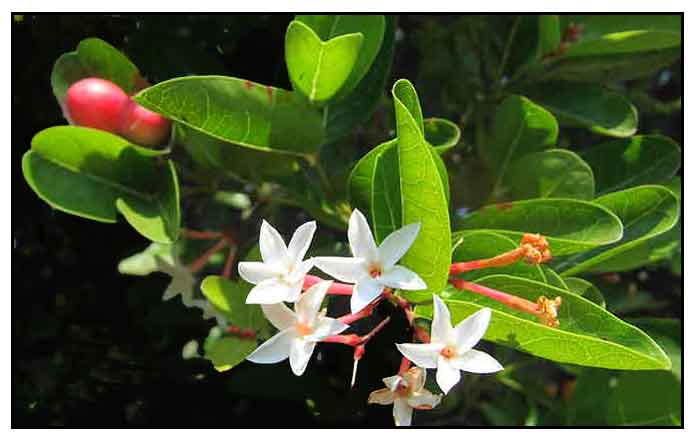
• Caranda is a shrub growing 2 to 3 meters high. Branches are numerous, rigid and spreading, with 2 straight, simple or forked thorns, up to 5 centimeters in length on the axils and nodes. Leaves are smooth, ovate, or oblong-ovate, 4 to 7.5 centimeters in length, 2.5 to 4 centimeters in width, rounded or notched at the base, and blunt tipped. Flowers are fragrant, white or pale rose-colored, clustered in twos or threes. Calyx-segments are very slender, pointed and hairy. Corolla tube is about 2 centimeters long, smooth, with a swollen throat and hairy lobes, the lobes being lanceolate, pointed, spreading and about half as long as the tube. Fruit is a drupe, broadly ovoid, 1.5 to 2.5 centimeters long, bluntly pointed, and blackish or reddish-purple, containing 2 to 4 small, flat seeds. Pulp is reddish-purple and sour.
• Growth form: A woody shrub to a small tree, with climbing habit. It can grow up to 5 m tall. Foliage: Leaves are broadly ovate to oblong in shape, measuring up to 7 cm long and 4 cm wide, with broadly cuneate to rounded base and apiculate apex. Stems: Stems have spines which are simple to slightly forked, measuring about 5 cm. Flowers: Inflorescence in cyme arrangement, fragrant white flowers, tubular up to 2 cm long, with lanceolate lobes which are overlapping to right. Fruit: Berries, reddish purple, globose to broadly oval in shape, measuring about 2.5 cm x 2 cm. (53)
Distribution
- Recently introduced into the Philippines.
- In limited cultivation. especially in the College of Agriculture at Los Banos, Laguna.
- Native of India.
- Common in the Indian subcontinent, including Bangladesh.
 Constituents Constituents
- Root contains a trace amount of volatile oil with an odor similar to that of Piper betle leaf, salicylic acid, and an alkaloid.
- Study has reported carisone, carindone, carinol, lignin, oderoside and 2-acetylphenol from root materials.
- Leaves have yielded triterpenes, tannins and carissic acid.
- Fruits yield a mixture of volatile principles - 2-phenyl ethanol, linalool, ß-caryophyllene, isoamyl alcohol and benzyl acetate, and a novel triterpenic alcohol (carissol).
- Study of fresh leaves isolated four pentacyclic triterpenoids (1-4) including a new constituent, carissin (3beta-hydroxy-27-E-feruloyloxyurs-12-en-28-oic acid), and two previously unreported compounds. (12)
- A methanolic extract of roots of Carissa congesta yielded a des-N-methylnoracronycine, an acridone alkaloid, carissone, carindone, lupeol besides stigmasterol, ursolic acid and its methyl ester.
(22)
- Plant yielded major bioactive compounds, i.e., alkaloids, flavonoids, saponins, large amounts of cardiac glycosides, triterpenoids, phenolic compounds, and tannins. Roots yield volatile principles including 2-acetyl phenol, lignan, carinol, sesquiterpenes (carissone, carindone), lupeol, β-sitosterol, 16β-hydroxybetulinic acid, α-amyrin, β-sitosterol glycoside, and des-Nmethylnoracronycine. Leaves yield triterpenoid constitutes as well as tannins. Fruits yield carisol, epimer of α-amyrin, linalool, β-caryophyllene, carissone, carissic acid, carindone, ursolic acid, carinol, ascorbic acid, lupeol, and β-sitosterol.
(24)
- GC-MS analysis of methanol extract of dried fruits yielded 11 compounds: Dichloroacetic acid, 2-ethylhexyl ester (1), 1-Pentatriacontanol (2), Myo-inositol, 4-c-methyl (3), Heptacosanoic acid, 1-methoxy-25-methyl heptacosan-1-ol, methyl ester (4), Methyl 13-octadecenoate (5), Z,Z-6,28-Heptatriactontadien-2-one (6), 12-Oleanen-3-yl acetate, (3-alpha) (7), 2R-acetoxymethyl-1,3,3-trimethyl-4t-(3-methyl-2-buten-1-yl)-1t-cyclohexanol (8), ß-Amyrin (9), 2,4,4-Trimethyl-3-hydroxymethyl-5a-(3-methyl-but-2-enyl)-cyclohexene (10), 2R-Acetoxymethyl-1,3,3-trimethyl-4t-(3-methyl-2-buten-1-yl)-1t-cyclohexanol (11). (see study below) (27)
-  Study of ethanol (E) and n-hexane (nH) extracts of leaves showed total antioxidant capacity (mg/gm: ascorbic acid equivalent) of 3.61±1.74 and 4.88±3.44, respectively. Total phenolic content (mg/gm: GAE: gallic acid equivalent) showed 8.02±2.24 and 6.11±1.34, respectively. (see study below) (28)
-
Study of neutraceutical properties of the fruit yielded carbohydrate (19.32 ± 0.69 mg/100g), protein (0.185 ± 0.011μg/g), crude fiber (15.64 % ±0.64) with total phenolic content (188.75 ± 1.42 μgGAE/g) and ascorbic acid (62.93 ± 0.35 mg/100g). (29)
- Phytochemical analysis of root extract yielded
steroid, tannin, saponin, coumarin, alkaloids, carbohydrates, flavonoids, diterpenes, phytosterol, phenols. (34)
- Nutrient analysis of fruit yielded moisture 82.3 ±17.6%, crude protein 11.77 ±0.93 (mg g-1), total sugar 29.00 ±0.20 (mg g-1), total lipid 0.029 ±0.001 (mg g-1). Of 23 fruits studied, Carissa caranda showed the lowest sugar content. (38)
- Nutritive value of Karonda fruits per 100 grams of edible portion: energy 364 kcal, moisture 18 gm, protein 2 gm, fat 10 g,
mineral 3 gm, fiber 0, carbohydrates 67 gm, calcium 160 mg, phosphorus 60 mg, iron 39 mg, (USDA National Nutrient Data Base) (41)
- Phytochemical screening of methanol extract of leaves yielded alkaloids, steroids, flavanoids, tannins, saponins, and reducing sugars. (see study below) ( 43)
- Methanol extract revealed presence of flavonoids, tannins, saponins, and steroids; the hexane fraction yielded flavonoids, alkaloids, saponins, and steroids; and the aqueous extract revealed alkaloids, proteins, and triterpenoids. ( 57)
- GC-MS analysis of hexane and aqueous leaf extracts revealed important biomolecules such as pentadecanoic acid, 14-methyl-, methyl ester, 9,12,15-octadecatrienoic acid, (Z, Z, Z)-, Phytol, Bis(2-ethylhexyl) phthalate, Squalene, Octasiloxane, 1,1,3,3,5,5,7,7,9,9,11,11,13,13,15,15- hexadecamethyl, beta.-Sitosterol, 9,12,15-Octadecatrienoic acid, 2-[(trimethylsilyl)oxy]-1-[[(trimethylsilyl)oxy]methyl] ethyl ester, (Z, Z, Z)-Acetamide, N-methyl-N-[4-(3-hydroxypyrrolidinyl)-2-butynyl]-, 5,8,11,14-Eicosatetraenoic acid, methyl ester, (all-Z)-, and 6-Octadecenoic acid, methyl ester, (Z). ( 57)
- Study of fresh leaves isolated six natural products, namely: ursolic acid ( 1), ursolic acid-γ-lactone ( 2), 27- O- Z- p-coumaroyl ursolic acid ( 3), 23-hydroxy ursolic acid ( 4), uvaol ( 5) and ursolic aldehyde ( 6). (see study below) ( 59) Properties
- Root considered a bitter stomachic.
- Unripe fruit considered astringent, antidiarrheal, aphrodisiac, thermogenic, appetizer, anthelmintic; the ripe fruit, cooling, acid, and antiscorbutic.
- Studies have shown antioxidant, antibacterial, anticonvulsant, analgesic, anti-inflammatory, antipyretic, hepatoprotective, antidiabetic, hypolipidemic, hypotensive, spasmolytic, gut-stimulatory, anthelmintic, anti-ulcer, anti-aging, antiacne, skin whitening, cosmeceutical properties.
Parts used
Roots, fruits and leaves.
Uses
Edibility / Nutrition
- Green fruit makes a good pickle; also made into jam, jelly, or pudding. The ripe fruit may be eaten raw; sour-sweet when ripe.
- Fruit is a rich source of iron, with a fair amount of vitamin C.
- Mature fruit, high in pectin, is useful for making jellies, jams, squash, syrup and chutney.
-The fruit makes an excellent acid jelly for serving with fish and meats.
Folkloric
- Root used as plaster in the Konkan to keep off flies.
- A concoction pounded with horse wine, lime juice and camphor, used as a remedy for itches.
- In Cuttack, decoction of leaves used at the commencement of remittent fevers.
- In Punjab and Cashmere, leaves used in diarrhea, earache, soreness of the mouth and throat, and syphilitic pains.
- In India, root paste used for diabetic ulcers. Used for acidity, flatulence, poor digestion. Juice of fresh plant used for wounds that refuse to heal. Used for scabies, intestinal worms, pruritus, biliousness.
- In Ayurveda, stem bark used for obstinate skin diseases; the root for urinary disorders.
- In Bangladesh, plant parts used for treatment of epilepsy, malaria, fever, dysentery, and diabetes.
- Unripe fruit used as astringent; ripe fruit useful for bilious complaints.
- Ripe fruit also used as antiscorbutic.
- Reported to be an anaphrodisiac, reducing women's libido.
- In Tamil Nadu, leaf juice in honey taken three time a day to relieve cough by helping liquefy the sputum to facilitate expectoration. (42)
Others
- Silkworm: Leaves feed the tussar silkworm.
- Wood: Used for making household utensils.
- Repellent:
Paste of pounded roots used as insect repellent.
Studies
• Anticonvulsant / Roots: Study in mice showed the ethanol extract of roots of Carissa carandas exhibited anticonvulsant effects. The data suggest the anticonvulsant effect may be due to non-specific mechanisms since there was reduction of duration of seizures produced by maximal electroshock as well as delayed the latency of seizures produced by pentylenetetrazole and picrotoxin. (3)
• Hepatoprotective / Antioxidant / Roots: Study on the ethanol extract of roots of C carandas showed significant dose-dependent hepatoprotective activity against CCl4 and paracetamol induced hepatotoxicity. Data also showed strong antioxidant activity. (4)
• Antioxidant / Fruit: Eight fractions from methanolic and chloroform extracts all showed very strong antioxidant activity. Mixture of compounds in the chloroform and methanolic extracts showed better antioxidant activity than the isolated fractions. Results suggest that the synergistic effects of the constituents in the choloroform extracts of the unripe fruits showed the best antioxidant activity. (•) Study for methanolic extract of fruits for antioxidant activity using DPPH radicals showed an IC50 value of 27.45 ±0.43 µg/ml. Total phenolic content was 188.75 ± 1.42 µgGAE/g and ascorbic acid 62.93 ±0.35 mg/100 g. (39)
• Anticancer / Leaves and Fruits: Study of plant extracts was done on human ovarian carcinoma, Caov-3 and lung cancer cells, NCI. Chloroform extract from leaves showed good anticancer activity against Caov-3 with EC50 value of 7.702 µg/ml while the n-hexane extract of the unripe fruit showed remarkable activity against the lung cancer cell line with EC50 value of 2.942 µg/ml on methylene blue assay (MBA). (5)
• Lignans / Carandoside : Study of the stems of C. carandas yielded two new compounds, carandoside and a glucopyranosylr-resinol, together with three known lignans. Study also evaluated their DPPH radical scavenging activities. (6)
• Analgesic / Anti-Inflammatory / Antipyretic / Roots: Study of the ethanol and aqueous extracts from roots of P. daemia and C. carandas showed significant analgesic, anti-inflammatory and antipyretic activities in rodent models, using hot plate, acetic acid-induced writhing methods, and carrageenan induced paw edema assay, respectively. (7)
• Fruit Constituents: Study of volatile flavor constituents of karanda fruits growing in Cuba yielded 150 compounds in the aroma concentrate, the major constituents were isoamyl alcohol, isobutanol and beta-caryophyllene. (11)
• Antidiabetic: Study showed a methanol extract and its ethyl acetate soluble fraction significantly lowered the elevated blood glucose levels by 48% and 64.5% respectively, at dose levels of 400 mg/kg. The increased antidiabetic potential of the EAF over the ME was attributed to its partial purification with increase degree of polymerization and segregation of secondary metabolites. (13)
• Anti-Inflammatory / Analgesic / Fruits: Study of ethanolic extract of Cc fruits resulted in inhibition of stretching episodes and 16.05% inhibition in acetic acid induced writhing. (14)
• Anti-Hyperlipidemic / Leaves: Study of aqueous extract of Cc leaves in egg yolk-induced hyperlipidemic rats showed a significant reduction in body weight, cholesterol, triglycerides, HDL, and LDL , with reduction in histopathologic changes in hyperlipidemic rats. Activity of ethanol and water extract of C. carandas was comparable to atorvastatin. (15)
• Acute Hypotensive Activity: Study evaluated the effect of Carissa carandas extract on cardiovascular function of normal rats. An ethanol extract showed potent acute hypotensive effect in normal rats. It stimulated the muscarinic receptors on the endothelial cells of the vasculature which causes a release of endothelial-derived relaxing factors (EDRFs) or nitric oxide that diffuses to the vasculature and causes smooth muscle relaxation. (19)
• Hypoglycemic / Antihyperglycemic / Leaves: Study evaluated an aqueous extract of leaves of C. carandas on alloxan induced and normoglycemic Wistar rats. Results showed both significant hypoglycemic and antihyperglycemic effects in Wistar rats. (20) Methanol extract of leaves administered at doses of 50, 100, and 200 mg/kbw to glucose-looaded mice demonstrated dose-dependent weak antihyperglycemic activity at 15.6, 17.8 and 20%, respectively. At dose of 400 mg/kbw, the serum glucose concentration fell by 47.8%, a dose that compared favorably with 43.5% reduction with standard glibenclamide at dose of 10 mg/kbw. (58)
• Antidiabetic Potential / Unripe Fruit Extract: Study showed increased antidiabetic potential of an ethyl acetate fraction over a methanol extract attributed to its partial purification achieved by fractionation resulting in increased degree of polymerization and segregation of secondary metabolites. (21)
• Spasmolytic and Gut-Stimulatory / Dual Effectiveness in Constipation and Diarrhea: Study demonstrated dual effectiveness of a crude extract of C. carandas: a gut-stimulatory effect mediated primarily through the activation of muscarinic and histaminergic receptors and a spasmolytic effect was mediated possibly through a Ca++ antagonist pathway. (25)
• Antibacterial / Leaves: Study evaluated various extracts of Carissa caranda leaves for antibacterial properties against selected pathogenic microorganisms such as P. aeruginosa, S. aureus, and E. coli. Methanolic, EA, and ethanolic extracts showed an average inhibitory zone diameter of 23.5, 22.0, and 21.5 mm, respectively. The methanolic extracts showed best result with inhibition greater than antibiotic tetracycline (17.0 mm). (26)
• Anti-Inflammatory / Dried Fruits: Study evaluated the anti-inflammatory effects of dried fruit methanol extract on carrageenan-induced hind paw edema in rats. ME given orally exhibited significant activity (p≤0.05) when compared to control. (see constituents above) (27)
• Antioxidant / Cytotoxicity / Leaves: Study evaluated the phytochemical compounds, antioxidant and cytotoxic potentials of ethanolic and n-hexane extracts of leaves of C. carandas. Results showed significant antioxidant capacities compared to ascorbic acid in DPPH free radical scavenging with IC50 of 1.292 µg/ml and 1.8224 g/ml with ethanolic and n-hexane extracts, respectively. Cytotoxic activities were comparable to vincristine sulfate with IC50 of 2.818 and 1.995 ethanolic and n-hexane, respectively. (see constituents above) (28)
• Anthelmintic / Fruit: Study evaluated the in-vitro anthelmintic activity of various extracts of unripe fruits of C. carandas using Indian earthworm Pheretima posthuma. Results showed anthelmintic activity in measures of time of paralysis and time of death of worm. (30)
• Effect of Fruit Ripening on Phytonutrients and Antioxidant Properties: Study evaluated the effect on fruit ripening on phytonutrients, viz., soluble proteins, total soluble sugars, antioxidants (phenols, ascorbic acid, lycopene) and antioxidant activity (DPPH, FRAP, and NO scavenging activity) in fruits of Cordia myxa and Carissa carandas at five ripening stages. Results showed decrease in soluble proteins, total phenol contents, DPPH radical scavenging and NO scavenging activities, while total soluble sugars, ascorbic acid content and ferric reducing activity increased with maturity of the fruit. There was significant increase in antioxidant lycopene in the fully ripened red Carissa fruit. (31)
• Acute, Subacute, and Subchronic Toxicological Studies / Leaves: Study evaluated the toxicological effects of various extracts of C. carandas leaves in rats. The extracts were found very safe in acute treatment even at high dose of 5000 mg/kg. Histopathological studies after subchronic toxicity doses of 1750 mg/kg/p.o. and 5000 mg/kg/pi showed no toxic organ effects on the liver, heart, kidney and spleen. Chronic toxicity study at dose of 5000 mg/kg/p.o. showed some histological changes. (32)
• Anti-Inflammatory / Leaves: Study evaluated two defatted successive solvent extracts of C. carandas leaves for acute anti-inflammatory potential by carrageenan induced hind paw edema assay in Wistar albino rats. Results showed significant anti-inflammatory activity, with the ME showing a bit more activity than the EA extract. (33)
• Anti-Ulcer / Roots: Study evaluated various extracts of roots in various models of gastric ulcer, viz, acetic acid induced chronic gastric ulcer, pylorus ligation and ethanol induced acute gastric ulcer, in albino rats. All extracts showed significant antiulcer activity in the chronic and acute gastric ulcer model; the alcoholic extract showed comparably more potency. (35)
• Antibacterial / Roots: Study evaluated crude extracts from different parts (roots, stems, leaves) of C. carandas for antibacterial activity against gram-positive and gram-negative bacteria. Bacilus subtilis and A. tumifaciens were the most susceptible organisms. Leaf and stem crude extracts showed best activity against Bacillus subtilis. All the tested crude extracts showed potent antibacterial activity. (36)
• Hepatoprotective / Leaves: Study evaluated the hepatoprotective activity of methanol extract of leaves of Carissa carandas against carbon tetrachloride induced hepatotoxicity in albino rats. Results showed significant hepatoprotective activity. The liver section of extract-treated animals clearly showed normal hepatic cells and compared with the Silymarin-treated group of animals. (37)
• Organoleptic Effect / Blending with Papaya Juice: Study evaluated the blending of karonda juice with guava, papaya, and pineapple juices in different proportions. The blend of 25% karonda juice + pineapple juice recorded the highest acceptability score with highest total sugars (10.35%), reducing sugars (6.96%) and organoleptic score ( 7.42) followed by 59% karonda juice + 50% guava juice (T2) of 7.18. (40)
• Adaptogenic Activity / Lanostane Triterpenoid / Fruit: Study
evaluated the lanostane triterpenoid isolated from the ethanolic extract of fruit for adaptogenic activity in experimental mice. Screening was done using anoxia stress tolerance, swimming endurance, and cyclophosphamide induced immunosuppression model. Results demonstrated the extract and isolated compound showed significant adaptogenic activity. (41)
• Antinociceptive / Anthelmintic / Cytotoxic / Leaves: Study investigated a methanol extract of C. carandas leaves for phytochemical constituents, antinociceptive, anthelmintic, and cytotoxic activities in Swiss albino mice. On acetic acid-induced writhing test, the extract showed significant analgesic activity. Fresh leaf juice showed potent anthelmintic activity against earthworm Pheretima posthuma. The extract displayed moderate cytotoxic activity by brine shrimp lethality assay compared with standard drug, vincristine sulphate. (see constituents above) (43)
• Antibacterial / Leaf and Fruit: Study evaluated various extracts of fresh leaf and fruit of Carissa carandas for antimicrobial activities by agar well diffusion method. The dichlormethane and toluene extracts of leaves showed better results against Staphylococcus aureus and Klebsiella pneumonia than other solvents. An ethyl acetate fruit extract showed better activity against all test strains. Qualitative screening for metabolites yielded alkaloid, glycosides, saponin, terpenoids, tannins, and steroids. (44)
• Antimicrobial / Synergism / Fruits: Study evaluated aqueous and ethanolic extract of leaves and fruits of three medicinal plants (Carissa carandas, Mentha arvensis, and Calendula officinalis) for antimicrobial activity against strains of three pathogenic bacteria viz., B. cereus, S. aureus, and E. coli. C. carandas fruits and M. arvensis ethanolic extract showed strong antimicrobial activity against E. coli. The ethanolic combination of Calendula:Carrisa:Mentha at 1:2:1 showed strong activity against B. cereus and fruit of C:C:M showed significant activity against S. aureus. Study showed the extracts and their combinations have significant effect on antibacterial activity. (45)
• Anti-Inflammatory / Roots: Study investigated the anti-inflammatory potential of extracts, fractions, and compounds from C. carandas roots. Bioassay guided fractionation yielded stigmasterol (1), lupeol (2), oleanolic acid (3), carissone (4), and scopoletin (5) as potential anti-inflammatory agents. Carissone (4) and scopoletin (5) exhibited significant inhibition of NO with IC 20.1 ± 2.69 µg/mL and IC50 24.6 ± 1.36 µg/mL, respectively. Compounds 4 and 5 inhibited TNF-α, IL-1ßm and NO. (46)
• Antioxidant / DNA Damage Inhibition: Study evaluated the antioxidant and DNA damage inhibition potential of a methanol extract of C. carandas leaves. The extract showed significant (p<0.05), dose-dependent DPPH radical scavenging activity (MIC 73.1 µg/ml, dose dependent (p<0.05) increase in total antioxidant activity, significant (p<0.05) dose dependent H2O2 scavenging activity with IC50 84.0 µg/ml. Study also showed DNA damage inhibition potential which can be used for cancer prevention. (47)
• Antidiabetic / Alpha Amylase Inhibition / Anticancer: Study evaluated seven Indian tropical fruit residues for antidiabetic and anticancer activities.
On alpha amylase inhibition, Carissa carandas showed best activity with IC50 of 29.66 mg/mL. On invitro cytotoxic activity against cervical cancer cell line (HeLa), breast cancer cells (MCF-7), and hepatocellular carcinoma cells (HepG-2), C. carandas and Litchi sinensis showed IC50s ranging from 56.72 to 89.24 µg/ml. (48)
• Antioxidant / Cytotoxic / Antineoplastic / Leaves: Study of a methanol extract of leaves showed antioxidant activity using DPPH and ABTS assays with IC50 of 10.5 ± 1.2 and 1.75 ± 0.3 µg/ml, respectively, comparable to L-ascorbic acid. On in-vitro cytotoxic study using colonic adenocarcinoma cell lines (SW-480 and SW-48), the extract showed dose-dependent activity. In vivo antineoplastic evaluation against Ehrlich ascites carcinoma (EAC) showed significant (p<0.05) decrease in viable EAC cell count. (49)
• Toxicology Study / Leaves: Study evaluated the pharmacological and toxicological screening of ethnaol/water (1:1) extract of leaves of C. carandas and a polyherbal product used in the treatment of various cardiovascular disorders. Toxicological studies of the extract and drug on treated animals showed they are safe in acute treatments even at high dose of 5000 mg/kg, showing no mortality. The high dose was also used for subacute and chronic toxicity testing with no toxic effect except for some adverse effects on liver, spleen, and kidney. (50)
• Silver Nanoparticles / Antioxidant, Anticancer, Antibacterial / Leaves: Study reports on the biofabrication of silver nanoparticles using C. carandas leaves extract. the nanoparticles showed free radical scavenging activities against DPPH and ferric reducing antioxidant power. The NPs showed in vitro cytotoxicity against hepatic cell lines (HUH-7) and renal cell lines (HEK-293) and antibacterial activity against MRSA, Shigella sonnei, S. boydii, and Salmonella typhimurium. (51)
• Cosmeceutical Applications / Antiacne / Antibacterial / Antioxidant / Antiaging / Fruit: Study evaluated the total phenolic content (YPC), antioxidant, antiaging, antibacterial, and cosmeceutical applications of C. carandas fruits (ripe, unripe, and fully ripe). Six extracts showed high phenolic content and elastase inhibition of fresh fruit in fully ripe stage were 100.31 mg GAE/g extract and 14.11%, respectively. Fresh fruits in unripe stage showed strongest DPPH and collagenase inhibitory activity of 29.11 and 85.94%, respectively. Ethanol extract of unripe dried fruit showed high antioxidant in ABTS assay, with IC50 of 0.17 µg/mL. The MBC of dried fruit as anti Cutibacterium acnes, Staphylococcus epidermis, and Staphylococcus aureus strains were 25.0, 25.0, and 16.25 mg/mL, respectively. Fresh fruit in ripe stage showed strongest inhibition of tyrosinase at 93.88%. Results suggest the fresh fruit extracts exhibited high potential as novel cosmeceuticals for antiaging and skin whitening applications. The dried fruit in ripe stage had most effective ingredient as antiacne. (54)
• Anti-Aging, Antioxidant, Skin Whitening / Ursolic Acid: Study evaluated various parts of C. carandas, including fruit, leaf, seed and pulp for anti-aging, antioxidant, and skin whitening activities. An ethyl acetate extract yielded the most ursolic acid, while an ethanol extract extract the most phenolics and flavonoids. The leaf EA extract inhibited MMP-1, NF-kappa B, and tyrosinase activity the most. Results suggest potential use in cosmetics due to its anti-wrinkle, anti-inflammation, and skin whitening properties. Ursolic acid was proposed as a key component of the biologic activities. (55)
• Novel Carissic Acid / Cytotoxicity / Anticancer / Fruits: Study evaluated the cytotoxic activity of extract and fractions of C. carandas against eight cancer cell lines. A choloroform fraction from methanolic extract exhibited significant activity against MCF-7, HY-29, A-549 with IC50s of 3.98, 1.28. and 1.48 µg/mL, respectively. Study isolated a novel compound carissic acid (CA), which exhibited notable activity with IC50s of 3.47 µM for !-549, 2.65 µM for HT-29, and 13.58 µM for MCF-7 cells. CS caused chromatin condensation with decrease of mitochondrial membrane potential, cell death via ROS generation, and significant decrease in colony formation in a dose-dependent manner. Results suggest CA has cytotoxicity effect via inhibition of cell proliferation and promotion of apoptosis in lung
(A-549) carcinoma cell line. (56)
• Cytotoxic Phytochemicals / Anticancer / Anti-Inflammatory / Leaves: Study of fresh leaves isolated six natural products, namely: ursolic acid (1), ursolic acid-γ-lactone (2), 27-O-Z-p-coumaroyl ursolic acid (3), 23-hydroxy ursolic acid (4), uvaol (5) and ursolic aldehyde (6). Compounds 3 and 4 showed potent activity against lung cancer cell line (NCI-H460). Compound 4 showed potent anti-inflammatory activity against reactive oxygen species production from human whole blood phagocytes. Compound 5 showed good selective cytotoxicity against NCI-H460 without cytotoxicity against normal cell line up to 250 µM. (59)
• Increase Shelf-Life of Jam Under Ambient Temperature: Study evaluated the best sugar treatment for maximum storage of karonda jams under ambient temperature. Results showed Treatment 4, 1000g pulp + 1150 g sugar, showed best physical, chemical, and sensory parameters of jam with ideal values for total soluble solids (TSS), pH, acidity, moisture, ascorbic acid, iron, and overall acceptability at 0, 20, 40, and 80 days of storage. (60)
• Naringin / Anti-Inflammatory / Antioxidant / Hepatoprotective / Leaves: Study of a 80% MeOH extract of leaves defatted with CHCl3 and chemoprofiled using UPLC-MS/MS isolated naringin (NG). The NG exhibited potent inhibitory effect on LPS induced release of NO from RAW 264.7 macrophages. NG showed significant antioxidant activity by superoxide radical and DPPH assays. The defatted extract showed hepatoprotective effect evidenced by effects on serum liver function markers and liver cell oxidative stress markers. (61)
• Potential for Wine Production / Fruit: Study evaluated the potential for wine production and quality using parameters of temperature, pH, sugar addition, and inoculum size in the primary fermentation, and aging time in storage. Results showed 9% supplementation of sugar, pH 3.6, temperature 28°C, 14% inoculum size, and 10 weeks aging obtained a high ethanol content (8.19% v/v), total phenolic content (184.32 mg GAE/100g) and overall acceptability (8.01). (62)
Availability
- Wild-crafted.
- Pickles, jellies, jams in the cybermarket.
|