|
Gen info
- Crescentia is a genus of six species of flowering plants in the family Bignoniaceae, native to southern North America, the Caribbean, Central America, and northern South America. (47)
- It is the national tree of of St. Lucia.
-
Considered the miracle tree of General Santos City. (44)
- The Costa Rican town of Santa Barbara de Santa Cruz holds a traditional annual dance of the calabashes - baile de los guacales. (45)
- Bottle gourds are also referred to as "calabashes", often confused with the hard, hollow fruits of the unrelated calabash tree (Crescentia cujete).
- Etymology: The genus name Crescentia honors Pietro Crescenti (1231-1321), an Italain monk and author of Il libro della agricoltura. The species epithet cujete is a vernacular Braziilian name for the gourds of the plant. (54)
 Botany Botany
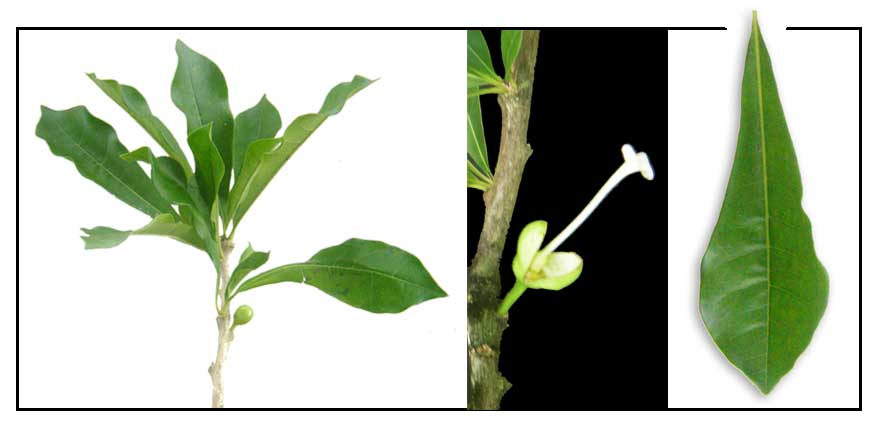
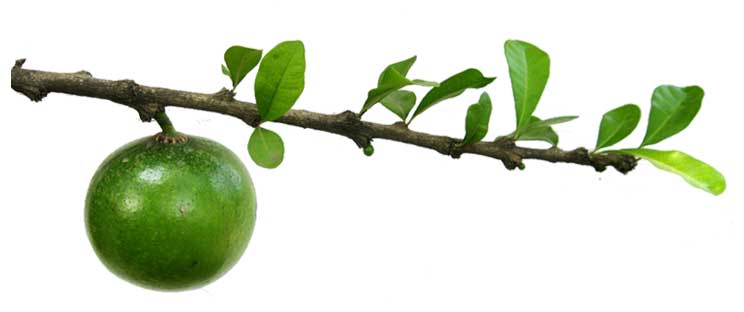
Cujete is a smooth, much-branched tree growing to a height of 4 to
5 meters. Branches are arching with close-set clusters of leaves. Leaves are alternate, often fascicled at the nodes, oblanceolate,
5 to 17 centimeters long, glossy at the upper surface, blunt at the tip and narrowed
at the base. Flowers develop from the buds that grow from the main trunk,
yellowish and sometimes veined with purple, with a slightly foetid odor,
occurring singly or in pairs at the leaf axils, stalked and about 6 centimeters
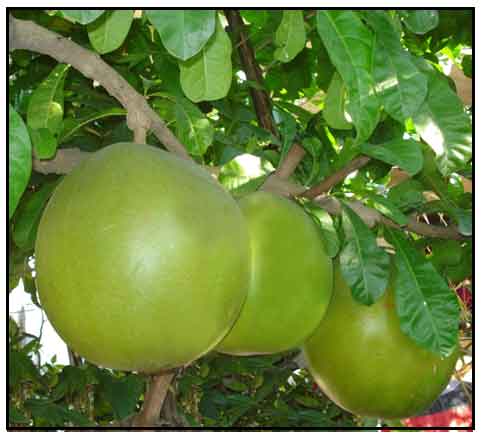
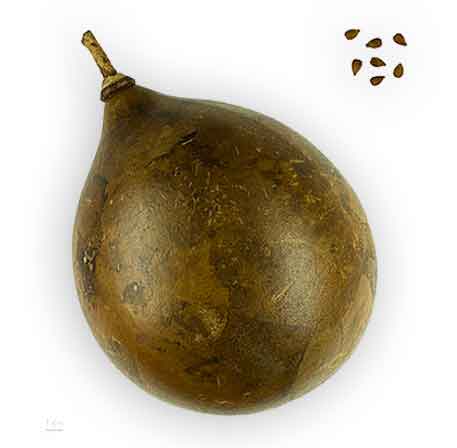
long, and opens in the evening. Calyx is about 2 centimeters long, and split into two lobes. Fruit is short-stemmed, rounded, oval or oblong, green or purplish,
15 to 20 centimeters in diameter.
Distribution
- Introduced from tropical America.
-
Occasionally cultivated
for ornamental purposes.
- Native to Aruba, Bahamas, Belize, Caribbean, Cayman Is., Colombia, Costa Rica, Cuba, Dominican Republic, El Salvador, Guatemala, Haiti, Honduras, Jamaica, Leeward Is., Mexico, Netherlands Antilles, Nicaragua, Panama, Puerto Rico, Venezuela. (22)
 Constituents Constituents
• Phytochemical
studies of the fresh fruit pulp report the presence of crescentic acid,
tartaric acid, citric, and tannic acids, two resins and a coloring matter
than resembles indigo.
• Studies yielded tartaric acid, cianhidric acid, citric acid,
crescentic acid, tannins, beta-sitosterol, stigmasterol, alpha and
beta amyrins, estearic acid, palmitic acid.
• Study yielded flavonoids quercetin, apigenin with anti-inflammatory,
antihemorrhagic and anti-platelet aggregation activities.
• Leaves have yielded naphthoquinone, iridoid glycosides, aucubin, plumieride, and asperuloside.
• Phytochemical study of the fruit yielded eight new compounds,
along with four known compounds, acanthoside D, ß-D-glucopransoyl
benzoate, (R)-1-0-ß-glucopyranosyl-1,3-octanediol.
• Fruit yielded four new 11-nor-iridoids: 6-O-p-hydroxybenzoyl-10-deoxyeucommiol, 6-O-benzoyl-10-deoxyeucommiol, 6-O-benzoyl-dihydrocatalpolgenine (a mixture of 3 and 4) with two known iridoids, ningpogenin and 6-O-p-hydroxybenzoylaucubin. (14)
• Study analyzed nutritive and anti-nutritive compositions of fruit pulp in both wet and dry samples: ash 3.74% (dry), ether extract, 4.38% (wet); crude protein 7.67% W, 10.01% D; crude fiber 4.88% D; carbohydrate 15.65% W, 68.13% D. Sodium (Na) showed high value of 3.20% W and o.32% D. (see study below) (3)
• Phytochemical study on the fruit yielded saponins, flavonoid, cardenolides, tannins, and phenol, as well as the presence of hydrogen cyanide. Results also showed relatively low mean concentrations for heavy metals, but high mean concentrations for manganese, iron, zinc, and copper. Values for fat, protein, nitrogen, crude fibre, moisture content, sucrose, fructose, galactose and energy content are quite high viz; 1.13, 8.35, 1.34, 4.28, 84.92, 59.86, 25.09, 18.24 and 88.69%, respectively. (16)
• Constituent analysis of sarcocarp yielded 18 compounds, viz., ningpogenin (1), 6-O-p-hydroxylbenzoyl-aucubin (2), 3,3′-bisdemethylpinoresinol (3), (22E,24R)-ergosta-7,22-dien-3β-ol (4), ergosta-4,6,8 (4), 22-dien-3-one (5), cerevisterol (6), 5α,8α-epidiory-(22E,24R)-ergosta-6,22-dien-3β-ol (7), β-sitosterol (8), daucosterol (9), 3β,5α,9α-trihydroxyergosta-7,22-dien-6-one (10), ergosta-7,22-dien-3-one (11), sesquiterpene (12), 4-hydroxybenzonicacid (13), benzoic acid (14), p-hydroxybenzylethanol (15), p-hydroxybenzylalcohol (16), D-allitol (17), 5-hydroxymethyl-2-furancarboxaldehyde (18). (27)
• Study of C. cujete seed and oil
showed saturated acid content of mixed fatty acids: saturated acids 19.7%, oleic acid 59.4%, linoleic acid 19.3%, and linolenic acid 1.6%. In comparison of seed oil with peanut and olive oil, except for the presence of small amount of linolenic acid in peanut the oils are similar. (28)
• Study of essential oil by hydrodistillation of leaf by GC-MS analysis yielded 12 compounds accounting for 98.2% of total oil contents. Major constituents were kaur-16-ene (33.6%) and phytol (29.9%), along with trans-pinane (8.3%) and hexadecanal (4.6%), (Z)-9, 17-occtadecadienal
(3.4%), neophytadiene (2.3%), selina-4(15), 6-diene (1.2%), and allo-aromadendrene (1.0%). (29)
• Phytochemical screening of fruits yielded alkaloids, flavonoids, cardiac glycosides, reducing sugars, saponins, tannins, phytosterols, and terpenoids in the fresh cujete fruit. (see study below) (33)
• Proximate composition analysis of leaves yielded carbohydrate (40.46%), crude protein (16.51%). crude fiber (19.71%), crude fat (2.91%), ash (9.77%), and moisture (11.03%), while screening confirmed the presence of cardiac glycosides, saponins, tannins, anthraquinones, and flavonoids. Mineral analysis (mg/g) yielded in decreasing order: Ca (6.0) > K (5.0) > Mg (2.2) > P (1.5) > Na (0.2) Fe=Zn (0.6) . Cu=Mn (0.03). (37)
• Study of stem bark yielded alkaloids, saponins, tannins, flavonoids, terpenoids, steroids, resins, carbohydrates, proteins and fatty oils. (see study below) (38)
- Bioassay-directed fractionations of MeCOEt extract C. cujete isolated (25-3S)-3-hydroxy-5,6-dimethoxydehydroiso-α-lapachone (1), (2R)-5,6-dimethoxydehydroiso-α-lapachone (2), (2R)-5- methoxydehydroiso-α-lapachone (3), 2-((1-hydroxyethyl)naphtho(2,3,-b)furan-4,9-dione (4), 5-hydroxy-2-(1-hydroxyethyl)naphtho(2,3-b)furan-4,9-dione (5), 2-isopropenylnapththo92,3-b)furan-4,9-dione (6), and 5-hydroxydehydroiso-α-lapachone (7). (see study below) (4)
- Study of fruits yielded 15 new compounds, three iridoid glucosides (6,8,9), five iridoids (7,11-14), two 3-hydroxyoctanol glycosides (16,17), three 2,4-pentanediol glycosides (18-20) and two 4-hydoroxy-2-pentanone glycosides (21,22), along with known compounds, ajugol (1), 6-O-p-hydroxybenzoylajugol (2), aucubin (3), 6-O-p-hydroxybenzoyl-6-epi-aucubin (4), 1-dehydroxy-3, 4-dihydroaucubigenin (5),(10), acanthoside D (15), benzoic acid glucosyl ester (23) and 5-hydroxymethylfurfural (24). (55)
 Properties Properties
• Fruit considered aperient, laxative, expectorant.
• Considered anthelmintic, analgesic, anti-inflammatory, febrifuge,
laxative.
• Studies have suggested antibacterial, antifungal, antidiabetic, snake venom neutralizing, anti-angiogenic, CNS depressant, antimycobacterial, anti-inflammatory, cytotoxic, wound healing, anti-platelet aggregation, acaricidal, anthelmintic, coagulant, water purification, antimitotic, antigenotoxic properties.
Toxicity
• Seeds and fruit pulp reported as poisonous.
•
Some publications consider the fruit not edible for humans, cautioning on the presence of tetracyclic triterpenoid cucurbitacin, which has been reported to cause stomach ulcers.
• Study of fruit sample yielded the presence of hydrogen cyanide (HCN), with mean value cyanide content of 0.11 ppm. Continual consumption of fruit may eventually lead to hydrogen cyanide toxicity. (see study below) (58) and (23)
• Mention is made of the young fruit being cooked and eaten. There is a general consensus that the hard-shelled mature fruit is toxic.
• Seeds considered poisonous when eaten raw.
• Handling of the plant may cause skin irritation or allergic reactions. (56) (57)
Parts used
Fruit, bark, leaves.
Uses
Edibility
• Young fruit reportedly pickled, but pulp is poisonous. and seeds are poisonous.
• Some publications consider the fruit not edible for humans, cautioning on the presence of tetracyclic triterpenoid cucurbitacin, which has been reported to cause stomach ulcers.
• Seeds also poisonous if consumed raw. Cooked seeds used to make a beverage. A syrup and confection (carabobo) is made from the seed. Seeds used to make a syrup, ground finely and mixed with sugar and a little water, then boiled. Roasted seeds, combined with roasted wheat, used as aromatic and flavorful coffee substitute. (56)
• Medicinal tea is made from leaves. Leaves are cooked and used in soups.
Folkloric
• In India,
used as a pectoral, the poultice of pulp is applied to the chest.
• In the West Indies,
syrup prepared from the pulp used for dysentery and skin diseases; also used as pectoral.
• In Rio de Janeiro,
the alcoholic extract of the not-quite ripe fruit used to relieve constipation
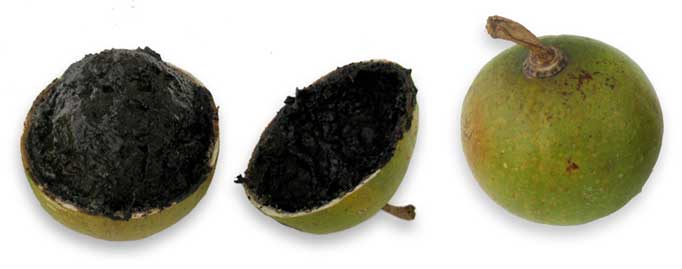
• For erysipelas, the fresh pulp is boiled in water to form a
black paste, mixed and boiled with vinegar, spread on linen for dermatologic
application.
 • The bark is used for mucoid diarrhea. • The bark is used for mucoid diarrhea.
• Fruit pulp used as laxative and expectorant.
• In the Antilles
and Western Africa, fruit
pulp macerated in water is considered depurative, cooling and febrifuge,
and applied to burns and headaches.
• In West Africa,
fruit roasted in ashes is purgative and diuretic.
• In Sumatra, bark
decoction used to clean wounds and pounded leaves used as poultice for
headaches.
• Internally, leaves used as diuretic.
• Throughout the Caribbean,
used as analgesic and anti-inflammatory
• In the Antilles,
fresh tops and leaves are ground and used as topical for wounds and
as cicatrizant.
• In Venezuela,
decoction of bark used for diarrhea. Also, used to treat hematomas and
tumors.
• In Costa Rica,
used as purgative.
• In Cote-d'Ivoire,
used for hypertension because of its diuretic effect.
• In Columbia,
used for respiratory afflictions. Also used for treatment of myomas.
• In Vietnam, used
as expectorant, antitussive, laxative and stomachic. Fruit decoction used to treat diarrhea, stomachaches, cold, bronchitis, cough, asthma, and urethritis.
• In Haiti, the
fruit of Crescentia cujete is part of the herbal mixtures reported in
its traditional medicine. In the province of Camaguey in Cuba, is considered a panacea.
• In Panama,
where it is called totumo, the fruit is used for diarrhea and
stomachaches. Also for respiratory ailments, bronchitis, cough, colds,
toothaches. headaches, menstrual irregularities; as laxative, anti-inflammatory,
febrifuge. The leaves are used for hypertension.
• Leaves used to lower blood pressure. Bark decoction used to clean wounds, treat hematomas and tumors. Pulp syrup used to treat dysentery and stomachache. (37)
• Traditional Mayan healers have used
the fruits force menses, birth and after-birth or as abortifacient. (43)
• In Vietnam, fruit used as expectorant, antitussive, laxative and stomachic.
Others
• Crafts / Household wares: In some countries,
the dried shell of the fruit is used to make bowls for drinking water, wine, tea or holding fruit or food. Shells used in craft, decorated with paintings or carvings. Also used in bags or other containers.
• Musical tool: Dried fruit is filled with pebbles or beads and attached a handle to make maracas or musical rattle.
• Cigarette paper: In Brazil, the fibrous lining of the fruit is sometimes used as a substitute for cigarette paper.
• Orchid perch: A favorite perch for orchids.
• Festivals: The Costa Rican town of Santa Barbara de Santa Cruz holds a traditional annual dance of the calabashes, baile de los guacales. Native Americans serve chicha in calabash vessels to participants of the baile de los diablitos (dance of the little fiends or dance of the little devils). (45)
 Studies Studies
• Phytochemicals / Fruits:
Previous studies have yielded naphthoquinones and iridoid glucosides.
The fruits yielded 15 new compounds, 3 iridoid glucosides, five iridoids,
3 2,4-pentanediol glycosides, along with known compounds.
• Iridoids and Iridoid Glucosides / Fruits: Study fruit constituents yielded 16 iridoids and iridoid glucosides. Eight compounds were new, named crescentins I-V and crescentosides A, B, and C. Another eight known compounds were identified as ajugol, 6-O-p-hydroxybenzoylajugol, aucubin, 6-O-p- hydroxybenzoyl-6-epiaucubin, agnuside, ningpogenin, 5,7-bisdeoxycynanchoside and a degradation product of glutinoside. (11)
• Nutritive
and Anti-Nutritive Composition of Calabash Fruit:
Pulp was found to have high mineral concentrations; sodium, highest;
calcium, lowest, with high values of thiamine and found to be free from
HCN toxicity and suggests useful contributions to human health and nutrition. (see constituents above) (3)
• Bioactive
Furanonaphthoquinones: Study isolated new and known
bioactive compounds showing selective activity toward DNA-repair-deficient
yeast mutants. (see constituents above) (4)
• Antibacterial: In a study of extracts against E. coli and S. aureus, Crescentia cujete
showed activity against S. aureus.
• Antibacterial: Among several solvents used, only the ethanol extracts showed significant antimicrobial activity against Shigella dysenteriae, Bacillus cereus, B. subtilis, B. megaterium and Staphylococcus aureus. (15)
• Snake Venom Neutralizing Effect: In a study of t5 plant extracts used by traditional healers in Colombia for snakebites, 31 had moderate to high neutralizing ability against the hemorrhagic effect of Bothrops atrox venom. C cujete (unripe fruits) was one of 19 that showed moderate neutralization. (10)
• Antidiabetic: In a non experimental validation for antidiabetic activity, study yields cyanhidric acid believed to stimulate insulin release.
(13)
• Crude Oil from Calabash Seed: Crude seed oil was found to have the following composition: saturated acids 19.7%, oleic acid 59.4%, linoleic acid 19.3%, linolenic acid 1.6%. Calabash oil is similar to peanut and olive oils except for its content of linolenic acid, which is an unusual constituent for an oil of low iodine number. (17)
• Antioxidant / Leaves and Stem Bark: Study evaluated leaves and bark crude ethanol extracts for antioxidant activity using DPPH, FRP, and TAC assays. Phytochemical screening yielded steroids, flavonoids, tannins, glycosides, and terpenoids. The leaves showed significant free radical scavenging properties compared to the stem bark. There was a clear correlation between antioxidant activity and phenolic content. (18)
• Antivenom Activity / Leaves and Stem Bark: Study evaluated the antivenom activity of ethanolic extracts of Crescentia cujete fruit in experimental animals. Results showed significant neutralizing capacity of snake Vipera russelli venom which may be beneficial in the treatment of snake bites. (19)
• Anti-Angionesis Effect: Study of Calabash fruit epicarp showed dose-dependent (100% concentration) antiangiogenic effect on chick embryo. Results suggest a potential for halting tumor revascularization.
(20) Study of calabash fruit and leaf extracts yielded flavonoids such as quercetin and anthraquinone. In a study on duck eggs, the extracts halted the formation of new blood vessels as evidenced by lower number of branching joints in duck embryo. Results suggest ability to prevent blood vessel growth and development and potential for use in preventing cancer spread. (44)
• CNS Depressant Effect: Study evaluated the CNS depressant properties of a crude extract of pulp of fruit of C. cujete. There was significant dose dependent reduction in rearing, grooming, locomotor activity and head dips in mice with an anxiogenic effect on the elevated plus maze test. Results showed the fruit possess central depressant properties. (21)
• Fetal Gestational Effect / Toxicity / Fruit: Study evaluated an ethanolic fruit extract on Sprague Dawley rats days 6-19 of gestation, the organogenetic period. Findings suggests continuous consumption of higher concentration of the extract during gestation can cause alteration in growth and development of the fetus and changes in maternal organs and blood count. Concern is raised for possible hypothyroidism in gestating mother rats cause by high demand of iodine during pregnancy, and how hydrogen cyanide in the fruit extract can impair iodine uptake in the thyroid gland. Utmost caution is advised against use of the extract during pregnancy. (23)
• Pericarp / Metabolites / Toxicity Study: Study of ethanol extract of pericarp yielded three groups of secondary metabolites, i.e., flavonoids, steroids, and triterpenes. Biological study did not show acute toxicity in either tested biological systems or concentrations tested. (24 )
• Anti-Mycobacterial / Metabolites / Toxicity Study: Study of aqueous and alcoholic extracts of stem bark and leaves of C. cujete showed inhibitory effect on all of the strains of Mycobacterium tuberculosis used in the study. (25)
• Anti-Inflammatory / Antibacterial: Study evaluated the anti-inflammatory and antibacterial potential of C. cujete leaves and stem bark. Results showed dose-dependent anti-inflammatory activity in the HRBC membrane stabilization test and potent antibacterial activity by disc diffusion method. (26)
• Cytotoxicity / Mutagenicity / Antimutagenicity / Leaves: Study evaluated air-dried leaves of C. cujete. Phytochemical screening yielded secondary metabolites like flavonoids, tannins, reducing sugar, and steroids. All plants extracts (HE, AE and CEE) showed comparable mutagenicity, antimutagenicity, and protective potential towards MMS (methyl methanesulfonate) probably due to the presence of phytochemicals that could trap the CH3 carbocation released by MMS. (30)
• Hypoglycemic / Toxicity Study / Fruit: Study evaluated the acute toxicity dose and glucose lowering effect of Calabash fruit in alloxan-induced diabetic rabbits. Toxicity study of the fruit decoction was nontoxic by OECD guideline. Post Hoc Pair-wise Test showed Calabash and Metformin had comparable effects. Results suggest calabash fruit decoction is non-toxic and is effective in lowering blood glucose of alloxan-induced hyperglycemic rabbits at dose of 10 mg/kg. (31) Study evaluated fruit juice of C. cujete for potential hypoglycemic effect in Sprague-Dawley rats. No toxicity was noted at 2000 mg/kg oral dose in rats using OECD guidelines. C. cujete caused an initial increase in glucose level followed by significant reduction at 4h and 6h (P<0.05). Effect was not significantly different from metformin. (39)
• Antiplatelet Aggregation Activity / Flavonoid / Fruit: Study investigated C. cujete fruit for flavonoid content and platelet aggregation activity. Results showed potent antiplatelet aggregation activity which was attributed to flavonoid content. Acute oral toxicity categorized it as non-toxic based on OECD guidelines-423. (32)
• Cytotoxicity / Antioxidant / Anthelmintic / Fruit: Brine shrimp lethality assay showed the EA extract to be most toxic and exhibits highest bioactivity with LC50 of 1.50 ppm during first 6 hours of treatment. Anthelmintic assay showed the EA extract at 20,000 ppm showed the least time to paralyze and kill test organisms Eudrilus eugenia. Thin layer chromatography showed phenolic antioxidants in the fruit crude ethanolic extract. (see constituents above) (33)
• Acaricidal / Fruit Pulp: Cattle tick is an important constraint in livestock production. Ethanol extract and fraction of fruit pulp of C. cujete was evaluated for acaricide effect against Rhipicephalus microplus. Study yielded cinnamic acid and benzoic acid. The ethyl acetate fraction 10% solution showed 100% mortality with LC50 of 5.9%. Cinnamic acid showed 63% mortality with LC50 of 6.6%. Results showed the fruit pulp as a potential alternative for R. microplus control. (34)
• Wound Healing / Leaf Ointment: Study evaluated the potential wound healing property of calabash tree leaf ointment on an incision wound model in mice. (35)
• Antimicrobial / Stem Bark: Study evaluated methanolic crude stem bark for antimicrobial potential against clinical isolates of B. subtilis, S. aureus, P. aeruginosa, E. coli, S. typhi, Candida albicans, and A. niger. Results showed concentration dependent antimicrobial activity in the order of EF > MF > HF > MCE. (see constituents above) (38)
• Nanoparticles / Bactericidal / Leaves: Study reports on an easy, economical, and eco-friendly method of silver nanoparticles synthesis using an aqueous dry leaf extract of C. cujete. The silver nanoparticles showed better antimicrobial activity against gram-positive and gram-negative bacterial than the plant extract alone. (40)
• Cianhidric Acid: Studies have reported the presence of cianhidric acid in C. cujete. This review article mentions cianhidric acid as "one of the most toxic compounds in plants"
and is found in Crescentia cujete fruits, Phaseolus lunatus whole plant, and Prunus serotina leaves and seeds. The same review mentions an LD50 >2000 mg/kg p.o. in rats for ethanol extract of C. cujete fruits. (41) Note: I have not been able to locate any study on Crescentia cujete that pertains to cianhidric acid toxicity. (G. Stuart)
• Removal of Heavy Metal from Waste Water: Granite industrial wastewater effluent is one of the industries responsible for polluting the surrounding aquatic environment. Study showed activated carbon form from calabash seed is an inexpensive and reliable material for the removal of toxic metals from the waste water. (42)
• Contraction of Isolated Uterine Muscle / Seed: Study evaluated the effect of seed extract or raw juice from fruit pulp directly applied to isolated uterine tissue from Mus musculus and to evaluated the resulting smooth muscle contractile response. The seed extract increased the force and frequency of contraction compared to the tissue's spontaneous motility. The pulp juice also produced increased in contractile forces, with less remarkable changes in frequency. Results support the traditional claims of Mayan healers of the fruit's effect on uterine contractile response. (43)
• No Antimicrobial Effect / Fruit: Study evaluated the antmicrobial potential of calabash fruit against common infectious pathogens i.e., gram positive S. aureus and gram negative E. coli using disc diffusion method. The extract was prepared by maceration with ethanol for 24 hours. The study revealed no antibacterial effect. (46)
• Antibacterial Effect / Fruit: Study evaluated the antibacterial effect of methanol, ethyl acetate, and n-hexane extract of fruits of Crescentia cujete using agar diffusion method with paper disc. Phytochemical screening yielded flavonoids, saponins, and triterpenoid. The methanol extract showed most effective (17.29 mm) antibacterial activity. (48)
• Acute Toxicity Study / Fruit and Leaves: Acute toxicity study of fruit and leaves of the plant according to OECD guidelines showed no mortality or signs of toxicity at tested concentrations, suggesting LD509 above 2000 to 5000 mg/kbw, and considered safe for consumption below 5000 mg/kbw. (47)
• Diuretic / Leaves: Study evaluated the diuretic activity of C. cujete ethanolic leaf extract on female albino rats using doses of 50mg/200g, 100mg/200g, and 200mg/200g orally and using measures of urine output, pH, and chloride concentration in the urine. The 200mg/200g dose exhibited the highest diuretic activity (104.79%). The 100mg/200g dose (0.6875%) exhibited highest chloride concentration. The diuretic activity was attributed to presence of secondary metabolites saponins, flavonoids, and tannins. (49)
• Metabolite Profiling of Pulp and Fruit Juice / Antimicrobial: GC-MS and UPLC-HRMS analysis evaluated the metabolite profile of C. cujete fruit pulp and commercial fruit juice. The fruit showed potential to bioaccumulate small organic molecules. Volatile organic compounds in the fruit pulp were absent from processed commercial juice. Biosynthetic precursors, benzenoid compounds thiazole and (+)-δ -cadinene, were identified in the juice sample. Molecular analysis of ethanol extract of juice identified 1-kestose and sucrose. 1-Kestose is considered a essential prebiotic compound associated with boosting metabolism and immunity. Both samples yielded positive results against Candida albicans using disc diffusion assay. Only the juice sample showed significant activity against Escherichia coli. (50)
• Potential as Adsorbent or Solid Fuel / Fruit and Pulp Biomass: Study of methanolic crude extract of C. cujete fruit yielded volatile constituents consisting mostly of furans and unsaturated carboxylic acid, trans-cinnamic acid. Energy dispersive X-ray spectroscopy (EDX) showed high levels of K2O (79.56%), P2O5 (9.925%), and SO3 (9.131%) from the lyophilized pulp. Aliphatic compounds such as alkanes and alkenes were mostly present in both hydrochars as revealed by FTIR analyses. SEM and TGA analyses showed degradation of the lignin components of both hydrochars after the hydrothermal carbonization process. Results present the chemical characterization of the fruit and the hydrothermal carbonization (HTC) of the pulp biomass which exhibited promising properties for applications as solid fuel or as an adsorbent. (51)
• Wound Healing / Leaves: Study evaluated the wound healing potential of ethanol and ethyl acetate extracts of C. cujete leaves using an excision model in rats.
Results showed greater wound healing ability with the extracts compared to control. By day 9, animals treated with EE and EAE extracts showed wound closure around 50% and 65% respectively, compared to negative control of 35%. On the 15thh day, all wounds were almost closed except for control. Wound healing activities were attributed to individual or combined action of phytoconstituents like flavonoid, alkaloids, saponins, and tannins. (52)
• Antibacterial / Fruit Rind and Flesh: Study evaluated the antibacterial activity and MICs of ethanol extracts of berenuk's fruit rind and flesh against S. aureus and E. coli. The ethanol extract of fruit rind contained alkaloid, saponin, tannin, and flavonoid, while the fruit flesh yielded alkaloid and flavonoid. Fruit rind showed inhibition zone on S. aureus growth at 80% and 100% w/v with MIC at concentration of 65%. Both extracts showed no inhibition zone against E. coli. (53)
• Hydrogen Cyanide Content / Potential Toxicity / Fruit: Study of fruit sample showed mean value of cyanide content of 0.11 ppm. Hydrogen cyanide is a chemical asphyxiant, which stops the tissue from utilizing oxygen, with a potential for fatal poisoning. Hydrogen cyanide is also found in small quantities in peaches, cherries or apricots. The hydrogen cyanide concentration of 0.11 ppm exceeds the WHO cyanide value for drinking water (0.01 mg/L), meaning the continual consumption of C. cujete fruit may eventually lead to hydrogen cyanide toxicity. (58)
• Wound Healing / Fruit Pulp Formulation: Study evaluated the wound healing potential cream-based fruit formulation of Crescentia cujete (Buah berunuk extract/ BBE) in excision wounds in Sprague-Dawley rats. Phytochemical analysis showed the BBE contained alkaloid, flavonoid, phenolic, saponin, tannin, and ascorbic acid. Results revealed use of 2% BBE cream had significant impact on wound area in rat models, affecting histopathology, skin collagenization, and immunoreactivity of IL-6 and FGF when compared to other treatment groups. (59)
• Coagulant for Water Purification / Fruit Shell: Conventional drinking water treatment facilities use coagulants, typically alum and ferric sulfate to remove turbidity and improve water clarity. In search of a cost-effective, sustainable, and eco-friendly alternative, study investigated the calabash fruit shell as a plant-based natural and eco-friendly coagulant. Results showed the coagulant obtained from C. cujete reduced water turbidity by 84.3% at optimal dosage of only 1.0 g/L. FT-IR analyses showed the sample to be largely composed of hemicellulosic material, which likely contributed to coagulant efficacy. (60)
• In Silico Analysis / Anti-Inflammatory / Antioxidant: Study reports on in silico analyses by ADME prediction and molecular docking simulations on bioactive compounds and assessed their potential for antioxidant and anti-inflammatory applications. Comparison of ADME properties nd molecular docking scores showed that naringenin, pinocembrin, and eriodictyol has most potential to act as inhibitors of the target proteins involved in inflammation and oxidation pathways. (61)
• Antidiabetic / α-Amylase Inhibitory / Leaves: Study evaluated the antidiabetic activity of C. cujete extract using alpha-amylase inhibition assay and glucose uptake by yeast cell. Results showed alpha amylase inhibition, increasing with increase in concentration. Inhibition was best at concentration of 5 mg/mL with 42.7% inhibition, compared to metformin's 55% at same concentration. Results showed the leaf extract possess antidiabetic activity based on alpha amylase inhibition assay and glucose uptake by yeast cell. At the same concentration, metformin and metronidazole performed better. (62)
• Antimitotic / Antigenotoxic / Fruit and Leaves: Study
evaluated the effects of Cujete fruit and leaf extracts on percent inhibition, chromosomal aberrations, mitotic index, and % germination of the onion (Allium cepa) cell division and mongo seed (V. radiata) germination exposed to sodium azide (NaN3). Results showed the fruit extract exhibits more antimitotic and antigenotoxic potential compared to the leaf extract based on mitotic index and frequency of aberrations in the onion root cells. (63)
• Antioxidant / Anti-Inflammatory / Fruit and Leaves / Review: The review focused on the antioxidant and anti-inflammatory activities of various extracts from C. cujete and serves as reference for future researchers interested in the gray areas of its antioxidant and anti-inflammatory potentials. (64)
• Effect of Fermented Cujete on Hematological and Clinical Chemistry Profiles: Study evaluated the effect of fermented calabash (FC) on hematology, clinical chemistry, and levels of CD4+ and CD8+ in the circulatory system using rat models. Study highlighted FC's beneficial effects on the haemorheology and immune system, specifically on the decrease in % of hemolysis, elevated ATP concentration, number of lymphocytes, ration N/L, CD4+. and CD4+/CD8+ ratio without causing significant changes to the hematological and clinical chemistry profiles in rat models. (65)
• Anti-Inflammatory / Fruit: Study evalu
ated the anti-inflammatory activity of 100% Calabash fruit extract. Extract was obtained by macerating fruit pulp without seeds in 95% ethyl alcohol. Diclofenac sodium was used as positive control. Results showed significant anti-inflammatory properties in reducing inflammation on egg-albumin induced paw edema in ICR mice. (66)
Availability
- Ornamental cultivation.
- Seeds in the cybermarket.
|