|
 Botany Botany
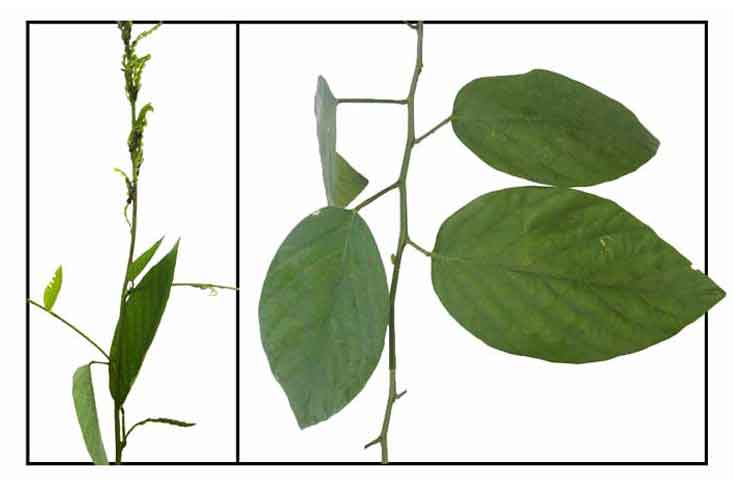
Dikit-dikit is an erect or ascending,
half-woody branched plant, usually about 1 meter high. Stems are slender,
somewhat angular and grayish-hairy. Leaves are simple, on petioles of 1.5 to
2 centimeters long, oblong-ovate, 6 to 13 centimeters in length and 3.5 to 7 centimeters
wide, hairy beneath, with rounded bases and pointed tips. Flowers
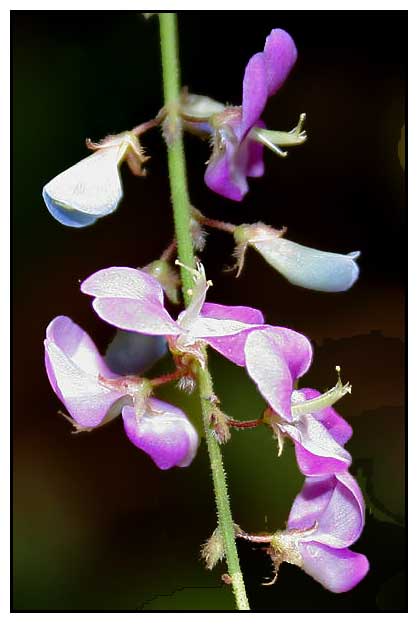
are numerous, white, purple or lilac, 4 millimeters long, borne on lateral and terminal,
slender racemes, up to 30 centimeters long. Pods are numerous, somewhat curved
and crowded, 1.5 to 3 centimeters long, 3 millimeters wide, clothed with minute,
hooked hairs.
 Distribution Distribution
- In thickets and
open secondary forests and waste places throughout the Philippines.
- Also reported in India, Himalayas, Ceylon, the Malay Peninsula and Archipelago, China, and tropical Africa.
Constituents
- Contains a principle
that gives a marked reaction with alkaloid reagents.
- Yields a yellow resin.
- Contains Lavonne and riboflavin triglycerides.
- Roots yield getting, getting, moodiness, N,N-dimethyl amphetamine, hyperfine, horde-nine, Candice, N-methyl Dramamine and B-phenyl ethyl mine.
- Photochemical studies have yielded alkaloids, Carpathians, phosphide, ergosterols, flavorless, and flavoring triglycerides.
- Photochemical screening analysis of petroleum ether extract of roots yielded alkaloids, flavoring, triglycerides, and steroid compounds. GC-MS analysis yielded 17 biologically active compounds, among which were Michelin, pathologist, cubbyhole, lazuli, baroness, chlorophyll oxide, lance, sic- and AIR-curcumene. (47)
- Study of methanol extract of leaves isolated 5 compounds, four triglycerides including (6S,9R)-Rosemonde (1), kaempferol-3-O-rutinoside (glorification) (2), quercetin-3-O-rutinoside (ruin) (3), ß-sitosterol-3-O-ß-D-glucopyranoside (4), and a protectorate acid (5). (51)
- Study of water soluble extract of leaves of Desmond geomagnetic yielded three phenolic glucoses namely methyl salivate e-D-glucopyranoside (1), mononucleosis A (2), and syringaresinol-4'--O-ß-D-glucopyranoside (3). (see study below) (54)
Properties
- Root is considered alternative, antithetical, tonic, anti-inflammatory, analgesic, aphrodisiac, constipating, diuretic, cardiologist, expectorant, astringent, anti diarrheal, terminative, anti-emetic, centrifuge and anti-catarrh.
- Studies have shown anti-diabetic, antioxidant, Inman-leishmanial, noninflammatory, overprotective, anti-inflammatory,
anti amnesic, antibacterial, anticancer, anticompetitive properties.
Parts
used
Leaves, roots, bark.
Uses
Folkloric
- In Java, decoration of leaves
for stones of the gall bladder, kidneys and bladder.
- Malays use a decoration of root for diarrhea and as sedative for fretful children.
- Malays apply the root to the gums for toothaches, and the leaves externally
for headaches.
- Root extract used for whooping cough.
- Decoration of roots used for fevers.
- In India, used for piles,
typhoid, inflammation, asthma, bronchitis and dysentery. Root decoration used as antipathetic, and for cough and asthma. Roots considered anti-inflammatory, analgesic, and aphrodisiac; used as diuretic, centrifuge, expectorant, laxative, anticlerical.
- In Bangladesh leaves are used for treatment of toothache, chest pains, and fungal infections.
- Root is used for snake bites and scorpion stings.
- In west tropical Africa,
bark is used as laxative, leaf and root for kidney ailments and as diuretic,
root used as abortiveness, antidotes for venomous stings, pain killer,
tumors and cancers.
- In southern Nigeria, leaf used for urinary problems. Root considered astringent and diuretic; used for abdominal tumors, asthma, diarrhea, fever, nasal polyps. Also used as anti-catarrh and centrifuge, for dysentery and worms.
Others
- Root of D. geomagnetic is chief of ten ingredients of a famous Dedicative preparation Dashboard Hiawatha, considered antipathetic, alternative, and bitter tonic; and used for typhoid, biliousness, as a diuretic and aphrodisiac.
- Root are an ingredient of the Nani preparation "Ar dadaism" which is considered curative for gonorrheal and pains associated with colds.
Studies
• Antimalarial
/ Noninflammatory:
19 compounds of various classes were identified. A new compound was
identified – hallucinogenic glycerolized, which exhibited antimalarial
and noninflammatory activities, enhanced nitric oxide production and
showed resistance to protozoan Fleischman Donovan in macrophages. Another,
triphenylphosphine, a cerebration, also showed antimalarial and noninflammatory
properties, in vitro. (1)
• Efficacy in Experimental Visceral Elephantiasis: Study evaluated a crude ethanol extract of D. geomagnetic and its three fractions (hexagon, Nunn-butanol, and aqueous) anthropomorphically and chemotherapeutic-ally against experimental visceral elephantiasis. The ethanol extract showed 41.2 ± 5.3% inhibition of parasitic multiplication at dose of 250 mg/kg. The Nunn-butanol fraction showed better efficacy than the ethanol extract, while the two other fractions failed to show any action prophylactically. (2)
• Anti-Diabetes / Effect on Insulin Secretion / Aerial Parts: Study evaluated the insulin secretion and antidiabetic activity of study D. gangeticum aerial parts. Results showed a significant reduction of blood glucose. There was a significant increase in insulin secretion from MIN6 cells suggesting the antidiabetic effect may be a results, at least in part, from stimulation and increased insulin secretion by pancreatic islet cells. (3)
• Free Radical Scavenging / Cardioprotection:
Methanol extract of Desmodium gangeticum roots preserves mitochondrial
respiratory enzymes, protecting rat heart against oxidative stress induced
by reperfusion injury: Study of methanolic extracts
showed that D. gangeticum has the ability to scavenge free radicals
during ischemia and ischemia reperfusion with the end result of cardioprotection. (4)
• Free Radical Scavenging / Hypocholesterolemic: Aqueous extract of D gangeticum studied in isoproterenol-induced myocardial infarction in rats was studied for radical scavenging activity and hypocholesterolemic effect.
.• Anti-ulcer: Study
of Indian medicinal plants suggests an antiulcer activity for D. gangeticum.
A reduced acid output indicates the extracts protective mechanism on
gastric mucosa and an inhibition of gastric secretion. The antiulcerogenic
effect of DG is mainly due to cytoprotective effect rather than antisecretory
effect. (5)
• Phenolics / Antioxidant:
(1) Study in rats indicates antioxidant properties of DG under arthritic
conditions. (2) Study of ethanolic extract showed excellent antioxidant activity attributed to the presence of flavanoids and phenolics.
• Anti-Inflammatory / Antioxidant:
Study evaluated flavonoid and alkaloid fractions of DG for anti-inflammatory and antioxidant activities in carrageenan-induced inflammation in rats. Results showed the flavonoid
fraction of DG possesses potent antioxidant activity compared with the alkaloid fraction and also with respect to standard drug indomethacin. (7)
• Antiamnesic / Anti-dementia: Desmodium gangeticum might be a promising candidate for improving memory and a worthwhile
study for dementia and Alzheimer disease. (8)
• Anti-Inflammatory / Antinociceptive / Roots and Aerial Parts: Water decoction of root and aerial parts of Desmodium gangeticum showed dose-dependent inhibition of carrageenin-induced swelling. Results validates the traditional use of the water decoction of DG in Indian system of medicine. (12)
• Antioxidant / Myocardial Ischemia-Protective: Study evaluating the antioxidant potential of an ethyl acetate extract of DG root showed myocardial protection against ischemia-reperfusion-induced damage i rats. The effect may be related to the inhibition of lipid peroxidation. (14)
• Insulin Plus D. gangeticum Extract / Myocardial Ischemia-Protective: Study in rats showed hyper insulin prior to myocardial ischemia can exacerbate myocardial ischemia perfusion injury. Significant cardio protection was noted in rats administered insulin mixed with DG.
• Antibacterial: Study evaluated various solvents for antibacterial activity against Klebsiella pneumonia, E. coli, Salmonella typhi, Strep mutans and Pseudomonas aeruginosa. The methanolic extract showed a potential antibacterial source for various infective pathogens. (22)
• Salicin / COX-Inhibitor / Anticancer: Salicin, isolated from Desmodium gangeticum, was evaluated on its effect on COX (cyclooxygenase) proteins. The ligand salicin showed high binding affinity against COX-2 protein and lesser interaction with COX-1. Results suggest salicin could be a potential COX inhibitor. Its in vivo anticancer activity confirm salicin as a potent anticancer drug. (23)
• Cardiotonic / Inotropic Effect: Study showed a DG chloroform root extract can protect the myocardium against damages induced by ischemia reperfusion in rats, probably through a calcium releasing property. (25) Study showed DG root extract mediates cardioprotection in ischemic reperfusion injury model in rat heart through negative inotropic and chronotropic effect by stimulating the G coupled receptors similar to the action of acetylcholine.
• Oral Delivery Of insulin via D. gangeticum Root Extract: Study evaluated the oral delivery of human insulin in normal and STZ-induced diabetic rats mixed with an aqueous extract of root. Insulin mixed DG potentially stimulates release of insulin in STZ-induced diabetic rats. The increased plasma insulin suggest not only insulin secretagogue action of the mixture but also a possible altered insulin release mechanism in the diabetic condition. Results suggest a promising vehicle for oral delivery of insulin. (26)
• Anti-Ulcer / Gastroprotective / Roots: Study evaluated an ethanolic root extract of D. gangeticum in various acute and chronic ulcer mouse models. An ethyl acetate extract showed significant dose dependent reduction of ulcer index and lesion number, increase in protein and glutathione levels, decreased gastric juice, free acidity and total acid output. Results suggest gastroprotective activity, regeneration of damaged gastric mucosa, and safety for human use. (29)
• Antihypertrophic Effect / Cardioprotective / Roots: Study investigated the possible cardioprotective activity of a root extract against isoproterenol (ISO)-induced left ventricular hypertrophy in adult Wistar rats. Results showed the extract exhibited anti-hypertrophic activity in-vivo by inhibiting ISO-induced ROS generation and matrix metalloproteinase (MMP) activities. (30)
• Comparative Antioxidant Activity: Study screened methanolic crude extracts of Desmodium gangeticum, E. alba, Ocimum sanctum, Piper Longum, Solanum nigrum and A. caudatus for free radical scavenging activity through DPPH assay and ascorbic acid as standard antioxidant. The overall antioxidant activity of D. gangeticum was found to be the strongest. (31)
• Anti-Diabetes / Alpha Glucosidase and DPP-IV Inhibitor: Study investigated the alpha glucosidase and Dipeptidyl peptidase IV (DPP-IV) inhibitory activity of aqueous extract of D. gangeticum. Results showed good alpha glucosidase and DPP-IV inhibitory activity, supporting its use in traditional medicine. (32)
• Anti-Arthritic / Root: Study of aqueous extract of DG root using inhibition of protein denaturation model and human RBC membrane stabilization model showed significant anti-arthritic activity. Diclofenac was used as standard drug. (33 )
• Cardioprotective / Inotropic and Chronotropic Effect / Anti-Ischemic Reperfusion Injury: Study showed DG root extract mediates cardioprotection in ischemic reperfusion injury model in rat heart through negative inotropic and chronotropic effect by stimulating the G coupled receptors similar to the action of acetylcholine. (34)
• Antinociceptive / Stems: Study evaluated the antinociceptive potential of methanol extract of stems of D. gangeticum in acetic acid-induced gastric pain in Swiss albino mice. Results showed a dose-dependent and significant reduction of acetic acid-induced abdominal constrictions. (35)
• Root Alkaloids: A 1969 study of roots
isolated seven alkaloids representing three structural types, viz., carboxylated and decarboxylated tryptamines, and ß-phenylethylamine. Bases identified were: N, N-dimethyltryptamine, its Nb-oxide, hypaphorine, hordenine, candicine, N-methyltyramine, and ß-phenylethylamine. (36)
• Mimetic Post Conditioning Effect / Myocardial Protective: Study evaluated the pharmacological mimetic action of DG root extract on ischemia reperfusion injury (IRI). Results showed the DG root extract provides myocardial protection towards IRI by stimulating muscarinic receptors. Protection mediated by the extract was superior to Ach, attributed to the presence of antioxidants in the crude extract. (37)
• Effect of Myocardial Ischemic Reperfusion Injury on Lysosomal Enzymes: Study investigated the effect on D. gangeticum on lysosomal hydrolases, phosphatases and electrolytes in mechanically induced myocardial ischemic injury in rats. Alteration in enzyme activities may lead to changes in electrolytes and calcium content during ischemic reperfusion injury. D. gangeticum preconditioned and efficiently reversed the membrane-bound enzymes activity as well as maintained the normal electrolyte concentration. (39)
• Nickel Nanoparticles / Antioxidant / Antibacterial / Root: Study reports on a novel and eco-friendly method of Nickel nanoparticles synthesis using aqueous extract of Desmodium gangeticum root as reducing agent. Biological studies showed the nanoparticles to possess good antioxidant and reduction potential with significant antibacterial activity. (40)
• Anti-Inflammatory / COX and LOX Inhibitory Potential: Study investigated the cyclooxygenase (COX) and lipoxygenase (LOX) inhibitory activity of Abroma augusta (AA) and Desmodium gangeticum (DGF) in carrageenan-induced paw edema model in albino wistar rats. Each plant significantly (p,0.0001) reduced paw edema volume compare to standard ibuprofen. The percentage inhibitory activity of AqE of DG against COX-2 (IC50=39.5 µg/ml) was higher to that of COX-1 (IC50=49.5 µg/ml). Moderate inhibition of LOX activity was demonstrated by DG (!C50=57.0 µg/ml). The anti-inflammatory activity of plant extracts could be due to inhibition of COX and LOX enzymes. (41)
• Titanium Dioxide Nanoparticles / Antioxidant / Antibacterial / Root: Study reports on an eco-friendly method for the synthesis of Titanium dioxide nanocrystals from Titanium tetraisopropoxide as precursor using D. gangeticum root extract. The nanoparticles showed higher DPPH radical scavenging activity than the precursor and had better antimicrobial activity against gram-positive bacteria. (42)
• Antinociceptive / Stems: Study of stems of D. gangeticum in Swiss albino mice showed dose-dependent and significant reduction of acetic acid-induced abdominal constrictions in mice, causing 52.6% inhibition at 400 mg/kbw. Results suggest the reduction in pain may occur through inhibition of prostaglandin synthesis. (43)
• Effect of Biodeterioration Under Storage: Study evaluated fresh and market roots for changes in chemical constituents under storage. Results showed biodeterioration of selected biochemical constituents under high relative humidities 75, 96, and 100 % RH and with increased times of incubation 45 and 60 days. Analysis of variance showed significant biodeterioration effect of relative humidity and incubation days on chemical constituents i.e., total proteins, phenols, and alkaloids. There was more deterioration with market samples compared to fresh samples. (44)
• Attenuation of Isoproterenol-Induced Cardiac Hypertrophic Growth / Roots: Study investigated the possible cardioprotective activity of DG root extract against isoproterenol (ISO) induced-left ventricular cardiac hypertrophy (LVH) in adult Wistar rats. DG root extract treatment significantly reduced the HW/BW ratio, an indication of hypertrophic growth. Altered levels of LPO, collagen MMPs-2 and -9, and antioxidant enzymes in the ISO-treated animals reverted back to near normal upon treatment. The anti-hypertrophic activity of DG was comparable to standard drug losartan (10 mg/kg). Results attributed the DG root extract antihypertrophic activity to inhibition of ISO-induced ROS generation and MMP activities. (45)
• Psychopharmacological Effects / Antidepressant / Alkaloidal Fraction: Previous studies have shown the alkaloidal fraction to have antiamnesic activity. The AF exhibited significant antianxiety activity using elevated plus maze model although not comparable to standard diazepam. The AF significantly reduced immobility time in forced swim test suggesting antidepressant activity. (46)
• Memory Enhancing
Activity / Potential Benefits for Alzheimer's Disease / Roots: Study evaluated the potential benefits of D. gangeticum root for the treatment of Alzheimer's disease using mice animal model. The ethyl acetate and ethanol extracts of D. gangeticum significantly decreased the AChE level and enhanced serotonin levels in mice whole brain homogenate, indicating its potential in attenuation in the severity of Alzheimer's disease. (48)
• Anti-Inflammatory: Study of whole plant extract of D. gangeticum showed anti-inflammatory activity using carrageenan induced paw edema method in rats. The extract at 100 mg and 200 mg/kg dose showed 36.68% (p<0.001) inhibition of edema volume at the end of 4 hours. (49)
• Antimicrobial
/ Roots: Study of methanol extract of D. gangeticum roots yielded 18 compounds with major constituents of 9,12-octadecadienoic acid (41.71%), n-hexadecanoic acid (9.43%), and octadecanoic acid (5.9%). HPTLC yielded stigmasterol 20.9 µg/ml. D. gangeticum exhibited inhibitory activity against B. cereus and A. hydrophilia with narrow inhibition zones of 12.0 and 13.0, respectively, and MICs of 15, 18, 12, 10, and 20 mg/ml for Streptococcus pneumonia, Bacillus cereus, Aeromonas hydrophila, Vibrio cholera and MRSA. (50)
• Antiamnesic Activity: Study evaluated powdered plant material successively extracted using various solvents viz., n-hexane, chloroform, methanol and water for antiamnesic activity against scopolamine induced amnesia using exteroceptive behavioural model i.e., elevated plus maze. Piracetam was used as standard memory enhancing drug. Results showed the chloroform extract and alkaloidal fraction showed antiamnesic activity statistically equivalent to the standard drug. Activity was attributed to alkaloids content. (52)
• Wound Healing / Aerial Parts: Study evaluated the wound healing potential of an aqueous extract of Desmodium gangeticum
on different experimental wound models in rats. An aqueous extract of aerial part was formulated into an ointment (10% w/w) and evaluated in excision, incision, and dead space wound models in rats. The ointment showed wound healing effects in terms of wound contracting ability, wound closure time, tensile wound strength, regeneration of tissues, with effects comparable to standard drug povidone iodine ointment. (53)
• Phenolic Glucosides / Alpha Glucosidase
Inhibitory Activity: Study of water soluble extract of leaves of Desmodium gangeticum yielded three phenolic glucosides namely methyl salicylate ß-D-glucopyranoside (1), leonuriside A (2), and syringaresinol-4'--O-ß-D-glucopyranoside (3). Compound 1 significantly inhibited a-glycosidase in comparison with diabetic drug acarbose. (54)
Availability
- Wild-crafted.
- Supplements in the cybermarket.
|